
Reviewed · GYEONGJU TOURS
Private Gyeongju Tour – Explore Gyeongju UNESCO Sites
Gyeongju is South Korea’s best place to see the Silla kingdom brought back to life, and this private day tour covers its big sights without making you juggle buses, taxis, and Korean-language signs. You move from Bulguksa Temple and Seokguram Grotto to royal tombs, an ancient observatory, palace ruins, and a first-rate museum.
I like the one-group-only format, which lets your guide adjust the pace and explain what interests you. I also like the chance to eat traditional Korean food at Hongsi Hanjeongsik, though the meal and two entrance fees cost extra despite the tour description referring to lunch as part of the experience.
The main drawback is the length of the day. With seven stops and several hours in the car, this is a full sightseeing push rather than a slow wander through town. Families should also discuss walking distances, rest stops, and the pace with the guide at the start.
Key points to know before booking
- Seven major Gyeongju sights in one day: The route links mountain temples, royal burial mounds, palace ruins, scientific monuments, and museum treasures.
- A private English-speaking guide: Guides including Jason, Lily, Joy, Finn, Cynthia, Mimi, and Eunhee have been praised for clear explanations and flexible planning.
- Comfortable private transport: Pickup, drop-off, fuel, parking, tolls, and an air-conditioned vehicle are included.
- A local Korean meal can be arranged: Hongsi Hanjeongsik is listed as the lunch stop, but meals are not included in the stated inclusions.
- Expect a long day: The experience lasts about 8 to 9 hours, and driving can take 3 to 4 hours depending on traffic and the starting point.
- Two small admission charges apply: Daereungwon and Donggung Palace and Wolji Pond each list an entrance fee of ₩3,000 per person.
Why a private Gyeongju day makes sense
Gyeongju is spread out. Its most important places sit among wooded hills, open burial grounds, historic neighborhoods, and the city center. Public transport can work, but fitting all seven stops into one day takes planning and patience.
I like the practical value of a private vehicle here. You are not waiting for the next bus or trying to explain a destination to a taxi driver. Pickup and drop-off are included, along with parking, tolls, and fuel costs. That matters in a day when every transfer cuts into your time at the sites.
The group size is also useful. One private group can include 1 to 7 people, while a mid-sized private option is available for 8 to 15 people. You are not placed with strangers, and the guide can respond to your group’s interests, energy, and walking speed.
The guides bring different strengths. Jason is repeatedly described as punctual, flexible, and good at explaining Korean history during the drive. Lily has adjusted plans during crowded holiday periods and has helped families make the most of limited time. Joy has been praised for strong English and explanations of Buddhist culture. Finn has worked well with mixed-age families, while Cynthia has used questions and simple Korean phrases to keep younger travelers engaged.
That personal element is the reason to choose this tour over a basic transport service. Gyeongju’s monuments are beautiful, but without context, some can feel like a series of old stones and rooflines. A guide can explain how each place fits into Silla life, religion, science, and royal power.
A few more Gyeongju half-days to weigh up
- Gyeongju UNESCO sites Private tour with licensed tour guide
★ 5.0 · 275 reviews - Busan: Gyeongju UNESCO Legacy Tour with National Museum
★ 5.0 · 172 reviews - Gyeongju: UNESCO Heritage Tour Including Bulguksa Temple
★ 4.8 · 104 reviews
Bulguksa Temple, where Silla stonework takes center stage
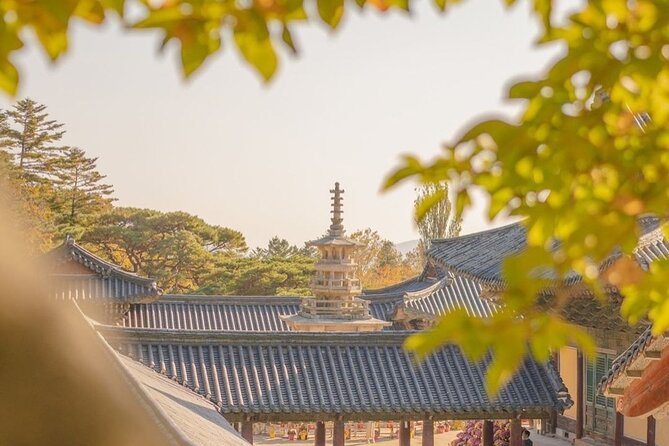
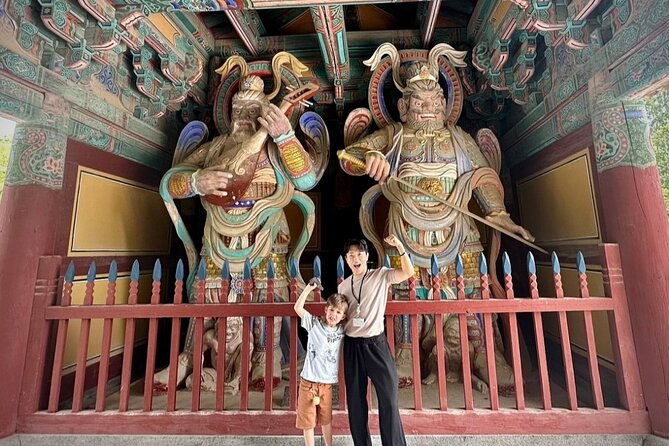
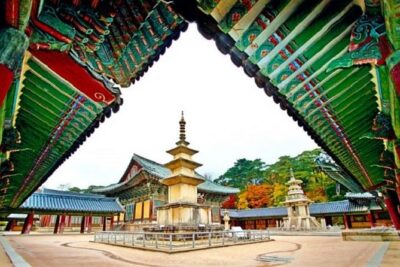
Bulguksa is the day’s grand opening. The temple is closely tied to Silla Buddhism, and its stone terraces, stairways, pagodas, and wooden halls give you a clear sense of the kingdom’s artistic ambition.
Plan on about an hour here. That is enough for a guided look at the main complex, though you will want comfortable shoes because the temple grounds involve walking and changes in level. The setting is attractive, but the value comes from learning how the buildings and stone features express Buddhist ideas.
Eunhee, also known as Daisy, has received special praise for explaining the finer points of Bulguksa and Silla Buddhist history. Joy has also been praised for her Buddhist and Korean history commentary. If religion and architecture interest you, tell your guide early so you can spend more time on those details.
Admission is listed as free for this stop. The real cost is time and energy, since Bulguksa sits away from the central cluster of Gyeongju sights.
Seokguram Grotto and the mountain road
From Bulguksa, the route continues to Seokguram Grotto. This sanctuary was built within a cave and is known for its central Buddhist sculpture and carefully designed stone setting.
The stop is listed at about one hour, including the walk and explanation. The grotto is not simply another temple hall. Its power comes from the unusual combination of sculpture, stone construction, and mountain location. You get a different experience here from Bulguksa, which makes pairing the two worthwhile.
Admission is listed as free. Still, you should ask your guide about the walking distance and pace if anyone in your group has limited stamina. One useful lesson from the tour feedback is that families should be clear from the beginning about whether they want the guide to accompany them through each site or give them time to explore independently.
Hongsi Hanjeongsik and the case for a traditional lunch
Lunch is scheduled at Hongsi Hanjeongsik, a traditional Korean restaurant in the Gyeongju area. Hanjeongsik usually means a broad Korean meal served with several side dishes, so this is a chance to eat in a way that feels connected to the region rather than stopping at a familiar fast-food chain.
The meal is one of the tour’s most appealing cultural touches. Finn has been praised for explaining the dishes, and Cynthia’s tour included an authentic local restaurant and a few useful Korean words. Guides have also helped choose restaurants during crowded holidays, when a good table can be harder to find.
There is an important pricing detail here. The overview describes a local lunch as part of the package, but the formal inclusions say meals are not included. Treat lunch as an opportunity arranged during the tour, not a prepaid meal, and confirm the details before departure.
The stop is listed at one hour. That gives you time to eat, but it is not a long, unhurried food tour. If lunch is a major reason you are booking, ask what is included and whether dietary needs can be accommodated before you pay.
A different way to spend a day from here:
- Gyeongju UNESCO World Heritage Sites and History Full-Day Tour with Lunch
★ 5.0 · 104 reviews - Gyeongju: Private Car Tour with a Licensed Tour Guide
★ 5.0 · 85 reviews - Full day Private Gyeongju UNESCO Heritage Tour : a glimpse into Silla
★ 5.0 · 60 reviews - Guided Car Tour in Geyongju with a Local Guide
★ 5.0 · 38 reviews
Daereungwon Tomb Complex and Silla royal power
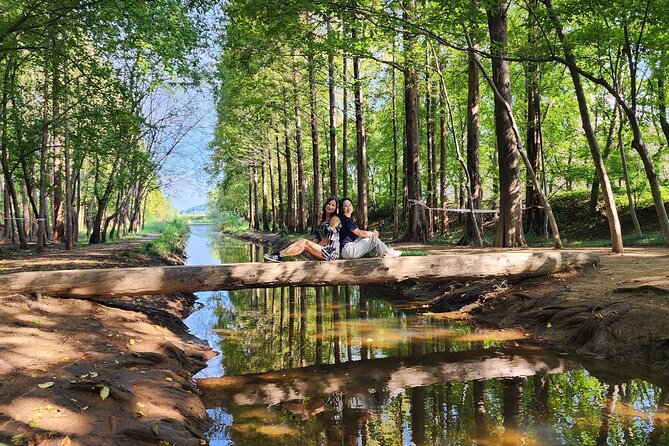
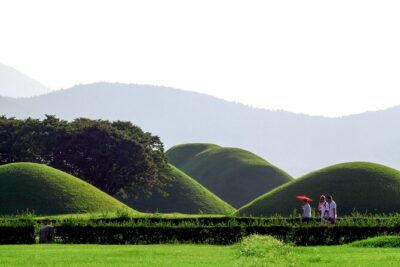
Daereungwon is one of the most memorable places in central Gyeongju. Large grassy burial mounds rise across the grounds, marking the tombs of ancient kings and nobles. Their size gives you a physical sense of the wealth and authority held by Silla’s ruling class.
This is an easy site to appreciate even if you are not a specialist. The mounds are bold, simple, and spread through open space. Your guide can explain how these tombs differ from ordinary graves and why they matter to Gyeongju’s identity.
The listed visit lasts about an hour. Daereungwon is also a good place for family photographs, and Jason has been praised for taking pictures throughout the day and sending them promptly. That small service can be useful when one person would otherwise be left out of every group shot.
Admission is listed separately at ₩3,000 per person. Add that fee to your budget, along with the second ₩3,000 charge later in the day.
Cheomseongdae, an ancient observatory in an open setting
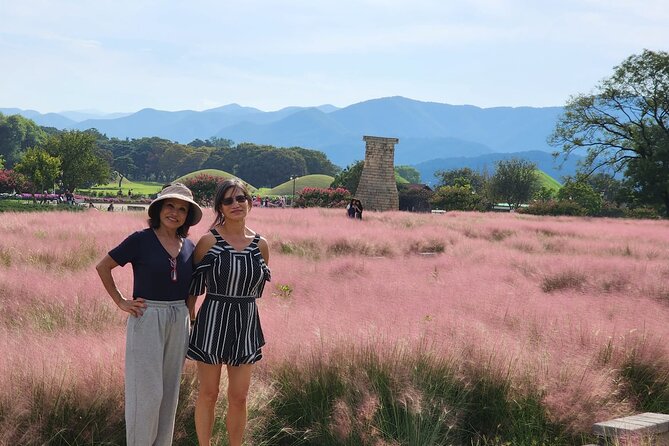
Cheomseongdae is a compact stop, but it carries unusual importance. It is described as the world’s oldest surviving astronomical observatory, built from 362 stones, a number associated with the days of the year.
You will not spend an hour inside a museum here. The observatory is viewed outdoors, and the guide supplies the explanation that makes the small stone tower meaningful. It is a good change of pace after the tomb complex, with room to walk and take photographs.
Admission is listed as free. Because the stop is open-air, check the weather and wear shoes suited to a full day outside. One direct piece of advice from the tour experience is simple: bring good shoes and prepare for a long day.
Donggung Palace and Wolji Pond, best saved for atmosphere
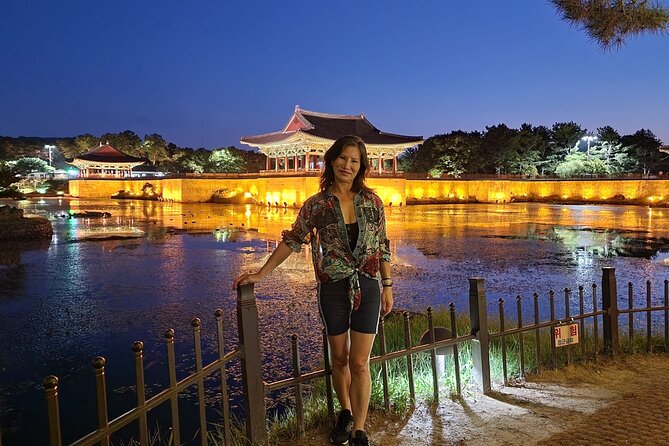
Donggung Palace and Wolji Pond is a former Silla royal site built in 674 under King Munmu. The pond was designed as part of a palace complex, and its water, pavilions, and reconstructed structures give the stop a more theatrical feel than the tombs or observatory.
This is often the most atmospheric part of the central Gyeongju route, especially when the palace is illuminated after dark. Lily has arranged evening visits that made the lit palace especially memorable. If your timing allows, ask about seeing this site later in the day.
The stop is listed at one hour, with admission charged separately at ₩3,000 per person. Crowds and traffic can affect the order of the itinerary, especially during Chuseok or other holidays. Lily and Arthur have both been praised for changing the schedule when roads or sites became crowded, so flexibility is a real advantage here.
Gyeongju National Museum, the useful final chapter
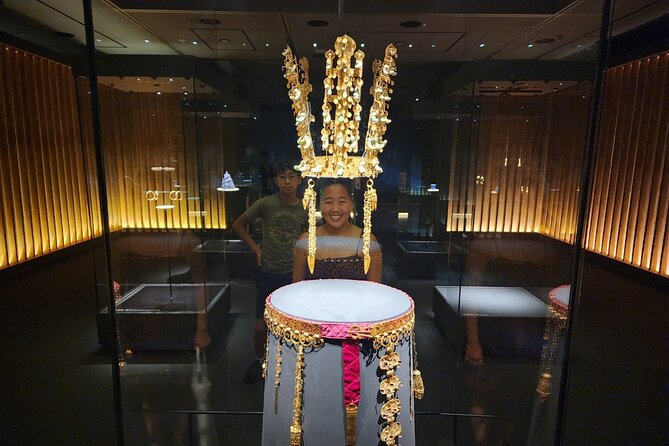
The Gyeongju National Museum gives you a chance to put the outdoor monuments into context. Its displays include objects unearthed in and around Gyeongju, with exhibits connected to Silla culture and royal life.
I like ending with the museum because it helps explain what you have already seen. After Bulguksa, the grotto, tombs, and palace grounds, authentic artifacts can make the earlier stops easier to understand.
The museum visit is listed at one hour and admission is free. It may be the most valuable stop for anyone who wants more than photographs. Your guide can point out important objects and explain how they relate to the sites visited earlier, though the amount of time available will depend on traffic and how long your group spends elsewhere.
The real cost: $186.50 per person
At $186.50 per person, this is not a budget tour. The price makes more sense for a small group that values private transport, a dedicated guide, and a full day of sightseeing. For two people, the cost is harder to justify than for a family or group of friends sharing the private experience.
The price includes the professionally qualified guide, pickup and drop-off, an air-conditioned vehicle, fuel surcharge, parking fees, and toll fees. Those transport costs can add up on a long Gyeongju day, particularly if you are coming from outside the city.
You still need to pay for lunch and the two stated admission charges. The listed admissions total ₩6,000 per person. Since the meal wording is unclear, confirm that point before booking.
The strongest value comes from time saved and access to local explanation. You are paying to connect distant sights in one day and to have someone adjust the plan. If you prefer to spend half a day at one temple, browse slowly, or use public buses at a lower cost, this tour may feel too tightly packed.
How the day works for families and mixed groups
The tour has worked well for groups that include children, teenagers, adults, and older relatives. Finn has been praised for staying patient and flexible with a group ranging from children to people in their seventies. Mimi has also been praised for engaging teenagers while adapting to cold and rainy weather.
That said, do not assume every family need will be handled perfectly without a conversation. One serious complaint involved a five-year-old and a ninety-year-old participant, with concerns about bathroom breaks, walking distance, pace, and missed stops. The company response gave a different account of the day and described extra efforts to keep the child comfortable.
The practical lesson is clear: tell the operator about ages, mobility needs, bathroom preferences, meal concerns, and desired walking pace before the tour. Also agree on whether the guide will walk with you at every stop or wait nearby while you explore.
Driving time, weather, and crowded holidays
This is a road-based tour. One account puts the total time in the car at roughly 3 to 4 hours, depending on traffic and starting point. That is not a flaw if you want to see several distant sites, but it does shape the day.
The vehicle is air-conditioned, which matters during Korea’s hot and humid weather. One guide also used a microphone so people seated at the back could hear the commentary clearly. Pickups can be early, and one guide accommodated a ferry-port schedule and even made a Busan detour at the group’s request, but you should confirm any unusual route before booking.
Holiday traffic can be heavy. Chuseok and major local events may change the order of stops or reduce the time available at some places. A private guide gives you more control than a fixed group schedule, but no guide can remove traffic or crowds.
Who should book this private tour?
I would choose this tour if you want to see Gyeongju’s major sites in one organized day and prefer explanation to independent sightseeing. It suits first-time visitors, families, small groups, history fans, and anyone staying in Busan or another nearby base who does not want to arrange several transfers.
It is also a good match if you want a local meal, help with photographs, and conversation about both old Korea and daily life today. Several guides have been praised for making the day personal rather than delivering a stiff script.
I would hesitate if you dislike long drives, need a slow schedule, or want to study every museum display in detail. Seven stops in 8 to 9 hours requires reasonable efficiency. The route is broad, not leisurely.
Should you book it?
Book this tour if your priority is maximum coverage with private guidance. Bulguksa, Seokguram, Daereungwon, Cheomseongdae, Donggung Palace, Wolji Pond, and the National Museum form a strong introduction to Gyeongju, and guides such as Jason, Lily, Joy, Finn, Cynthia, and Eunhee have shown the personal touch this format can provide.
Before booking, confirm the lunch cost, pickup location, walking expectations, and whether you want guided visits or free time at each site. If those details suit your group, the $186.50 price can be fair for the convenience and coverage. If not, a slower independent visit may give you more breathing room.
FAQ
How long does the Gyeongju tour last?
The tour lasts approximately 8 to 9 hours.
What sites are included?
The route includes Bulguksa Temple, Seokguram Grotto, Hongsi Hanjeongsik, Daereungwon Tomb Complex, Cheomseongdae Observatory, Donggung Palace and Wolji Pond, and Gyeongju National Museum.
Is the tour private?
Yes. Only your group participates. The small private option accommodates 1 to 7 people, and a mid-sized private option is available for 8 to 15 people.
Is pickup and drop-off included?
Yes. Pickup and drop-off are included at selected locations.
Is the guide English-speaking?
Yes. The tour includes an English-speaking guide.
Is lunch included in the price?
The route includes a stop at Hongsi Hanjeongsik, but the formal inclusions state that meals are not included. Confirm the meal arrangement before booking.
What entrance fees must I pay?
Daereungwon Tomb Complex lists an admission fee of ₩3,000 per person. Donggung Palace and Wolji Pond also lists an admission fee of ₩3,000 per person.
Are Bulguksa, Seokguram, Cheomseongdae, and the National Museum free?
The provided tour details list admission as free for those four stops.
What is included besides the guide?
The tour includes an air-conditioned vehicle, fuel surcharge, parking fees, toll fees, and pickup and drop-off.
Can I cancel for a full refund?
Yes, if you cancel at least 24 hours before the experience start time. Cancellations or changes made within 24 hours are not refunded or accepted.
Recently added around Gyeongju
- From Daegu: Gyeongju UNESCO Tour 7 Highlights with Bulguksa★ 4.6 · 5 reviews
- From Busan: Busan & Gyeongju One Day Tour★ 5.0 · 5 reviews
- UNESCO Listed Historic Sites in Gyeongju National Park★ 5.0 · 5 reviews
- Gyeongju Best Customized Private Tour with Tourguide★ 5.0 · 6 reviews
- Busan: 7 Highlights Gyeongju City One Day Tour★ 4.9 · 10 reviews
- Private World Heritage Gyeongju Taxi Tour★ 5.0 · 12 reviews
- Gyeongju: Private Car Charter Taxi Tour★ 5.0 · 37 reviews
- Guided Car Tour in Geyongju with a Local Guide★ 5.0 · 38 reviews
Gyeongju Tours, compared.
Gyeongju UNESCO sites Private tour with licensed tour guide
Read the review →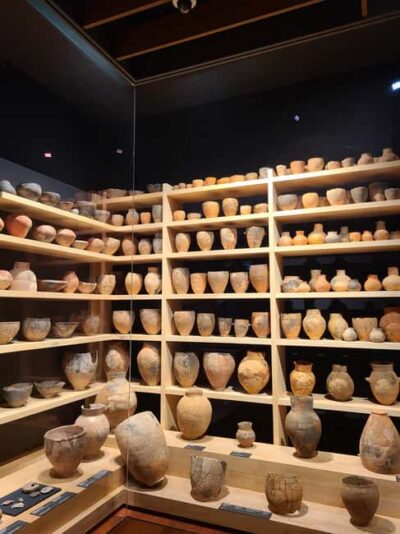
Gyeongju UNESCO Legacy Tour with National Museum
Read the review →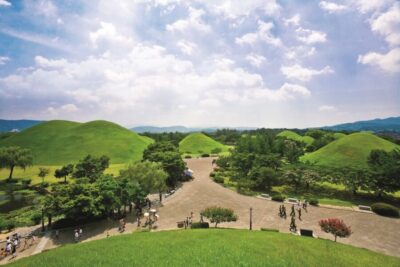
UNESCO Heritage Tour Including Bulguksa Temple
Read the review →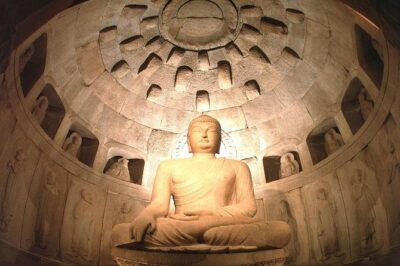
Gyeongju UNESCO World Heritage Sites and History Full-Day Tour with Lunch
Read the review →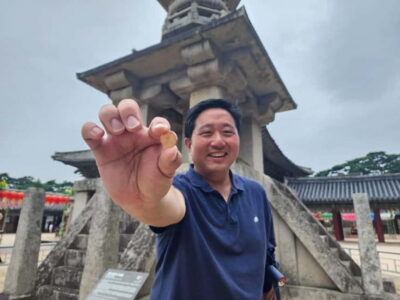
Full day Private Gyeongju UNESCO Heritage Tour : a glimpse into Silla
Read the review →
Browse the lists this tour appears in