
Reviewed · GYEONGJU TOURS
Busan: 7 Highlights Gyeongju City One Day Tour
Gyeongju packs royal tombs, ancient stonework, old village lanes, trendy food streets, and a grand wooden bridge into one very busy day. The best part is the contrast: you can study Silla-era monuments in the morning, then snack on 10 won bread in Hwangnidan-gil soon after.
I like the Busan round trip, which saves you the trouble of arranging trains and local transport, and I like the guides’ friendly, practical approach. Leo, named by one happy participant, was especially good at explaining the history and pointing out photo spots. The trade-off is a full schedule, with traffic and weather able to shift the timing.
Key points to know before booking
- Seven major stops in one day: See Bulguksa, Daereungwon, Hwangnidan-gil, Cheomseongdae, Gyochon Traditional Village, Woljeonggyo, and, from September 15, 2025, Daewangam Suspension Bridge.
- A useful Busan base: Morning pickup is offered at three Busan meeting points, with the day ending back at Haeundae or Seomyeon Station depending on your booking.
- History with a modern break: Ancient tombs and temples share the day with cafes, shops, local snacks, and Korean photo spots.
- Good guide support: The tour includes an English-speaking guide and driver. Guides may also speak Chinese and Korean.
- Bring extra money for food: Meals and drinks are not included, and Daereungwon admission is also separate.
- Plan for walking and weather: The tour is not suitable for wheelchair users or people with heart problems, and baby seats are not available.
Why Gyeongju makes sense as a day trip from Busan
Gyeongju is one of South Korea’s most rewarding history stops, but getting around its spread-out sights can take planning. This tour solves the basic problem by collecting you in Busan, handling the driving, and linking several major places in one route.
You will not see every corner of Gyeongju. That is not the point. This is a highlights tour for someone who wants a strong first look at the city without changing hotels or figuring out regional buses.
The day moves between different periods of Korean history. Bulguksa introduces Buddhist Silla, Daereungwon shows how Silla royalty was buried, and Gyochon Traditional Village shifts the focus to Joseon-era homes and family life. Cheomseongdae and Woljeonggyo add two of the city’s most photographed landmarks.
I like that the route is not only a parade of monuments. Hwangnidan-gil gives you time for food and shopping, while the village streets and bridge offer a slower visual change of pace. You get history, local flavor, and plenty of chances to take photographs.
The $47 price is strong value if you would otherwise pay for intercity transport, taxis, and separate admission fees. It is less attractive if you prefer to linger for an hour at one site or set your own pace. The tour earns its value through transportation and organization, not through included meals.
A few more Gyeongju half-days to weigh up
- From Busan: Busan & Gyeongju One Day Tour
★ 5.0 · 5 reviews - Busan: Gyeongju Guided Day Trip to Three Kingdoms Capital
★ 4.8 · 1,925 reviews - Mt. Seorak+Nami Island+Garden of Morning Calm Day Trip from Seoul
★ 5.0 · 959 reviews
The opening stop: Daewangam Suspension Bridge and sea views
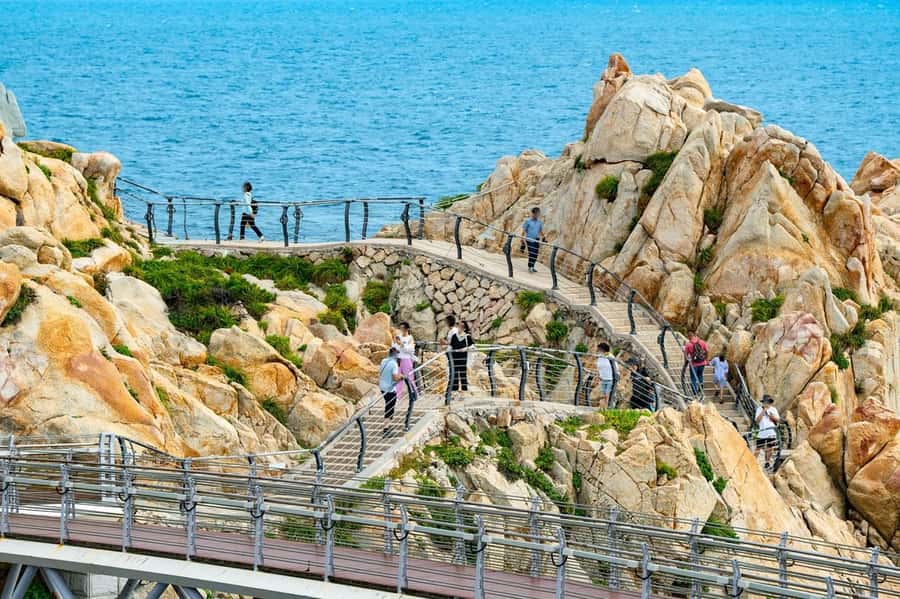
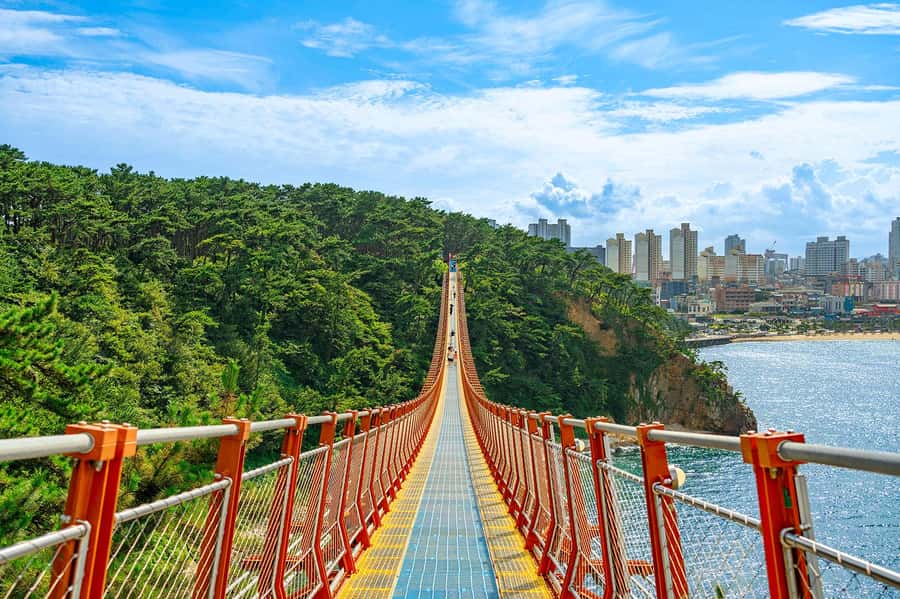
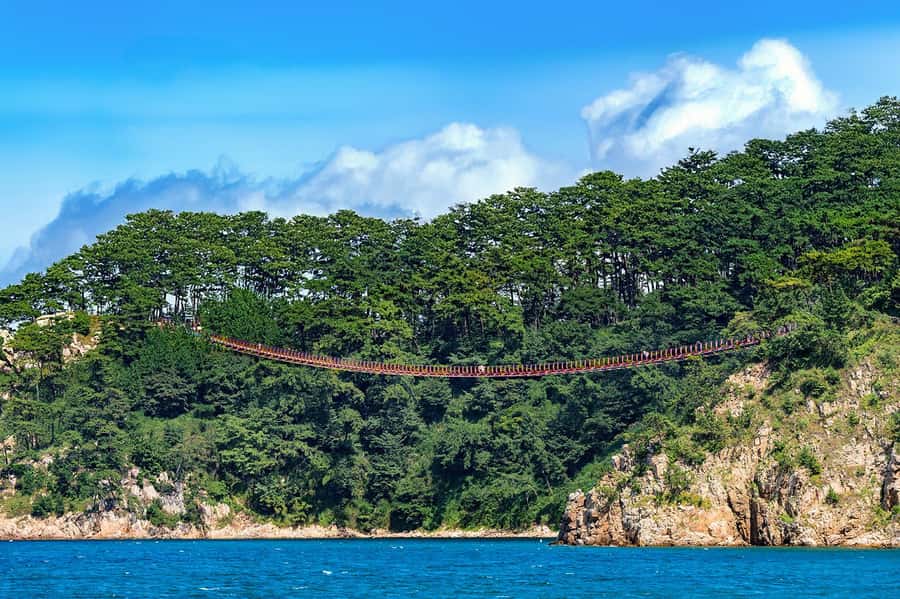
From September 15, 2025, the morning route includes Ulsan Daewangam Suspension Bridge instead of Seokguram Grotto. This is an important change to check before you book, especially if Seokguram is high on your wish list.
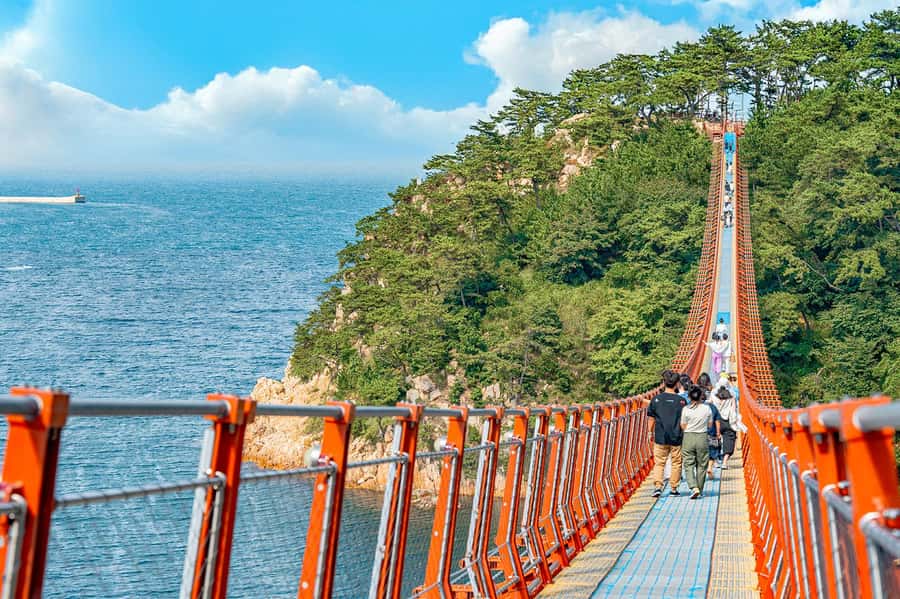
Daewangam offers a very different start from the inland historical sites. You cross a suspension bridge surrounded by rocks and sea, with the setting designed for dramatic views and photographs. I would expect this stop to feel more active and exposed than a temple visit, so comfortable shoes and weather protection are sensible.
The bridge also helps break up the long ride from Busan. You begin with scenery and a little thrill before turning toward Gyeongju’s older monuments.
The exact visit time can change with traffic and weather. The route can also be adjusted slightly, and the final return time is not fixed. Keep your evening in Busan flexible rather than booking a tight dinner reservation or evening train.
Bulguksa: stone pagodas and Silla Buddhist art
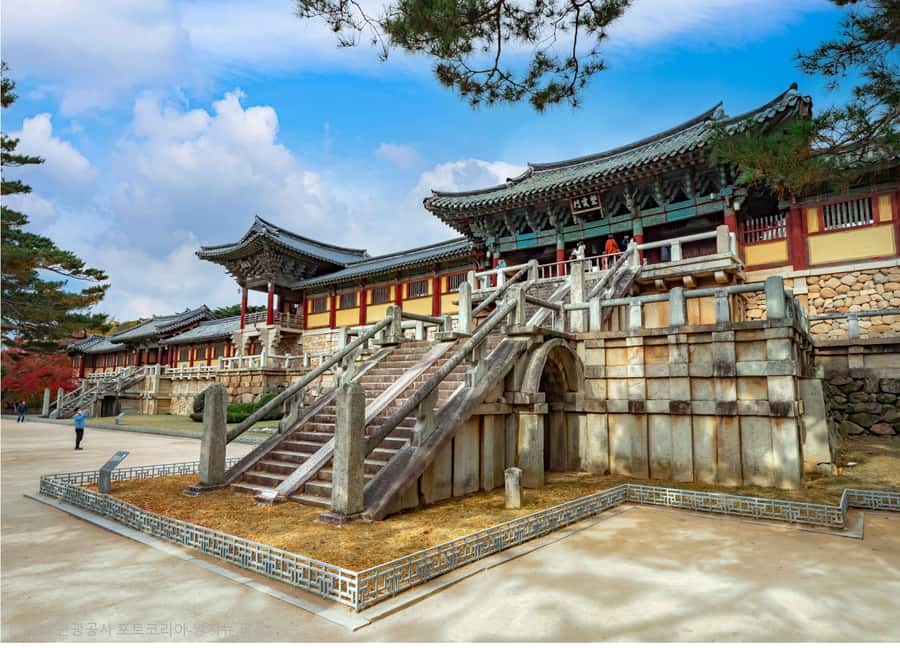
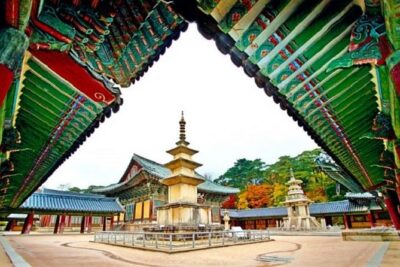
Bulguksa sits on Tohamsan and is the day’s major temple stop. Its importance is not just visual. The site holds six National Treasures, including the Dabotap and Seokgatap stone pagodas.
Dabotap has a fun modern connection: its design appears on South Korea’s 10 won coin. That small detail gives you something concrete to look for as you study the stonework.
I would give Bulguksa your full attention. This is the stop where a guide adds real value, since the meaning of the structures and the differences between the pagodas are easy to miss if you simply walk around taking pictures.
The temple visit also introduces a recurring theme of the day: Silla builders worked with stone, wood, and religious ideas on a grand scale, while later generations preserved, rebuilt, and interpreted those places. Your guide can connect what you see here with the tombs and observatory later in the afternoon.
Because this is a one-day route, do not expect unlimited time at Bulguksa. If temple architecture is your main reason for visiting Gyeongju, an independent visit with more time may suit you better. For a first visit, though, this stop gives you a strong foundation.
Hwangnidan-gil: Gyeongju’s modern food stop
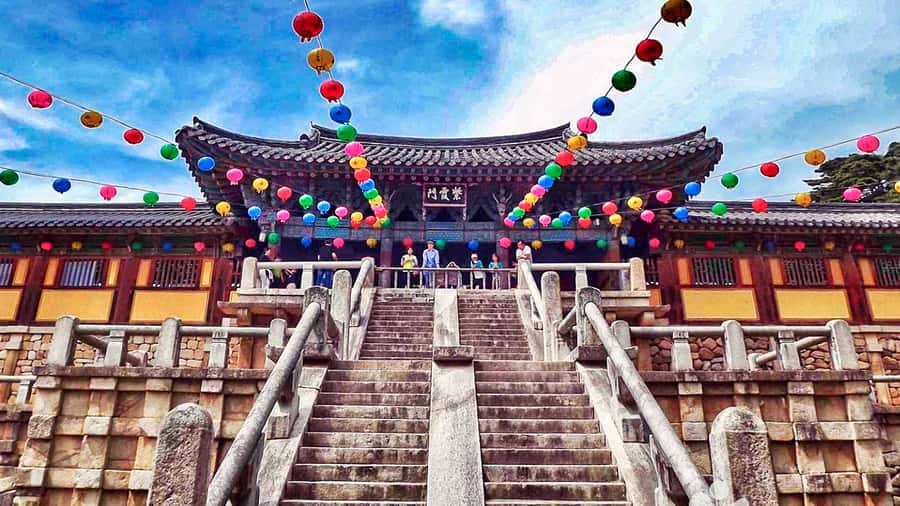
After the formal history of Bulguksa, Hwangnidan-gil feels like a change of channel. This pedestrian-only street is lined with trendy shops and restaurants, making it one of Gyeongju’s main places for a snack, a coffee, or a little browsing.
The signature bite is 10 won bread, known locally as sibeonppang. It is named for the coin and has become one of the street’s must-try foods. Meals and drinks are not included, so you should carry some Korean won or another accepted payment method for food and personal purchases.
I like this part of the route because it gives you a chance to experience present-day Gyeongju instead of treating the city as an open-air museum only. You can sample a local snack, look at shopfronts, and take photographs without needing to turn the stop into a formal sightseeing exercise.
The drawback is that food time can feel short on a packed route. If you want to sit down for a full meal, ask your guide how much free time you have before ordering. A quick snack is the safer choice if you want to make the next meeting time comfortably.
A different way to spend a day from here:
- Gyeongju UNESCO sites Private tour with licensed tour guide
★ 5.0 · 275 reviews - Private Gyeongju Tour – Explore Gyeongju UNESCO Sites
★ 5.0 · 272 reviews - Busan: Gyeongju UNESCO Legacy Tour with National Museum
★ 5.0 · 172 reviews - Gyeongju UNESCO World Heritage Sites and History Full-Day Tour with Lunch
★ 5.0 · 104 reviews
Daereungwon: walking among Silla royal tombs
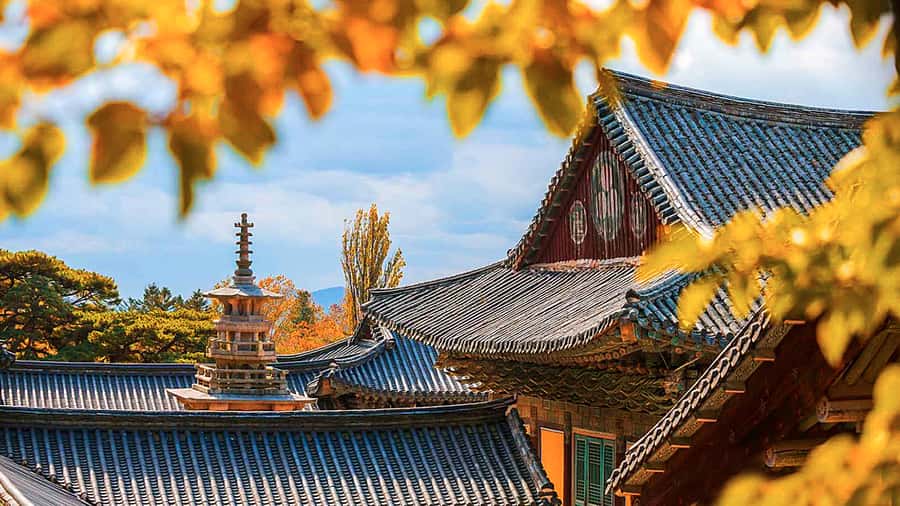
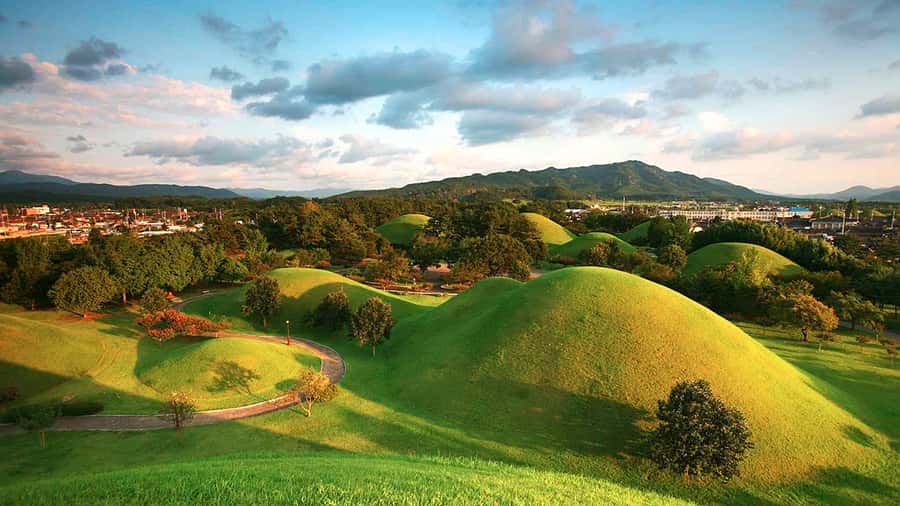
Daereungwon is a complex of Silla-era tumuli, with 23 tombs connected to kings, queens, and nobles. The rounded grassy mounds are not ordinary burial sites. Their solid construction made them difficult for plunderers to enter, helping preserve many objects from the Silla period.
Several of the recovered relics have National Treasure status. Even without seeing every artifact, the scale and placement of the tombs help you understand the power of the people buried here.
The site is also one of the day’s best photography stops. The large mounds create a calm setting, especially when compared with Hwangnidan-gil’s shops and food stalls next door.
There is one cost to note: Daereungwon admission is not included. That is easy to overlook because other attraction admissions are included, so budget for this separate ticket.
The walk should be manageable for many people, but the tour is not suitable for wheelchair users. If you have limited mobility, heart problems, or trouble walking outdoors, this is an important trip to reconsider rather than a minor detail.
Cheomseongdae and the science of Silla
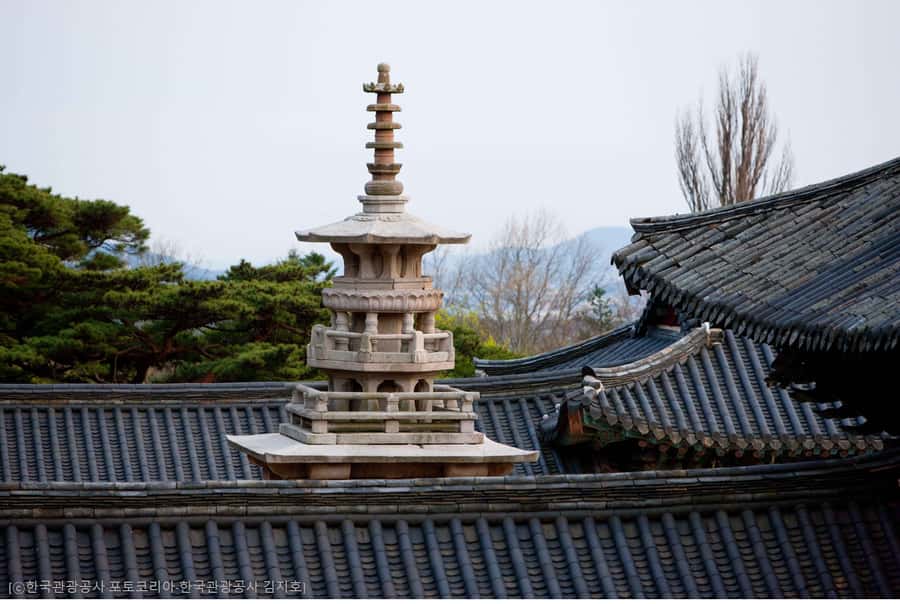
Cheomseongdae is described as the oldest astronomical observatory in Asia. Its simple stone form can look modest beside a temple or palace, but that is exactly why a guide’s explanation matters.
This structure points to the scientific side of Silla society. The day is not only about royal power and Buddhist worship. It also shows careful observation of the sky and the practical importance of astronomy in an early Korean kingdom.
I recommend slowing down here and looking closely at the construction instead of treating it as a quick photo stop. The surrounding area is also useful for pictures, and your guide can help you find good angles.
As with the other open-air locations, weather affects comfort. On a hot day, keep water handy and use the shaded opportunities you find. One participant specifically found the tour comfortable despite intense heat, thanks in part to the guide’s care and clear explanations, but you should still prepare for the conditions.
Gyochon Village and the Choi family story
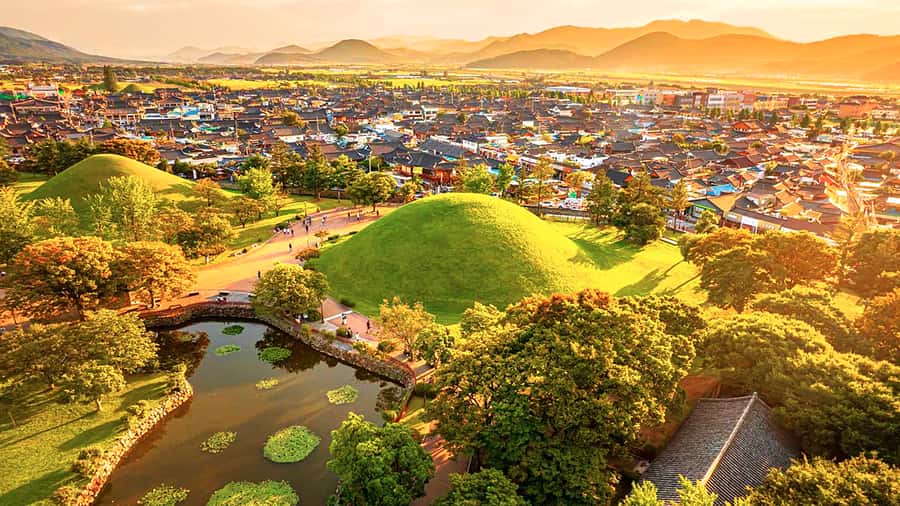
Gyochon Traditional Village brings you into a different chapter of Korean history. Its old hanok houses reflect the Joseon Dynasty, and the area is closely associated with the Gyeongju Choi family.
The Choi family was a wealthy aristocratic household known as the Rich Choi Family. For about 400 years, across twelve generations, they were among the largest landowners in the region. That detail gives the village more weight than a simple collection of attractive old houses.
You can also find Gyeongju Gyo-dong Beopju here, a traditional Korean rice wine brewed and sold in the village. If you are interested in Korean food and drink, this is a more meaningful stop than buying a generic souvenir at a shopping district.
The village is a good place to compare architecture with the earlier Silla sites. At Bulguksa, stone pagodas and temple structures express religious devotion. Here, hanok homes and family traditions show how a powerful household lived during the Joseon period.
The tour does not include meals or private purchases, so any rice wine, snacks, or souvenirs are your responsibility. You will get more from the stop if you leave room in your budget for one small local purchase.
Woljeonggyo: the day’s most atmospheric photo stop
Woljeonggyo sits beside Gyochon Traditional Village and is one of the tour’s most striking structures. The original bridge dates to the Unified Silla period, from AD 676 to 935, before it was destroyed by fire during the Joseon Dynasty.
The bridge was rebuilt in 2018 and is now described as the largest wooden bridge in Korea. Its history includes both loss and reconstruction, which makes the polished structure more interesting than a brand-new attraction with no older story behind it.
This is a peaceful place for photographs and a chance to pause after several information-heavy stops. One participant especially enjoyed seeing the bridge lit up, although lighting conditions depend on the timing of your visit and the day’s schedule.
Woljeonggyo works well as a final major sight because it brings together the tour’s main themes: Silla origins, later damage, careful rebuilding, traditional architecture, and visual appeal. You can take pictures, enjoy the setting, and let the day’s history settle before returning to Busan.
Guides, transport, and the pace of the day
The tour includes an English-speaking guide and driver, plus round-trip transfers between destinations. The vehicle can be a car, van, or coach, depending on how many people book.
That flexibility is useful because Gyeongju’s attractions are spread across the city and nearby areas. You avoid changing buses, searching for taxis, or losing time between sites.
Guide quality matters on a history-heavy day. The feedback available for this experience points to guides who explain clearly, answer questions, and help with photographs. Leo received particular praise for being open, friendly, and attentive to everyone in the group. Another guide was described as fluent in English, Chinese, and Korean.
You should still expect a group tour, not a private guide. The vehicle type and group size are not fixed, and the schedule may change with traffic or weather. Arrive at your selected meeting point at least 5 to 10 minutes early. Late arrivals and no-shows cannot receive a refund.
Pickup takes place at three Busan meeting points in the morning. The tour returns to Busan, with Haeundae Station and Seomyeon Station named as return points depending on the option booked. Hotel pickup and drop-off are not included.
Who should book this $47 Gyeongju tour?
I would choose this tour if you are staying in Busan and want to see Gyeongju in one day without arranging a complicated route. It suits first-time visitors, photographers, history fans, and anyone who likes a clear plan with a guide to explain what the stones, tombs, and buildings mean.
It also works well if you want variety. You will not spend the whole day in temples. You get a coastal bridge, a Buddhist complex, a food street, royal tombs, an astronomical site, a traditional village, and a rebuilt wooden bridge.
I would hesitate if you dislike early starts, group schedules, outdoor walking, or changing plans. The tour is not suitable for wheelchair users or people with heart problems. Infants aged 0 to 2 can ride free on an adult’s lap, but baby seats are not available.
The cancellation policy is friendly: cancel up to 24 hours ahead for a full refund. You can also reserve and pay later, which helps if your Busan plans are still shifting.
Should you book it?
Book this tour if you want an efficient first look at Gyeongju and value transport, historical context, and a guide who can help you find the best photo angles. At $47, it is a sensible deal for a full day of connected sightseeing, especially when you factor in the Busan return transfer and attraction admissions.
Choose another plan if you want long, quiet visits at Bulguksa or Daereungwon, or if you specifically want Seokguram Grotto after September 15, 2025. For most Busan-based visitors with only one free day, this route gives you a generous taste of Gyeongju without making the logistics your problem.
FAQ
Where does the tour start and end?
The meeting point depends on the option you book. Morning pickup is available at three meeting points in Busan, and the tour ends back at the meeting point. Haeundae Station and Seomyeon Station are named as Busan return points.
Is transportation included?
Yes. The experience includes round-trip transfers between destinations, along with an English-speaking tour guide and driver. The vehicle may be a car, van, or coach depending on the number of participants.
Are meals and drinks included?
No. Meals, beverages, and other private expenses are not included. You should budget separately for snacks such as 10 won bread in Hwangnidan-gil.
Is Daereungwon admission included?
No. Admission to the Daereungwon Tomb Complex is specifically excluded. Other attraction admissions are included.
What replaces Seokguram Grotto?
From September 15, 2025, the tour visits Ulsan Daewangam Suspension Bridge instead of Seokguram Grotto.
Can infants or wheelchair users join?
Infants aged 0 to 2 can join free if they sit on an adult’s lap. Baby seats are not available. The tour is not suitable for wheelchair users or people with heart problems.
Recently added around Gyeongju
- From Daegu: Gyeongju UNESCO Tour 7 Highlights with Bulguksa★ 4.6 · 5 reviews
- From Busan: Busan & Gyeongju One Day Tour★ 5.0 · 5 reviews
- UNESCO Listed Historic Sites in Gyeongju National Park★ 5.0 · 5 reviews
- Gyeongju Best Customized Private Tour with Tourguide★ 5.0 · 6 reviews
- Private World Heritage Gyeongju Taxi Tour★ 5.0 · 12 reviews
- Gyeongju: Private Car Charter Taxi Tour★ 5.0 · 37 reviews
- Guided Car Tour in Geyongju with a Local Guide★ 5.0 · 38 reviews
- Gyeongju UNESCO sites Private tour with licensed tour guide★ 5.0 · 275 reviews
Gyeongju Tours, compared.
Gyeongju UNESCO sites Private tour with licensed tour guide
Read the review →
Private Gyeongju Tour – Explore Gyeongju UNESCO Sites
Read the review →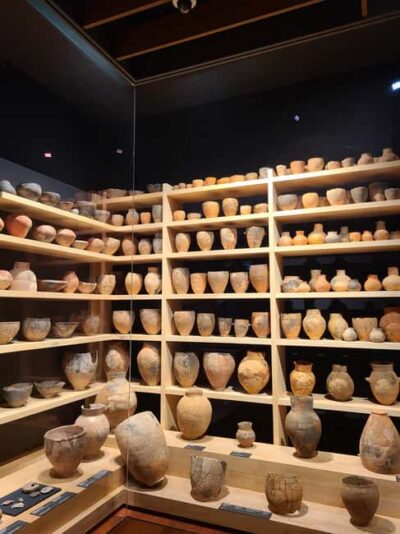
Gyeongju UNESCO Legacy Tour with National Museum
Read the review →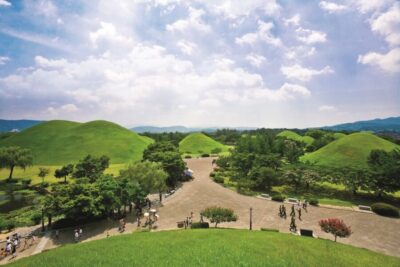
UNESCO Heritage Tour Including Bulguksa Temple
Read the review →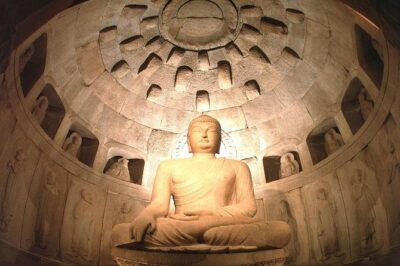
Gyeongju UNESCO World Heritage Sites and History Full-Day Tour with Lunch
Read the review →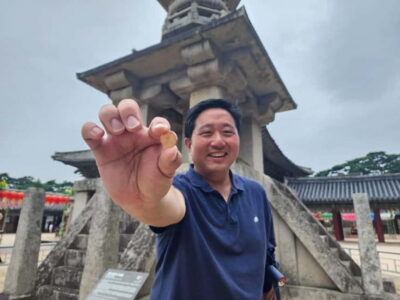
Full day Private Gyeongju UNESCO Heritage Tour : a glimpse into Silla
Read the review →
Browse the lists this tour appears in