
Reviewed · GYEONGJU TOURS
Gyeongju Best Customized Private Tour with Tourguide
Gyeongju packs nearly 1,500 years of Korean history into one very full day. This private tour takes you from the stone Buddha at Seokguram to Silla tombs, a restored royal bridge, palace ruins, and the cafés of modern Hwangnidan-gil.
I like the flexible, no-shopping format, and I like having a certified guide explain why each place matters instead of leaving you to connect the pieces alone. Guide Peter is praised for fluent English, a friendly manner, and adjusting the day for families and solo visitors.
The main drawback is pace. Eight stops in about eight hours leaves little room for lingering, and lunch is not included. You will also pay separate admission for Daereungwon Tomb Complex and Donggung Palace and Wolji Pond.
Key points at a glance
- UNESCO-listed Bulguksa and Seokguram: See Korea’s leading Silla Buddhist sites in one morning.
- Private transport for up to five people: A roomy Palisade, fuel, parking, pickup, and drop-off are included.
- Guide Peter’s flexible approach: He can explain the sites in clear English and adjust the day to suit your group.
- Royal tombs and golden relics: Enter Cheonmachong at Daereungwon to see excavated Silla treasures.
- Old and new Gyeongju together: Pair ancient observatories and palace ruins with cafés, food, and shops on Hwangnidan-gil.
- No forced shopping stops: Your time is spent at the places listed or on an itinerary you arrange with the guide.
What this Gyeongju private tour does well
Gyeongju was the capital of the Silla Kingdom for roughly a thousand years, and this tour gives you a useful first look at that long period without making you change buses or work out separate taxi rides. The route covers major sights in the hills south of town, the tomb district, central Gyeongju, and the royal pond area.
You are not joining a large coach group. Only your party rides in the Palisade, which can hold up to five people. That matters here because the day includes several stops with different moods and walking demands. You can spend more time at a temple if it interests you, or move on when the children have had enough.
The tour is also explicitly no-shopping. That sounds like a small detail, but it protects your limited time in Gyeongju. The guide’s role is to get you to the important places, explain them, and help shape the day around your interests.
Peter is the named guide in the supplied tour details and the guide praised in the available feedback. His strengths include punctuality, fluent English, humor, and a willingness to work with both families and solo visitors. One solo customer had booked while staying in Daegu for a conference and ended up with a private day, while families appreciated Peter’s support and flexibility.
The tour has a five-star rating from six reviews, so the sample is small. Still, the same themes appear more than once: a pleasant guide, clear explanations, a comfortable day for adults and children, and help choosing food. One Italian-speaking couple especially appreciated Peter’s contemporary explanations and his suggestion of cold noodles. Lunch remains your responsibility, so treat food help as a useful bonus rather than part of the formal package.
A few more Gyeongju half-days to weigh up
- Gyeongju UNESCO sites Private tour with licensed tour guide
★ 5.0 · 275 reviews - Private Gyeongju Tour – Explore Gyeongju UNESCO Sites
★ 5.0 · 272 reviews - Busan: Gyeongju UNESCO Legacy Tour with National Museum
★ 5.0 · 172 reviews
Bulguksa Temple introduces Silla Buddhism
Your first major stop is Bulguksa, usually reached after the 9 a.m. start. Allow about 1 hour and 30 minutes here. Admission is listed as free.
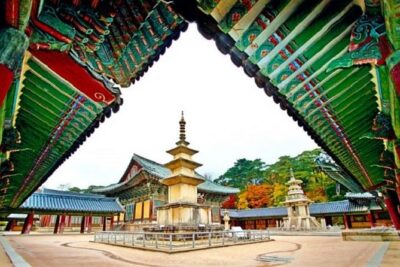
Bulguksa was built during the Silla Dynasty, when Buddhism was the state religion. Its purpose was not simply to provide a place for worship. The temple was intended to represent a Buddhist country, and its builders used the finest construction skills available at the time.
That context makes the site more rewarding than a quick photo stop. Ask your guide to point out how the temple’s design expresses Silla ideals and how its stonework has survived across many centuries. You will get more from the courtyards and structures if you understand the religious and political ambition behind them.
Bulguksa and Seokguram were designated together as Korea’s first UNESCO World Heritage Site in 1995. The tour gives you enough time to see Bulguksa without reducing the morning to a rushed walk-through, though the overall schedule means you should be ready to keep moving.
Wear shoes suited to walking and arrive ready for an active day. The supplied information says most people can participate, but it does not promise a fully step-free route.
Seokguram and the Silla Buddha
From Bulguksa, the tour continues to Seokguram for about one hour. Admission is listed as free.
Seokguram is an artificial stone cave created in the eighth century. Inside, a central Buddha represents the height of Silla Buddhist art. The cave was carefully designed around the statue, so the structure itself matters as much as the image you see within it.
This stop has a different feel from Bulguksa. Bulguksa is an open temple complex with buildings, stone features, and courtyards. Seokguram is more focused, with the Buddha as the clear center of attention. A guide helps explain why the cave was built and how its design serves the statue.
You should also know that the two UNESCO sites are not interchangeable. Seeing one does not mean you have seen the other. Including both in the same morning is one of the strongest reasons to choose this tour over a basic city sightseeing route.
Daereungwon reveals Gyeongju’s royal tombs
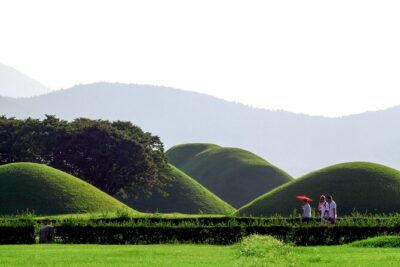
Daereungwon Tomb Complex receives about 1 hour and 30 minutes. The park contains 23 large and small burial mounds gathered together, a striking reminder that central Gyeongju was once the heart of Silla power.
The key stop is Cheonmachong, described as the only tomb in Daereungwon to have been opened for viewing. It is thought to date from the late fifth or early sixth century. Excavations found gold crowns, hats, belts, and gilt-bronze shoes placed on the deceased.
That detail changes how you look at the grassy mounds. They are not just pleasant hills in a city park. They are burial chambers with direct links to Silla rulers and elite life. Inside Cheonmachong, the displayed objects help you picture the wealth and ceremony associated with these tombs.
Admission here is not included. The tour details do not give the current fee, so check the price when booking or bring a little extra for this stop. Because the tour includes 90 minutes, you should have time for both the opened tomb and the surrounding park rather than only a quick exterior view.
A different way to spend a day from here:
- Gyeongju: UNESCO Heritage Tour Including Bulguksa Temple
★ 4.8 · 104 reviews - Gyeongju UNESCO World Heritage Sites and History Full-Day Tour with Lunch
★ 5.0 · 104 reviews - Gyeongju: Private Car Tour with a Licensed Tour Guide
★ 5.0 · 85 reviews - Full day Private Gyeongju UNESCO Heritage Tour : a glimpse into Silla
★ 5.0 · 60 reviews
Woljeonggyo Bridge at a slower half-hour stop
Woljeonggyo Bridge is a 30-minute visit and admission is free. The original bridge was wooden and dates to the Silla period. The version you see today was restored after a ten-year process of research, testimony, and reconstruction, completed in April 2018.
The bridge is now known for its carefully reproduced form and for appearing in Korean dramas and films. That gives the stop a different appeal from the temples and tombs. You are looking at a modern reconstruction, but one based on an older Silla design.
Thirty minutes is enough for photographs and a look at the structure. It is not enough for a long visit, and that is probably fine. The bridge works well as a visual change between the archaeological sites and the more social parts of the afternoon.
Hwangnidan-gil adds present-day Gyeongju
The tour spends about one hour on Hwangnidan-gil, the newest-feeling area on the route. It refers to the Hwangnam-dong district, where cafés, restaurants, souvenir shops, and small businesses now occupy the lanes.
This is where you see how Gyeongju is changing. Ancient sites do not sit apart from daily life here. A short ride can take you from a royal tomb to a coffee shop or a restaurant with a modern interpretation of Korean food.
Use the hour according to your priorities. You can browse souvenirs, look for a café, or ask Peter about local food. The schedule does not include lunch, so this is a sensible place to eat if your group wants a meal. The available tour feedback specifically mentions a satisfying authentic Korean lunch and cold noodles, but those meals were not included in the tour price and should not be treated as guaranteed.
Hwangnidan-gil may appeal most to people who want more than monuments. If your ideal day is only temples and museums, you may prefer to shorten this stop through the itinerary customization. If you want a feel for current Gyeongju, keep the full hour.
Cheomseongdae connects farming, science, and power
Cheomseongdae takes about 30 minutes, with no admission charge. It is generally dated to the seventh century and is described as the oldest observatory in Asia.
The structure is one of Gyeongju’s best-known landmarks. Its purpose is linked to observing the movement of the sky, working out the farming calendar, and reading signs that might suggest good or bad fortune for the country.
Your guide can help you see the building as more than an unusual stone tower. In Silla Korea, astronomy had practical value for farming and political life. Watching the heavens was tied to the welfare of the kingdom.
Half an hour is suitable for the site itself, though you may want longer if you are interested in photographs or the surrounding grounds. This is another place where a private guide helps you decide how much time to spend.
Gyochon Village shows another side of old Gyeongju
Gyeongju Gyochon Traditional Village receives about one hour. The village is associated with a wealthy family that preserved its fortune for 12 generations and produced national ministers for nine generations through a strong focus on study.
The available activities include earthenware making, rice-cake making, traditional tea, hanbok, traditional sauces, rituals, and quilting. The tour details do not say that any of these activities are included, scheduled, or available every day, so ask Peter what is operating when you visit.
Even without joining a workshop, the village gives the day a more personal scale. Temples, tombs, and palace remains tell the story of kingdoms. Gyochon helps you think about family life, education, wealth, and local tradition.
One hour is enough for a walk and a look around. If a hands-on activity matters to you, customization may be important. You should confirm the timing and any extra cost before counting on one.
Donggung Palace and Wolji Pond finish with royal atmosphere
The final listed stop is Donggung Palace and Wolji Pond, with about one hour of sightseeing. Admission is not included.
The site once formed part of the Silla royal complex. Donggung was a detached palace connected with the crown prince, and the pond area was used for banquets and receptions when the kingdom held important events or welcomed honored visitors.
The pond gives the closing stop a reflective quality after a busy day. You see where royal celebrations took place, not just where people lived and worked. Ask your guide to connect the pond to the wider Silla palace district and to explain its role in court life.
Since the tour ends back at the meeting point, confirm the exact return plan with the guide. The listed start and end point is 1038 Poseok-ro, Gyeongju, Gyeongsangbuk-do, and the published start time is 9 a.m.
Does the $396 group price offer good value?
The price is $396 per group of up to five people, not per person. For a full group of five, that works out to $79.20 per person before the two separate admission fees and lunch. For two people, the effective cost is much higher, but you are paying for a private vehicle, a certified guide, fuel, parking, pickup, and drop-off.
That package can make sense if you value time and comfort. Gyeongju’s key sights are spread across different parts of the city, and arranging the same route independently would require careful planning and several transport decisions. The Palisade also gives your group a private base between stops.
The price is less attractive if you are a solo budget visitor who is happy using public transportation and setting your own pace. You should also budget separately for Daereungwon and Donggung Palace and Wolji Pond, since those fees are excluded. Lunch is excluded as well.
The no-shopping promise adds real value for people with only one day. You are not losing part of the schedule to commercial stops, and you can use the guide’s local suggestions for food or adjust the route to fit your interests.
Who will get the most from this private day?
I would choose this tour if you are visiting Gyeongju for one day, want the major sights covered, and prefer explanations in English. Families are a good match because the private format allows the guide to adjust the rhythm for children and adults. The available feedback also shows that solo visitors can benefit when the guide provides personal attention.
It suits first-time visitors better than repeat visitors who already know the temples and tombs. The itinerary is broad, so you get a solid overview rather than a narrow look at one period or district.
Couples and small groups should compare the private price with the cost of separate transport. The larger your group, the better the per-person value becomes. You should also tell the provider before the day if Bulguksa, food, photography, or traditional activities matter most, since the itinerary can be customized.
Practical details before you reserve
Pickup and drop-off are included, and the tour uses a roomy Palisade. Fuel and parking are covered, so you do not need to handle those costs during the day. The activity is private, and only your group participates.
Confirmation is sent within 48 hours of booking, subject to availability. The tour is booked, on average, 49 days in advance, which suggests that planning early is sensible if your dates are fixed.
Service animals are allowed, and the meeting area is near public transportation. The information says most people can participate, but it does not provide detailed mobility guidance for every stop. If anyone in your group has specific walking needs, ask before booking.
Free cancellation is available up to 24 hours before the local start time for a full refund. Cancellations or changes made less than 24 hours before the start are not refunded or accepted.
My recommendation: book it for a first Gyeongju visit
Book this private Gyeongju tour if you want a well-covered first day, private transport, no shopping detours, and a guide who can explain the Silla sites in clear English. The mix is especially good: UNESCO temples in the morning, royal tombs and a restored bridge, then contemporary food and cafés, a traditional village, and a palace pond.
I would hesitate only if you prefer slow visits, want to explore every site independently, or are traveling alone on a strict budget. Eight stops make for a productive day, not a leisurely one.
For most small groups with limited time, the cost buys convenience and useful context. Ask Peter to adjust the balance between monuments, food, Hwangnidan-gil, and traditional activities, then bring extra money for lunch and the two admission fees.
FAQ
How long is the Gyeongju private tour?
The tour lasts approximately 8 hours and starts at 9 a.m.
How many people can join the private tour?
The price covers one group of up to 5 people. Only your group participates.
Is hotel pickup included?
Yes. Pickup and drop-off are included, and the certified guide accompanies your group from your place, such as a hotel, to the tour sites.
Which admissions are not included?
Admission to Daereungwon Tomb Complex and Donggung Palace and Wolji Pond is not included. The supplied details list admission as free for Bulguksa, Seokguram, Woljeonggyo Bridge, Hwangnidan-gil, Cheomseongdae, and Gyochon Village.
Is lunch included?
No. Lunch is not included in the tour price. The guide may suggest or take you to a local restaurant, but meals are an extra cost.
Can the itinerary be customized?
Yes. The tour allows itinerary customization, so you can discuss your preferred stops and priorities with the guide.
What is the cancellation policy?
You can cancel at least 24 hours before the local start time for a full refund. Cancellations or changes made less than 24 hours before the start are not refunded or accepted.
Recently added around Gyeongju
- From Daegu: Gyeongju UNESCO Tour 7 Highlights with Bulguksa★ 4.6 · 5 reviews
- From Busan: Busan & Gyeongju One Day Tour★ 5.0 · 5 reviews
- UNESCO Listed Historic Sites in Gyeongju National Park★ 5.0 · 5 reviews
- Busan: 7 Highlights Gyeongju City One Day Tour★ 4.9 · 10 reviews
- Private World Heritage Gyeongju Taxi Tour★ 5.0 · 12 reviews
- Gyeongju: Private Car Charter Taxi Tour★ 5.0 · 37 reviews
- Guided Car Tour in Geyongju with a Local Guide★ 5.0 · 38 reviews
- Gyeongju UNESCO sites Private tour with licensed tour guide★ 5.0 · 275 reviews
Gyeongju Tours, compared.
Gyeongju UNESCO sites Private tour with licensed tour guide
Read the review →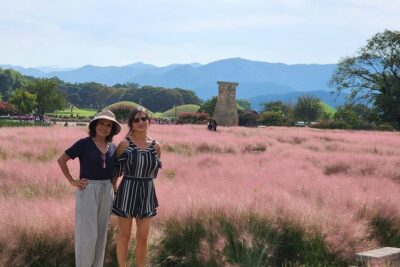
Private Gyeongju Tour – Explore Gyeongju UNESCO Sites
Read the review →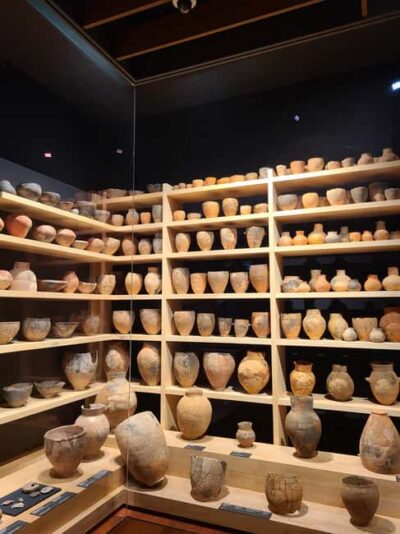
Gyeongju UNESCO Legacy Tour with National Museum
Read the review →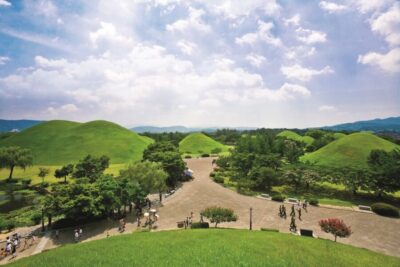
UNESCO Heritage Tour Including Bulguksa Temple
Read the review →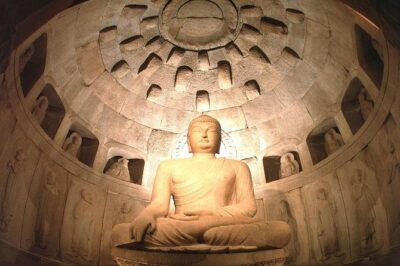
Gyeongju UNESCO World Heritage Sites and History Full-Day Tour with Lunch
Read the review →
Full day Private Gyeongju UNESCO Heritage Tour : a glimpse into Silla
Read the review →
Browse the lists this tour appears in