
Reviewed · GYEONGJU TOURS
From Busan: Busan & Gyeongju One Day Tour
Gyeongju packs a thousand years of Korean history into one long day, while Busan supplies the color and sea views. This tour links both places without making you sort out intercity transport, which is the main reason to consider it. You’ll see Gamcheon Culture Village, ancient royal tombs, traditional homes, and Cheongsapo’s train tracks beside the coast.
I like the small group of up to eight, since that gives the guide room to answer questions and help with photos. I also like the mix of famous sights and free time, especially around Hwangnidan-gil, where you can eat and browse rather than simply follow a flag.
The tradeoff is the clock. With about three hours of van travel and many stops, this is a brisk overview rather than a slow study of Gyeongju. The route also involves plenty of walking and is not suitable for people with mobility impairments.
Key points to know before booking
- Gyeongju’s major sights in one day: See Daereungwon, Cheomseongdae, Hwangnidan-gil, Woljeonggyo Bridge, and Gyochon Traditional Village.
- A colorful start in Busan: Spend about an hour at Gamcheon Culture Village, with time for photos, murals, sculptures, shops, and side streets.
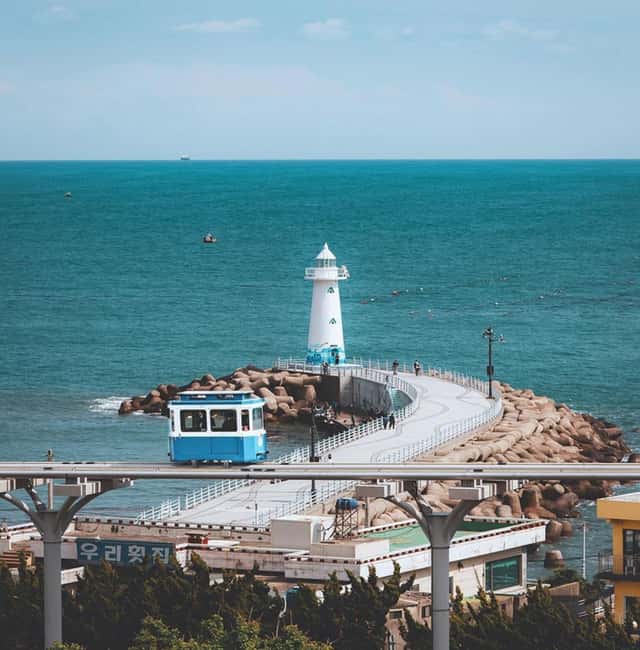
- Coastal scenery at Cheongsapo: Finish near Haeundae Blue Line Park, where trains, the sea, Sky Capsule, and buildings create a popular photo setting.
- Small-group transport: Ride in a comfortable vehicle with no more than eight people, departing from Busan Station or Seomyeon.
- A guide-led history lesson: English-speaking guides such as Zoe and Pada have been praised for clear explanations, humor, personal attention, and photography help.
- A long but efficient day: The tour lasts about 11 hours, with meals and drinks purchased separately.
Why this Busan and Gyeongju pairing works
Busan and Gyeongju offer very different views of South Korea. Busan is a modern port city with steep neighborhoods, beaches, cafés, and bold public art. Gyeongju was the capital of the Silla kingdom, one of Korea’s Three Kingdoms, and its central sights are spread across a broad area.
That distance is the problem. You can reach Gyeongju independently, but a one-day visit requires planning transport, choosing which sites matter most, and finding your way between them. This tour handles the transfers in a van and gives you an English-speaking guide to explain what you are seeing.
I see this as a strong first look at the Busan region. You will not have time to study every museum or linger at each historic site, but you will come away with a useful sense of how old Gyeongju and modern Busan fit together.
The small-group format matters here. A group capped at eight is easier to move through narrow lanes than a large coach party, and it gives you a better chance to ask about a tomb, mural, or local custom. The guides also help with photographs. Pada was especially praised for taking many couple photos, while Zoe was described as warm, funny, and good at making historical stops feel relaxed.
A few more Gyeongju half-days to weigh up
- Busan: 7 Highlights Gyeongju City One Day Tour
★ 4.9 · 10 reviews - Busan: Gyeongju Guided Day Trip to Three Kingdoms Capital
★ 4.8 · 1,925 reviews - Mt. Seorak+Nami Island+Garden of Morning Calm Day Trip from Seoul
★ 5.0 · 959 reviews
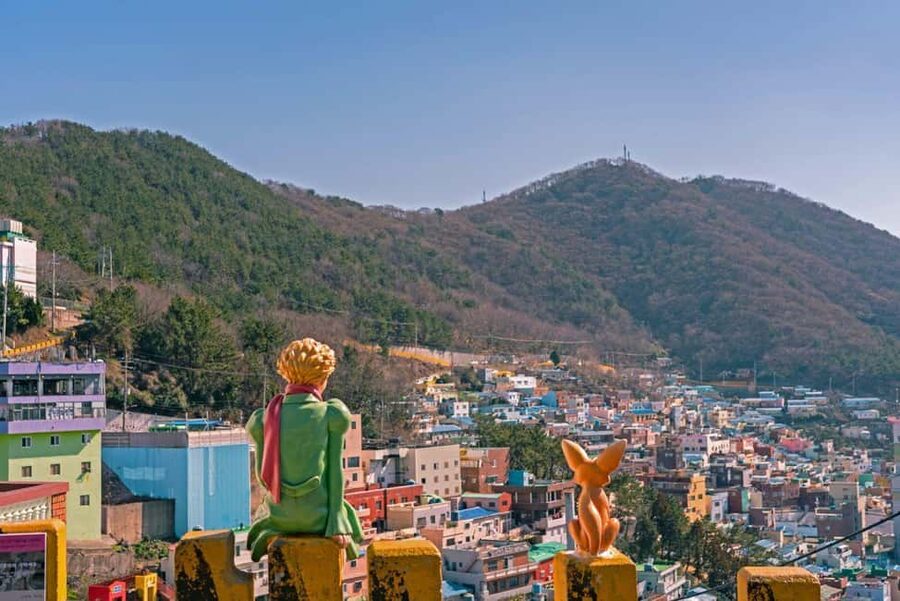
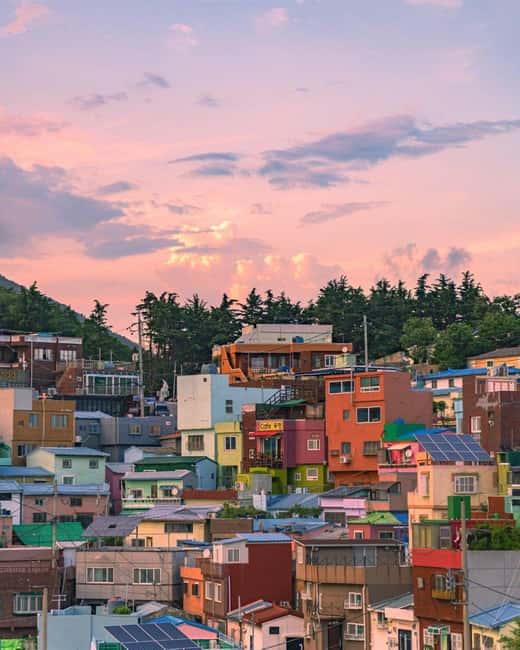
Gamcheon Culture Village, Busan’s colorful hillside opening
The day begins at Gamcheon Culture Village, reached after about 30 minutes by van from the meeting point. You have roughly one hour for a guided visit, photos, walking, shopping, and free time.
Gamcheon began as a settlement for refugees during the Korean War. It was later decorated and adapted as a tourist destination, helping preserve the old town while adding murals, sculptures, and colorful buildings. The result is one of Busan’s most recognizable sights, often called the Santorini of Korea.
The appeal is visual, but the background gives the place more weight. Those painted walls and photo spots are not simply decoration. They sit within a former refugee neighborhood shaped by war and migration.
Use your hour wisely. You can photograph the stacked buildings, look for murals and public sculptures, and browse small shops. The time is enough for a clear introduction, but not for a slow exploration of every lane.
Gamcheon also gives the guide an early chance to explain Busan’s past. This is useful because the day later shifts from a living urban neighborhood to royal burial grounds and old palace-era streets.
The long ride to Gyeongju
The trip from Gamcheon to Gyeongju takes about 90 minutes. That is a sizable stretch of the day, but it is also what makes the combined route possible.
You should treat the van time as part of the bargain. The alternative is managing the journey yourself and then arranging transport between several Gyeongju sights. Here, you can sit back while the guide continues the story of the region.
The exact traffic conditions can affect the day, so keep your expectations practical. An 11-hour tour with a 10 to 11-hour round trip is not a relaxed pace. It is designed to give you a broad introduction to two places in one outing.
Daereungwon and the royal tombs of Gyeongju
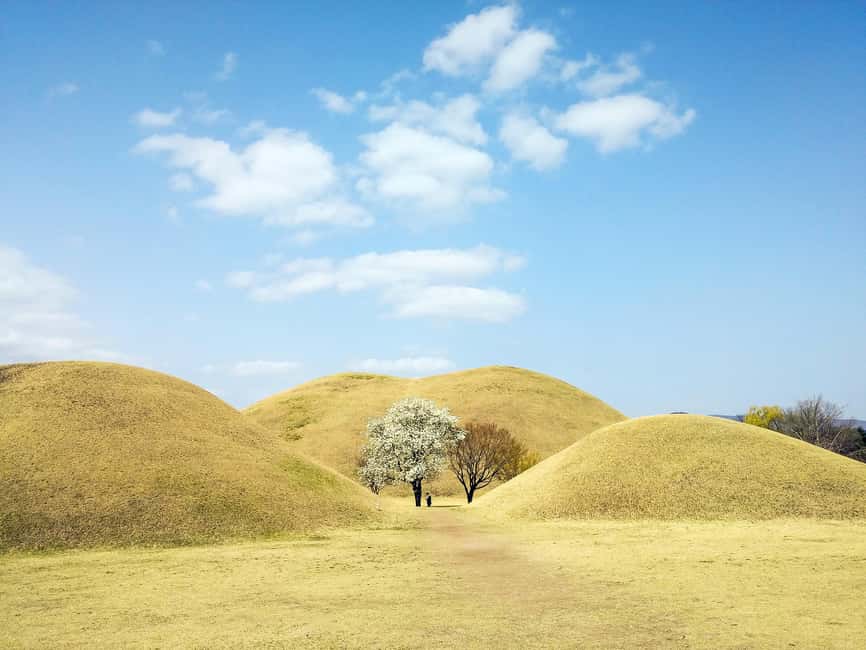
Your first Gyeongju stop is Daereungwon Tomb Complex, with about an hour for a guided visit, photos, walking, shopping, and free time.
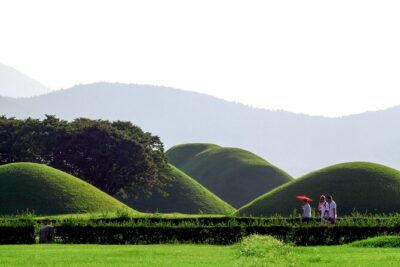
The rounded grassy tombs are among Gyeongju’s most striking sights. They look like gentle hills, but they are royal burial mounds connected to the Silla period. Their quiet scale helps you understand that Gyeongju is not just a town with a few old buildings. The historic center itself is filled with remains of an ancient capital.
This stop is a good fit for a guide. Without context, the tombs can seem simple and repetitive. With an explanation of their age and purpose, the shapes become easier to read.
You may also appreciate the contrast with Gamcheon. Busan’s first stop is full of painted walls, steep lanes, and modern artistic touches. Daereungwon is open, quiet, and shaped by burial traditions. The change gives the tour a useful rhythm.
The free time is welcome, although one hour passes quickly. If you like archaeology or want to examine details closely, you may wish for more time here.
A different way to spend a day from here:
- Gyeongju UNESCO sites Private tour with licensed tour guide
★ 5.0 · 275 reviews - Private Gyeongju Tour – Explore Gyeongju UNESCO Sites
★ 5.0 · 272 reviews - Busan: Gyeongju UNESCO Legacy Tour with National Museum
★ 5.0 · 172 reviews - Gyeongju UNESCO World Heritage Sites and History Full-Day Tour with Lunch
★ 5.0 · 104 reviews
Hwangnidan-gil, food and modern Gyeongju
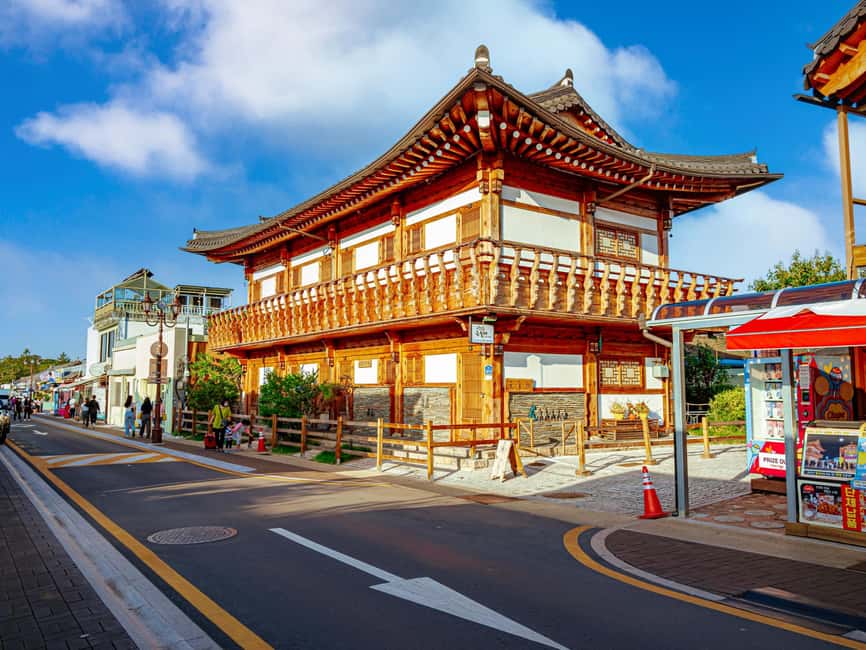
The tour then moves to Hwangnidan-gil for about 100 minutes, followed by a separate 30-minute lunch break in the same area. This is one of the most practical parts of the schedule because it gives you time to eat without adding another transfer.
Hwangnidan-gil is known for its traditional-style buildings, shops, cafés, and food spots. It is a modern commercial street, but its low-rise appearance connects it to Gyeongju’s older character. You can browse, take photos, and see how the historic city has been adapted for present-day life.
Lunch is not included, so plan to pay for your own meal and drinks. The 30-minute lunch window is fairly tight. You should choose food promptly rather than spending most of the break deciding where to eat.
The longer 100-minute visit gives you more freedom than the other stops. I like that balance. Much of the day is guided sightseeing, but here you can wander, shop, or simply take a break from historical explanations.
If your main goal is ancient architecture, Hwangnidan-gil may feel less important than Daereungwon or Woljeonggyo Bridge. Still, it prevents the tour from becoming a string of monuments and gives you a taste of contemporary Gyeongju.
Woljeonggyo Bridge after the lunch stop
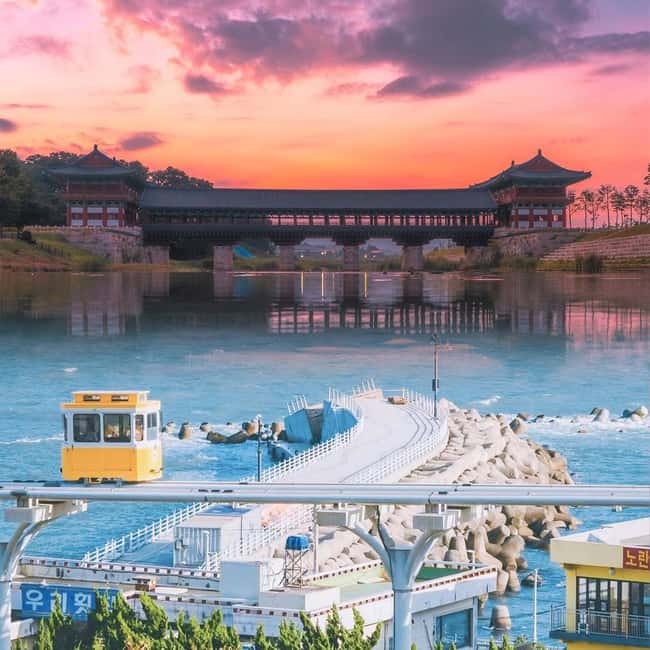
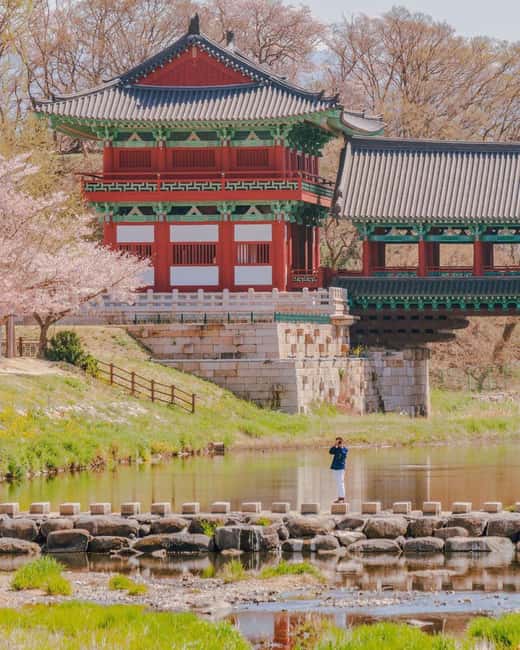
Woljeonggyo Bridge receives about 40 minutes. The bridge is a restored historic crossing with an elegant traditional Korean design, and it is one of the day’s strongest photo stops.
The structure is especially appealing because it links history with a sense of place. You are not looking at an isolated object in a gallery. You are seeing a bridge in its setting, with the surrounding area helping you picture how movement and water shaped the old city.
Forty minutes is enough for a guided explanation and photographs. It is not enough for a long, unhurried walk or extended exploration nearby, so arrive ready to make the most of the stop.
This is also where the guide’s photography help can be useful. The route includes several scenic locations, and a small group makes it easier to pause for a photo without holding up a large crowd.
Gyochon Traditional Village and old-style homes
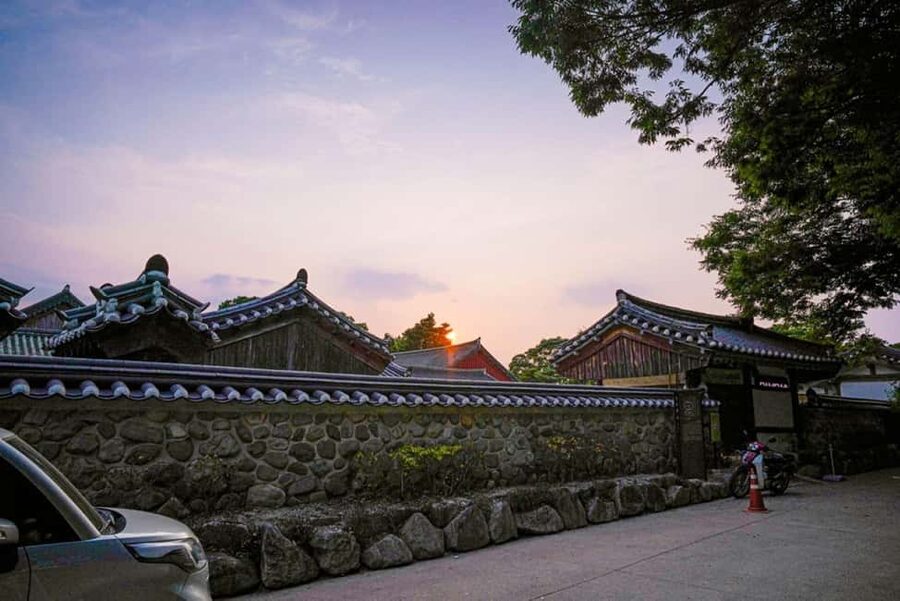
Gyeongju Gyochon Traditional Village follows Woljeonggyo Bridge, with another 40-minute visit. The village contains traditional homes and offers a more intimate view of old Korean residential life than the broad open grounds of Daereungwon.
The value of Gyochon is its scale. Tombs and royal sites show the power of the Silla capital, while a village helps you think about ordinary buildings, family spaces, and daily routines.
You will have time for a guided walk, photos, and some free exploration. The visit is brief, so focus on the overall character of the village rather than trying to inspect every building.
The combination of Gyochon and Hwangnidan-gil is useful. One shows traditional forms and historic surroundings; the other shows how those forms now support shops, cafés, and sightseeing.
Cheongsapo and Haeundae Blue Line Park
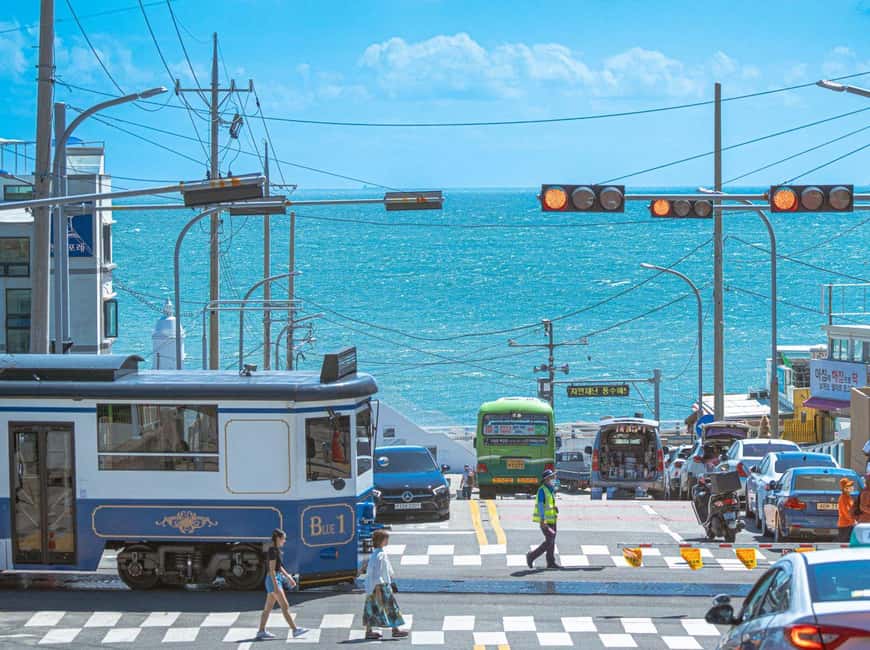
After another 90-minute van ride, the final major stop is Cheongsapo Station in Haeundae Blue Line Park. You get about an hour for photos, walking, sightseeing, and free time before returning to Busan.
Cheongsapo is a fine way to end the day because it brings you back to Busan’s coastal identity. The photo scene includes Haeundae Beach, the railroad, passing trains, the Sky Capsule, and nearby buildings. When the elements line up, you get a very recognizable Busan picture.
The stop is about atmosphere as much as a single monument. After a full day among tombs, bridges, and traditional homes, the sea and railway offer a change of pace.
Do not expect a long beach visit. The schedule allows about one hour, and the stop is centered on Cheongsapo and the Blue Line Park setting. If you want to ride the Sky Capsule or take a separate coastal journey, confirm what your booked option includes, since the listed inclusions cover attraction admission but do not specify a Sky Capsule ride.
The final van ride back to Busan takes about 40 minutes. Drop-off is at either Seomyeon Station Exit 12 or KTX Busan Station Exit 1, matching the two starting options.
How the $84 price measures up
At $84 per person, the tour offers a reasonable package for a full 11-hour day. The price includes round-trip transfers from Busan, attraction admission, and an English-speaking guide. Meals, drinks, and personal purchases are extra.
The best value comes from the route, not from any single admission ticket. You are covering Busan and several Gyeongju areas in one day, with the transport arranged and the schedule organized. That saves time and reduces the chance of losing an hour to a wrong connection or an inefficient route.
The price is less compelling if you prefer to move slowly or only want Gyeongju. Independent visitors who are comfortable arranging transport may prefer to spend a full day in Gyeongju and choose fewer sights.
For a short stay in Busan, though, the combination can make sense. You see the city’s famous hillside village, a coastal stop, and a solid selection of Gyeongju’s central historic sights without booking a separate day trip.
What the guide adds to the day
The guide is central to the experience. The tour is offered in English, and the strongest comments focus on personal attention, clear explanations, humor, and help with photographs.
Zoe has been praised for making the day feel relaxed and personal, using stories and jokes to make historical places easier to enjoy. Pada was praised for clear English, careful photo help, and adapting explanations through Japanese when needed for a Japanese couple.
Guide assignments can vary, so do not book on the assumption that you will receive one particular person. What you can count on is a live English-speaking guide, a small group, and guided visits at each main stop.
This format suits you if you want context but do not want a formal lecture. It also helps at places such as Daereungwon and Cheomseongdae, which are named in the tour description as part of Gyeongju’s historic story even though the detailed stop schedule gives more time to other locations.
Practical limits to keep in mind
Start points are KTX Busan Station Exit 1 and Seomyeon Station Exit 12. The return points are the same, but your exact meeting point depends on the option you book.
Wear comfortable shoes. The day includes walking at Gamcheon, Daereungwon, Hwangnidan-gil, Woljeonggyo Bridge, Gyochon Village, and Cheongsapo. The tour is specifically not suitable for people with mobility impairments.
Bring money for lunch, drinks, shopping, and other personal expenses. Since lunch is only about 30 minutes, decide quickly and keep the meal simple if you want time to browse Hwangnidan-gil.
The tour requires at least four participants to operate. Weather can also affect seasonal flowering conditions, and the provider may suggest changing the date when conditions are unlikely to be good.
Free cancellation is available up to 24 hours before departure for a full refund. You can also reserve now and pay later, which helps if your Busan plans are still shifting.
Should you book this day trip?
Book it if you have limited time in Busan and want a guided introduction to both the city and Gyeongju. The route gives you colorful urban scenery, royal tombs, historic bridges, traditional homes, food time, and a coastal finale in one organized day.
Skip it if you want long museum visits, a slow lunch, or several hours at one historic site. The schedule is full, the van rides are substantial, and the day works best when you accept that it is an overview.
For most first-time visitors with one free day, I find the value convincing. The small group, guide support, and carefully chosen stops make the long route manageable. Just wear good shoes, budget for lunch, and expect a busy day rather than a leisurely one.
FAQ
How long does the Busan and Gyeongju tour last?
The tour lasts about 11 hours. The provider notes that the full round trip can take 10 to 11 hours.
Where can I join the tour?
You can join at KTX Busan Station Exit 1 or Seomyeon Station Exit 12. The meeting point may depend on the option you book.
Where does the tour end?
Drop-off is at Seomyeon Station Exit 12 or KTX Busan Station Exit 1.
What language is the tour conducted in?
The tour is conducted in English with a live English-speaking guide.
How large is the group?
This is a small-group tour limited to eight participants.
Is lunch included?
No. Meals and beverages are not included. You pay for lunch and drinks separately.
What attractions are included?
The route includes Gamcheon Culture Village, Daereungwon Tomb Complex, Hwangnidan-gil, Woljeonggyo Bridge, Gyeongju Gyochon Traditional Village, and Haeundae Blue Line Park at Cheongsapo Station.
Is transportation included?
Yes. Round-trip transfers from Busan are included in a van.
Is the tour suitable for people with mobility impairments?
No. The tour is listed as unsuitable for people with mobility impairments.
Can I cancel for a full refund?
Yes. You can cancel up to 24 hours in advance for a full refund.
Recently added around Gyeongju
- From Daegu: Gyeongju UNESCO Tour 7 Highlights with Bulguksa★ 4.6 · 5 reviews
- UNESCO Listed Historic Sites in Gyeongju National Park★ 5.0 · 5 reviews
- Gyeongju Best Customized Private Tour with Tourguide★ 5.0 · 6 reviews
- Busan: 7 Highlights Gyeongju City One Day Tour★ 4.9 · 10 reviews
- Private World Heritage Gyeongju Taxi Tour★ 5.0 · 12 reviews
- Gyeongju: Private Car Charter Taxi Tour★ 5.0 · 37 reviews
- Guided Car Tour in Geyongju with a Local Guide★ 5.0 · 38 reviews
- Gyeongju UNESCO sites Private tour with licensed tour guide★ 5.0 · 275 reviews
Gyeongju Tours, compared.
Gyeongju UNESCO sites Private tour with licensed tour guide
Read the review →
Private Gyeongju Tour – Explore Gyeongju UNESCO Sites
Read the review →
Gyeongju UNESCO Legacy Tour with National Museum
Read the review →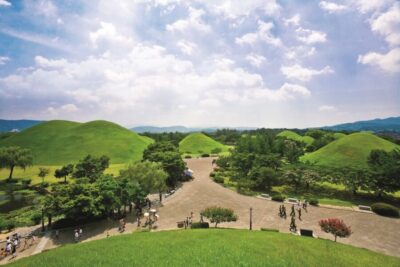
UNESCO Heritage Tour Including Bulguksa Temple
Read the review →
Gyeongju UNESCO World Heritage Sites and History Full-Day Tour with Lunch
Read the review →
Full day Private Gyeongju UNESCO Heritage Tour : a glimpse into Silla
Read the review →
Browse the lists this tour appears in