
Reviewed · GYEONGJU TOURS
Gyeongju: UNESCO Heritage Tour Including Bulguksa Temple
Gyeongju packs more than a thousand years of Korean history into one remarkably manageable day. You’ll move from grassy royal tombs to Buddhist temples, a mountain grotto, an ancient observatory, and a palace pond, with guide Sue, Steve, Jina, or another English-speaking guide helping connect the stones to the Silla dynasty.
I like the door-to-door transport, since Gyeongju’s major sights are spread across town and into the hills. I also like the human touch: guides such as Sue and Steve are praised for clear storytelling, while drivers such as Joe have helped with photographs, directions, and the practical business of keeping the day moving.
The catch is the pace. Eight hours is a lot of ground to cover, and a late start, holiday traffic, heat, or large crowds can shorten time at individual stops. At $189 per person, this is a convenience-first tour, not the cheapest way to see Gyeongju.
Key points to know before booking
- Bulguksa and Seokguram come together: You visit Korea’s best-known Buddhist temple and its mountain grotto in the same guided day.
- Pickup is available in Busan or Gyeongju: The air-conditioned van saves you from arranging several train, bus, and taxi connections.
- The route mixes famous sights with local character: Gyochon Village and a possible tasting of Gyeongju Gyodong Beopju add variety beyond major monuments.
- Lunch and entrance fees are included: Traditional food, including bibimbap on some tours, helps make the day feel like more than a sightseeing transfer.
- Small groups or private touring are available: This matters when you want questions answered or need a little flexibility.
- Crowds can affect the schedule: Korean holidays and busy periods may mean quicker visits or route changes.
Why Gyeongju works so well as a day trip
Gyeongju was the capital of the Silla dynasty for roughly a thousand years. That long period left behind royal burial mounds, Buddhist art, palace remains, and scientific monuments scattered through a modern Korean city.
The city is often described as a museum without walls, and the phrase makes sense once you begin moving between sites. You are not confined to one palace or one archaeological park. Instead, history appears in open fields, wooded hills, village lanes, temple courtyards, and quiet water.
That spread is also the main reason to consider a guided van tour. From Busan, you need to reach Gyeongju and then connect several places that are not all clustered together. The tour removes that planning work and lets you concentrate on what you are seeing.
You should still expect a full day rather than a slow, scholarly visit. Most stops have a set amount of guided time, and the route covers six main sightseeing areas. If you want to photograph every corner or read every sign, you may feel hurried.
More Historical Tours in Gyeongju:
- Gyeongju UNESCO World Heritage Sites and History Full-Day Tour with Lunch
★ 5.0 · 104 reviews - Full day Private Gyeongju UNESCO Heritage Tour : a glimpse into Silla
★ 5.0 · 60 reviews - Private World Heritage Gyeongju Taxi Tour
★ 5.0 · 12 reviews
Bulguksa Temple gives the day its spiritual center
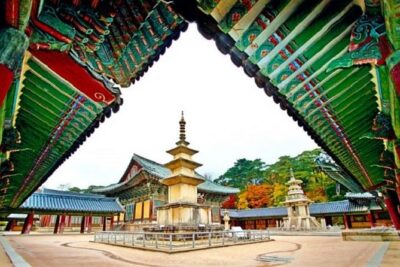
Bulguksa Temple is the tour’s central stop, with about an hour for a guided visit. Its stone bridges, courtyards, pagodas, and mountain setting show how Silla builders joined religious purpose with careful design.
The temple’s two best-known pagodas are Dabotap and Seokgatap. Their forms are different, and seeing them together gives you a quick lesson in the balance between ornament and restraint in Korean Buddhist architecture.
I find Bulguksa most rewarding when you give yourself time to notice the stonework rather than treating it as a quick photo stop. The temple is a functioning religious place as well as a major cultural site, so quiet attention serves you better than racing from one feature to the next.
The one-hour visit is useful for an overview, but it is not enough for a leisurely study of every courtyard. Your guide can point out the main structures and explain their place in Silla culture, which is especially helpful if this is your first encounter with Korean Buddhist architecture.
Seokguram Grotto adds a powerful mountain setting
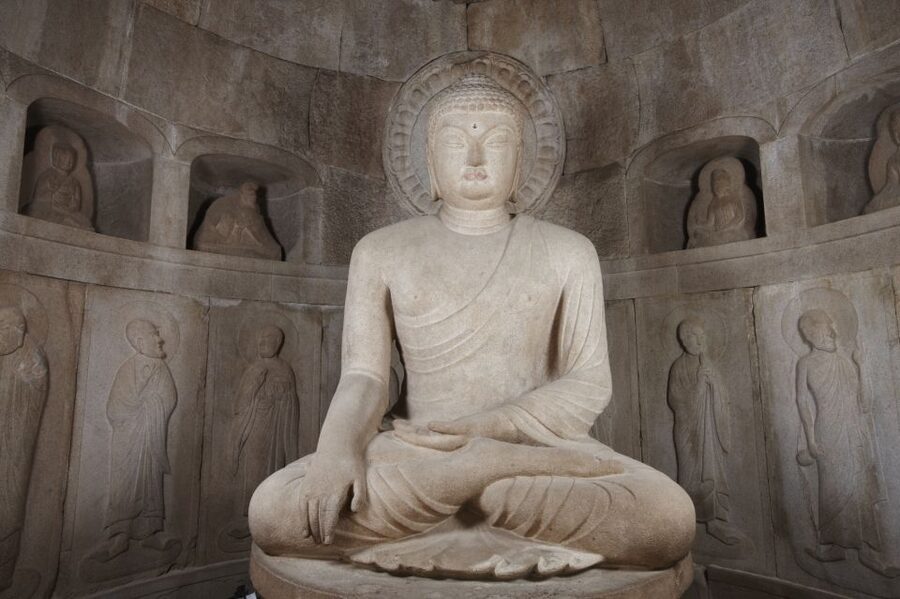
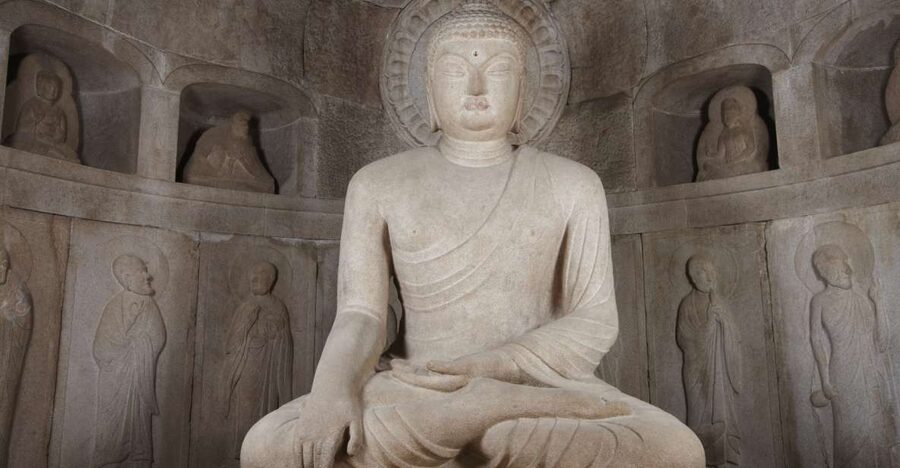
From Bulguksa, the van climbs Tohamsan Mountain to Seokguram Grotto. The visit also lasts about an hour and focuses on the granite Buddha, carved guardians, and the engineering behind this unusual Buddhist site.
The grotto is valued for more than its setting. The central Buddha and surrounding stone figures show the technical skill and religious imagination of the Silla period. The space is carefully arranged, and the visit has a more enclosed, concentrated feeling than the open temple grounds below.
You should know that the grotto is not simply another large temple complex. The central sculpture is the main event, and the experience depends on looking closely and listening to the explanation. The mountain road also makes the included vehicle useful, particularly for a one-day visit from Busan.
A small but memorable detail from the tour experience is the chance to try snacks sold by women outside the grotto. That kind of brief local exchange adds warmth to a stop that could otherwise feel purely monumental.
Daereungwon turns royal history into an open-air walk
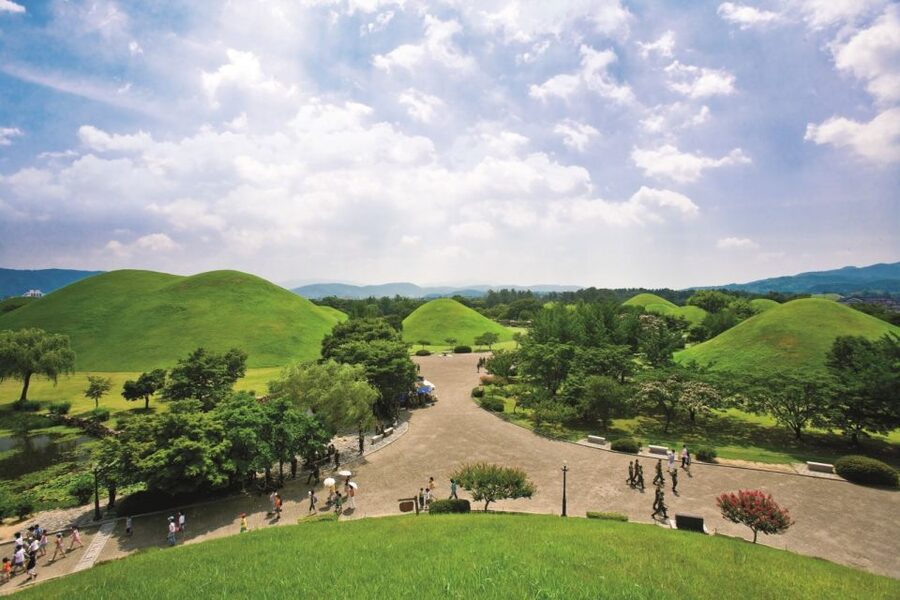
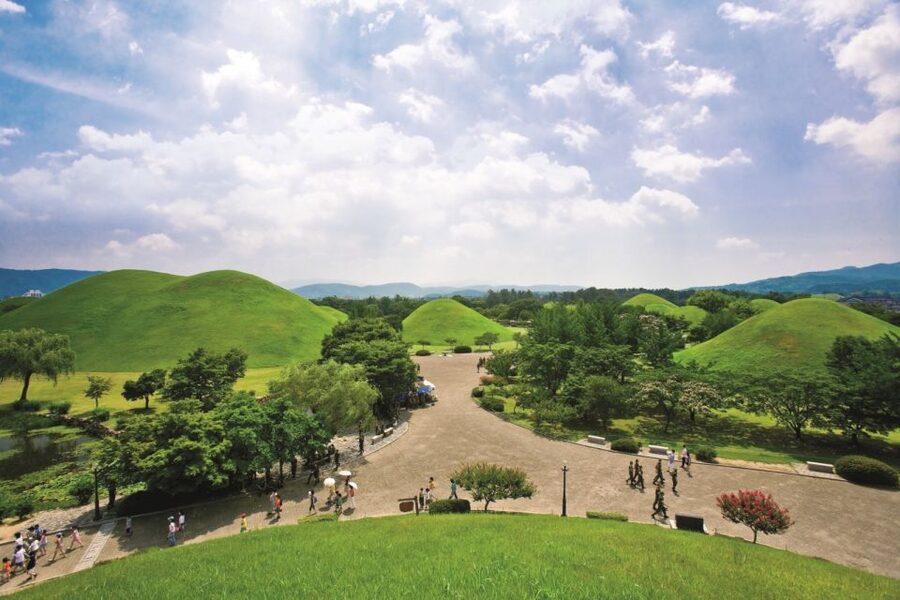
At the Daereungwon Tomb Complex, broad grassy burial mounds rise across a park-like setting. This is one of the easiest places in Gyeongju to grasp the scale and status of the Silla royal court.
The tombs belong to kings and aristocrats, and two names are especially important. Cheonmachong is associated with the famous ancient horse painting found inside, while Hwangnamdaechong is one of the largest and most refined tombs from the period.
You’ll spend about an hour here, walking outdoors rather than moving through a conventional museum. That makes the site visually calm, but it also means you should dress for the weather. Summer heat, winter cold, and wet conditions will be more noticeable here than inside the van.
I like this stop because the mounds are not hidden behind dense modern construction. The open grass allows you to see them as part of the city’s fabric, not as isolated objects in a display case. Your guide can supply the missing context about burial customs, rank, and the objects found inside.
A few more Gyeongju half-days to weigh up
- Gyeongju UNESCO sites Private tour with licensed tour guide
★ 5.0 · 275 reviews - Private Gyeongju Tour – Explore Gyeongju UNESCO Sites
★ 5.0 · 272 reviews - Busan: Gyeongju UNESCO Legacy Tour with National Museum
★ 5.0 · 172 reviews - Gyeongju: Private Car Tour with a Licensed Tour Guide
★ 5.0 · 85 reviews
Cheomseongdae shows Silla’s scientific side
Cheomseongdae Observatory receives about 30 minutes, enough to see the stone tower and hear why it matters. Built during the reign of Queen Seondeok, it is identified as the oldest existing astronomical observatory in Asia.
The structure is compact, distinctive, and easy to photograph. Its importance comes from what it says about Silla society: this was not only a kingdom of tombs and temples, but also a place where rulers supported astronomy and careful observation of the sky.
Thirty minutes is a sensible amount of time for the stop. You will not need a long visit to appreciate the tower, but the explanation is valuable because its purpose may not be obvious from the outside.
Cheomseongdae also works as a useful change of mood. After the solemn tomb complex, you are looking at a monument tied to science and royal administration. It helps broaden your picture of ancient Korea.
Gyochon Village supplies a more personal view of old Korea
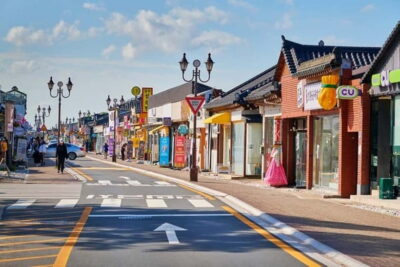
Gyeongju Gyochon Traditional Village brings the route down from royal scale to family life. You’ll walk through lanes lined with hanok buildings and visit the House of the Gyeongju Choi Clan, a family site known for its heritage and craftsmanship.
The village helps explain how historic Korean architecture worked at a human scale. Instead of only seeing what kings built, you get a sense of the homes, courtyards, and narrow passages associated with an established local family.
When available, you may try Gyeongju Gyodong Beopju, a traditional liquor linked to the area. Availability is not guaranteed, so treat it as a possible extra rather than a promised tasting.
This stop is also one of the places where the group format matters. A guide can point out details you might otherwise walk past, while a private tour may give you more room to ask about architecture, family traditions, or the modern life of the village.
Wolji Pond is the right place to finish
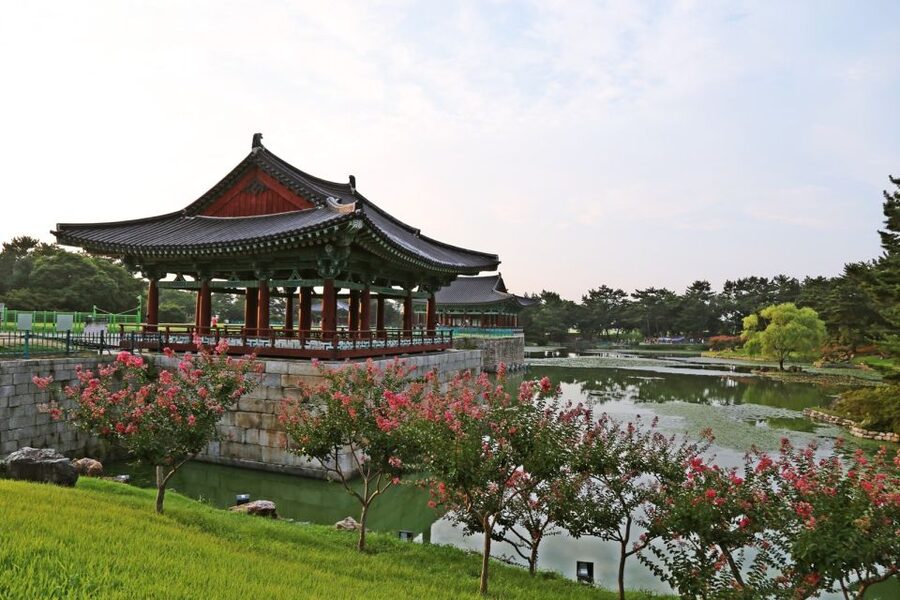
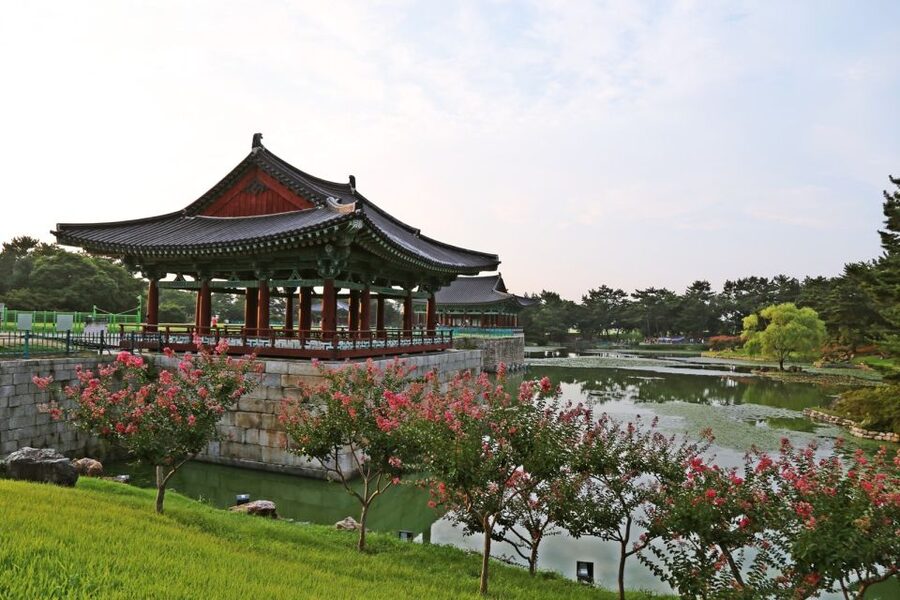
Donggung Palace and Wolji Pond, formerly known as Anapji, were connected with the royal palace during the reign of King Munmu. The pond, pavilions, trees, and reflections create one of Gyeongju’s most attractive views.
The tour schedules about an hour here, and the timing can be especially pleasant toward dusk. Light on the water changes quickly, so this is a good place to slow down after a day of monuments and explanations.
Wolji Pond is not simply a pretty garden. It was part of a royal setting used for formal occasions and leisure, which gives the view historical weight. The water also helps you picture how Silla rulers designed spaces for ceremony and display.
Because this is the final scheduled sightseeing stop, it can feel like a gentle landing after the more demanding temple and mountain visits. Do keep an eye on the clock, especially if traffic earlier in the day has caused delays.
Guides make the difference between facts and a story
The strongest part of this experience is the guiding. Sue appears repeatedly as a warm, funny, and attentive guide who explains Silla history clearly and keeps an eye on the practical needs of the group. Steve is also praised for adapting to crowds and traffic while making the dynasty’s story easier to follow.
Other guides, including Jina, Chris, and Jade, have led tours as well. Since the guide is assigned rather than selected in advance, you should not book solely on the expectation of one particular person. Still, the pattern is clear: the English-language guiding is a major reason to choose this option over arranging the same stops alone.
Drivers contribute more than transportation. Joe has helped take photographs, shown related images on his phone, and made sure people found the right path. That kind of support is useful when the group is moving quickly between large sites.
The social side can be pleasant, too. Small groups of five have created an easy atmosphere, and some guides join the group for lunch. If you prefer complete privacy, request the private option. If you like meeting a few people while keeping the day organized, the small-group format is likely the better value.
Lunch is a practical part of the experience
Lunch is included, along with a bottle of water. Several tour accounts single out the meal, with bibimbap receiving particular praise and one guide showing the group how to mix and eat it properly.
That detail matters because a full day of temples and outdoor sites leaves little time to search for a restaurant. An included meal keeps the route moving and gives you a chance to try a familiar Korean dish in Gyeongju.
The exact restaurant and menu are not specified, so do not book this as a food tour. Think of lunch as a welcome break that adds local flavor and removes another decision from a tightly scheduled day.
In hot weather, water is especially useful. One guide prepared iced bottles for the group, though you should not assume that exact service on every departure.
Is $189 a fair price?
At $189 per person, this is expensive compared with using public transportation and visiting fewer sites. One direct assessment called the cost high for what is essentially a traditional sightseeing route, especially when comparing departures from Gyeongju with similar options from Busan.
The price makes more sense if you are starting in Busan, have only one day, or value a private or small-group vehicle. You receive hotel pickup and drop-off, an English-speaking guide, an air-conditioned van, lunch, water, and all entrance fees.
You are also paying for time. Reaching Bulguksa, Seokguram, the tombs, Cheomseongdae, Gyochon, and Wolji independently takes planning and several transport changes. If a missed connection or confusing bus route would cost you half a day, the premium may be reasonable.
I would compare the price against your priorities. Budget-minded visitors who enjoy public transport can save money. First-time visitors with limited time, families, older relatives, or anyone staying in Busan will likely find the convenience worth more.
Timing, crowds, and the pace of the day
The advertised duration is eight hours, but the actual feel depends on the pickup point, traffic, group, and season. Korean holidays can bring heavy crowds, especially at major sights, and traffic may force the guide to adjust the order or shorten a visit.
One late-starting group missed the final scheduled item but accepted the change after choosing to visit another village. That is a useful warning: tell the operator your priorities early, arrive ready at pickup, and understand that the route may need to flex.
The tour is not physically extreme, but you will walk outdoors at several stops and spend time at the mountain grotto. Comfortable shoes, sun protection, and weather-appropriate clothing make the day easier.
The route is best for someone who wants a strong first look at Gyeongju. It is less suitable if you want long, unhurried photography sessions, extensive museum time, or a deep focus on one temple.
Who should book this Gyeongju tour?
I would recommend it to first-time visitors based in Busan, especially those who want to see the major Silla sites without solving the transport puzzle. It also suits couples and families who value a comfortable vehicle, included lunch, and a guide who can answer questions as the day unfolds.
History fans will appreciate the range. You see royal burial customs, Buddhist architecture, mountain sculpture, astronomy, traditional housing, and palace gardens in one continuous story.
The tour also works well for short stays. Several people used it as their main introduction to Gyeongju and felt they had reached the city’s most important places in one day.
I would hesitate if the $189 price strains your budget or if you already have several days in Gyeongju. In that case, public transport, taxis, and a slower self-guided plan may give you more time at each site for less money.
Book with the free cancellation period in mind, since you can cancel up to 24 hours ahead for a full refund. The reserve-now, pay-later option also helps if your Busan plans are not fixed.
FAQ
How long does the Gyeongju UNESCO heritage tour last?
The tour lasts eight hours, including transportation between the sites, guided visits, lunch, and hotel pickup and drop-off.
Where can pickup and drop-off take place?
Pickup and drop-off are available in Busan or Gyeongju-si. The activity information also states that pickup is available from anywhere in Busan.
Which language is the tour conducted in?
The live tour guide speaks English.
Which major sights are included?
The route includes Bulguksa Temple, Seokguram Grotto, Daereungwon Tomb Complex, Donggung Palace and Wolji Pond, Cheomseongdae Observatory, and Gyeongju Gyochon Traditional Village.
Are lunch and entrance fees included?
Yes. Lunch, a bottle of water, and all entrance fees are included in the price.
Is this a private tour or a group tour?
Private and small-group options are available. The exact group format depends on the option you select when booking.
Can I cancel the tour if my plans change?
You can cancel up to 24 hours in advance for a full refund. The reserve-now, pay-later option lets you hold a place without paying immediately.
Recently added around Gyeongju
- From Daegu: Gyeongju UNESCO Tour 7 Highlights with Bulguksa★ 4.6 · 5 reviews
- From Busan: Busan & Gyeongju One Day Tour★ 5.0 · 5 reviews
- UNESCO Listed Historic Sites in Gyeongju National Park★ 5.0 · 5 reviews
- Gyeongju Best Customized Private Tour with Tourguide★ 5.0 · 6 reviews
- Busan: 7 Highlights Gyeongju City One Day Tour★ 4.9 · 10 reviews
- Private World Heritage Gyeongju Taxi Tour★ 5.0 · 12 reviews
- Gyeongju: Private Car Charter Taxi Tour★ 5.0 · 37 reviews
- Guided Car Tour in Geyongju with a Local Guide★ 5.0 · 38 reviews
Gyeongju Tours, compared.
Gyeongju UNESCO sites Private tour with licensed tour guide
Read the review →
Private Gyeongju Tour – Explore Gyeongju UNESCO Sites
Read the review →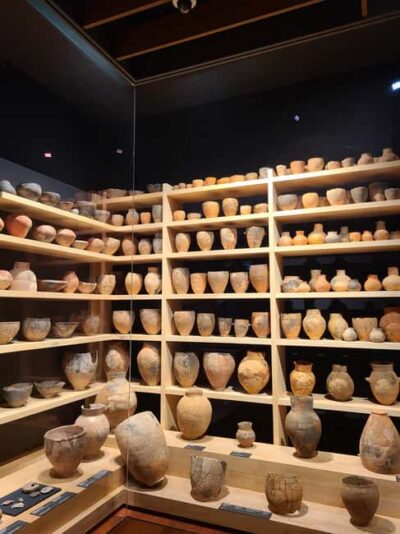
Gyeongju UNESCO Legacy Tour with National Museum
Read the review →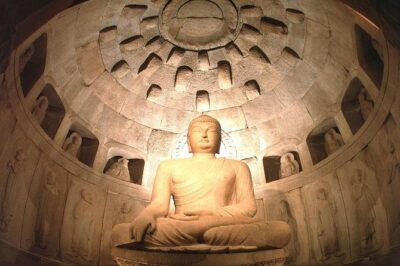
Gyeongju UNESCO World Heritage Sites and History Full-Day Tour with Lunch
Read the review →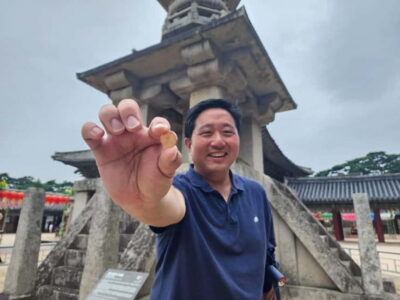
Full day Private Gyeongju UNESCO Heritage Tour : a glimpse into Silla
Read the review →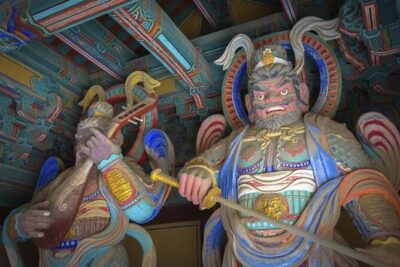
Browse the lists this tour appears in