
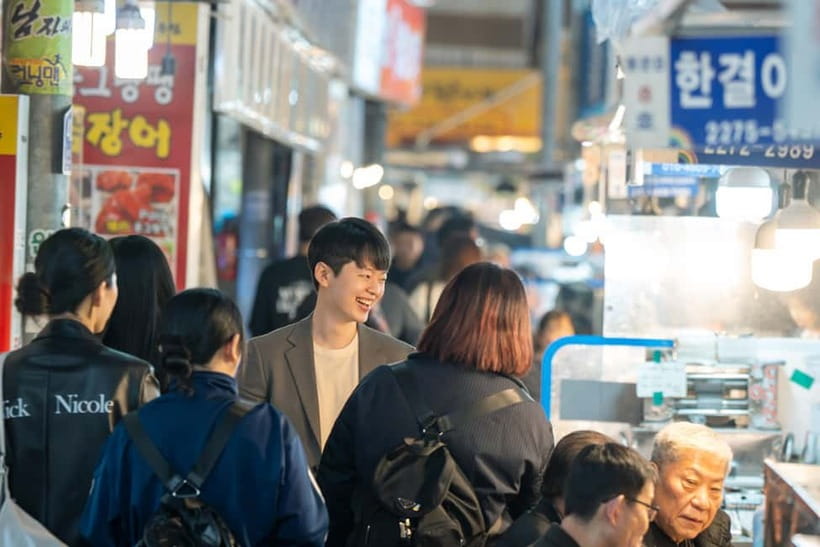
Reviewed · SEOUL TOURS
Seoul: Gwangjang Market Vegan & Vegetarian Food Tour
Gwangjang Market is one of Seoul’s best places to eat, but it can be a hard place for a vegan to navigate alone. This tour solves that problem with 11-plus meat-, fish-, egg-, and dairy-free tastings, from filling meals and noodle bowls to snacks, sweets, and Korean drinks. Jungho, the English-speaking guide, does the ordering and ingredient checks while you focus on the food.
I especially like two things here: the tour seeks out dishes that are naturally vegan, rather than simply removing meat from a standard order, and the small group of no more than eight makes it easier to hear, ask questions, and find seats. The main caution is important: this is still a traditional working market, so shared cooking areas can create mild cross-contact. It is not a safe choice for severe allergies or strict gluten-free diets.
Key points at a glance
- 11-plus tastings in two hours: Try a broad mix of Korean meals, noodles, snacks, desserts, and drinks under one price.
- Jungho handles the difficult parts: He translates, checks ingredients, orders food, and explains how to eat and identify plant-based dishes in Seoul.
- Naturally vegan choices: The stops focus on traditional foods that locals actually order, not just modified versions.
- Small group, maximum eight people: You get more personal attention and a better chance of sharing questions and table space.
- Jongno 5-ga start and finish: Meet outside Exit 8, then return to the same station after exploring Gwangjang Market.
- Useful for non-vegans too: The food and culture focus make this a market introduction for anyone curious about Korean eating traditions.
Why Gwangjang Market can be tricky for vegans

Gwangjang Market is famous for food stalls packed close together, quick service, and dishes prepared in busy shared spaces. That is part of its appeal, but it also means menus may not explain every ingredient clearly in English, and a dish that looks plant-based may contain fish sauce, seafood stock, egg, dairy, or honey.
That is where this experience earns its keep. Jungho has already checked the ingredients at each stop and built a route around food that fits the tour’s vegan standard. You do not need to stand at a stall trying to explain your diet through gestures or guess whether a sauce contains seafood.
The tour was originally created for the guide’s family, who wanted authentic Korean market food without spending their visit searching for suitable dishes. That personal starting point matters. The experience is not simply a general market walk with one vegan snack added. The route was developed by checking stalls and testing traditional foods until the plant-based options were clear.
You should still keep the cross-contact warning in mind. The food itself is meat-, fish-, egg-, and dairy-free, but stalls may cook those ingredients nearby or use shared equipment. For most vegans who are comfortable with that risk, the tour offers practical help. For anyone with a severe allergy, even a small amount of shared-surface contact may be too much.
A few more Seoul half-days to weigh up
- Vegan & Vegetarian Korean Market Adventure Gwangjang Market
★ 5.0 · 34 reviews - Vegan Korean Food Cooking Class: Gimbap, Sundubu Jjigae, and more
★ 5.0 · 32 reviews - Seoul Vegan & Vegetarian Gwangjang Market Food Tour (11 Tastings)
★ 5.0 · 24 reviews
Meeting Jungho at Jongno 5-ga Station
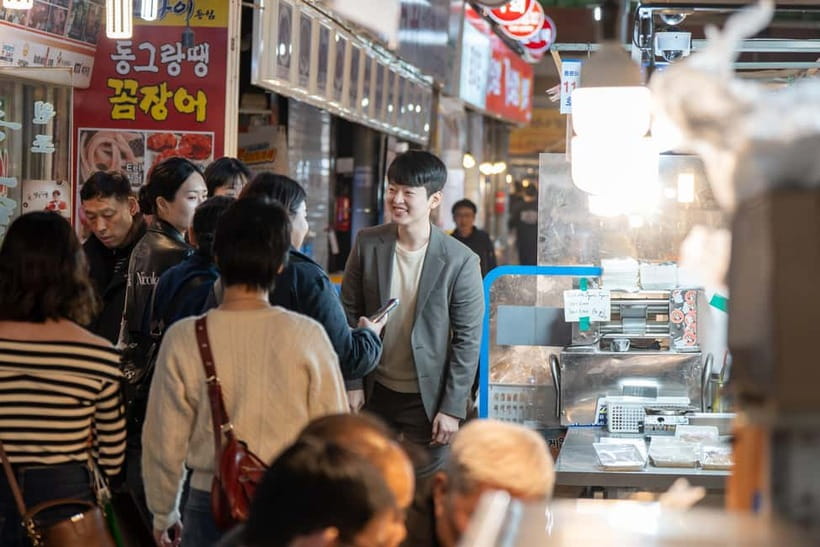
You meet outside Exit 8 of Jongno 5-ga Station. The tour begins and ends at this station, so you do not need to arrange a separate return transfer or learn a new meeting point after the meal.
The station location is useful because Gwangjang Market can feel confusing on a first visit. Once you leave the subway, Jungho leads you into the market rather than leaving you to find a particular stall among the narrow lanes. Look for him next to Exit 8 and use the tour photos to recognize him.
The group limit is eight people. That number is small enough for a guide to keep everyone together while moving between stops, and it avoids the feel of a large food procession. It also matters when you reach indoor restaurants or shared tables, where space can be limited.
The total duration is two hours. That is enough time for many small tastings, but it is not a slow, full-evening dinner. You will move at a steady pace and should arrive hungry, though not so hungry that you rush the explanations between dishes.
Walking through Gwangjang Market
The first part of the tour is a guided walk through Gwangjang Market’s food alleys. This is not just a series of handoffs from stall to stall. Jungho explains what you are eating, how it fits into Korean food culture, and how locals approach market dining.
I like this format because the setting does much of the teaching. You see the stalls working, watch food being served, and learn how a traditional market functions while you eat. The guide also shares practical dining etiquette, so you get more than a list of dishes.
The market is partially covered, which gives the tour some protection from the weather. One recent winter experience found the covered sections comfortable, with several stops in pleasant indoor restaurants as well. Still, Gwangjang is a working market rather than a polished food hall. Expect close quarters, active stalls, and the possibility of shared cooking areas nearby.
A separate entrance helps the group move through the market without waiting in the ordinary line. This does not mean every stop will be instant. Seating and stall service still depend on the market’s pace, but the arrangement keeps the two-hour route moving.
What you eat during the 11-plus tastings
The exact lineup can vary, but the tour covers a wide range of Korean eating rather than repeating one type of snack. You can expect a mixture of:
- Hearty traditional meals
- Satisfying noodle bowls
- Savory market snacks
- Sweet desserts
- Refreshing Korean beverages
That variety is one of the strongest parts of the experience. A vegan food tour can easily become a search for one safe dish followed by another similar dish. Here, the goal is to show how plant-based food appears across different parts of a Korean meal.
Some choices are traditional recipes that are naturally vegan. That is especially valuable because you are tasting food that fits the local food culture, rather than eating a tourist-friendly substitute. The guide explains the story behind each dish and the traditions connected with it, which helps you understand why the food belongs in the market.
Eleven or more tastings sounds generous for two hours, and it is. Portions are designed for sampling, not for giving you 11 full meals. Even so, the number of stops can add up quickly. One participant wished for more room to eat, which is a useful warning: arrive ready to sample, but do not expect to consume every item as a complete entrée.
The drinks are included too. That makes the route feel more like a full introduction to market eating instead of a snack crawl. Since the guide handles the ordering, you can ask what each drink contains before trying it.
More Food Tours in Seoul:
- Seoul Street Food Market Tour
★ 5.0 · 1,226 reviews - Seoul: Night Market Food Tour with Local Guide
★ 4.9 · 943 reviews - Downtown Seoul Guided Food & Market Tour with 8+ Local Tastings
★ 5.0 · 580 reviews - Seoul: Guided Food & Market Tour with 8+ Tastings
★ 4.9 · 342 reviews
Why the guide makes the difference
The food is important, but the guide is the key reason this tour works. Jungho translates orders, checks ingredients, directs you to the right stalls, and explains how to eat the food in a local setting. That removes the most tiring part of vegan dining in an unfamiliar food market.
He also gives you skills you can use later in Seoul. You learn what to look for when plant-based food is not clearly advertised and gain a better sense of how to ask about ingredients. For a visitor spending several days in Korea, that information may be worth almost as much as the tastings.
The guide’s style appears to be warm and energetic, with plenty of room for questions about food and Korean culture. The strongest praise centers on his attentiveness, personal approach, and ability to keep the tour fun without losing the food explanations.
I would especially value this help early in a Seoul trip. Take notes if you plan to eat on your own afterward. The tour cannot guarantee that every restaurant in the city will understand vegan requirements, but it can make the process less intimidating.
The cultural side of the meal
This is not a lecture about Korean history. The cultural information comes through the food, the market, and the way people eat. You hear the story behind each dish, learn about market traditions, and get tips on local dining manners as you move through the stops.
That balance suits Gwangjang Market. You are not standing still for long explanations while the food gets cold. Instead, each tasting gives you a small piece of context. The result is a clearer picture of Korean food culture than you would get from simply ordering a few dishes at a restaurant.
The experience also helps correct a common assumption that vegan food in Korea must be modern or foreign. The route includes original recipes that are naturally plant-based and points out food that locals enjoy. That makes the tour useful for anyone who wants Korean food as it is normally prepared, within the limits of a vegan menu.
Non-vegans can join as well. The focus is on Korean dishes and market traditions, not on presenting plant-based food as a special-interest substitute. If you enjoy food tours, you can treat this as a way to see a famous market with expert ordering help.
Is $89 a fair price?
At $89 per person, this is not the cheapest way to buy food in Seoul. You are paying more than the stall prices alone because the fee includes every tasting and drink, a licensed English-speaking guide, translation, ingredient checks, market guidance, and cultural explanation.
The value depends on your needs. If you are a confident vegan who speaks Korean or already knows how to check ingredients, you may prefer to explore independently and spend less. But if you are worried about fish sauce, seafood stock, hidden egg, or unclear sauces, the guide saves time and reduces the stress of every order.
I also think the small group improves the value. With no more than eight people, the guide can respond to individual food questions and keep the route efficient. A large group would make the market feel more cumbersome and would make shared seating harder.
The price is easier to justify if this is your main market-food experience in Seoul. You are not only buying dinner. You are buying access to a carefully tested route, plus practical information that can help you eat more confidently for the rest of your trip.
Who should book this food tour?
This tour is a strong match for:
- Vegans who want traditional Korean market food
- Vegetarians who prefer a fully vegan tasting route
- First-time visitors nervous about ordering in Korean
- Food lovers who want market culture, not just restaurant dining
- Couples, friends, and solo visitors who like small-group tours
- Non-vegans curious about naturally plant-based Korean dishes
It is less suitable for people with severe allergies, nut allergies, or gluten intolerance. The tour specifically warns that it is not suitable for those needs. Gwangjang Market is a shared working environment, and the tour cannot remove every possibility of cross-contact.
It may also be a poor fit if you want a long, seated dinner. The two-hour format involves walking, moving between food stops, and eating tasting portions. Choose it for variety and guidance, not for one relaxed meal at one table.
Practical details that matter
The tour is conducted in English by a licensed guide. Hotel pickup and drop-off are not included, so plan to reach Jongno 5-ga Station on your own.
You can cancel up to 24 hours before the start for a full refund, and the reserve-now, pay-later option lets you hold a place without paying immediately. Starting times vary, so check availability for your preferred date.
Wear comfortable shoes. The route takes place in and around a market, and you will be walking between food stops. Bring an appetite, but pace yourself because 11-plus tastings can be surprisingly filling.
The market is partly covered, and the route includes some indoor restaurant stops, but conditions can still vary. If weather or comfort is a concern, ask the guide about the day’s route when you meet.
Should you book the Gwangjang Market vegan tour?
Book it if you want to eat Korean food without spending your first days in Seoul decoding menus and questioning every sauce. The combination of a small group, a tested vegan route, and Jungho’s personal ingredient checks gives you something difficult to arrange on your own.
I would be most likely to recommend it near the start of a Seoul visit. You get a meal, a market orientation, and useful advice for finding plant-based food later. The tour also works for mixed groups, since non-vegans can enjoy the food and cultural side without needing a separate itinerary.
Skip it if you have severe allergies, need strict gluten-free preparation, or prefer to explore markets at your own pace. For everyone else, $89 is a reasonable price for a focused two-hour introduction to Gwangjang Market, especially when you count the food, drinks, translation, and ingredient checks included.
FAQ
Where does the Seoul vegan food tour meet?
Meet outside Exit 8 of Jongno 5-ga Station. The guide waits next to the exit, and tour photos can help you recognize him.
Where does the tour finish?
The tour returns to Jongno 5-ga Station after the two-hour visit to Gwangjang Market.
How long does the experience last?
The tour lasts two hours, including the guided market walk and food tastings.
How many people can join the group?
The experience is limited to a maximum of eight participants.
What food is included?
The price includes 11 or more vegan and vegetarian tastings, along with all drinks served during the tour. The dishes are meat-, fish-, egg-, and dairy-free.
Does the guide check the ingredients?
Yes. The English-speaking guide handles ordering, translation, and ingredient checks for the included tastings.
Is the tour suitable for people with allergies?
No. It is not suitable for people with food allergies, nut allergies, or gluten intolerance. The food itself is free of meat, fish, eggs, and dairy, but mild cross-contact may occur in shared market cooking areas.
Is hotel pickup included?
No. You are responsible for reaching the meeting point at Jongno 5-ga Station, Exit 8, and hotel pickup and drop-off are not included.
More Market Tours in Seoul
- Local Home Korean Cooking Class & Market Adventure in Seoul
★ 5.0 · 1,024 reviews - Seoul: Korean Cooking Class at a Local Home and Market Tour
★ 5.0 · 348 reviews - Cook 3 Authentic Korean Dishes with Local Market Tour
★ 5.0 · 231 reviews - Korean Palace and Market Tour in Seoul Including Insadong and Gyeongbokgung Palace
★ 4.0 · 174 reviews
More Food in Seoul
- Small-Group Night Food Tour in Seoul with Korean BBQ
★ 5.0 · 304 reviews - Seoul Night Palace & Market Food Tour with Vehicle
★ 5.0 · 275 reviews - Seoul Fun Food Tour: 12 different food tastings
★ 5.0 · 266 reviews - The Award-Winning PRIVATE Food Tour of Seoul: The 10 Tastings
★ 4.5 · 128 reviews
Recently added around Seoul
- Nami & Maple Road & Theatre des Lumieres Day Tour from Seoul★ 4.8 · 4 reviews
- Gyeongbokgung Palace Photo Session with your own phone★ 5.0 · 4 reviews
- Private Tour around Suwon UNESCO Fortress and Korea Folks Village★ 4.5 · 4 reviews
- Jisan Forest Resort: Ski Full-Day Tour or Shuttle from Seoul★ 5.0 · 4 reviews
- N Seoul Tower + Namsan Cable Car Ticket (Collect in Myeongdong)★ 3.5 · 4 reviews
- Seoul: Deoksugung Palace Night Tour★ 4.5 · 4 reviews
- Seoul Private Walking Tour with a Local★ 5.0 · 4 reviews
- Private Jeonju Hanok Village – Culinary tour★ 5.0 · 4 reviews
Seoul Tours, compared.
Best DMZ Tour Korea from Seoul (Red Suspension Bridge Optional)
Read the review →
DMZ Tour: 3rd Tunnel, Option(Suspension Bridge, Boat) from Seoul
Read the review →
DMZ tour south Korea from Seoul (NK experience hall, defector)
Read the review →
DMZ The 3rd Tunnel and Suspension Bridge Tour
Read the review →
Signature DMZ Tour: Exclusive Defector Talk & Suspension Bridge
Read the review →
Thrilling Korean DMZ 3rd Tunnel Tour from Seoul + Red Bridge Rush
Read the review →
DMZ Past and Present: Korean Demilitarized Zone Tour from Seoul
Read the review →Browse the lists this tour appears in