
Reviewed · SEOUL TOURS
Seoul Fun Food Tour: 12 different food tastings
Gwangjang Market is the star here, but this is more than a market snack walk. Over about three hours, you’ll eat your way through classic Korean dishes, cook ramen from a huge selection of flavors, stroll beside Cheonggyecheon Stream, and finish with a drink in the hanok lanes of Ikseon-dong. Come very hungry. The portions can feel closer to small meals than samples.
I like two things right away. First, a guide such as Suha, June, or Sunha does the hard work of choosing food and explaining what you’re eating, which matters in a market where menus can be hard to read. Second, the route mixes food with Seoul neighborhoods and local history, so you get more than a string of restaurant stops. The main consideration is that the experience is food-heavy, and the walking may be adjusted in winter weather.
Key points to know before booking
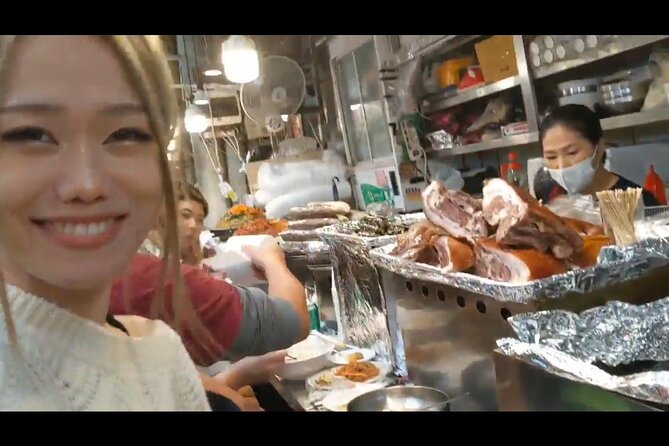
- Gwangjang Market anchors the tour: Spend about an hour tasting Korean market food at several traditional eateries.
- You may eat more than 12 items: Past tastings have included tteokbokki, savory pancakes, soups, bulgogi, fish cakes, banchan, shaved ice, and more.
- The ramen stop is hands-on: Choose a flavor from a large selection and prepare it yourself at a 24-hour convenience store.
- Ikseon-dong supplies the relaxed finish: Explore old hanok lanes now filled with cafes and restaurants, then stop for tea or coffee.
- Small groups make questions easy: The published information describes a group of up to eight, with a maximum of ten listed in the additional details.
- The $88 price covers the food: Public transportation costs about ₩2,000 per person separately.
Why this Seoul food walk works so well
Seoul can be a difficult city to eat through on your own. The food is everywhere, but knowing what to order, where to sit, and how much to buy is another matter. This tour gives you a practical first lesson in Korean eating, with a local guide handling the choices while you focus on tasting and asking questions.
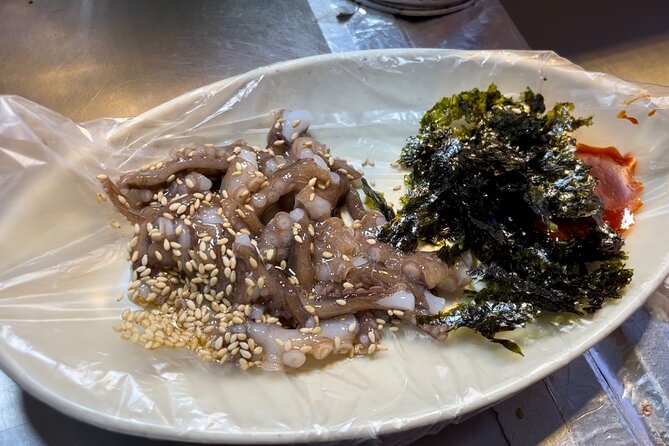
The strongest part is the mix of familiar and less familiar dishes. You may recognize noodles, dumplings, or barbecue, but the setting and side dishes add plenty of new detail. You might also try foods you would skip alone, including seafood or moving octopus tentacles for those who choose to sample them.
The guide is central to the experience. Suha receives the warmest praise in the supplied comments, with June and Sunha also named as hosts. The useful difference is not simply that the guides speak English. They explain pronunciation, customs, the story behind each dish, and the way food fits into Korean daily life. One guide has also sent participants a list of the dishes afterward, a handy reference when you want to find them again.
The tour is rated 4.9 from 266 ratings, with 99 percent recommending it. Those numbers suggest a dependable experience, but the real practical message is simpler: the guide and the amount of food are the main reasons to book. The exact tasting lineup can change with the season and availability, so book this for the range and guidance rather than one fixed menu.
More Food Tours in Seoul:
- Seoul Street Food Market Tour
★ 5.0 · 1,226 reviews - Seoul: Night Market Food Tour with Local Guide
★ 4.9 · 943 reviews - Downtown Seoul Guided Food & Market Tour with 8+ Local Tastings
★ 5.0 · 580 reviews
Gwangjang Market: the main course of the morning or afternoon
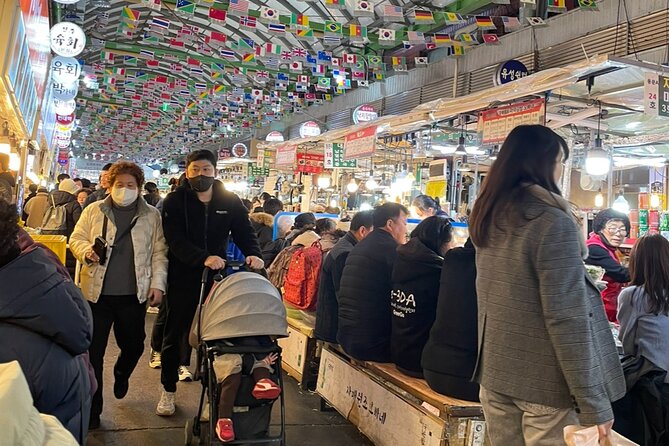
The tour begins at Jinju Yukhoe 3rd Branch, at 403 Dongho-ro in Seoul’s Jongno District. From there, you head into Gwangjang Market, one of the city’s oldest and largest traditional markets. The market is not just a backdrop. It is where the tour does its best work.
You’ll spend about an hour trying several foods at different eateries. Sitting down together is a useful detail. Market food can mean standing beside a stall with a paper tray, but this experience has included seats at several restaurants, allowing the group to eat at the same pace and hear the guide without fighting through the crowd.
The foods served can vary, but the tasting range has included tteokbokki, soybean pancakes, beef and vegetable soup, fish cakes, bulgogi, egg soup, banchan, and other Korean favorites. That list gives you a good sense of the meal: some spicy, some savory, some mild, and plenty of small side dishes that show how Korean meals are built.
I especially like the way the guide can connect food with language. You may learn the Korean names and their pronunciation as you go, rather than leaving with a vague memory of something tasty but unpronounceable. Ask questions here. The market is the place where a local guide adds the most value.
Do not plan a large meal before meeting. Several people have found the portions generous enough to skip food later in the day. The phrase food crawl may sound light, but this is closer to a progressive meal with many samples.
Gwangjang Market can also be crowded and noisy. That is part of its appeal, but it is not the setting for a quiet, slow meal. Stay close to your guide and be ready to move between restaurants. The small group helps, especially when crossing busy areas or finding seats.
Cheonggyecheon Stream: a short breath between bites
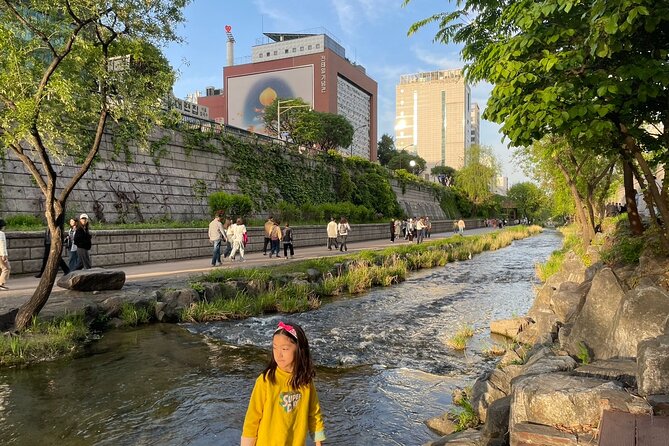
After the market, the route includes about 20 minutes along Cheonggyecheon Stream. This gives your stomach and your attention a short break. The stream runs through central Seoul, with walking paths and stepping stones that can provide good photo stops.
This section is brief, but it improves the pace. Without it, three hours of eating could feel like one long table session. Here, your guide can continue talking about the area, and you get a different view of central Seoul before the next food stop.
Weather matters. Walking may be changed during winter conditions, and the tour requires suitable weather. One supplied account describes heavy rain during part of the walk, with the guide moving the group from shelter to shelter. That suggests the route can be handled with some flexibility, but you should still dress for the forecast and bring rain protection when needed.
The stream stop is not a major sightseeing visit, so do not book this tour mainly for Cheonggyecheon. Think of it as a pleasant connector between two eating sessions, with a chance to stretch your legs.
Jongno ramen shop: choose, cook, and eat
The next stop is a 24-hour ramen convenience store in Jongno. You’ll spend about 40 minutes choosing from a large selection of instant ramen, then preparing your own bowl. The available range has been described as more than 70 varieties, making this a playful change from the restaurant tastings.
This is one of the tour’s most distinctive stops because it shows a very ordinary part of Korean food culture. You are not simply being served a famous dish. You are choosing a flavor and making it yourself, with the guide helping the group understand how the shop works.
For many people, the ramen stop will be the easiest food to approach. If you are less confident with unfamiliar Korean dishes, this gives you a choice you can control. On the other hand, you may already be quite full by this point. Pace yourself at the market, even if everything looks tempting.
The ramen session also breaks up the flavors. After pancakes, soups, rice dishes, fish cakes, and side dishes, a hot noodle bowl feels familiar but still tied to the Korean setting. Since the exact foods change, I would treat this stop as a fun food experience rather than a chance to sample the best ramen in Seoul.
A few more Seoul half-days to weigh up
- Seoul: Guided Food & Market Tour with 8+ Tastings
★ 4.9 · 342 reviews - Small-Group Night Food Tour in Seoul with Korean BBQ
★ 5.0 · 304 reviews - Seoul Night Palace & Market Food Tour with Vehicle
★ 5.0 · 275 reviews - The Award-Winning PRIVATE Food Tour of Seoul: The 10 Tastings
★ 4.5 · 128 reviews
Ikseon-dong: hanok lanes and a cafe finish
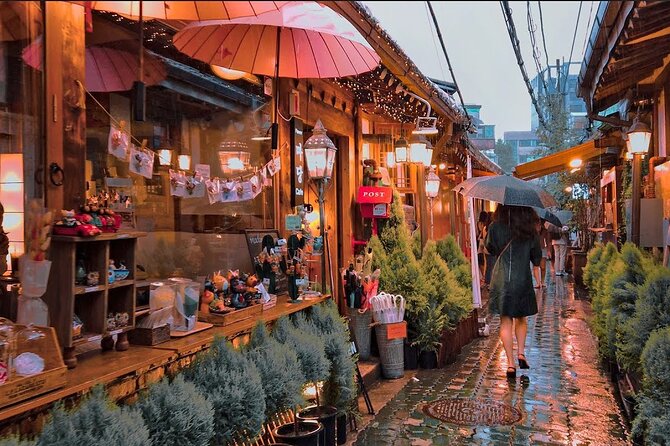
The final major stop is Ikseon-dong, an old hanok neighborhood that has been filled with cafes, restaurants, and small shops. Traditional Korean homes give the area a different feel from Gwangjang Market and the modern streets around Jongno.
You’ll spend about an hour exploring and stopping at a cafe for tea or coffee. This finish is well judged. After a crowded market and a self-cooked ramen bowl, sitting down with a drink gives the group time to talk and settle.
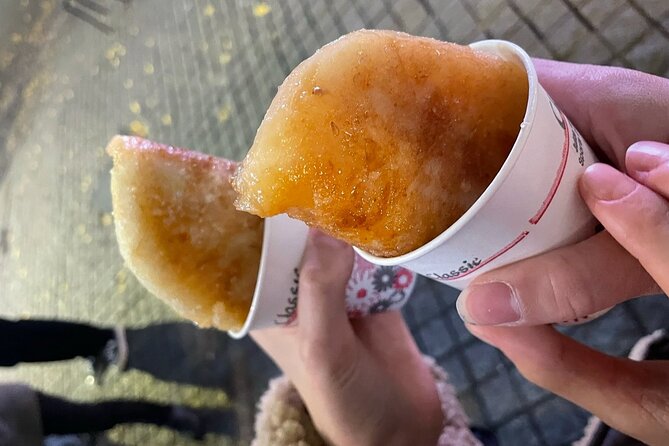
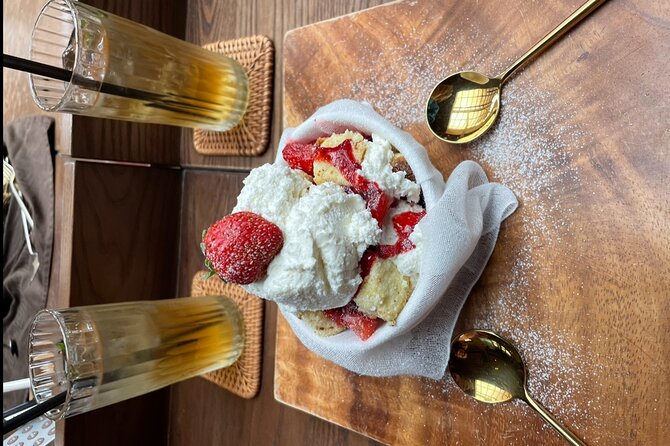
The cafe tasting may include dessert, and one particularly generous version included several shaved ice desserts with fresh fruit, red beans, ice cream, and chocolate ice cream. Do not assume that exact spread will appear on every departure, but it shows how the final stop can become a substantial sweet course.
Ikseon-dong is also a good place to notice how Seoul uses old buildings in new ways. The hanok setting remains visible while cafes and restaurants bring in a younger, more current side of the city. Your guide can explain that change in a way a quick self-guided walk may not.
The drawback is that Ikseon-dong can be popular and busy. If you want a quiet traditional village with few businesses, this is not that place. It is better understood as a historic neighborhood with a modern food and cafe scene.
What the $88 price really covers
At $88 per person, this is not the cheapest way to grab Korean street food. It can still be good value if you take advantage of everything included: 12 different food tastings, snacks, bottled water, a three-hour small group tour, and an English-speaking local guide.
The quantity is the main value. The tour has sometimes served more than the advertised 12 items, with some participants counting 17 or even 19 foods and drinks. That may include small portions, side dishes, and drinks, but it is still a lot of tasting for one session.
The guide adds value in three practical ways:
- You avoid ordering blindly in a large market.
- You get explanations of ingredients, customs, and Korean terms.
- You visit several areas without having to plan the route yourself.
Public transportation is not included. The stated extra cost is ₩2,000 per person, so factor that into the total. The meeting point and ending point are different. You begin near Gwangjang Market and finish at Jongno 3-ga Station, which is useful because you can continue sightseeing from there.
The price makes less sense if you want only one specific Korean dish or prefer to eat at your own pace. It makes more sense if you are new to Seoul, enjoy trying many things, and would otherwise spend time and money figuring out the market on your own.
Who will enjoy this most
I would recommend this for first-time visitors who want a broad introduction to Korean food without spending days researching restaurants. It also suits people who enjoy asking questions and sharing food with a small group.
Adventurous eaters get the most from it. The range can include dishes with unfamiliar textures, strong flavors, seafood, and foods you may not recognize at first glance. You are not required to try every unusual item, but the tour gives you the chance.
Families and mixed-age groups can also fit well. The experience has been described as suitable for all ages, and the meal format lets people try small amounts rather than commit to a full serving of one dish. Still, very selective eaters may find the number of stops tiring.
This is less ideal for anyone who needs a carefully controlled menu. The supplied details do not specify vegetarian, vegan, halal, gluten-free, or allergy arrangements. Contact the provider before booking if you have dietary restrictions. Do not assume the guide can change every tasting.
You should also be comfortable walking for part of the three hours and spending time in crowded food areas. Service animals are allowed, and the tour is near public transportation, but the published details do not promise step-free access at every market or restaurant stop.
Timing, group size, and practical planning
The experience lasts about three hours. The published overview describes a small group of up to eight, while the additional information gives a maximum of ten travelers. Since those numbers differ, confirm the current group limit when you book.
A small group matters in Gwangjang Market. The guide can keep people together, answer questions, and help everyone get seated. It also makes the cultural explanations easier to hear than they would be in a large coach group.
Wear comfortable shoes and leave room in your schedule after the tour. You may finish full, and the route includes walking between food stops. Bring a phone with space for photos and notes, especially if you want to remember the Korean names of the dishes.
The mobile ticket is convenient, and confirmation is provided when you book. The start point is specific, so use the address rather than simply searching for Gwangjang Market. The tour ends at Jongno 3-ga Station, not back at the first meeting point.
Free cancellation is available when you cancel at least 24 hours before the start time. Changes or cancellations inside that window are not accepted for a refund. Poor weather or failure to meet the minimum number of participants can lead to a new date, another experience, or a full refund.
The food is the point, but the guide makes it work
The strongest part of this experience is the guide’s role. Suha is repeatedly praised for being friendly, patient, enthusiastic, and easy to understand in English. Those qualities matter more than a polished script when you are deciding if a dish is spicy, learning how to say its name, or wondering why a restaurant serves a certain side dish.
The guide also keeps the tour personal. You are not just moved from one famous food to another. The format allows for questions about culture, language, and local habits. Past hosts have adapted some tastings by season, so the menu can feel current rather than locked in place.
The best advice I can give is to let the guide set the pace. Try something unfamiliar if you are willing, but do not feel you must force down every bite. The point is to learn what you like, and you can always ask for the name of a dish to seek out again later.
Should you book the Seoul Fun Food Tour?
Book it if you want a generous, guided introduction to Korean food and would rather sample widely than choose one restaurant. The combination of Gwangjang Market, a hands-on ramen stop, Cheonggyecheon Stream, and Ikseon-dong gives you a fuller afternoon than a simple street-food tasting.
The $88 cost is easiest to justify when you count the number of tastings, the included water and snacks, and the time saved planning. Suha and the other English-speaking guides are the key benefit, especially for first-time visitors.
Skip it if you dislike group tours, have strict dietary needs that have not been confirmed, or want a quiet meal with complete control over timing. For everyone else, this is a smart early-Seoul activity. Schedule it near the start of your trip, come hungry, and use the guide’s dish list to build the rest of your food plans.
FAQ
How long does the Seoul Fun Food Tour last?
The tour lasts approximately three hours.
How many food tastings are included?
The tour includes 12 different food tastings, along with snacks and bottled water. The actual number of items may be higher depending on the day’s selections.
Where does the tour begin?
The meeting point is Jinju Yukhoe 3rd Branch, 403 Dongho-ro, 1st floor, in Seoul’s Jongno District.
Where does the tour end?
The tour ends at Jongno 3-ga Station in Jongno District.
Is public transportation included?
No. Public transportation costs about ₩2,000 per person and is not included in the tour price.
What places does the tour visit?
The route includes Gwangjang Market, Cheonggyecheon Stream, a 24-hour make-your-own ramen convenience store in Jongno, and Ikseon-dong.
Who leads the experience?
The experience provider is Suha. Guides named in the supplied information include Suha, Soo-ha, June, and Sunha. The guide is English-speaking.
How large is the group?
The overview describes a small group of up to eight people. The additional information lists a maximum of ten travelers, so confirm the current group size when booking.
Can I cancel for a full refund?
Yes. You can cancel for a full refund at least 24 hours before the experience start time. Cancellations or changes made less than 24 hours before the start time are not refunded or accepted.
Recently added around Seoul
- Nami & Maple Road & Theatre des Lumieres Day Tour from Seoul★ 4.8 · 4 reviews
- Gyeongbokgung Palace Photo Session with your own phone★ 5.0 · 4 reviews
- Private Tour around Suwon UNESCO Fortress and Korea Folks Village★ 4.5 · 4 reviews
- Jisan Forest Resort: Ski Full-Day Tour or Shuttle from Seoul★ 5.0 · 4 reviews
- N Seoul Tower + Namsan Cable Car Ticket (Collect in Myeongdong)★ 3.5 · 4 reviews
- Seoul: Deoksugung Palace Night Tour★ 4.5 · 4 reviews
- Seoul Private Walking Tour with a Local★ 5.0 · 4 reviews
- Private Jeonju Hanok Village – Culinary tour★ 5.0 · 4 reviews
Seoul Tours, compared.
Best DMZ Tour Korea from Seoul (Red Suspension Bridge Optional)
Read the review →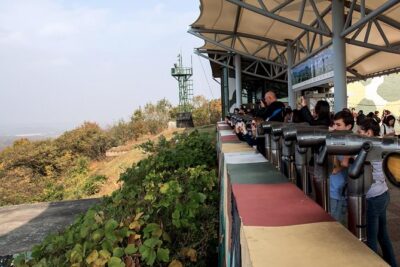
DMZ Tour: 3rd Tunnel, Option(Suspension Bridge, Boat) from Seoul
Read the review →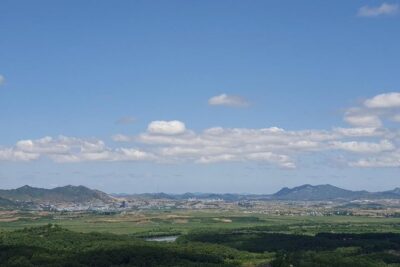
DMZ tour south Korea from Seoul (NK experience hall, defector)
Read the review →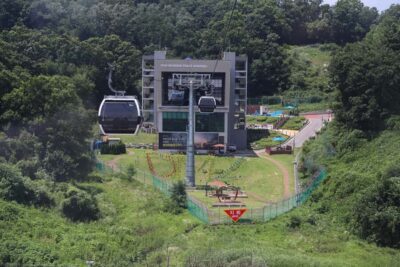
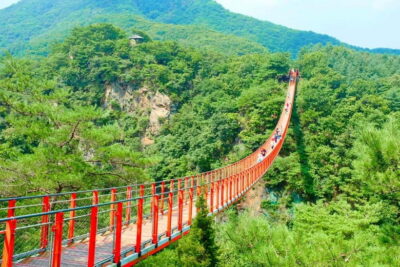
DMZ The 3rd Tunnel and Suspension Bridge Tour
Read the review →
Signature DMZ Tour: Exclusive Defector Talk & Suspension Bridge
Read the review →
Thrilling Korean DMZ 3rd Tunnel Tour from Seoul + Red Bridge Rush
Read the review →
DMZ Past and Present: Korean Demilitarized Zone Tour from Seoul
Read the review →Browse the lists this tour appears in