
Reviewed · SEOUL TOURS
Downtown Seoul Guided Food & Market Tour with 8+ Local Tastings
Seoul reveals itself one bite at a time on this three-hour walk through markets, palace districts, and old neighborhoods. You move from savory street food to sweets and tea, with enough local explanation to understand what sits on your plate. The small group, capped at 12 people, keeps the experience personal.
I especially like the wide range of tastings, from mung bean pancakes and mandu to fish broth, kimbap, tteokbokki, salt bread, and traditional tea. I also like the route’s mix of eating and sightseeing, with Gyeongbokgung Palace, Bukchon Hanok Village, and Insadong woven into the food walk.
The main caution is value. At $98 per person, this costs more than simply eating at the market on your own, and one past participant felt the menu leaned too much toward sweets and did not include enough noodles, barbecue, or mandu. Come hungry, but know that this is a guided introduction, not an all-you-can-eat feast.
Quick take: what makes this Seoul food walk useful
- A proper first taste of Korean food: Try eight or more foods and drinks without ordering full portions at every stop.
- A market-to-teahouse route: Begin near Jongno and finish in a traditional teahouse in Insadong, about 100 meters from Anguk Station.
- Small groups matter: The tour normally has no more than 12 people, with the advertised small-group format limited to about 10.
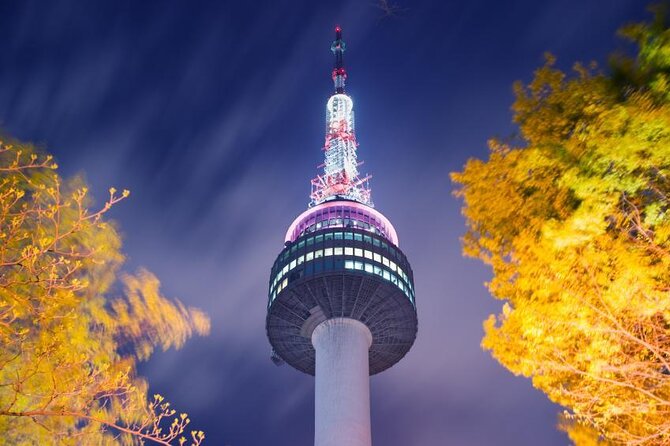
- Food with a sense of place: Palace gates, Bukchon lanes, Namdaemun Market, and Jongno landmarks give context between tastings.
- Several dishes you may not order alone: Mung bean pancakes, fish fillets with broth, Korean honey snacks, and grilled rice cake add variety beyond the usual barbecue meal.
- A useful first-day activity: The route helps you learn what you like, where to return, and how Korean dishes are prepared and named.
Starting near Jongno, where old Seoul meets everyday food
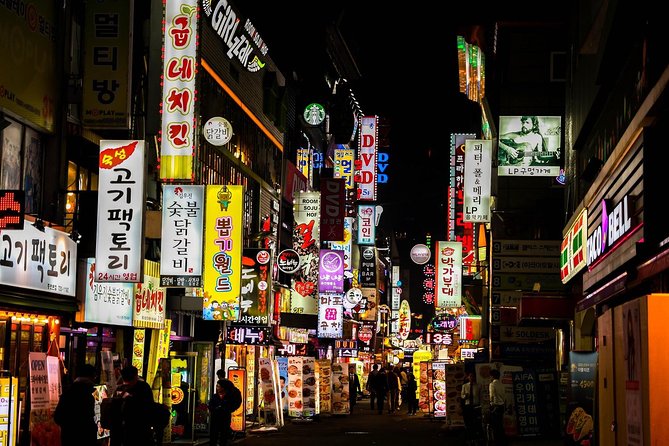
The meeting point is 214 Jong-ro in Jongno District. This is a practical part of central Seoul, close to public transportation and surrounded by the city’s old royal and market districts. You do not receive hotel pickup or drop-off, so plan your route to the starting point before the tour begins.
The walk is designed to get you eating quickly. One account describes the first stop as a restaurant almost right away, which is good news if you have just arrived hungry. It also means you should not eat a large breakfast beforehand. The portions are tasting-sized, but the stops add up.
Your guide provides the thread connecting the food to Korean life. Guides who have led this route include Alex, Jae, Youla, and Ji Yoon. The strongest part of the guiding is not simply naming each dish. It is explaining how the food is made, why a dish has its name, and how it fits into Korean customs and local history.
English communication has been praised in particular for Alex, while Jae has been singled out for patient explanations of ingredients, dish names, and the history attached to each stop. Youla has led market walks with a friendly, organized manner, and Ji Yoon has been especially attentive to the group’s needs. The exact guide depends on your date, but the tour clearly depends on the individual guide to bring the food to life.
More Food Tours in Seoul:
- Seoul Street Food Market Tour
★ 5.0 · 1,226 reviews - Seoul: Night Market Food Tour with Local Guide
★ 4.9 · 943 reviews - Seoul: Guided Food & Market Tour with 8+ Tastings
★ 4.9 · 342 reviews
Mung bean pancakes and the first savory bites
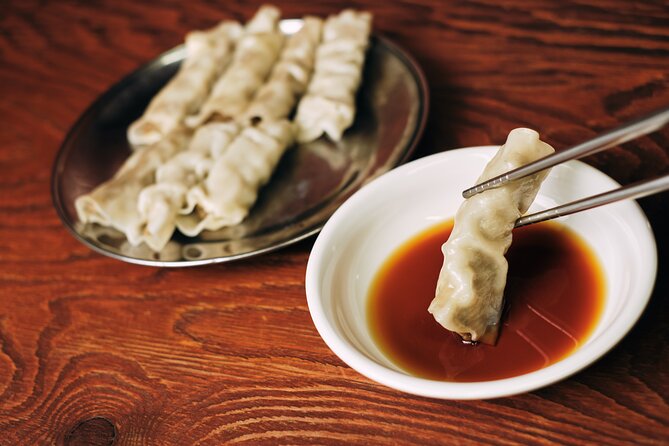
One of the signature tastings is nokdujeon, a fried mung bean pancake served with sweet onions. It is a useful introduction to the tour’s approach. You are not just checking off a famous Korean dish. You are trying something with a crisp exterior, a soft bean-based center, and a flavor that differs from the better-known scallion pancakes often found outside Korea.
The market setting makes this stop more interesting. Seoul’s traditional markets can feel confusing at first, with unfamiliar foods, crowded stalls, and menus that may not offer much English. With a guide handling the ordering and explaining what you are seeing, you can try dishes you might otherwise skip.
Next comes a mix of familiar and spicy flavors. Mandu, or Korean dumplings, and tteokbokki are listed among the planned tastings. The rice cakes bring a soft, chewy texture and a sauce with some heat. The spice level may be manageable for many people, but it is still worth telling your guide if you are sensitive to chili.
There is one point to keep in mind: the exact food sequence can vary. One detailed account of the experience did not include mandu, even though it is part of the stated tasting list. Food tours depend on what is available at the market and participating stops that day, so you should treat the menu as a strong guide rather than an unchangeable contract.
Fish soup, kimbap, and the rhythm of market eating
A later stop features minced fish fillets paired with a little fish soup. This is the sort of tasting that benefits from explanation. Fish cakes and broth are common parts of Korean market food, but the texture and preparation may not be obvious if you are encountering them for the first time.
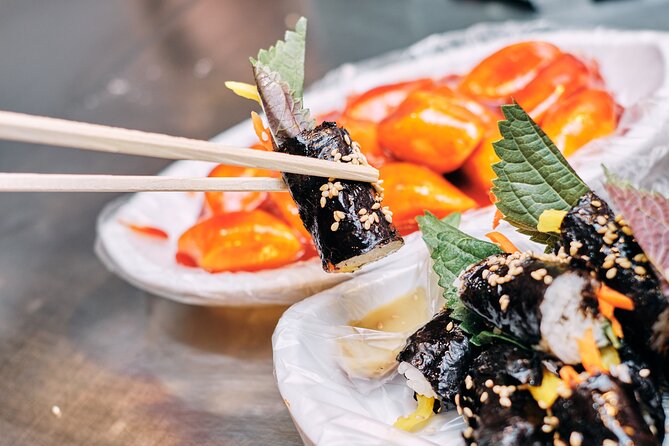
The tour also includes freshly prepared kimbap. These seaweed rice rolls are easy to recognize, yet the quality depends heavily on freshness and balance. You may get a better feel for the role of rice, vegetables, seaweed, and fillings here than from a packaged convenience-store roll.
Depending on the day’s selections, other savory foods can appear. The tasting list and detailed descriptions include beef tartare, chicken, additional dumplings, seaweed rolls, and kimchi. Not every item is guaranteed in every account, so do not book this expecting a fixed restaurant menu.
That variation is both a strength and a weakness. It allows the guide to use food that is fresh and available, but it makes it harder to compare the experience with a tour promising one exact dish after another. If you have your heart set on barbecue, noodles, or a long list of banchan, this is probably not the right food outing.
Sweet bread, honey snacks, and the tour’s softer side
The menu shifts toward sweets as the walk continues. Sweet and salty cream bread is included, and a number of participants have particularly enjoyed the salt bread. Its appeal is simple: soft bread, a salty edge, and a rich filling that makes a pleasant change from the market’s spicy and savory foods.
You will also try a Korean honey snack, followed by grilled rice cake with traditional tea. The rice cake gives you another chewy texture, while the tea helps slow down the pace after several tastings. This is not just a dessert break. It offers a look at older food traditions and the way tea can mark the end of a meal or social visit.
The sweet emphasis deserves an honest warning. One critical assessment found the tour expensive for its amount of food and felt too much of the menu was devoted to desserts. If you prefer savory food above all else, you may find the balance less satisfying than someone who likes tasting pastries, bread, honey sweets, and tea.
On the other hand, the sweets are part of what separates this route from a standard Korean barbecue meal. The tour aims to show different sides of Seoul eating, including snacks that many first-time visitors would not know how to seek out.
A few more Seoul half-days to weigh up
- Small-Group Night Food Tour in Seoul with Korean BBQ
★ 5.0 · 304 reviews - Seoul Night Palace & Market Food Tour with Vehicle
★ 5.0 · 275 reviews - Seoul Fun Food Tour: 12 different food tastings
★ 5.0 · 266 reviews - The Award-Winning PRIVATE Food Tour of Seoul: The 10 Tastings
★ 4.5 · 128 reviews
Palace gates and old Seoul between the stops
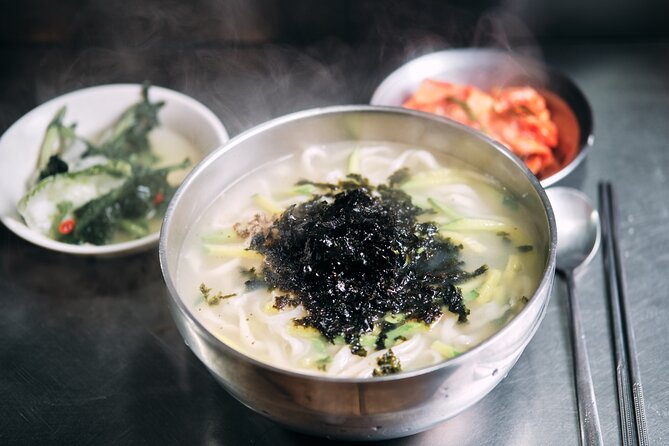
Food is the main event, but the route also takes you past major sights. Gwanghwamun, the main gate of Gyeongbokgung Palace, may appear during the walk. Gyeongbokgung was the principal royal palace of the Joseon dynasty, built in 1395, and its presence gives the Jongno area a strong historical frame.
You may also pass Gyeongbokgung itself, Bukchon Hanok Village, Changdeokgung Palace, and Jongmyo Royal Shrine. Bukchon is known for its traditional Korean houses on the hill between the palace sites. Changdeokgung is one of Seoul’s Five Grand Palaces, and Jongmyo is a royal shrine area set within Jongno.
The tour also connects with Namdaemun Market, described as Korea’s oldest and largest traditional market, beside Namdaemun, the old city’s Great South Gate. The supplied route information names several landmarks, but it does not promise a lengthy entrance visit to each one. Think of the sights as part of the walking setting, not as separate palace tours.
This distinction matters. If you want detailed architecture lectures or interior visits, book a palace-focused tour separately. Here, the sights give you orientation and atmosphere while the guide keeps the group moving toward the next bite.
Finishing in Insadong with tea and breathing room
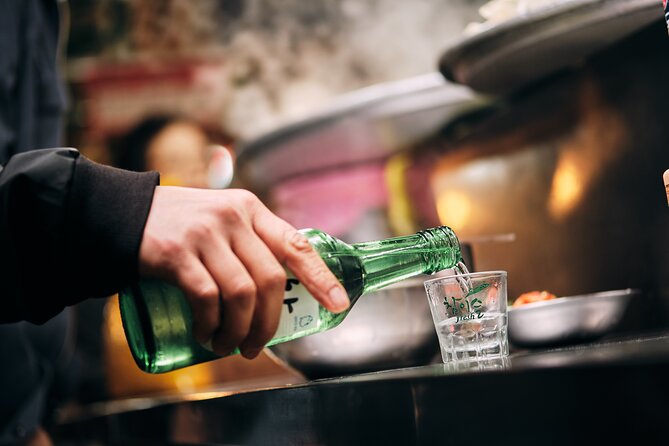
The tour ends in Insadong at a traditional teahouse. The final location is about 100 meters from Anguk Station on Seoul’s orange Line 3, making it easy to continue sightseeing or return to your hotel by subway.
Ending with tea is a smart choice. After market food, fried snacks, spicy rice cakes, bread, and rice treats, a quiet cup gives the morning or afternoon a clear finish. It also places you in one of central Seoul’s most useful areas for browsing traditional crafts, galleries, and food shops.
The end point is not just convenient. It gives you a practical base for the rest of your day. You can return to a market stall you liked, continue through Insadong, or use Anguk Station to reach another part of Seoul.
Some guides also give restaurant suggestions for later meals. That is one of the tour’s real benefits: you learn not only what you are eating now, but which places and dishes may be worth seeking out later.
Is $98 a fair price for three hours?
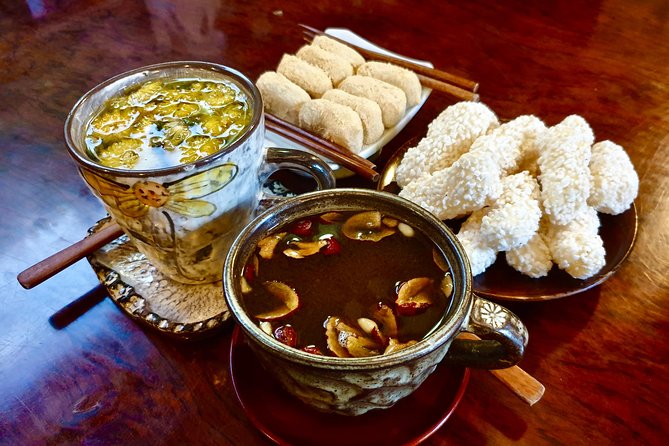
At $98 per person, this is not a bargain market lunch. You pay for food, a local guide, route planning, translation help, cultural explanation, and the confidence to order in places that may feel difficult to manage alone.
The value is strongest if you are new to Seoul or uncertain about Korean food. Eight or more tastings let you sample a broad set of flavors without committing to a full serving of every dish. You also get a planned route through markets and historic neighborhoods, plus lunch and a final tea stop.
The price is harder to justify if your main goal is quantity. A person comfortable using Seoul’s subway, pointing at food, and ordering from market stalls can eat more cheaply. A seasoned Korean-food fan may also want more specialized dishes, especially noodles, barbecue, seafood, or a greater selection of pickled vegetables.
Group size helps protect the value. The maximum is 12 people, and the small-group setup is promoted at around 10. A group this size is easier to keep together in a market and gives you a better chance to ask questions than a large bus tour.
A private option is available for only you and your group. The supplied price is for the standard per-person experience, so you should check the private upgrade cost before deciding. Private touring makes more sense for families, friends with strong food preferences, or anyone who wants a slower pace.
Practical advice before you book
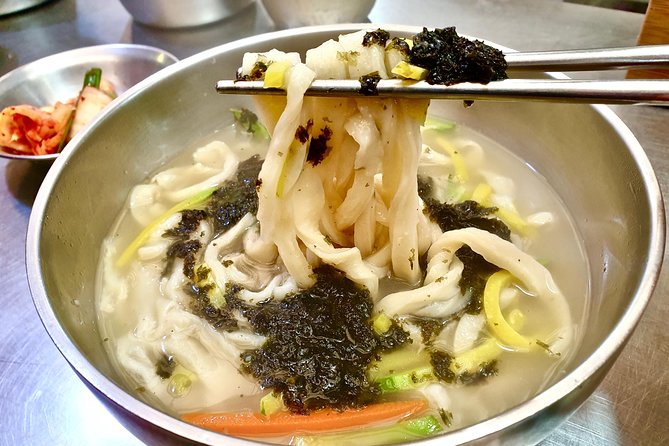
Wear comfortable walking shoes. The route combines market floors, city streets, palace districts, and neighborhood lanes, so even a moderate amount of walking can feel tiring after several food stops.
Arrive ready to eat, but do not skip water. The tour includes spicy, fried, sweet, and chewy foods, and the balance may feel substantial even when each serving is small. You may also want to keep your schedule flexible after the tour, since it ends in a useful sightseeing district rather than returning you to your hotel.
Dietary restrictions require advance contact. Because the route is built around selected market and food stops, the operator may not be able to adjust every tasting. Vegetarians may find workable choices, but you should ask before booking rather than assume the full menu can be changed.
Pets are not accepted on the food tour. Most people can participate, and the route is near public transportation. Confirmation is sent within 48 hours of booking, subject to availability.
The cancellation policy is simple: cancel at least 24 hours before the start time for a full refund. Cancellations or changes made inside that window are not accepted for a refund.
Who should choose this food tour?
I would choose this as an early Seoul activity, especially on the first or second day. It gives you a quick map of Jongno, teaches you the names of foods you may see again, and points you toward market stalls and restaurants worth revisiting.
It suits you best if:
- You want an easy introduction to Korean food without ordering full meals alone.
- You enjoy history and neighborhood sightseeing along with eating.
- You like trying unfamiliar foods, including mung bean pancakes, fish dishes, tartare, rice cakes, and traditional sweets.
- You value a guide who can explain ingredients and local customs.
- You are comfortable with a fixed group route and possible menu changes.
I would hesitate if you are seeking a dedicated barbecue tour, a noodle crawl, or a very large meal for the price. I would also think twice if you have strict dietary needs that cannot be accommodated at market stalls.
Should you book the Seoul market food walk?
Book it if you want a friendly, well-organized first look at Korean food, especially with palace districts and Insadong added to the route. The strongest reasons are the small group, the guide-led ordering, the unusual tastings, and the chance to leave with a list of places to revisit.
Skip it if your priority is maximum quantity or a tightly fixed menu. At $98, the experience needs to deliver more than food, and it does that through guiding, context, and access to dishes you may not confidently order on your own.
For most first-time visitors who want to start eating Korean food right away, this is a sensible choice. Just arrive hungry, wear good shoes, and save room for the sweet finish.
FAQ
How long does the Seoul food and market tour last?
The tour lasts approximately three hours.
What food is included?
The listed tastings include a mung bean pancake with sweet onions, mandu, slightly spicy tteokbokki, minced fish fillets with a little fish soup, freshly prepared kimbap, sweet and salty cream bread, a Korean honey snack, grilled rice cake with traditional tea, and a secret dish.
Where does the tour start?
The meeting point is 214 Jong-ro in Jongno District, Seoul, South Korea.
Where does the tour end?
The tour ends at a traditional teahouse in Insadong, about 100 meters from Anguk Station on subway Line 3, the orange line.
How many people can join the tour?
The activity has a maximum of 12 participants. The small-group format is described as a group of about 10 people, and a private option is also available.
Is hotel pickup or drop-off included?
No. Hotel pickup and drop-off are not included.
Can dietary restrictions be accommodated?
Some dietary needs may be accommodated, but the operator cannot guarantee adjustments for every restriction. Contact the provider before booking to discuss your needs.
More shopping trips in Seoul
- Private DMZ Tour (No Shopping): 3rd Tunnel & Suspension Bridge
★ 5.0 · 607 reviews - Seoul: Nighttime Tour of Palace, Market, Naksan Park & More
★ 4.9 · 143 reviews - Fortress Night Hike & Snack at a Local Market
★ 5.0 · 112 reviews - Seoul: Gyeongbok Palace, N Tower, & Local Market City Tour
★ 4.9 · 107 reviews
More Market Tours in Seoul
- Local Home Korean Cooking Class & Market Adventure in Seoul
★ 5.0 · 1,024 reviews - Seoul: Korean Cooking Class at a Local Home and Market Tour
★ 5.0 · 348 reviews - Cook 3 Authentic Korean Dishes with Local Market Tour
★ 5.0 · 231 reviews - Korean Palace and Market Tour in Seoul Including Insadong and Gyeongbokgung Palace
★ 4.0 · 174 reviews
Recently added around Seoul
- Nami & Maple Road & Theatre des Lumieres Day Tour from Seoul★ 4.8 · 4 reviews
- Gyeongbokgung Palace Photo Session with your own phone★ 5.0 · 4 reviews
- Private Tour around Suwon UNESCO Fortress and Korea Folks Village★ 4.5 · 4 reviews
- N Seoul Tower + Namsan Cable Car Ticket (Collect in Myeongdong)★ 3.5 · 4 reviews
- Jisan Forest Resort: Ski Full-Day Tour or Shuttle from Seoul★ 5.0 · 4 reviews
- Seoul: Deoksugung Palace Night Tour★ 4.5 · 4 reviews
- Private Jeonju Hanok Village – Culinary tour★ 5.0 · 4 reviews
- Seoul Private Walking Tour with a Local★ 5.0 · 4 reviews
Seoul Tours, compared.
Best DMZ Tour Korea from Seoul (Red Suspension Bridge Optional)
Read the review →
DMZ Tour: 3rd Tunnel, Option(Suspension Bridge, Boat) from Seoul
Read the review →
DMZ tour south Korea from Seoul (NK experience hall, defector)
Read the review →
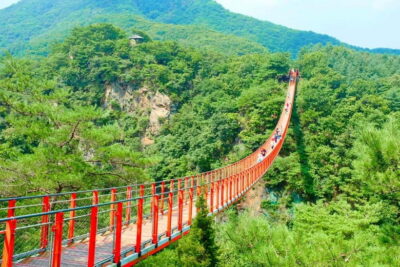
DMZ The 3rd Tunnel and Suspension Bridge Tour
Read the review →
Signature DMZ Tour: Exclusive Defector Talk & Suspension Bridge
Read the review →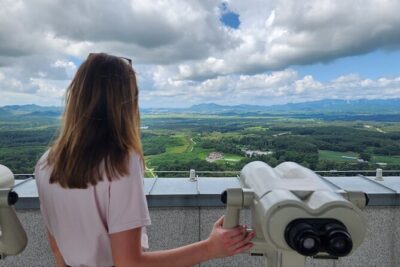
Thrilling Korean DMZ 3rd Tunnel Tour from Seoul + Red Bridge Rush
Read the review →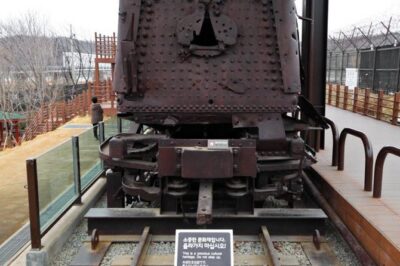
DMZ Past and Present: Korean Demilitarized Zone Tour from Seoul
Read the review →Browse the lists this tour appears in