
Reviewed · SEOUL TOURS
Seoul Food Tours, Eat Like a Local : 100% Personalized & Private
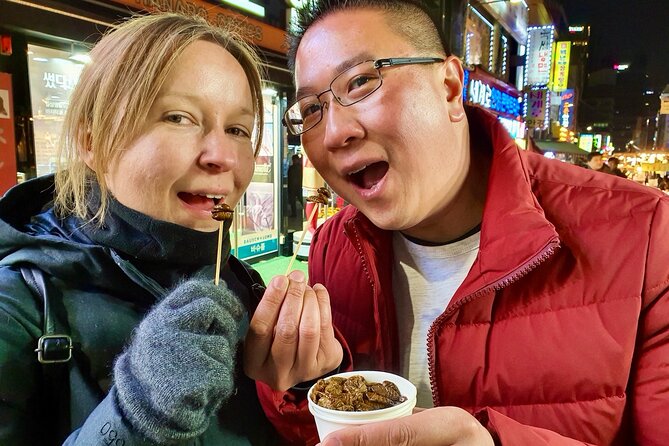
Seoul’s food culture is best understood one small dish at a time, and this private three-hour crawl gives you a local guide to lead the way. Your route can include mandu at Yago Mandoo, Korean BBQ, noodle soup, garlic chicken stew, market pancakes, and a tea stop in Ikseondong. Hosts such as Andrew, Ben, and Van have also helped visitors try dishes they would not have ordered alone.
I like the custom itinerary, since you can shape the outing around foods you want to try rather than follow a fixed menu. I also like the local scale: small eateries, street stalls, and neighborhood cafés offer a more useful introduction to Seoul than a string of polished restaurants.
The main drawback is value. At $221.45 per person, the tour costs a lot for three hours, especially since transport, extra food, and drinks are not included. You are paying for private guiding and flexibility, not simply for the food.
Key points to know before booking
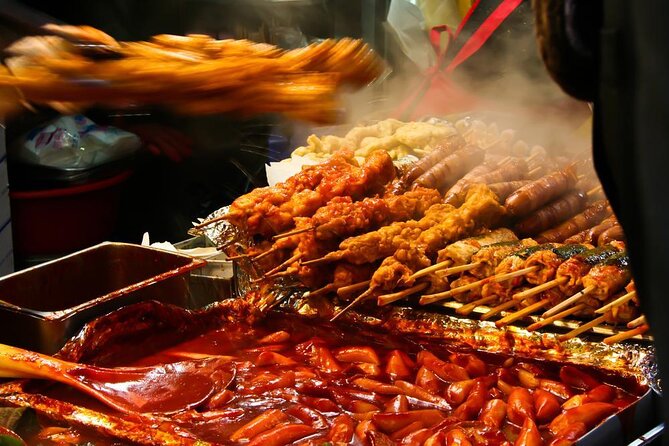
- Six to eight tastings: You receive a broad introduction to Korean food, plus two soft drinks per person.
- Your tastes shape the route: Ask for dishes such as galbijjim or kalguksu, or let your host suggest something less familiar.
- Neighborhood food, not just famous sights: The plan can include Ikseondong, Gwangjang Market, and small local eateries.
- Private from start to finish: Only your group takes part, so the pace and food choices can be adjusted.
- Guides add cultural context: Andrew, Ben, and Van have been singled out for their friendly company, local insight, and willingness to help with unfamiliar foods.
- Bring room for walking: This is mainly a walking experience. Public transport or taxis can be suggested, but you pay those costs separately.
Why a private food walk works well in Seoul
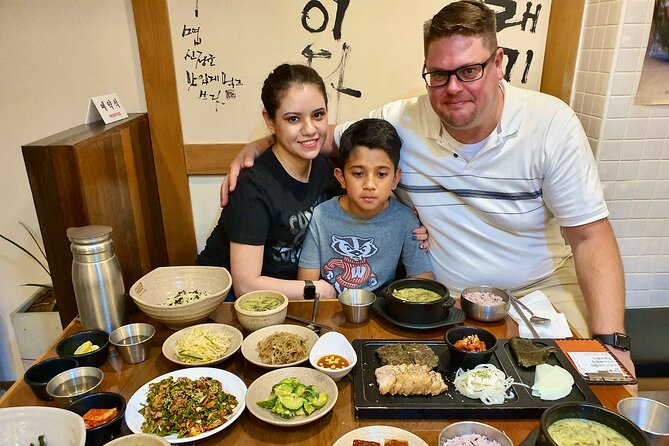
Seoul can be a hard city to read at mealtime. A restaurant may have no English menu, a market stall may sell a dish you cannot identify, and a local favorite may sit on an unremarkable side street. This is where a private host earns the fee.
The guide does more than point to food. You can ask why a dish is eaten, how it is ordered, and what makes one style different from another. The experience also gives you a starting point for later meals. Once you have tried a few dishes and learned the names, ordering on your own becomes much easier.
The private format matters most if your group has mixed tastes. You can request familiar Korean staples, ask for foods that are more unusual, or avoid ingredients that do not suit you. A shared group tour often has to follow one set plan. Here, the host can adjust the route as your interests become clearer.
The tour lasts about three hours, which is enough time for several stops without turning the meal into an all-day commitment. You should still expect a fair amount of walking, with possible public transport or taxi use if the route calls for it.
More Food Tours in Seoul:
- Seoul Street Food Market Tour
★ 5.0 · 1,226 reviews - Seoul: Night Market Food Tour with Local Guide
★ 4.9 · 943 reviews - Downtown Seoul Guided Food & Market Tour with 8+ Local Tastings
★ 5.0 · 580 reviews
Starting near Anguk and Bukchon
The listed meeting point is Starbucks Anguk at 5-1 Bukchon-ro in Jongno District. This places you in a useful part of central Seoul, close to traditional neighborhoods and several food areas.
A hotel meet-up is available on request if you are staying in a central location. Confirm this before you set out, since the standard meeting point is the Anguk café. The experience ends back at the meeting point, so you have a clear place to return to after the food walk.
Starting in the Anguk area also gives the host room to build a route through older parts of the city. The exact stops are not fixed, and that is important. Yago Mandoo, Gwangjang Market, Pumpkin Korean BBQ, and other named places are examples of the type of stop you might visit, not guaranteed appointments.
If you have a strong preference, say so at the beginning. A request for dumplings, grilled meat, noodle soup, or traditional tea gives the host something concrete to work with. If you have no plan, you can let the guide choose a mix of familiar and more unusual foods.
Mandu, noodles, and garlic chicken stew
Mandu, or Korean dumplings, is one of the most approachable ways to start. At a place such as Yago Mandoo, you can expect a traditional dish that is easy to share and compare with other Korean dumplings you may know.
The value here is not only the taste. Your host can help you understand how the dish fits into everyday Korean eating, how it differs from other dumplings, and what else to order alongside it. For a first visit to Seoul, that context makes a simple plate more useful.
The route may also include noodle soup and garlic chicken stew. These dishes show a different side of Korean cooking from the hot, grilled foods often associated with Seoul. Noodle soup is a practical comfort food, while a hearty stew gives you a sense of the shared dishes commonly ordered at a local meal.
Your exact food list depends on the personalized plan. The promise is six to eight Korean specialties, not one large fixed meal. That makes the experience good for sampling, though anyone expecting a full restaurant dinner should keep the format in mind. Portions may be tasting-sized, and extra orders cost more.
Korean BBQ at a small local eatery
A stop at a sikdang, meaning a small local restaurant, can provide the most direct look at everyday Seoul dining. Pumpkin Korean BBQ is given as an example of the kind of eatery your host may include.
Korean BBQ is social food. It is often ordered for the table, cooked as part of the meal, and eaten with side dishes and sauces. Having a host beside you is useful if you are unsure how to manage the grill or combine the different items.
This is also one of the places where the tour’s private format can help. Your host can explain what to try first and adjust the order to your comfort level. You are not left to decode a menu while a busy restaurant staff waits.
The limitation is that BBQ can use up a large share of a three-hour food route. If you want to taste as many different specialties as possible, tell the host that variety matters more than spending a long time at one stop. If BBQ is your top priority, allow the route to give it proper space.
A few more Seoul half-days to weigh up
- Seoul: Guided Food & Market Tour with 8+ Tastings
★ 4.9 · 342 reviews - Small-Group Night Food Tour in Seoul with Korean BBQ
★ 5.0 · 304 reviews - Seoul Night Palace & Market Food Tour with Vehicle
★ 5.0 · 275 reviews - Seoul Fun Food Tour: 12 different food tastings
★ 5.0 · 266 reviews
Ikseondong’s hanok café streets
Ikseondong is known for cafés set within traditional hanok-style buildings. The area offers a change of pace from savory food stops, with a chance to sample tea or finish the route with something sweet.
One particularly useful part of this stop is the setting. You are not only eating in a café. You are seeing how older Korean buildings have been used for modern food and drink businesses. The contrast helps explain why Ikseondong feels different from a standard commercial street.
A tea-house dessert was part of one especially well-received outing, and medicinal tea was another requested experience. If you prefer a gentler finish after several savory tastings, ask whether a tea stop can be included.
Ikseondong can also be popular and busy, so do not expect a quiet private room simply because the tour is private. Your group has its own guide, but the public streets and cafés remain shared spaces. The benefit is a flexible route and local explanation, not exclusive access.
Gwangjang Market and Seoul street food
Gwangjang Market is the place to ask questions and keep an open mind. The route may include rice cakes, pancakes, and other street foods, with your host helping you identify what is worth trying.
Market food is useful for understanding Seoul because it is direct and informal. You can watch food being prepared, choose small portions, and move on without committing to a full restaurant meal. A rice cake or pancake picked up along the way can become one of the most memorable bites of the afternoon.
The market can also be a sensory overload. There are many stalls, strong smells, crowded aisles, and unfamiliar dishes. That is precisely when a local guide helps. You can point to something that looks interesting and ask what it is before ordering.
Remember that Gwangjang Market is only a possible stop. The host may choose another neighborhood based on your interests, timing, and the custom plan. If the market is a must-see, mention it when you book or at the start of the walk.
A guide who shapes the experience
The guide is the most important part of this tour. Food is easy to find in Seoul. Finding the right mix of places, explaining what you are eating, and making the walk feel natural is what you are paying for.
Andrew has been praised for bringing the city to life and adding useful historical detail. That makes him a strong fit if you want your food walk to include more than restaurant recommendations.
Ben has helped with specific requests for galbijjim, a braised beef dish, and kalguksu, Korean knife-cut noodle soup. His route took the food search into a traditional neighborhood away from the main tourist areas, followed by night-market walking and medicinal tea. That is a good example of how specific your requests can be.
Van has been recommended for a food-focused evening with street vendors and Korean specialties. If you are visiting during hot, sticky weather, keep your pace easy and carry water. The tour can still be enjoyable in uncomfortable conditions, but Seoul’s summer heat is a real consideration.
The provider is City Unscripted, and the tour is private. You do not share the group with strangers, which makes it easier to ask basic questions, change your mind, or spend more time on a dish you enjoy.
What the $221.45 price really buys
The price is $221.45 per person. Included are three hours with a private host, six to eight Korean food tastings, two soft drinks per person, walking, and a central hotel meet-up when available by request.
That is a premium price for a short food experience. The cost makes more sense for a small group that values personal attention and wants a quick introduction to Seoul’s food culture without doing the research alone. Group discounts may also improve the total value, so check the price for your party rather than judging only the individual rate.
The food allowance is generous in variety, but the included items are not unlimited. Additional food and drinks are excluded, as are attraction tickets, transport, and optional gratuities. If you use a taxi or public transport, that cost comes from your pocket.
I would compare this tour with the price of a private guide plus several self-arranged meals. The advantage here is convenience and local direction. The disadvantage is that a three-hour walk may feel expensive if you already know Seoul’s food districts or are comfortable ordering on your own.
Who should book this experience?
I would recommend it most strongly for first-time visitors who want to get their bearings through food. It is also useful for people who are curious about Korean dishes but do not know where to start.
The tour suits couples, families, and small groups with different food preferences. A private route is easier to adapt than a fixed group outing, and most people can participate. Service animals are allowed, and the meeting point is near public transport.
It is less suited to anyone looking for a formal cooking class, a long restaurant dinner, or a sightseeing tour with guaranteed stops. It is also not the best choice if the price is your main concern. You can eat cheaply in Seoul, but you will not get the same help choosing and understanding the food.
Bring comfortable shoes and arrive ready to walk. Tell your host about food preferences, allergies, disliked ingredients, and must-try dishes before the route begins. The more specific you are, the more useful the personalized plan can be.
Cancellation and other practical details
You receive confirmation at booking. The experience is offered as a private activity, so only your group participates.
Free cancellation is available up to 24 hours before the start time for a full refund. Cancellations or changes made less than 24 hours before the experience are not accepted for a refund, and cut-off times use Seoul local time.
The meeting point is Starbucks Anguk, and the activity returns there. Central hotel meet-up is available on request, while transport costs during the walk are not included.
Should you book the Seoul food tour?
Book it if you want a personal introduction to Korean food and prefer a local guide to make the choices for you. The combination of small eateries, market snacks, mandu, BBQ, noodles, stew, and hanok cafés gives you a broad taste of Seoul in a short window.
The strongest reason to book is the flexible route. Ask for galbijjim, kalguksu, medicinal tea, or a market visit, and the host can build the outing around those interests. Guides such as Andrew, Ben, and Van have shown how much the experience can improve when the food matches what you actually want to eat.
Skip it if $221.45 feels too high for three hours, or if you want a guaranteed menu and fixed schedule. For everyone else, this is a useful first-day activity, particularly if you want to learn the names, customs, and neighborhoods that will help you eat well for the rest of your Seoul stay.
FAQ
How long does the Seoul food tour last?
The experience lasts approximately three hours.
How many food tastings are included?
You receive six to eight tastings of Korean specialties, along with two soft drinks per person.
Is this a private tour?
Yes. Only your group participates in the activity.
Where does the tour start?
The listed meeting point is Starbucks Anguk, 5-1 Bukchon-ro, Jongno District, Seoul.
Can the tour begin at my hotel?
A hotel meet-up is available on request if you are staying in a central location.
Are transportation costs included?
No. The experience is mainly a walking tour, but your host can suggest public transport or taxi options. Those transportation costs are not included.
Can I cancel for a full refund?
Yes, if you cancel at least 24 hours before the experience start time. Cancellations or changes made less than 24 hours before the start time are not accepted for a refund.
Recently added around Seoul
- Nami & Maple Road & Theatre des Lumieres Day Tour from Seoul★ 4.8 · 4 reviews
- Gyeongbokgung Palace Photo Session with your own phone★ 5.0 · 4 reviews
- Private Tour around Suwon UNESCO Fortress and Korea Folks Village★ 4.5 · 4 reviews
- N Seoul Tower + Namsan Cable Car Ticket (Collect in Myeongdong)★ 3.5 · 4 reviews
- Jisan Forest Resort: Ski Full-Day Tour or Shuttle from Seoul★ 5.0 · 4 reviews
- Seoul: Deoksugung Palace Night Tour★ 4.5 · 4 reviews
- Seoul Private Walking Tour with a Local★ 5.0 · 4 reviews
- Private Jeonju Hanok Village – Culinary tour★ 5.0 · 4 reviews
Seoul Tours, compared.
Best DMZ Tour Korea from Seoul (Red Suspension Bridge Optional)
Read the review →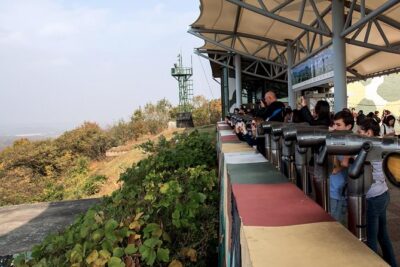
DMZ Tour: 3rd Tunnel, Option(Suspension Bridge, Boat) from Seoul
Read the review →
DMZ tour south Korea from Seoul (NK experience hall, defector)
Read the review →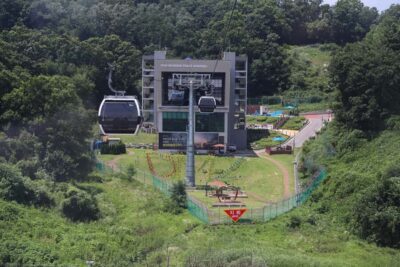
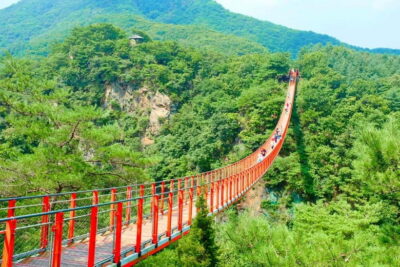
DMZ The 3rd Tunnel and Suspension Bridge Tour
Read the review →
Signature DMZ Tour: Exclusive Defector Talk & Suspension Bridge
Read the review →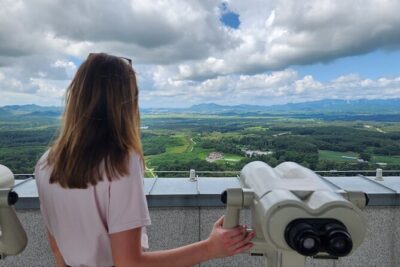
Thrilling Korean DMZ 3rd Tunnel Tour from Seoul + Red Bridge Rush
Read the review →
DMZ Past and Present: Korean Demilitarized Zone Tour from Seoul
Read the review →Browse the lists this tour appears in