

Reviewed · HANOK VILLAGE TOURS
Seoul: Experience Korean Cooking in Modern Hanok Kitchen
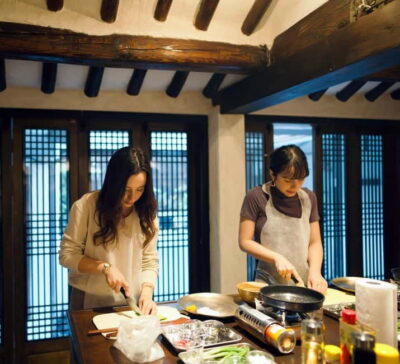
The most appealing part of this Seoul cooking class is that you do not simply watch a chef prepare Korean food. You work at your own station, cook two dishes yourself, and then eat the results in a modern hanok kitchen in Bukchon. That makes the class feel useful, not just entertaining.
I like the clear, low-stress teaching style and the chance to learn how Korean home meals come together. I also like the menu range: bibimbap, bulgogi, japchae, and jeyuk-bokkeum cover vegetarian, non-spicy, beef, and pork options. Chef Jia has been praised for her patience, humor, and quick response to dietary needs.
The main thing to consider is the price, $84 per person for two hours. That is not a cheap meal, but you are paying for instruction, ingredients, a professional chef, and a hands-on cultural activity in central Seoul. Tell the organizers about allergies or dietary restrictions before you arrive, since menu adjustments need planning.
Key points to know before you book
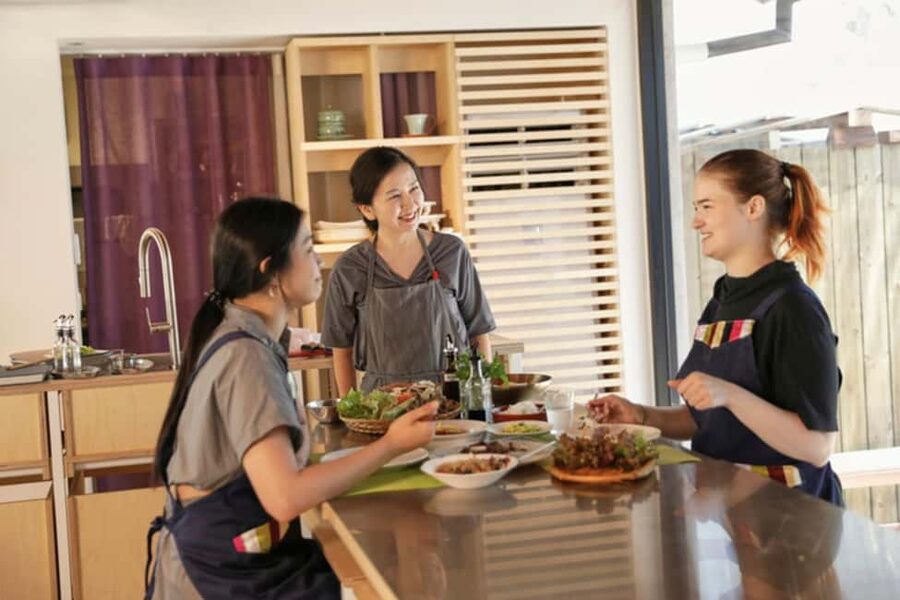
- Your own cooking station: Each participant prepares their dishes rather than watching from the sidelines.
- Four Korean classics: The possible dishes include bibimbap, jeyuk-bokkeum, japchae, and bulgogi.
- Bukchon setting: The class takes place at O’ngo Food Communications, in a recently renovated modern hanok studio.
- English instruction: The class is led by a professional chef with a live English-speaking guide.
- Helpful dietary flexibility: Meat can be replaced when arrangements are made, as one participant received tofu instead of meat.
- Practical recipes: The methods are simple enough to repeat at home after your Seoul visit.
Cooking Korean food in a Bukchon hanok
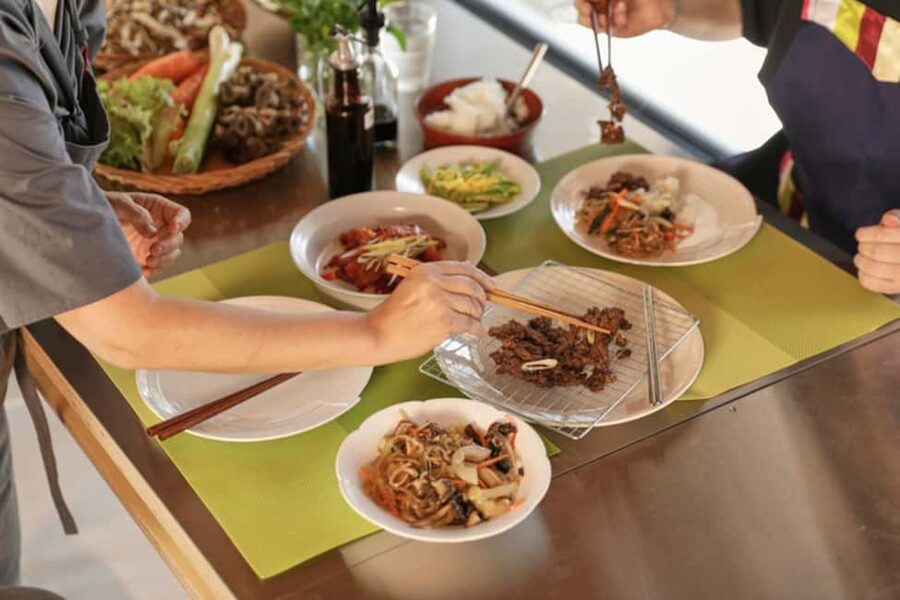
Bukchon is a fitting place for this class. The neighborhood is known for its traditional Korean houses, and your cooking session takes place inside a renovated hanok designed for modern use. You get the old-style setting without giving up the practical comforts of a working kitchen.
The location is O’ngo Food Communications, at 137-11 Bukchon-ro, Jongno-gu, Seoul. Since Bukchon has slopes and narrow streets, allow enough time to find the address. The meeting point matters here because late arrivals are responsible for missed participation, and a two-hour class leaves little room to catch up.
Once the class begins, the chef explains the dishes and the food culture behind them. This is more than a recipe lesson. You learn how Korean meals balance rice, vegetables, meat, sauces, and side-dish-style flavors. That context helps you understand why the food is prepared in a particular order and why sauces such as gochujang and soy-based marinades matter so much.
The setting also gives the class a more personal feel than a large demonstration kitchen. A small group can mean close attention, and one class had only three participants, allowing the chef to provide very direct help. Group size can vary, so do not assume every session will be that intimate, but the format is built around individual participation.
More Hanok Village Tours in Seoul:
- Seoul City Sightseeing Tour Including Gyeongbokgung Palace, N Seoul Tower, and Namsangol Hanok Village
★ 5.0 · 1,423 reviews - Seoul: Gyeongbok Palace and Bukchon Hanok Walking Tour
★ 4.8 · 157 reviews - Best Walking Tour to Gyeongbok Palace Bukchon Hanok Village
★ 5.0 · 138 reviews
What happens during the two-hour class
The session starts with an explanation and demonstration. The chef shows how ingredients are prepared and how the cooking process works before you begin. This is useful if you are not comfortable with Korean ingredients or kitchen techniques, since you can see the full method before handling your own food.
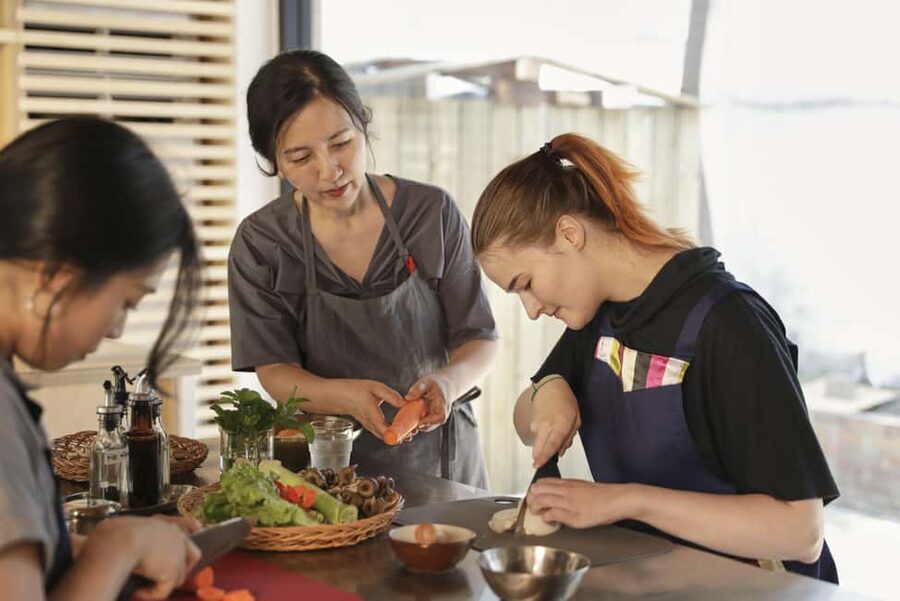
You then cook two Korean dishes with provided ingredients. Each participant prepares an individual portion, rather than helping make one large shared dish. That small distinction makes the class more rewarding: you practice the cutting, seasoning, cooking, and assembly yourself.
The instructor remains available as you work. The teaching style is designed to be easy to follow, and the recipes are not presented as a frantic race against the clock. One participant described the process of making bulgogi as simple and low stress, with a helpful demonstration first. That is good news if you want an activity that feels social and practical rather than demanding.
At the end, you taste the food you prepared. The meal is part of the class, so this is not a cooking lesson followed by a separate restaurant visit. You leave having eaten two dishes and, more importantly, having learned how to make them.
Bibimbap: the best introduction to Korean food
Bibimbap is one of the strongest choices for a first Korean cooking class. It combines rice, cooked seasonal vegetables, and a sunny-side-up egg in one bowl. The final dish is colorful, filling, and easy to adjust to different tastes.
The value of learning bibimbap is in the assembly as much as the cooking. You see how separate ingredients become one balanced meal, with vegetables providing freshness and texture while the rice gives the dish substance. The egg adds richness, and the sauce brings the familiar Korean kick.
You should not expect the dish to be identical every time you make it at home. The vegetables are seasonal, so the exact ingredients can change. That is actually a strength for home cooking: you learn a flexible format rather than a recipe that depends on one hard-to-find shopping list.
Bibimbap is also a practical choice for people who do not eat meat. The dish already centers on rice and vegetables, and the menu can be customized for dietary needs when those needs are shared in advance.
Bulgogi and jeyuk-bokkeum bring the heat
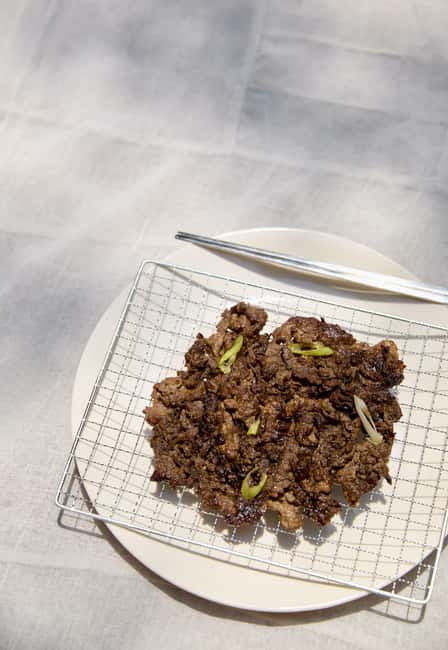
Bulgogi uses thinly sliced beef marinated with soy sauce, sesame, and garlic. The result is savory and familiar, even if Korean food is new to you. Learning the marinade gives you a useful base for recreating the dish at home, and the ingredients are easier to recognize than some more specialized Korean cooking items.
Jeyuk-bokkeum is a spicy pork barbecue seasoned with gochujang. It is the dish most often requested for the class, which makes sense if you enjoy bold flavors and a little heat. Gochujang gives the pork its deep chili flavor, but the intensity may not suit every palate.
The class offers a good way to compare two different approaches to Korean meat dishes. Bulgogi leans on a soy, sesame, and garlic marinade, while jeyuk-bokkeum uses a spicy gochujang sauce. If you have a strong preference, ask which two dishes you will prepare when booking or before the session begins.
Do not assume meat dishes are the only option. One participant forgot to mention that she did not eat meat, and the chef prepared tofu in about ten minutes. The result was described as excellent, but this should not replace advance notice. For allergies or strict dietary requirements, contact the provider beforehand so the kitchen can prepare properly.
More Cooking Classes in Seoul:
- Local Home Korean Cooking Class & Market Adventure in Seoul
★ 5.0 · 1,024 reviews - Master Korean traditional cooking with a Kimchi chef
★ 5.0 · 385 reviews - Seoul: Korean Cooking Class at a Local Home and Market Tour
★ 5.0 · 348 reviews - Seoul: Korean Cooking at Seoul Cooking Club!
★ 5.0 · 311 reviews
Japchae gives you a non-spicy choice
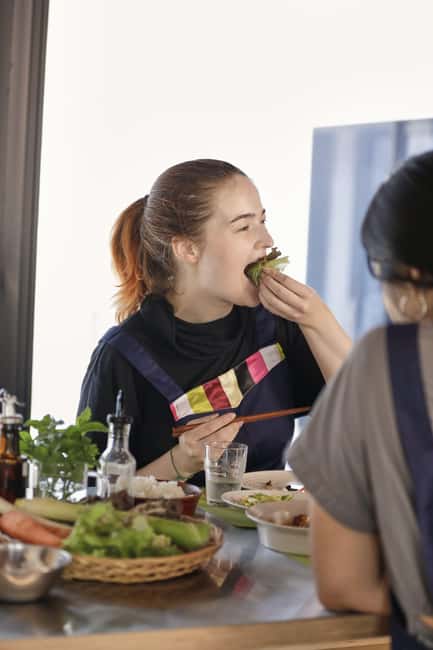
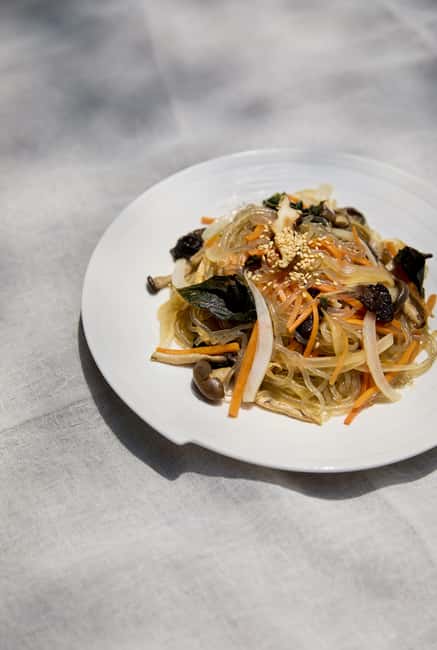
Japchae is the gentlest dish on the menu for visitors who do not want chili heat. It combines glass noodles with a variety of cooked vegetables, creating a soft, lightly seasoned dish that works as a meal or side dish.
The class describes japchae as a royal cuisine, and it offers a useful lesson in Korean texture. The noodles are springy, the vegetables add different levels of bite, and the dish depends on careful mixing rather than a heavy sauce. It is a good pick for families or couples with different spice preferences.
Japchae may also be the best choice if you want something that feels different from the usual Korean barbecue experience. You still learn Korean seasoning and preparation, but the finished dish is lighter and more salad-like than the meat options.
Since the class includes two dishes, the combination matters. Japchae paired with bibimbap gives you a vegetable-focused session. Japchae with a meat dish creates more contrast. If the menu choice is important to you, confirm the available pairings before the class starts.
Why the cooking format is worth the $84 price
At $84 per person, this is more expensive than simply ordering bibimbap or bulgogi at a neighborhood restaurant. If your only goal is to eat Korean food, you can spend less elsewhere.
The value comes from the combination of food and instruction. You get a professional chef, ingredients, individual cooking, cultural explanation, and two dishes to eat. You also gain recipes and techniques that can be repeated later. A class participant specifically noted that the recipes were practical to make at home, and another said the dishes had been recreated several times after returning home.
That repeat value changes the calculation. You are not just buying lunch or dinner. You are paying for a guided introduction to four familiar Korean dishes, with the chance to leave knowing how the meal was built.
The price makes the most sense for you if you enjoy food activities, want a break from sightseeing, or prefer experiences that connect daily life with local culture. It makes less sense if you dislike cooking, need a very short activity, or are mainly looking for the cheapest way to try Korean food.
The two-hour length is well judged. It is long enough to explain the ingredients, demonstrate the methods, let you cook, and eat your food, but short enough to fit into a day of exploring Jongno and Bukchon.
Chef Jia’s teaching style and the group experience
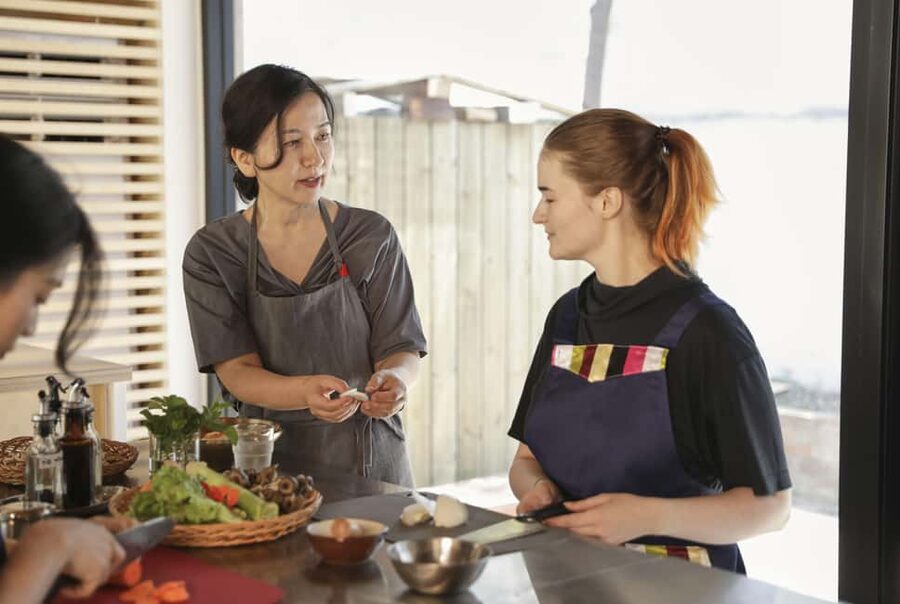
The instructor makes a major difference in any cooking class. Chef Jia has been praised for explaining each step calmly and patiently, while also adding humor and information about Korean culture. That combination matters because a recipe demonstration alone can feel dry.
You should expect instruction in English. The class has a live English-speaking guide, and the provider lists English as the available language. If you are not confident in the kitchen, the demonstration before cooking should make the process easier to follow.
The small-group format can also help you ask questions as you work. One session had three people and allowed close attention from the chef. Other class sizes are not specified, so group intimacy is possible rather than guaranteed.
This is not a class aimed only at experienced cooks. The process has been described as simple and easy to follow, and the focus is on learning rather than showing off technical skill. You can enjoy it as a complete beginner, while confident home cooks will still pick up useful ideas about Korean sauces, noodles, and meal balance.
Dietary requests need to be handled early
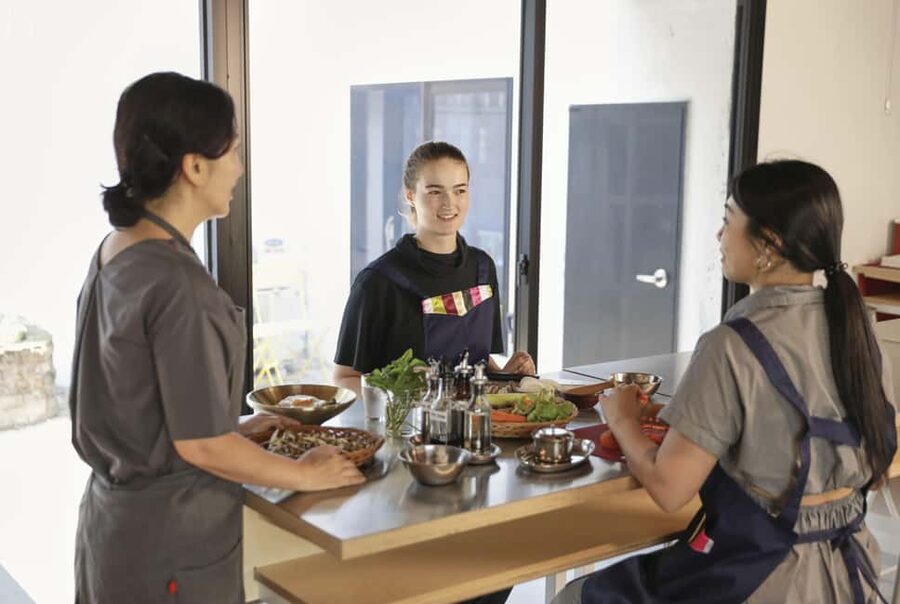
The class can accommodate different diet options, but you should not leave this until the day of arrival. The instructions specifically ask you to report allergies and dietary restrictions in advance.
The menu gives the kitchen several ways to adjust a meal. Bibimbap and japchae can suit people who prefer vegetable-based dishes, and meat can be replaced when the chef has time and the right ingredients. A tofu substitute was prepared quickly for one participant, but advance notice remains the sensible approach.
Be precise when you write to the provider. Say if you avoid all meat, only pork, seafood, eggs, dairy, or particular sauces. Also mention allergies separately from preferences. Korean sauces can contain multiple ingredients, so clear communication is important.
Private and customized classes are available by request. The supplied details do not give the price or exact format for those options, so ask the provider directly if you want a private session or a menu built around specific restrictions.
Who will get the most from this Seoul activity?
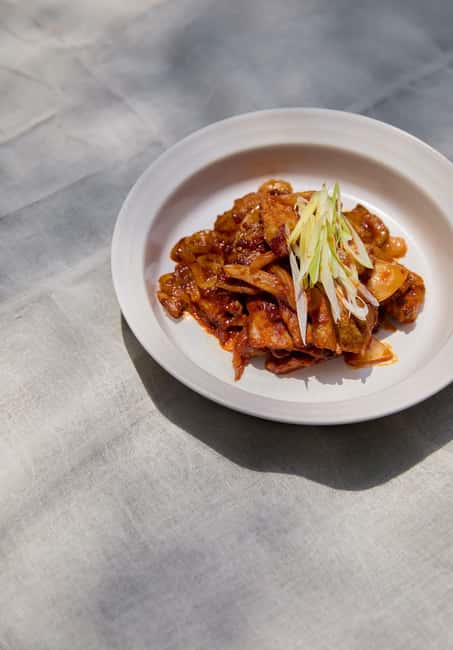
I would recommend this class to food-focused visitors who want more than a restaurant meal. It also suits couples, families, and small groups looking for an indoor activity with a clear start and finish.
It is especially good for you if you want to understand Korean home cooking. The class explains how everyday meals are prepared, not just how to plate a famous dish. You also get the pleasure of eating food you have made yourself.
Beginners are welcome in practical terms. The chef demonstrates the preparation and cooking before you begin, and the recipes are intended to be manageable at home. You do not need to arrive with specialist cooking skills.
The class may be less suitable if you want a broad food tour with several stops around Seoul. You remain in one cooking studio for two hours. It is also not the right pick if you prefer to watch a chef rather than work at a station.
Plan your timing carefully around the Bukchon meeting point. The address is specific, and late arrival can mean missing the activity. If your schedule changes, cancellation is free up to 24 hours before the start time, and you can reserve now and pay later.
Should you book the Bukchon cooking class?
Book it if you want a hands-on way to understand Korean food and you are happy to pay for instruction as well as a meal. The individual station, two dishes, English guidance, and practical recipes give the experience lasting value.
I would choose it for a first visit to Seoul, especially if bibimbap, bulgogi, japchae, or jeyuk-bokkeum are already on your food list. Tell the provider about dietary needs before booking, confirm the dish pairing if you have a strong preference, and arrive at the Bukchon address with time to spare.
Skip it if your budget is tight or if you would rather spend two hours eating in several restaurants. For everyone else, this is a focused and friendly introduction to Korean cooking, with enough cultural context to make the food memorable after the meal is over.
FAQ
Where does the Korean cooking class take place?
The class takes place at O’ngo Food Communications, 137-11 Bukchon-ro, Jongno-gu, Seoul, in the Bukchon area.
How long does the cooking class last?
The activity lasts two hours. Starting times vary, so check availability when booking.
Which language is used during the class?
The class is conducted in English with a live tour guide.
Which Korean dishes can I learn to make?
The possible dishes are bibimbap, jeyuk-bokkeum, japchae, and bulgogi. You prepare and taste two Korean dishes during the class.
Do I cook my own food?
Yes. Each participant prepares an individual dish with provided ingredients and works at their own cooking station.
Can the class accommodate dietary restrictions?
Dietary options can be customized, but you must inform the provider about allergies or dietary restrictions in advance. Private and customized classes are also available by request.
What is the cancellation policy?
You can cancel up to 24 hours before the activity for a full refund. You can also reserve now and pay later.
Recently added around Seoul
- Nami & Maple Road & Theatre des Lumieres Day Tour from Seoul★ 4.8 · 4 reviews
- Gyeongbokgung Palace Photo Session with your own phone★ 5.0 · 4 reviews
- Private Tour around Suwon UNESCO Fortress and Korea Folks Village★ 4.5 · 4 reviews
- Jisan Forest Resort: Ski Full-Day Tour or Shuttle from Seoul★ 5.0 · 4 reviews
- N Seoul Tower + Namsan Cable Car Ticket (Collect in Myeongdong)★ 3.5 · 4 reviews
- Seoul: Deoksugung Palace Night Tour★ 4.5 · 4 reviews
- Private Jeonju Hanok Village – Culinary tour★ 5.0 · 4 reviews
- Seoul Private Walking Tour with a Local★ 5.0 · 4 reviews
Hanok Village Tours, compared.
Seoul City Sightseeing Tour Including Gyeongbokgung Palace, N Seoul Tower, and Namsangol Hanok Village
Read the review →
Gyeongbok Palace and Bukchon Hanok Walking Tour
Read the review →
Best Walking Tour to Gyeongbok Palace Bukchon Hanok Village
Read the review →Experience Korean Cooking in Modern Hanok Kitchen
Read the review →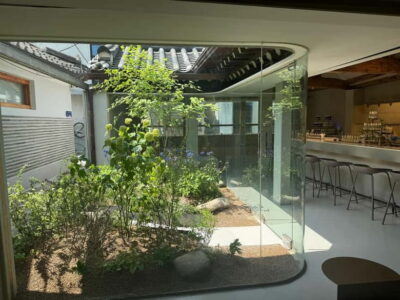
Royal Seoul Cooking Class in a 100-Year-Old Hanok
Read the review →
Royal Seoul Cooking Class in a 100-Year-Old Hanok
Read the review →
Jeonju Hanok Village Full-Day Tour:Jangtaesan Autumn Foliage
Read the review →Browse the lists this tour appears in