
Reviewed · BUKCHON AND INSADONG WALKS
Seoul: Gyeongbok Palace and Bukchon Hanok Walking Tour
Gyeongbokgung Palace gives you Seoul’s grand royal setting, but Bukchon’s narrow lanes show how traditional homes still fit into a modern city. This three-hour morning walk links both places with an English-speaking guide, then finishes near Insadong, where you can shop and eat on your own.
I like the small groups of up to eight, which leave room for questions and personal tips. I also like the practical touch: guides explain public transport and local customs, not just palace dates. The trade-off is clear: you cover a lot of ground in three hours, with uphill walking and limited time at some stops.
Key points at a glance
- Watch the royal guard ceremony: The changing ceremony adds movement, color, and a useful link to palace life.
- See two sides of old Seoul: Gyeongbokgung offers formal royal architecture, while Bukchon brings you into traditional residential lanes.
- Visit a museum inside the palace grounds: The National Folk Museum displays more than 98,000 artifacts about everyday Korean life.
- Learn Seoul’s transport basics: Your guide can help you understand public transport and local etiquette early in your visit.
- Expect real walking: Bukchon includes slopes and climbing, so wear shoes that can handle several hours on foot.
- Finish near Insadong: The tour ends in a useful central area for souvenirs, food, and ideas for the rest of your day.
Starting at City Hall Station and walking into old Seoul
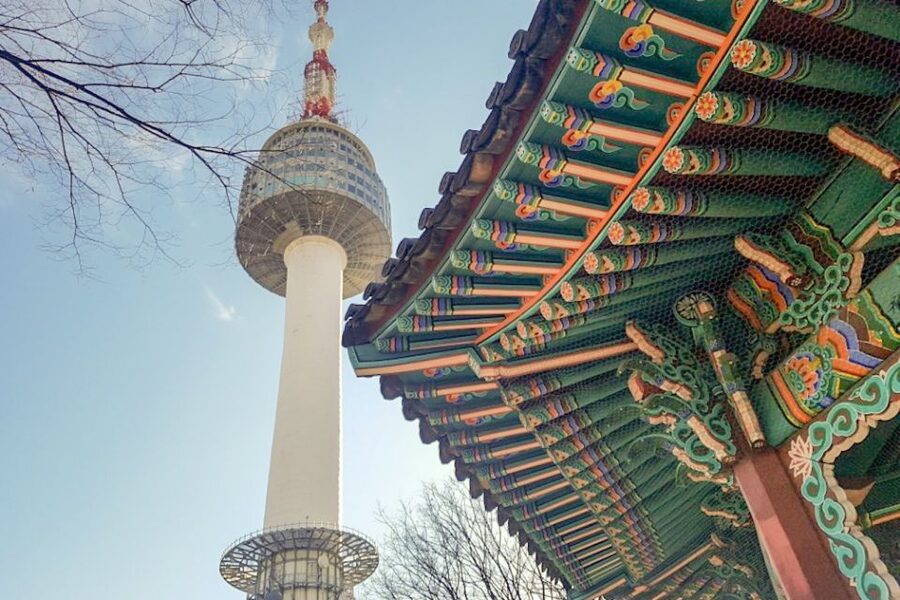
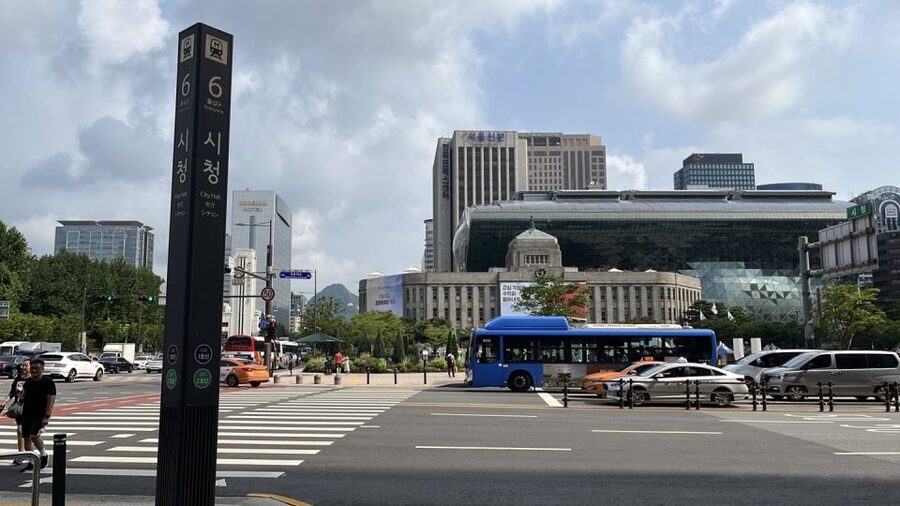
You meet outside Exit 6 of City Hall Station, next to The Plaza hotel. This is a sensible starting point because you do not need a hotel transfer, and a central subway station gives you an early lesson in getting around Seoul.
The walk toward Gyeongbokgung Palace helps you shift from present-day Seoul to the city’s royal past. Guides have also used this opening stretch to point out lesser-known lanes, explain local customs, and answer practical questions about moving around the city.
That transport help can be especially useful if this is your first morning in Korea. Past participants have valued learning how to use a T-money card, how to ride buses, and what public transport etiquette to follow. You are not simply being led from one landmark to the next. You are getting a short orientation to the city you will use for the rest of your stay.
The group is capped at eight people, though bookings can be small enough to feel almost private. Several bookings have had just one or two participants, while other groups have remained compact. That format suits you if you like asking questions or want advice about food, shopping, and places to visit after the walk.
More Bukchon and Insadong walks:
- Seoul: Gyeongbok Palace, Bukchon Village, and Gwangjang Tour
★ 4.9 · 2,321 reviews - Best Seoul City Tour (Gyeongbokgung Palace,Insadong,Namsan Tower)
★ 5.0 · 1,647 reviews - Seoul: Gyeongbok Palace, Bukchon Village, and Gwangjang Tour
★ 5.0 · 1,044 reviews
Gyeongbokgung Palace and the Joseon court
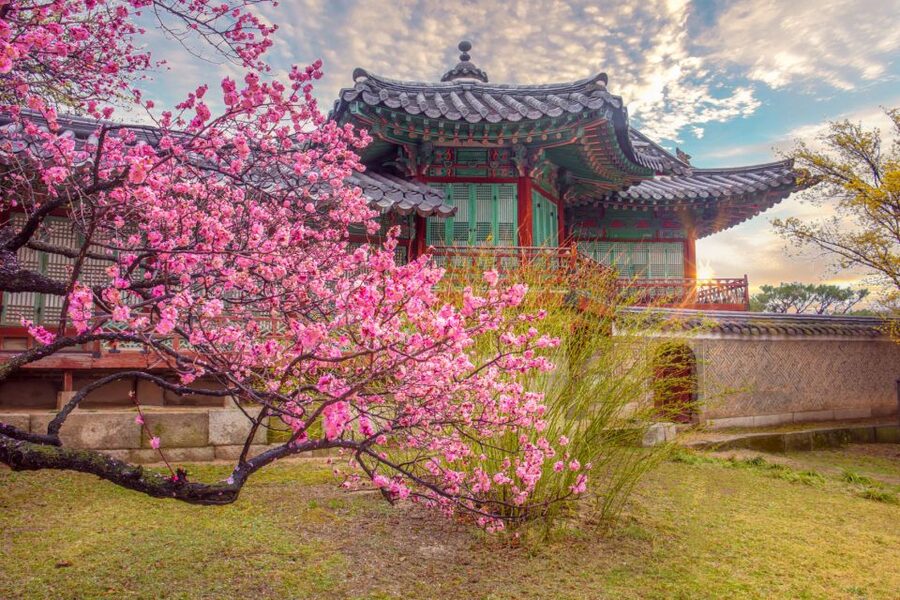
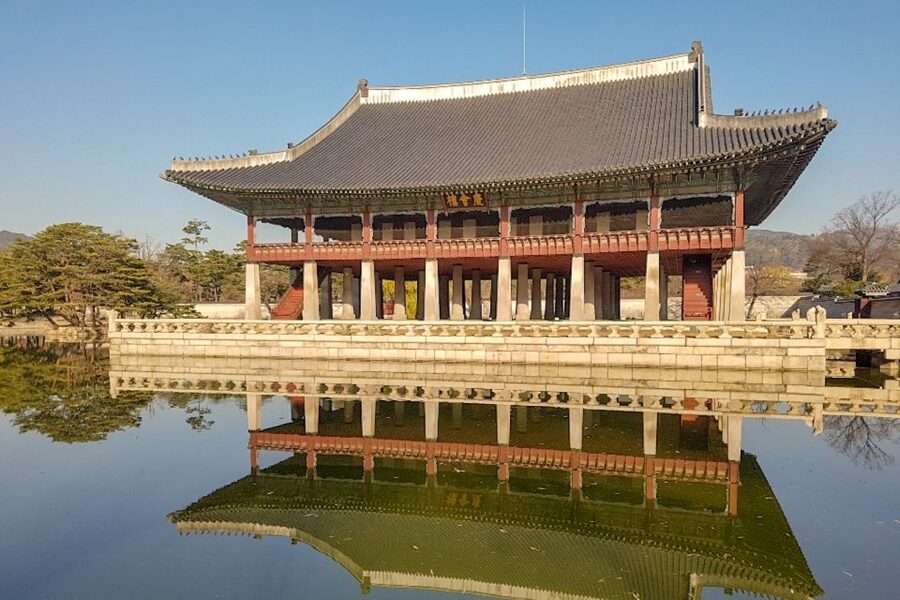
Gyeongbokgung is the tour’s main historical setting. Your guide explains the palace and the roughly 500-year story of the Joseon Dynasty, giving meaning to the courtyards, gates, halls, and royal spaces you pass.
Without a guide, it is easy to admire the tiled roofs and painted details without understanding how the palace functioned. A good explanation connects the buildings to court life, government, ceremony, and the larger story of Korea. Guides including Stella, Joe, Jack, Jay Kim, and Jae have been praised for making the past easy to follow and for linking historical events to Korean life today.
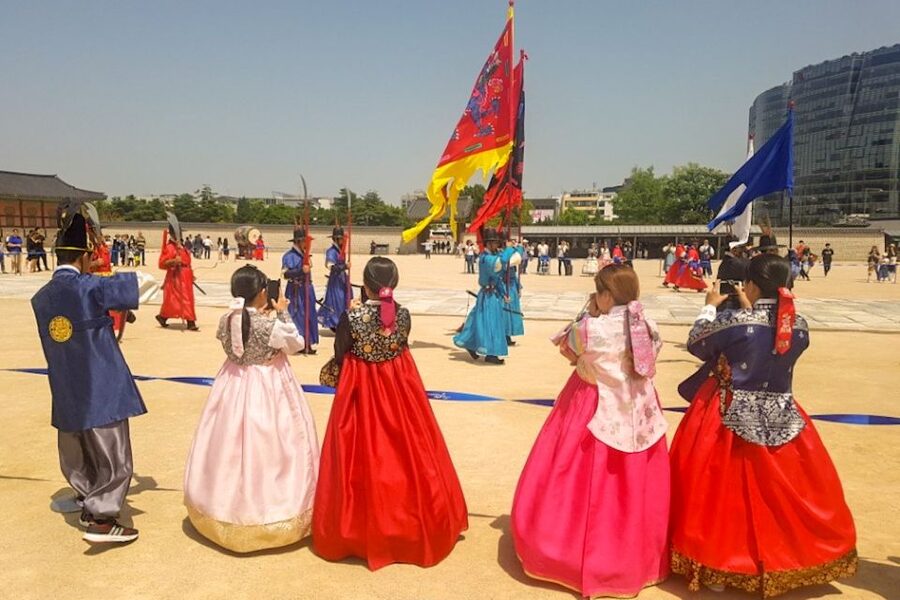
The changing ceremony of the royal guards is a major reason to choose a morning departure. You watch guards in period clothing take part in a formal public display outside the palace. It is a visual event, so have your camera ready, but listen to the explanation too. The ceremony gives you a way to picture the palace as an active royal compound rather than a collection of old buildings.
The palace portion includes walking and standing. You may stop for photographs, but this is not a leisurely sit-down visit with unlimited time in each courtyard. If you want to inspect every architectural detail or spend hours taking portraits in traditional dress, you will need a separate palace visit.
The weather matters here. A December booking continued through intense cold and snow, with the guide helping the participant stay comfortable. That does not remove the need for warm clothing, but it shows why comfortable clothes and shoes are listed as essentials. In rain, heat, snow, or heavy traffic, the precise order or timing can change.
The National Folk Museum’s view of daily life
Inside the palace grounds, the National Folk Museum of Korea adds a different layer to the morning. The palace explains royal power and formal spaces. The museum turns your attention to ordinary Korean life during the Joseon period.
The collection contains more than 98,000 artifacts. In three hours, you will not see everything, but a guided stop helps you understand why selected objects matter. The useful question is not only what an item is, but how it fit into family life, work, food, customs, and social traditions.
This stop is valuable if you prefer history with practical human detail. Guides have been praised for explaining museum objects instead of letting them blur into a long line of displays. Their stories help connect household items and folk traditions with the society that produced them.
Time is the limit. You should expect an introduction and selected highlights, not a full museum study. If the museum is your main reason for visiting, return later with more time. On this tour, it works best as a bridge between palace history and the residential streets of Bukchon.
Bukchon Hanok Village and Samcheongdong Alley
The tour then moves to Bukchon Hanok Village, including a walk through Samcheongdong Alley. This is where Seoul’s old and new sides meet most clearly.
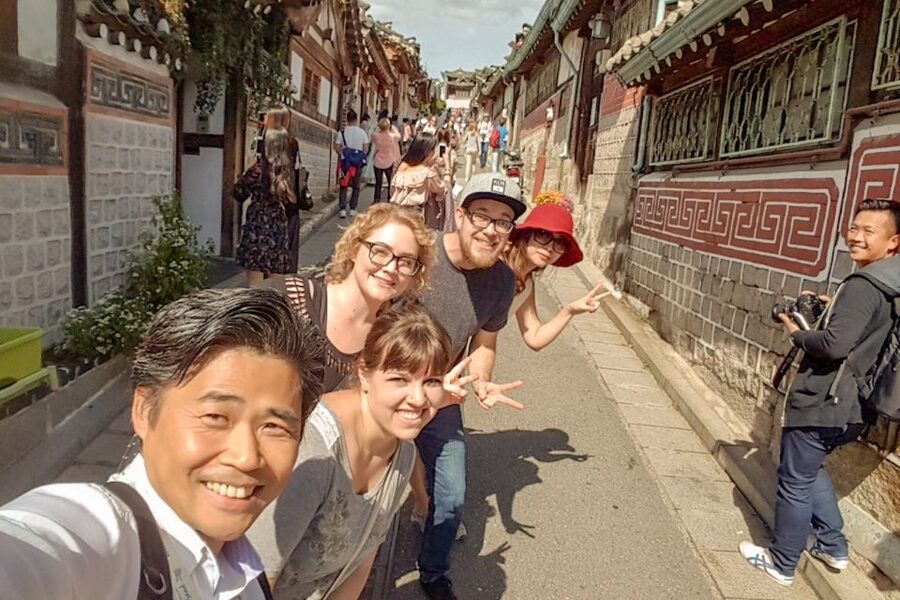
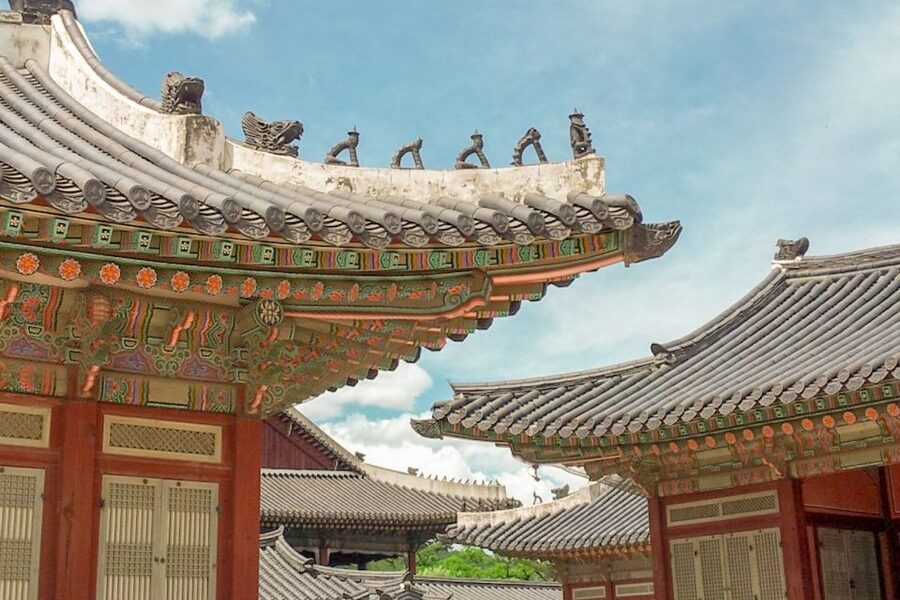
Hanok are traditional Korean houses, and Bukchon lets you see them in a living neighborhood rather than only behind museum glass. The streets bring you close to tiled roofs, wooden details, walls, and changing views between buildings. Modern Seoul remains nearby, which is part of the appeal. You are seeing traditional housing within a working city, not an isolated historic set.
The route through smaller alleys is one of the tour’s strongest features. Guides know short paths and photo locations that can be easy to miss if you follow only the broad streets. They can also explain how the neighborhood fits into the city’s present life.
Bukchon is not flat. Expect uphill sections, steps, and some climbing. One participant compared the extra effort to needing ice cream for the uphill stretch, which is a useful warning in friendly form. Wear proper walking shoes, especially if you have already spent a morning sightseeing or if the pavement is wet.
You should also keep your voice down and follow your guide’s lead. Bukchon is a residential area, so the point is to look carefully without treating every doorway as a photo prop. The experience is better when you notice the design and the way the neighborhood functions, rather than rushing from one picture spot to another.
This section can feel brief if you want a long, unhurried exploration. The advantage is coverage: in one morning, you see the palace, museum, and traditional village. The disadvantage is that the schedule does not leave much spare time for entering shops, lingering at every overlook, or exploring side streets alone.
More Hanok Village Tours in Seoul:
- Seoul City Sightseeing Tour Including Gyeongbokgung Palace, N Seoul Tower, and Namsangol Hanok Village
★ 5.0 · 1,423 reviews - Best Walking Tour to Gyeongbok Palace Bukchon Hanok Village
★ 5.0 · 138 reviews - Experience Korean Cooking in Modern Hanok Kitchen
★ 5.0 · 118 reviews - Seoul: Perfume-Making Workshop in a Hanok
★ 4.9 · 110 reviews
Insadong: a useful finish for the rest of your day
The walk ends in the Insadong area. That is a practical finish because you can continue exploring without returning to the starting point.
Insadong is a good place to look for souvenirs, and your guide can suggest shops or places to eat. Guides have also helped participants find Korean street food, vegetarian choices, skincare products, tea, and local restaurants. Those suggestions are not a formal tasting program, so plan to pay for anything you buy or eat after the tour.
This final location also gives you a chance to ask targeted questions. You might ask where to go for Korean food, which neighborhoods suit the rest of your schedule, or how to reach your next stop by subway or bus. Guides such as Stella and Ben have been especially appreciated for giving practical recommendations and helping visitors feel more comfortable navigating Seoul.
If you want a food tour, this is not the right booking. Food advice may be part of the conversation, but no meal or tasting is included. Think of Insadong as a useful launch point for your own afternoon.
The guides make the difference
The itinerary is strong, but the guide is the part that can turn a standard sightseeing walk into a memorable introduction to Seoul.
Stella appears repeatedly in the tour’s feedback for her friendly manner, clear English, historical explanations, food suggestions, and personal tips. Joe has been praised for humor, detailed stories, and patient explanations, including in difficult winter weather. Jay Kim has led discussions that ranged from Korean history and politics to food and current rights movements.
Other named guides include Jack, Jae, Ben, Kat, Kelly, Sam, Phoebe, Joseph, Catherine, and Kay. Several guides have a teaching background or a long connection with Korean history, which helps explain why participants often describe the tours as well organized and easy to follow.
You cannot choose a particular guide based on the information provided, so book for the route and format rather than expecting one specific person. The common strength is the chance to ask questions. A guide can explain the difference between a ceremonial building and an everyday space, help with Korean pronunciation, suggest a photo angle, or show you how to continue by public transport.
The guide’s style also affects the pace. Some participants received a relaxed walk with time for photos. Others covered a great deal of ground in the three-hour window. If you want maximum detail at every location, say so early and accept that you may see fewer side streets.
What $88 buys you
At $88 per person, this is not Seoul’s cheapest walking tour. The price includes the guide and Gyeongbokgung entrance ticket, but not hotel pickup, meals, drinks, souvenirs, or transport costs beyond reaching the meeting point.
The value comes from the compact route and the explanation. You cover three major cultural stops, learn how to get around Seoul, and finish in a district that is easy to use for the rest of the day. A small group can also feel close to private when only one or two people book.
I would see the price as reasonable if you are visiting Seoul for the first time, have limited time, or prefer context instead of reading signs on your own. It is less compelling if you already know the palace, Bukchon, and Seoul’s transport system, or if you plan to spend a full day at each site.
The three-hour length is a strength for a busy itinerary. It leaves your afternoon open for Insadong, markets, museums, shopping, or another neighborhood. The same short length means you must accept a brisk route and a limited museum visit.
Free cancellation up to 24 hours before the tour and reserve-now, pay-later booking make it easier to fit into a changing schedule. Still, check the available morning start time and leave room for weather or traffic changes.
Who should book this morning walk
I recommend it most for first-time visitors who want a clear introduction to Seoul’s history, architecture, neighborhoods, and transport. Solo visitors can benefit from the small group, and the experience may feel nearly private if demand is low.
It also suits couples, families with older children, and anyone who prefers a guide who can adjust the conversation. The route offers plenty of visual interest, but it is not a passive sightseeing ride. You will walk, stand, climb, and listen.
You should think twice if you have difficulty with hills or want a slow, highly detailed palace visit. The supplied information does not describe an accessibility arrangement, so contact the provider before booking if mobility is a concern.
Bring comfortable shoes and comfortable clothes. If you visit in winter, dress for outdoor standing. In warm or wet weather, the same advice matters for a different reason. The itinerary can change with weather and traffic, so keep your schedule flexible.
My verdict: a strong first morning in Seoul
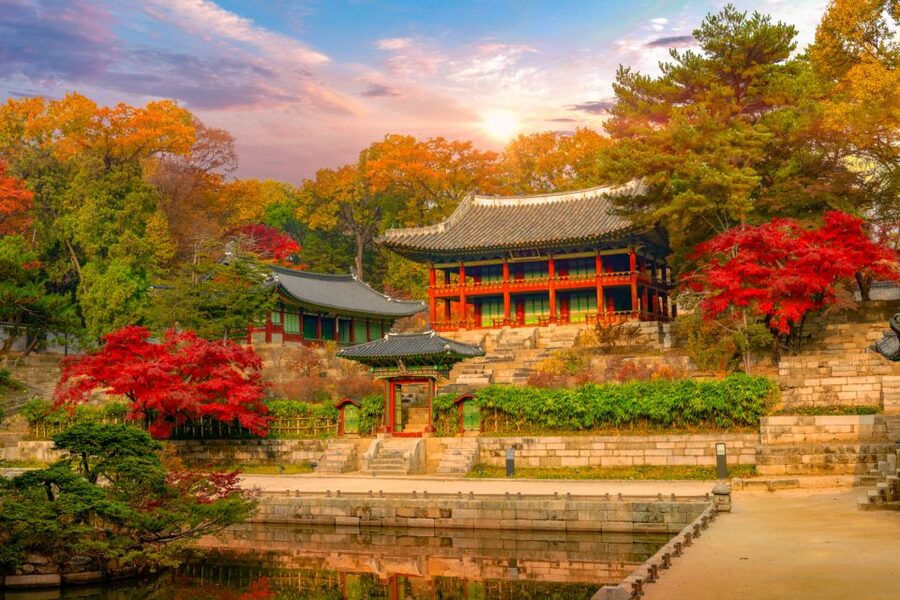
I would book this tour early in a Seoul visit. It gives you a useful framework: royal power at Gyeongbokgung, everyday life at the Folk Museum, traditional housing in Bukchon, and shopping and food options near Insadong.
The best reason to choose it is the combination of history and practical city advice. You are not only looking at old buildings. You are learning how the city works and receiving ideas for the days ahead.
The main caution is the pace. If you need lots of time for photographs, museum displays, or quiet wandering, return to one or more stops later. For a compact, guide-led morning that helps you get your bearings, $88 is a fair price, especially when the group stays small.
FAQ
How long is the Gyeongbokgung Palace and Bukchon tour?
The tour lasts three hours and takes place in the morning.
Where does the tour meet?
Meet outside City Hall Station at Exit 6, right next to The Plaza hotel.
Where does the tour end?
The morning walk ends in the Insadong area.
Is hotel pickup included?
No. Hotel pickup and drop-off are not included.
What language is the tour conducted in?
The live tour guide speaks English.
How large is the group?
The group is limited to eight participants. Some bookings may be smaller.
Does the price include palace admission?
Yes. The Gyeongbokgung entrance ticket is included, along with the guide.
Will I see the changing of the royal guards?
The morning itinerary includes watching the changing ceremony of the royal guards. The exact schedule can be affected by weather and traffic conditions.
What should I bring?
Bring comfortable shoes and comfortable clothes. You should be ready for several hours of walking and some uphill sections in Bukchon Hanok Village.
More Walking Tours in Seoul
- Seoul moonlight walking tour with local historian
★ 5.0 · 940 reviews - Seoul: Nighttime Hidden Gems Walking Tour
★ 5.0 · 775 reviews - Seoul: Evening Dark History, Folklore & Ghost Story Walking Tour
★ 5.0 · 593 reviews - Seoul: Dark Side of the City and Ghost Stories Walking Tour
★ 4.8 · 484 reviews
Recently added around Seoul
- Gyeongbokgung Palace Photo Session with your own phone★ 5.0 · 4 reviews
- Private Tour around Suwon UNESCO Fortress and Korea Folks Village★ 4.5 · 4 reviews
- Nami & Maple Road & Theatre des Lumieres Day Tour from Seoul★ 4.8 · 4 reviews
- N Seoul Tower + Namsan Cable Car Ticket (Collect in Myeongdong)★ 3.5 · 4 reviews
- Jisan Forest Resort: Ski Full-Day Tour or Shuttle from Seoul★ 5.0 · 4 reviews
- Seoul: Deoksugung Palace Night Tour★ 4.5 · 4 reviews
- Private Jeonju Hanok Village – Culinary tour★ 5.0 · 4 reviews
- Seoul Private Walking Tour with a Local★ 5.0 · 4 reviews
Bukchon and Insadong Walks, compared.
Gyeongbok Palace, Bukchon Village, and Gwangjang Tour
Read the review →
Best Seoul City Tour (Gyeongbokgung Palace,Insadong,Namsan Tower)
Read the review →Gyeongbok Palace, Bukchon Village, and Gwangjang Tour
Read the review →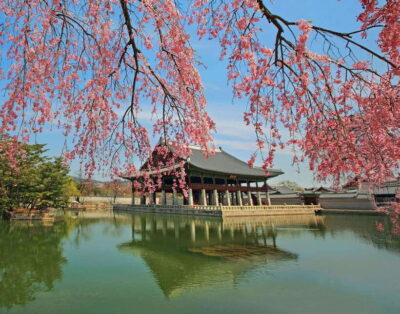
Seoul Highlights: Gyeongbok Palace, Insadong & N Seoul Tower
Read the review →
Korean Palace and Market Tour in Seoul Including Insadong and Gyeongbokgung Palace
Read the review →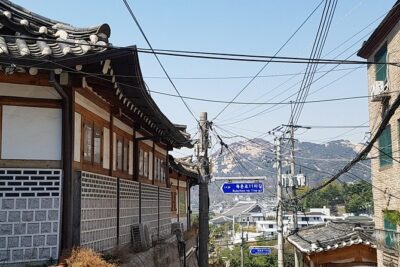
Best Walking Tour to Gyeongbok Palace Bukchon Hanok Village
Read the review →
Carve Your Personal Korean Stone Seal with Jeongju in Insadong
Read the review →
Write a Meaningful Korean Calligraphy Scroll in Insadong
Read the review →Browse the lists this tour appears in