
Reviewed · BUKCHON AND INSADONG WALKS
Seoul: Gyeongbok Palace, Bukchon Village, and Gwangjang Tour
Gyeongbokgung Palace, Bukchon’s old wooden homes, and Gwangjang Market give you three very different views of Seoul in one outing. Add a mountain lookout and the Royal Guard Changing Ceremony, and this becomes a useful way to get your bearings fast in the capital.
I like the tour’s strong mix of culture and scenery, especially the jump from palace courtyards to the narrow lanes of Bukchon and then up to Bugak Pavilion. I also like the well-regarded guides, including Sophie, Sunny, Grace, Chloe, Shin, and Henry, who are praised for clear English, humor, patience, and helpful photo tips. The main consideration is pace: this is a sightseeing sampler, not a slow, in-depth visit to each place.
Key reasons to consider this Seoul tour
- Royal ceremony included: Watch the colorful Royal Guard Changing Ceremony at Gyeongbokgung Palace.
- Three sides of Seoul: See royal architecture, a traditional residential district, and a famous food market in one trip.
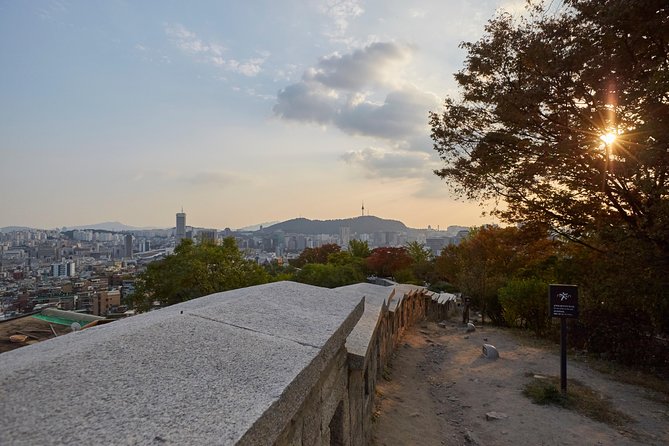
- Bugak views: Ride toward Bugak Skyway and stop at Bugak Palgakjeong for broad views over Seoul.
- Flexible formats: Choose a half-day tour, a Tuesday route featuring N Seoul Tower and Deoksugung Palace, or a full-day version.
- Easy transport: Air-conditioned minivan or coach connects sights that would take longer to combine by subway.
- Useful market finish: End at Gwangjang Market, where you can buy snacks or make your own lunch.
Gyeongbokgung Palace and the changing of the guard
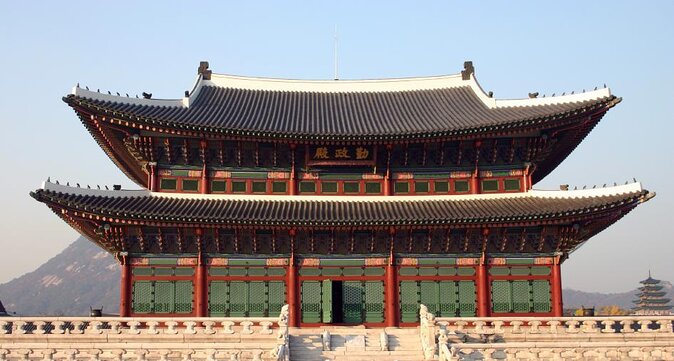
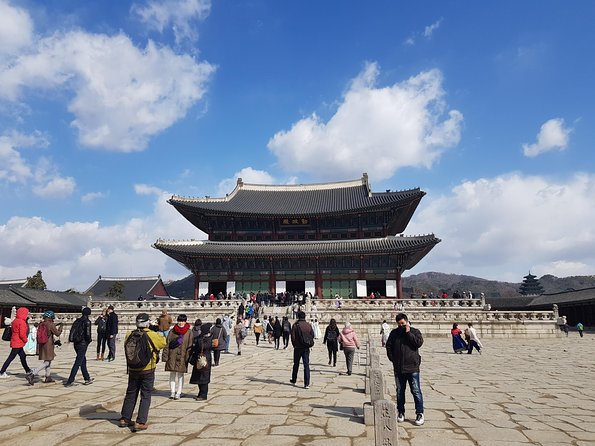
The tour begins with Gyeongbokgung Palace, Seoul’s largest and often considered its most beautiful royal palace. You spend about an hour with an English-speaking guide, which gives the grand gates, courtyards, painted details, and ceremonial spaces more meaning than a quick self-guided walk.
The highlight is the Palace Royal Guard Changing Ceremony. This is one of those short cultural displays that makes a palace visit feel connected to Korea’s royal past rather than simply photogenic. Bright uniforms, formal movements, and traditional ceremony provide plenty of good photo opportunities.
A guide matters here because the palace grounds can otherwise feel like a series of impressive buildings without a clear story. Guides such as Grace, Sophie, Shin, and Sunny are repeatedly praised for explaining Korean customs and history in an accessible way. Chloe has also been noted for using a tablet to show pictures while speaking, a useful touch when a detail is hard to see from a distance.
You should not treat the one-hour palace visit as a full study of the Joseon dynasty. It is a focused introduction, designed to leave room for several other stops. If the palace is your main reason for coming, you may want extra independent time on another day.
Morning departures can be a smart choice. One guest specifically found the palace nearly empty in the morning, making it easier to see the courtyards and take photographs without large crowds. Exact starting times depend on the option you book.
More Bukchon and Insadong walks:
- Best Seoul City Tour (Gyeongbokgung Palace,Insadong,Namsan Tower)
★ 5.0 · 1,647 reviews - Seoul: Gyeongbok Palace, Bukchon Village, and Gwangjang Tour
★ 5.0 · 1,044 reviews - Seoul Highlights: Gyeongbok Palace, Insadong & N Seoul Tower
★ 4.7 · 726 reviews
Bukchon Hanok Village, with photo stops and a reality check
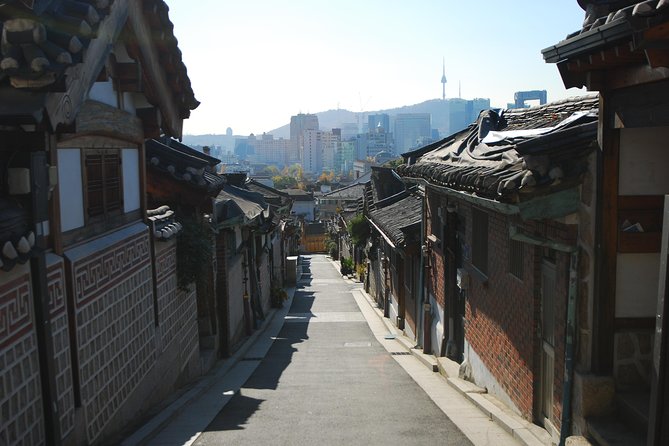
From the palace, the tour moves to Bukchon Hanok Village for about 30 minutes. Hanok means traditional Korean house, and Bukchon is known for its sloping lanes lined with tiled roofs, timber frames, and carefully preserved homes.
This is a good place to see how old Seoul fits into the modern city. Many traditional houses now serve as cultural centers, guesthouses, and restaurants. The district is especially popular for photographs, so your guide can help you find attractive angles and take pictures of you rather than leaving you to rely on a stranger or a timer.
The short visit is both its strength and its limit. You get a clear introduction and time for photographs, but not much room for wandering down every lane. Bukchon is also a living residential area, so the tour is best enjoyed respectfully and quietly. You are looking at people’s homes, not an open-air stage set.
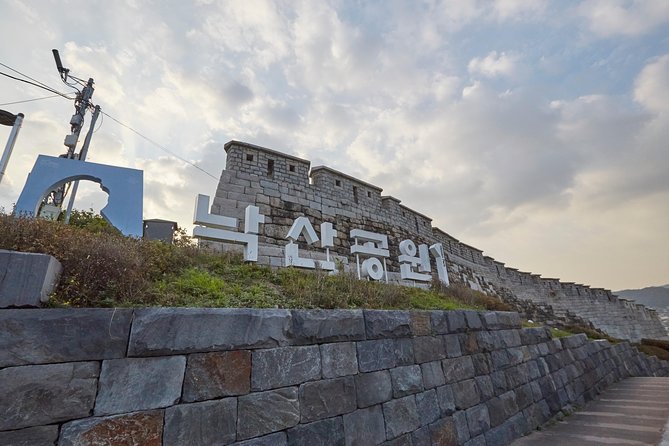
If Bukchon Hanok Village is closed, the tour substitutes Namsangol Hanok Village. That gives you another way to see traditional Korean architecture, but it is not the same neighborhood experience. Check the selected option and current operating details before booking if Bukchon is essential to your plans.
Comfortable shoes are important. The tour combines palace grounds, village lanes, market aisles, and lookout access. It is not described as suitable for wheelchair users, so anyone with mobility concerns should consider the walking and vehicle transfers carefully before reserving.
Bugak Skyway and the view from Bugak Palgakjeong
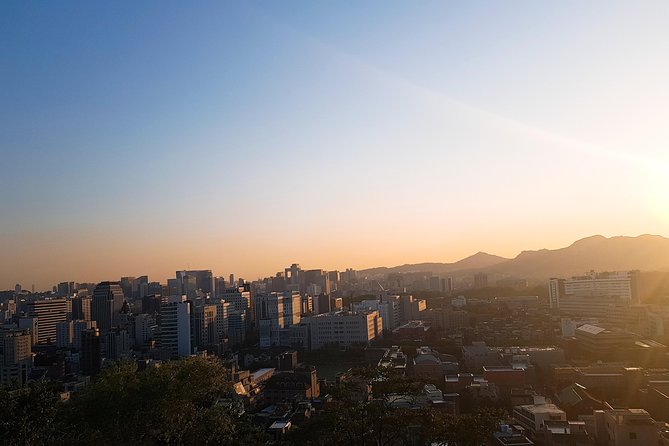
The next section takes you along Bugak Skyway toward Bugak Palgakjeong, also called Bugak Pavilion. The tour allows roughly 30 minutes for Bugak Skyway and about 10 minutes at the pavilion.
This stop changes the rhythm of the day. After historic buildings and crowded photo lanes, you get open views over Seoul from the slopes of Bugaksan Mountain. The pavilion is a peaceful place to pause, take pictures, and see how the city’s dense districts spread beneath the surrounding hills.
The lookout is a scenic bonus rather than a long mountain walk. You will not be spending hours on a trail, and the 10-minute pavilion stop is brief. Still, it adds something the palace and market cannot provide: a sense of Seoul’s shape and setting.
Weather will affect this part of the experience. The tour operates in rain or shine, so mist, cold, or low cloud can reduce the views. Bring suitable clothing, particularly in winter. One guide, Sophie, was praised for handing out warmers on a bitterly cold day, but you should still dress for outdoor time rather than count on that extra kindness.
The Korean Ginseng Museum and the shopping stop
The tour then visits Cheongha Korea Ginseng, described as a Korean Ginseng Museum, for about 30 minutes. You learn about ginseng’s long use in East Asian medicine and browse Korean ginseng products.
This stop is different from the palace and village. It is partly educational and partly a shopping visit. Korean ginseng is presented as a major traditional product, with attention to its use as an adaptogenic herb and its reputation for quality.
The practical point is simple: you do not have to buy anything. Personal expenses are not included, and the stop may feel more commercial than the historic sights. If you are interested in Korean health products or gifts, it can be useful. If shopping is not your priority, keep your expectations modest and remember that this is one part of a larger route.
The ginseng visit also gives the tour a cultural angle beyond palaces and photo streets. It shows how Korean traditions are packaged and sold today, which can be interesting when approached with a curious but careful eye. Ask questions about products and prices before purchasing, and do not feel pressured to turn an optional shopping opportunity into a major expense.
A few more Seoul half-days to weigh up
- Best DMZ Tour Korea from Seoul (Red Suspension Bridge Optional)
★ 5.0 · 41,422 reviews - DMZ Tour: 3rd Tunnel, Option(Suspension Bridge, Boat) from Seoul
★ 5.0 · 21,373 reviews - DMZ tour south Korea from Seoul (NK experience hall, defector)
★ 5.0 · 20,599 reviews - Seoul: DMZ Tour with Optional Suspension Bridge
★ 4.8 · 5,277 reviews
Gwangjang Market: finish with bindaetteok and mayak gimbap
The standard half-day tour ends at Gwangjang Market, Seoul’s first market, while the full-day version includes it as a later stop. This is where the tour shifts from formal sightseeing to eating and browsing.
Gwangjang is known for affordable goods and food stalls. The market is especially associated with bindaetteok, savory mung bean pancakes, and mayak gimbap, small seaweed rice rolls with a reputation for being hard to stop eating. Food and drinks are not included, so bring money for snacks or lunch.
Ending here works well because you are free to choose your own food rather than being tied to a fixed restaurant menu. You can try one dish, share several, or simply walk through the market before continuing your Seoul plans. The tradeoff is that the tour does not provide a meal, and the market can feel crowded and noisy.
For the half-day option, the official drop-off is at Gwangjang Market. For some full-day routes, the final drop-off is at Myeongdong Cathedral. That makes the tour useful for continuing into central Seoul, but it is not a hotel drop-off service unless your selected private or pickup option says otherwise.
The Tuesday route is different
Tuesday bookings use a different version of the day. Instead of Gyeongbokgung Palace and Bugak Skyway, the route includes N Seoul Tower, with the observatory not included, Bukchon Hanok Village, Deoksugung Palace, the Royal Guard Changing Ceremony, the ginseng stop, and Gwangjang Market.
This variation matters if you have a particular palace in mind. Deoksugung offers a different setting from Gyeongbokgung, and N Seoul Tower gives you another recognizable Seoul viewpoint. Since the observatory ticket is not included, check exactly what access your package provides before assuming you will go to the top.
If you are booking around palace schedules, read the Tuesday option carefully. The tour still provides royal architecture, a guard ceremony, Bukchon, food, and shopping, but the order and sights are not identical to the regular route.
What the full-day version adds
The full-day tour keeps the main sights, then adds lunch time at your own expense, the War Memorial of Korea, Jogye Temple, and Tapgol Park. It ends at Myeongdong Cathedral.
The War Memorial visit focuses mainly on the third-floor United Nations Memorial Cemetery section. This adds modern Korean history and international wartime context to a day otherwise centered on royal Seoul and traditional culture.
Jogye Temple brings Buddhist culture into the route, while Tapgol Park offers another central Seoul stop with historical importance. These additions make the full-day option a better fit if you want a broad introduction to Korean history, religion, and city life rather than only the most photographed sights.
The drawback is stamina. Four to nine hours is a wide range because the options differ, but the full-day route is clearly a long day with repeated walking, vehicle transfers, and outdoor stops. Lunch is not included, and you should budget separately for food, drinks, shopping, and any personal purchases.
Guides, transport, and the pace of the day
The guide is a major part of this experience. The strongest pattern across the available feedback is not simply that guides know the sights, but that they explain clearly, keep different age groups involved, answer questions, and watch out for the group.
Sophie is praised for warmth, historical detail, useful cultural explanations, and helping people through cold weather. Sunny is repeatedly described as friendly, funny, attentive, and willing to take photos. Grace receives praise for clear explanations and a caring manner, while Chloe is noted for humor, photos, and lively use of visual aids. Shin is described as charismatic, well organized, and good at making palace history easy to follow. Henry and Winnie also receive strong marks for friendly, informative guiding.
That range of names reflects a team rather than a single fixed guide. You cannot choose from the comments which person will lead your departure, but the pattern is encouraging. The listed language is English.
Transport is by air-conditioned minivan or coach. That matters in Seoul, where moving between a palace district, a mountain viewpoint, and a market by public transport can take extra time and involve transfers. The vehicle does not remove walking, but it makes the route practical for a short visit.
Pickup is optional and only available with selected bookings, including private tours and certain central Seoul accommodation areas such as Gangnam, Myeongdong, Gwanghwamun, Itaewon, and Dongdaemun. Pickup times are listed between 7:20 AM and 8:40 AM. Otherwise, use the confirmed meeting point, which varies by option. Do not try to join at Gyeongbokgung after the tour has begun.
Is $32 a good value?
At $32 per person, the half-day tour offers good value if you want transport, a live English-speaking guide, palace entrance, a guard ceremony, Bukchon, a mountain viewpoint, a ginseng visit, and a finish at Gwangjang Market.
The value is strongest for a first visit or a short stay. You can cover several parts of Seoul without working out the route yourself, and the guide adds context that free sightseeing would not provide. Air-conditioned transport is another practical advantage.
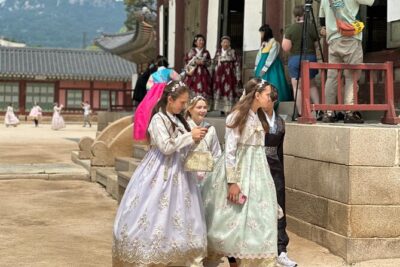
The price does not cover food, drinks, hanbok rental, personal expenses, travel insurance, or hotel drop-off. The ginseng stop may also lead you toward purchases, though buying is optional. For a relaxed, private experience, choose the private-group option if available, but expect the shared tour to offer the better price.
A 4.9 rating from 2,321 ratings suggests strong overall satisfaction, and transport receives especially high marks, with 95 percent of ratings giving it a perfect score. That does not mean every departure will match your preferred pace, so choose the half-day route for efficiency and the full-day route for wider coverage.
Who should book this tour?
I would recommend it to first-time visitors, families, solo visitors who want an organized introduction, and anyone with only part of a day in Seoul. It is also a good choice if you want palace history explained in English and prefer not to manage several subway connections.
You should think twice if you want long, quiet visits at each sight, dislike shopping stops, or need wheelchair access. The route is active, weather-dependent, and designed to show you many places rather than let you linger at one.
Canceling is flexible up to 24 hours before departure for a full refund, and reserve-now-pay-later is available. Those policies help if your Seoul schedule is still shifting, but check the exact conditions attached to your chosen option.
FAQ
How long does the Seoul tour last?
The available options last between 4 and 9 hours. The exact duration depends on whether you choose the shared half-day route, Tuesday route, private option, or full-day tour.
What sights are included on the regular shared tour?
The regular route includes Gyeongbokgung Palace, the Royal Guard Changing Ceremony, Bukchon Hanok Village, Bugak Skyway, Bugak Palgakjeong, the Korean Ginseng Museum, and a drop-off at Gwangjang Market.
Is the Royal Guard Changing Ceremony included?
Yes. The regular route includes the ceremony at Gyeongbokgung Palace, while the Tuesday route includes the ceremony at Deoksugung Palace.
What happens if Bukchon Hanok Village is closed?
The tour visits Namsangol Hanok Village instead if Bukchon Hanok Village is closed.
Is food included?
No. Food and drinks are not included. You can buy lunch or snacks at Gwangjang Market, including bindaetteok and mayak gimbap.
Is hotel pickup available?
Pickup is available only with selected options or private tours. Listed central Seoul areas include Gangnam, Myeongdong, Gwanghwamun, Itaewon, and Dongdaemun, with pickup scheduled between 7:20 AM and 8:40 AM.
Is N Seoul Tower included on every tour?
No. N Seoul Tower is included on the Tuesday route. The observatory ticket is not included.
Can wheelchair users join this tour?
The tour is not suitable for wheelchair users. Comfortable walking shoes are recommended, and the tour operates in all weather.
Recently added around Seoul
- Gyeongbokgung Palace Photo Session with your own phone★ 5.0 · 4 reviews
- Private Tour around Suwon UNESCO Fortress and Korea Folks Village★ 4.5 · 4 reviews
- Nami & Maple Road & Theatre des Lumieres Day Tour from Seoul★ 4.8 · 4 reviews
- N Seoul Tower + Namsan Cable Car Ticket (Collect in Myeongdong)★ 3.5 · 4 reviews
- Jisan Forest Resort: Ski Full-Day Tour or Shuttle from Seoul★ 5.0 · 4 reviews
- Seoul: Deoksugung Palace Night Tour★ 4.5 · 4 reviews
- Private Jeonju Hanok Village – Culinary tour★ 5.0 · 4 reviews
- Seoul Private Walking Tour with a Local★ 5.0 · 4 reviews
Bukchon and Insadong Walks, compared.
Best Seoul City Tour (Gyeongbokgung Palace,Insadong,Namsan Tower)
Read the review →
Gyeongbok Palace, Bukchon Village, and Gwangjang Tour
Read the review →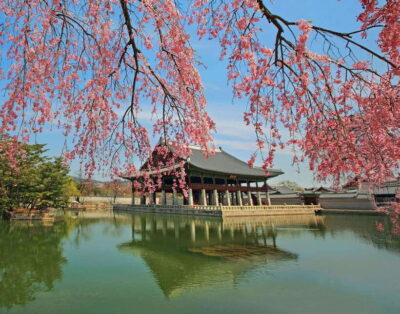
Seoul Highlights: Gyeongbok Palace, Insadong & N Seoul Tower
Read the review →
Korean Palace and Market Tour in Seoul Including Insadong and Gyeongbokgung Palace
Read the review →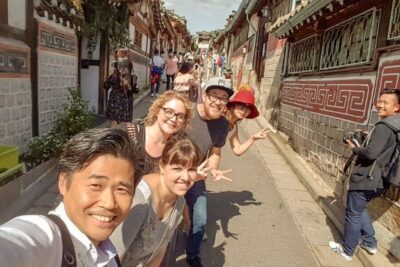
Gyeongbok Palace and Bukchon Hanok Walking Tour
Read the review →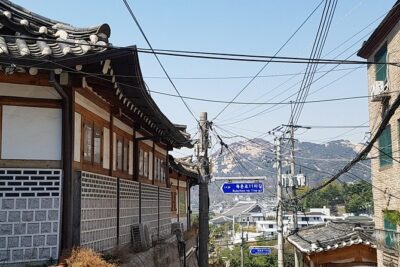
Best Walking Tour to Gyeongbok Palace Bukchon Hanok Village
Read the review →
Carve Your Personal Korean Stone Seal with Jeongju in Insadong
Read the review →
Write a Meaningful Korean Calligraphy Scroll in Insadong
Read the review →Browse the lists this tour appears in