
Reviewed · SEOUL TOURS
Hidden Stories & Flavors: Traditional Market Food Tour
Gwangjang Market is best understood one bite at a time, and this two-hour walk adds something unusual: conversation about modern Korea, military service, and the division of the peninsula while you eat. The menu covers eight familiar market foods, from dumplings and meatballs to spicy rice cakes and sweet pancakes.
I like the small group of no more than 10, which should make it easier to ask questions and keep up in crowded aisles. I also like the guide’s personal angle. Taeseong, named in several bookings, is praised for clear English, friendly conversation, and explaining both the food and the stories behind it.
The main thing to consider is quantity. The portions can be generous, so arriving hungry matters. Also, this is not a formal historical tour, and the food menu can change with market conditions.
Key points at a glance
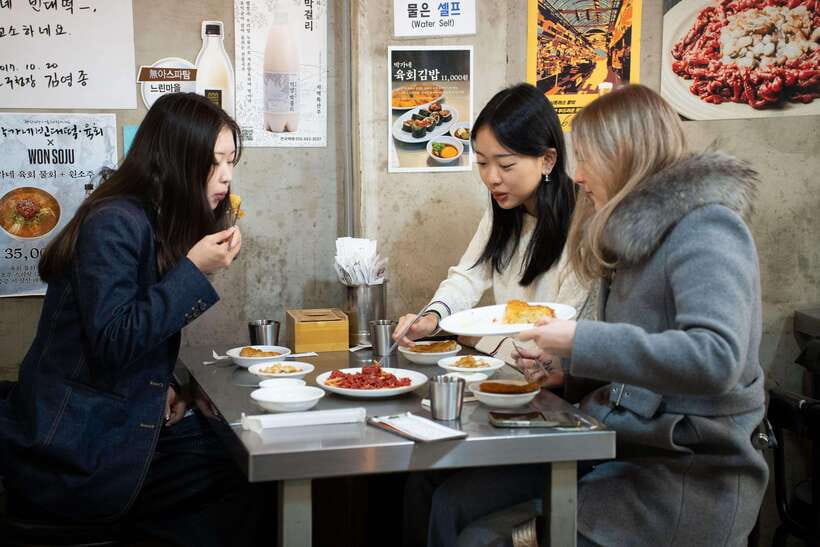
- Eight or more Korean market tastes: Try dumplings, meatballs, Korean hotdog, rice roll, spicy rice cake, fish cake, sweet Korean pancake, and fish-shaped bun.
- Gwangjang Market setting: The entire two-hour walk takes place in one of Seoul’s traditional markets.
- Personal modern-Korea stories: Expect discussion of Seoul, social life, the peninsula’s division, and military experience.
- English-speaking local guide: Taeseong has led departures, with strong praise for clear explanations and sociable conversation.
- Small group format: The group is limited to 10 people, useful when moving between food stalls.
- Flexible booking: You can cancel up to 24 hours ahead for a full refund or reserve now and pay later.
Why this Gwangjang Market walk feels different
Many market food walks focus on eating, with a few facts added between stops. This one takes a wider view. You still spend the bulk of the two hours tasting Korean street food, but the guide also uses Seoul and everyday Korean life to explain the country as it is now.
That makes the experience a good fit if you want more than a checklist of dishes. You can ask about the food, but you can also ask how people relate to one another, what military service means, and how the division of the Korean peninsula affects modern South Korea.
The tour is careful to describe itself as a food experience rather than a historical tour. That distinction matters. You should not book it expecting a detailed chronology of Korean history or a long lecture at each stall. Instead, expect informal context woven into the walk.
I find that approach useful during a first visit. A market gives you a practical setting for learning. You hear about a dish while looking at it, tasting it, and watching it being served. The information has somewhere to land.
More Food Tours in Seoul:
- Seoul Street Food Market Tour
★ 5.0 · 1,226 reviews - Seoul: Night Market Food Tour with Local Guide
★ 4.9 · 943 reviews - Downtown Seoul Guided Food & Market Tour with 8+ Local Tastings
★ 5.0 · 580 reviews
Meeting at Jongno 5-ga Station Exit 8
Your meeting point is Jongno 5-ga Station Exit 8. This is an important detail because traditional markets can have many entrances and several nearby streets, and meeting your guide at a clearly named station exit keeps the start simple.
The supplied starting information also includes the number 407, but the practical meeting instruction is Jongno 5-ga Station Exit 8. I would use that station exit as your main reference when planning the start of the day.
The tour lasts two hours, with Gwangjang Market serving as the main and only listed sightseeing area. There is no separate coach ride or transfer between neighborhoods. Once the group enters the market, the food and conversation take place on foot.
A two-hour format works well here. It is long enough to sample several foods without turning the outing into an all-day commitment. It also fits neatly into a Seoul schedule, perhaps before another Jongno-area visit or after a morning of sightseeing.
Walking through Gwangjang Market
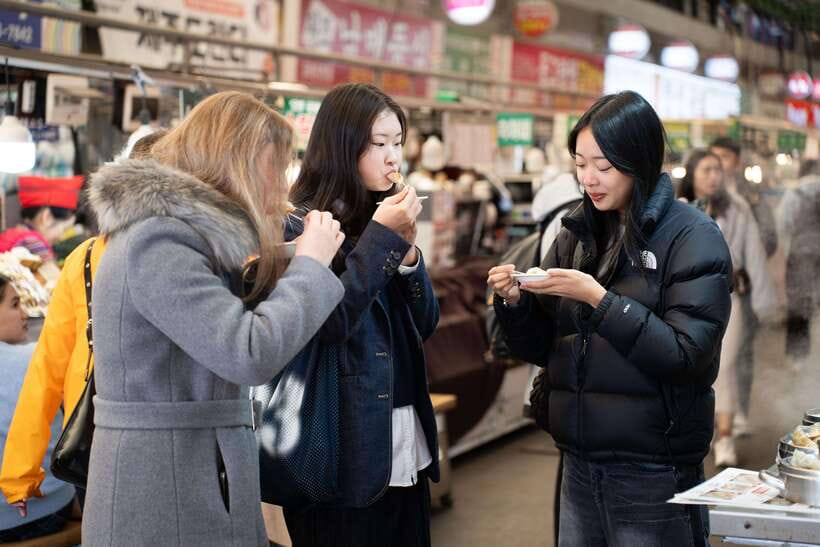
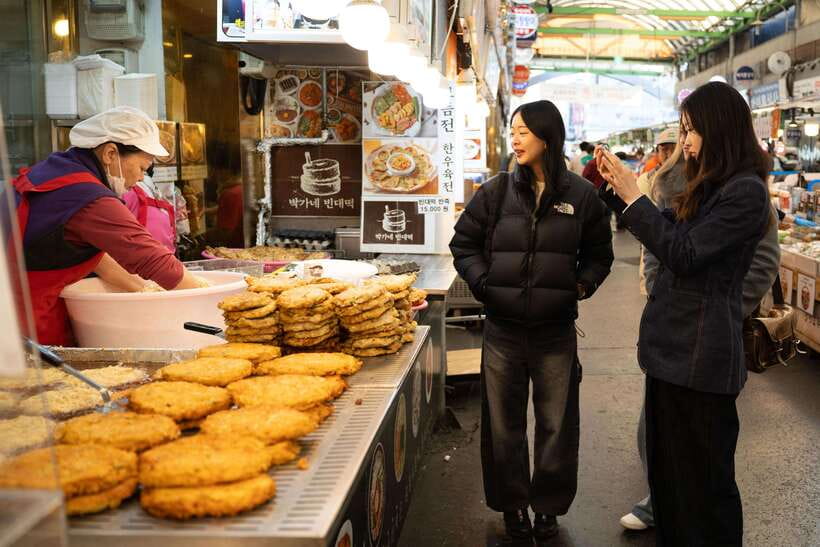
Gwangjang Market is the setting, not just a backdrop. You move among traditional stalls, watch food being prepared and served, and stop for small portions along the way. The exact order may change, and the menu can change too, depending on what is available.
That flexibility is normal for a market tour. You are not eating from a fixed restaurant menu. The stalls and the day’s conditions help shape the route, so you should think of the published food list as a guide to the kinds of tastes included rather than an absolute promise of every item.
The English-speaking guide helps give the market a clear rhythm. You do not have to decide what every unfamiliar dish is or guess how to approach each stall. The guide introduces the food, explains what you are eating, and keeps the group moving.
Because the group is capped at 10, you get a better chance to hear those explanations than you might in a large food excursion. A small group also makes it easier to stay together in narrow market passages and to ask a quick question without holding up dozens of people.
Eight Korean foods, from dumplings to fish-shaped buns
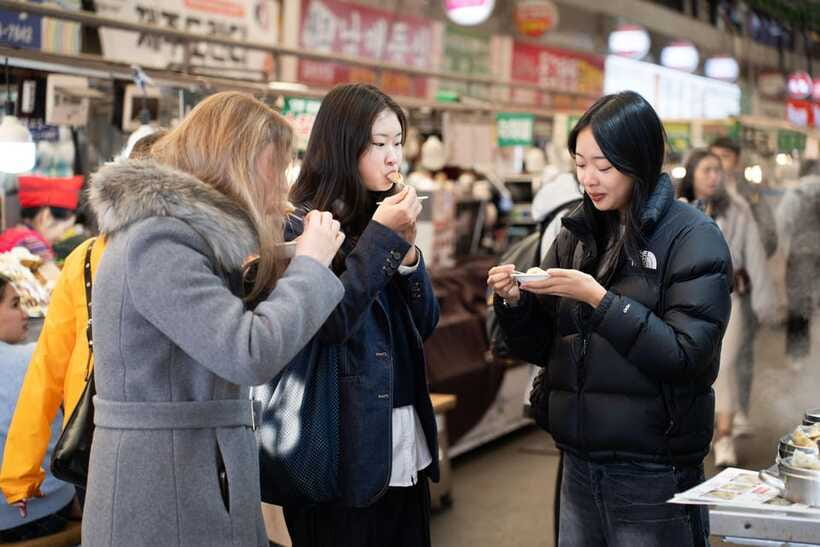
The menu is the heart of the outing. It includes both savory and sweet items, which gives you a broad introduction to familiar Korean market fare.
Dumplings offer a gentle starting point for many people. If you are still learning Korean food names, a dumpling is an approachable first taste, while the guide can explain how it fits into local market eating.
Meatballs add another savory stop. The item is listed simply as meatball, so the exact preparation may vary. That is one reason to listen to the guide’s explanation rather than relying on a fixed assumption about what will arrive.
A Korean hotdog gives the tour a more playful street-food note. The name can suggest something familiar, but the Korean market version may be prepared in its own style. This is a good place to ask about ingredients and how the food is commonly eaten.
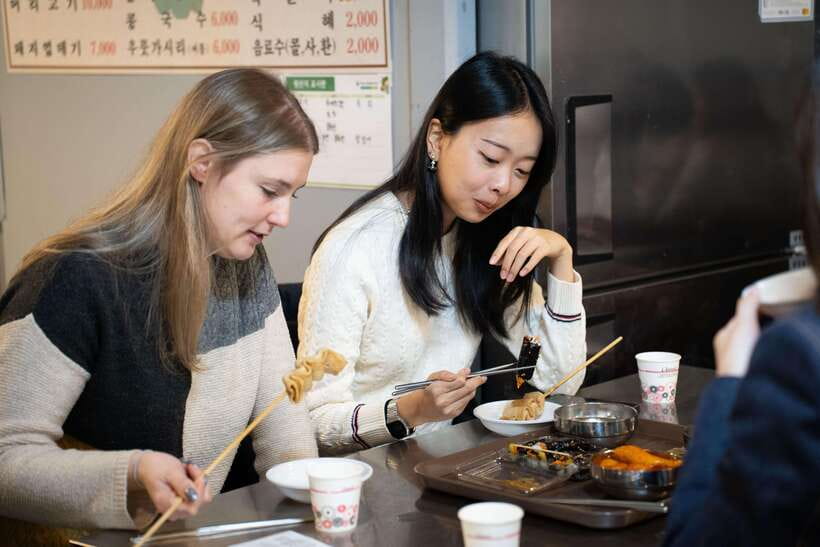
The rice roll brings a rice-based taste to the route. It helps balance the fried or sauced items and gives you another example of the practical, portable foods sold in a traditional market.
Then comes spicy rice cake, one of the better-known Korean street foods. The seasoning may be a concern if you avoid heat, but the guide can help explain what you are tasting. If spice is a serious issue for you, it is sensible to mention that before the food stops begin.
Fish cake is another classic market food. It gives you a savory taste with a different texture from the dumplings and rice dishes, helping the menu feel varied rather than like eight versions of the same snack.
The sweet course includes a Korean pancake and a fish-shaped bun. The pancake provides a warm, sweet finish, while the bun adds a visual detail that makes it especially memorable. Together, they prevent the walk from ending on only spicy and savory notes.
Water is included. That sounds minor, but it is welcome during a food walk, especially when the menu includes spicy rice cake and several substantial items.
A few more Seoul half-days to weigh up
- Seoul: Guided Food & Market Tour with 8+ Tastings
★ 4.9 · 342 reviews - Small-Group Night Food Tour in Seoul with Korean BBQ
★ 5.0 · 304 reviews - Seoul Night Palace & Market Food Tour with Vehicle
★ 5.0 · 275 reviews - Seoul Fun Food Tour: 12 different food tastings
★ 5.0 · 266 reviews
Come hungry, but pace yourself
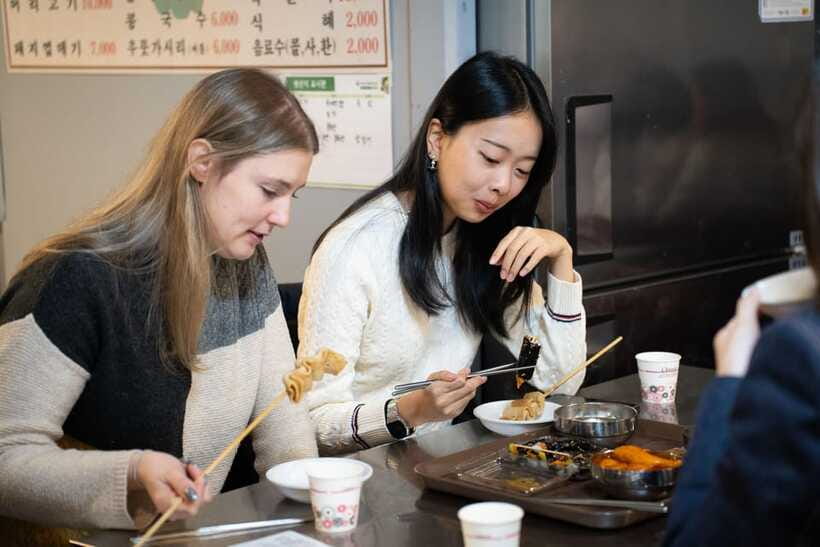
One practical point deserves emphasis: this can be a lot of food for a two-hour tour. A particularly useful tip is to skip or reduce breakfast if you want to taste everything. The portions may be larger than you expect, and you may need to leave some food behind if you arrive full.
I would not treat that as a flaw, but it does affect how you plan the morning. This is not a quick nibble followed by lunch. The food itself may function as a full meal for many people.
Pace yourself. You do not need to finish the first item quickly just because the group is moving. Listen to the guide, take a small break when possible, and save room for the sweet foods near the end.
The menu can change according to circumstances, so you should also keep expectations flexible. If one listed item is unavailable, the experience is still built around sampling a range of traditional market foods rather than receiving a rigid eight-course menu.
Stories about Seoul and everyday Korean life
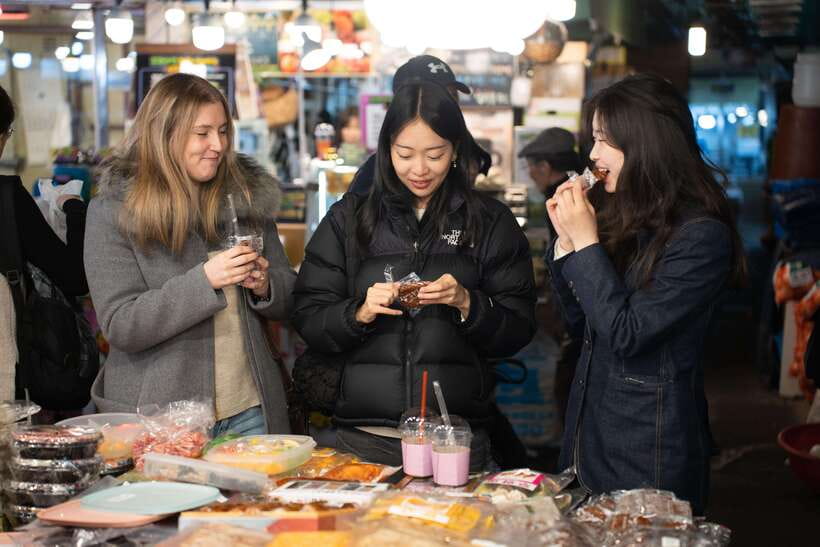
The strongest feature for me is the guide’s role as a conversation partner. The tour includes stories about Seoul sights, Korean culture, social behavior, and life in South Korea. The guide does not simply identify ingredients and send you to the next stall.
Taeseong is specifically associated with several departures and is described as friendly, sociable, and clear in English. The best part of that style is the chance to ask follow-up questions. You can move from a dish to its place in daily life, then from daily life to the larger issues shaping the country.
The tour also touches on the Korean peninsula’s division. That subject can be reduced to a few tourist talking points, but here it is presented through the guide’s own perspective and experience. The information provided also notes that the guide has experience as a member of the reserve forces, which gives the military discussion a personal foundation.
Still, keep the scope in mind. This is not a specialist political program or a battlefield visit. It is a market food walk with social and modern history context. You get a human-scale introduction rather than an academic treatment.
That balance may suit you if you want to understand more about Korea without spending two hours in a classroom. If your main goal is a detailed account of the Korean War, the armistice, or the Demilitarized Zone, you will need a separate tour.
How much value do you get for $100?
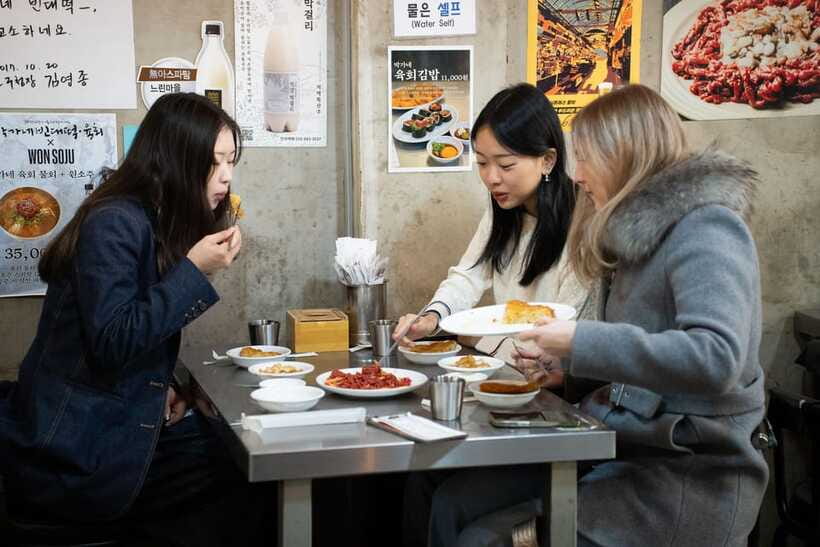
At $100 per person, this is not the cheapest way to buy street food in Seoul. You could spend less by choosing individual stalls yourself. The price pays for more than the snacks, though.
You are paying for an English-speaking guide, a planned route through Gwangjang Market, the included food, and the chance to ask questions in a small group. The personal explanation of Korean society and military life is also part of the value, especially if you prefer food tours that give you context rather than simply pointing at dishes.
The group limit of 10 improves the calculation. A large group can make a market walk feel like a procession, with people at the back missing the explanation or struggling to see the food. A smaller group gives the guide more room to talk and adjust the conversation.
The value is strongest for a first-time visitor who wants a guided introduction to Korean food and modern life in one compact outing. It is weaker for someone who already knows Gwangjang Market well, speaks Korean, and is comfortable ordering from stalls independently.
You should also count the tour as a meal. If you would otherwise pay for breakfast or lunch, the price becomes easier to assess. Just remember the portions may be generous, and the included water is useful but not a major part of the cost.
Who will enjoy this food tour most?
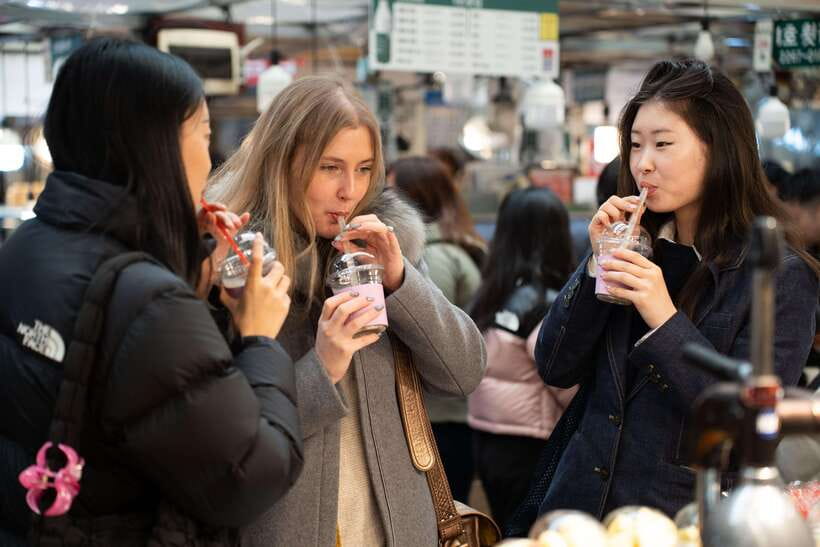
I would recommend this experience to you if you want a friendly introduction to Korean dishes and prefer asking questions as you go. It is especially suitable for solo visitors, couples, and small groups who like conversation rather than a silent tasting route.
It also suits curious eaters who want to understand how food connects with Korean society. The talk about the division of the peninsula and military service adds a serious layer without changing the setting into a formal history lesson.
The tour may work well for people who are unsure what to order at a traditional market. You can try several foods without committing to full portions at separate stalls, and the guide provides a framework for what you are seeing.
I would be more cautious if you have strict dietary restrictions, since the available information does not specify vegetarian, vegan, halal, allergy-friendly, or gluten-free arrangements. The menu may also change, so you should ask the provider directly before booking if a particular ingredient is essential to your plans.
This is also not the best match if you want a quiet meal. Markets are active places, and the format involves moving between stalls, tasting several items, and keeping pace with a group.
Timing, group size, and cancellation details
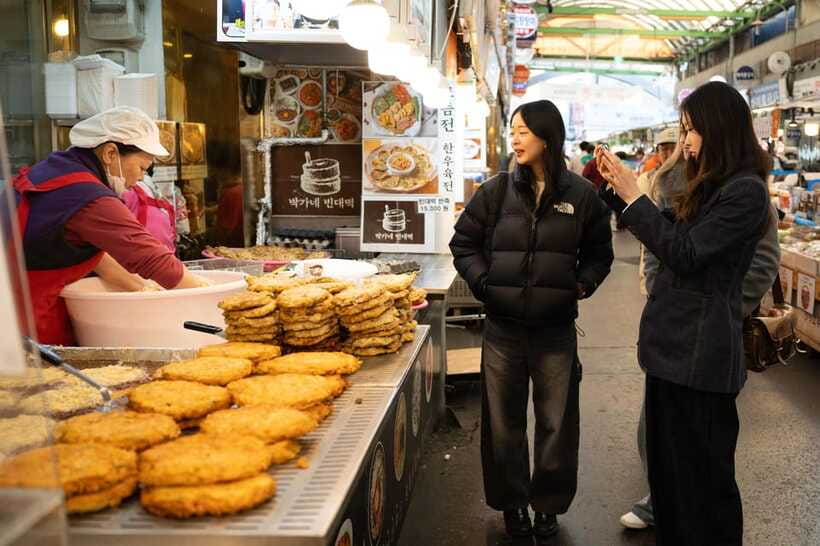
The tour runs for two hours, with starting times available according to the chosen date. Check the departure time carefully, since the precise start is not fixed in the supplied information.
The tour is conducted in English and limited to 10 participants. That is small enough for direct conversation while still giving the outing a social feel.
You can reserve now and pay later, which helps if your Seoul schedule is still shifting. Free cancellation is available up to 24 hours before the experience for a full refund.
The menu is subject to change. That is worth remembering when planning around a favorite dish. The market, not a fixed restaurant kitchen, determines what can be served.
Should you book this Gwangjang Market experience?
Book it if you want a food-first introduction to Seoul with serious conversation built in. The combination of eight listed tastes, a two-hour market route, a small English-speaking group, and personal discussion about Korea gives the tour a clear purpose.
The strongest reason to choose it is the guide. Taeseong’s friendly manner, clear English, and ability to explain both dishes and Korean life are repeatedly highlighted in the supplied feedback. The personal perspective on reserve service and peninsula division makes this more distinctive than a standard snack crawl.
Skip it if you want a formal historical tour, a fixed menu, or a low-cost way to buy individual street foods. Also think twice if you have a very small appetite, since the portions can add up quickly.
For most curious first-time visitors, I would book it early in a Seoul stay. You get a useful introduction to Korean market food, and the guide’s explanations may help you make better sense of other meals and places you encounter afterward.
FAQ
Where does the tour meet?
The meeting point is Jongno 5-ga Station Exit 8 in Seoul.
How long does the tour last?
The guided food walk lasts two hours.
Which market does the tour visit?
The tour takes place at Gwangjang Market.
What food is included?
The listed foods include dumpling, meatball, Korean hotdog, rice roll, spicy rice cake, fish cake, sweet Korean pancake, fish-shaped bun, and water. Menu items may change according to circumstances.
Is the tour conducted in English?
Yes. The tour includes a live English-speaking guide.
How many people can join, and what are the cancellation terms?
The group is limited to 10 participants. You can cancel up to 24 hours in advance for a full refund, and you can reserve now and pay later.
More shopping trips in Seoul
- Private DMZ Tour (No Shopping): 3rd Tunnel & Suspension Bridge
★ 5.0 · 607 reviews - Seoul: Nighttime Tour of Palace, Market, Naksan Park & More
★ 4.9 · 143 reviews - Fortress Night Hike & Snack at a Local Market
★ 5.0 · 112 reviews - Seoul: Gyeongbok Palace, N Tower, & Local Market City Tour
★ 4.9 · 107 reviews
More Market Tours in Seoul
- Local Home Korean Cooking Class & Market Adventure in Seoul
★ 5.0 · 1,024 reviews - Seoul: Korean Cooking Class at a Local Home and Market Tour
★ 5.0 · 348 reviews - Cook 3 Authentic Korean Dishes with Local Market Tour
★ 5.0 · 231 reviews - Korean Palace and Market Tour in Seoul Including Insadong and Gyeongbokgung Palace
★ 4.0 · 174 reviews
Recently added around Seoul
- Nami & Maple Road & Theatre des Lumieres Day Tour from Seoul★ 4.8 · 4 reviews
- Gyeongbokgung Palace Photo Session with your own phone★ 5.0 · 4 reviews
- Private Tour around Suwon UNESCO Fortress and Korea Folks Village★ 4.5 · 4 reviews
- Jisan Forest Resort: Ski Full-Day Tour or Shuttle from Seoul★ 5.0 · 4 reviews
- N Seoul Tower + Namsan Cable Car Ticket (Collect in Myeongdong)★ 3.5 · 4 reviews
- Seoul: Deoksugung Palace Night Tour★ 4.5 · 4 reviews
- Private Jeonju Hanok Village – Culinary tour★ 5.0 · 4 reviews
- Seoul Private Walking Tour with a Local★ 5.0 · 4 reviews
Seoul Tours, compared.
Best DMZ Tour Korea from Seoul (Red Suspension Bridge Optional)
Read the review →
DMZ Tour: 3rd Tunnel, Option(Suspension Bridge, Boat) from Seoul
Read the review →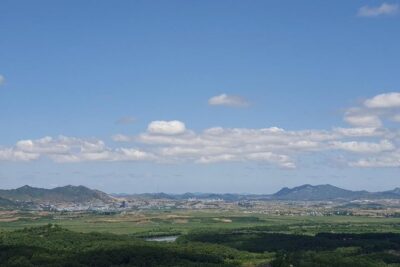
DMZ tour south Korea from Seoul (NK experience hall, defector)
Read the review →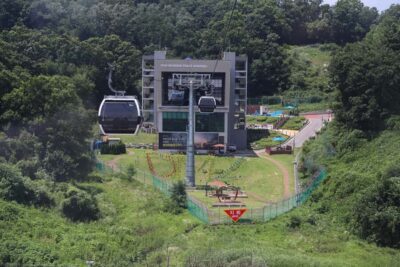
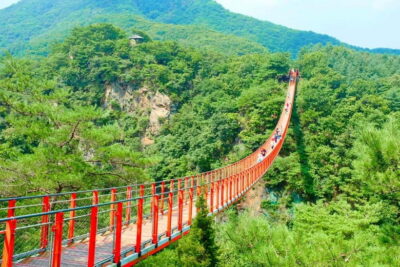
DMZ The 3rd Tunnel and Suspension Bridge Tour
Read the review →
Signature DMZ Tour: Exclusive Defector Talk & Suspension Bridge
Read the review →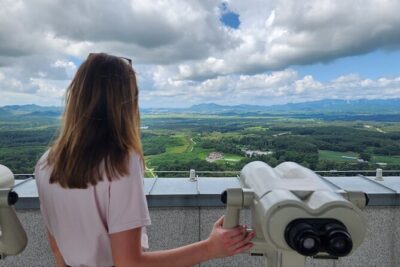
Thrilling Korean DMZ 3rd Tunnel Tour from Seoul + Red Bridge Rush
Read the review →
DMZ Past and Present: Korean Demilitarized Zone Tour from Seoul
Read the review →Browse the lists this tour appears in