Reviewed · GUIDED
Daegu Highlights & private tour with a Licensed guide
Daegu is easiest to understand when you see its contrasts in one day: a 1,500-year-old Buddhist temple, a nearly 500-year-old market, a busy downtown street, and sweeping city views from Apsan. This private tour with licensed guide Peter handles the driving and links together places that are spread across the city.
I like the private vehicle and flexible plan, especially if you want to ask questions or adjust the schedule. I also like the mix of food, religion, old streets, art, and city life. The main consideration is cost: at $105 per person, you still pay separately for the Apsan cablecar and Kansong Art Museum, and lunch is not included.
Key points at a glance
- Private touring with Peter: You travel only with your own group and can discuss itinerary changes with a local guide.
- Seven different Daegu stops: The day moves from Donghwasa Temple and mountain views to markets, downtown streets, art, and traditional medicine.
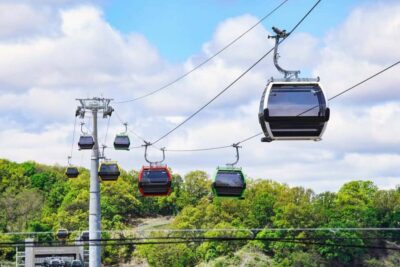
- Apsan is the visual highlight: The cablecar leads to an observatory with panoramic views across Daegu.
- Seomun Market adds local flavor: You have time to browse Korean street food, goods, and a market with almost 500 years of history.
- Extra costs are modest but real: Budget $9 per person for Apsan Observatory and $5 for Kansong Art Museum, plus lunch.
- Hotel pickup and drop-off simplify the day: The listed meeting point is Daegu Grand Hotel, with the tour returning there at the end.
Why this private Daegu day works well
This is a full eight-hour introduction to Daegu, built for people who want more than a quick look at one neighborhood. You get a comfortable private vehicle, fuel and parking, pickup and drop-off, and a licensed guide. That matters in Daegu, where the sights are not all clustered together.
I especially like the range of the plan. Donghwasa gives you quiet temple grounds and mountain scenery. Seomun Market brings you into everyday food and shopping culture. Dongseongno shows the city’s younger side, while the Modern Cultural Alley and Kansong Art Museum add historical and artistic context.
The day also has a useful human touch. Peter is identified as the guide, and his approach is clearly flexible. He has adjusted plans for guests’ interests, answered questions about Daegu and Korea, and added requested stops when possible. If you are curious about local life, that flexibility is worth more than a fixed script.
The tradeoff is pace. Seven stops in about eight hours means you will not spend half a day at any one place. Apsan receives the longest scheduled visit at two hours, while the Oriental Medicine Market receives only 30 minutes. If you prefer slow photography, long meals, or extended museum visits, you should ask Peter about trimming the schedule before you start.
A few more South Korea half-days to weigh up
- Busan Private Tour with licensed tour guide + private vehicle
★ 5.0 · 1,143 reviews - Private DMZ Tour (No Shopping): 3rd Tunnel & Suspension Bridge
★ 5.0 · 607 reviews - Jeju Island English Private & Flexible Tour any number anywhere
★ 5.0 · 561 reviews
Donghwasa Temple opens the day
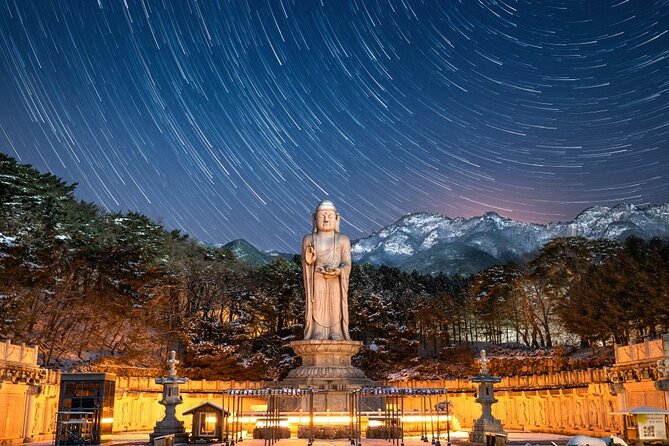
The tour begins with about 90 minutes at Donghwasa, a temple with roughly 1,500 years of history. It is surrounded by forest, and its 17-meter Buddha statue is one of the main visual draws.
This is a good first stop because it gives you a calm start before the city portions of the day. You can look at the temple buildings, walk through the grounds, and hear the stories that make the site more meaningful than a quick photo stop. The temple’s wooded setting also provides a clear change from central Daegu.
Admission is included here, so there is no extra ticket to arrange. Wear comfortable shoes, since the experience involves walking around the temple grounds. The supplied schedule allows 90 minutes, enough for a focused visit but not an exhaustive look at every corner.
I would ask Peter to explain the Buddhist details as you go. The value of a guide at Donghwasa is not simply pointing out buildings. It is understanding why the statue, setting, and temple traditions matter.
Dongseongno shows Daegu’s youthful side
Next comes Dongseongno, the center of Daegu’s fashion, food, and youth culture. You have about an hour to see the city’s busiest shopping street and feel its modern rhythm.
This stop balances the temple nicely. Instead of old buildings and forest, you get storefronts, restaurants, and a public street full of current city life. It is also a useful place to ask Peter about Daegu today, not just its past.
There is no admission charge, and the hour is enough to walk, look around, and perhaps decide what you want to return to later. Lunch is not included in the tour, so Dongseongno may be a practical place to discuss a meal, though the schedule does not promise a specific restaurant or lunch break.
Keep your expectations realistic. This is a city walk, not a dedicated shopping tour, and the tour specifically avoids shopping stops designed to sell to visitors. That is a positive if you want ordinary downtown Daegu rather than commercial detours.
Seomun Market brings the day down to street level
Seomun Market is one of the most useful stops for understanding Daegu’s everyday culture. It has almost 500 years of history and was one of the major traditional markets during the Joseon dynasty.
You have about an hour here. That gives you time to see stalls selling local street food and products, watch the market’s daily activity, and sample something if you wish. Since lunch is not included, bring a little appetite and ask Peter which foods fit your tastes.
The market is more than a place to buy things. It lets you see how food, trade, and social life meet in a Korean city. The contrast with polished Dongseongno is part of the appeal: one stop shows modern retail and youth culture, while the other keeps older market habits in view.
An hour can pass quickly. If food is your main interest, tell Peter early so you do not spend the whole visit simply walking through. The tour’s private format gives you a better chance of shaping that time around what you actually want to see.
A different way to spend a day from here:
- Best DMZ Tour Korea from Seoul (Red Suspension Bridge Optional)
★ 5.0 · 41,422 reviews - DMZ Tour: 3rd Tunnel, Option(Suspension Bridge, Boat) from Seoul
★ 5.0 · 21,373 reviews - DMZ tour south Korea from Seoul (NK experience hall, defector)
★ 5.0 · 20,599 reviews - DMZ Insider Tour: 3rd Tunnel, NK Defector Meet & Red Bridge
★ 4.9 · 15,214 reviews
Apsan Cablecar provides the big city view
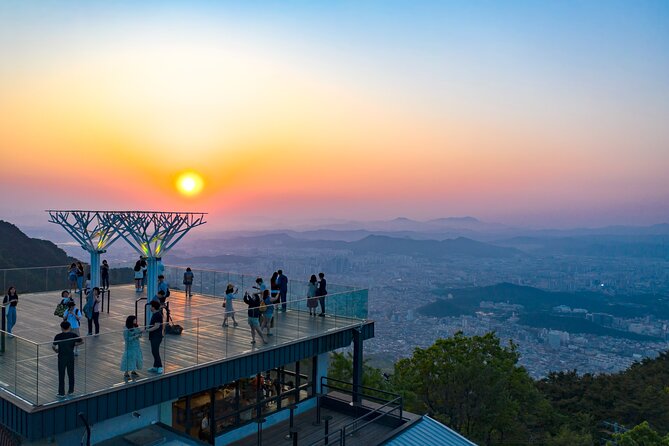
Apsan is the visual centerpiece of the day. You ride the cablecar up to the observatory, where you can look across Daegu from above. The scheduled time is two hours, the longest portion of the itinerary.
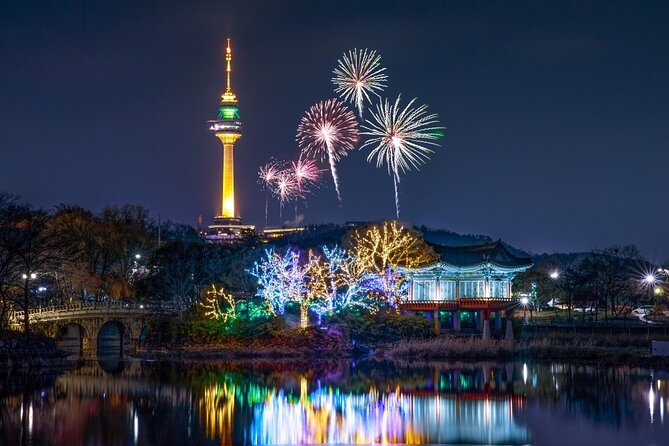
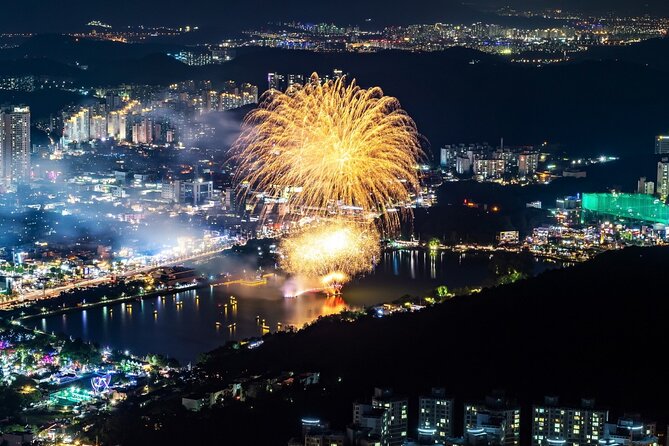
That extra time is sensible. You need room for the cablecar ride, the observatory, photographs, and a little time to take in the view without rushing. After the temple, market, and downtown streets, Apsan gives you a clear sense of Daegu’s size and layout.
The cablecar and observatory admission are not included. The listed price is $9 per person, so add that to your budget. This is the main paid sight on the route, and the view is the reason to make room for it.
Weather can affect how satisfying this stop feels, although no weather guarantee is provided. On a clear day, the panoramic view should be the highlight for anyone who likes seeing a city from above. If clouds limit visibility, the cablecar ticket may feel less worthwhile, so it is sensible to confirm the day’s conditions with Peter before committing to the ride.
Modern Cultural Alley adds stories to old Daegu
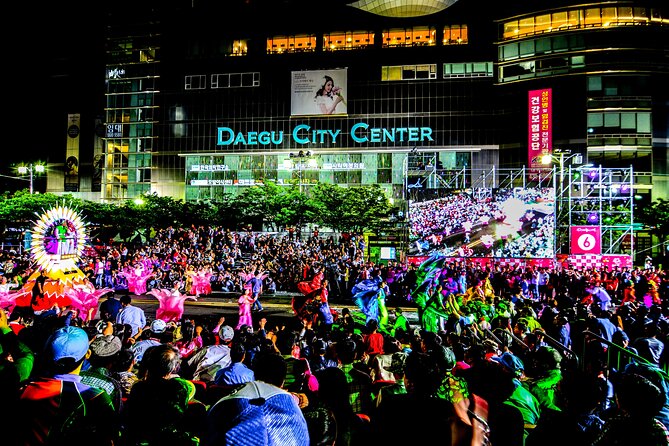
The Modern Cultural Alley portion lasts about an hour and focuses on preserved buildings and restaurants dating from the 19th and 20th centuries. This is where a guide’s storytelling can make a real difference.
Old streets can be easy to skim past. With Peter explaining what you are seeing, the buildings become part of Daegu’s story rather than a row of attractive facades. The stop also helps connect the market and downtown visits to the city’s changing urban identity.
Admission is free. The route may appeal most to you if you enjoy architecture, local history, and walking at a steady pace. It is less about a single famous object and more about noticing how older structures remain part of the city.
The schedule gives one hour, so expect an introduction rather than an exhaustive historical walk. If this is your favorite part of Daegu, ask about spending more time here and shortening a stop that matters less to you.
Kansong Art Museum puts Korean heritage first
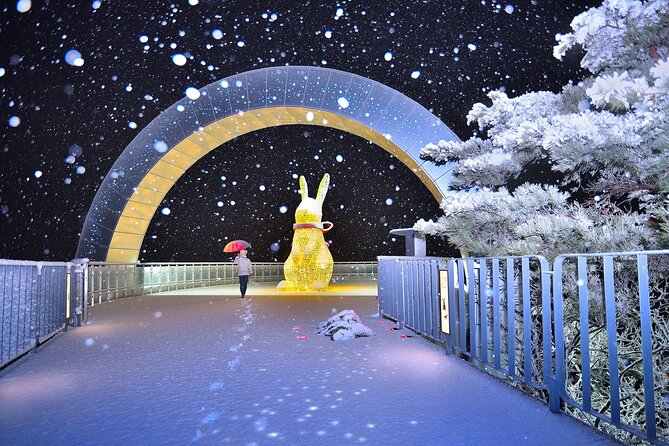
The Daegu Kansong Art Museum is devoted to preserving and displaying important Korean cultural heritage. It is named for Kansong Jeon Hyeong-pil, who dedicated his life to protecting Korean cultural works.
You have about an hour, and admission costs $5 per person. That fee is separate from the tour price. The museum gives the day a more focused cultural stop after the broad historical setting of the Modern Cultural Alley.
I like having this included because it keeps the tour from becoming only temples, shopping streets, and food. A museum visit can help you look at Korean art with more context, particularly if you ask Peter to connect what you see to the country’s wider cultural story.
One hour is enough for an introduction, but not for a slow, detailed museum visit. If art is a major reason for your Daegu visit, confirm which exhibits are available and consider requesting additional time. The provided information does not specify current displays, so the museum’s exact appeal will depend on what is showing during your visit.
The Oriental Medicine Market closes the cultural loop
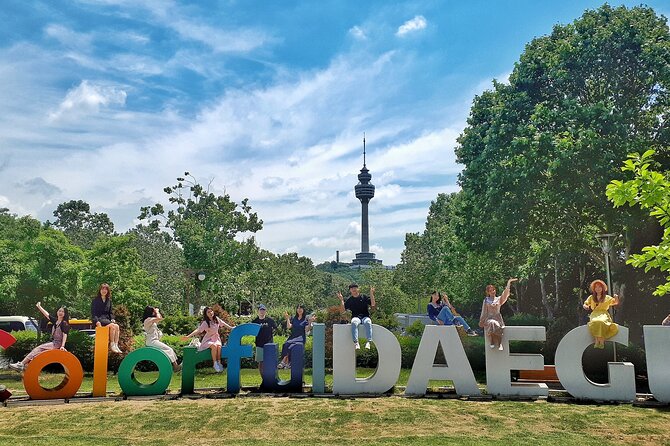
The final stop is Daegu Yangnyeongsi Herbal Medicine Market, one of Korea’s oldest traditional medicine markets, with more than 350 years of history. You get about 30 minutes here.
The market has long been a center for Korean traditional herbal medicine, known as Hanbang. This is a compact but worthwhile stop if you want to see a part of Korean life that does not fit neatly into the usual sightseeing list.
Thirty minutes is enough for an introduction and a short look around. It is not enough for a detailed consultation or a long shopping session, and the tour is not built around shopping. If herbal medicine interests you, ask Peter to explain what you are seeing and how the market fits into Daegu’s past and present.
Ending here gives the day a distinctive final note. You finish with a specialized local tradition rather than another general shopping street.
What the $105 price really covers
The price is $105 per person. For that amount, you receive a private vehicle, a licensed guide, fuel, parking, and pickup and drop-off. The private format is the most important part of the value. You are not following a large group or waiting for strangers at every stop.
The price makes better sense for couples, families, or small groups who value convenience and personal attention. A private SUV or similar vehicle also reduces the work of arranging transportation between Donghwasa, Apsan, central Daegu, and the markets.
You should add three costs to your mental budget:
- Apsan Observatory and cablecar: $9 per person
- Kansong Art Museum: $5 per person
- Lunch, which is not included
That means the known admission add-ons total $14 per person, before food. The tour itself returns to the meeting point, so you do not need to arrange a separate end location unless the provider agrees to a change.
The tour averages booking about nine days ahead. Confirmation is sent within 48 hours, subject to availability, so I would not leave it until the last minute if you have only one day in Daegu.
Who will get the most from this tour
I would choose this tour if you have one full day in Daegu and want an efficient first look at the city. It suits you particularly well if you prefer a private car, want a guide to explain local places, or are traveling with family.
It is also a good fit if your interests are mixed. You can see a temple, market, downtown street, old urban quarter, museum, herbal market, and city viewpoint without planning separate transport.
The tour may be less suitable if you want to spend hours shopping, focus only on food, or move at a very slow pace. The schedule covers a lot of ground, and some stops are short. The flexible format helps, but you should discuss priorities at the beginning.
Peter’s reported strengths are practical ones: arriving on time, providing a clean SUV, treating guests courteously, answering many questions, and adjusting the plan around personal interests. Those details matter on a long private day. A polite, responsive guide can turn a packed schedule into a manageable one.
The tour is listed as suitable for most participants, near public transportation, and open to service animals. The listed start is 9:00 am at Daegu Grand Hotel, 305 Dongdaegu-ro, Suseong District, with the activity ending back at the meeting point. Because the description also says pickup is offered from your place or hotel, confirm the exact pickup arrangement when booking.
Booking, cancellation, and practical planning
Free cancellation is available if you cancel at least 24 hours before the local start time. Changes or cancellations made inside that 24-hour window are not accepted for a refund.
The experience requires a minimum number of participants. If the provider cancels because that minimum is not met, you are offered another date or experience, or a full refund.
I would wear comfortable shoes, carry water, and keep some flexibility around lunch. Bring a little cash or a payment method for market food and the two extra admission charges. Most of all, tell Peter what matters most to you before the vehicle leaves. The day has enough variety to suit many interests, but not enough time to give every stop equal weight.
Should you book it?
Book this tour if you want a well-organized private introduction to Daegu rather than a single themed outing. Donghwasa and Apsan provide the strongest visual moments, while Seomun Market, the Modern Cultural Alley, and the Oriental Medicine Market give the day its local character.
The value is strongest for a small group that can share the private vehicle cost and wants Peter’s flexibility. I would skip it only if you already know Daegu well, want long unhurried museum visits, or prefer to explore entirely by public transportation. For a first visit with limited time, the combination of personal guiding, city views, old markets, and cultural sites makes the $105 price reasonable, provided you budget for the extra tickets and lunch.
FAQ
How long does the Daegu private tour last?
The experience lasts approximately eight hours, beginning at 9:00 am and ending back at the meeting point.
Where does the tour start?
The listed meeting point is Daegu Grand Hotel, 305 Dongdaegu-ro, Suseong District, Daegu, South Korea.
Is hotel pickup included?
Pickup and drop-off are included, and the guide description says pickup is provided from your place or hotel. Confirm the exact pickup location when booking.
Is this a private tour?
Yes. Only your own group participates, and the vehicle and licensed guide are provided privately.
What entrance fees are extra?
Apsan Observatory costs $9 per person, and Kansong Art Museum costs $5 per person. These fees are not included in the tour price.
Is lunch included?
No. Lunch is not included in the tour price.
Can the itinerary be customized?
Yes. The tour allows itinerary customization, and the guide can adjust the plan around your interests when possible.
Recently added around South Korea
- Seoul: Private Car Tour with Licensed Professional Guide★ 5.0 · 3 reviews
- Yeosu: Private Taxi Car Private Charter Tour★ 4.7 · 3 reviews
- Imjingak DMZ Private Tour for Incheon Airport and Cruise Guests★ 5.0 · 3 reviews
- Unique Native Experience : Han River Picnic, Board game, BBQ★ 5.0 · 3 reviews
- Seoul: Nami and K-Garden with Optional Alpaca Winter Tour★ 5.0 · 3 reviews
- Jeju: BTS Are You Sure?! Filming Locations Private Taxi Tour★ 5.0 · 3 reviews
- BTS In The Soop Version: One Day Private VIP Tour★ 5.0 · 3 reviews
- 9 Hour Private Day Tour Taxi in Jeju island (High recommend)★ 5.0 · 3 reviews
Guided, compared.
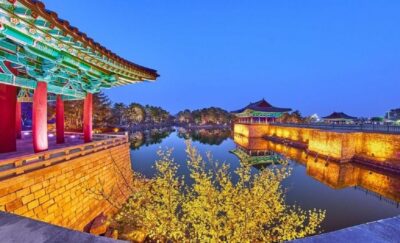
Gyeongju Guided Day Trip to Three Kingdoms Capital
Read the review →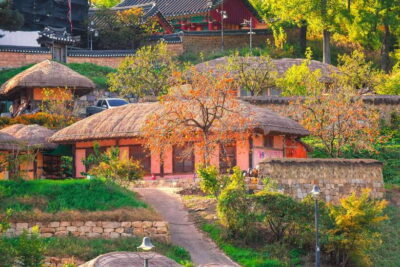
Gyeongju UNESCO World Heritage Guided Day Tour
Read the review →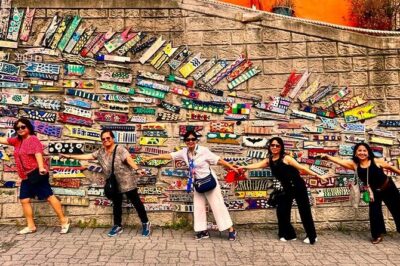
Busan Private Tour with licensed tour guide + private vehicle
Read the review →
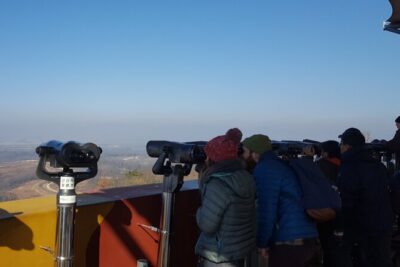
DMZ Guided Tour with Suspension Bridge / Gondola from Seoul
Read the review →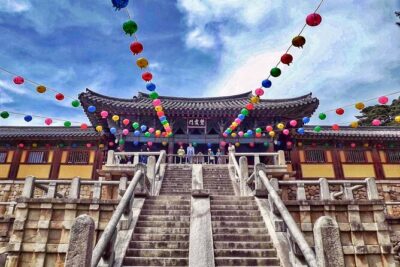
Gyeongju UNESCO World Heritage Guided Day Tour from Busan
Read the review →
Downtown Seoul Guided Food & Market Tour with 8+ Local Tastings
Read the review →