
Reviewed · BUSAN TOURS
Gyeongju UNESCO World Heritage Guided Day Tour from Busan
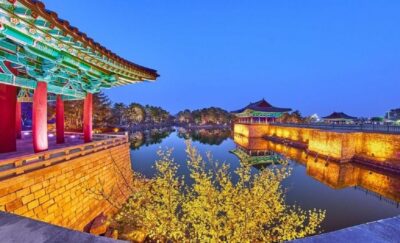
Gyeongju is where Korea’s Silla-era past feels close enough to touch. This full-day trip packs temples, village lanes, royal tombs, an old bridge, and a palace pond into one long sweep from Busan. The most memorable finish is usually Donggung Palace and Wolji Pond, especially when the water reflects the evening lights.
I like the easy round-trip coach ride and the choice between a site-heavy UNESCO route and a more museum-focused day. I also like having guides such as Irene, Vincent, Sol, Bobby Kim, and Lucy to explain the sites and keep a large group moving. The catch is the length: expect 10 to 12 hours, plenty of walking, and outdoor stops in changing weather.
Key points to know before booking
- The UNESCO route covers Yangdong Village, Bulguksa, Daereungwon, Woljeonggyo Bridge, and Wolji Pond.
- The Museum route trades Yangdong Village and several outdoor sites for the Gyeongju National Museum and Hwangnidan-gil.
- Bulguksa and Yangdong Village are the major daytime stops, but time can feel tight at both.
- Wolji Pond is often the visual highlight, with palace ruins and evening reflections.
- Lunch and dinner cost extra, and food arrangements vary by stop.
- A maximum group size of 43 makes this efficient, but not intimate.
Why Gyeongju makes a worthwhile day from Busan
Busan gives you beaches, markets, seafood, and city energy. Gyeongju offers something very different: broad temple grounds, quiet village homes, grassy burial mounds, and royal sites spread across an area once ruled by the Silla kingdom.
Going alone is possible, but fitting these places into one day by public transport takes planning. This tour handles the long transfers by air-conditioned coach and links several major sights without asking you to work out each connection. That is the main value of the $57.14 price.
You also get admission to the paid sites included in the UNESCO option, including Yangdong Village, Donggung and Wolji, and the Cheonmachong Tomb at Daereungwon. The guide adds historical context that helps connect a temple, a tomb, and a palace pond into one story rather than a string of unrelated photo stops.
The tradeoff is pace. This is not a slow village walk or a quiet temple retreat. It is a broad introduction to Gyeongju, with some free time at stops but also firm departure times, bus rides, and a large group.
More Historical Tours in Busan
- From Busan: Gyeongju UNESCO World Heritage Guided Day Tour
★ 4.8 · 1,250 reviews - Old Korea Thousand History Tour of Gyeongju from Busan
★ 5.0 · 518 reviews - Busan history and market food tour with local chef
★ 5.0 · 58 reviews
Choosing between the UNESCO and Museum routes
The UNESCO tour is the better pick if this is your only day in Gyeongju and you want the widest range of sights. You see a traditional village, Buddhist architecture, royal tombs, an old bridge, and a palace pond. It gives you the clearest sense of how varied Gyeongju is.
The Museum tour is better if you prefer indoor collections and a slightly simpler cultural route. It includes Bulguksa, Hwangnidan-gil, and the Gyeongju National Museum. You miss Yangdong Village, Daereungwon, Woljeonggyo Bridge, and Donggung and Wolji on this option, so check the selected route carefully before booking.
I would choose the UNESCO route for a first visit. Yangdong Village and Wolji Pond offer two very different experiences, and both are difficult to replace with a museum visit. Choose the Museum route if Silla artifacts, golden crowns, Buddhist objects, and a good amount of independent time in the city appeal more than seeing several heritage sites from outside.
Bulguksa Temple: a strong opening stop
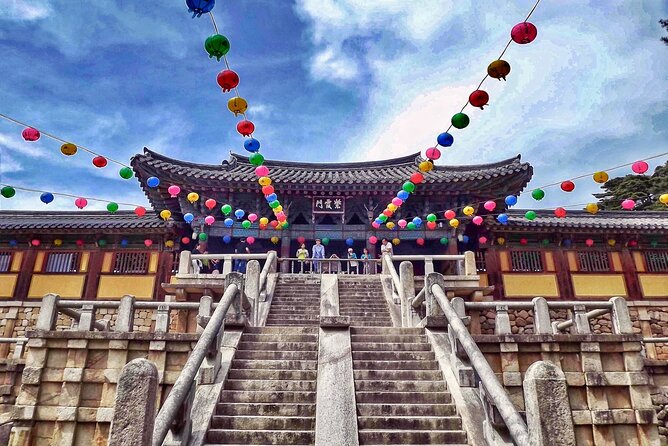
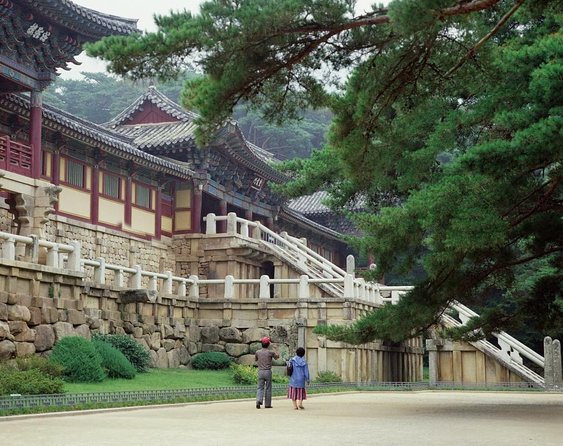
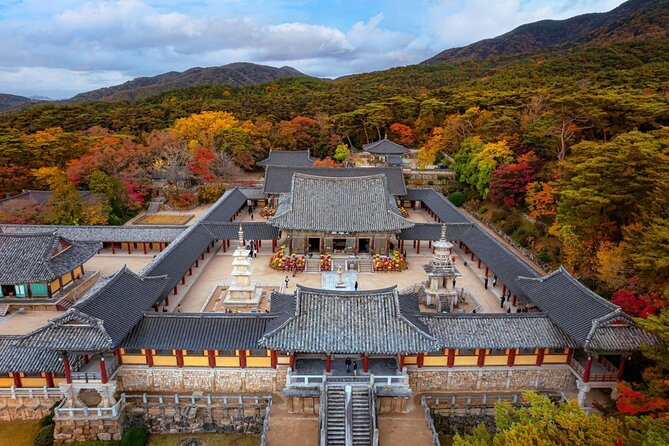
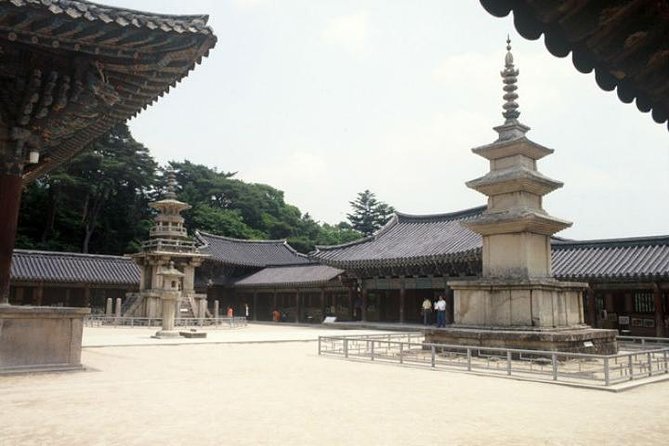
Bulguksa is the anchor of both routes. This Silla-era Buddhist temple, first built in the eighth century, is known for its stone platforms, stairways, pagodas, and carefully arranged courtyards.
The visit lasts about 1 hour and 10 minutes. That is enough to see the main complex and hear an introduction, but you should not expect a lingering study of every hall. Stay close to your guide at the start, then use any free time for photographs and a closer look at the stonework.
Bulguksa rewards attention to small details. The stone construction feels unusually solid and formal, while the painted buildings bring color and lift to the site. Your guide may point out the Buddhist ideas and Silla craftsmanship behind the layout, which makes the visit more meaningful than simply walking through a pretty temple.
The grounds involve walking and some uneven or sloping sections. Wear shoes you can use comfortably for much of the day. One practical complaint is that the schedule can feel rushed here, particularly when the group is large, so listen carefully to the meeting time.
Yangdong Folk Village and a slower view of old Korea
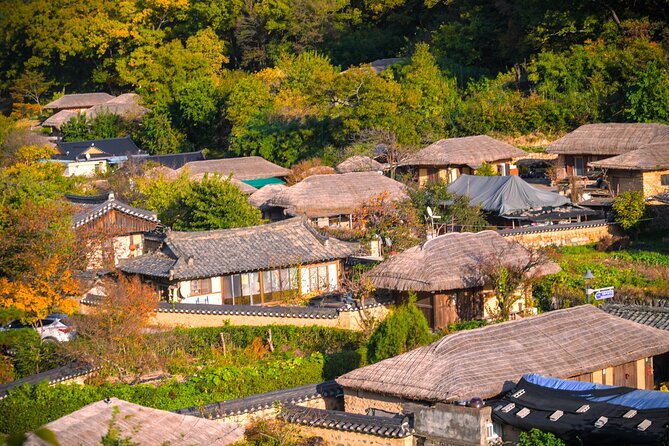
On the UNESCO route, Yangdong Village receives about 2 hours and 15 minutes. This is the longest stop and one of the most distinctive.
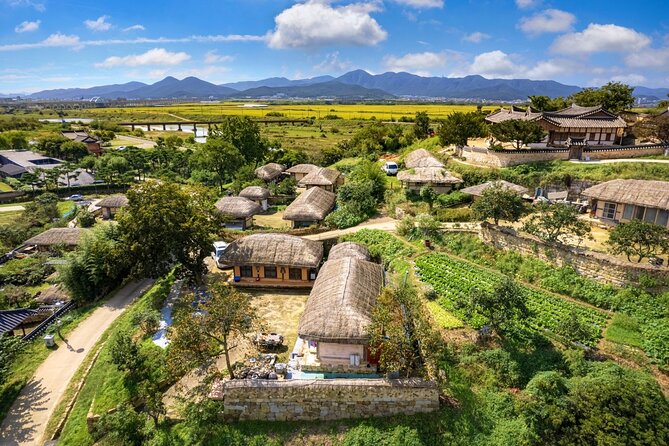
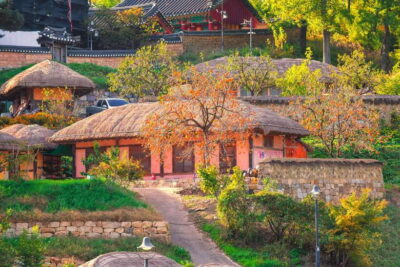
The village is made up of traditional homes set among hills and rural scenery. Rather than presenting a single restored building, it gives you a sense of how homes, paths, family compounds, and farmland fit together. The setting is part of the experience, so take time to look beyond the most photographed houses.
This is also the tour’s main lunch stop. Food is not included. Several meals are available at the village, but one useful point is that the local cafe may be cash-only. Vegetarian choices may be limited, so bringing something suitable is sensible if you have dietary restrictions.
Some people enjoy the traditional meal here, including a ginseng chicken set. Others find the portions small for the price. I would treat lunch as a practical stop rather than a guaranteed food highlight, and keep a little cash and a snack with you.
Yangdong is largely outdoors. The paths, hills, and open setting can feel refreshing, but they also make weather matter. In summer, bring sun protection and water. In cool weather, layers help. One day can pass through warm afternoon conditions and a much cooler evening.
A different way to spend a day from here:
- Busan: Gyeongju Guided Day Trip to Three Kingdoms Capital
★ 4.8 · 1,925 reviews - Small Group Full Day Busan Tour (Max 6 Pax)
★ 5.0 · 1,464 reviews - Busan Private Tour with licensed tour guide + private vehicle
★ 5.0 · 1,143 reviews - Busan: Coastal Treasures Beach Train, Culture Village & More
★ 4.7 · 832 reviews
Daereungwon and the shape of Silla’s royal past
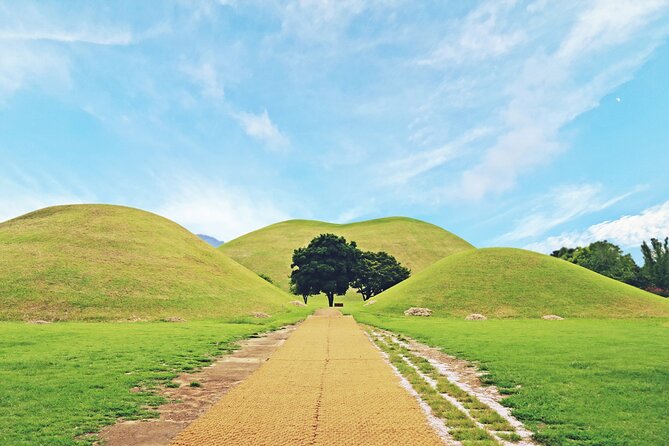
Daereungwon Tomb Complex is scheduled for about 45 minutes on the UNESCO route. The park contains 23 Silla-era tombs, large rounded mounds covered in grass and scattered across an open area.
The scale is what makes the stop work. These are not small gravestones tucked into a corner. The tombs rise like enormous green hills, giving you a clear sense of royal power and burial customs even before the guide explains the details.
The included Cheonmachong Tomb ticket allows you to enter one of the tombs. This adds a useful indoor element to a day otherwise spent mostly outside. You can see how the mound was constructed and understand why archaeologists learned so much from these burial sites.
The timing is brief, so do not wander too far from the group. Daereungwon is next to Hwangnidan-gil, and the schedule may give you time to look around the street as well. That stop is useful for snacks, coffee, and shopping, but some people find the long day makes this late-afternoon break feel longer than necessary.
Hwangnidan-gil: old roofs, new shops
Hwangnidan-gil sits beside Daereungwon and brings a modern note to the day. Hanok-style buildings now hold cafes, food shops, and small stores. It is an easy place to pause after the more formal heritage sites.
Admission is free, but food and shopping are at your own expense. This is where you can try local snacks or buy a drink, though do not expect every item to feel unique to Gyeongju. Some offerings are similar to what you will find in Seoul and other Korean cities.
I like the contrast. After temples and tombs, a street with cafes and shops shows how the old city is being used now. Still, if your priority is ancient Korea, you may prefer less free time here and more time at Yangdong or Bulguksa.
Woljeonggyo Bridge in a quick photo stop
Woljeonggyo Bridge receives about 20 minutes on the UNESCO route. The historic wooden bridge was rebuilt over stone supports and is especially attractive when illuminated.
Twenty minutes is enough for a look and photographs, but not much more. This is a scenic pause rather than a full historical visit. Let your guide explain the bridge’s background, then use the remaining time to find a clear view.
The short stop works well late in the day, when the warm tones and traditional form photograph nicely. It can also feel hurried if the group takes time to gather or if traffic has already reduced the schedule.
Donggung Palace and Wolji Pond after dark
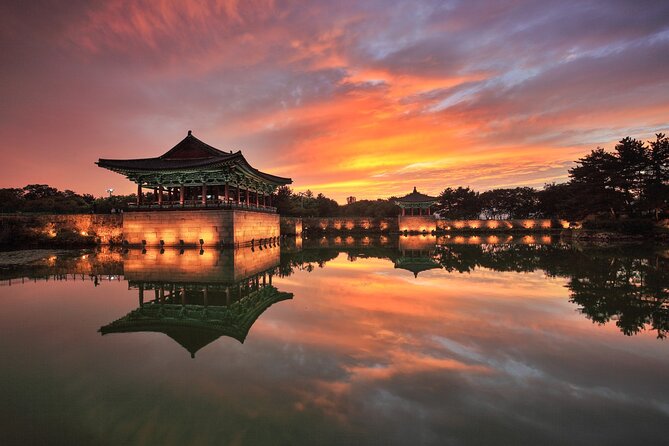
The final major UNESCO route stop is Donggung Palace and Wolji Pond, with about one hour allotted. The pond was constructed in 674 as part of a Silla palace complex. Today, the surviving foundations, water, trees, and illuminated buildings create one of Gyeongju’s most attractive evening scenes.
This is often the emotional high point of the tour. During the day, Gyeongju can feel like a collection of scattered ruins and monuments. At Wolji, the reflections and lighting pull the elements together. You can walk beside the pond, photograph the restored structures, and picture the ceremonial role of the palace.
The evening timing is important. If traffic delays the group, you may have less time here, but the late visit is still worthwhile. Bring a layer because temperatures can drop after sunset. You will also be tired by this point, and the hour involves more walking than simply standing at a viewpoint.
What the Museum route adds
The Gyeongju National Museum replaces several UNESCO route stops. Its collection includes Silla artifacts, golden crowns, Buddhist relics, and objects from the kingdom’s long period of rule.
The museum is a good choice for anyone who wants the objects themselves, not only the sites where they were found. After seeing tombs and temples, the displays can answer practical questions: what was placed in royal burials, how Buddhist art developed, and how much technical skill went into Silla metalwork.
The museum visit lasts about one hour, and admission is free on the described route. You still visit Bulguksa and Hwangnidan-gil, so the day is not entirely indoors. This option may also suit you if rain or extreme heat makes a day dominated by outdoor stops less appealing, although the itinerary remains subject to weather and traffic.
Guides, transport, and group size
The coach or minivan is one of the tour’s strongest practical features. You avoid piecing together buses between Busan and Gyeongju, and the air conditioning matters after hours outside.
Guides vary by departure, but named guides including Tomy, Lan, Irene, Vincent, Sol, Lucy, Bobby Kim, Charles, Juna, Roy, and Bryan have led different groups. The guide may speak English, Chinese, or Korean. Strong guiding is important here because the sites are spread out and the day moves quickly.
I especially value the guide’s role in keeping people on schedule and helping with photographs. Several guides are praised for clear explanations, humor, and careful organization. Roy even helped a confused participant reach the correct hotel after the tour, though that kind of personal assistance should not be assumed as part of the service.
The maximum group size is 43. A full coach can create a friendly atmosphere, but it also means you need to watch the clock and remember the meeting point. This is not the format for private questions at every stop.
Food, walking, and the real length of the day
Meals are not included. Lunch is commonly taken near Yangdong Village on the UNESCO route, while dinner is generally on your own around the evening street stop. Bring cash for lunch, plus a snack if you eat more than small portions.
The day can run from roughly 10 to 12 hours. Pickup may begin around 9:00 or 9:20 in central Busan, with return times reported around 20:00 to 21:00 depending on the drop-off point, traffic, and route. Do not book a tight evening reservation.
Most stops are outside. You will walk through temple grounds, village paths, tomb parks, streets, and the pond area. Comfortable shoes are more important than fashionable ones, and layers are a smart choice because the day crosses several temperatures.
The itinerary is subject to traffic and weather. Busan and Gyeongju are close enough for a day trip, but road delays can add time. The driver has a demanding schedule, and the long ride back can feel tiring after the final evening stop.
Is $57.14 good value?
At $57.14 per person, the tour offers solid value if you want to cover several Gyeongju sites in one day. Transport, a guide, and the listed admissions are included, which removes several costs and planning tasks.
The value is strongest on the UNESCO route, where Yangdong Village, Donggung and Wolji, and Cheonmachong are covered. You still pay for meals, drinks, snacks, insurance, and personal purchases, so your actual day will cost more than the advertised fare.
You are paying for access and efficiency rather than a relaxed pace. If you would otherwise need taxis, local buses, and separate entrance tickets, the price is reasonable. If you prefer to spend half a day in one village or museum, an independent visit may suit you better.
Who should book this Gyeongju day trip?
Book it if you have a short stay in Busan and want a broad introduction to Silla Korea without handling the transport yourself. It suits first-time visitors, history fans, families who value a fixed plan, and anyone who wants a guide to connect the sites.
The UNESCO route is best for photographers and people who want varied scenery. The Museum route suits anyone drawn to artifacts and indoor displays. Neither route is ideal if you dislike early starts, long coach rides, group schedules, or extensive outdoor walking.
Free cancellation is available up to 24 hours before the start time. Confirmation arrives at booking, and the meeting points are near public transport. A mobile ticket is used. You may also need WhatsApp and a Google account to fully follow tour communications, though workarounds are possible.
Should you book it?
I would book the UNESCO route if Gyeongju is a priority and you have only one day from Busan. Bulguksa, Yangdong Village, and Wolji Pond give you three strong and very different views of Korea’s past, while the coach makes the schedule possible.
Go in with realistic expectations: this is a packed heritage sampler, not a quiet retreat. Pack comfortable shoes, layers, cash, water, and patience for traffic. If you want efficient coverage and useful historical guidance, the $57.14 price is fair. If you want long, unhurried visits, choose fewer sites and explore Gyeongju independently.
FAQ
How long does the Gyeongju tour from Busan last?
The experience lasts approximately 10 to 12 hours. Pickup and return times can vary with traffic, weather, and the Busan drop-off point.
What is included in the tour price?
The price includes transport by air-conditioned coach or minivan and an English, Chinese, or Korean-speaking guide. On the UNESCO route, admission to Yangdong Village, Donggung and Wolji, and Cheonmachong Tomb is included.
Are meals included?
No. Lunch, dinner, drinks, snacks, and other personal expenses are not included.
What is the difference between the UNESCO and Museum tours?
The UNESCO route includes Yangdong Village, Bulguksa, Daereungwon, Woljeonggyo Bridge, and Donggung and Wolji. The Museum route includes Bulguksa, Hwangnidan-gil, and the Gyeongju National Museum.
How many people can join the tour?
The activity can have a maximum of 43 participants.
Can I cancel the booking?
You can cancel for a full refund if you do so at least 24 hours before the experience begins. Changes or cancellations made less than 24 hours before the start time are not accepted for a refund.
Recently added around Busan
- Full Day Busan and Gyeongju Guided Tour★ 5.0 · 4 reviews
- Andong Hahoe Folk Village Day Tour From Busan★ 5.0 · 4 reviews
- Make your own Makgeolli (Rice Wine) in Busan★ 5.0 · 4 reviews
- Best Busan night views : Mountain observatory streets★ 5.0 · 4 reviews
- Busan: Naejangsan National Park Autumn Foliage One Day Tour★ 4.8 · 4 reviews
- Gyeongju private tour with an official tour guide (Unesco)★ 4.5 · 4 reviews
- 5 Highlights Pohang Tour from Busan (Group Tour)★ 5.0 · 5 reviews
- Busan: Winter Healing Park and (Gyeongju/Daegu) One Day Tour★ 5.0 · 5 reviews
Busan Tours, compared.
Gyeongju Guided Day Trip to Three Kingdoms Capital
Read the review →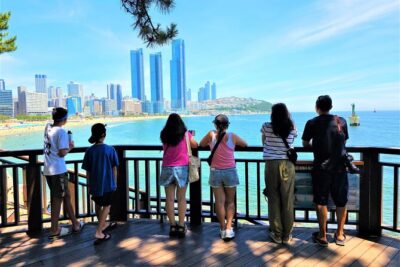
Gyeongju UNESCO World Heritage Guided Day Tour
Read the review →
Busan Private Tour with licensed tour guide + private vehicle
Read the review →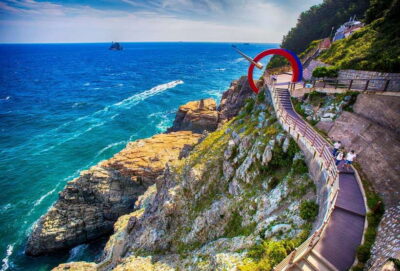
Coastal Treasures Beach Train, Culture Village & More
Read the review →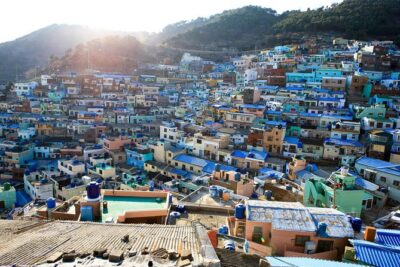
Busan’s Cultural Wonders with Beach Train & Gamcheon Village etc
Read the review →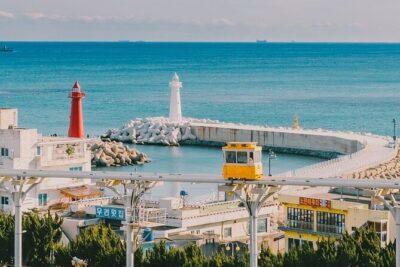
Private Busan Tour -Explore Cultural Landmarks with a Local Guide
Read the review →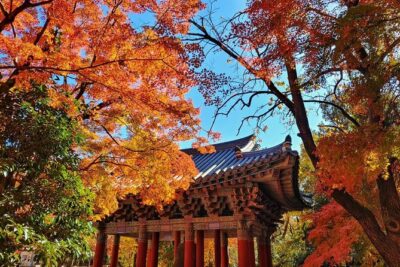
Old Korea Thousand History Tour of Gyeongju from Busan
Read the review →Browse the lists this tour appears in