
Reviewed · BUSAN TOURS
Old Korea Thousand History Tour of Gyeongju from Busan
Gyeongju gives you Korea’s ancient Silla capital in one long, well-packed day. This tour links Bulguksa Temple, royal tombs, old hanok streets, and glowing palace ruins, with round-trip transport from Busan so you do not have to manage trains, buses, and distant sights yourself.
I like the easy door-to-door structure from central Busan pickup points, and I like the guides’ lively approach. Bada, Erica, Kayla, Hyony, Katrina, and Eva are among the guides praised for clear explanations, humor, patience, and help taking photos. The main drawback is the pace: this can run from about 10 a.m. to 10 p.m., with more than 18,000 steps on a hot day.
Key points to know before booking
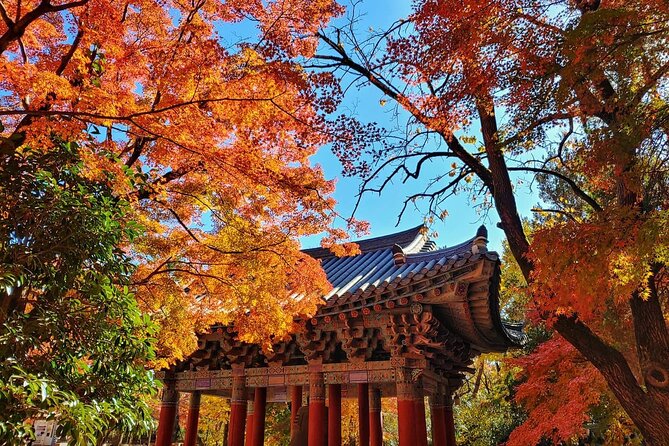
- Six major stops in one day: See Bulguksa Temple, Gyochon Village, Daereungwon, Hwangridan-gil, Donggung Palace and Wolji Pond, plus Woljeonggyo Bridge.
- A late evening finish: The final sights are especially attractive after dark, but you will return to Busan tired.
- Strong guide element: Guides including Bada, Erica, Kayla, Hyony, Katrina, and Eva are praised for history, humor, timing, and photo help.
- Transport adds real value: Round-trip travel from Busan saves you from planning separate connections to spread-out Gyeongju sights.
- Prepare for heat and walking: Bring water, sunscreen, a hat or parasol, and good walking shoes.
- Admission is covered: Entry to the listed attractions is included, while meals and personal spending are not.
Why Gyeongju works as a day trip from Busan
Gyeongju is not simply another Korean city with a few old buildings. It was the center of the Silla kingdom and later Unified Silla, and its remains are spread across a wide area. That makes independent sightseeing possible, but not always simple in one day.
This tour solves the main problem: transport. You meet at Busan Station, Seomyeon Station, or Haeundae Station, then ride to Gyeongju and between the main sights. The bus also gives you a break between walking stops. On a humid day, that air-conditioned rest matters.
The listed price is $64 per person. For that fee, you receive round-trip transfers, a professional guide, and admission to the included attractions. Meals are not covered, and personal expenses are extra. I consider the price fair for a first visit because Gyeongju’s sights are scattered and the day would require careful planning on your own.
The tradeoff is independence. You will not set your own pace at each location, and the group may be large. The tour allows up to 400 people, although one account described a much smaller English-speaking group. Your actual group size can vary.
More Historical Tours in Busan
- From Busan: Gyeongju UNESCO World Heritage Guided Day Tour
★ 4.8 · 1,250 reviews - Gyeongju UNESCO World Heritage Guided Day Tour from Busan
★ 5.0 · 660 reviews - Busan history and market food tour with local chef
★ 5.0 · 58 reviews
Starting from Busan and settling into the long day
Pickup is offered at Busan Station, Seomyeon Station, and Haeundae Station. The summer schedule lists Busan Station at 10:00 a.m. and Seomyeon Station at 10:20 a.m., with the Haeundae time shown separately in the booking information.
Check your meeting point and time carefully before the morning of the tour. One booking account described a mismatch between the voucher and the actual departure time, so I would rely on the latest confirmed instructions rather than an old screenshot. Missing the bus would be a poor start to a 12-hour outing.
The ride to Gyeongju is part of the appeal. You can sit back while the guide begins explaining Silla history and the day’s plan. Several guides have been singled out for keeping the bus entertaining, using jokes and personal stories without losing the thread of the historical explanation.
This is not a quiet, self-guided excursion. You should expect regular meeting times and reminders about staying with the group. That structure is useful when there are many stops, but it can feel brisk if you prefer to linger over photographs.
Bulguksa Temple: the strongest opening stop
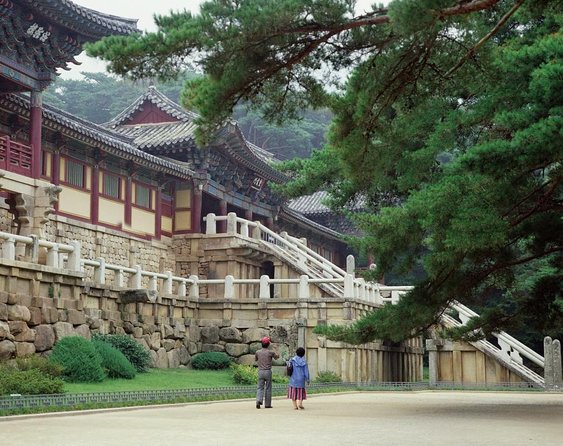
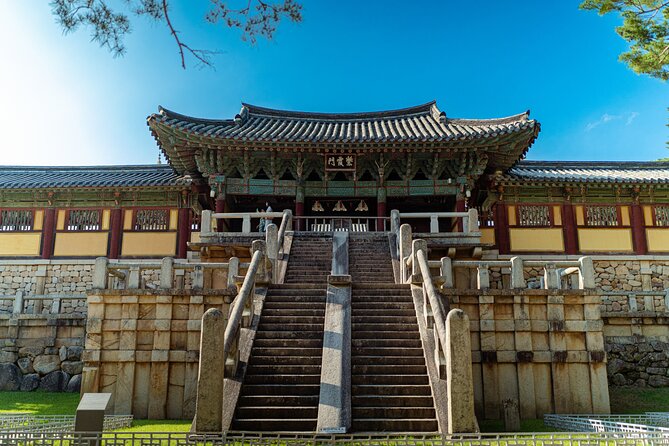
Bulguksa Temple is the day’s grandest architectural visit and, for many people, the clear highlight. It represents the Silla period and sits among wooded hills, where stonework and temple buildings work together with the setting.
You have about one hour here, with admission included. That is enough to see the main areas and hear the guide explain why the temple matters, but it is not enough for a slow study of every detail. Keep your camera ready and listen early in the visit, since the guide may give the main explanation near the first gathering point.
I would treat Bulguksa as the stop where you most want to stay close to the guide. The temple is more than a pretty photo background. Its design, stone stairways, and religious role give you a useful starting point for understanding Silla art and belief.
The site also sets the physical tone of the tour. Expect walking and some time outdoors. On hot days, the combination of sun, humidity, and stone paths can be tiring. Water and a hat are not optional extras here.
Gyochon Village and Woljeonggyo Bridge
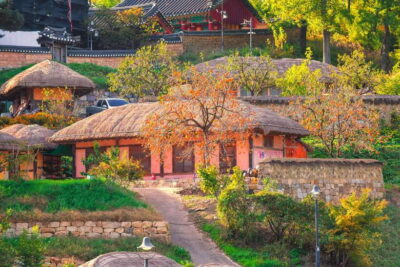
Gyeongju Gyochon Traditional Village offers a different view of the city. Instead of monumental temple architecture, you see hanok houses, stone walls, Gyeongju Hyanggyo, restaurants, and the nearby Woljeonggyo Bridge.
The scheduled time is about one hour. The village is attractive because it connects everyday Korean building traditions with the older heritage sites around it. It also gives the day a change of scale after Bulguksa.
Do not expect an extended house-by-house tour. The guided visit may focus on one traditional house and the main village area, leaving limited time to explore independently. If you want detailed architectural photography, use your free moments carefully and ask where you may walk without falling behind the group.
Woljeonggyo Bridge appears again later as the final evening photo stop. During daylight, the village and bridge help you understand how Gyeongju mixes restored heritage with modern cafes and restaurants. At night, the bridge becomes a more polished visual scene, with traditional lines and lights reflected in the water.
A different way to spend a day from here:
- Busan: Gyeongju Guided Day Trip to Three Kingdoms Capital
★ 4.8 · 1,925 reviews - Small Group Full Day Busan Tour (Max 6 Pax)
★ 5.0 · 1,464 reviews - Busan Private Tour with licensed tour guide + private vehicle
★ 5.0 · 1,143 reviews - Busan: Coastal Treasures Beach Train, Culture Village & More
★ 4.7 · 832 reviews
Daereungwon Tomb Complex: important, but visually quiet
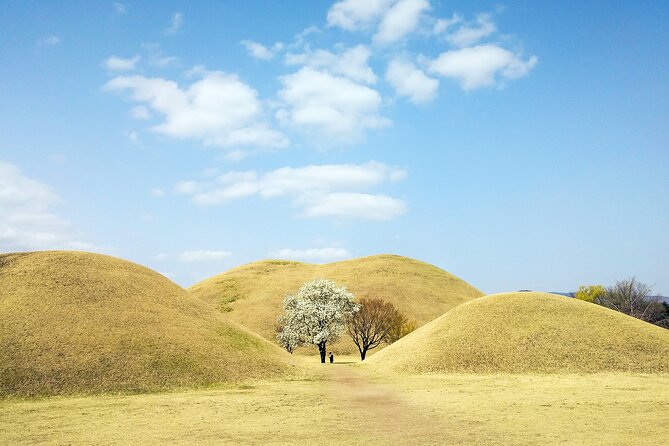
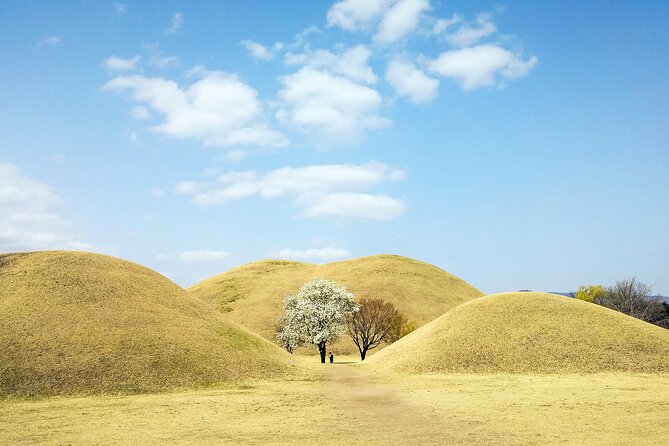
Daereungwon is a broad area filled with large grassy mounds. These are royal and aristocratic tombs from old Silla, including tombs associated with kings and queens.
You receive about one hour here. The site can look simple at first glance, especially if you expect visible chambers, statues, or buildings. The large mounds are the main remains, and much of the value comes from understanding what they represent rather than from a long list of structures to inspect.
I would listen closely to the explanation at this stop. The guide can turn what looks like a series of small hills into a lesson about rank, burial customs, and the power of the Silla court. Without that context, you might find the stop underwhelming.
This is also one place where the tour’s group pace helps and limits you. You get a clear introduction and time for photographs, but not a deep archaeological visit. If you already know Gyeongju’s tombs well, you may wish for more detail. If this is your first encounter with them, the hour is a useful introduction.
Hwangridan-gil: two hours for food and a break
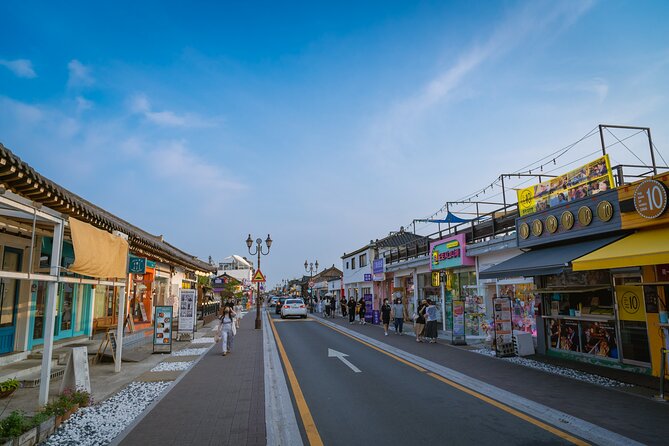
Hwangridan-gil is the most relaxed part of the afternoon. Old buildings from the 1960s have been preserved and adapted into shops, cafes, and food spots, creating a street where Gyeongju’s recent past meets its tourist center.
The tour allows about two hours here, and that longer pause is welcome. You can eat, browse, rest, and take photographs without the pressure of a formal monument visit. Meals are not included, but food may be available at an additional cost. Bring a payment method and confirm the group’s meeting time before wandering far.
This stop is less about ancient Silla than the other sites. That is its strength. After temples, tombs, and palace remains, you get a look at how the city presents its older character in daily commercial life.
Still, keep your expectations realistic. Hwangridan-gil is a street and market area, not a large museum district. If you want a major historical site, the two hours may feel long. If you want lunch and a chance to cool down, it may be the most practical stop of the day.
Donggung Palace and Wolji Pond after sunset
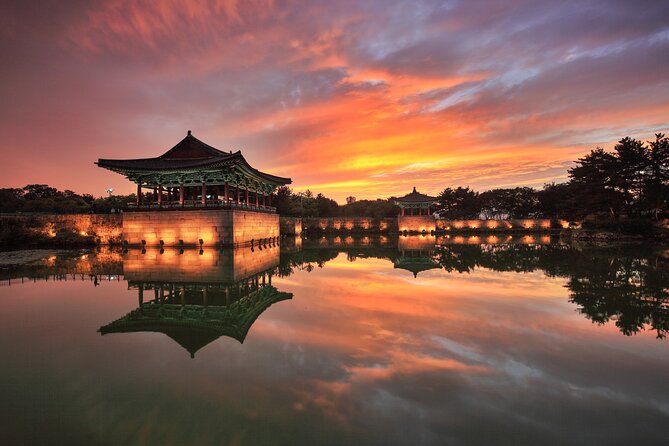
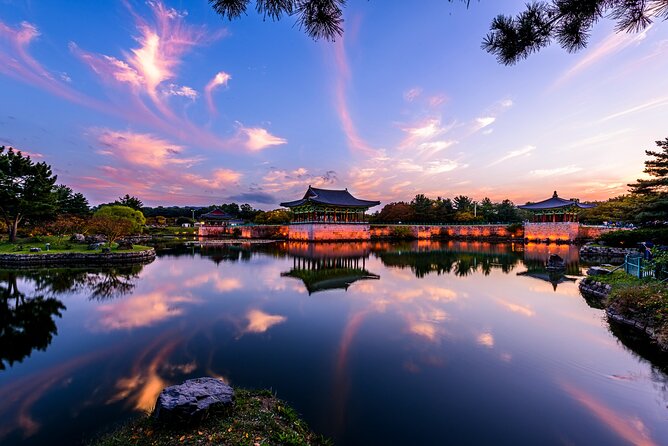
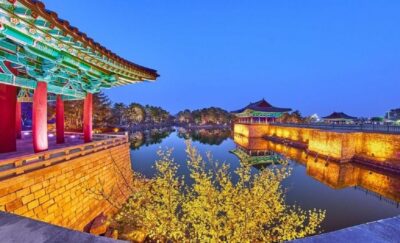
The day’s most memorable atmosphere usually arrives at Donggung Palace and Wolji Pond. This was a palace site from the Unified Silla period. The restored structures are limited, but the pond, pavilions, and reflections create a striking evening view.
You have about one hour here, and the timing is important. The visit is planned for later in the day, when the lights come on and the palace buildings reflect on the water. This is the stop to save camera battery for.
Do not expect a fully preserved palace complex. Much of what you see is an archaeological site with a small number of reconstructed structures. The visual appeal comes from the water, lighting, and placement of the buildings, while the historical value comes from imagining the court life that once used the site.
The evening setting also explains why this tour runs so late. A daytime return would miss the pond’s best mood. If you are bringing young children, plan for the possibility of fatigue. The late finish is part of the payoff, but it also makes this a demanding family day.
Woljeonggyo Bridge under the lights
The final stop lasts about 30 minutes and returns you to the Woljeonggyo area. At night, the bridge is lit in a way that emphasizes its traditional form, with reflections stretching across the water.
This is a short photography stop, not a second village visit. You will have enough time for several views and group photos, but the guide will need to keep everyone moving toward the bus.
Several guides are praised for taking photos, which is especially useful if you are traveling alone. Erica, Kayla, Bada, Hyony, and others are described as willing to help with pictures when asked. That is a small service, but it can make a difference on a tour built around scenic stops.
After the bridge, you return to Busan. Depending on traffic and the day’s schedule, expect the full outing to occupy roughly 12 hours. A 10 a.m. start and 10 p.m. finish has been reported, so do not schedule a late-night reservation in Busan.
The guide can make or break the pace
The strongest part of this experience is its guide-led storytelling. Bada is praised for speaking clearly, explaining early Korean history, watching for signs of heat, and taking good photos. Erica is described as upbeat, helpful, and able to mix history with humor. Kayla is praised for energy and funny stories, while Hyony is noted for helping solo participants with pictures.
Katrina and Eva are also described as attentive guides who explain each location and help keep the group together. These comments point to a consistent strength: the experience depends heavily on the person leading your departure, but the guide role is clearly central to the design.
A good guide matters in Gyeongju because several sites are visually quiet. At Daereungwon, the story explains the mounds. At Donggung Palace, the explanation gives meaning to reconstructed buildings and an empty palace site. At Bulguksa, context helps you notice more than the most obvious photo angles.
The balance is not perfect for every personality. One account described a guide who talked too much, rushed photographs, and left too little time to explore alone. Another raised concern about being asked for tips and prompted for a specific review score. Tipping is not part of the listed price, and you should never feel pressured to give either a tip or a particular rating. The best approach is to enjoy the guide’s help while keeping your own pace and expectations clear.
Heat, walking, and what to pack
This is a physically active day. One person recorded more than 18,000 steps, and several accounts stress the heat and humidity, especially in summer. Gyeongju can feel warmer than Busan, so dress for long periods outside.
Bring:
- Comfortable walking shoes
- Plenty of water
- Sunscreen
- A hat or parasol
- A portable phone battery for photos
- Light clothing suited to heat and humidity
The air-conditioned bus gives you welcome recovery time between sites. Still, you will walk at temples, along village roads, around tomb mounds, and beside the pond. Moderate physical fitness is recommended.
The schedule also means you should eat when you can. Hwangridan-gil provides the clearest meal break, but food is not included. If you have dietary needs, the available choices are not specified, so plan to ask the guide early in the day.
Who should book this Gyeongju tour?
I would book this tour if you have limited time in Busan and want to see Gyeongju without arranging several connections. It suits first-time visitors who value a clear explanation of Silla history, scenic night views, and a full day of sightseeing over a slow, private pace.
It also works well for solo participants. The guides may help with photos, and the group structure removes the awkwardness of visiting a spread-out area alone. Couples and families can also benefit, provided everyone is comfortable with a long day and plenty of walking.
I would hesitate if you dislike fixed schedules, want lengthy visits at each monument, or find late returns difficult. The tomb complex may feel too quiet, Hwangridan-gil may feel too commercial, and the final palace and bridge visits may leave little energy for anything else that night.
Free cancellation is available up to 24 hours before the start time. Changes or cancellations inside that window are not accepted for a refund. The experience also depends on good weather, with a different date or full refund offered if poor weather causes cancellation.
Final verdict: a smart first look at Gyeongju
At $64, this is a practical way to cover Gyeongju’s main sights from Busan. The admission fees, transport, and guide make the price reasonable, especially when you factor in the time saved planning a route between distant locations.
The best parts are Bulguksa Temple, the guide’s historical storytelling, and the illuminated Donggung Palace, Wolji Pond, and Woljeonggyo Bridge. The weak spots are the packed schedule, the physical demands, and the limited independent time at some stops.
Book it if you want a lively, efficient introduction and can handle a 12-hour day. Skip it if you want quiet reflection, flexible meals, or detailed time at each site. For most first visits from Busan, I think the convenience and range of sights make the long day worthwhile.
FAQ
How long is the Old Korea Thousand History Tour of Gyeongju?
The tour lasts approximately 12 hours. The schedule may begin around 10 a.m. and return to Busan around 10 p.m., so plan for a full day and evening.
Where does the tour depart from in Busan?
Pickup points include Busan Station, Seomyeon Station, and Haeundae Station. The summer schedule lists Busan Station at 10:00 a.m. and Seomyeon Station at 10:20 a.m. Check your confirmed departure details before leaving.
What attractions are included?
The tour visits Bulguksa Temple, Gyeongju Gyochon Traditional Village, Daereungwon Tomb Complex, Hwangridan-gil, Donggung Palace and Wolji Pond, and Woljeonggyo Bridge.
Are entrance fees included?
Yes. Admission to the included attractions is covered in the tour price.
Are meals included?
No. Meals are not included. Food may be available at an additional cost during the Hwangridan-gil stop.
How much walking is involved?
You should expect substantial walking and moderate physical activity. One account recorded more than 18,000 steps, and the tour information recommends a moderate fitness level.
Can I cancel for a full refund?
You can cancel at least 24 hours before the experience starts for a full refund. Cancellations or changes made less than 24 hours before the start time are not accepted for a refund.
Recently added around Busan
- Full Day Busan and Gyeongju Guided Tour★ 5.0 · 4 reviews
- Andong Hahoe Folk Village Day Tour From Busan★ 5.0 · 4 reviews
- Make your own Makgeolli (Rice Wine) in Busan★ 5.0 · 4 reviews
- Best Busan night views : Mountain observatory streets★ 5.0 · 4 reviews
- Busan: Naejangsan National Park Autumn Foliage One Day Tour★ 4.8 · 4 reviews
- Gyeongju private tour with an official tour guide (Unesco)★ 4.5 · 4 reviews
- 5 Highlights Pohang Tour from Busan (Group Tour)★ 5.0 · 5 reviews
- Busan: Winter Healing Park and (Gyeongju/Daegu) One Day Tour★ 5.0 · 5 reviews
Busan Tours, compared.
Gyeongju Guided Day Trip to Three Kingdoms Capital
Read the review →
Gyeongju UNESCO World Heritage Guided Day Tour
Read the review →
Busan Private Tour with licensed tour guide + private vehicle
Read the review →
Coastal Treasures Beach Train, Culture Village & More
Read the review →
Busan’s Cultural Wonders with Beach Train & Gamcheon Village etc
Read the review →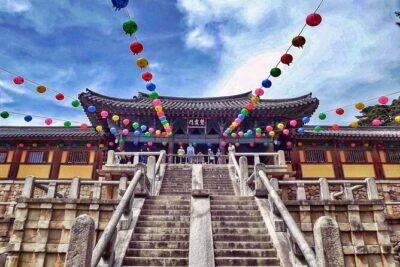
Gyeongju UNESCO World Heritage Guided Day Tour from Busan
Read the review →
Private Busan Tour -Explore Cultural Landmarks with a Local Guide
Read the review →Browse the lists this tour appears in