
Reviewed · BUKCHON AND INSADONG WALKS
Seoul: UNESCO Sites tour: Palace, Shrine & Bukchon Village
Seoul’s royal past comes into focus on this compact cultural tour, which links Changdeokgung Palace, Jongmyo Shrine, and the traditional lanes of Bukchon Hanok Village. I like the mix of grand architecture and ordinary neighborhood life, and I like having a guide to explain why these places matter instead of simply pointing at a gate. Guides such as Stella, Leo, Chloe, and Ms Park are praised for clear English, local tips, and taking photos.
The main thing to watch is the shifting itinerary. Jongmyo Shrine is closed on Tuesdays, Changdeokgung is replaced by Gyeongbokgung on Mondays, and the full-day version adds Suwon far beyond central Seoul. The tour is also not suitable for wheelchair users, and lunch is extra.
Key points at a glance
- Royal Seoul in three different settings: See palace courtyards, an ancestral shrine, and a living hanok neighborhood in one outing.
- Bukchon is more than a photo stop: Traditional homes now house cafés, cultural centers, and other small businesses.
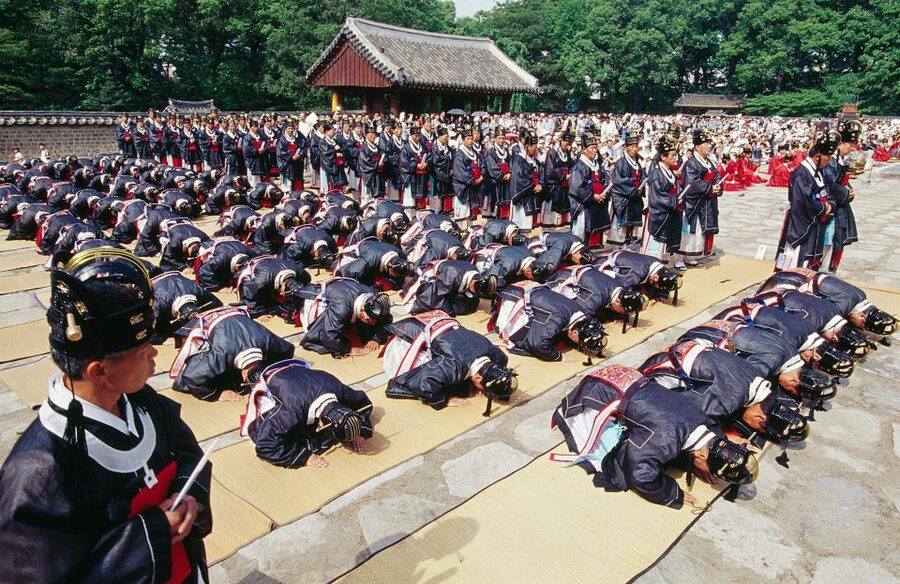
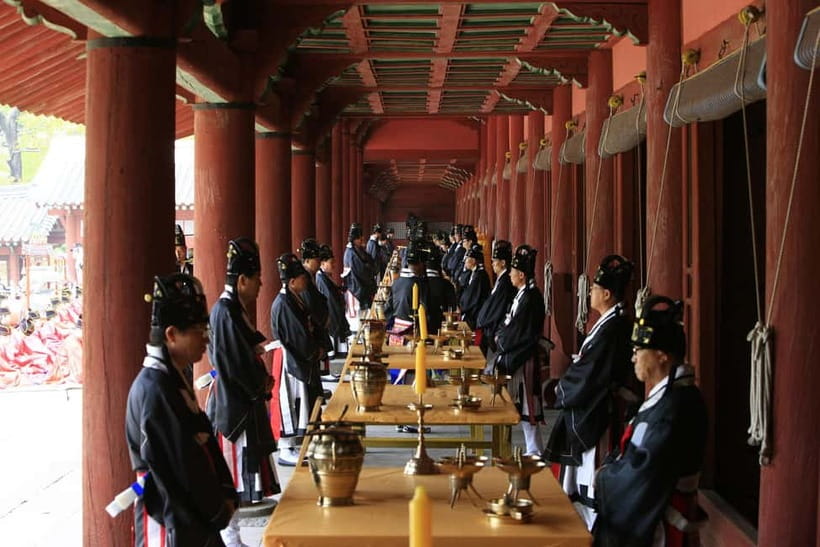
- Jongmyo offers a quieter kind of heritage: This sacred site was built for royal ancestral rites and still has links to memorial ceremonies and court music.
- The full-day choice reaches Suwon: Add Hwaseong Fortress and Haenggung Palace for a longer look at Korea’s military and royal past.
- Guides add practical help: Stella, Leo, Chloe, Orota, and several guides named Park are praised for history explanations, photos, and restaurant or hanbok-shop tips.
- The $36 price covers the core logistics: Entrance fees, an English-speaking guide, a driver, and van transport are included, but meals and pickup are not.
Why this tour works for a first day in Seoul
I like this tour because it gives you a useful cultural map of Seoul without asking you to work out several subway connections on your own. You begin with a traditional neighborhood, move to a royal shrine, and then enter a palace complex. Each stop has a different mood.
Bukchon shows how traditional Korean houses fit into a modern city. Jongmyo explains the ritual side of royal power. Changdeokgung brings you into the court itself, with buildings and gardens designed for kings and officials. That progression makes the day easier to understand than a random list of landmarks.
The guide matters here. The sites are attractive enough to photograph without help, but their meaning is less obvious. At Jongmyo, for example, the long, restrained buildings can seem plain compared with Seoul’s colorful palaces. A guide can explain their purpose and the ceremonies once held there. At Changdeokgung, you can better appreciate why the layout and garden design differ from a simple collection of grand halls.
The tour has a strong record of friendly guiding. Stella is praised for her English and her ability to connect Korean history with architecture. Leo is described as both passionate and attentive, while Chloe, also identified as KyungAh Park, helped with photos and a hanbok-shop search. Guides named Park are also praised for giving people enough time at each stop and helping with pictures.
That personal attention may depend on the guide and group size. One booking felt almost private because it included only the couple and the guide, but you should not assume every departure will be that small. Still, the repeated comments about friendly, flexible guides suggest that the human side is one of the tour’s main strengths.
More Bukchon and Insadong walks:
- Seoul: Gyeongbok Palace, Bukchon Village, and Gwangjang Tour
★ 4.9 · 2,321 reviews - Best Seoul City Tour (Gyeongbokgung Palace,Insadong,Namsan Tower)
★ 5.0 · 1,647 reviews - Seoul: Gyeongbok Palace, Bukchon Village, and Gwangjang Tour
★ 5.0 · 1,044 reviews
Starting at Myeong-dong Exit 10
The meeting point is outside Exit 10 of Myeong-dong subway station at 8:30 in the morning. This is a sensible central starting point, especially if you are staying near Myeong-dong or already plan to shop and eat there later.
There is no hotel pickup, so allow time to reach the station. Your exact meeting details and time are confirmed by email from the local partner. Check your spam folder if the message does not appear, since the meeting instructions may be more specific than the basic station description.
You travel between stops by van with a driver. That saves time compared with arranging public transport for every part of the day, particularly if you choose the full-day version and continue to Suwon. The tradeoff is that you are following a fixed route rather than setting your own pace.
Wear shoes you can walk in comfortably. The tour involves streets, palace grounds, shrine paths, and possibly fortress areas. It runs in rain or shine, so a weather check before leaving is sensible. Bring water and a rain layer when needed, since the tour does not promise shelter at every point.
Bukchon Hanok Village and Seoul’s traditional homes
Bukchon Hanok Village is an effective opening stop because it shows Korean tradition in a living urban setting. The streets are lined with preserved hanok, the traditional houses known for their tiled roofs, timber details, and calm proportions.
You can take photos of the architecture while your guide explains the day ahead. Some homes now serve as cafés and cultural centers, so the village is not a museum frozen in time. It is a neighborhood where old building forms sit beside modern Seoul life.
That mixture is also the main consideration. Bukchon is a real residential area, not simply a backdrop built for sightseeing. Keep your voice low and stay mindful of people who live there. The visit is best approached as a walk through a functioning neighborhood, not only as a series of photo angles.
The route gives you a useful introduction to Korean design before the palace visit. You will see that traditional architecture does not rely only on size or decoration. Roof lines, courtyards, woodwork, and the way buildings sit on the slope all matter.
If Bukchon is closed, the itinerary changes to Namsangol Hanok Village. That replacement keeps the traditional-house theme, but it is not the same visit, so check the final plan with the local operator if Bukchon is important to you.
Jongmyo Shrine, where ritual takes center stage
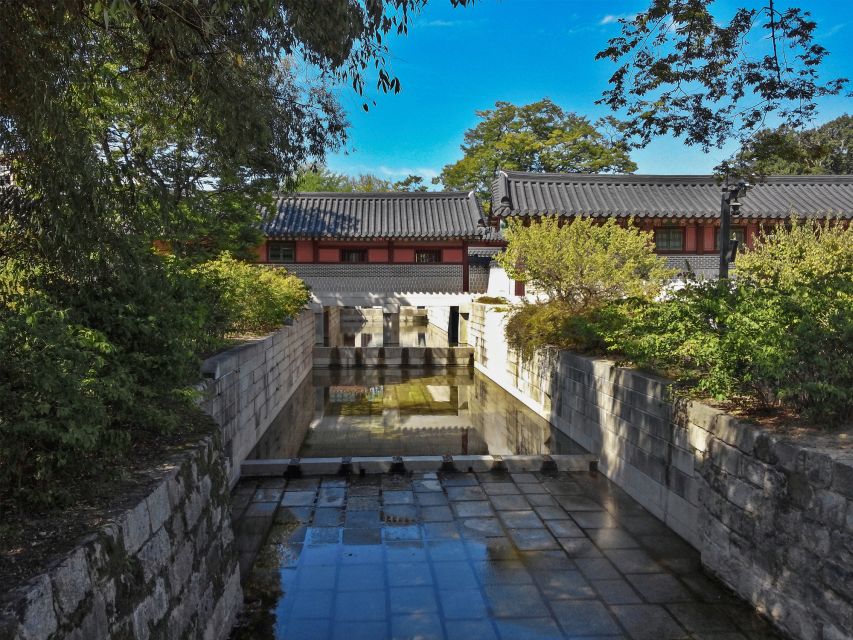
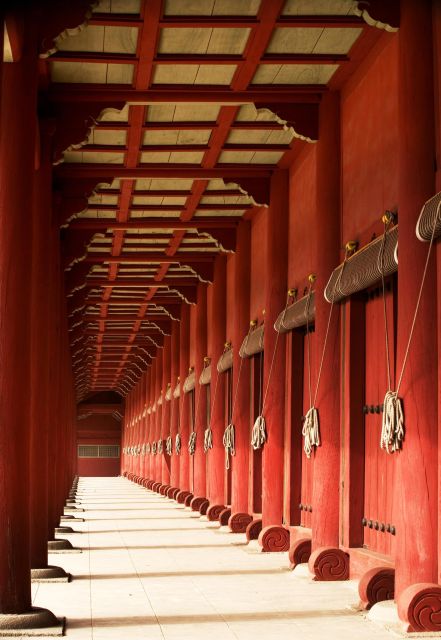
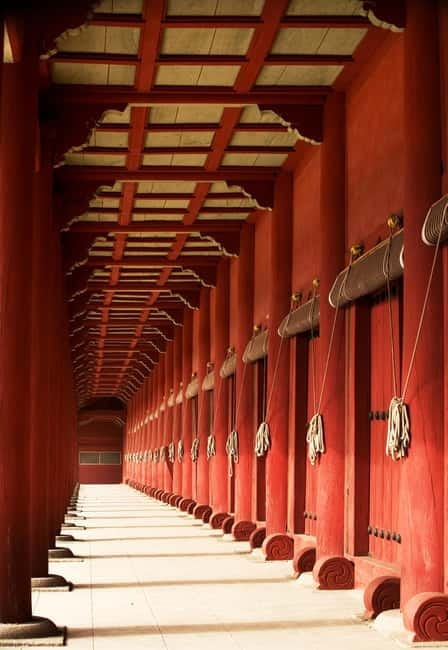
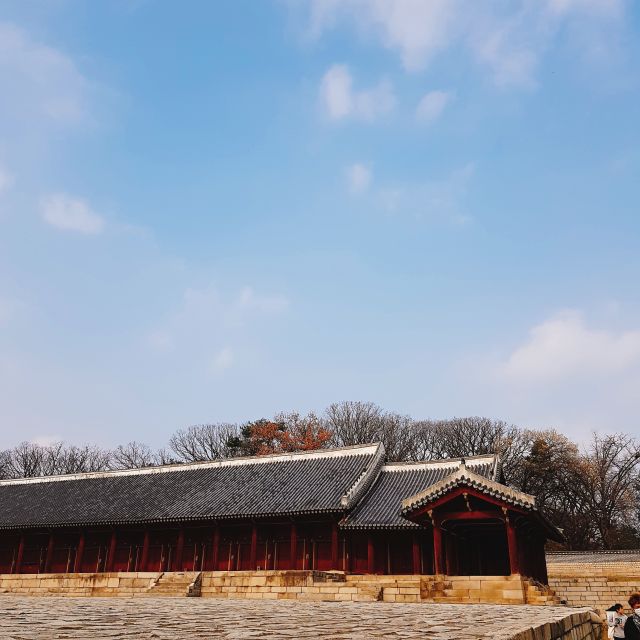
Jongmyo Royal Shrine was built nearly 600 years ago for royal ancestral rites. Korean kings came here to honor earlier monarchs, making the site a place of ceremony and memory rather than royal residence.
I find Jongmyo valuable because it adds a quieter layer to Seoul’s history. A palace shows authority in public. A shrine shows how that authority was tied to family lines, ritual duty, and respect for the dead.
The architecture is deliberately restrained. You may not get the same immediate visual drama as at a palace gate, but the long ritual spaces and ordered grounds reward careful attention. Your guide can explain the role of memorial ceremonies and the court music performances sometimes connected with the shrine.
Jongmyo is closed on Tuesdays. On that day, the tour replaces it with Insa-dong Culture Street, an older Seoul neighborhood known for antique shops, galleries, traditional tea houses, and a traditional atmosphere. Insa-dong offers more shops and street life, but it does not provide the same sacred setting, so choose another day if Jongmyo is your priority.
A few more Seoul half-days to weigh up
- Best DMZ Tour Korea from Seoul (Red Suspension Bridge Optional)
★ 5.0 · 41,422 reviews - DMZ Tour: 3rd Tunnel, Option(Suspension Bridge, Boat) from Seoul
★ 5.0 · 21,373 reviews - DMZ tour south Korea from Seoul (NK experience hall, defector)
★ 5.0 · 20,599 reviews - Seoul: DMZ Tour with Optional Suspension Bridge
★ 4.8 · 5,277 reviews
Changdeokgung Palace and its garden setting
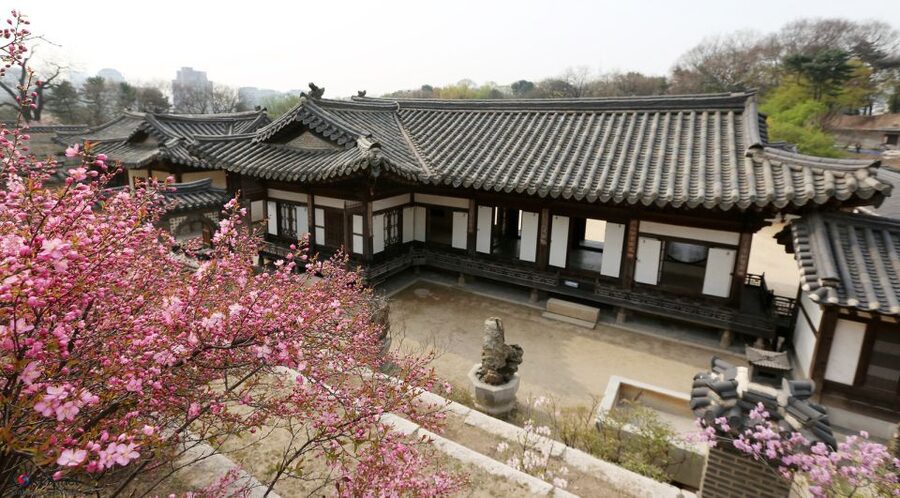
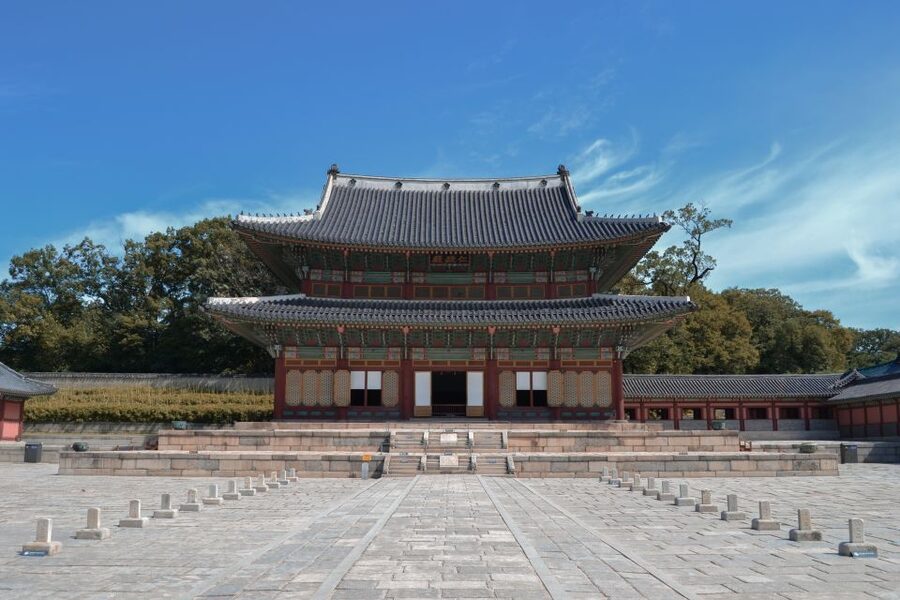
Changdeokgung is one of Seoul’s key royal sites and has about 600 years of history. It was once a royal residence and is recognized as a UNESCO World Heritage Site.
The palace is admired for architecture that works with its surroundings rather than trying to overwhelm them. Courtyards, gates, halls, and garden areas reflect traditional Korean design. Your guide helps connect these details to the way the royal court used the complex.
I especially like placing Changdeokgung after Bukchon and Jongmyo. You first see traditional housing at a neighborhood scale, then royal ritual, then the formal residence. The three stops help you compare everyday life, ancestral ceremony, and court life.
The palace is not simply a quick photo stop. Give yourself time to look at the spacing between buildings and the contrast between painted wooden details and quieter garden areas. The exact amount of free time depends on the group and the guide, though the tour is designed to cover each scheduled location.
On Mondays, Changdeokgung is replaced by Gyeongbokgung Palace. Gyeongbokgung is another major royal site, but it is a different palace with a different layout and story. If Changdeokgung’s garden design is the reason you want this tour, avoid Monday.
Lunch, ginseng, and the commercial stop
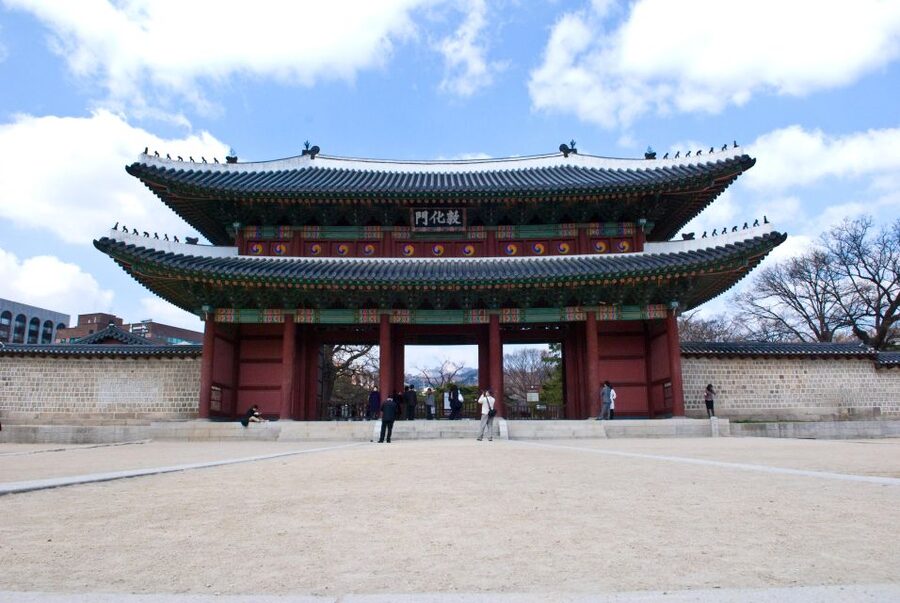
A lunch break is provided, but the meal is not included in the $36 price. That gives you some freedom, but you should budget for food and expect the guide to fit lunch into the day’s schedule rather than letting you make a long independent stop.
After the heritage visits, the tour stops at Cheongha Korea Ginseng. You learn about Korean ginseng and its long place in East Asian medicine. The material presented includes its early documentation during China’s Han Dynasty in the classic Ji Jiu Zhang and the value placed on Korean ginseng for its adaptogenic properties.
This stop may appeal if you are curious about Korean health products or want context for a familiar national specialty. It is also the most commercial part of the outing. If you prefer a tour made up only of historic sites, this visit may feel less essential than the palace and shrine.
Keep your expectations practical. The tour explains ginseng’s cultural and medicinal reputation, but the included information does not promise a tasting, purchase, or medical consultation. Treat it as an educational stop, not a reason to buy a health product.
The tour ends in Myeong-dong near a subway station. That is useful for an evening meal, shopping, or continued sightseeing. It also means you do not have to find your way back across Seoul after a full day.
The full-day route to Suwon
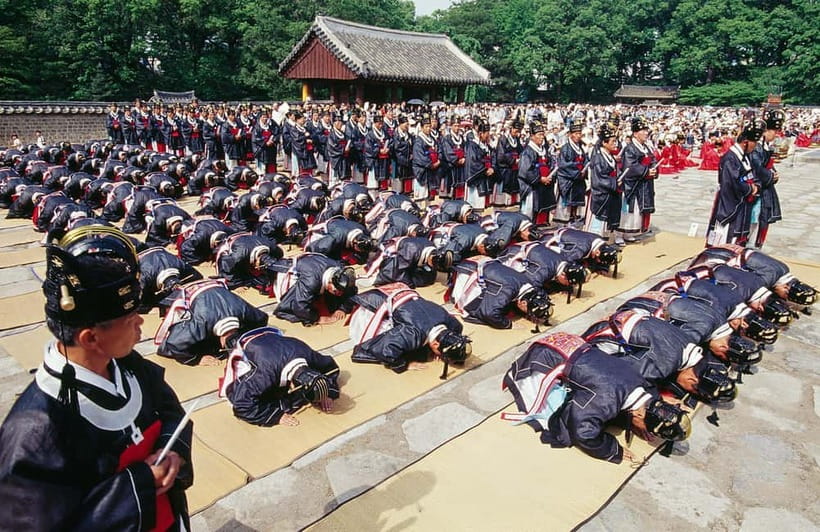
The full-day version continues in the afternoon to Suwon, in Gyeonggi-do Province. This is a substantial addition, not a small extra stop in central Seoul.
Suwon Hwaseong Fortress is a UNESCO World Heritage Site known for its well-preserved structure and advanced military engineering from the late 18th century. The visit broadens the tour beyond palace ceremony and urban tradition. You see how a later Korean ruler approached defense, city planning, and royal power.
You also visit Hwaseong Haenggung Palace, a temporary residence for kings traveling outside the capital. This connects Suwon to the morning’s royal theme while giving you a different setting from Seoul’s main palaces.
The full-day option is best for someone who wants a packed history day and does not mind being away from central Seoul for much of the afternoon. The half-day-style route, focused on Bukchon, Jongmyo or Insa-dong, and a Seoul palace, leaves more room for your own plans.
The supplied description presents the Suwon portion as part of the full-day tour, so confirm that you are booking the version you want. The final drop-off is back in Myeong-dong near the subway station.
What the $36 price really covers
At $36 per person, the tour offers solid value if you want an organized introduction to Seoul’s heritage. Entrance fees, a professional guide, a driver, and van transport are included. Those costs can add up when you visit several major sites.
The price does not include lunch, hotel pickup, or hotel drop-off. You need to reach Myeong-dong in the morning and return there at the end. For some people, that is a drawback. For others, ending near restaurants and shops is more useful than being delivered back to a hotel.
The value depends on how much explanation you want. If you are happy to read signs, use a guidebook, and manage public transport, you can visit parts of this route independently. The tour earns its fee through transport, admission, route planning, and the chance to ask a guide questions.
The included English guiding is particularly helpful at Jongmyo, where the purpose of the site is not immediately clear. It also adds detail to Changdeokgung’s buildings and gardens. If you enjoy history but do not want a lecture-heavy group, the available guide feedback points to a friendly, approachable style.
Who should book this Seoul heritage tour?
I would choose this for a first visit to Seoul when you want historical context early in your stay. It is also a good fit if you want someone to help with photos, explain Korean culture, and offer practical suggestions about restaurants or hanbok shops.
The tour suits history enthusiasts, architecture fans, and people who prefer seeing several related sites in one day. The full-day option is especially useful if Suwon is high on your list and you do not want to arrange a separate outing.
You may want to skip it if you prefer slow, independent sightseeing. The fixed schedule, van transfers, lunch break, and ginseng stop leave less room for lingering wherever you like. It is also not suitable for wheelchair users.
Consider your calendar carefully. Avoid Tuesday for Jongmyo and Monday for Changdeokgung. If either site is essential, those substitutions matter. Check the weather, prepare for walking, and confirm the meeting email before the morning of the tour.
Practical details before you reserve
- The tour is in English.
- Meet outside Exit 10 of Myeong-dong subway station at 8:30 am.
- Pickup is not included.
- Van transport, driver, guide, and entrance fees are included.
- Lunch is not included.
- The tour operates rain or shine.
- The activity is not suitable for wheelchair users.
- You can cancel up to 24 hours in advance for a full refund.
- You can reserve now and pay later.
- The usual end point is back at the Myeong-dong meeting area.
Should you book it?
Book this tour if you want efficient access to Seoul’s royal and cultural highlights with a friendly English-speaking guide. The combination of Bukchon, Jongmyo, and Changdeokgung gives you more than a palace-only outing, and the full-day Suwon option adds real historical weight.
I would book it for a first or second day, especially if you want help getting your bearings and learning where Korean culture fits into modern Seoul. I would not choose it for a slow day of independent wandering, or if you are unwilling to pay separately for lunch and make your own way to Myeong-dong.
For the best match, select a day when Changdeokgung and Jongmyo are both open. If you do that, the $36 cost is a fair exchange for admissions, transport, and a guide who can turn impressive buildings into a connected story.
FAQ
Where does the tour begin?
Meet outside Exit 10 of Myeong-dong subway station at 8:30 am.
Where does the tour end?
The activity ends back at the meeting point in Myeong-dong, near a subway station.
Is hotel pickup included?
No. You must make your own way to the Myeong-dong meeting point.
Is hotel drop-off included?
No. The tour ends in Myeong-dong rather than at your hotel.
What language is the tour conducted in?
The tour is conducted in English.
What is included in the price?
Entrance fees, a professional guide, van transport, and a driver are included.
Is lunch included?
No. A lunch break is provided, but you pay for your own meal.
What happens on Mondays?
Changdeokgung Palace is replaced by Gyeongbokgung Palace on Mondays.
What happens on Tuesdays?
Jongmyo Royal Shrine is closed on Tuesdays, so the tour visits Insa-dong Culture Street instead.
What happens if Bukchon Hanok Village is closed?
The visit is replaced with Namsangol Hanok Village.
Is the tour suitable for wheelchair users?
No. The tour is not suitable for wheelchair users.
Does the tour operate in bad weather?
Yes. The tour takes place rain or shine.
Can I cancel for a refund?
Yes. You can cancel up to 24 hours in advance for a full refund.
Can I reserve without paying immediately?
Yes. The reserve-and-pay-later option lets you book your spot without paying on the day of reservation.
Recently added around Seoul
- Nami & Maple Road & Theatre des Lumieres Day Tour from Seoul★ 4.8 · 4 reviews
- Gyeongbokgung Palace Photo Session with your own phone★ 5.0 · 4 reviews
- Private Tour around Suwon UNESCO Fortress and Korea Folks Village★ 4.5 · 4 reviews
- N Seoul Tower + Namsan Cable Car Ticket (Collect in Myeongdong)★ 3.5 · 4 reviews
- Jisan Forest Resort: Ski Full-Day Tour or Shuttle from Seoul★ 5.0 · 4 reviews
- Seoul: Deoksugung Palace Night Tour★ 4.5 · 4 reviews
- Private Jeonju Hanok Village – Culinary tour★ 5.0 · 4 reviews
- Seoul Private Walking Tour with a Local★ 5.0 · 4 reviews
Bukchon and Insadong Walks, compared.
Gyeongbok Palace, Bukchon Village, and Gwangjang Tour
Read the review →
Best Seoul City Tour (Gyeongbokgung Palace,Insadong,Namsan Tower)
Read the review →Gyeongbok Palace, Bukchon Village, and Gwangjang Tour
Read the review →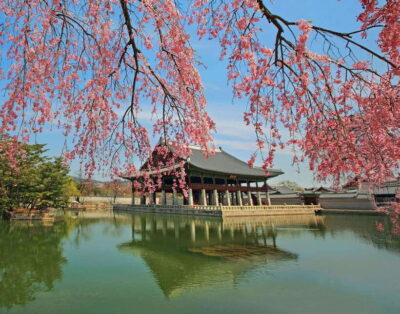
Seoul Highlights: Gyeongbok Palace, Insadong & N Seoul Tower
Read the review →
Korean Palace and Market Tour in Seoul Including Insadong and Gyeongbokgung Palace
Read the review →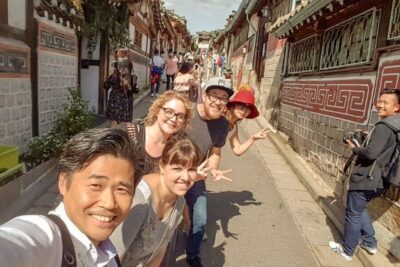
Gyeongbok Palace and Bukchon Hanok Walking Tour
Read the review →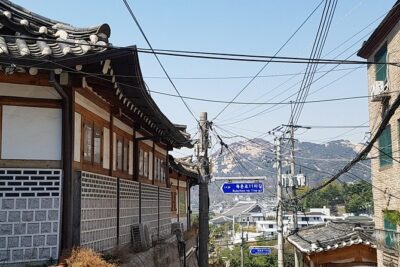
Best Walking Tour to Gyeongbok Palace Bukchon Hanok Village
Read the review →
Carve Your Personal Korean Stone Seal with Jeongju in Insadong
Read the review →Browse the lists this tour appears in