
Reviewed · SEOUL TOURS
Traditional Korean 6-Dish Cooking Class + Hidden Alley Tour Seoul
The best part of this Seoul experience is the pairing of a full Korean cooking lesson with a walk through Euljiro’s back lanes. You do not simply eat a meal and move on. You learn why Korean dishes use particular colors, cook six familiar recipes, then see a less polished and more local side of central Seoul.
I especially like the warm opening with Korean tea and the clear cultural explanation before the knives and hot pans come out. I also like that chef Jiny sends you home with printed recipes, photos, and a small souvenir. The main consideration is time: three and a half hours is a long food activity, and the meal is substantial, so arrive hungry and keep your afternoon fairly open.
Key points to know before booking
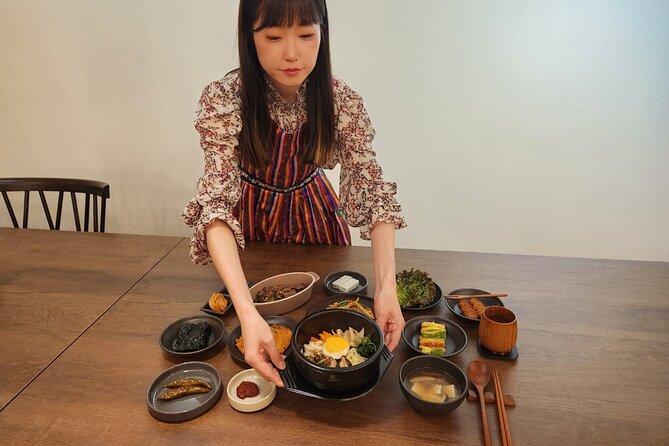
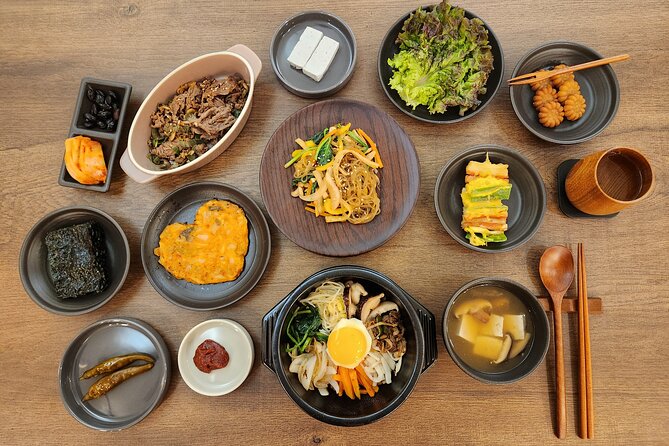
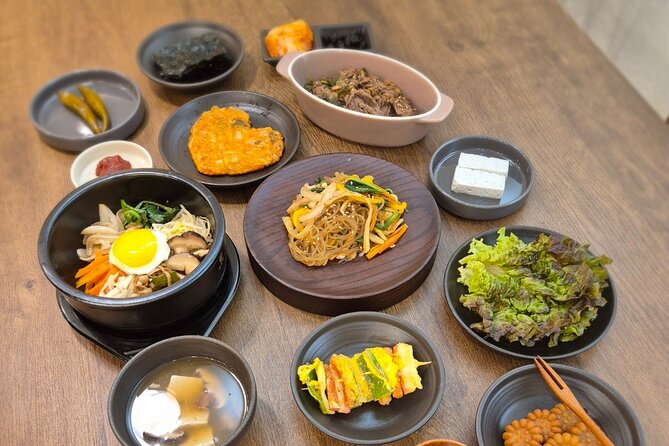
- Six complete Korean dishes: Prepare hot stone bibimbap, bulgogi, japchae, doenjang-jjigae, kimchi pancake, and vegetable skewers.
- Culture before cooking: Jiny explains Korean food values and the color balance behind dishes such as bibimbap.
- A private group setting: Only your own group participates, with the cooking class held in a tidy studio near Chungmu-ro.
- Euljiro after lunch: The walk takes you through lesser-known alleys and local businesses, with stories about the district’s changes.
- Useful take-home extras: You receive recipes, complimentary photos, drinks, snacks, and a special souvenir.
- Flexible cancellation: You can receive a full refund if you cancel at least 24 hours before the start time.
Starting with tea at the Chungmu-ro cooking studio
You meet at 2F, 50-4 Chungmu-ro, in Seoul’s Jung District. The address places you near public transportation, but the studio is tucked into an alley rather than sitting on a broad tourist avenue. Allow a few extra minutes to find the entrance and reach the second floor.
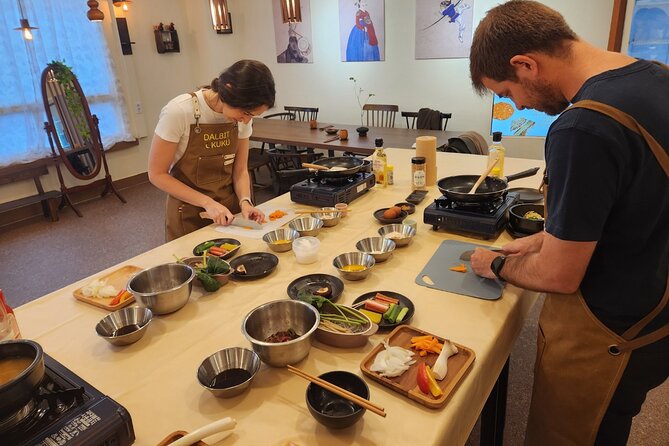
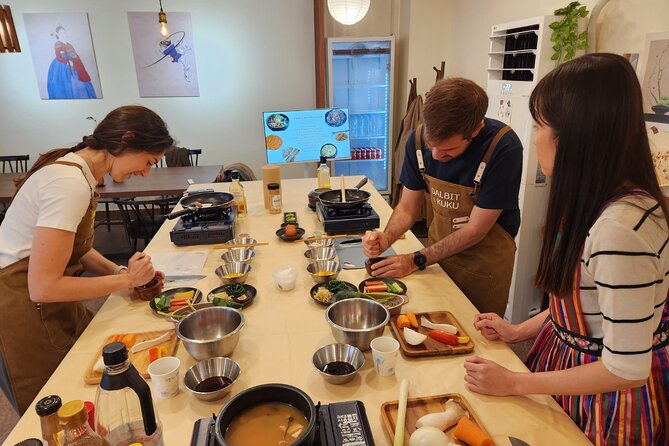
The room combines older Korean touches with a modern cooking setup. It is designed for teaching, not just watching. Each person has a station, ingredients are prepared in advance, and the space has been described as clean and well organized. That matters because six dishes can become chaotic if the work area is cramped or the order is unclear.
Jiny begins with a welcome cup of traditional Korean tea and a small snack. She takes time to introduce the menu and explain what the food means in Korean life. This opening is not filler. It gives you a framework for understanding why the dishes are served together and why presentation matters.
One particularly useful lesson concerns the color harmony of bibimbap. Korean food often pays attention to contrast in color, texture, and taste, and bibimbap makes that idea easy to see. You are not only following a recipe. You are learning how a Korean meal is put together.
Jiny’s teaching style is warm and encouraging. She uses simple instructions and checks that everyone understands each stage. That makes the class suitable for beginners, while experienced cooks can still pick up useful methods and cultural context. English-language instruction is available, and the class is structured so you can take part rather than sit at the edge of the room.
More Cooking Classes in Seoul:
- Local Home Korean Cooking Class & Market Adventure in Seoul
★ 5.0 · 1,024 reviews - Master Korean traditional cooking with a Kimchi chef
★ 5.0 · 385 reviews - Seoul: Korean Cooking Class at a Local Home and Market Tour
★ 5.0 · 348 reviews
Six dishes, six different kinds of kitchen work
The menu gives you a broad introduction to Korean home cooking. It includes meat, vegetables, noodles, soup, rice, and pan-fried food. You get a much better sense of Korean cooking from this mix than you would from preparing one famous dish for an hour.
Hot stone bibimbap
Bibimbap is the visual centerpiece. Rice is combined with several prepared ingredients, and the attention to color gives the dish its familiar look. The hot stone element adds a little drama and changes the texture, helping create the crisp rice that makes this version different from a simple bowl of mixed rice.
Jiny explains the meaning behind the arrangement before you combine everything. This is a good dish for learning that Korean cooking is not just about a strong sauce. It also depends on balance, neat preparation, and the contrast between soft rice and vegetables.
Bulgogi
Bulgogi gives you a direct lesson in Korean marinating and seasoning. The dish is approachable for first-time cooks, yet it has enough flavor to feel rewarding when you prepare it yourself. Since each person takes part in the process, you can ask about ingredients and cooking time as you work.
The class menu lists beef bulgogi, and several participants have specifically described making it successfully even without much cooking experience. That is useful if you want recipes you can repeat at home rather than a meal that depends on restaurant equipment.
More hands-on workshops in Seoul:
- Yongpyong Ski Resort from Seoul with Optional Lesson and Packages
★ 5.0 · 217 reviews - Seoul: Kpop Dance Class Including Video Shooting & Editing
★ 4.8 · 185 reviews - Seoul: Taste of Korea, Authentic Home Style Cooking Class
★ 4.9 · 166 reviews - Seoul: Perfume-Making Workshop in a Hanok
★ 4.9 · 110 reviews
Japchae
Japchae adds noodles and a different rhythm to the class. You work with ingredients that must come together in the right order so the final dish stays balanced instead of turning oily or limp. Jiny’s step-by-step approach helps here, particularly if Korean cooking is new to you.
Japchae is also a practical choice for a take-home recipe. It is familiar enough to appeal to many tastes, but it introduces the sweet-savory style and layered texture often found in Korean food.
Doenjang-jjigae
The soybean stew, doenjang-jjigae, brings a savory soup course to the table. Its fermented soybean base gives it a deeper, earthier flavor than a mild vegetable broth. It is a helpful dish for understanding how fermented ingredients shape everyday Korean meals.
Because it is served as part of a larger spread, you can taste how the stew works alongside rice, meat, noodles, and side dishes. This is one reason the menu feels like a home meal rather than a single cooking demonstration.
Kimchi pancake
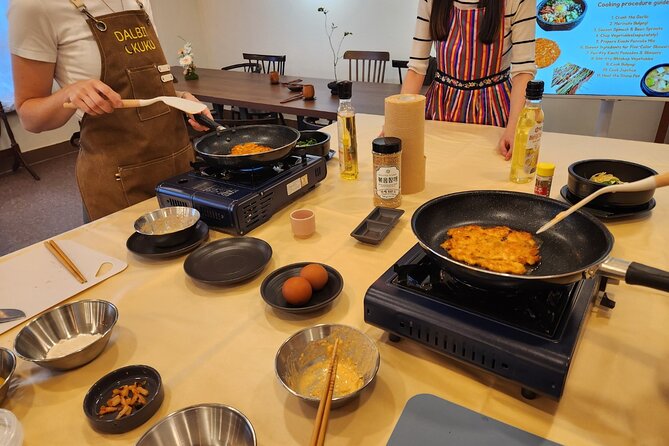
Kimchi pancake is the most immediately playful dish on the menu. You mix, shape, and cook it in a pan, learning how to manage browning while keeping the center cooked. The sour, spicy kimchi gives it a strong Korean identity without requiring an elaborate recipe.
It is also a good confidence builder. Even if your pancake is not perfectly round, the cooking process is clear and the result is satisfying. You will likely find this one of the easiest recipes to try again after returning home.
Vegetable skewers
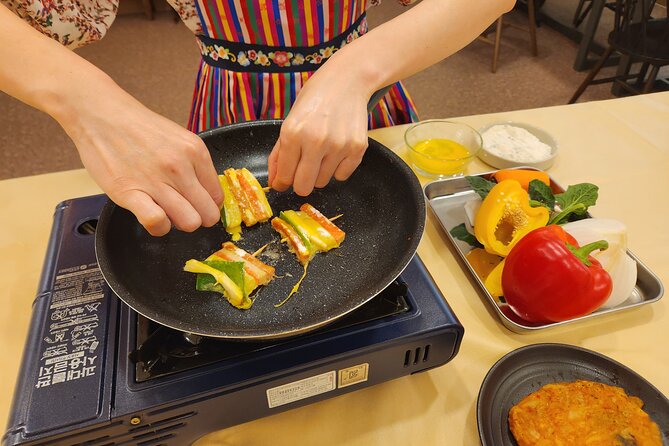
The final item is listed as vegetable skewers, while some descriptions call them sanjeok. The idea is a colorful arrangement of ingredients on skewers, prepared with care and cooked until ready to serve. Like bibimbap, it shows how Korean food gives attention to appearance as well as taste.
Taken together, the six dishes cover a lot of ground. You prepare a meal with enough variety to keep the class interesting, but the pace is still guided. Jiny and her husband help keep the work moving, and the ingredients are ready before you begin.
Sitting down to eat what you made
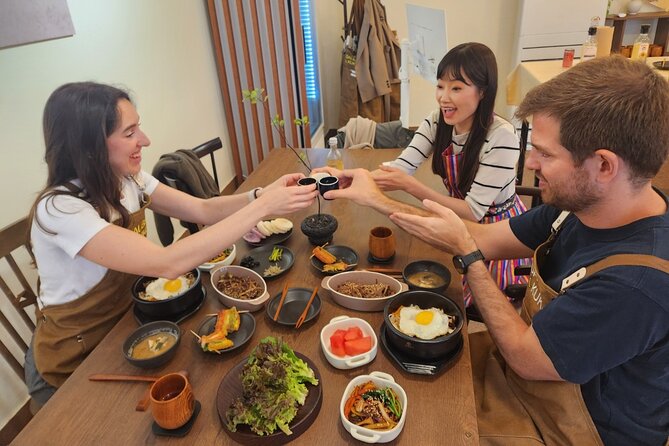
After cooking, everyone gathers around the table and eats together. This shared meal is an important part of the experience. You see how separate dishes work as one Korean spread, and you can compare the results while the food is still fresh.
The meal is generous. The menu includes enough food that you should not plan a large lunch before arriving. Drinks, beverages, and snacks are included, and traditional desserts are part of the broader food experience. The exact dessert selection is not specified, so you should think of it as an added taste rather than a fixed course to plan around.
I like the fact that the meal is not rushed into a quick tasting. You have time to enjoy the dishes and talk with the host. The cooking itself may run longer than the advertised schedule when the group is engaged, so do not book a tight appointment immediately afterward.
This is also a good activity for a birthday or family occasion. Jiny has prepared small personal touches for special celebrations, and the friendly teaching style helps the class feel social rather than formal. Still, the setting is centered on cooking and eating, not on a polished restaurant meal. You should expect to participate, make small mistakes, and enjoy the process.
Walking Euljiro after the meal
The second half takes you outside for a walk through Euljiro. This neighborhood is often associated with workshops, small businesses, old commercial lanes, and Seoul’s rapid change. The activity focuses on places that are easy to miss if you stay on the main streets.
The walk is valuable because it changes the way you see the area around the studio. Instead of treating the cooking class as a sealed indoor activity, you get some context for the neighborhood where it takes place. Jiny points out local spots and tells stories about how the district has changed.
Do not expect a major landmark route. The appeal is in the alleys and details, not famous monuments. You might find the streets narrow, uneven, or less straightforward than a standard sightseeing route. Comfortable shoes are sensible, and you should be ready for a walk after a filling meal.
The tour also adds a useful local perspective. Euljiro is a place where older trades and newer city life sit close together. You may pass small businesses and corners that you would not notice on your own. The precise route can vary, and the experience depends on Jiny’s personal knowledge of the area.
At the end, there is a quiz and a small surprise gift. It is a light way to finish the day, and the souvenir gives you a physical reminder beyond the recipe sheet and photos.
What makes the host part of the value
Jiny is the main reason this experience feels personal rather than mechanical. She learns names, explains each step, encourages participation, and adjusts the pace when needed. That is particularly helpful in a class with several recipes, since a lost step early on can make the rest of the meal confusing.
Her husband also helps with hosting and makes the atmosphere feel welcoming. The teaching is described as suitable for different abilities, with clear instructions for people who rarely cook. At the same time, experienced cooks can ask questions about ingredients, methods, and Korean food traditions.
The cultural material is another strong point. Jiny discusses the stories and meaning connected with the dishes, as well as Korean language and food customs. This gives you more than a set of recipes copied from a website.
The tone is friendly and informal. If you prefer a quiet, highly technical culinary school, the cheerful social style may feel less formal than expected. For most people looking for a hands-on introduction to Korean food, that warmth is a plus.
Is $85 a fair price?
At $85 per person, this is not the cheapest food class in Seoul. The price makes more sense when you count the full package: about three and a half hours, six dishes, a complete meal, drinks and snacks, instruction, a neighborhood walk, photos, printed recipes, and a souvenir.
You are also paying for a private activity. Only your own group participates, which can make it easier to ask questions and keep the pace comfortable. The class is not simply a demonstration followed by a small tasting. You prepare the full menu and leave with recipes you can use again.
Value depends on what you want from a cooking class. If you only want to learn one quick dish, this is more than you need. If you want a substantial meal, personal instruction, cultural background, and a neighborhood walk in one booking, the price is reasonable.
The included photos are a nice practical touch. You do not have to stop constantly to document every stage, and the recipes help turn the experience into something useful after your trip. Complimentary drinks, snacks, and dessert also reduce the need to spend more during the afternoon.
Who will enjoy this Seoul activity most?
I would recommend this class to first-time visitors who want an easy entry into Korean food. It works especially well for couples, families, friends, and small private groups who enjoy doing something together rather than sitting through a talk.
It is also a good fit for food lovers who want dishes they can recreate. Bulgogi, japchae, kimchi pancake, and bibimbap are recognizable Korean favorites, while doenjang-jjigae and the skewers broaden your understanding of everyday meals.
Beginners should feel comfortable. The ingredients are prepared in advance, the directions are simple, and Jiny checks each stage. Children can take part if they are able to follow the cooking activity, though the supplied information does not specify a minimum age or child policy.
The class may be less suitable if you dislike group-style conversation, walking after lunch, or a schedule that can stretch beyond the stated three hours and thirty minutes. It is also not the right choice if you need private transportation, since transport is not included.
The meeting point is near public transportation, and the activity ends back at the same location. Service animals are allowed. Confirmation arrives when you book, and free cancellation applies up to 24 hours before the start time. Changes or cancellations inside that window are not accepted for a refund.
Practical tips for a smoother visit
Arrive with an appetite. Six dishes plus snacks and drinks make this a proper meal, not a small sample.
Wear comfortable clothes and shoes. You will cook indoors, then walk through Euljiro’s alleys, so practical clothing is better than anything delicate or restrictive.
Plan your afternoon around the class. The stated duration is approximately three and a half hours, and an especially social session can take longer. The walking portion comes after the meal, so leave room for a slower finish.
Bring questions. Jiny’s teaching style is interactive, and the value increases when you ask about ingredients, substitutions, preparation, and Korean food customs.
Keep the recipe material. The class is designed to give you food you can make again at home, and the printed recipes make that much easier than relying on memory.
Should you book the six-dish class?
Book it if you want a full Korean food experience rather than a short cooking lesson. The combination of six dishes, personal instruction from Jiny, a generous shared meal, and an Euljiro alley walk gives you both practical skills and a stronger sense of Seoul’s everyday culture.
Skip it if your schedule is packed, you want a single specialty dish, or you prefer to avoid cooking and walking. For everyone else, the $85 cost is justified by the amount of food, the private format, and the useful extras. I would place this high on the list for a first Seoul visit, especially for couples, families, and anyone who wants to return home with more than a restaurant receipt.
FAQ
How long does the Korean cooking class and alley tour last?
The experience lasts approximately three hours and thirty minutes. The cooking session comes first, followed by the Euljiro alley walk, quiz, and souvenir.
Which Korean dishes will I prepare?
You will prepare hot stone bibimbap, bulgogi, japchae, doenjang-jjigae, kimchi pancake, and vegetable skewers. Some descriptions refer to the skewers as sanjeok.
Where does the activity start and finish?
It starts at 2F, 50-4 Chungmu-ro, Jung District, Seoul, South Korea. The activity ends back at the meeting point.
Is transportation included?
No. Private transportation is not included. The meeting point is near public transportation.
Is this a private experience?
Yes. Only your group participates in the activity.
What is included in the price?
The experience includes a guide, cooking instruction, meal drinks and beverages, snacks, complimentary photos, printed Korean recipes, and a special souvenir. Traditional desserts are also included as part of the food experience.
Recently added around Seoul
- Gyeongbokgung Palace Photo Session with your own phone★ 5.0 · 4 reviews
- Private Tour around Suwon UNESCO Fortress and Korea Folks Village★ 4.5 · 4 reviews
- Nami & Maple Road & Theatre des Lumieres Day Tour from Seoul★ 4.8 · 4 reviews
- Jisan Forest Resort: Ski Full-Day Tour or Shuttle from Seoul★ 5.0 · 4 reviews
- N Seoul Tower + Namsan Cable Car Ticket (Collect in Myeongdong)★ 3.5 · 4 reviews
- Seoul: Deoksugung Palace Night Tour★ 4.5 · 4 reviews
- Private Jeonju Hanok Village – Culinary tour★ 5.0 · 4 reviews
- Seoul Private Walking Tour with a Local★ 5.0 · 4 reviews
Seoul Tours, compared.
Best DMZ Tour Korea from Seoul (Red Suspension Bridge Optional)
Read the review →
DMZ Tour: 3rd Tunnel, Option(Suspension Bridge, Boat) from Seoul
Read the review →
DMZ tour south Korea from Seoul (NK experience hall, defector)
Read the review →

DMZ The 3rd Tunnel and Suspension Bridge Tour
Read the review →
Signature DMZ Tour: Exclusive Defector Talk & Suspension Bridge
Read the review →
Thrilling Korean DMZ 3rd Tunnel Tour from Seoul + Red Bridge Rush
Read the review →
DMZ Past and Present: Korean Demilitarized Zone Tour from Seoul
Read the review →Browse the lists this tour appears in