
Reviewed · SEOUL TOURS
Seoul: Taste of Korea, Authentic Home Style Cooking Class
Korean food is best understood at the stove, not just at a restaurant table. In this Seoul class, Chef Jennifer guides you through four home-style dishes, explaining how each fits Korean food culture while you chop, season, cook, and eat.
I like the individual cooking stations, which let you work at your own pace, and the generous meal that follows, with seasonal banchan, traditional drinks, snacks, and dessert. The main thing to consider is the menu: budae jjigae includes ingredients such as Spam, hot dogs, and beans, so diners seeking a more classic or meat-free Korean menu should ask about substitutions in advance.
Key points at a glance
- Four dishes in one class: Depending on the session, you may prepare gimbap, tteokbokki, haemul pajeon, and budae jjigae.
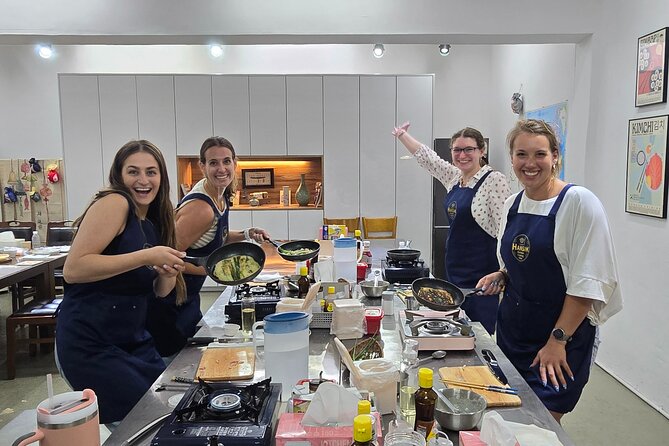
- Chef Jennifer leads in English: Instructions are demonstrated step by step, with help available at each cooking station.
- A full meal, not just a lesson: Your cooking is served with seasonal banchan, water, tea or coffee, snacks, Sikhye, makgeolli, and Korean dessert.
- Small groups of up to 10: Smaller sessions can feel especially personal, and some classes have had only two to four participants.
- Useful recipes for home: Ingredients are pre-portioned, cooking ratios are explained, and recipes are sent by email.
- Near Gyeongbokgung Palace: The meeting point is about a five-minute walk from Gyeongbokgung Subway Station, Line 3, Exit 2.
Why this Seoul cooking class works
Seoul gives you endless chances to eat Korean food. What it does not always give you is a clear sense of how the dishes are built. This class fills that gap. You do not simply watch a chef prepare lunch. You handle the ingredients, follow the method, and then sit down to eat what you made.
That difference matters. A restaurant can introduce you to the taste of gochujang, sesame oil, garlic, or Korean rice wine. A cooking class shows you how those flavors work together. You also learn which parts of a dish are flexible and which are not. That is the sort of knowledge you can use after your holiday ends.
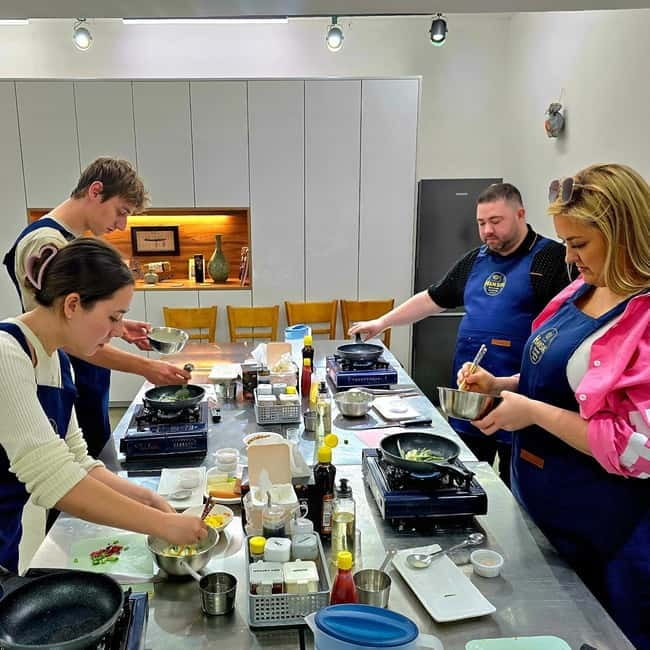
The setting is a dedicated cooking studio with individual work areas. The kitchen is described as clean, spacious, and well fitted for a small class. Pre-portioned ingredients keep the session moving and remove much of the tedious measuring. You still do the cooking, but you are not spending half the lesson searching for ingredients or washing a mountain of vegetables.
Chef Jennifer is the main personality of the experience. Her teaching style is warm, patient, and practical. She explains each dish, gives cultural background, demonstrates the method, and checks how you are doing. English is the teaching language, so you can ask questions and follow the process without relying on gestures or translation.
The format also suits people who are not confident cooks. The recipes are presented in manageable steps, and the class is not built around speed or technical showmanship. Even children and first-time cooks have been able to take part, though younger participants should be comfortable working in a kitchen environment.
More Cooking Classes in Seoul:
- Local Home Korean Cooking Class & Market Adventure in Seoul
★ 5.0 · 1,024 reviews - Master Korean traditional cooking with a Kimchi chef
★ 5.0 · 385 reviews - Seoul: Korean Cooking Class at a Local Home and Market Tour
★ 5.0 · 348 reviews
Finding the studio near Gyeongbokgung
The meeting point is Gyeongbokgung Subway Station on Seoul’s orange Line 3. Use Exit 2, then walk straight for about five minutes toward Woori Bank. The studio is in a small alley between the bank and the K-Pop Store.
This is a useful location for a day in central Seoul. You can pair the class with Gyeongbokgung Palace, Bukchon, Insadong, or the nearby streets around Seochon. The final approach is in a small alley, so allow enough time to find the entrance rather than arriving at the last minute.
The directions are specific, but the alley location may still take a little attention if you are unfamiliar with Seoul. I would arrive near the station early, check that you have the correct exit, and keep the meeting instructions available on your phone.
Morning and evening sessions are available, with exact times depending on the date. The three-hour duration is long enough to cook several dishes and have a proper meal, but short enough to fit around sightseeing.
Welcome drinks, snacks, and the first taste of Hansik
The class begins with drinks and Korean snacks. Included refreshments can include tea, coffee, bottled water, traditional snacks, Sikhye, and makgeolli.
Sikhye is a sweet Korean rice punch, often served chilled. Makgeolli is a traditional milky rice wine. These drinks are not just filler while the chef sets up. They give you an early introduction to the range of Korean flavors, from sweet and refreshing to lightly fermented.
The welcome period also gives the group time to settle in. With a maximum of 10 participants, you may be cooking beside people from several countries, couples, families, or solo visitors. The small format makes conversation easy without turning the session into a large demonstration.
Alcohol is included through makgeolli, so keep that in mind if you do not drink. Tea, coffee, water, and other refreshments are also provided.
Four Korean dishes, four different lessons
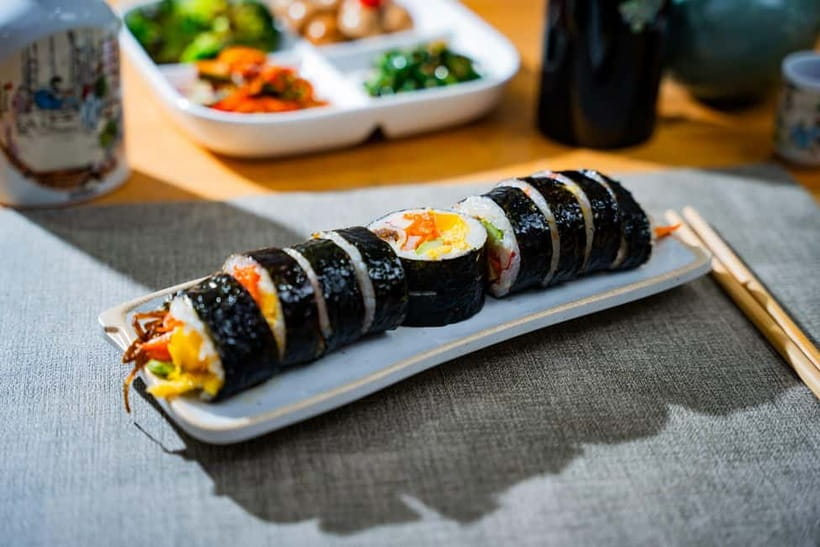
The class can include four familiar Korean dishes: gimbap, tteokbokki, haemul pajeon, and budae jjigae. The precise balance may vary, but the menu gives you a useful spread of Korean cooking styles.
More hands-on workshops in Seoul:
- Yongpyong Ski Resort from Seoul with Optional Lesson and Packages
★ 5.0 · 217 reviews - Seoul: Kpop Dance Class Including Video Shooting & Editing
★ 4.8 · 185 reviews - Seoul: Perfume-Making Workshop in a Hanok
★ 4.9 · 110 reviews - Korean Cooking Class with Grocery Shopping at Seoul Local Market
★ 5.0 · 107 reviews
Gimbap: careful preparation in a roll
Gimbap is made with rice and fillings wrapped in seaweed, then cut into neat rounds. It looks simple, but getting the rice, fillings, and rolling technique right takes some care.
This is a good dish to learn at home because it is adaptable and easy to share. You practice arranging ingredients, controlling the amount of rice, and rolling firmly without crushing the filling. The class also gives you a chance to make attractive food, which is helpful if you want to recreate a Korean meal for family or friends.
Tteokbokki: chewy rice cakes and gochujang
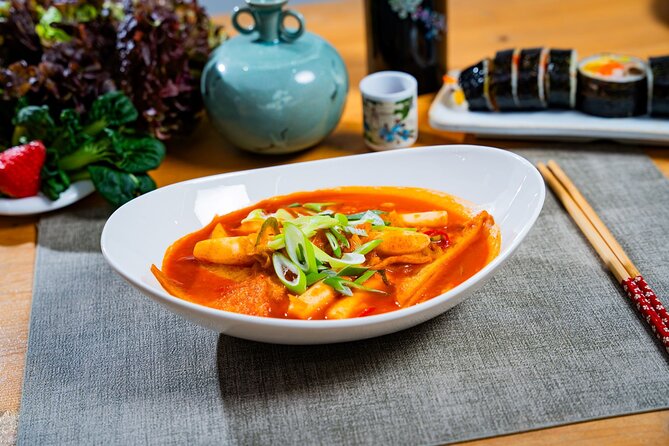
Tteokbokki brings the bold, spicy side of Korean food. The rice cakes are chewy, and the sauce usually gets its character from gochujang, Korean red chili paste.
This dish teaches you how a sauce can carry a meal. You learn the balance of heat, sweetness, and savory flavor rather than simply opening a packet of prepared sauce. If you enjoy Korean street food, this is likely to be one of the most familiar dishes on the menu.
Spice levels can feel different from person to person. If you are sensitive to heat, tell Jennifer before you begin so you can understand how the seasoning is being adjusted.
Haemul pajeon: a crisp seafood and green onion pancake
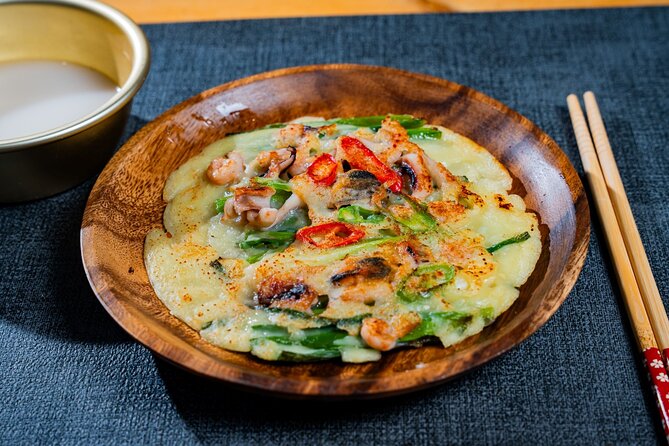
Haemul pajeon combines seafood and green onions in a savory pancake. The pleasure here is in the contrast: a browned, crisp surface with a softer center and the fresh bite of scallions.
The method is straightforward, but pan temperature and batter distribution matter. Jennifer’s step-by-step approach helps you see how thick the pancake should be and when it is ready to turn. It is also a dish that makes sense in a shared meal, cut into pieces and eaten with other dishes and dipping sauces.
If you do not eat seafood, ask about alternatives before booking or at the start of class.
Budae jjigae: a modern Korean stew with a complicated story
Budae jjigae, often translated as army stew, is made with ingredients such as Spam, hot dogs, beans, noodles, and a spicy broth. It developed in the difficult period after the Korean War, when people used available American military provisions alongside Korean ingredients.
That background makes the dish culturally interesting. It shows that Korean food is not frozen in an old-fashioned idea of tradition. It also reflects survival, adaptation, and the way outside ingredients became part of everyday cooking.
Still, this may be the least appealing dish for some people. One participant felt that eating Spam and hot dogs in Korea did not fit their aim of learning more traditional food. That is a fair concern. If you prefer dishes with a more clearly old-style Korean profile, ask whether a substitution is possible. Vegetarians have received meat-free alternatives, and a diner who did not eat red meat had one dish adapted successfully.
From cooking lesson to generous Korean meal
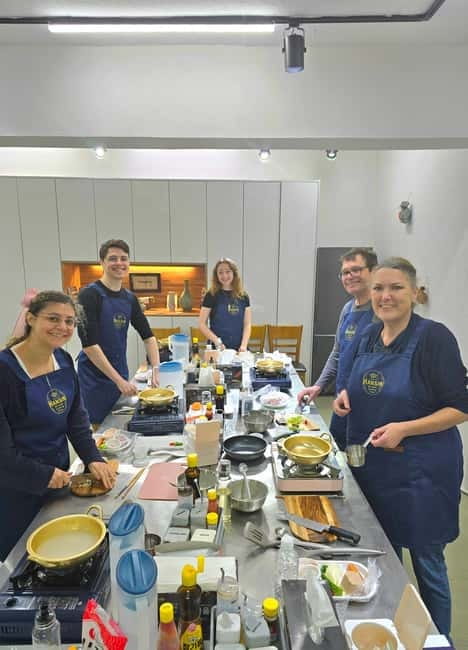
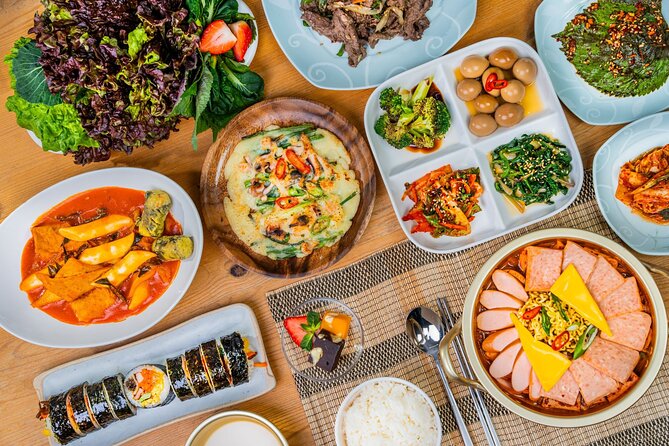
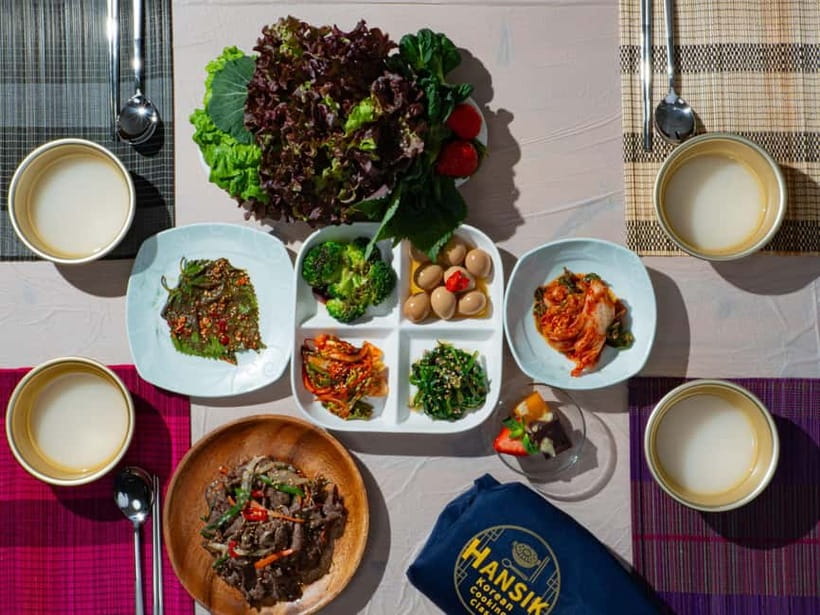
A major strength of this activity is that you eat the food you prepare. The class is not a quick tasting with tiny portions. You make several dishes, then sit down to enjoy them with seasonal banchan and extra items provided by the host.
Banchan are the small side dishes that give a Korean meal its variety. They may be pickled, seasoned, fermented, or lightly cooked. Their purpose is not merely decoration. They add sharpness, crunch, salt, freshness, and contrast to the main dishes.
You may also receive extra food beyond the four dishes. Past sessions have included stir-fried pork with lettuce, additional drinks, snacks, and dessert. Since the exact extras can change, think of them as a welcome bonus rather than a promised menu item.
Come hungry. The combination of four dishes, side dishes, drinks, and dessert can be a very large meal. If you cannot finish everything, takeaway bags are available for leftovers. One useful improvement would be sturdier containers for liquid dishes such as the stew, so bring your expectations down slightly if you plan to carry soup around Seoul afterward.
There is also time to take photos of the food. That may sound minor, but a cooking class moves quickly, and it is nice to record the finished dishes before the table becomes a hungry group meal.
Cultural background without a classroom lecture
The strongest educational part is the link between food and daily life. Jennifer explains the story behind dishes, Korean cooking traditions, ingredients, and ways to serve the food.
This makes the meal more meaningful. You learn not only how to stir a sauce or fold a roll, but why the dish looks and tastes the way it does. Budae jjigae connects food with postwar history. Gimbap shows the practical side of rice, seaweed, and prepared fillings. Banchan explains why Korean meals often arrive with many small tastes rather than one large main course.
The cultural details are woven into the cooking, so you are not sitting through a long lecture. That balance works well for people who want context but would rather spend their Seoul afternoon doing something with their hands.
The experience can also include neighborhood exploration. One session involved a short local market visit and a walk around the area before cooking. This should not be treated as a guaranteed market tour, but it shows how the host may add local food context when time and scheduling allow.
A closer look at the value of $89
At $89 per person, this is not the cheapest meal you can buy in Seoul. That is not the right comparison. The price covers three hours of instruction, all ingredients and equipment, a full meal, seasonal banchan, drinks, snacks, dessert, and recipes sent by email.
You are also paying for a small group and a professional chef’s attention. In a group of four, or even two, you can ask questions freely and receive direct help. With the maximum group size of 10, the class remains more personal than a large cooking demonstration.
The recipes add lasting value. Ingredients are pre-portioned during the class, but Jennifer also explains ratios for making larger portions at home. That is especially useful because many cooking classes are enjoyable in the moment yet hard to repeat. Here, the aim is to give you dishes you can realistically make again.
The meal itself can replace lunch or dinner, which makes the price easier to assess. You receive an activity, food, drinks, and practical instruction in one booking. For someone already planning to eat a substantial meal, the value is strong. For someone who only wants a short demonstration or a small tasting, it may feel expensive.
Dietary needs and menu choices
Vegetarian diners have been accommodated with substitute ingredients, and a diner who avoids red meat had one dish changed. That is encouraging, but you should still state your dietary needs clearly when booking and again when you arrive.
The standard menu can include seafood, pork, processed meat, and spicy ingredients. Do not assume every dish will suit you simply because substitutions have been possible before. Ask what can be changed, especially if you avoid shellfish, alcohol, meat, or strong spice.
The class is best for people who enjoy active participation. You will be handling ingredients and cooking rather than sitting back. If you want a quiet meal with no kitchen work, book a restaurant instead.
Who should book this experience?
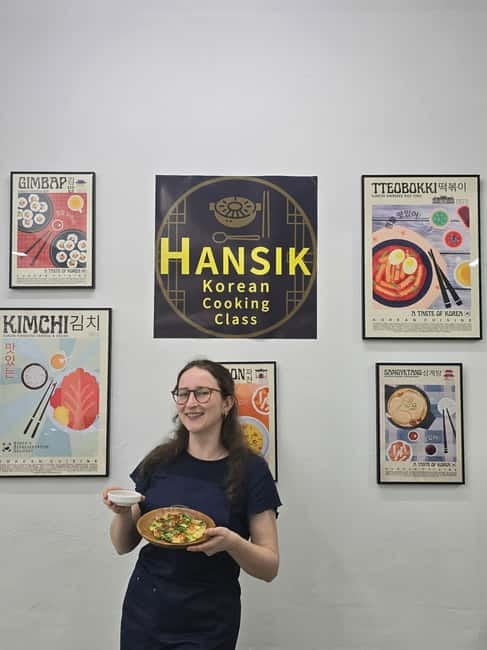
I would recommend this class to first-time visitors who want more than a checklist of Seoul sights. It is also a strong choice for solo visitors, couples, families with older children, and anyone who wants practical recipes to take home.
It suits curious eaters who want cultural context with their meal. You do not need advanced cooking skills, and the clear demonstrations make the dishes approachable.
I would pause before booking if you dislike spicy food, seafood, processed meat, or a large meal. The menu has flexibility, but the standard dishes are not designed as a delicate tasting menu. You should also remember that the class takes three hours, so it is not a quick stop between palace visits.
The small group size is a real advantage. A class with two to four participants can feel almost like cooking with a local acquaintance. A full group of 10 will be livelier and may offer more social energy, but you will have less one-to-one time than in a very small session.
Booking details worth knowing
The activity costs $89 per person and lasts three hours. English is the teaching language, and the group is limited to 10 participants.
Morning and evening starting times are offered, subject to availability. You can reserve now and pay later, which helps if your Seoul schedule is still shifting. Cancellation is free up to 24 hours before the activity for a full refund.
Wear something comfortable for kitchen work, and arrive with room for a serious meal. The provider supplies ingredients, equipment, drinks, and recipes, so you do not need to bring cooking tools.
Should you book the Hansik Korean Cooking Class?
Book it if you want to understand Korean food by making it yourself. Chef Jennifer’s patient instruction, personal cooking stations, cultural explanations, and generous meal make this more useful than a simple food tasting.
The only real question is the menu. Budae jjigae is historically important but includes processed meats, and the class may not suit strict vegetarians or diners with several food restrictions unless substitutions are confirmed first.
For most visitors, $89 is fair for three hours of hands-on cooking, a full Korean meal, drinks, snacks, dessert, and recipes you can use at home. I would schedule it on a morning or evening near your Gyeongbokgung sightseeing, arrive early from Line 3’s Exit 2, and save plenty of appetite.
FAQ
Where is the Korean cooking class held?
The meeting point is near Gyeongbokgung Subway Station on Seoul’s orange Line 3. From Exit 2, walk straight for about five minutes to Woori Bank. The studio is in a small alley between the bank and the K-Pop Store.
How long does the experience last?
The listed duration is three hours. Some sessions have finished in about two and a half hours, depending on the pace of the group.
How much does the cooking class cost?
The price is $89 per person.
What language is used during the class?
The class is taught in English by the instructor.
How many people can join?
The class is a small-group experience limited to 10 participants.
Which Korean dishes will I make?
The class can include gimbap, tteokbokki, haemul pajeon, and budae jjigae. The exact selection may depend on the session.
Is food included after cooking?
Yes. You eat the dishes you prepare as a full-course meal with Korean seasonal banchan. Korean snacks, drinks, and dessert are also included.
Are drinks included?
Yes. The inclusions list bottled water, tea, coffee, Sikhye, makgeolli, and Korean traditional snacks. Makgeolli is Korean rice wine.
Can vegetarians join the class?
Vegetarian substitutions have been provided. You should state your dietary needs when booking and confirm the available alternatives before cooking.
Do I receive the recipes afterward?
Yes. Recipes are sent by email after the class.
Can I take leftover food away?
Takeaway bags are available for food you cannot finish. A sturdy container may be useful if you plan to carry leftover stew.
What is the cancellation policy?
You can cancel up to 24 hours in advance for a full refund. The activity also offers reserve-now, pay-later booking.
Recently added around Seoul
- Nami & Maple Road & Theatre des Lumieres Day Tour from Seoul★ 4.8 · 4 reviews
- Gyeongbokgung Palace Photo Session with your own phone★ 5.0 · 4 reviews
- Private Tour around Suwon UNESCO Fortress and Korea Folks Village★ 4.5 · 4 reviews
- N Seoul Tower + Namsan Cable Car Ticket (Collect in Myeongdong)★ 3.5 · 4 reviews
- Jisan Forest Resort: Ski Full-Day Tour or Shuttle from Seoul★ 5.0 · 4 reviews
- Seoul: Deoksugung Palace Night Tour★ 4.5 · 4 reviews
- Seoul Private Walking Tour with a Local★ 5.0 · 4 reviews
- Private Jeonju Hanok Village – Culinary tour★ 5.0 · 4 reviews
Seoul Tours, compared.
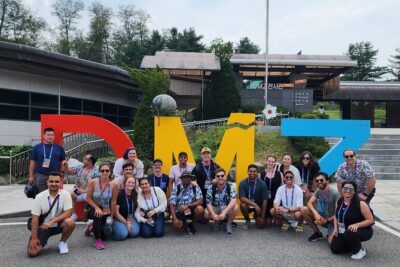
Best DMZ Tour Korea from Seoul (Red Suspension Bridge Optional)
Read the review →
DMZ Tour: 3rd Tunnel, Option(Suspension Bridge, Boat) from Seoul
Read the review →
DMZ tour south Korea from Seoul (NK experience hall, defector)
Read the review →
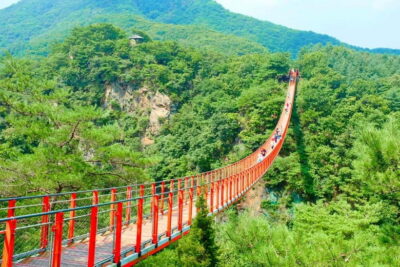
DMZ The 3rd Tunnel and Suspension Bridge Tour
Read the review →
Signature DMZ Tour: Exclusive Defector Talk & Suspension Bridge
Read the review →
Thrilling Korean DMZ 3rd Tunnel Tour from Seoul + Red Bridge Rush
Read the review →
DMZ Past and Present: Korean Demilitarized Zone Tour from Seoul
Read the review →Browse the lists this tour appears in