
Reviewed · BUKCHON AND INSADONG WALKS
Seoul: 4-Hour Guided Tour to Palace, Bukchon, Jogyesa Temple
Seoul’s old city makes the most sense when you understand the ideas behind its buildings. This private tour uses Confucianism and Joseon architecture as its guiding thread, moving from Gyeongbokgung Palace to the National Folk Museum, Bukchon Hanok Village, and Insadong. Guide Paul Koo explains why these places look as they do, rather than treating them as photo stops.
I like the private format, which lets you set the meeting place and time and ask questions without keeping pace with a large group. I also like the way the tour joins palace ritual, ordinary family life, traditional houses, and Buddhist practice in one compact morning or afternoon. The main consideration is cost: at $152 per group of up to two, it can be good value for focused guiding, but admission fees, transport, food, and drinks are extra.
Key points to know
- Gyeongbokgung receives the bulk of the tour: Expect about 2 hours and 20 minutes devoted to Seoul’s grandest Joseon palace.
- Paul Koo teaches through Confucian ideas: His explanations connect palace layout and traditional Korean culture.
- The National Folk Museum adds everyday life: Exhibits cover birth, marriage, work, illness, seasonal customs, and death.
- Bukchon brings old Seoul into the modern city: Its hanok houses sit among metropolitan buildings, with views toward N Seoul Tower.
- Insadong closes the route: This gives the tour a cultural district setting after the formal palace and village visits.
- Extra costs matter: Palace and N Seoul Tower admission, if applicable, plus transportation and refreshments are not included.
Why the Confucian theme changes the palace visit
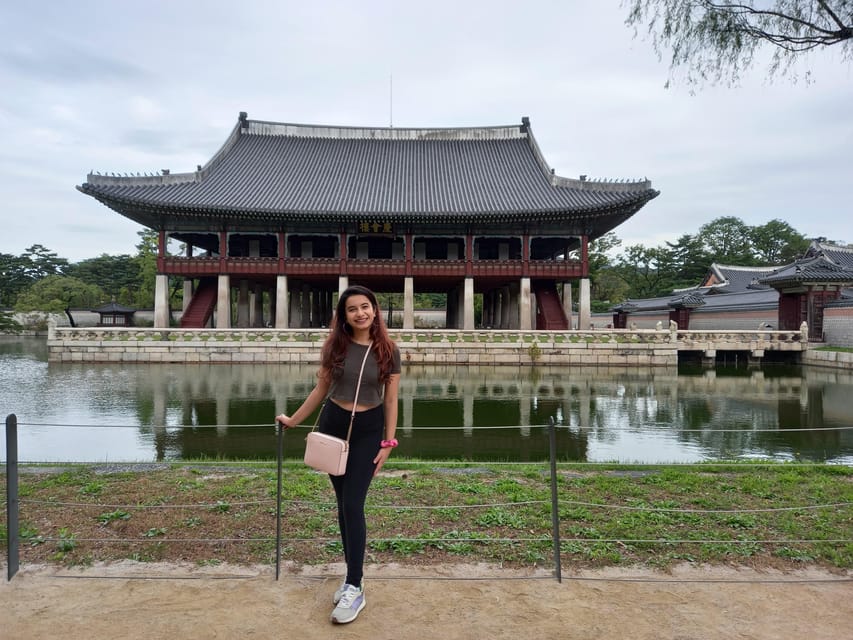
Gyeongbokgung is not simply a handsome collection of gates, courtyards, halls, and painted woodwork. It was built in 1395 as the main palace of the Joseon Dynasty, whose national ideology was Confucianism. That belief system shaped the palace’s order, hierarchy, ceremonies, and relationship between ruler, officials, family, and society.
Paul Koo’s approach centers on this point. He presents Korean traditional culture through its Confucian foundations, helping you read the palace as a statement about how Joseon society believed government and family life should work. Without that context, you can admire the rooflines and broad courtyards but miss much of the meaning.
The palace is described as the largest and most magnificent of Korea’s palaces, and it has an unusual structural distinction: it was built on flat land according to an authentic Confucian palace plan. That gives the visit a clear focus. You are not just wandering through an old royal compound. You are looking at architecture shaped by a political and moral system.
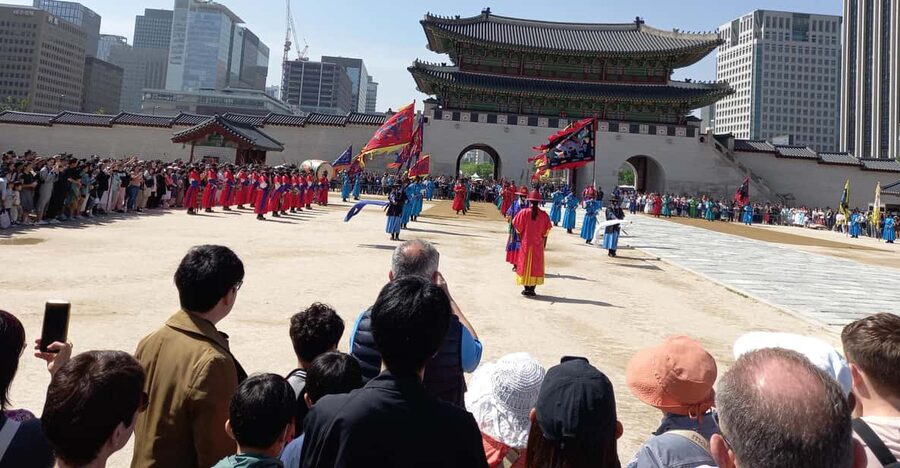
The Gyeongbokgung portion lasts about 2 hours and 20 minutes, making it the heart of the four-hour program. That is a generous amount of time for a guided visit, especially if you want explanations rather than a quick circuit for photographs. It also means the tour is not a light, hop-on-hop-off style introduction. You will spend most of your energy on one major site before moving on.
The practical catch is that palace admission is not included. The supplied information does not give the admission price, so check the current fee when you book or before you arrive. Your guide fee covers four hours of guiding and information, not every cost connected with the day.
More Bukchon and Insadong walks:
- Seoul: Gyeongbok Palace, Bukchon Village, and Gwangjang Tour
★ 4.9 · 2,321 reviews - Best Seoul City Tour (Gyeongbokgung Palace,Insadong,Namsan Tower)
★ 5.0 · 1,647 reviews - Seoul: Gyeongbok Palace, Bukchon Village, and Gwangjang Tour
★ 5.0 · 1,044 reviews
What the National Folk Museum adds after the royal palace
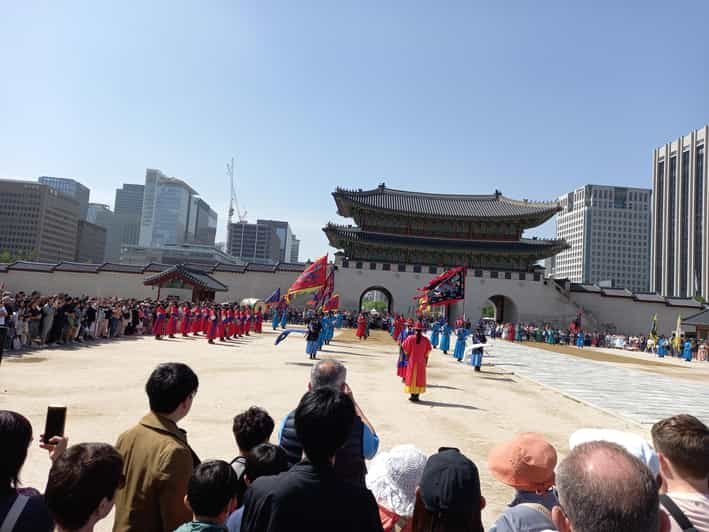
The National Folk Museum of Korea provides a useful change of scale. Gyeongbokgung introduces the royal court and national ideals. The museum turns your attention toward ordinary people and the routines that shaped life during the Joseon period.
The planned museum visit lasts about 30 minutes. That is enough for a guided overview, but not enough to study every display at length. I would treat this as a focused companion to the palace, not a full museum day.
The museum’s subject range is broad. Exhibits present seasonal activities and folk customs, along with stages of life from birth and childhood through growth, marriage, aging, illness, treatment, and death. Ceremonies and commemorative events help show how family and community traditions gave structure to daily life.
This stop matters because palace architecture can make Joseon Korea seem like a story about kings and officials alone. The Folk Museum widens the picture. You get a chance to consider how customs worked for regular families and how major life events were marked.
The short time here is both a strength and a limit. It keeps the tour moving and prevents the palace visit from being squeezed into a rushed schedule. If museum displays are your main interest, you may want to return on your own. If you want a clear introduction that supports the palace discussion, 30 minutes should be useful.
Bukchon Hanok Village and the old city beside new Seoul
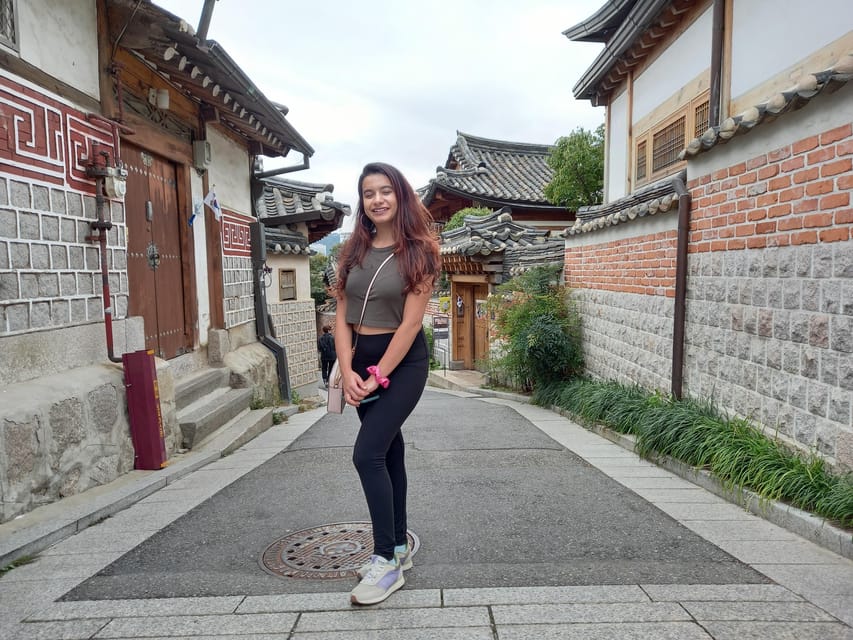
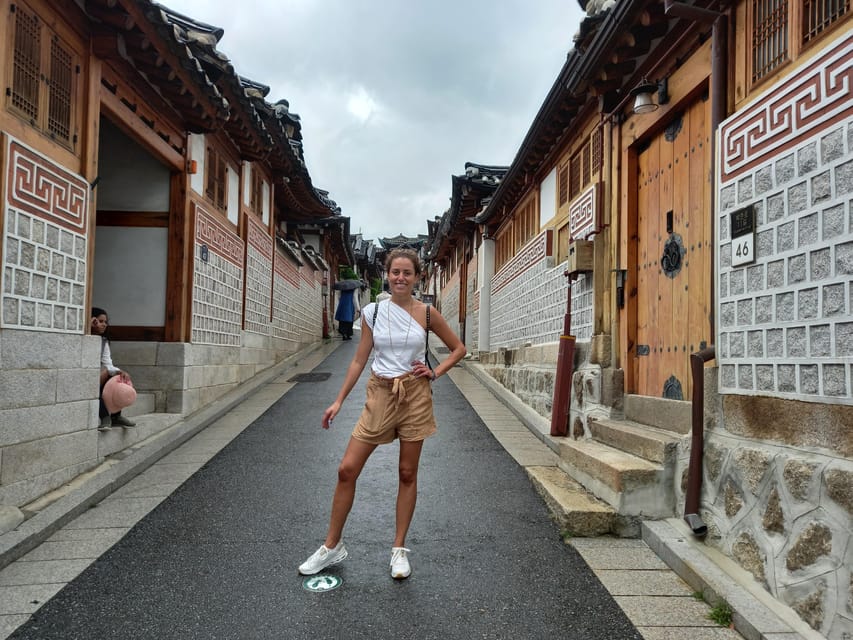
Bukchon Hanok Village is the tour’s most visual contrast. A hanok is a traditional Korean house, and Bukchon contains the largest cluster of these homes, about 1,000 according to the supplied information. Here, tiled roofs and traditional forms meet the modern capital around them.
The village is valued for its view of old and new Seoul together. From Bukchon, you might see traditional houses framed by city buildings and, in the background, N Seoul Tower. That combination explains why the stop is more than a preserved-house visit. It shows how Seoul’s older neighborhoods remain part of a large, modern capital.
The guided portion is planned for about 40 minutes. You should expect a compact walk and an explanation of what makes the hanok form important. One useful detail from the tour feedback is that Paul Koo also helps with photographs, including suggestions for good spots and angles. That can be handy in a village where the best view is not always obvious from the first street you reach.
There is one practical issue to keep in mind. Bukchon is a residential village, not an open-air museum built only for sightseeing. The information provided does not spell out mobility conditions, crowd levels, or the exact walking route, so ask Paul about the day’s path when you arrange the tour. Comfortable shoes are sensible for any walking-focused visit, but the available details do not promise a particular level of accessibility.
Bukchon also follows a long palace visit, a museum stop, and the walk between sites. You may appreciate the change of scenery, but do not expect the four hours to feel leisurely at every moment. The schedule is designed to cover several important places in one outing.
Insadong and the Buddhist side of central Seoul
Insadong is the final listed stop, with about 30 minutes of guided time. It gives the tour a different setting after the formal grounds of Gyeongbokgung and the residential lanes of Bukchon. The supplied information connects Jogyesa Buddhist Temple with this part of the route.
Jogyesa is small compared with Gyeongbokgung, but its role is important. It is the headquarters temple of Korea’s Buddhist organization and was built in 1926 in Insadong, close to Gyeongbokgung. This makes it a useful counterpoint to the palace. The palace expresses Joseon Confucian government and ritual; Jogyesa introduces Korean Buddhist practice and institutional life.
The temple is described as a place where older traditions meet the modern city. That contrast is one of the tour’s strongest ideas. Seoul’s cultural identity is not represented by one religion or one architectural style. In a short distance, you can move from royal Confucian planning to Buddhist worship and then into the wider Insadong district.
There is a small route detail worth clarifying before booking. The highlights mention Jogyesa and also mention Bongeunsa Buddhist Temple as a beautiful place showing old and new Seoul together. However, the detailed four-stop schedule lists Gwanghwamun Square, Gyeongbokgung, the National Folk Museum, Bukchon, and Insadong, and it does not list Bongeunsa. The reviews describe a Gyeongbokgung, Bukchon, and Jogyesa route. If Bongeunsa is important to you, confirm whether it can be added or substituted, since the listed four-hour plan does not clearly include it.
A few more Seoul half-days to weigh up
- Best DMZ Tour Korea from Seoul (Red Suspension Bridge Optional)
★ 5.0 · 41,422 reviews - DMZ Tour: 3rd Tunnel, Option(Suspension Bridge, Boat) from Seoul
★ 5.0 · 21,373 reviews - DMZ tour south Korea from Seoul (NK experience hall, defector)
★ 5.0 · 20,599 reviews - Seoul: DMZ Tour with Optional Suspension Bridge
★ 4.8 · 5,277 reviews
A private four-hour format, and what the price means
The price is $152 per group of up to two people. For a solo guest or a pair, that works out differently from a per-person tour. Two people pay $76 each before admissions and other expenses, while a solo visitor carries the full group price alone.
I see the value in the format if you want a history lesson shaped around your questions. Paul Koo’s explanations have been praised for making Korean history clear, detailed, and engaging, especially when he explains it through Confucianism. The personal attention can also help if you want time for photographs or need the route adjusted within the available schedule.
The price is less attractive if you only want an escort to the main photo spots. You are paying chiefly for the four-hour guide service and the interpretation of the sites. Palace admission, N Seoul Tower admission, transportation between locations, food, drinks, and insurance are excluded. N Seoul Tower is not part of the detailed itinerary, but it appears among the possible admission exclusions, so ask about the exact route and any added stop before you commit.
Transportation is another important point. The guide fee does not include moving between sites. The meeting place can be chosen after booking, and you can request a meeting at your hotel. That is convenient, especially if you are staying in Seoul and want to avoid finding a fixed meeting point. It does not mean private vehicle service is included.
The group is private, and the guide language is English. The tour lasts four hours, with starting times subject to availability. You can reserve now and pay later, and cancellation is free up to 24 hours in advance for a full refund. Request the reservation and guide confirmation ahead of time, particularly because the meeting time and route details are arranged after booking.
Who will get the most from Paul Koo’s approach
I would choose this tour if you want Seoul’s traditional sites explained rather than simply photographed. It suits a first visit, a couple seeking a private introduction, or anyone who enjoys architecture, religion, political ideas, and social customs.
It is especially useful for visitors who find palace compounds hard to read on their own. Paul’s emphasis on Confucian culture gives you a framework for understanding why the palace is arranged as it is and why traditional architecture reflects the spirit of its period.
The tour also suits anyone who likes a guide who can connect details across several sites. The route moves from royal design to common life, then to traditional housing and Buddhism. That sequence helps you compare different parts of Korean culture within one afternoon or morning.
I would think twice if you want a slow museum visit, a food tour, or a full day of Buddhist temples. Four hours allows a strong overview, but the schedule is fairly full. You will also need to budget for admissions and transportation, and you should confirm the status of Bongeunsa if that temple is a priority.
The available ratings are all five stars, with praise focused on Paul’s historical explanations, clarity, detail, cultural background, photography help, and ability to cover the planned places. Those strengths point to the tour’s real purpose: giving meaning to the sights so you do not leave with only a camera roll.
Should you book this Seoul history walk?
Book it if you want a private, explanation-led introduction to Seoul’s traditional center and like the idea of Confucianism tying the day together. Gyeongbokgung receives enough time to make the palace more than a quick stop, while the Folk Museum, Bukchon, and Insadong add everyday culture, traditional homes, and Buddhist context.
Before booking, confirm the exact meeting point, transport plan, included route, admission costs, and whether Jogyesa or Bongeunsa is intended. For two people who value a personal guide, $152 can be fair. For one person or a visitor who prefers to explore independently, the added admissions and transport may make the value less compelling.
FAQ
How long does the tour last?
The tour lasts four hours.
What sites are included in the detailed route?
The listed route begins at Gwanghwamun Square and includes Gyeongbokgung, the National Folk Museum of Korea, Bukchon Hanok Village, and Insadong.
Is Jogyesa Buddhist Temple included?
Jogyesa is named among the tour highlights, and the supplied route information connects it with Insadong. Confirm the exact route with the guide when booking.
Is Bongeunsa Buddhist Temple included?
Bongeunsa is mentioned among the highlights, but it does not appear in the detailed four-stop itinerary. Ask whether it can be included or substituted.
Who leads the tour?
The experience provider and guide is Paul Koo.
What language is the tour offered in?
The live tour guide speaks English.
Is the tour private?
Yes. It is a private group experience for up to two people at the listed price.
Are admission fees included?
No. Admission to the palace and N Seoul Tower is not included.
Can the meeting point and time be chosen?
Yes. You can choose the meeting place and time after booking, and you can request to meet at your hotel.
Recently added around Seoul
- Imjingak DMZ Private Tour for Incheon Airport and Cruise Guests★ 5.0 · 3 reviews
- Seoul: Private Car Tour with Licensed Professional Guide★ 5.0 · 3 reviews
- Seoul: Nami and K-Garden with Optional Alpaca Winter Tour★ 5.0 · 3 reviews
- Unique Native Experience : Han River Picnic, Board game, BBQ★ 5.0 · 3 reviews
- BTS In The Soop Version: One Day Private VIP Tour★ 5.0 · 3 reviews
- DMZTour from Seoul:3rd Tunnel,North Korea View&UNESCO Valley★ 5.0 · 3 reviews
- Bukhansan mountain hiking tour – 6 hours★ 4.7 · 3 reviews
- Seoul’s Hidden Dark History Guided Tour of Seodaemun Prison★ 5.0 · 3 reviews
Bukchon and Insadong Walks, compared.
Gyeongbok Palace, Bukchon Village, and Gwangjang Tour
Read the review →
Best Seoul City Tour (Gyeongbokgung Palace,Insadong,Namsan Tower)
Read the review →Gyeongbok Palace, Bukchon Village, and Gwangjang Tour
Read the review →
Seoul Highlights: Gyeongbok Palace, Insadong & N Seoul Tower
Read the review →
Korean Palace and Market Tour in Seoul Including Insadong and Gyeongbokgung Palace
Read the review →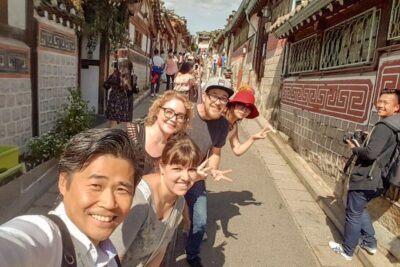
Gyeongbok Palace and Bukchon Hanok Walking Tour
Read the review →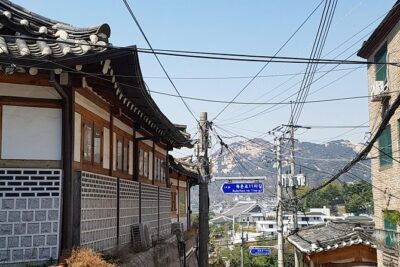
Best Walking Tour to Gyeongbok Palace Bukchon Hanok Village
Read the review →
Carve Your Personal Korean Stone Seal with Jeongju in Insadong
Read the review →Browse the lists this tour appears in