Reviewed · SEOUL TOURS
Spiritual Adventure : Into Inwangsan and Korean Shamanism
Inwangsan is one of Seoul’s most unusual meeting points between city life and the spirit world. On this 2.5-hour walk, you follow sacred paths to Guksadang and other sites tied to Korean shamanism, then learn how rituals, talismans, offerings, and fortune telling still fit into modern Korean life. Guide Ethan gives the experience its human touch, explaining beliefs without turning them into a staged performance.
I like two things here. First, you get a real cultural encounter, not a costumed demonstration designed for a quick photo. Second, the walk gives you a different view of Seoul, both literally and culturally, with mountain paths and broad city views. The main consideration is the uphill route. You need moderate physical fitness, and the experience depends on decent weather.
Key points at a glance
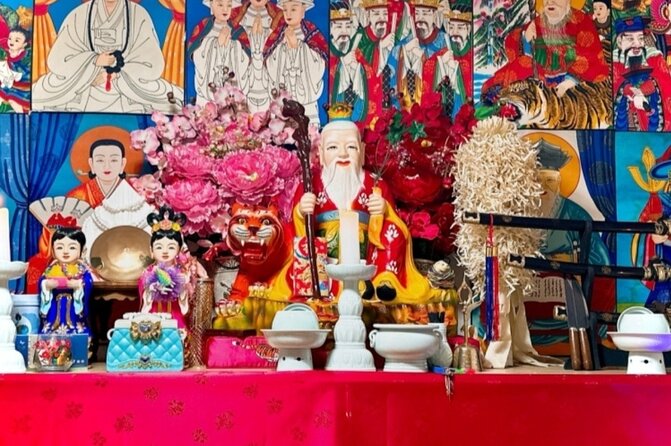
- Meet a Korean shaman: The tour may include a personal fortune-telling session and time to ask about love, health, or career.
- Visit Guksadang on Inwangsan: This sacred site helps explain the place of mountain spirits, ritual practice, and Korean shamanic tradition.
- Learn from Ethan: His storytelling covers deities, ritual objects, talismans, chants, candles, and offerings in clear everyday terms.
- See Seoul from a different angle: The uphill route brings open views that are far removed from the usual palace and shopping districts.
- Join a private activity: Only your group participates, making it easier to ask personal questions and discuss sensitive subjects.
- Pay about $28.20: For a private cultural walk with a possible fortune reading, the price is reasonable, though transportation and water cost extra.
Why Inwangsan offers a different side of Seoul
Many first visits to Seoul focus on palaces, markets, design districts, and food. Inwangsan gives you another way to understand the city. The mountain is close to the urban center, yet its paths lead toward shrines, legends, and religious customs that do not fit neatly into a standard sightseeing route.
Korean shamanism, often called muism, is not presented here as a museum subject frozen in the past. It has continued alongside Confucianism, Buddhism, and modern city life. That mix is one of the most useful parts of the tour. You learn that Korean spiritual practice is not always a choice between one formal religion and another. Different traditions can influence family life, rituals, personal decisions, and ideas about luck.
The guide’s job is especially important. Ethan interprets the setting, explains the customs, and helps you separate folklore from current practice. His explanations are intended to give context rather than ask you to accept every belief literally. That makes the experience suitable for curious visitors who want cultural understanding, even if they are not spiritual themselves.
A few more Seoul half-days to weigh up
- Best DMZ Tour Korea from Seoul (Red Suspension Bridge Optional)
★ 5.0 · 41,422 reviews - DMZ Tour: 3rd Tunnel, Option(Suspension Bridge, Boat) from Seoul
★ 5.0 · 21,373 reviews - DMZ tour south Korea from Seoul (NK experience hall, defector)
★ 5.0 · 20,599 reviews
Starting at Dongnimmun Station Exit 3
The tour begins at Dongnimmun Station Exit 3 in Seoul. This is a practical meeting point near public transportation, but public transit is not included in the price, so you need to arrange your own route to the start.
From there, the experience moves toward Inwangsan and its sacred sites. The available details do not provide a precise minute-by-minute route, so expect a guided walk rather than a fixed sequence of indoor attractions. This matters because the setting is part of the lesson. You are not simply hearing a talk about shamanism in a classroom. You are walking through the kind of place where these beliefs have been practiced.
Wear shoes that are comfortable on an uphill path. The tour is not described as a strenuous hike, but the physical requirement is listed as moderate fitness. If you have limited mobility or dislike uneven or sloping routes, ask the operator for more detail before booking.
Guksadang and the sacred mountain paths
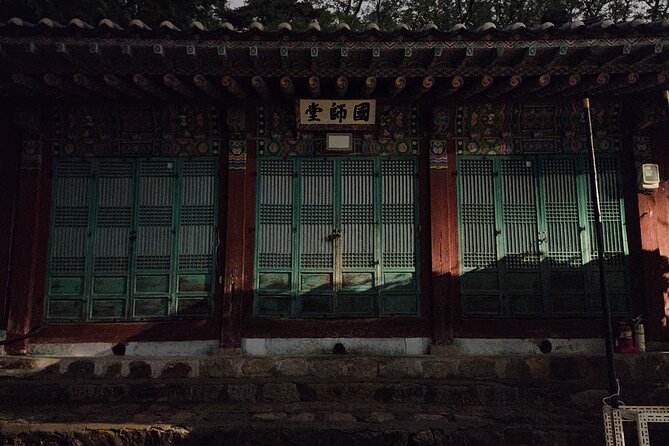
Guksadang is the central cultural stop. It is a well-known sacred site connected with Korean shamanism, and the visit gives Ethan a natural place to explain the role of deities, offerings, ritual tools, and talismans.
You can expect the guide to discuss how objects used in rituals carry meaning. Candles, chants, and offerings are not simply decorative details. They form part of a system of communication and respect directed toward spiritual beings and ancestors. The tour also covers the figures worshipped in Korean shamanic practice and the way local legends help explain the character of a sacred place.
This part may be most rewarding if you take your time and ask questions. The experience is designed for conversation, not just photographs. You can ask how shamanism relates to Buddhism or Confucian family customs, or how these traditions appear in present-day Korean life.
One point to keep in mind is that sacred sites require respectful behavior. The tour description does not list a formal dress code, but quiet attention and following Ethan’s instructions are sensible. Do not treat ritual objects as props, and ask before photographing people or ceremonies.
A real fortune reading, not a staged show
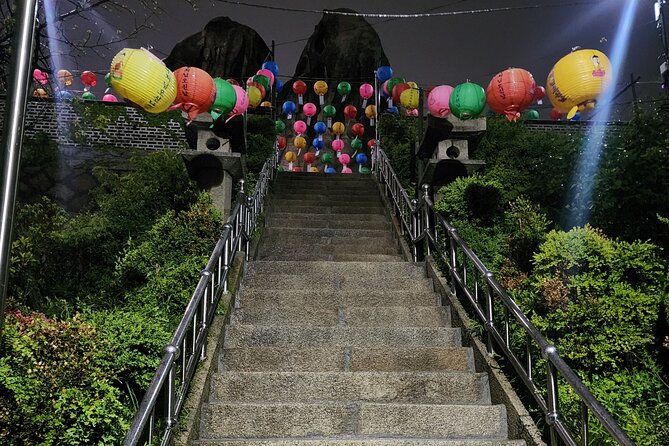
The possible fortune-telling session is the most unusual feature. You may meet a real Korean shaman and receive a personal reading, with the chance to ask about subjects such as love, health, or career.
This is best approached as cultural insight rather than a guaranteed prediction. The value lies in seeing how fortune telling works within Korean society and how people use it when thinking through uncertain choices. It also gives you a direct example of how older spiritual customs continue beside office jobs, smartphones, universities, and highly modern city life.
The details indicate that you may be able to request or purchase a custom talisman. If that option comes up, ask Ethan what it represents, how it is used, and what additional cost applies before agreeing. The listed tour price does not include separate purchases, so treat a talisman as an optional extra, not part of the $28.20 admission price.
A shaman may not always be available. One account of the experience describes a situation in which the shaman was ill, with Ethan providing the explanations and cultural discussion instead. That is an important practical point. The tour includes the opportunity for this encounter, but you should not book it expecting a guaranteed personal consultation in every circumstance.
A different way to spend a day from here:
- Seoul: DMZ Tour with Optional Suspension Bridge
★ 4.8 · 5,277 reviews - Seoul: DMZ The 3rd Tunnel and Suspension Bridge Tour
★ 5.0 · 4,656 reviews - Signature DMZ Tour: Exclusive Defector Talk & Suspension Bridge
★ 5.0 · 4,459 reviews - Incheon Airport: Traveler SIM & T-money Transportation Card
★ 4.7 · 3,332 reviews
Ethan’s storytelling and the private format
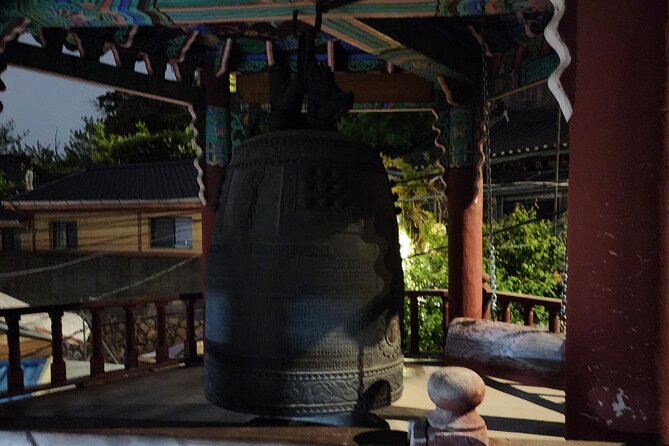
Ethan is repeatedly praised for his energy, care, and ability to explain Korean shamanism in relation to everyday life. That combination matters. A guide can list names of spirits and ritual objects, but the subject becomes much easier to understand when someone explains why it has remained meaningful.
He also appears to be attentive to comfort and safety during the walk. That is useful on a route that combines a cultural visit with an uphill climb. The tour is described as private, meaning only your group participates. A private format gives you more freedom to ask personal or difficult questions without feeling that you are slowing down a large group.
The private setup is particularly helpful during the fortune-telling portion. Some subjects can feel personal, and you may prefer a smaller setting when asking about family, health, relationships, or work. It also lets Ethan adjust the conversation to your interests. If you are more interested in ritual objects and folklore than in receiving a reading, say so.
The exact group size is not provided, so private does not necessarily mean one guide and one guest. It means the booking is limited to your own party rather than mixed with unrelated participants.
What the two-and-a-half-hour schedule feels like
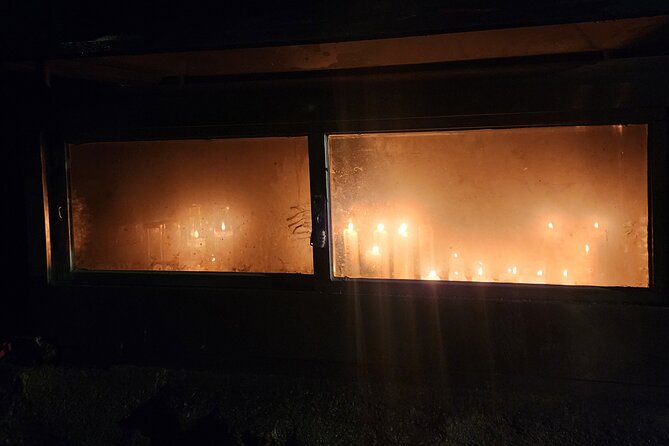
The short duration is one of the tour’s strengths. Two hours and 30 minutes is enough time to walk to important sites, hear a structured explanation, ask questions, and possibly meet the shaman without making the outing consume half your day.
The route appears to follow this general rhythm:
- Meet at Dongnimmun Station Exit 3.
- Walk uphill toward Inwangsan’s sacred sites.
- Learn about Korean shamanism, its history, deities, rituals, and talismans.
- Visit Guksadang and related places.
- Witness or take part in authentic ritual activity when available, including candles, chants, and offerings.
- Meet a shaman for a possible fortune reading.
- Take photographs and finish with questions.
- End at Muakjae Station, at 411 Moraenae-ro in Seodaemun-gu.
The end point differs from the meeting point, so plan your day around Muakjae Station rather than assuming you will return to Dongnimmun. This is convenient if you have another plan in western Seoul, but less convenient if your next stop is back near the starting area.
An air-conditioned vehicle is listed as optional. The information does not specify when or how that option is used, so confirm the arrangement before booking if vehicle transport matters to you. Otherwise, expect public transportation to and from the tour, with those fares separate from the tour price.
The views are part of the reward
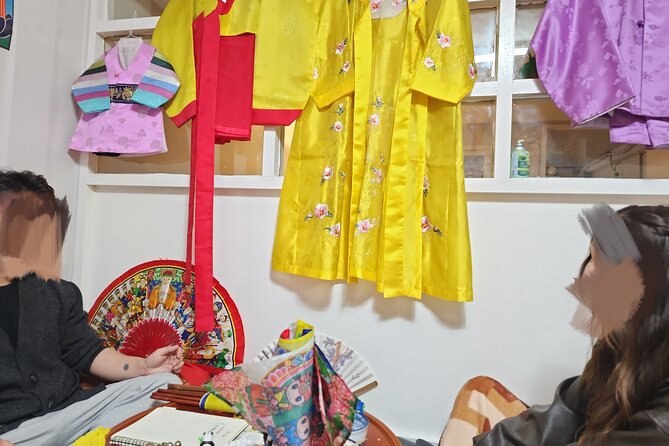
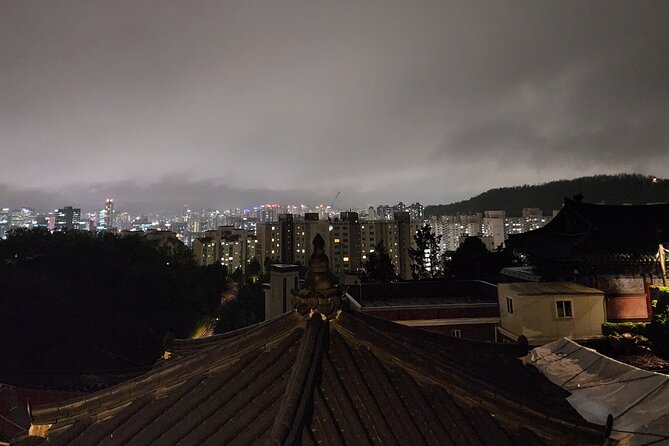
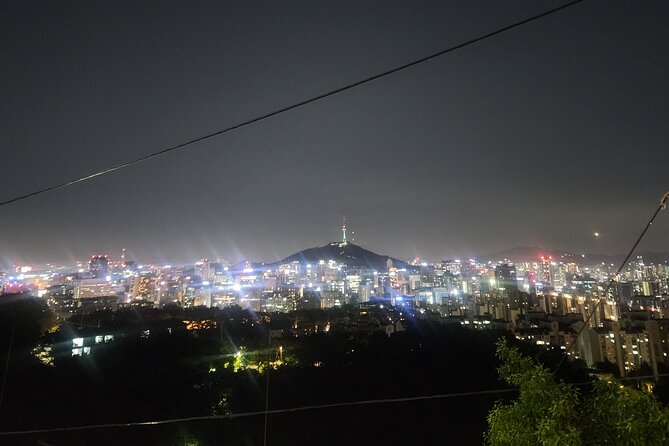
The walk is not only about shrines and spiritual customs. Inwangsan offers a chance to look across Seoul from a higher point, and the change from dense streets to mountain paths helps explain why these sites have remained important.
You get some exercise along the way, but the route also creates a gradual shift in mood. The city does not disappear, yet the sounds and pace can feel different as you move uphill. That contrast is one reason this works well after a few days of standard urban sightseeing.
The tour may be offered in evening or moonlight conditions, based on the experience described in the available information. If your booking is at night, the atmosphere may be especially striking, but bring appropriate clothing and take care on the path. Exact lighting, weather, and visibility will affect the walk and the views.
What the $28.20 price includes and leaves out
At about $28.20 per person, this is a fair price for a private, guide-led cultural experience with access to a subject that is difficult to investigate independently. You are paying for interpretation, local access, route planning, and the chance to meet a shaman, not merely for a walk up a mountain.
The value is strongest if you ask questions and take an interest in the explanations. If you only want a quick scenic hike, a free walk on Inwangsan may suit you better. If you want to understand why the shrines, rituals, and legends matter, the fee is easier to justify.
The price does not include public transportation or bottled water. Bring water with you, and budget for subway or bus fares. A custom talisman, if you choose to request or buy one, may also cost extra. The air-conditioned vehicle is listed as optional, so clarify whether that adds a fee.
Who will enjoy this experience most
I would recommend this tour to you if you have already seen Seoul’s major palaces and want a less familiar cultural subject. It suits visitors interested in folklore, religion, ancestral customs, Korean history, or the relationship between old beliefs and modern society.
It is also a good choice for curious couples, families with older children, and small groups who like asking questions. The private format gives you room to shape the conversation, and the guide’s storytelling helps keep the subject accessible.
You may want to skip it if you want a purely visual sightseeing tour, dislike spiritual or fortune-telling themes, or cannot manage an uphill walk. The experience is educational, but it is also personal and atmospheric. It does not treat shamanism as a simple tourist show.
Booking, weather, and practical cautions
You receive confirmation at the time of booking, and the meeting point is near public transportation. The tour requires good weather. If poor conditions cause cancellation, you are offered another date or a full refund.
You can cancel for a full refund up to 24 hours before the start time. Cancellations or changes made within 24 hours are not refunded or accepted. Since the route involves an outdoor walk, check the forecast and wear suitable shoes before setting out.
The tour ends at Muakjae Station, not at the original meeting point. That makes it easy to continue by public transportation, but you should know where you are going next. Bring water, charge your phone for navigation and photographs, and keep your schedule flexible enough for questions at the end.
Should you book Spiritual Adventure into Inwangsan?
Book it if you want to understand a side of Seoul that most city tours leave out. The combination of Inwangsan’s uphill paths, Guksadang, Ethan’s clear interpretation, and the possible fortune reading gives you a cultural experience that is both specific and personal.
I would not choose it as a substitute for a scenic mountain hike or a conventional religious-site tour. The route requires moderate fitness, the shaman meeting cannot be treated as guaranteed, and extra costs include transportation, water, and possibly a talisman.
For about $28.20, though, it offers strong value for a private cultural walk and a rare chance to discuss Korean shamanism in a living setting. If you approach the fortune telling with curiosity rather than certainty, this is one of the more distinctive ways to spend a few hours in Seoul.
FAQ
Where does the tour begin?
The tour begins at Dongnimmun Station Exit 3 in Seoul.
Where does the tour end?
The tour ends at Muakjae Station, at 411 Moraenae-ro in Seodaemun-gu, Seoul.
How long does the experience last?
The tour lasts approximately 2 hours and 30 minutes.
Is public transportation included?
No. Public transportation is not included, so you pay your own fares to the meeting point and from the end point.
Is an air-conditioned vehicle included?
An air-conditioned vehicle is listed as optional. The available information does not specify the arrangement or any additional cost, so confirm this before booking if needed.
Will I meet a Korean shaman?
The tour includes a visit with a real Korean shaman when available, along with the opportunity for a personal fortune-telling session. Availability may vary.
Can I ask questions during the fortune reading?
Yes. You can ask personal questions about subjects such as love, health, or career.
Do I need to be physically fit?
You should have a moderate level of physical fitness because the experience includes an uphill walk on Inwangsan.
What is the cancellation policy?
You can cancel at least 24 hours before the start time for a full refund. Cancellations or changes made less than 24 hours before the start time are not refunded or accepted. If poor weather causes the tour to be canceled, you are offered another date or a full refund.
Recently added around Seoul
- Nami & Maple Road & Theatre des Lumieres Day Tour from Seoul★ 4.8 · 4 reviews
- Gyeongbokgung Palace Photo Session with your own phone★ 5.0 · 4 reviews
- Private Tour around Suwon UNESCO Fortress and Korea Folks Village★ 4.5 · 4 reviews
- N Seoul Tower + Namsan Cable Car Ticket (Collect in Myeongdong)★ 3.5 · 4 reviews
- Jisan Forest Resort: Ski Full-Day Tour or Shuttle from Seoul★ 5.0 · 4 reviews
- Seoul: Deoksugung Palace Night Tour★ 4.5 · 4 reviews
- Seoul Private Walking Tour with a Local★ 5.0 · 4 reviews
- Private Jeonju Hanok Village – Culinary tour★ 5.0 · 4 reviews
Seoul Tours, compared.
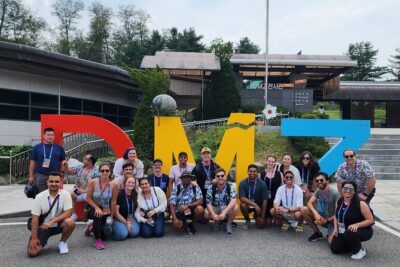
Best DMZ Tour Korea from Seoul (Red Suspension Bridge Optional)
Read the review →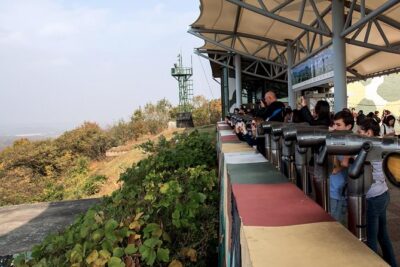
DMZ Tour: 3rd Tunnel, Option(Suspension Bridge, Boat) from Seoul
Read the review →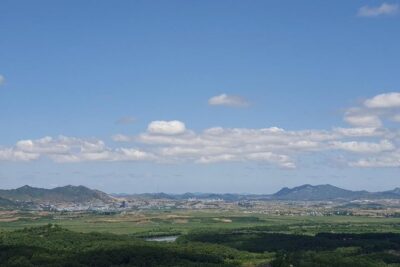
DMZ tour south Korea from Seoul (NK experience hall, defector)
Read the review →
DMZ The 3rd Tunnel and Suspension Bridge Tour
Read the review →
Signature DMZ Tour: Exclusive Defector Talk & Suspension Bridge
Read the review →
Thrilling Korean DMZ 3rd Tunnel Tour from Seoul + Red Bridge Rush
Read the review →