Reviewed · SEOUL TOURS
Seoul: Create Your Own Natural Perfume with a Perfumer
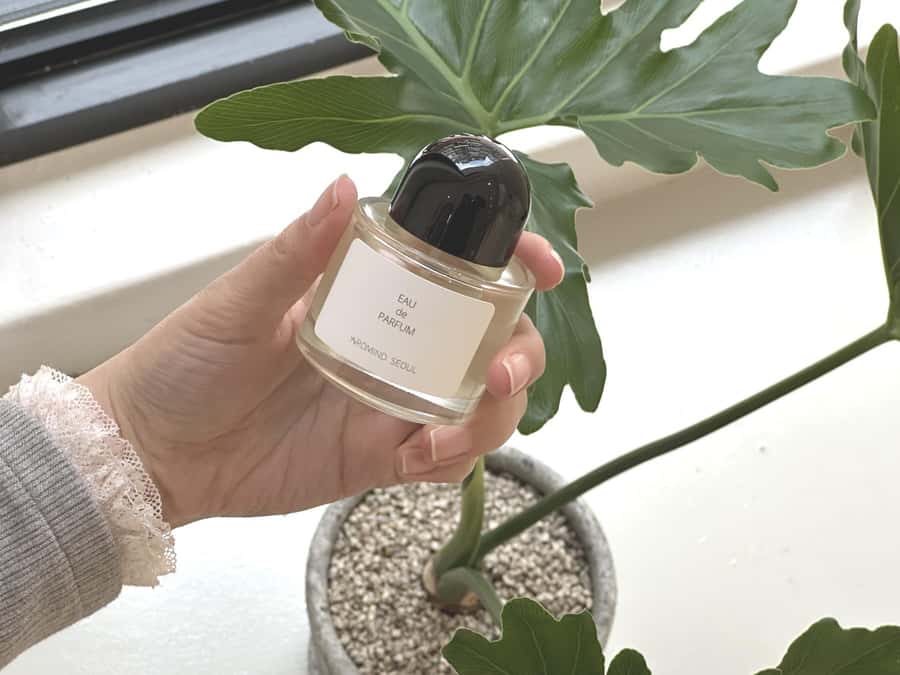
Creating perfume from scratch in a traditional Korean hanok is a fine way to turn a Seoul memory into something you can carry home. You work with 30 scent bases made from natural essential oils and absolutes, testing top, middle, and base notes before settling on your blend. The professional perfumer explains the process in clear English and lets you make the key choices.
I like two things right away: the small group of no more than eight keeps the session personal, and the finished package includes both a 10ml traveler bottle and a 50ml Eau de Parfum. The main consideration is that scent selection takes patience. If you already know perfume well, the guided format may feel basic, and one participant wished for a wider range of aromas.
Key points at a glance
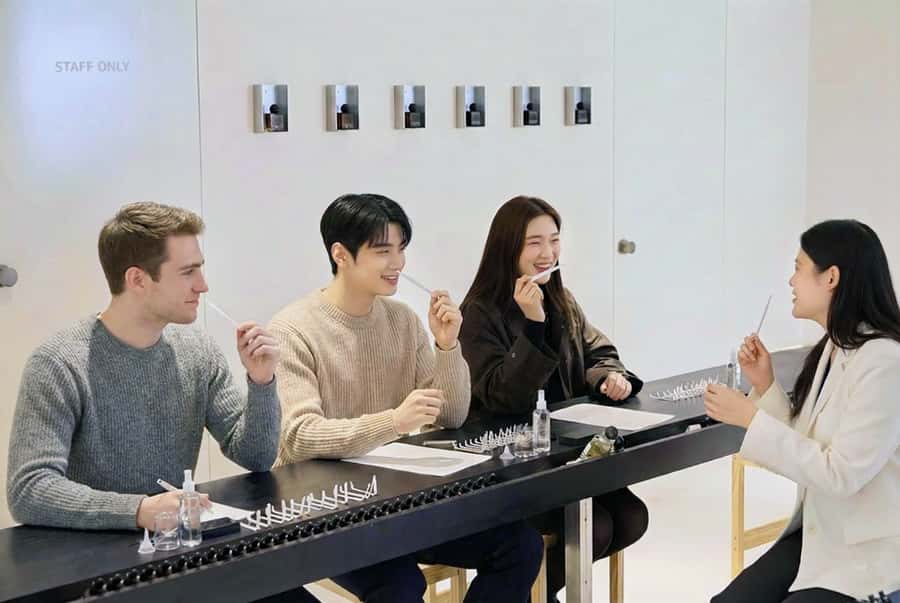
- Thirty natural scent bases: Test a mix of top, middle, and base notes before building your formula.
- A hanok setting near Anguk: The workshop sits five to eight minutes from Exit 2 of Anguk Station.
- A useful take-home set: Leave with a 10ml travel bottle, a 50ml Eau de Parfum, box, bag, and recipe.
- English-speaking instruction: The perfumer explains each stage and helps you adjust the blend.
- A calm, small-group activity: With a maximum of eight people, you have room to ask questions and work at your own pace.
- Good Seoul pairing: Add it to a visit to Bukchon Hanok Village and the surrounding Anguk area.
A perfume workshop with a Korean sense of place
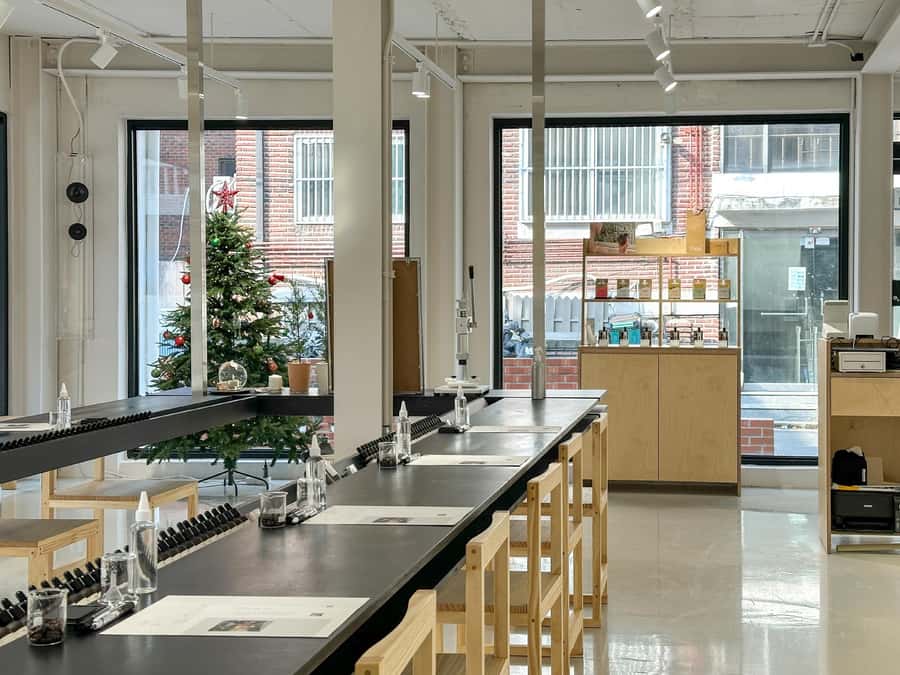
This is not a quick scent-pouring activity. You are asked to think about what Korea smells like to you, then turn that impression into a personal fragrance.
That might mean recalling a walk through a historic neighborhood, a quiet temple visit, flowers in a palace garden, or the clean smell of the countryside. The workshop does not promise that one bottle will reproduce a particular place exactly. Instead, it gives you a set of natural materials and a method for building your own interpretation.
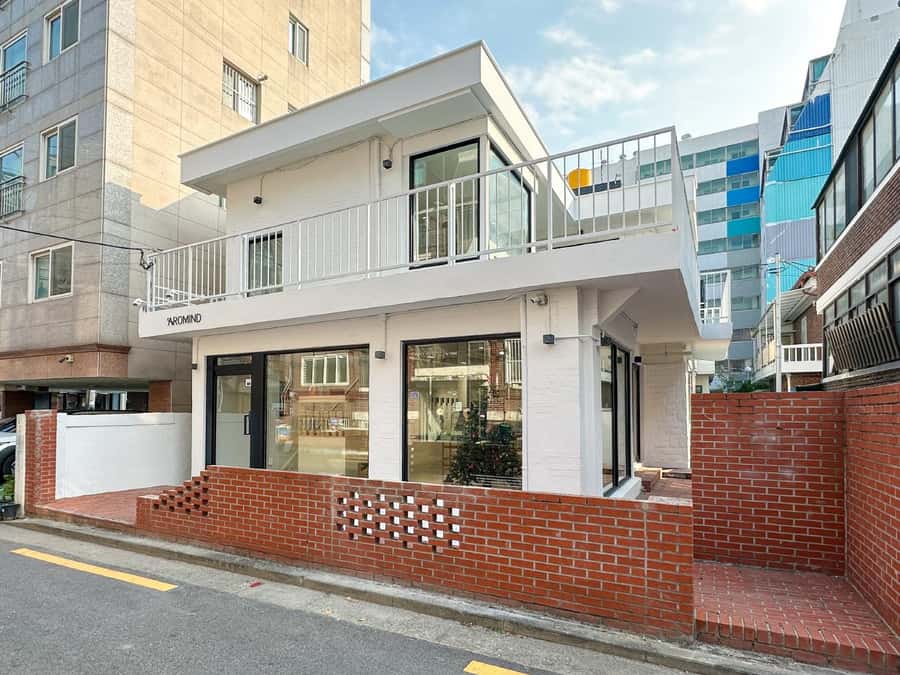
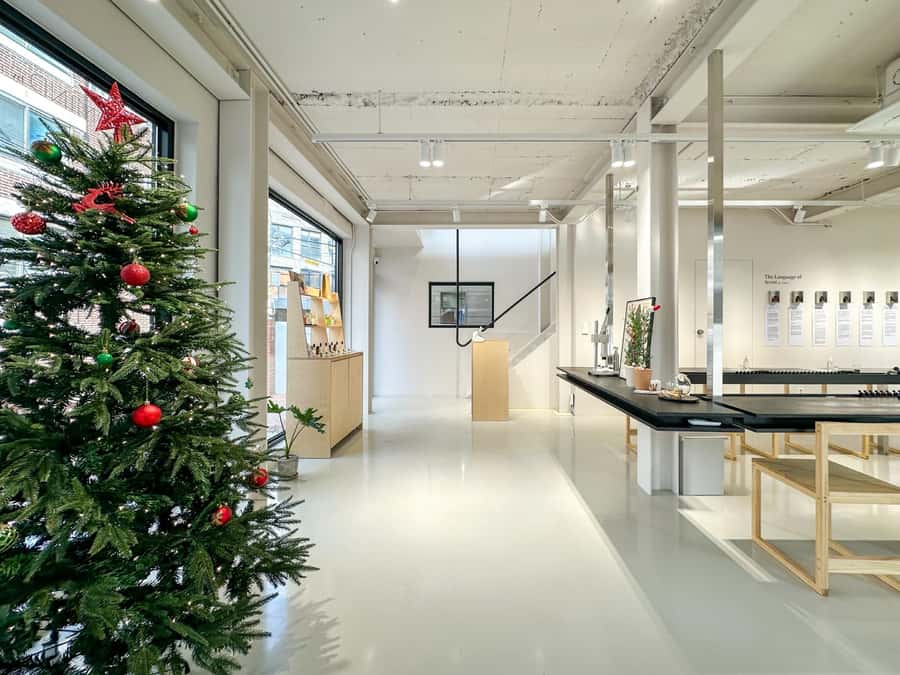
The setting helps. The workshop takes place in a beautifully preserved hanok, the traditional Korean house style known for timber construction and tiled roofs. The venue is described as a small shop down an alley with traditional buildings around it. That makes the arrival feel more special than entering a generic retail studio in a shopping center.
You should allow five to eight minutes to walk from Exit 2 of Anguk Station on Seoul Subway Line 3. The activity begins and ends at the meeting point, so you do not need to arrange a separate ride afterward. The location information identifies the experience with Gyeonggi Province, but the stated meeting point is near Anguk Station in Seoul. Check the exact booking map and directions before setting out.
A few more Seoul half-days to weigh up
- Best DMZ Tour Korea from Seoul (Red Suspension Bridge Optional)
★ 5.0 · 41,422 reviews - DMZ Tour: 3rd Tunnel, Option(Suspension Bridge, Boat) from Seoul
★ 5.0 · 21,373 reviews - DMZ tour south Korea from Seoul (NK experience hall, defector)
★ 5.0 · 20,599 reviews
What happens during the 1.5-hour session
The full activity lasts about 90 minutes. Starting times vary, so you select one when checking availability.
The opening part introduces the basic language of perfume. You learn that a fragrance is not simply one smell mixed into a bottle. It is built from different note groups that appear at different stages. Top notes are usually the first impression, middle notes form much of the character, and base notes give the blend staying power.
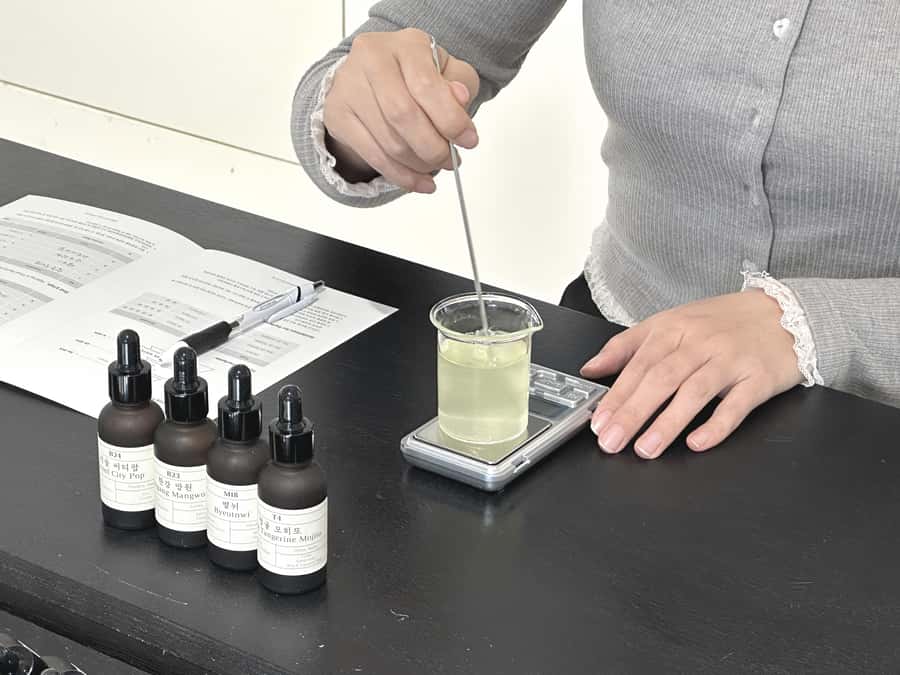
The perfumer then guides you through the available materials. The supplied scent range includes 30 bases made with 100 percent natural essential oils and absolutes. You get the chance to smell them one by one and compare how they affect you.
This stage is more important than it sounds. Smelling several aromas in succession can blur your judgment, especially if you have little experience with fragrance. Take your time. Make simple notes about what you like, what you dislike, and what seems too sharp, sweet, woody, floral, or heavy for your taste.
You are not expected to arrive with a trained nose. The instructor explains the steps and helps you make sense of the choices. That makes the workshop friendly for a first-time perfume maker, and the 90-minute schedule gives you time to ask questions instead of rushing through a fixed demonstration.
Testing top, middle, and base notes
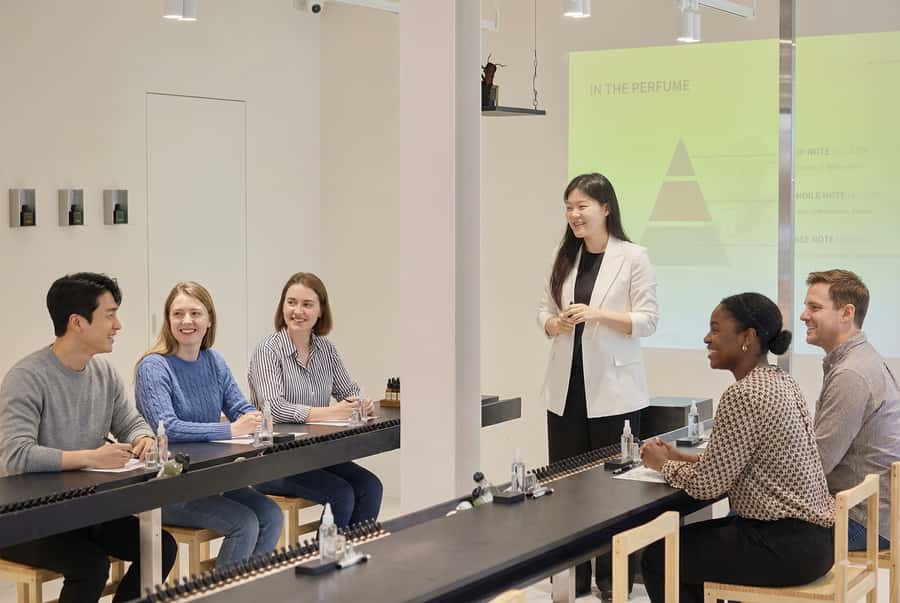
The most hands-on part is the scent testing. You work through the 30 options and consider how each could fit into the final blend.
A useful way to approach this is to begin with broad preferences. Decide which scents attract you and which ones you would rather leave aside. Then compare the stronger candidates against one another. A perfume can smell appealing on a test strip but less appealing when combined with other notes, so the final selection requires some trial and adjustment.
The activity includes a small tester bottle as well as the full finished perfume. That gives you a chance to check the blend before the final recipe is prepared. If the balance needs changing, adjustments can be made before the Eau de Parfum is completed.
You also receive the recipe for your blend. This is a particularly useful detail. Your bottle is not just a souvenir that runs out and disappears. The recipe gives you a record of the formula, which can help you order or recreate the scent later if that option is available through the perfumery.
The selection may feel generous for a short workshop, but it is not an enormous professional perfume organ. One participant found the range could be more varied. If you already spend time studying fragrance, you may want a wider selection of unusual materials. For most beginners, though, 30 bases provide enough choice to make the process interesting without turning it into a technical course.
Why the natural ingredients matter
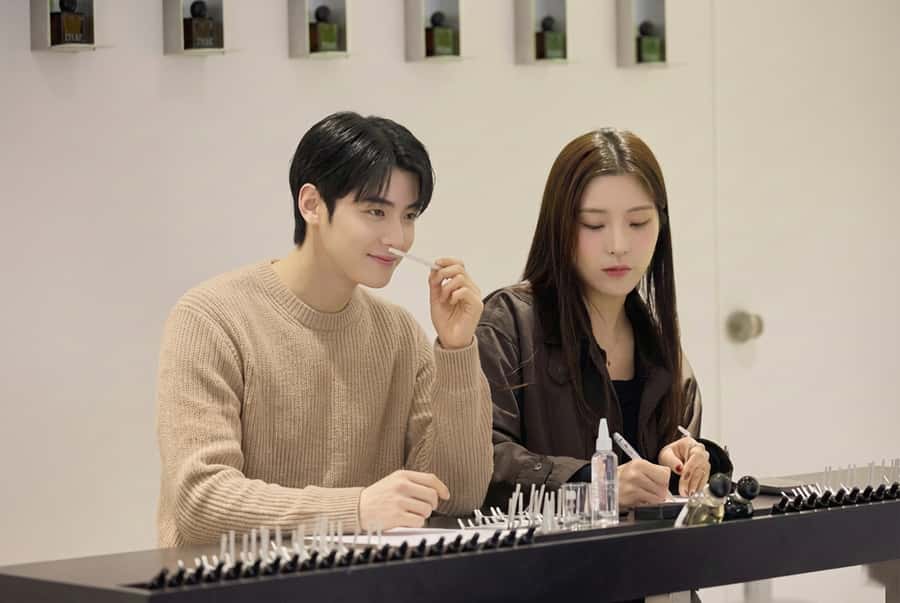
The workshop uses natural essential oils and absolutes rather than presenting a set of ready-made commercial fragrances for you to choose from.
That distinction changes the activity. You are not picking a label from a shelf. You are smelling individual ingredients and deciding how they should work together. It also helps explain why the finished scent may not smell exactly like a familiar department-store perfume.
Natural materials can be expressive, but they may also be less predictable than a simple premixed fragrance. Your final bottle reflects your selections and the balance created during the session. It may be a little different from what you first imagined, which is part of the appeal and part of the risk.
If you want a guaranteed scent that matches one you already wear, this may not be the right purchase. If you like the idea of experimenting and leaving with something personal, the natural ingredients make the experience more meaningful.
A different way to spend a day from here:
- Seoul: DMZ Tour with Optional Suspension Bridge
★ 4.8 · 5,277 reviews - Seoul: DMZ The 3rd Tunnel and Suspension Bridge Tour
★ 5.0 · 4,656 reviews - Signature DMZ Tour: Exclusive Defector Talk & Suspension Bridge
★ 5.0 · 4,459 reviews - Incheon Airport: Traveler SIM & T-money Transportation Card
★ 4.7 · 3,332 reviews
The hanok setting and the pace of the workshop
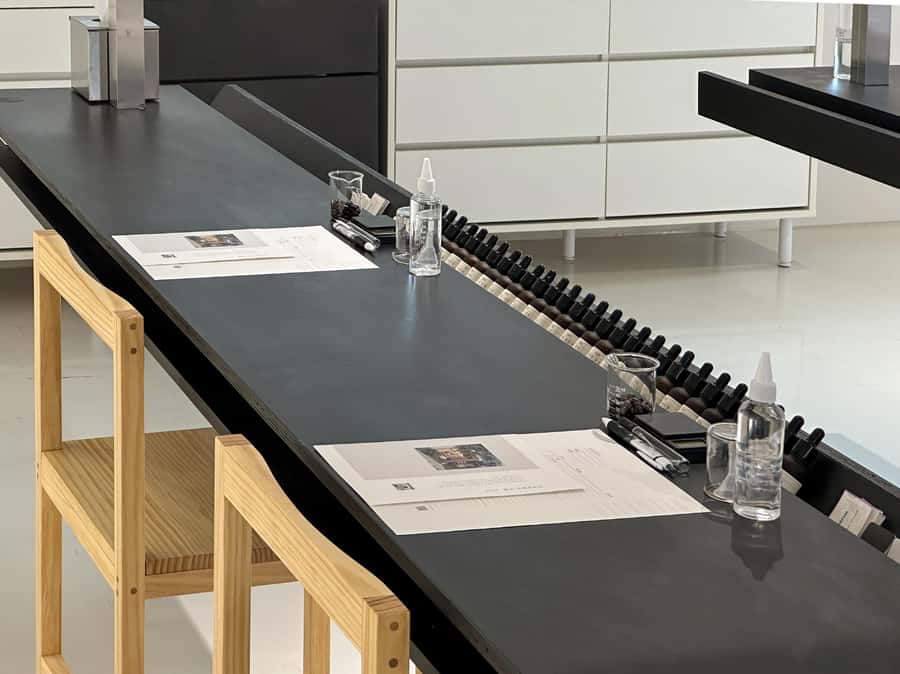
The venue is one of the strongest reasons to choose this activity instead of a perfume class in an ordinary studio.
A hanok gives the workshop a clear connection to Korea. You are not simply making perfume in Seoul. You are doing it in a traditional building near Anguk, an area well suited to walking and cultural sightseeing. The environment is described as clean, quaint, calm, and relaxing.
The group size also affects the mood. With up to eight participants, the class is small enough for individual help. You can ask the perfumer to explain a scent again or talk through a difficult choice without trying to get attention in a crowded room.
The pace appears deliberately unhurried. You are given time to smell, compare, and make changes. That suits perfume making, since rushing can leave you with a bottle chosen by impulse rather than one you actually enjoy.
The physical setup may require sitting or standing for part of the session. The activity is wheelchair accessible, but it is not suitable for people with back problems according to the supplied restrictions. If that matters to you, confirm the seating and movement arrangements before booking.
The value of the $55 price
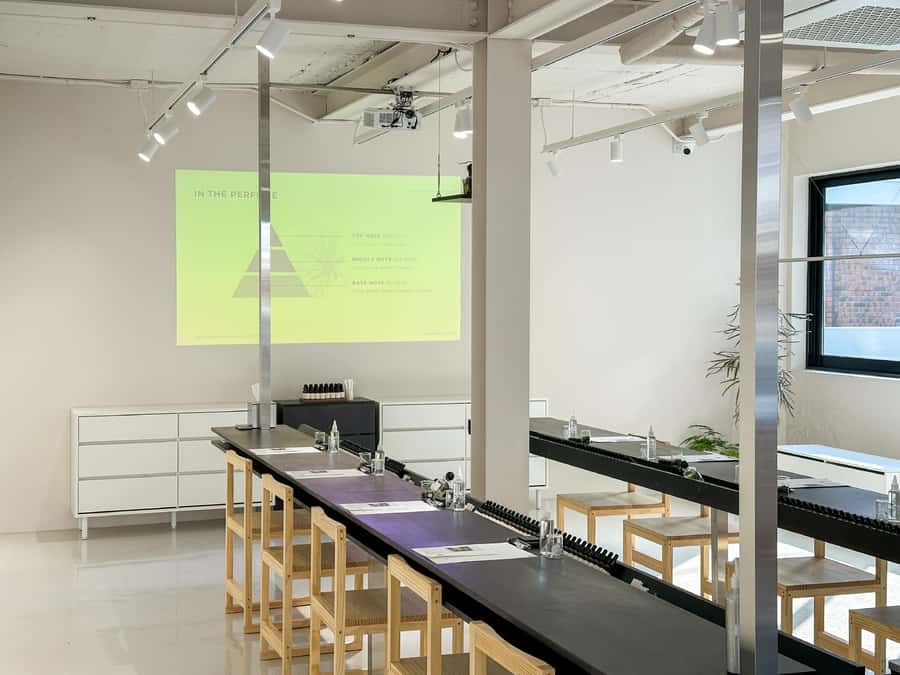
At $55 per person, this is not the cheapest souvenir activity in Seoul. It is also more than a simple fragrance purchase because the price covers instruction, the blending session, and two finished sizes.
You receive a 10ml traveler-size bottle and a 50ml Eau de Parfum, along with a box and bag. You also receive the recipe. Taken together, that makes the cost easier to justify, especially if you were already planning to buy a Korean beauty or fragrance product to take home.
The experience itself adds value. You spend 1.5 hours learning how perfume is built, rather than completing a transaction in a shop. The bottle then carries a link to your time in Korea. It can remind you of the trip in a way that a standard souvenir may not.
Still, do not book this only for the amount of product. The main value is the combination of creative work, expert help, and a personal keepsake. If you want several large bottles or extra perfumes for family members, the included package does not cover that. Crafting additional perfumes or choosing larger bottles costs extra, if available.
Friends and family members who are not registered for the session cannot simply join you. Book everyone who wants to participate.
Who will get the most from this activity
I would recommend this workshop most strongly to first-time perfume makers, couples, solo visitors who enjoy hands-on activities, and anyone looking for a quieter break from sightseeing.
It also suits people who want a souvenir with a story. You are not just carrying home an object made in Korea. You are carrying home a formula you helped create, linked to your own memories and preferences.
The workshop can work well for different ages, too, though children under 10 are not accepted. The activity is educational without being presented as a formal science lesson. Younger participants who meet the age requirement can play with the scent choices, while older participants can focus on the craft and the Korean setting.
I would be more cautious if you already have advanced perfume experience. The instructor is there to teach and guide, not to provide a professional perfumer’s full laboratory. The 30-base selection may feel limited if you are looking for rare materials, complex formulas, or a long technical discussion about extraction and composition.
The workshop is also not suitable for pregnant women, and strong fragrances should not be worn before arrival. That last point matters. A perfume on your skin can interfere with your ability to judge the natural materials, so arrive with a clean nose.
Practical tips for a better scent-making session
Arrive on time. The session is short, and a late arrival could cut into the part where you test and compare the ingredients.
Do not wear perfume before the workshop. Avoid strongly scented hair products or body products as well if you can, since they may affect your sense of smell.
Bring a camera if you want photos of the hanok or your finished package. Smoking and food are not allowed, and audio recording is prohibited.
Dress for comfort. The activity is not described as physically demanding, but people with back problems should not book it. If you use a wheelchair, the activity is listed as wheelchair accessible, though checking the exact venue details is still sensible.
Think about your Korea memories before you arrive. You do not need a finished concept, but having a few words in mind can help. Do you want something fresh, warm, floral, woody, soft, or unusual? A simple starting point makes the scent testing less overwhelming.
Do not judge the final blend too quickly. Fragrance changes as it develops. The small tester bottle gives you a chance to consider the result and request adjustments before the full bottle is prepared.
Pairing the workshop with Anguk and Bukchon
The workshop is easy to combine with a day around Anguk Station. One natural pairing is Bukchon Hanok Village, which places you in another traditional Korean setting before or after your perfume session.
You should plan your walking route carefully, since the meeting point is down an alley and five to eight minutes from Exit 2. Arriving early gives you time to find the venue without turning the first part of the class into a frantic search.
The experience ends back at the starting point. That makes it simple to continue sightseeing nearby, return to the subway, or carry your boxed perfume to another stop without arranging transportation.
The workshop itself is the quiet portion of the outing. That contrast can be useful after a day of city streets and busy attractions. You get a calm, focused activity, then leave with a souvenir that connects the session to the rest of your Seoul visit.
Booking, language, and cancellation details
Instruction is provided in English, and the professional perfumer guides you through the full process. The experience is limited to eight participants, though the exact number in your session depends on bookings.
The standard price is $55 per person. You can reserve now and pay later, which helps if your Seoul schedule may change. Free cancellation is available up to 24 hours before the activity for a full refund.
The listed duration is 1.5 hours, with start times shown during the availability check. The meeting point is a five to eight-minute walk from Exit 2 of Anguk Station on Line 3, and the workshop returns to that same point.
Should you book the natural perfume workshop?
Book it if you want a calm, creative Seoul activity with a clear cultural setting and a useful keepsake. The combination of a hanok venue, English guidance, 30 natural scent bases, a tester bottle, two finished sizes, and the recipe gives the $55 price solid value.
I would especially choose it for a first perfume-making experience or as a thoughtful alternative to standard shopping. You should skip it if you dislike experimenting with smells, need several extra bottles, already have advanced perfume knowledge, or fall under one of the listed restrictions.
For most visitors, the best plan is to pair it with Bukchon Hanok Village and leave enough time to find the alley near Anguk Station. Come without perfume, arrive promptly, and treat the process as creative trial and error. You may leave with a scent that is not what you expected, but it will be yours, and that is the point.
FAQ
Where does the perfume workshop take place?
The workshop takes place in a traditional Korean hanok near Anguk Station. The meeting point is a five to eight-minute walk from Exit 2 of Anguk Station on Subway Line 3.
How long does the activity last?
The perfume-making experience lasts 1.5 hours. Starting times depend on availability when you book.
What does the $55 price include?
The price includes professional perfumer guidance, access to 30 perfume bases made with natural essential oils and absolutes, and the custom perfume experience.
What perfume bottles do I take home?
You receive a 10ml traveler-size perfume and a 50ml Eau de Parfum, along with a box and bag.
Do I receive the recipe for my fragrance?
Yes. The completed fragrance recipe is included, so you have a record of the blend you created.
Is the workshop taught in English?
Yes. The instructor provides the activity in English.
How many people can join one session?
The workshop is a small-group activity limited to eight participants.
Can I make extra perfumes or choose a larger bottle?
Additional perfumes and larger bottles are not included in the standard activity.
What should I avoid before the workshop?
Do not wear perfume before arriving. Smoking and food are not allowed during the activity, and audio recording is prohibited.
Who should not book this activity?
The workshop is not suitable for children under 10, pregnant women, or people with back problems. It is listed as wheelchair accessible.
Recently added around Seoul
- Nami & Maple Road & Theatre des Lumieres Day Tour from Seoul★ 4.8 · 4 reviews
- Gyeongbokgung Palace Photo Session with your own phone★ 5.0 · 4 reviews
- Private Tour around Suwon UNESCO Fortress and Korea Folks Village★ 4.5 · 4 reviews
- Jisan Forest Resort: Ski Full-Day Tour or Shuttle from Seoul★ 5.0 · 4 reviews
- N Seoul Tower + Namsan Cable Car Ticket (Collect in Myeongdong)★ 3.5 · 4 reviews
- Seoul: Deoksugung Palace Night Tour★ 4.5 · 4 reviews
- Private Jeonju Hanok Village – Culinary tour★ 5.0 · 4 reviews
- Seoul Private Walking Tour with a Local★ 5.0 · 4 reviews
Seoul Tours, compared.
Best DMZ Tour Korea from Seoul (Red Suspension Bridge Optional)
Read the review →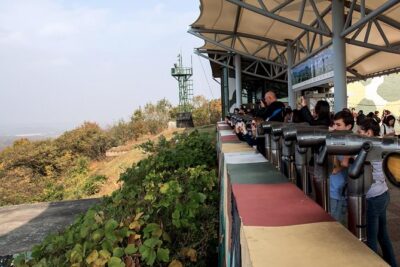
DMZ Tour: 3rd Tunnel, Option(Suspension Bridge, Boat) from Seoul
Read the review →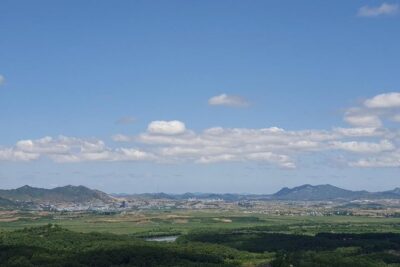
DMZ tour south Korea from Seoul (NK experience hall, defector)
Read the review →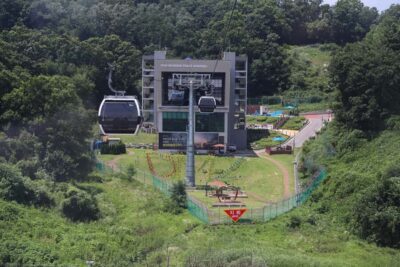

DMZ The 3rd Tunnel and Suspension Bridge Tour
Read the review →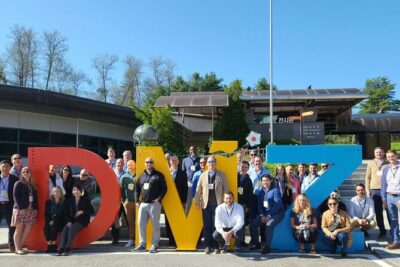
Signature DMZ Tour: Exclusive Defector Talk & Suspension Bridge
Read the review →
Thrilling Korean DMZ 3rd Tunnel Tour from Seoul + Red Bridge Rush
Read the review →