
Reviewed · BUKCHON AND INSADONG WALKS
Seoul: Bukchon Hanok Village Walking Tour
Bukchon Hanok Village gives you something many Seoul tours miss: a close look at homes where traditional Korean design still meets modern city life. You’ll walk through a 600-year-old district, compare Hanok styles from different periods, and hear how these buildings reflect Korean family life, food, etiquette, and art.
I like the small cultural details here, especially the visit to an OraeGage shop, an old Seoul business recognized for preserving local tradition. I also like the calm pause for tea or coffee, which turns the walk into more than a photo stop. The main caution is that the tour may be canceled if fewer than four people book, and weekend or holiday reservations cannot be confirmed.
Key points to know before you go
- Anguk Station Exit 3 is the meeting point: The walk begins and ends at the same subway exit.
- Hanok styles change over time: You’ll see how traditional Korean houses developed through different periods.
- OraeGage adds a living-history stop: These long-running Seoul shops preserve old traditions and local character.
- Tea and sweets are part of the experience: A tea-house visit may include a relaxed break and traditional treats.
- Guide Alan is praised for courtesy and photos: When Alan leads, expect patient explanations and help capturing the visit.
- Plan around the four-person minimum: The tour can be canceled when too few people join.
Starting at Anguk Station Exit 3
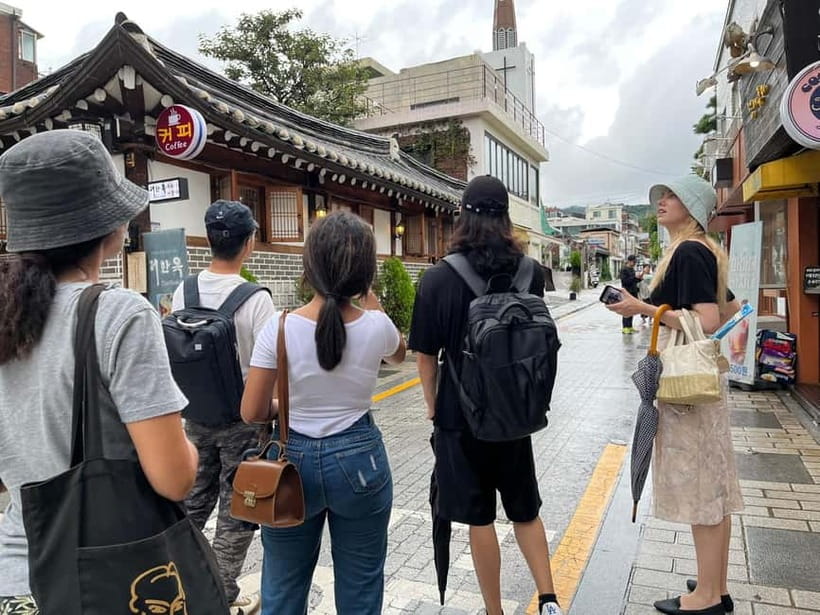
Anguk Station is a sensible place to begin. You meet at Exit 3 on Subway Line 3, close to the Bukchon area, then return to the same meeting point when the activity ends.
That return point makes the tour easy to fit into a day of sightseeing. You do not need to arrange a separate pickup or figure out how to get back from an unfamiliar neighborhood. Still, pay attention to the meeting instructions sent by email or WhatsApp, since the exact meeting time and place information are communicated there.
Wear comfortable shoes. Bukchon is best understood on foot, and the value of this experience comes from moving through its lanes rather than simply arriving at one lookout. The walk may feel easy in short stretches, but traditional neighborhoods often include uneven surfaces and sloping streets, so practical footwear matters more than stylish footwear.
The tour is offered in English. That makes the guide’s explanations especially important, since the buildings themselves do not always explain their own purpose. A tiled roof, wooden frame, courtyard, or narrow lane becomes more meaningful when you understand how Korean homes were arranged and used.
More Bukchon and Insadong walks:
- Seoul: Gyeongbok Palace, Bukchon Village, and Gwangjang Tour
★ 4.9 · 2,321 reviews - Best Seoul City Tour (Gyeongbokgung Palace,Insadong,Namsan Tower)
★ 5.0 · 1,647 reviews - Seoul: Gyeongbok Palace, Bukchon Village, and Gwangjang Tour
★ 5.0 · 1,044 reviews
Bukchon and its 600-year-old urban story
Bukchon lies north of Cheonggyecheon Stream and Jongno. Its name and location connect it with Seoul’s older center, and its long urban history helps explain why the district feels different from newer parts of the city.
The appeal is not simply that the houses are old. Bukchon shows how traditional Korean architecture was kept within a living city. Modern Seoul surrounds the neighborhood, yet the Hanok houses preserve a clear sense of place.
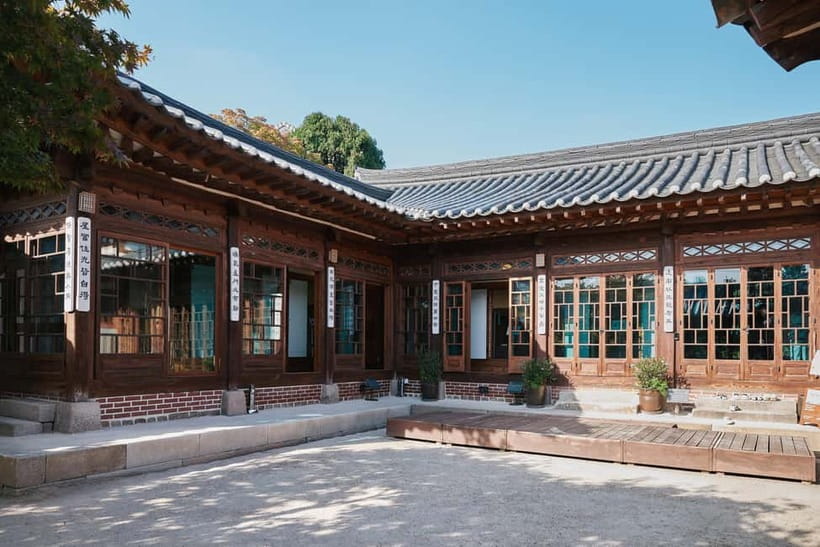
Your guide will explain Hanok as a Korean architectural style that changed across different eras. That distinction is useful. You are not looking at one fixed design copied again and again. You are looking at houses shaped by changing needs, periods, and tastes while retaining familiar Korean features.
The walk is designed to help you notice those changes. You may compare the appearance of houses from different periods and learn how their forms developed. The supplied information does not give a fixed list of every house or lane visited, so the precise route may vary, but the focus remains on traditional buildings and their changing character.
I find this approach more useful than a quick photo walk. A photograph can show the curve of a roof or the color of a wall. A guide can explain why that feature matters and how the home fits into Korean life.
Reading the details of a Hanok
Hanok is valuable as architecture, but it also gives you a window into daily life. During the walk, listen for the connection between building design and the customs of the people who lived in these homes.
The tour presents Hanok as a style that has survived through several periods. You’ll learn about the features and transformations of houses from different times, rather than treating every traditional home as identical.
That matters because Bukchon can otherwise become a parade of attractive walls and doorways. With context, the details take on meaning. The layout of a house, the relationship between rooms, and the use of shared or private areas can help explain Korean household values and social structure.
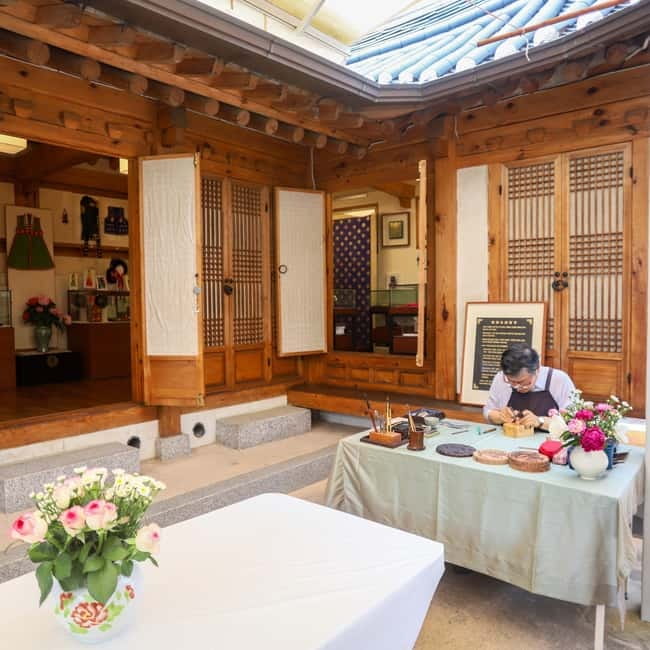
The experience also connects architecture with the food and culture associated with Korean nobles of the past. You may hear about traditional cuisine, dining etiquette, art, and other parts of upper-class life. This does not turn the tour into a formal museum lesson. Instead, it links the buildings around you with the customs that once gave them purpose.
One point to keep in mind is that the tour is described as a visit to Hanok houses from various periods, but it does not promise a specific number of interiors. Some parts of the walk may focus on exteriors and streetscapes, while selected stops may offer a look inside typical houses. The exact interior access should be confirmed through the tour’s meeting information.
The OraeGage stop and Seoul’s old businesses
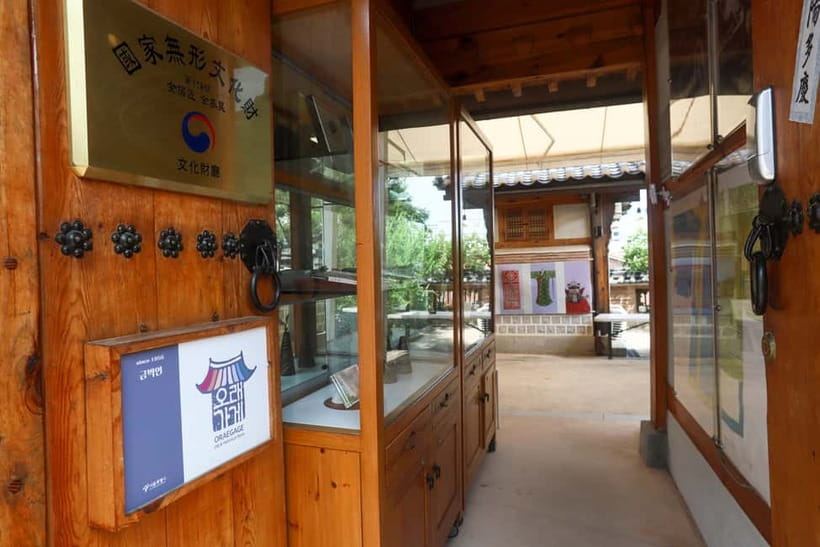
OraeGage is one of the tour’s more unusual ideas. The term refers to a store that has carried on Seoul’s traditions and values for a long time. Its meaning is tied to an old business that people hope will continue for many more years.
Seoul began identifying and designating OraeGage stores in 2017. The goal was to point people toward businesses with distinctive atmospheres and stories connected to the city.
That gives the tour a useful present-day link. Bukchon is not treated only as a preserved neighborhood from the past. The OraeGage idea shows how Seoul also values long-running businesses and the everyday traditions they carry.
You should think of this as a cultural stop, not a guaranteed shopping opportunity. The information provided does not name the specific OraeGage store or promise particular products. Its value is in understanding how Seoul marks places that have lasted through changing times.
For me, this is the kind of detail that makes a walking tour worthwhile. You get a broader picture of preservation. It is not only about keeping old houses intact. It is also about recognizing the shops, food, crafts, and habits that help a city keep its identity.
More Hanok Village Tours in Seoul:
- Seoul City Sightseeing Tour Including Gyeongbokgung Palace, N Seoul Tower, and Namsangol Hanok Village
★ 5.0 · 1,423 reviews - Seoul: Gyeongbok Palace and Bukchon Hanok Walking Tour
★ 4.8 · 157 reviews - Best Walking Tour to Gyeongbok Palace Bukchon Hanok Village
★ 5.0 · 138 reviews - Experience Korean Cooking in Modern Hanok Kitchen
★ 5.0 · 118 reviews
Tea, sweets, and a slower look at Korean culture
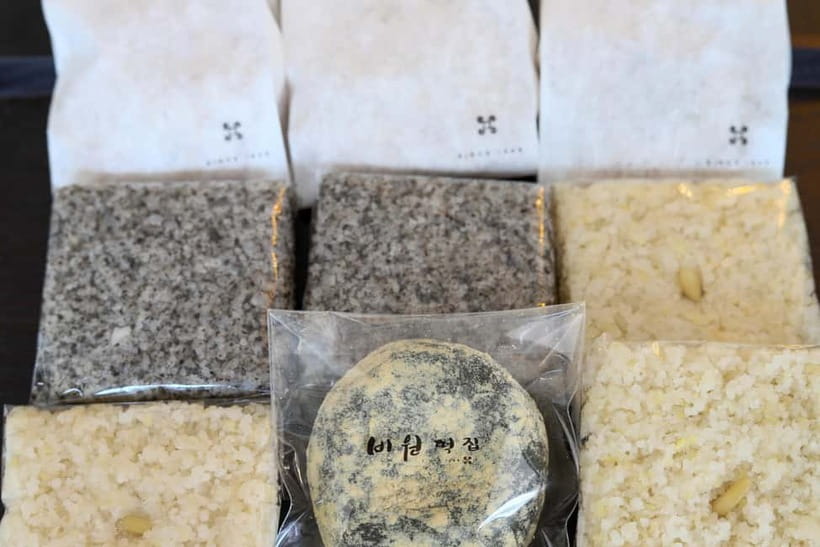
Coffee or tea is included in the price. One account of the experience describes a beautiful tea house where guide Alan offered tea and sweets, without rushing the group.
That pause sounds simple, but it serves a real purpose. Bukchon can be visually busy, and a seated break gives you time to absorb what you have seen. It also provides a natural setting for talking about traditional Korean food and etiquette.
The tea stop may be especially appealing if you want more than architecture. The tour connects Hanok with the food and customs enjoyed by Korean nobles in earlier times, so the drink and sweets help carry the cultural discussion beyond walls and rooftops.
Do not assume the tea stop will be an elaborate tasting menu. The included benefit is listed as coffee or tea, and the details of the sweets or tea-house visit may vary. Still, the experience provides a welcome change of pace from walking and sightseeing.
Alan’s approach is worth noting. He is described as explaining Bukchon’s past with enthusiasm and courtesy, taking time with the group, and helping with photographs. A guide who can explain the setting and also help you get a good picture is useful in a neighborhood where the best views may appear suddenly along a narrow street.
The guide may not be Alan on every departure, so consider that detail a possibility rather than a guarantee. The central promise is an English-speaking local guide who explains Bukchon and Hanok as you walk.
What the $54 price includes
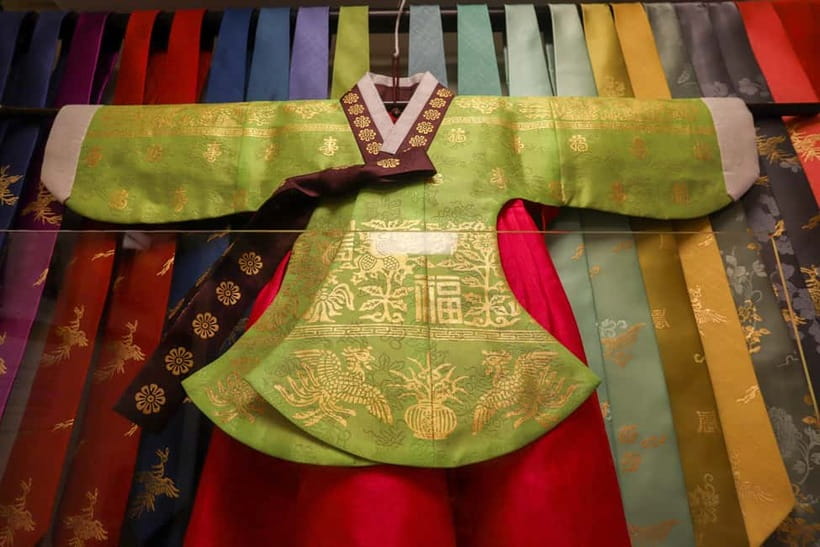
At $54 per person, this is not the cheapest way to see Bukchon. You can walk through the neighborhood independently at no admission cost, at least in terms of the basic streets. The question is what you gain by paying for a guided visit.
You are paying for interpretation, not simply entry. The guide explains the development of Hanok, places the houses in Seoul’s long urban story, introduces the OraeGage concept, and connects architecture with cuisine, etiquette, art, and social life.
Coffee or tea is included as well. If the route includes the kind of tea-house visit described by Federica, the break adds a pleasant cultural element. Still, I would choose this tour for the explanations and access to context, not for the drink alone.
The price makes better sense for a first visit to Seoul, especially if you want a structured introduction to Korean culture. It may feel less worthwhile if you already know Bukchon well, have studied Hanok architecture, or prefer to wander at your own pace without a guide.
A private tour is not stated, so you should expect to share the experience with other people if the departure operates. The four-person minimum is important. If fewer than four participants are booked, the provider can cancel and send notice through WhatsApp.
Who will get the most from this walk

This experience suits you if you want a gentle cultural introduction rather than a fast checklist of sights. It is a good match for first-time visitors who want help understanding what they are seeing.
You may also appreciate it if you enjoy architecture but do not want a technical lecture. The focus is on how Hanok developed, how homes fit into Korean society, and how traditional culture connects with modern Seoul.
The tea stop gives the walk appeal for people who like food and social customs as much as buildings. The explanation of noble-era cuisine, etiquette, and art adds another layer to the visit.
Families and older visitors should consider the walking conditions and wear supportive shoes. The tour information does not provide a duration or detailed accessibility notes, so ask for those details before booking if walking distance, slopes, or interior access are major concerns.
This may not be the best choice for someone who wants a tightly timed itinerary. The route and meeting details are sent separately, and the experience is built around conversation, observation, and a relaxed cultural stop. That is a strength for some people and a limitation for others.
Practical planning for your Bukchon visit
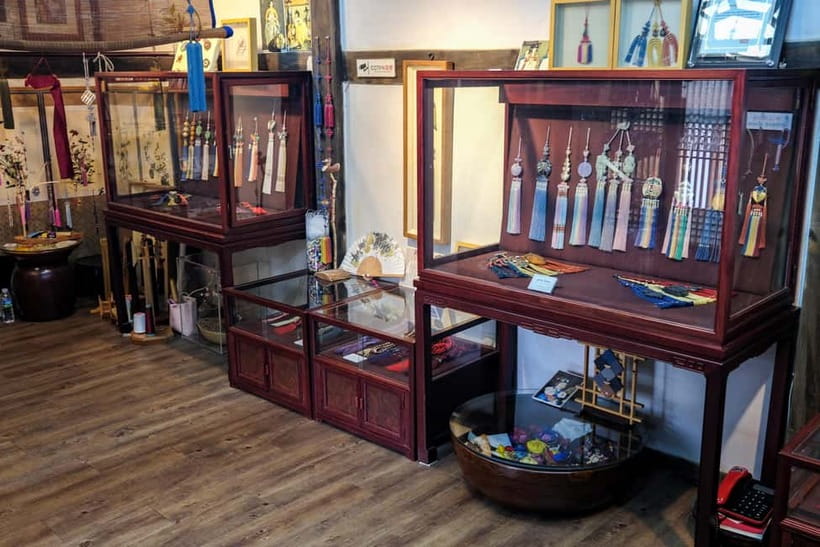
Book with the minimum group rule in mind. If the group has fewer than four participants, the activity can be canceled. The cancellation notice is sent by WhatsApp, so provide contact information you will check while in Seoul.
Reservations cannot be confirmed on weekends and holidays. That does not necessarily mean the tour never operates on those days, but it does mean you should not assume immediate confirmation for a weekend or public holiday booking.
The flexible payment option lets you reserve and pay later. Cancellation is allowed up to 24 hours in advance for a full refund. A no-show or same-day cancellation receives no refund, so keep the meeting time visible in your plans.
The meeting point is Anguk Station Exit 3, and the activity ends there. Since the tour returns to its starting point, you can continue to another Seoul sight afterward without arranging transport from a distant neighborhood.
Bring comfortable shoes and keep your schedule reasonably open. The provided details do not state the tour’s duration, so confirm the expected length if you have a palace visit, meal reservation, or performance booked afterward.
Should you book the Bukchon Hanok Village walk?
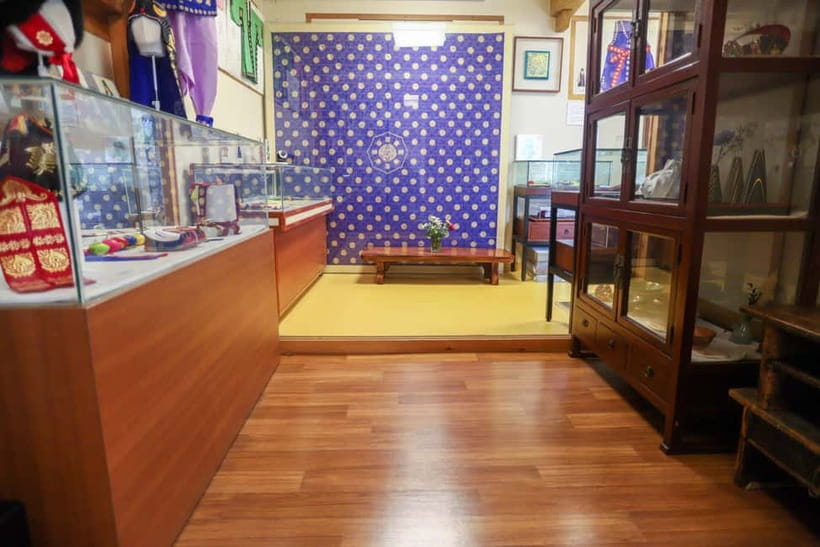
I would book this tour if you want Bukchon to make cultural sense, not just look attractive in photos. The best features are the explanation of changing Hanok styles, the OraeGage connection to old Seoul businesses, and the chance to slow down over tea or coffee.
The strongest guide experience described here comes from Alan, who explains carefully, takes photographs, and does not rush the group. Since guide assignments can vary, treat that as a useful possibility rather than a promise.
At $54, the tour is worth it when interpretation and a relaxed introduction matter to you. Skip it if you are happy to wander alone, need a guaranteed departure with fewer than four people, or require a precisely timed and fully detailed itinerary.
For a first look at Seoul’s traditional side, this walk offers a sensible balance of streets, houses, stories, and a quiet cultural break.
FAQ
Where does the Bukchon Hanok Village tour begin?
The tour begins at Anguk Station Exit 3 on Subway Line 3.
Where does the activity end?
The activity ends back at the meeting point, Anguk Station Exit 3.
What language is the tour offered in?
The tour is offered in English.
What is included in the price?
The price includes a local tour guide and coffee or tea.
Is travel insurance included?
No. Traveler’s insurance is not included.
What should I bring?
Bring comfortable shoes for the walking portion of the activity.
Can I cancel for a full refund?
You can cancel up to 24 hours before the tour for a full refund.
What happens if I do not show up or cancel on the day?
No refund is issued for a no-show or a cancellation made on the day of the tour.
Can the tour be canceled by the provider?
Yes. If fewer than four participants book, the tour can be canceled. The cancellation notice is sent through WhatsApp. Weekend and holiday reservations also cannot be confirmed.
More Walking Tours in Seoul
- Seoul moonlight walking tour with local historian
★ 5.0 · 940 reviews - Seoul: Nighttime Hidden Gems Walking Tour
★ 5.0 · 775 reviews - Seoul: Evening Dark History, Folklore & Ghost Story Walking Tour
★ 5.0 · 593 reviews - Seoul: Dark Side of the City and Ghost Stories Walking Tour
★ 4.8 · 484 reviews
Recently added around Seoul
- Seoul: Private Car Tour with Licensed Professional Guide★ 5.0 · 3 reviews
- Imjingak DMZ Private Tour for Incheon Airport and Cruise Guests★ 5.0 · 3 reviews
- Seoul: Nami and K-Garden with Optional Alpaca Winter Tour★ 5.0 · 3 reviews
- Unique Native Experience : Han River Picnic, Board game, BBQ★ 5.0 · 3 reviews
- BTS In The Soop Version: One Day Private VIP Tour★ 5.0 · 3 reviews
- DMZTour from Seoul:3rd Tunnel,North Korea View&UNESCO Valley★ 5.0 · 3 reviews
- Bukhansan mountain hiking tour – 6 hours★ 4.7 · 3 reviews
- Seoul’s Hidden Dark History Guided Tour of Seodaemun Prison★ 5.0 · 3 reviews
Bukchon and Insadong Walks, compared.
Gyeongbok Palace, Bukchon Village, and Gwangjang Tour
Read the review →
Best Seoul City Tour (Gyeongbokgung Palace,Insadong,Namsan Tower)
Read the review →Gyeongbok Palace, Bukchon Village, and Gwangjang Tour
Read the review →
Seoul Highlights: Gyeongbok Palace, Insadong & N Seoul Tower
Read the review →
Korean Palace and Market Tour in Seoul Including Insadong and Gyeongbokgung Palace
Read the review →
Gyeongbok Palace and Bukchon Hanok Walking Tour
Read the review →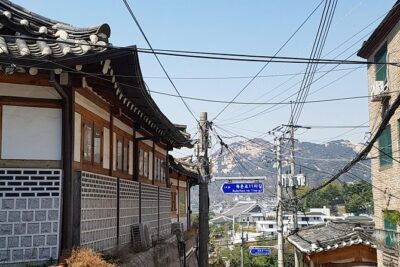
Best Walking Tour to Gyeongbok Palace Bukchon Hanok Village
Read the review →
Carve Your Personal Korean Stone Seal with Jeongju in Insadong
Read the review →Browse the lists this tour appears in