
Reviewed · SEOUL TOURS
Korean Kimchi Making Day Experience with a Local Market Tour
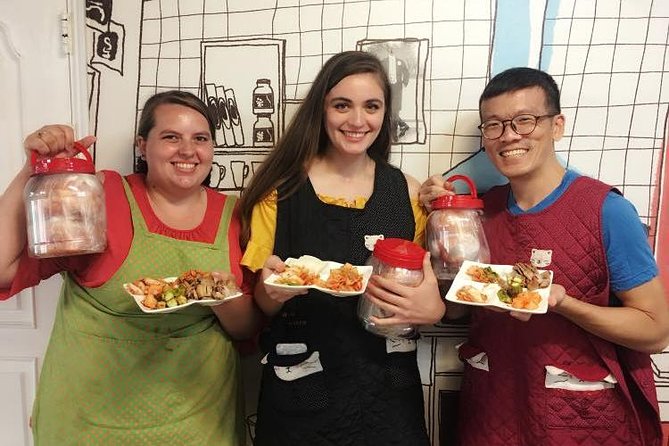
Four kinds of kimchi, a food-market walk, street snacks, and a home-cooked meal fit into this three-and-a-half-hour Seoul experience. Chef Jomin begins at Mangwon Station and leads you through Mangwon Market before guiding you through the recipes in her cooking studio.
I especially like the market stop, where you see the cabbage, radish, cucumber, seafood, and other foods before using them. I also like the hands-on format: you make the kimchi yourself, eat it with boiled pork and fried tofu, and take a generous container home. The main thing to consider is luggage space and timing, since your homemade kimchi may be awkward to carry on a flight and the class can be canceled or rescheduled if the minimum group size is not met.
Key points at a glance
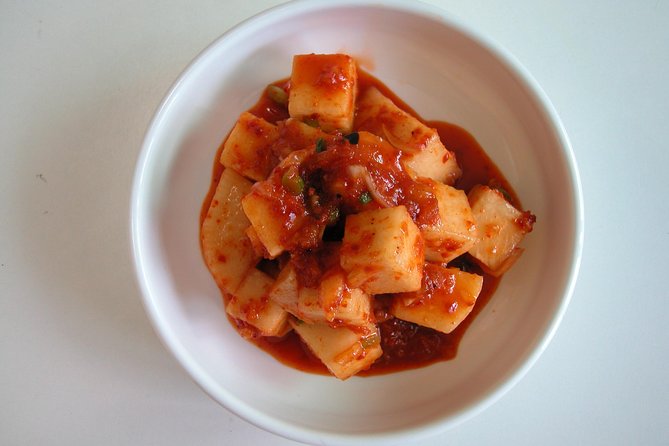
- Four kimchi recipes in one class: Learn several styles rather than only the familiar napa cabbage version.
- Mangwon Market first: See ingredients in their everyday Korean setting and sample local street foods.
- Chef-led instruction: Jomin guides the preparation step by step and gives you recipes to use at home.
- A real meal afterward: Eat your kimchi with boiled pork, fried tofu, and, according to the experience details, makgeolli.
- Take-home container included: You leave with the kimchi you make, which can amount to a large quantity.
- Small-group appeal: The class is advertised for a maximum of four people, though the general activity information lists up to 11 participants.
Why this kimchi class works so well in Seoul
Many food classes give you a recipe and a work surface, then send you on your way. This one begins earlier, at the market, which makes the cooking feel more connected to daily life in Seoul.
You meet Jomin at Mangwon Metro Station, Exit 2, on Line 6. From there, you walk toward the cooking studio through Mangwon Market. That short route matters. Before touching a mixing bowl, you see the produce and products that shape Korean cooking.
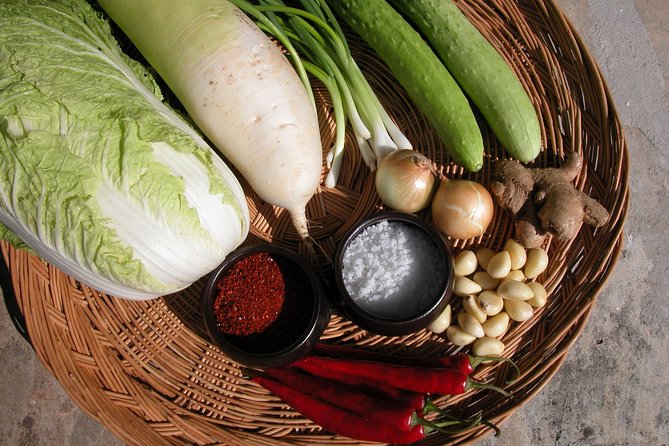
Jomin points out ingredients used in the class, including Korean cabbage, radish, and cucumber. You also have a chance to sample street foods and spend some free time looking at the stalls. The market portion is not simply a photo stop. It helps you understand what fresh ingredients look like and gives you more confidence if you return later to shop on your own.
This is a good choice if you want a break from Seoul’s grand palaces, shopping districts, and crowded sightseeing routes. Mangwon offers a more everyday look at the city, with food stalls, produce sellers, and seafood displays. The tour does not attempt to turn the market into a major historical lecture. Instead, it keeps the focus on what you are about to cook.
More Market Tours in Seoul:
- Seoul Street Food Market Tour
★ 5.0 · 1,226 reviews - Local Home Korean Cooking Class & Market Adventure in Seoul
★ 5.0 · 1,024 reviews - Seoul: Night Market Food Tour with Local Guide
★ 4.9 · 943 reviews
What happens at Mangwon Market
The market walk is the first part of the experience and lasts long enough to give you context without taking over the day. Jomin explains the ingredients needed for the class and shows how Korean food products appear in a local market.
You might see more variety than you expect from a class centered on kimchi. The market includes produce and seafood, along with ready-to-eat snacks. The food tasting is a useful extra because it lets you try something before the cooking begins, and it gives you a quick look at the range of flavors sold in a Korean market.
You also get time to buy items for yourself. That is worth noting if you like food souvenirs or want to return later without a guide. The market portion can help you recognize ingredients and find your way around with more confidence.
The practical drawback is that market walking and tasting happen before the main class. If you are short on time, this is not a quick, two-hour cooking demonstration. The full activity takes about three hours and 30 minutes, and the market visit is part of the reason.
Making four types of kimchi by hand
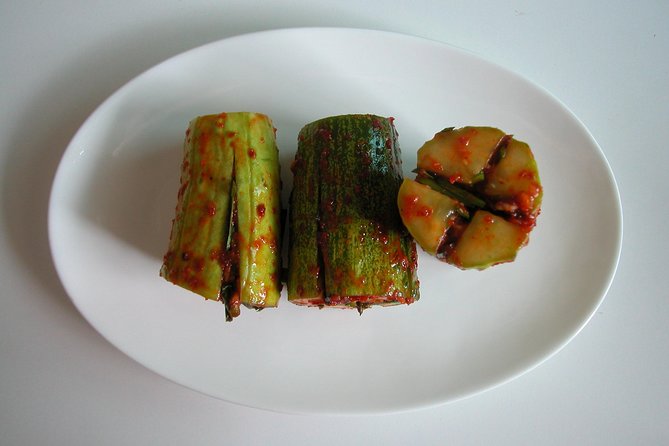
At the cooking studio, Jomin leads you through four kinds of kimchi using fresh cabbage, radish, and cucumber. The class is hands-on, so you are not only watching a chef mix ingredients. You prepare the food yourself with guidance along the way.
That format is especially helpful for beginners. Kimchi can look simple from a distance, but the balance of vegetables, seasoning, salting, and preparation is easier to understand when someone shows you each stage. The instruction is designed to give you enough confidence to repeat the recipes at home.
The class also moves beyond the one style most people know. The familiar napa cabbage version is included, but the additional recipes let you compare different textures and ways of seasoning vegetables. One particularly useful point is that the recipes cover short and long-term versions, giving you a better sense of how homemade kimchi can fit into your own kitchen routine.
Jomin’s teaching style is described as patient, clear, and good-humored. Her English is good enough for the class, and the instruction is organized so the pace does not drag. One participant with a 15-year-old daughter found the class easy to follow, while another first-time kimchi maker left feeling able to cook it independently.
That is the real value here. You do not need to arrive with cooking experience. You need curiosity, a willingness to work with strong flavors, and enough attention to follow the steps.
The meal: kimchi with pork and tofu
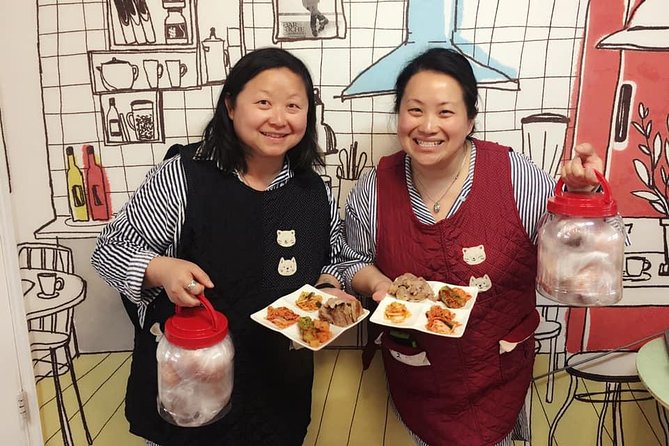
After preparing the four kinds, you sit down to eat. The kimchi is served with boiled pork and fried tofu, a combination that turns the lesson into a proper Korean-style meal rather than a tasting from a plastic cup.
This is one of the best parts of the experience because you immediately understand how the kimchi works at the table. You taste the fresh results with mild, savory foods that balance the sharpness and spice. The experience details also include makgeolli, a Korean rice drink, though the exact serving arrangements are not specified.
The meal gives you a chance to compare your four preparations side by side. Fresh kimchi has a different character from kimchi that has fermented longer, and tasting it right away helps you understand why timing matters.
The class is social, too. You cook and eat with the other people booked into your session. The activity is promoted as a class of up to four, which should allow for a more personal feel and more direct help from Jomin. However, the additional booking information gives a maximum of 11 for the overall activity, so group size may vary by date. If a very small class is important to you, check the details for your chosen departure.
More shopping trips in Seoul:
- Private DMZ Tour (No Shopping): 3rd Tunnel & Suspension Bridge
★ 5.0 · 607 reviews - Downtown Seoul Guided Food & Market Tour with 8+ Local Tastings
★ 5.0 · 580 reviews - Seoul: Korean Cooking Class at a Local Home and Market Tour
★ 5.0 · 348 reviews - Seoul: Guided Food & Market Tour with 8+ Tastings
★ 4.9 · 342 reviews
The take-home kimchi is generous, but plan ahead
You do not simply leave with a recipe card. You take home the kimchi you make, stored in a large container provided by the host. Several participants describe the amount as substantial, so plan for more than a small souvenir jar.
This is excellent value if you enjoy Korean food and have room in your schedule and luggage. You get to eat part of the batch during the class and continue trying it later. The recipe book also helps you recreate the dishes once you return home. It includes the class recipes, along with recipes for other popular Korean dishes.
The catch is transport. Kimchi is pungent, and the container may be inconvenient during the rest of a trip. If you are staying in Seoul for several more days, this is easy to manage. If you are heading straight to the airport, think carefully about how you will pack it. One practical tip is to keep the container in checked luggage if you take it on your flight, as one participant specifically noted.
You may also want to leave space in your suitcase before booking. The take-home food is part of the experience, not a minor extra.
Is $89 a fair price?
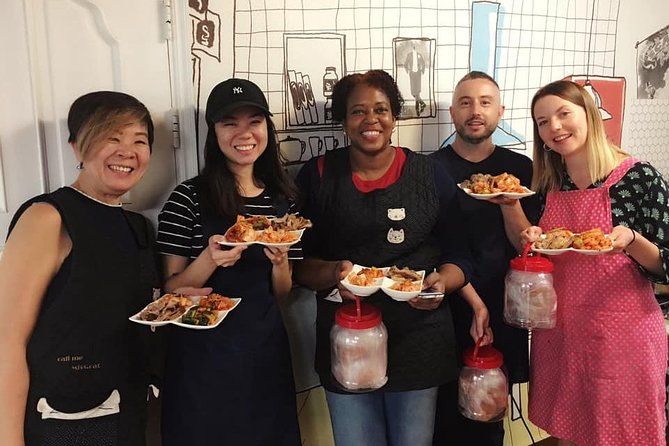
At $89 per person, this is not the cheapest way to eat kimchi in Seoul. It is also not just a restaurant meal. The price covers a market visit, street-food tasting, chef instruction, four recipes, a prepared meal, take-home kimchi, and a recipe book.
I see the strongest value in the amount of active cooking. A short demonstration followed by one small sample would feel expensive at this price. Here, you make four types and leave with food for later, which changes the calculation.
The market walk adds value for first-time visitors who want help understanding Korean ingredients. It also saves you from arriving at the studio without context. You see the vegetables before using them, taste market food, and learn how to identify ingredients you may want to buy again.
The price is easiest to justify for food lovers, couples, families, and anyone who wants a souvenir that is more personal than a packaged snack. It is less compelling if you do not like fermented foods, have little interest in cooking, or cannot take food home.
The booking pattern suggests planning ahead. The activity is often reserved about 30 days in advance, so I would not leave it until the last morning of your Seoul stay.
Who should book this experience?
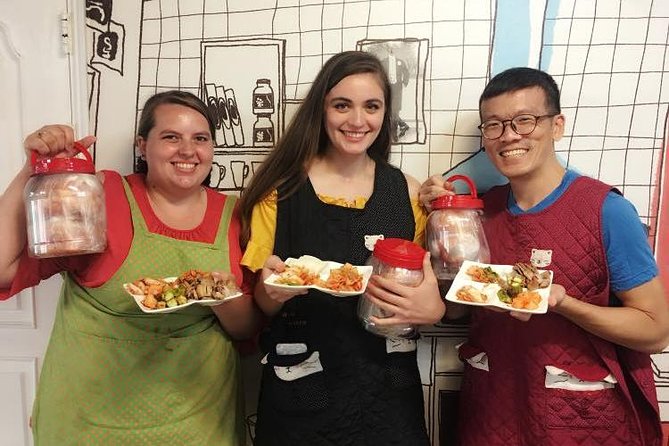
You should consider this class if you want to:
- Learn a Korean dish you can repeat at home
- See a traditional food market with a local guide
- Try several kimchi styles in one sitting
- Meet other people through a small cooking activity
- Take home a substantial edible souvenir
- Add a hands-on food experience to a Seoul itinerary
It is also a good family activity. A teenager can take part, and the work is practical rather than lecture-heavy. Couples will find it easy to share, while solo visitors can meet classmates around a common task.
Vegetarian and vegan options are available, so state your preference when booking. The standard meal includes boiled pork and fried tofu, but the listed dietary options mean the experience can be adjusted for plant-based participants.
I would be more cautious about booking it on a day packed with other plans. The activity starts at Mangwon Station and ends back at the meeting point, but the market, cooking, meal, and packing your food all take time. Allow the full three hours and 30 minutes rather than treating it as a flexible gap between attractions.
Meeting point, cancellation, and useful planning details
The meeting point is Mangwon Station, Line 6, Exit 2. The experience ends at the same meeting point. Since the route begins at the station and continues through the market to the studio, wear shoes suited to walking and keep your hands free for tasting and shopping.
You receive confirmation when booking, and the activity is near public transportation. A mobile ticket is provided, which makes entry simple once you reach the station.
Free cancellation is available up to 24 hours before the start time for a full refund. Changes or cancellations made less than 24 hours before the start are not accepted for a refund. The cut-off uses Seoul local time.
There is also a minimum number of participants. If that minimum is not met, the provider may reschedule or cancel the class. In that case, you are offered another date or experience, or a full refund. This is worth keeping in mind if your Seoul schedule is tight.
My practical verdict
I would book this class if you want to understand kimchi as part of Korean food culture, not just eat it as a side dish. The combination of Mangwon Market, hands-on preparation, a sit-down meal, and a large take-home batch gives the experience more substance than a standard cooking lesson.
The main question is not quality. The available feedback is uniformly strong, with a five-star rating and 100 percent recommendation. The practical questions are whether you can spare three and a half hours, whether you like cooking, and how you will carry the kimchi afterward.
Book it well ahead, leave room in your luggage, and arrive hungry but not overfed, since the market snacks and final meal are both part of the fun.
FAQ
Where does the kimchi-making experience begin?
It begins at Mangwon Metro Station in Seoul, at Line 6, Exit 2. The activity ends back at the meeting point.
How long does the experience last?
The experience lasts approximately three hours and 30 minutes.
How many kinds of kimchi will I make?
You will learn to prepare four types of kimchi using ingredients such as Korean cabbage, radish, and cucumber.
Is the cooking class hands-on?
Yes. You prepare the kimchi yourself with step-by-step guidance from chef Jomin rather than only watching a demonstration.
What food is served after the class?
You eat the kimchi you prepared with boiled pork and fried tofu. The experience details also mention makgeolli.
Can I take the kimchi home?
Yes. You receive a container for the kimchi you make and can take the leftovers with you. A recipe book is also provided.
Are vegetarian or vegan options available?
Yes. Vegetarian and vegan options are available.
What is the cancellation policy?
You can cancel up to 24 hours before the start time for a full refund. Cancellations or changes made less than 24 hours before the start time are not accepted for a refund. If the minimum group size is not met and the activity is canceled, you are offered another date or experience, or a full refund.
Recently added around Seoul
- Private Tour around Suwon UNESCO Fortress and Korea Folks Village★ 4.5 · 4 reviews
- Nami & Maple Road & Theatre des Lumieres Day Tour from Seoul★ 4.8 · 4 reviews
- Gyeongbokgung Palace Photo Session with your own phone★ 5.0 · 4 reviews
- Seoul: Deoksugung Palace Night Tour★ 4.5 · 4 reviews
- N Seoul Tower + Namsan Cable Car Ticket (Collect in Myeongdong)★ 3.5 · 4 reviews
- Jisan Forest Resort: Ski Full-Day Tour or Shuttle from Seoul★ 5.0 · 4 reviews
- Private Jeonju Hanok Village – Culinary tour★ 5.0 · 4 reviews
- Seoul Private Walking Tour with a Local★ 5.0 · 4 reviews
Seoul Tours, compared.
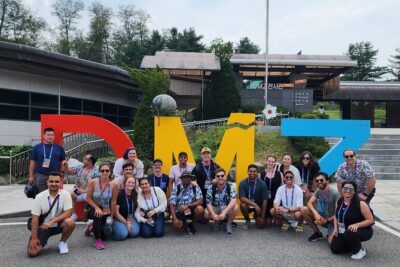
Best DMZ Tour Korea from Seoul (Red Suspension Bridge Optional)
Read the review →
DMZ Tour: 3rd Tunnel, Option(Suspension Bridge, Boat) from Seoul
Read the review →
DMZ tour south Korea from Seoul (NK experience hall, defector)
Read the review →

DMZ The 3rd Tunnel and Suspension Bridge Tour
Read the review →
Signature DMZ Tour: Exclusive Defector Talk & Suspension Bridge
Read the review →
Thrilling Korean DMZ 3rd Tunnel Tour from Seoul + Red Bridge Rush
Read the review →
DMZ Past and Present: Korean Demilitarized Zone Tour from Seoul
Read the review →Browse the lists this tour appears in