
Reviewed · KOREAN FOLK VILLAGE TOURS
Korean Folk Village & Suwon Hwaseong Fortress Private Tour
Suwon gives you two very different looks at Korea in one outing: King Jeongjo’s 5.7-kilometer fortress and a sprawling Joseon-era village filled with crafts, farm animals, music, acrobatics, and staged ceremonies. It is a smart way to get beyond Seoul without arranging trains, taxis, and admission tickets yourself.
I like the private car and the strong mix of culture and fun. Guides including Michelle, Nate, and Ben have brought history to life in a friendly way, and Nate has even provided water and small snacks in a clean, comfortable vehicle. The main drawback is time: one hour at the fortress is enough for a taste, not a full walk around the walls, and lunch is not included.
Key points to know before booking
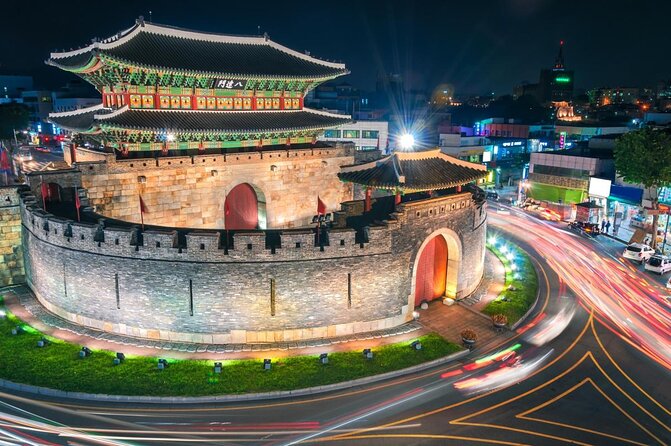
- Suwon Hwaseong covers 5.7 kilometers: You will see gates, pavilions, command posts, beacon platforms, and restored stone-and-brick walls around Suwon’s old town.
- The Korean Folk Village takes about three hours: This is a large 245-acre site with relocated traditional buildings, working craftspeople, animals, and scheduled performances.
- The private vehicle saves effort: Pickup is offered, and your group travels together in an air-conditioned car rather than joining a larger coach.
- The tour suits families: History, costumes, music, acrobatics, and hands-on-looking craft work give younger visitors more than a standard monument visit.
- The price reflects private service: At $296.50 per person, the outing is costly for solo visitors but more defensible for a small group splitting the vehicle and guide.
- Plan around the weather: The experience requires good weather, and poor conditions can lead to a new date or a full refund.
Why Suwon makes a good break from Seoul
Suwon lies about 30 kilometers south of Seoul, close enough for a day trip but far enough to feel like a change of scene. It is the largest city in Gyeonggi-do province, yet its old center still follows the line of a remarkable Joseon fortress.
The walls were built from 1794 to 1796 under King Jeongjo. The king considered moving the royal court south from Seoul, and Suwon was prepared for that role. He died before the plan took hold, leaving Seoul as the capital and Suwon with an enormous fortification that later became its defining sight.
That backstory gives the first stop more weight than a simple photo break. You are looking at a royal project that was part defense system, part planned city, and part political statement. The tour does not ask you to choose between a museum and a scenic outing. It gives you both a major structure and a living-style presentation of Joseon culture.
A private tour also changes the pace. You can ask why a gate was built in a certain place, stop to look at a view, or keep moving if the group has had enough. Since only your party participates, the day should feel less like a fixed bus route and more like a guided outing built around your group.
More Korean Folk Village Tours in Seoul:
- Seoul: Suwon Hwaseong Fortress & Korean Folk Village Tour
★ 4.7 · 214 reviews - Korean Folk Village and Suwon Hwaseong Fortress Day Tour(EG Tour)
★ 4.5 · 80 reviews - Seoul: Suwon Hwaseong, Folk Village, & Starfield Library
★ 4.8 · 55 reviews
Walking the 5.7-kilometer Hwaseong Fortress
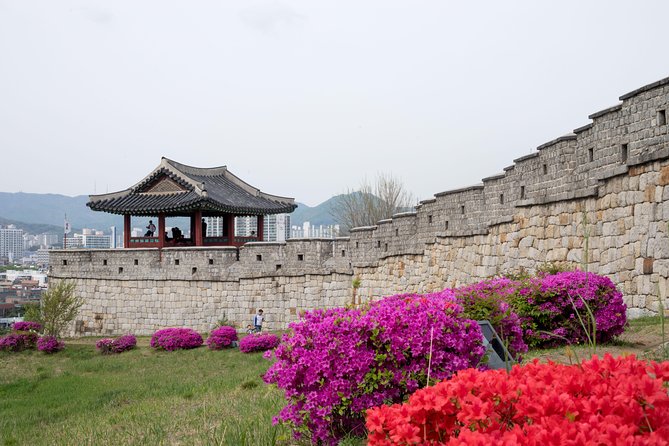
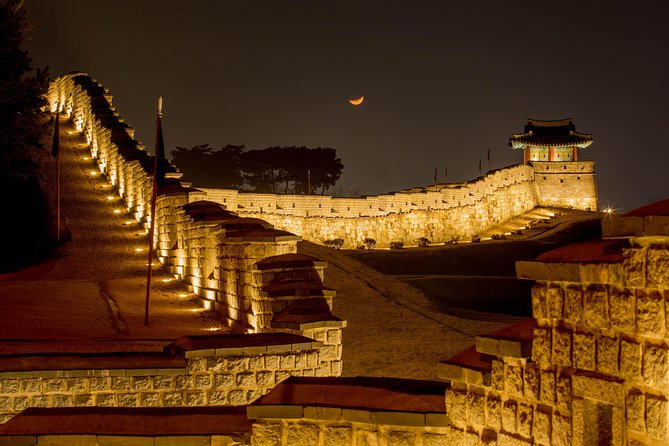
Hwaseong Fortress wraps around Suwon’s original town, climbing and descending Paldal-san, a 143-meter hill. The walls pass four large gates along with command posts, pavilions, observation towers, and fire-beacon platforms.
Nearly all of what you see has been restored. The original construction used earth faced with large stone blocks and gray bricks, a combination that gives the walls a sturdy, textured look. The route is scenic because the fortification rises and falls rather than sitting on a flat patch of ground.
The scheduled stop lasts about one hour, and that detail matters. You will not have time to walk the entire 5.7-kilometer circuit at a relaxed pace. Instead, expect a focused introduction to the fortress, with time for selected views and key structures. Your guide can help you understand how the gates, lookout points, and signal platforms fitted into the larger defense system.
I like this arrangement for anyone who wants context without spending half a day on walls. The fortress is large enough to reward serious walkers, but a short guided visit lets you see its character before moving on to the folk village.
The tradeoff is physical. The tour calls for moderate fitness, and the path rises over Paldal-san. Even a brief visit can include slopes and uneven walking. If you have limited mobility or prefer flat sightseeing, ask about the exact route before booking. The supplied details do not promise a fully accessible itinerary.
Bring shoes you can walk in comfortably. You do not need to commit to the whole circuit, but the fortress is best understood on foot, not from inside the vehicle. Good weather also matters here, since much of the experience takes place outdoors.
Three hours inside the Korean Folk Village
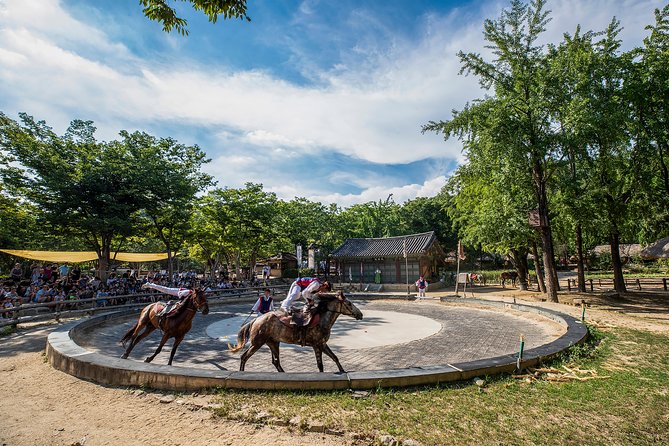
The Korean Folk Village is the longer and more theatrical half of the day. The 245-acre site uses traditional buildings relocated from different parts of Korea, including thatched homes and tiled structures. Walking through the grounds gives you a broad look at old village design rather than a single reconstructed house.
Performers wear hanbok and demonstrate traditional work. You might see pottery being made, paper being produced by hand, vegetable plots tended, and livestock cared for. These details make the setting easier to understand than a display behind glass because the buildings connect with daily tasks.
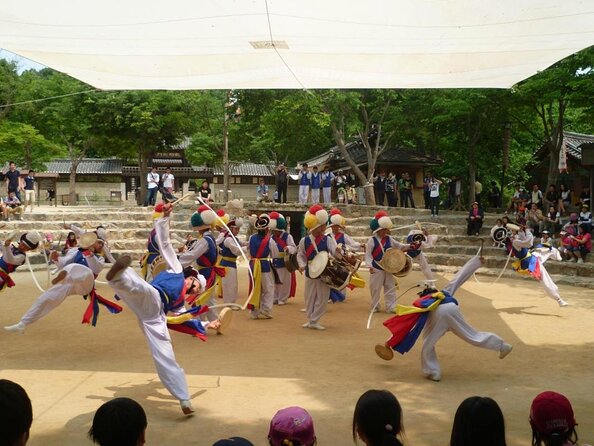
The village also schedules performances throughout the day. Traditional musicians, dancers, acrobats, and tightrope walkers appear, and a staged wedding ceremony is part of the program. The result is deliberately more active than a quiet historic site.
That can be a real advantage for families. Teens who might tire of stone walls have more visual action here, while adults get a clearer sense of clothing, crafts, buildings, and ceremony. One family outing was praised for finding a good balance among history, culture, and fun, and that is the right way to think about this stop.
You should also understand what the folk village is and is not. It is a themed cultural experience, not an untouched Joseon settlement. The relocated buildings and costumed demonstrations are designed to explain the period in an accessible way. If you want a scholarly site with long stretches of quiet and original structures, this may feel too staged. If you want a clear, entertaining introduction, the format works well.
Three hours gives you time to walk through the grounds and catch several activities, though the exact sequence of shows can affect your day. Your guide can help you make sensible choices rather than wandering past everything. Since the site is large, comfortable shoes and a willingness to walk are useful.
Guides who make the difference
The guide is especially important on a private outing because there is no larger group to supply momentum. You get the most from the day when the guide explains the royal plan behind Hwaseong, points out the purpose of the fortress structures, and helps you decide how to use your time at the folk village.
Michelle has been described as friendly, entertaining, and well informed about Korean history and the places visited. Ben has led a family outing that worked well for teenagers, keeping the educational side from becoming a lecture.
Nate offers an unusual personal angle. He grew up in the United States and moved to Korea for college, so he can speak from both an American and Korean point of view. He has also been associated with a comfortable, clean car, bottled water, and small snacks. Those touches are not listed as formal inclusions, so I would not book on the assumption that every guide provides them, but they give you an idea of the personal service this format can allow.
The tone matters as much as the facts. A private guide can adjust explanations for children, answer questions from serious students of Korean culture, or keep the pace light when the group needs a break. When booking, it is worth stating the ages and interests of everyone in your party.
A few more Seoul half-days to weigh up
- Best DMZ Tour Korea from Seoul (Red Suspension Bridge Optional)
★ 5.0 · 41,422 reviews - DMZ Tour: 3rd Tunnel, Option(Suspension Bridge, Boat) from Seoul
★ 5.0 · 21,373 reviews - DMZ tour south Korea from Seoul (NK experience hall, defector)
★ 5.0 · 20,599 reviews - Seoul: DMZ Tour with Optional Suspension Bridge
★ 4.8 · 5,277 reviews
What the private vehicle adds
Pickup is offered, and the tour includes an air-conditioned vehicle, fees, and taxes. That removes several chores from a day trip: finding the right transport south of Seoul, arranging the ride between two separate sights, and handling the included admission at the folk village.
For a small family or group of friends, the vehicle is the main reason to consider a private tour over a cheaper shared option. You stay together, skip the uncertainty of public connections, and have a guide available during the day. You also avoid spending your limited time figuring out the return journey.
The vehicle does not make the day effortless in every sense. Both major stops require walking, and the fortress includes slopes. The folk village covers a large area, so you still spend much of the visit outdoors and on your feet.
The tour lasts about six to seven hours. That is long enough to make Suwon worthwhile without turning the day into an exhausting full-day expedition. The schedule gives the fortress a concentrated hour and the folk village about three hours, with the remaining time used for transport and the private touring structure.
Lunch is not included. You should plan for that gap rather than assume the price covers a meal. The supplied details do not specify a restaurant, lunch stop, or menu, so ask the operator if a meal arrangement matters to your group.
Is $296.50 per person fair?
At $296.50 per person, this is not a budget Suwon visit. The value depends heavily on group size and how much you prize convenience.
For one person, the price is difficult to justify unless a private guide, pickup, and a tailored day are especially important. A group can make better use of the cost because the private format covers the party rather than placing you on a large scheduled coach. You are also paying for an air-conditioned vehicle, guide service, included Korean Folk Village admission, and covered fees and taxes.
The value is strongest for families, older relatives who prefer a direct ride, and groups that want explanations in English or another agreed language without being tied to strangers. It is weaker for independent visitors who enjoy public transport, have plenty of time, and are happy to explore at their own pace.
There are two small financial points to remember. Lunch is extra, and the fortress admission is listed as free, so the paid entrance benefit comes from the Korean Folk Village. The private transport and guide are the main parts of the package, not entrance tickets.
The experience is booked, on average, 16 days ahead. That suggests you should reserve early if your Seoul schedule is fixed, especially if you want a particular date or guide. Confirmation arrives at booking, which helps with planning.
Who will enjoy this day most
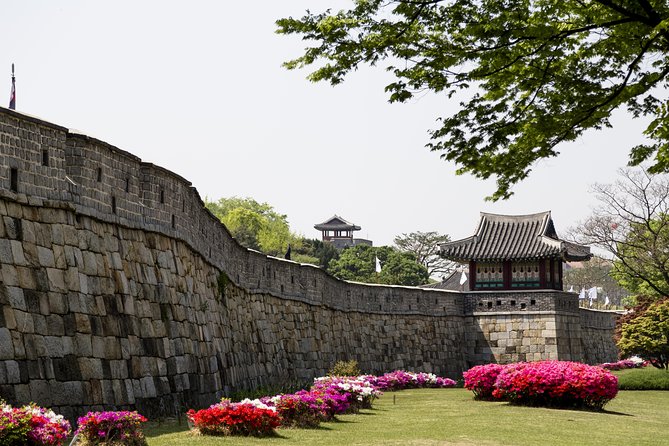
I would recommend this outing to families with children or teens who need variety. The fortress supplies architecture, royal politics, and views, while the folk village adds costumes, crafts, animals, music, acrobatics, and a wedding ceremony.
It also fits first-time visitors who want to see a major sight outside Seoul without managing the logistics themselves. A private guide can connect the two stops so the day feels like one story about Joseon life, royal ambition, defense, work, and ceremony.
History-minded visitors will appreciate Hwaseong, but serious walkers may find the one-hour fortress stop too short. If the wall circuit is your main reason for visiting Suwon, a longer or separate visit would give you more time.
The tour may be less suitable for anyone seeking a quiet, unstructured day. The folk village is a designed attraction with scheduled shows, and the total visit follows a set six-to-seven-hour framework. You should also think twice if steep or extended walking is difficult, since moderate physical fitness is required.
Weather, cancellation, and practical planning
The experience requires good weather. If poor weather causes cancellation, you are offered a different date or a full refund. You can also cancel for a full refund up to 24 hours before the start time.
Cancellations made less than 24 hours before the start are not refunded, and changes inside that window are not accepted. The cut-off follows local time in South Korea.
For your own planning, wear walking shoes and prepare for time outside. Keep lunch in mind, and tell the operator about your group’s ages, interests, and walking limits before the day begins. A private tour is most useful when the guide knows what your party wants from the fortress and the village.
Should you book this Suwon tour?
Book it if you want a comfortable, guided escape from Seoul that mixes a serious royal fortification with an active cultural attraction. The combination is the real strength: Hwaseong gives you place and purpose, while the folk village gives you movement, sound, craft, and ceremony.
I would choose it for a family, a small group, or anyone who values a private car and personal explanations more than the lowest possible price. I would skip it if you mainly want to walk every meter of the fortress, dislike staged cultural performances, or prefer to arrange a cheaper independent day.
The best reason to book is not simply that Suwon is close to Seoul. It is that this format makes two very different sites work together in one manageable day, with guides such as Michelle, Nate, or Ben bringing a personal touch to the journey.
FAQ
How long does the tour last?
The experience lasts approximately six to seven hours.
Where does the tour take place?
The tour departs from Seoul and visits Suwon, located about 30 kilometers south of Seoul.
Is pickup offered?
Yes, pickup is offered.
Is this a private tour?
Yes. Only your group participates in the private activity.
What is included in the price?
The price includes entrance to the Korean Folk Village, an air-conditioned vehicle, and all fees and taxes.
Is lunch included?
No. Lunch is not included.
How long is the visit to Hwaseong Fortress?
The scheduled visit to Hwaseong Fortress lasts about one hour.
How long is the visit to the Korean Folk Village?
The scheduled visit to the Korean Folk Village lasts about three hours.
Can I cancel for a full refund?
Yes, if you cancel at least 24 hours before the experience start time. Cancellations made less than 24 hours before the start time are not refunded. If poor weather causes the experience to be canceled, you are offered another date or a full refund.
Recently added around Seoul
- Seoul: Private Car Tour with Licensed Professional Guide★ 5.0 · 3 reviews
- Imjingak DMZ Private Tour for Incheon Airport and Cruise Guests★ 5.0 · 3 reviews
- Unique Native Experience : Han River Picnic, Board game, BBQ★ 5.0 · 3 reviews
- Seoul: Nami and K-Garden with Optional Alpaca Winter Tour★ 5.0 · 3 reviews
- BTS In The Soop Version: One Day Private VIP Tour★ 5.0 · 3 reviews
- DMZTour from Seoul:3rd Tunnel,North Korea View&UNESCO Valley★ 5.0 · 3 reviews
- Bukhansan mountain hiking tour – 6 hours★ 4.7 · 3 reviews
- Seoul’s Hidden Dark History Guided Tour of Seodaemun Prison★ 5.0 · 3 reviews
Korean Folk Village Tours, compared.
Suwon Hwaseong Fortress & Korean Folk Village Tour
Read the review →
Korean Folk Village and Suwon Hwaseong Fortress Day Tour(EG Tour)
Read the review →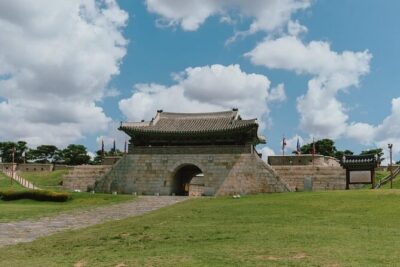
Hwaseong Fortress/Folk Village/Starfield Library Suwon
Read the review →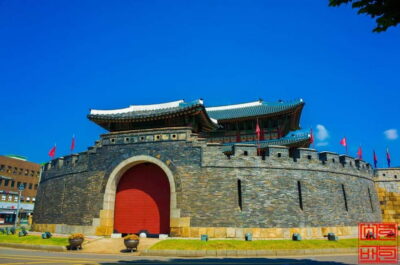
Suwon Hwaseong, Folk Village, & Starfield Library
Read the review →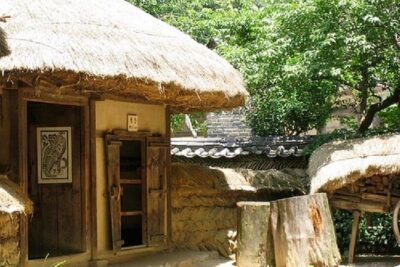
Namhansanseong UNESCO Historical Sites and Korean Folk Village-Private Tour
Read the review →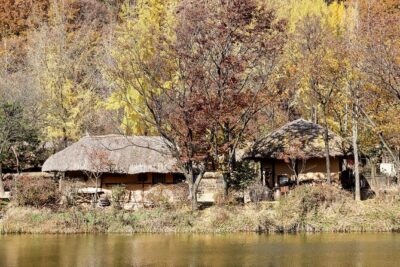
Private Day Trip to Korean Folk Village and Hwaseong Fortress
Read the review →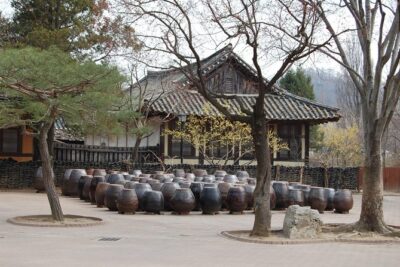
Browse the lists this tour appears in