
Reviewed · HISTORICAL TOURS
History and Culture Tour(Premium Private Tour)
Seoul’s past and present come together neatly on this private 8-hour tour. You move from royal palace courtyards to a traditional residential village, then on to food stalls, Buddhist culture, and a restored city stream. The day gives you a useful first look at the capital without making you figure out Seoul’s busy transport system on your own.
I like the door-to-door transport, especially for families, older visitors, and small groups. I also like the flexibility: your guide can adjust the day around your interests, and the experience gives you a chance to try Korean food at Kwangjang Market and Insadong. The main consideration is cost. At $230 per person, it offers comfort and personal attention, but it is much better value for a small group than for one or two people.
Key points at a glance
- Royal Seoul in one morning: Spend about 90 minutes at Gyeongbokgung Palace, including the changing guard ceremony when scheduled.
- A private guide named Michael Kim: Michael is praised for patience, clear communication, local insight, and helping with photos.
- A useful mix of sights: The route covers palaces, a traditional neighborhood, a temple, a market, and a modern urban stream.
- Food is flexible, but not included: Lunch and market snacks are paid separately, so you can choose what suits your taste.
- Tuesday requires a change: Gyeongbokgung is closed on Tuesdays, so the tour uses Changdeokgung or Deoksu Palace instead.
- Good for groups: Pickup, private transport, and sedan, MPV, or minibus options make the day practical for families and larger parties.
A private way to get your Seoul bearings
This tour begins with pickup at 9:00 a.m. and ends back at the meeting point. Your group has its own English-speaking driver and guide, along with an air-conditioned private vehicle. Depending on group size, that vehicle may be a sedan, MPV, or minibus.
That setup matters in Seoul. The city is easy to explore by subway, but a first day can involve plenty of walking, station changes, and time spent working out directions. Here, you can leave your hotel, see several major sights, and return without changing trains or hauling bags through crowded stations.
The tour is described as customizable, but you should discuss priorities before the day begins. The planned route already fills most of eight hours, and the listed sightseeing time adds up to about five hours and twenty minutes before driving, meals, and schedule changes. If you want extra time at the palace or a longer lunch at the market, you may need to shorten another stop.
The private format is the biggest difference from a standard coach tour. Your guide can explain a palace detail when you ask, slow down for a senior member of your group, or help shape lunch around your preferences. Michael Kim is specifically associated with this experience, and the supplied feedback gives you a clear sense of his working style: patient with senior groups, helpful with photographs, easy to communicate with, and willing to adjust plans.
More Historical Tours in South Korea:
- From Busan: Gyeongju UNESCO World Heritage Guided Day Tour
★ 4.8 · 1,250 reviews - Gyeongju UNESCO World Heritage Guided Day Tour from Busan
★ 5.0 · 660 reviews - Seoul: Evening Dark History, Folklore & Ghost Story Walking Tour
★ 5.0 · 593 reviews
Gyeongbokgung Palace and the royal court
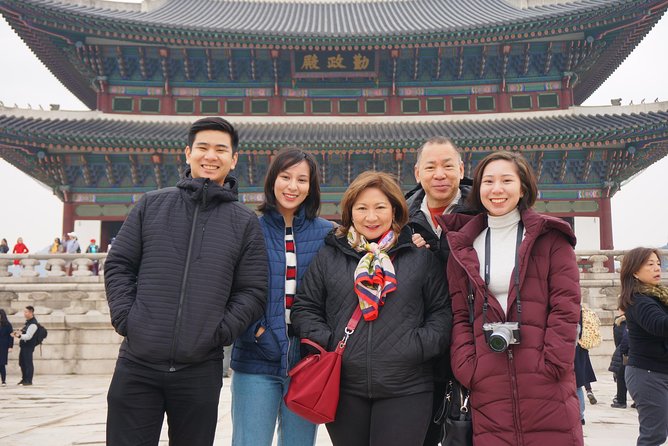
Gyeongbokgung is the day’s main historical stop, with about 90 minutes set aside. It was the principal palace of the Joseon dynasty, and its courtyards, gates, halls, and ceremonial spaces provide the clearest introduction to Korea’s royal past in central Seoul.
You will also see the changing guard ceremony when the timing works. This gives the visit a visual focus, but do not expect the ceremony alone to explain the palace. The real value of having a guide is the context around the buildings: how the palace functioned, how royal authority was displayed, and how the site fits into Seoul’s older political center.
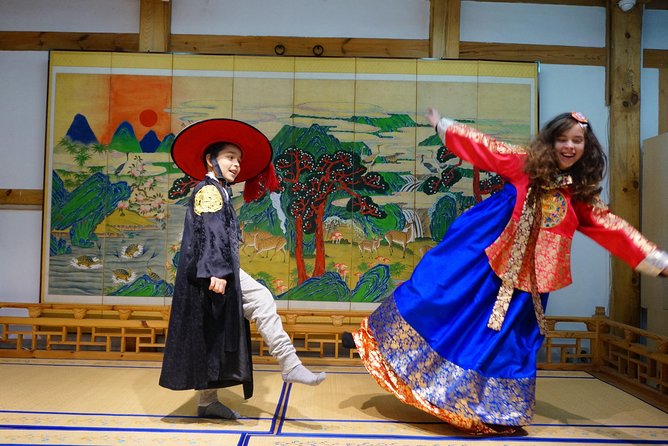
The entrance ticket is included, which keeps this part simple. If you want to wear hanbok, traditional Korean clothing, rental shops are available nearby. This can make for memorable photographs, though it also adds time and expense that you should confirm with your guide before the morning gets underway.
The one important scheduling note is Tuesday. Gyeongbokgung is closed that day, so the tour visits Changdeokgung or Deoksu Palace instead. That is not a reason to avoid the tour, but you should know the advertised palace may change.
At 90 minutes, the visit is long enough for a useful overview but not for every corner. If palace architecture is your main reason for booking, tell your guide early. If you want a broad Seoul introduction, the shorter format works well because the day still has five more stops.
Bukchon Hanok Village and the limits of a quick visit
From the palace, the tour continues to Bukchon Hanok Village for about 30 minutes. The area is known for its traditional hanok houses, with tiled roofs, narrow lanes, and old-style Korean design set within the modern city.
Bukchon is also a living residential area. People still live in these houses, so your visit should be quiet and respectful. This is not an open-air museum where every doorway invites a photograph. A guide can help you understand the difference between a historic neighborhood and a staged attraction.
Thirty minutes is enough for a look and a few photographs, but it is brief. The village is built on slopes, and even a short visit can involve uneven streets or uphill walking. If someone in your group has limited stamina, ask about the exact route and how much walking is planned.
I see this stop as a bridge between the palace and the rest of the city. Gyeongbokgung shows royal Seoul. Bukchon shows traditional residential Seoul. The contrast helps you understand how old forms remain part of the capital’s daily setting.
Insadong for lunch, crafts, and a slower street scene
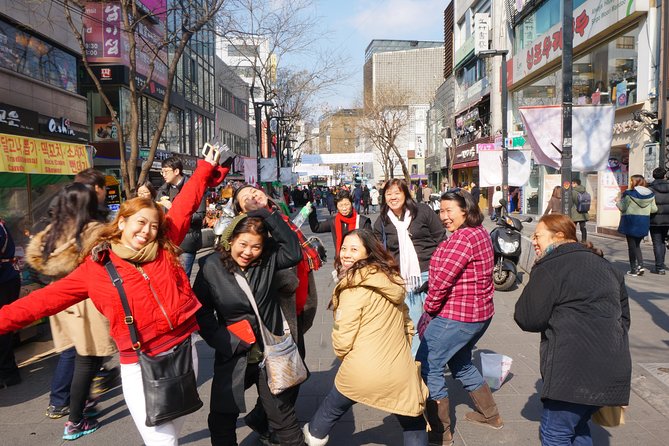
Insadong receives about 90 minutes, making it one of the more useful stops for browsing and lunch. The area has traditional restaurants, cafes, souvenir shops, art galleries, and shops selling Korean-themed goods.
The description notes that lunch may take place here based on your taste. That flexibility is welcome. You are not locked into a preset meal, and you can decide how much time to spend eating, shopping, or looking at art. Lunch is not included, so budget separately for food and drinks.
Insadong is also a pleasant place to buy a small reminder of Seoul without making the entire day about shopping. You might find traditional-style gifts, artwork, and souvenirs, though the exact shops you visit will depend on the guide and your interests.
The drawback is that 90 minutes can disappear quickly. A sit-down meal, browsing, and a gallery visit may be more than the clock allows. If food matters most, say so. If you prefer shopping, make that clear instead of assuming the guide will know your priority.
This is also a good point to ask questions about Korean customs and daily life. The guide’s commentary is meant to cover both history and culture, and the personal format gives you room to move beyond the standard palace explanation.
A few more South Korea half-days to weigh up
- Busan Private Tour with licensed tour guide + private vehicle
★ 5.0 · 1,143 reviews - Private DMZ Tour (No Shopping): 3rd Tunnel & Suspension Bridge
★ 5.0 · 607 reviews - Jeju Island English Private & Flexible Tour any number anywhere
★ 5.0 · 561 reviews - Private Busan Tour -Explore Cultural Landmarks with a Local Guide
★ 5.0 · 552 reviews
Jogyesa Temple and Korean Buddhist culture
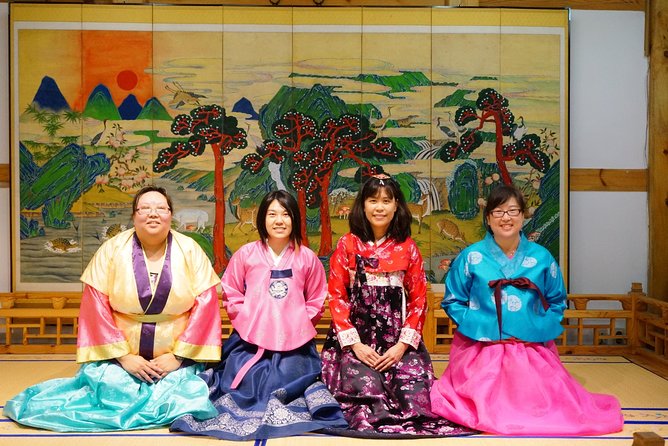
Jogyesa Temple is scheduled for about 40 minutes. It is the central temple and a major symbol of Korean Buddhism. The temple was founded by the Buddhist community in 1910 and went through changes of name and location before becoming the institution you see today.
The stop adds an important religious layer to the day. Without it, the route could feel focused mainly on royal buildings, shopping, and food. Jogyesa gives you a chance to see a living place of worship in the middle of Seoul and to ask how Buddhism fits into Korean society.
The admission entry is listed as not included. The supplied information does not specify a separate entry price, so it is wise to ask the operator what, if anything, you will pay at the temple.
Forty minutes is a sensible amount of time for a first look. You can observe the grounds, see the temple buildings, and listen to an explanation without turning the visit into a long religious tour. As always at a working temple, keep your voice low and follow your guide’s instructions about where to stand.
Kwangjang Market for Korean food
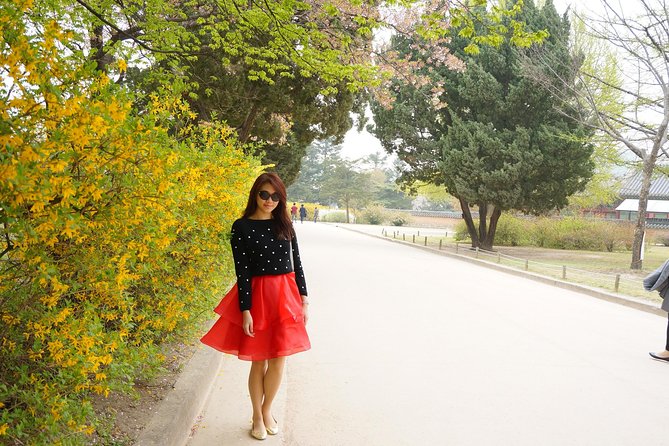
Kwangjang Market is the most hands-on food stop, with about 30 minutes allotted. You can look for Korean pancakes, rice wine, dumplings, and other market foods, along with a wide range of products.
I like the fact that food is left to your own budget and appetite. You can sample something unfamiliar without paying for a full arranged meal, or keep the stop simple if you already ate in Insadong. Lunch and alcoholic drinks are not included, so bring a payment method and allow extra time if your group wants to order several dishes.
Thirty minutes is enough for a taste, but it is not a leisurely market meal. If the stalls catch your attention, you may want to ask whether the schedule can be adjusted. The market can also be a sensory overload for first-time visitors, with many foods and products competing for attention. A guide is useful here because you can ask what something is before ordering.
The market is a good counterpoint to the palace. At Gyeongbokgung, you see formal royal spaces. At Kwangjang, you see a more everyday side of Seoul, centered on food, commerce, and quick social encounters.
Cheonggyecheon Stream and modern Seoul
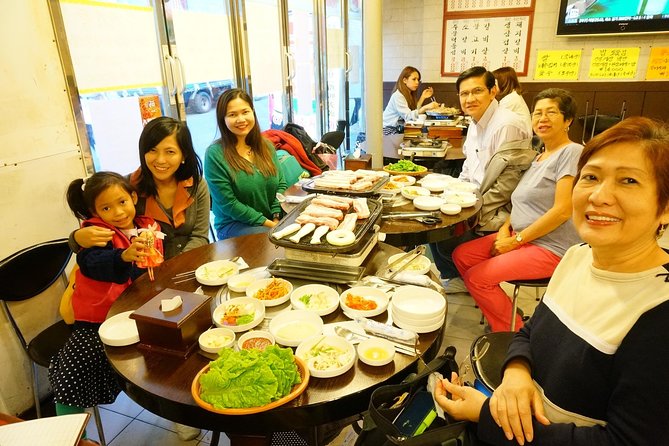
The final listed stop is Cheonggyecheon Stream, with about 40 minutes. The stream was created as a place associated with meetings, harmony, peace, and unification in a miniature version of Seoul. Interpretive panels discuss the 22 bridges crossing the stream.
This stop helps explain the city beyond its traditional monuments. The stream is an urban public space, and the panels give you a way to read the city’s planning and civic ideas. It is a calmer ending than another indoor attraction, with time to walk, look around, and review what you have seen.
Do not treat this as a substitute for a long riverside walk. Forty minutes gives you a taste of the area rather than an extended exploration. The guide can connect the stream to the broader story of Seoul’s growth, which makes the stop more meaningful than a quick photo break.
The sequence also makes practical sense. After the palace, village, shopping streets, temple, and market, a walk by the stream offers a change of pace before the return drive.
What the $230 price really buys
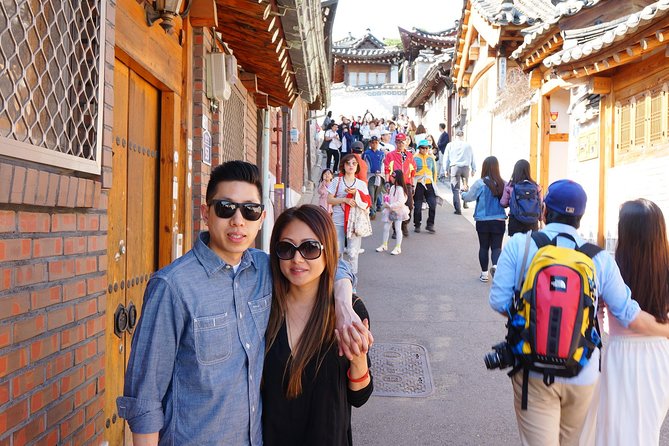
The price is $230 per person. That is a high daily rate compared with exploring Seoul independently, especially for a solo visitor or couple who are comfortable using public transport.
The value improves when you divide the cost among a family or larger private group, particularly if the vehicle is a minibus. You are paying for hotel pickup and drop-off, a private air-conditioned vehicle, fuel, an English-speaking driver-guide, and the Gyeongbokgung entrance. You also pay for time saved and for a guide who can change the pace around your group.
The cost does not cover lunch, alcoholic drinks, hanbok rental, or any possible charge at Jogyesa Temple. Keep those expenses separate when planning your budget. The tour also includes group discounts, though the exact discount is not stated, so ask before booking.
For a group with only one day in Seoul, the price can be reasonable if convenience is a top concern. If you have several days, enjoy public transport, or want to spend a long time at each place, independent sightseeing may offer better value and more control.
Who will get the most from this day
I would consider this tour for a family, a group of friends, or older relatives who want to see the main historic areas without managing every transfer. The private vehicle is especially useful when different members of your group have different walking speeds.
It also suits a first visit with limited time. You get royal architecture, a traditional neighborhood, art and shopping streets, Buddhism, market food, and a modern public space in one day.
The route is less suitable if you want an in-depth palace study, a long food crawl, or hours of unplanned wandering. The schedule is broad rather than slow. You will see many parts of Seoul, but each stop has a set time.
The available feedback points repeatedly to Michael Kim as a guide who is caring, patient, professional, and generous with historical and local explanations. He is also praised for helping with photographs and choosing a restaurant. Those details matter most for families and groups who want a personal host rather than a guide who simply moves everyone from stop to stop.
Practical details before you book
Pickup is offered, and the start time is 9:00 a.m. The activity ends back at the meeting point. Confirmation is provided at booking, and the tour is described as near public transportation, though you will mainly use the private vehicle during the experience.
Most people can participate, but the route includes walking through palace grounds, a residential village, streets, a market, a temple, and a streamside area. Ask in advance about the walking plan if your group includes anyone who needs a slower pace.
Free cancellation is available when you cancel at least 24 hours before the start time. Changes or cancellations inside that window are not accepted for a refund. The tour also requires a minimum number of participants, and if that minimum is not met, you are offered another date or experience, or a full refund.
Should you book this Seoul tour?
Book it if you want a private, well-organized introduction to Seoul and value pickup, a personal guide, and an air-conditioned vehicle more than the lowest possible price. It is particularly sensible for families, senior groups, and people with only one free day.
Think twice if you are traveling alone, watching your budget, or eager to linger at one palace or market. The route covers a lot, and the short stops mean you trade depth for range.
For the best fit, contact the operator before the day and state your priorities. Ask for more palace time, a food-focused schedule, hanbok rental, or a slower pace if those matter most. With that conversation, this can be a practical first chapter in your Seoul visit rather than a rushed checklist.
FAQ
What is the duration of the Seoul history and culture tour?
The tour lasts approximately 8 hours and begins at 9:00 a.m.
Is hotel pickup included?
Yes. Hotel pickup and drop-off are included, and the activity ends back at the meeting point.
Is the tour private?
Yes. Only your group participates in the private activity.
What kind of vehicle is used?
Transport is provided in an air-conditioned private sedan, MPV, or minibus, depending on the group.
Is lunch included in the price?
No. Lunch is not included. You choose and pay for your own meal, with lunch possible in Insadong based on your preferences.
What happens if I book for a Tuesday?
Gyeongbokgung Palace is closed on Tuesdays. The itinerary changes to Changdeokgung or Deoksu Palace instead.
What is the cancellation policy?
You can receive a full refund if you cancel at least 24 hours before the experience start time. Cancellations or changes made less than 24 hours ahead are not accepted for a refund.
Recently added around South Korea
- Gyeongbokgung Palace Photo Session with your own phone★ 5.0 · 4 reviews
- Nami & Maple Road & Theatre des Lumieres Day Tour from Seoul★ 4.8 · 4 reviews
- Private Tour around Suwon UNESCO Fortress and Korea Folks Village★ 4.5 · 4 reviews
- Jisan Forest Resort: Ski Full-Day Tour or Shuttle from Seoul★ 5.0 · 4 reviews
- Seoul: Deoksugung Palace Night Tour★ 4.5 · 4 reviews
- N Seoul Tower + Namsan Cable Car Ticket (Collect in Myeongdong)★ 3.5 · 4 reviews
- Private Jeonju Hanok Village – Culinary tour★ 5.0 · 4 reviews
- Seoul Private Walking Tour with a Local★ 5.0 · 4 reviews
Historical Tours, compared.
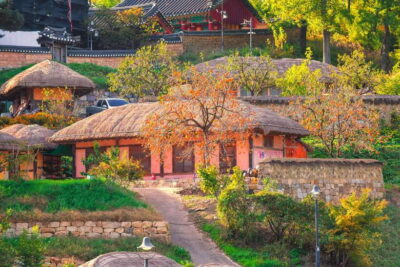
Gyeongju UNESCO World Heritage Guided Day Tour
Read the review →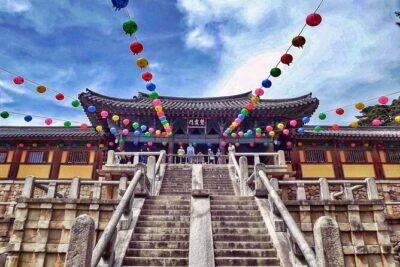
Gyeongju UNESCO World Heritage Guided Day Tour from Busan
Read the review →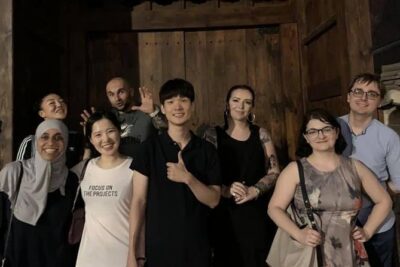
Evening Dark History, Folklore & Ghost Story Walking Tour
Read the review →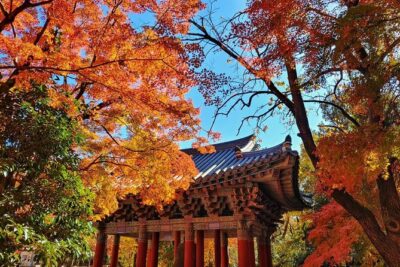
Old Korea Thousand History Tour of Gyeongju from Busan
Read the review →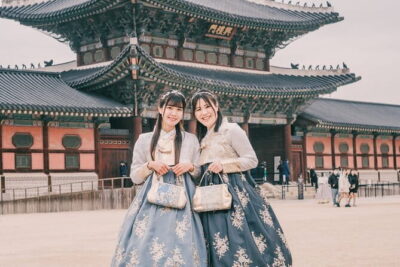
Hanbok Photoshoot and History Tour at Gyeongbokgung Palace
Read the review →
UNESCO Heritage Tour Including Bulguksa Temple
Read the review →
Gyeongju UNESCO World Heritage Sites and History Full-Day Tour with Lunch
Read the review →Browse the lists this tour appears in