
Reviewed · HISTORICAL TOURS
Gwangju May 18 History Tour (Small group Max.5)
Gwangju’s May 18 Democratic Uprising is not a distant chapter in a textbook. It is written into the city’s plazas, buildings, archives, and memorial grounds. This tour follows that story from the citizens’ final stronghold to the former military base, with local guide Veronica putting the places into clear human context.
I like the maximum group size of five, which gives you room to ask questions at sites that deserve more than a quick photograph. I also like the combination of serious history and a local food stop in Dongmyeong-dong, where you choose a dish and pay for lunch yourself.
The main consideration is the subject matter. This is an emotionally heavy day, not a light sightseeing outing. Lunch is not included, and the seven-hour route includes several stops of 60 to 90 minutes, so you should be comfortable with a full schedule.
Key points at a glance
- Small group of no more than five: Expect a more personal pace and better access to your guide than on a large bus tour.
- Six meaningful stops: The route connects Democracy Square, the 5.18 Archives, Jeonil Building 245, Dongmyeong-dong, the National Cemetery, and Liberty Park.
- A local guide from Gwangju: Veronica was born and raised in the city and leads the tour with local perspective.
- The bullet marks at Jeonil Building 245: Scientific evidence of helicopter gunfire remains preserved on the building’s exterior.
- Food is part of the lesson: You stop in Dongmyeong-dong to choose a local dish, with yukjeon among the options, and pay on the spot.
- Private transportation included: The tour starts in central Gwangju and finishes near Kimdaejung Convention Center Metro Station.
Why May 18 matters in Gwangju
On May 18, 1980, citizens in Gwangju rose against military dictatorship and demanded democracy. The uprising lasted ten days, and the city became known across South Korea for its resistance, sacrifice, sharing, and solidarity.
The subject can be difficult to understand if you only read a short paragraph about it. The value of this tour is that you move through the actual places where events unfolded. A square, an archive, a damaged building, a cemetery, and a former military site each reveal a different part of the story.
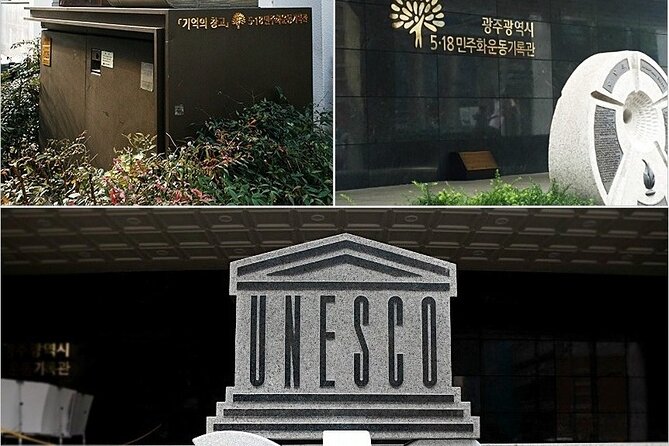
The May 18 Democratic Uprising was added to UNESCO’s Memory of the World register in 2011. That recognition matters, but the real force of the experience comes from seeing how the story remains part of daily Gwangju. The city has not tucked this past away. It has marked it, preserved it, and built public places for remembrance.
I would choose this tour if you want more than a general city introduction. It is especially useful if you are visiting Gwangju for the first time and want a guide to explain why particular corners of the city carry such weight.
More Small Group Tours in South Korea:
- Small Group Tour to DMZ & Suspension Bridge with Hotel Pickup
★ 5.0 · 1,568 reviews - Small-Group Royal Palace and Seoul City Tour (hotel pick-up)
★ 5.0 · 1,474 reviews - Small Group Full Day Busan Tour (Max 6 Pax)
★ 5.0 · 1,464 reviews
Beginning at May 18 Democracy Square
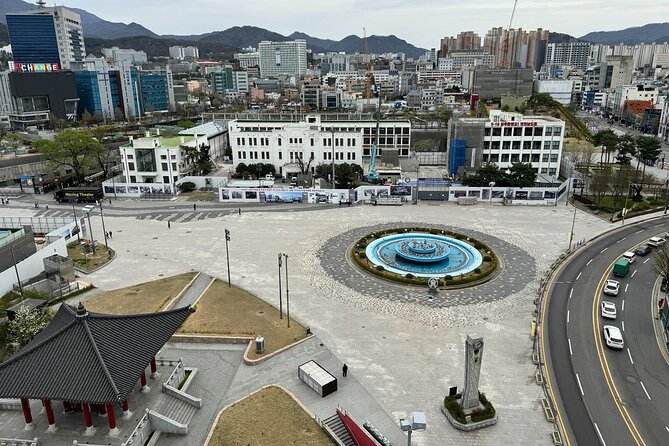
The tour begins at 10:00 a.m. at May 18 Democracy Square, on Geumnam-ro in central Gwangju. The square centers on a circular fountain and a broad plaza in front of the former South Jeolla Provincial Office.
This was the final stronghold of the citizens during the uprising, so the setting gives you an immediate sense of place. It is not just an opening stop where you receive dates and names. The plaza helps you understand the public scale of the movement and why this location became a symbol of Korean democracy.
You spend about 30 minutes here. That is enough time for an introduction and orientation without using up the best part of the day before the more detailed stops begin.
The start point is near public transportation, which is useful if you are staying in central Gwangju. Bring the exact meeting details with you, since the square and surrounding streets cover a substantial area. The tour later ends at the north side of Kimdaejung Convention Center Metro Station, so you will not return to the starting point.
Reading the records at the 5.18 Archives
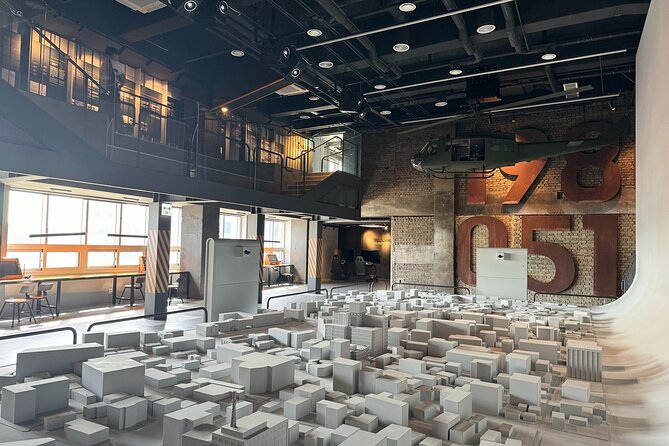
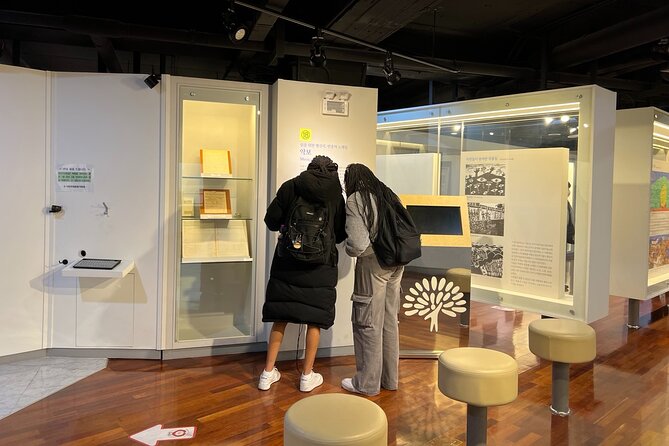
The next stop is the 5.18 Archives, housed in the former Gwangju Catholic Center. Established in 2015, this public facility collects, preserves, and shares records connected to the May 18 Democratic Uprising.
You have about an hour here. That longer stop makes sense because an archive can provide what a memorial plaza cannot: documents and preserved records that help you see how the uprising was recorded, remembered, and passed on.
I find this part of the route valuable for anyone who wants evidence and context rather than only a guide’s spoken account. Veronica can help connect the material to the places you have already seen, making the day feel like one continuous story instead of six unrelated stops.
Admission is free. The tour includes private transportation, which keeps the day practical as the route moves between central sites and locations farther away. Since the group is capped at five, you can ask for clarification without trying to speak over a large crowd.
Seeing the evidence at Jeonil Building 245
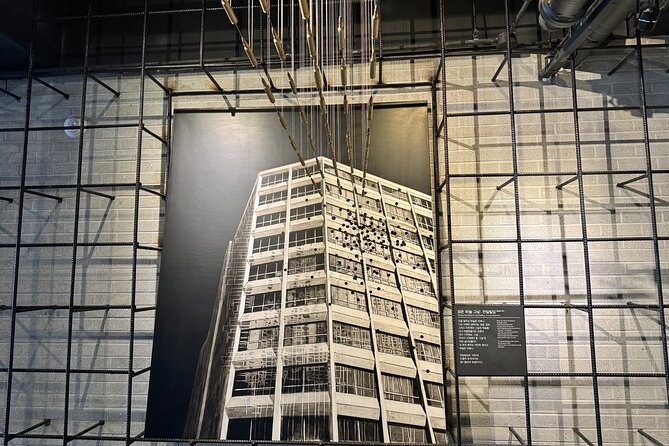
Jeonil Building 245 offers one of the day’s most striking physical details. The exterior still preserves 245 bullet marks, and the site is linked to scientific evidence of helicopter gunfire during the uprising.
You spend about an hour here. That may sound like a long time for one building, but the point is not simply to count marks or take a picture. The building gives the story a direct, visible form. Evidence on a wall can affect your understanding in a way that a date on a timeline cannot.
This is likely to be one of the more sobering stops. If you prefer to move quickly through difficult subjects, the pace may feel slow. If you want time to ask questions and consider what the evidence means, the hour is useful.
I appreciate that the tour includes this site rather than limiting the day to official memorials. Jeonil Building 245 adds a layer of investigation and public memory. It shows how the physical city can help preserve facts that were once disputed or suppressed.
More Historical Tours in South Korea:
- From Busan: Gyeongju UNESCO World Heritage Guided Day Tour
★ 4.8 · 1,250 reviews - Gyeongju UNESCO World Heritage Guided Day Tour from Busan
★ 5.0 · 660 reviews - Seoul: Evening Dark History, Folklore & Ghost Story Walking Tour
★ 5.0 · 593 reviews - Old Korea Thousand History Tour of Gyeongju from Busan
★ 5.0 · 518 reviews
Taking a lunch break in Dongmyeong-dong
After the memorial and archive visits, the tour shifts to Dongmyeong-dong Cafe Street for about 90 minutes. Gwangju is known for generous portions and local food, and this stop gives you a chance to eat in a less formal setting.
You choose your preferred dish from the available local selections and pay for it directly. Yukjeon, thin slices of meat or other ingredients coated and pan-fried in egg batter, is one of the named choices. The exact food experience depends on what you select, so you should treat this as a flexible local meal rather than a fixed tasting menu.
Lunch is not included in the $95 tour price. That is worth noting when you set your budget. The advantage is choice: you are not paying for a meal you may not want, and you can select what suits your appetite.
The food stop also gives the day a needed pause. May 18 is painful material, and an ordinary meal can help you process what you have seen before returning to memorial sites. Coffee or tea is included, adding another small break in the schedule.
Do not expect the lunch stop to be a long independent exploration of Dongmyeong-dong. Its role is to let you eat local food and spend time with the guide before the final two historical locations. If your main interest is cuisine, a dedicated food tour would offer more. Here, food supports the wider Gwangju experience.
Paying respects at the May 18 National Cemetery
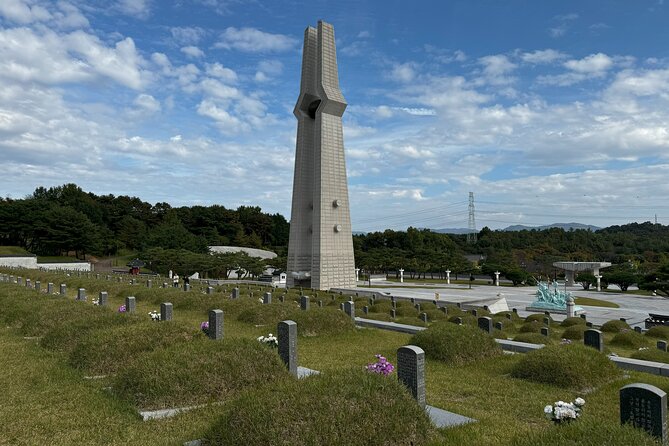
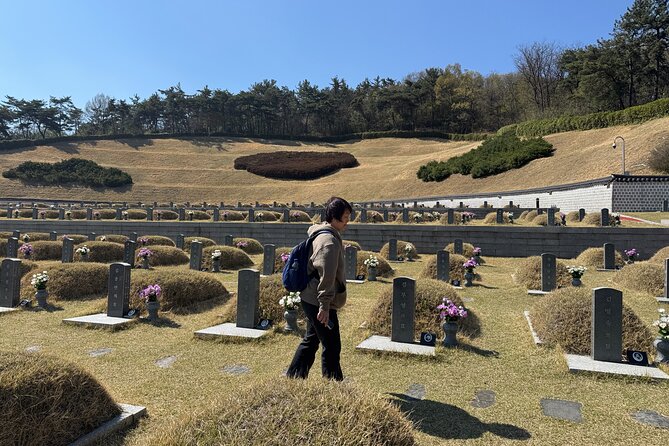
The May 18 National Cemetery is dedicated to those who died during the uprising. Opened in May 1997, it became the final resting place for victims of the May 18 Democratic Uprising.
The visit lasts about 90 minutes, giving you time to move at a respectful pace and listen to the guide’s explanation. A cemetery is different from a square or archive. It brings the human cost of the uprising into sharper focus and gives the day a quiet center.
I would plan for this to be one of the most reflective parts of the tour. It is not a quick photo stop. You may find that the open memorial setting makes the scale of the loss easier to grasp, even if you know the basic facts already.
This is also where the local perspective matters most. A guide born and raised in Gwangju can explain how May 18 remains part of the city’s identity, rather than treating the cemetery as an isolated monument.
Understanding Liberty Park and the military side
The final major stop is May 18 Liberty Park, located on the former site of the Sangmudae military base. During the uprising, martial law troops held key meetings here. The site was also connected to events during and after the uprising.
You spend around 90 minutes at Liberty Park. By this point, the route has shown you the citizens’ side, the preserved records, physical evidence, food culture, and memorial ground. Liberty Park adds the military setting, helping you consider how decisions made at a base affected the streets and people of Gwangju.
The sequence is well judged. Starting with Democracy Square gives you the public story. Ending at the former military base gives the day a wider frame. You are not left with only one viewpoint or one kind of memorial.
Because the site is part of the tour’s final section, you may be tired by the time you arrive. The seven-hour length is a real commitment, especially with 60 to 90 minutes at several stops. Still, the time allows the tour to treat the topic with care rather than rushing through a list of locations.
What the small group changes
A group of no more than five is one of the strongest reasons to consider this experience. May 18 sites call for conversation. You may want to ask how a location fits into the wider sequence, pause over a detail, or connect one stop with something seen earlier.
With a very small group, Veronica can adjust the explanation to your questions more easily than a guide leading a large coach group. The two existing written evaluations specifically praise her organization, local insight, and detailed explanation. One person described the day as inspirational and unforgettable, while another highlighted the hidden corners and food spots she introduced.
I would not book this expecting complete privacy unless you are reserving all available places. It is a small group, not necessarily a private tour. The limit of five is still small enough to feel personal, and group discounts may help if you are traveling with companions.
Is $95 a fair price?
At $95 per person, this is not the cheapest way to see Gwangju. The price makes more sense when you look at what is bundled together: roughly seven hours, a local guide, private transportation, coffee or tea, and a carefully connected route through six locations.
Admission to the listed sites is free, so you are mainly paying for interpretation, transport, planning, and the convenience of moving between places. That is important. If you only want to visit one plaza or the cemetery independently, public transport and self-guided reading would cost less.
The tour offers better value if you want the sites explained in sequence. The private vehicle also matters because the route includes the May 18 National Cemetery and Liberty Park, not just central Gwangju. You avoid arranging each transfer yourself and can focus on the story.
Lunch is extra, and personal travel insurance is not included. Keep some money aside for the meal you choose in Dongmyeong-dong. The food stop is flexible, but it is still part of the day’s plan.
Timing, comfort, and practical details
The tour starts at 10:00 a.m. and lasts approximately seven hours. The start is May 18 Democracy Square, and the finish is near Kimdaejung Convention Center Metro Station, specifically the north side of the station.
That one-way arrangement is useful if you plan to continue your day near the convention center or use the metro afterward. It also means you should not leave luggage or other items at the starting point.
Confirmation arrives when you book. The tour operates with mobile tickets, and service animals are allowed. Most people can participate, but the schedule is substantial and includes several serious memorial visits, so think about your own stamina and comfort with the subject.
The experience requires good weather. If poor weather causes cancellation, you receive the choice of another date or a full refund. You can cancel for a full refund up to 24 hours before the start time. Changes or cancellations made within 24 hours are not accepted for a refund.
Who should choose this Gwangju tour?
I would recommend it to you if you want:
- A focused introduction to the May 18 Democratic Uprising
- A local guide who grew up in Gwangju
- A small group rather than a large sightseeing bus
- A route that includes archives, physical evidence, memorial grounds, and a former military site
- Local food as part of the day, without being locked into a fixed lunch
- Private transportation between the main locations
You may want a different plan if you have only a few hours in Gwangju, prefer light sightseeing, or want to spend most of your day eating and shopping. This is a serious historical tour, and the schedule leaves limited time for unrelated attractions.
The food stop helps break up the day, but it does not change the tour’s central purpose. You are coming to understand May 18 and the May Spirit, not simply to sample Gwangju cuisine.
Should you book the May 18 History Tour?
Book it if you want Gwangju explained through the places where its democratic struggle unfolded. The strongest features are the five-person limit, Veronica’s local connection, the preserved evidence at Jeonil Building 245, and the full route from Democracy Square to the National Cemetery and Liberty Park.
The $95 price is reasonable for a seven-hour guided day with private transportation, especially if you value context and do not want to organize distant sites yourself. Just budget separately for lunch and prepare for an emotionally demanding schedule.
If your interest in modern Korean history is strong, this is one of the more useful ways to spend a day in Gwangju. If that subject is not your main reason for visiting, choose a shorter or more general city experience instead.
FAQ
How long does the Gwangju May 18 History Tour last?
The tour lasts approximately seven hours and begins at 10:00 a.m.
Where does the tour start?
The meeting point is May 18 Democracy Square on Geumnam-ro in Geumnamno 1-ga, Dong-gu, Gwangju.
Where does the tour finish?
The tour ends at the north side of Kimdaejung Convention Center Metro Station in Gwangju.
What is the maximum group size?
The tour accepts a maximum of five participants.
Is lunch included?
No. Lunch is not included. In Dongmyeong-dong, you choose a local dish and pay for it on the spot.
What is included in the tour price?
Coffee or tea and private transportation are included. Personal travel insurance is not included.
Can I cancel the tour for a full refund?
Yes. You can cancel at least 24 hours before the start time for a full refund. If poor weather causes the tour to be canceled, you are offered another date or a full refund.
Recently added around South Korea
- Seoul: Private Car Tour with Licensed Professional Guide★ 5.0 · 3 reviews
- Yeosu: Private Taxi Car Private Charter Tour★ 4.7 · 3 reviews
- Imjingak DMZ Private Tour for Incheon Airport and Cruise Guests★ 5.0 · 3 reviews
- Seoul: Nami and K-Garden with Optional Alpaca Winter Tour★ 5.0 · 3 reviews
- Unique Native Experience : Han River Picnic, Board game, BBQ★ 5.0 · 3 reviews
- BTS In The Soop Version: One Day Private VIP Tour★ 5.0 · 3 reviews
- Jeju: BTS Are You Sure?! Filming Locations Private Taxi Tour★ 5.0 · 3 reviews
- 9 Hour Private Day Tour Taxi in Jeju island (High recommend)★ 5.0 · 3 reviews
Historical Tours, compared.
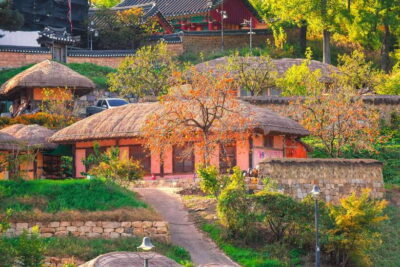
Gyeongju UNESCO World Heritage Guided Day Tour
Read the review →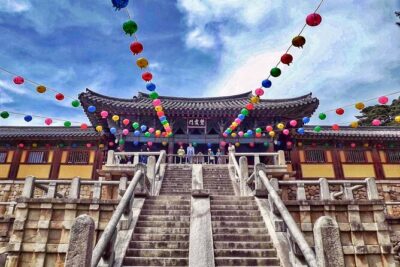
Gyeongju UNESCO World Heritage Guided Day Tour from Busan
Read the review →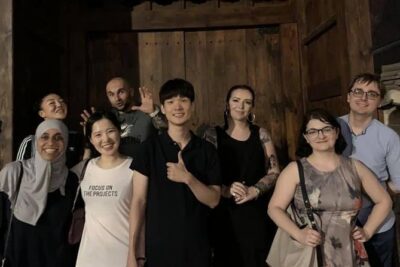
Evening Dark History, Folklore & Ghost Story Walking Tour
Read the review →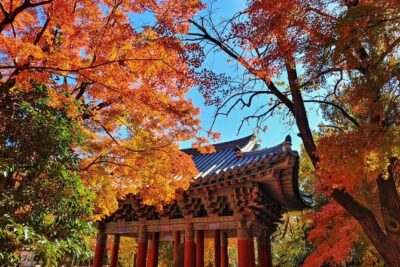
Old Korea Thousand History Tour of Gyeongju from Busan
Read the review →
Hanbok Photoshoot and History Tour at Gyeongbokgung Palace
Read the review →
UNESCO Heritage Tour Including Bulguksa Temple
Read the review →
Gyeongju UNESCO World Heritage Sites and History Full-Day Tour with Lunch
Read the review →Browse the lists this tour appears in