
Reviewed · SEOUL TOURS
Deoksugung & Jeongdong-gil: A Walk in Korea’s Rich Heritage
Seoul’s past comes into focus on this three-hour walking tour, which links royal palaces, missionary history, imperial politics, and modern public spaces. You begin at Deoksugung Palace and finish near Cheonggyecheon Stream, with a guide helping you connect the buildings to Korea’s difficult transition into the 20th century.
I like the route for two reasons: the mix of Korean and Western-style landmarks keeps the walk varied, and the small maximum of 15 people should make it easier to hear the guide and ask questions. If Sam is leading your outing, you can expect a friendly, informative introduction to Seoul. The main drawback is pace: with six stops in about three hours, some visits are brief rather than thorough.
Key points to know before booking
- A six-stop route through Seoul’s central past: Visit Deoksugung, Gyeonghuigung, Appenzeller Noble Memorial Museum, Jeongdong Theater, Jungmyeongjeon Hall, and Gwanghwamun Square.
- A useful introduction to late Joseon and early modern Korea: The route covers royal life, missionary education, the Korean Empire, and the period surrounding the Eulsa Treaty.
- Small-group format: The tour accepts a maximum of 15 people, a practical size for a guided city walk.
- No admission fees listed: The scheduled stops include free admission, though lunch and personal purchases are not included.
- A planned refreshment break: Jeongdong Theater offers time for coffee or another drink, plus a restroom stop.
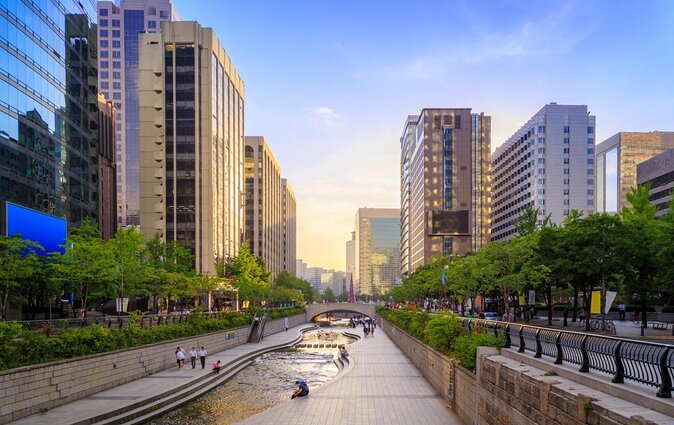
- Easy central start and finish: Meet at Deoksugung Palace at 9:30 a.m. and finish near Cheonggyecheon Stream.
Why this Seoul walk works as an introduction
I see this tour as a good first look at central Seoul, especially if you want more than a palace photo and a quick explanation of a king or queen. The route shows how Korea’s capital changed as Joseon rule gave way to the Korean Empire and then to a modern city shaped by foreign contact, public institutions, and new ideas.
The walk also keeps you close to major sights without turning into a broad city survey. You are not being taken across Seoul by bus or subway. Instead, the experience follows a compact central route where royal grounds, museums, theaters, public squares, and a stream sit within the same general area.
That combination matters. Deoksugung and Gyeonghuigung represent royal Seoul. Appenzeller Noble Memorial Museum introduces the role of Methodist education and missionary work. Jungmyeongjeon Hall brings in the Korean Empire and the political crisis surrounding the Eulsa Treaty. Gwanghwamun Square then brings you back to present-day Seoul.
The group limit of 15 is another plus. A walking guide has to keep a group moving, but a smaller party usually makes it easier to stay together and hear the explanation. You also have a better chance to ask about details that catch your attention.
The schedule is fairly tight. The listed stops total 110 minutes, leaving the rest of the three-hour period for walking and transitions. That means you should expect focused explanations, not long independent visits inside every site.
More Historical Tours in Seoul
- Seoul: Evening Dark History, Folklore & Ghost Story Walking Tour
★ 5.0 · 593 reviews - Hanbok Photoshoot and History Tour at Gyeongbokgung Palace
★ 5.0 · 276 reviews - From Seoul: Dae Jang Geum Park Historic K-Drama Set Tour
★ 4.9 · 143 reviews
Deoksugung Palace begins the story
The tour starts at Deoksugung Palace at 9:30 a.m. The palace, also called Gyeongun-gung, was built during the Joseon Dynasty and later became closely tied to Korea’s changing royal and imperial era.
You have about 20 minutes here, with admission listed as free. That is enough time for an orientation and for the guide to explain why this palace matters, but it is not a leisurely palace visit. If you want to study every gate, courtyard, or building at length, plan to return independently.
What makes Deoksugung especially useful as a starting point is its setting in central Seoul. The palace is not presented as an isolated royal compound. It sits close to busy roads and modern office districts, so the contrast between old Korea and present-day Seoul begins immediately.
I would pay close attention to the guide’s timeline here. The value of the stop is less about simply seeing another palace and more about understanding why Deoksugung appears in the story of Korea’s late 19th and early 20th centuries.
Gyeonghuigung adds a second royal perspective
The second stop is Gyeonghuigung Palace, also known as Gyeonghui Palace. It was built in 1623 during the Joseon Dynasty as a royal residence and is located in the Jongno-gu area.
The visit lasts about 20 minutes, and admission is listed as free. Since two palaces appear early in the route, you may wonder if they will feel repetitive. The guide’s role is important here. A good explanation should help you see the difference between visiting a palace as a physical site and learning how royal residences fit into the political life of Joseon.
This stop also gives the walk a broader frame. Deoksugung introduces one part of Seoul’s royal past, while Gyeonghuigung reminds you that the capital had several palace sites with different roles and periods of use.
Still, keep your expectations realistic. The allotted time is short, and the tour is not designed as a full palace study. You are getting a guided overview that prepares you for the next stops.
Appenzeller Noble Memorial Museum shows a different kind of change
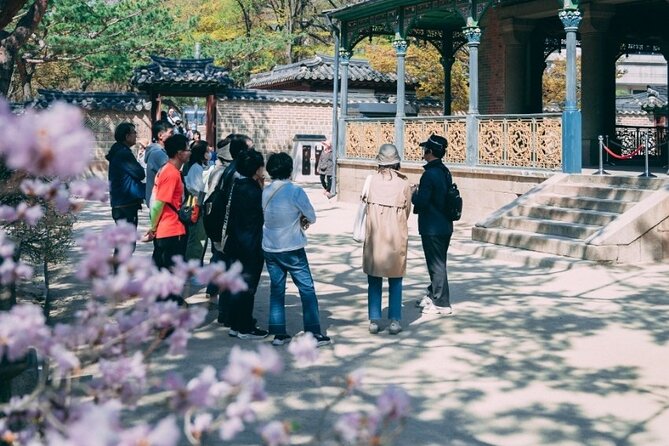
The Appenzeller Noble Memorial Museum is a short but important change of subject. The building was formerly the home of Baekjae Hakdang, a missionary school that later expanded into a university now known as Pai Chai University in Daejeon.
You have around 10 minutes here, with admission listed as free. That is the briefest scheduled stop, so expect a quick explanation rather than a long museum visit. The site helps show how education and Methodist missionary work became part of Korea’s changing society.
For me, this is one of the route’s most useful transitions. Palace sites tell you about royal authority. A former school points to another kind of change: the spread of new educational institutions and contact with Western religious groups.
Ten minutes can pass quickly, especially if the building has displays you would like to inspect. If this subject interests you, listen for the main points and note the museum’s name so you can decide if it deserves a separate visit later.
A different way to spend a day from here:
- Best DMZ Tour Korea from Seoul (Red Suspension Bridge Optional)
★ 5.0 · 41,422 reviews - DMZ Tour: 3rd Tunnel, Option(Suspension Bridge, Boat) from Seoul
★ 5.0 · 21,373 reviews - DMZ tour south Korea from Seoul (NK experience hall, defector)
★ 5.0 · 20,599 reviews - Seoul: DMZ Tour with Optional Suspension Bridge
★ 4.8 · 5,277 reviews
Jeongdong Theater gives the walk a practical pause
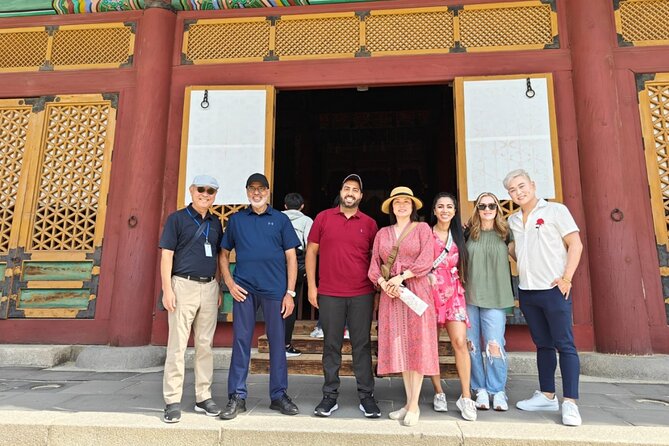
At Jeongdong Theater, the tour stops for about 25 minutes. The theater presents concerts, plays, and musicals that include elements of traditional Korean culture. On this walk, the stop is also practical: you can get coffee or another drink and use the restroom.
I appreciate this built-in pause. Three hours on foot can feel longer than expected, particularly if you are still adjusting to Seoul’s scale or the morning schedule. A planned break helps you reset without having to leave the group and search for a café.
The theater also adds another layer to the route. You are not only looking at old royal buildings. You are seeing how Korean cultural traditions are presented in a modern performance setting.
The price of drinks is not included, so bring money or a payment method for anything you purchase. Lunch is also not included, but the morning schedule should leave you free to eat after the walk.
Jungmyeongjeon Hall brings the political story into focus
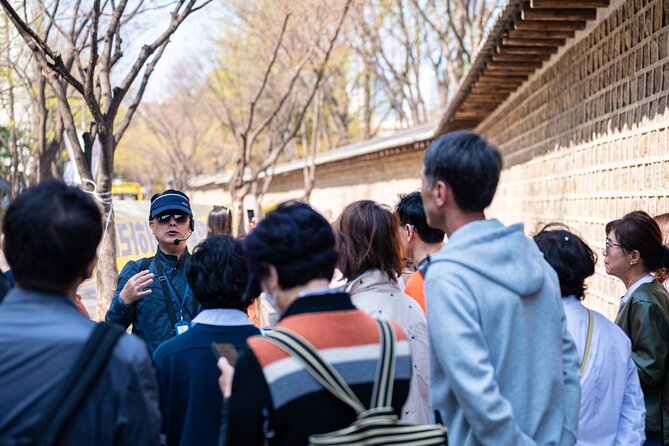
Jungmyeongjeon Hall is the most politically charged stop on the route. Built in 1899 as the imperial library of the Korean Empire, it later became the temporary residence of Emperor Gojong after Deoksugung Palace caught fire in 1904.
The hall is also tied to the Eulsa Treaty, a major event in Korea’s loss of diplomatic independence. The scheduled visit lasts about 15 minutes, so the guide will need to explain the setting with care and economy.
This is where the tour’s historical thread should come together. You have already seen royal residences and a school connected to missionary education. Jungmyeongjeon adds the Korean Empire’s attempt to operate in a period of pressure and foreign intervention.
I would treat this as one of the most valuable stops for anyone who wants context rather than a simple list of dates. The building’s former uses, the palace fire, Emperor Gojong’s temporary residence, and the Eulsa Treaty all show how quickly Korea’s political world was changing.
The short visit is the main limitation. If you have studied the Eulsa Treaty or the Korean Empire before, you may want more time for questions. A small group helps here, since you can ask the guide to clarify the parts that matter most to you.
Gwanghwamun Square connects the past to Seoul now
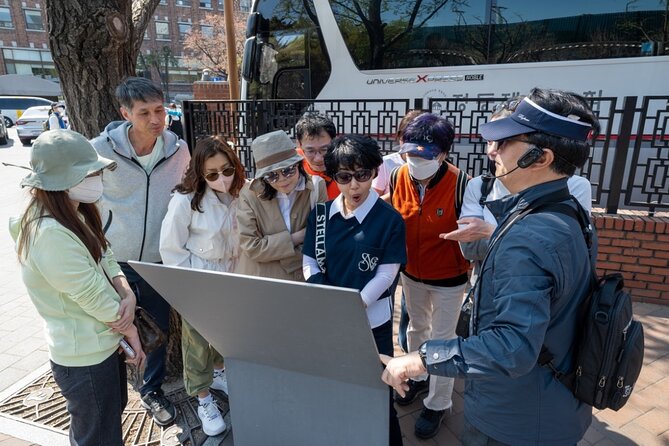
The final major stop is Gwanghwamun Square, a large public space in central Seoul built in 2009. The square includes a large fountain, a statue of King Sejong the Great, and other public features.
You spend about 20 minutes here before continuing toward the end point at Cheonggyecheon Stream. This is a fitting finish because the square is a modern gathering place, yet it keeps Korea’s past visible through the statue of King Sejong.
After several palace and museum stops, the square gives you room to think about what you have seen. The walk has moved from Joseon royal residences to the Korean Empire, then to a public space designed for modern Seoul.
The tour ends near Cheonggyecheon in Jongno District. The end point is useful for continuing your day in central Seoul, though the experience does not include additional sightseeing or transportation after the walk.
What $48 buys you
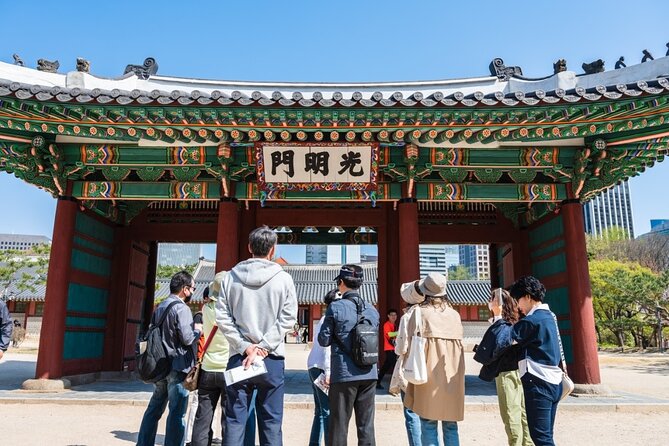
At $48 per person, the tour is priced as a guided introduction rather than a simple palace admission package. The listed stops have free admission, so the main value comes from the English-speaking guide, the organized route, and the historical connections between sites.
That value depends on what you want. If you only need directions and a quick look at Deoksugung, $48 may feel high. You can see several central areas on your own without paying for entry.
I think the price makes more sense if you want a clear story during your first Seoul visit. The route covers several subjects that are easy to encounter separately but harder to connect on your own: Joseon palaces, missionary schooling, the Korean Empire, Emperor Gojong, the Eulsa Treaty, King Sejong, and modern public space.
The small group also matters. With a maximum of 15 people, you are paying for a more personal format than a large coach excursion. The tour includes no lunch and no personal consumption, so budget separately for coffee or food.
A perfect rating from nine submitted reviews is encouraging, and the strongest praise centers on the introduction to Seoul and the guide’s ability to make the walk fun and informative. One guide named Sam is specifically associated with that positive experience. Guide assignments can vary, so I would not book solely on the assumption that Sam will lead your date.
Timing, walking, and what to bring
The tour lasts approximately three hours and starts at 9:30 a.m. You should arrive ready to walk between six stops, with the understanding that the scheduled time at each place is controlled and fairly short.
Wear comfortable shoes. That is ordinary advice for any city walk, but it matters here because the experience moves between palace grounds, museum or historic sites, a theater, a square, and the stream area. The tour requires good weather, so rain or other poor conditions can lead to a new date or a full refund.
A mobile ticket is provided. The meeting point is Deoksugung Palace, 99 Sejong-daero, Jung District, Seoul. The tour ends at Cheonggyecheon Stream in Jongno District, not back at the starting point.
Public transportation is nearby, which makes the morning meeting point practical. The activity is described as suitable for most people, but the format remains a walking tour, so anyone concerned about walking should consider the compact schedule and multiple transitions.
Free cancellation is available if you cancel at least 24 hours before the start time. Changes or cancellations made later are not accepted for a refund. Confirmation is sent within 48 hours of booking, subject to availability, and the tour can also be canceled if its minimum number is not reached.
Who should choose this experience
I would recommend this walk to a first-time Seoul visitor who wants historical structure without spending a full day inside museums. It also suits anyone interested in the meeting point between Korean traditions, Western missionary influence, imperial politics, and modern public life.
It is a good fit for you if:
- You want an English-speaking guide rather than a self-guided route.
- You enjoy walking through central Seoul.
- You want several connected subjects in one morning.
- You prefer a group capped at 15 people.
- You want a planned coffee and restroom break.
- You are comfortable with short visits at each site.
You may want another option if you prefer long, detailed palace visits, extensive museum time, or a relaxed pace. The 10-minute museum stop and 15-minute visit to Jungmyeongjeon Hall are enough for an introduction, but not enough for close study.
Should you book the Deoksugung and Jeongdong-gil walk?
Book it if you want a well-organized first morning in Seoul and value explanations more than admission-heavy sightseeing. The route is compact, the group size is limited, and the stops tell a useful story about Korea’s move from Joseon rule into the modern era.
The best reason to choose it is the connection between places that might otherwise seem unrelated. Deoksugung, Gyeonghuigung, a missionary school, a theater, Jungmyeongjeon Hall, and Gwanghwamun Square become parts of one city story.
Skip it if you want to set your own pace or spend an hour at each palace. At $48, you are paying mainly for the guide and the interpretation. For the right visitor, that guidance is what turns a morning walk into a meaningful introduction to Seoul.
FAQ
Where does the tour begin?
The tour begins at Deoksugung Palace, located at 99 Sejong-daero in Seoul’s Jung District.
What time does the tour start?
The scheduled start time is 9:30 a.m.
Where does the tour end?
The walk ends at Cheonggyecheon Stream in Seoul’s Jongno District.
How long does the experience last?
The tour lasts approximately three hours.
What sites are visited?
The route includes Deoksugung Palace, Gyeonghuigung Palace, Appenzeller Noble Memorial Museum, Jeongdong Theater, Jungmyeongjeon Hall, and Gwanghwamun Square.
Is admission included?
Admission is listed as free at the scheduled stops.
Is a guide included?
Yes. The experience includes a professional English-speaking tour guide.
Is lunch included?
No. Lunch and personal purchases are not included.
How many people can join the tour?
The maximum group size is 15 people.
Can the tour be canceled for a refund?
You can cancel at least 24 hours before the experience start time for a full refund. If poor weather or an insufficient number of participants causes the operator to cancel, you will be offered another date or experience, or a full refund.
More Walking Tours in Seoul
- Seoul moonlight walking tour with local historian
★ 5.0 · 940 reviews - Seoul: Nighttime Hidden Gems Walking Tour
★ 5.0 · 775 reviews - Seoul: Dark Side of the City and Ghost Stories Walking Tour
★ 4.8 · 484 reviews - Gangnam Walking Tour on Youth and Society in Seoul Korea
★ 5.0 · 401 reviews
Recently added around Seoul
- Gyeongbokgung Palace Photo Session with your own phone★ 5.0 · 4 reviews
- Private Tour around Suwon UNESCO Fortress and Korea Folks Village★ 4.5 · 4 reviews
- Nami & Maple Road & Theatre des Lumieres Day Tour from Seoul★ 4.8 · 4 reviews
- Jisan Forest Resort: Ski Full-Day Tour or Shuttle from Seoul★ 5.0 · 4 reviews
- Seoul: Deoksugung Palace Night Tour★ 4.5 · 4 reviews
- N Seoul Tower + Namsan Cable Car Ticket (Collect in Myeongdong)★ 3.5 · 4 reviews
- Private Jeonju Hanok Village – Culinary tour★ 5.0 · 4 reviews
- Seoul Private Walking Tour with a Local★ 5.0 · 4 reviews
Seoul Tours, compared.
Best DMZ Tour Korea from Seoul (Red Suspension Bridge Optional)
Read the review →
DMZ Tour: 3rd Tunnel, Option(Suspension Bridge, Boat) from Seoul
Read the review →
DMZ tour south Korea from Seoul (NK experience hall, defector)
Read the review →
DMZ The 3rd Tunnel and Suspension Bridge Tour
Read the review →
Signature DMZ Tour: Exclusive Defector Talk & Suspension Bridge
Read the review →
Thrilling Korean DMZ 3rd Tunnel Tour from Seoul + Red Bridge Rush
Read the review →
DMZ Past and Present: Korean Demilitarized Zone Tour from Seoul
Read the review →Browse the lists this tour appears in