Reviewed · SEOUL TOURS
Korean Traditional Music Performance Ticket
A 60-minute concert inside a traditional hanok gives you a graceful introduction to Korean music without taking up half your day. The program moves from the blessing ceremony called Gilje to court music, solo instruments, folk songs, and traditional versions of K-pop and drama soundtracks.
I like the intimate setting and the way the show connects old Korean instruments with music you may already know. I also like the chance to speak with the musicians and see their instruments after the performance. The main drawback is practical: the hall is reached by stairs only, and the $47 price may feel high if you want a longer concert or a meal included.
Key points to know before booking
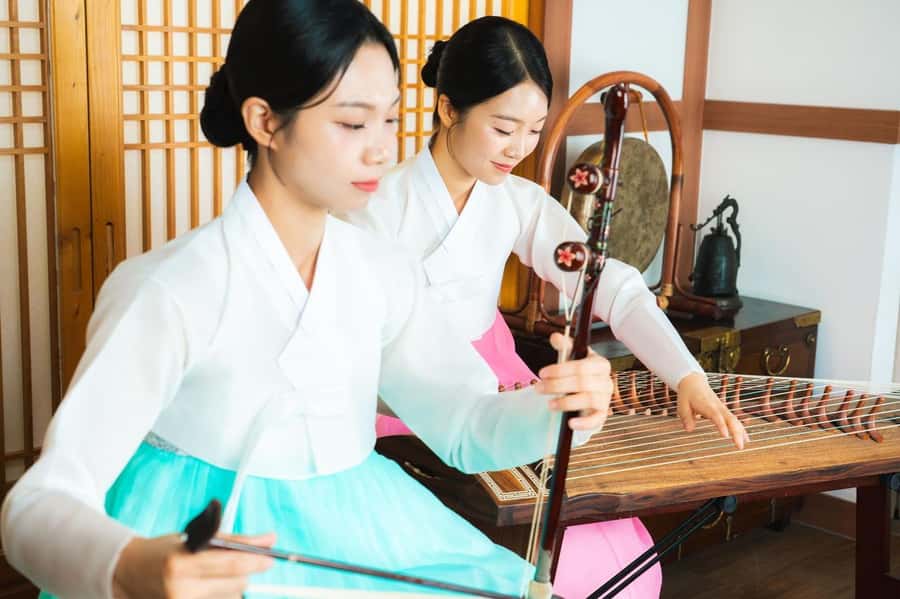
- Three-part program: Gilje opens with a blessing, Jinyeon presents court music and solos, and the final section joins folk music with K-pop and drama songs.
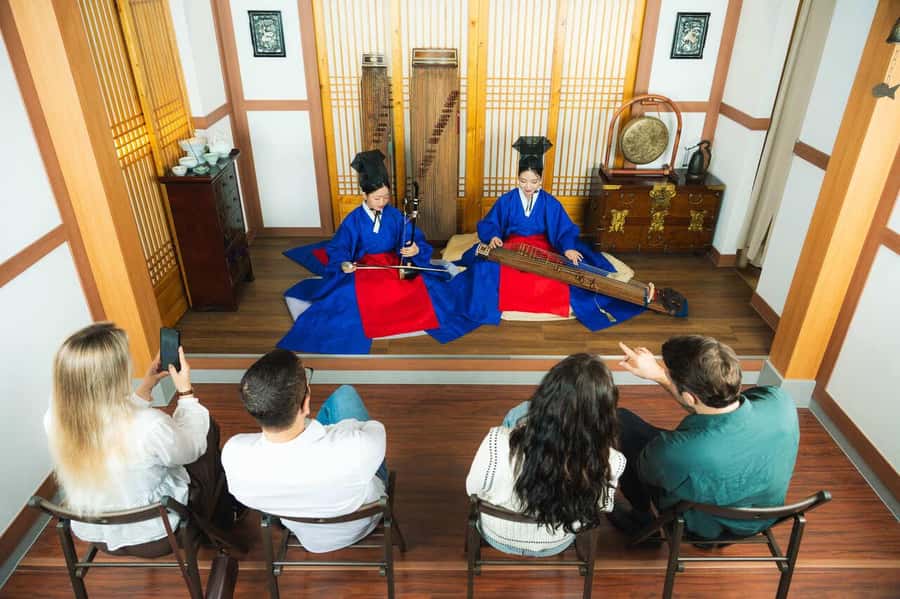
- Traditional hanok setting: You sit on prepared chairs in a small, atmospheric space that gives the performance a personal feel.
- English and Korean: The experience is offered in both languages, with performers sharing insight into Korean instruments and music.
- One-hour cultural stop: Weekday performances run at 11:00, 13:00, and 15:00, making this easy to pair with an Insa-dong afternoon.
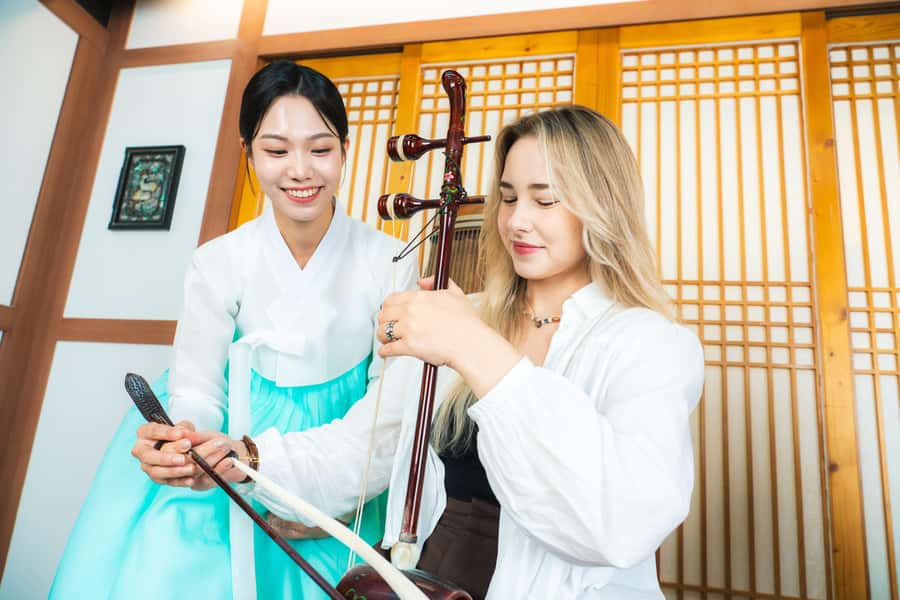
- Meet the musicians afterward: You can take photos and ask about the instruments, and performers may show you how they are played.
- Check the stairs: There is no elevator, so this activity is not suitable for people with mobility impairments.
A one-hour window into Korean sound
Insa-dong is one of Seoul’s best areas for traditional arts, galleries, tea houses, and craft shops. Tucked among those streets, Jinyeon Hall offers a quieter kind of cultural experience: you leave the noise of central Seoul behind and sit close to the performers in a modest hanok interior.
The setting matters. Korean traditional music can feel distant when heard only through a large stage or a museum recording. Here, the musicians are close enough for you to notice hand movements, facial expressions, and the changing shape of each instrument’s sound.
The performance is presented by musicians with more than 10 years of experience. That experience shows in the careful control of the instruments and in the contrast between delicate passages and stronger rhythmic sections. The program is not only an old-style concert. It is designed to explain how Korean music can move from court traditions to folk songs and modern popular culture.
You should expect a formal atmosphere during the music. Set your phone to silent before the show begins, and save photographs and conversation for afterward. This is a small room, so even a ringing phone can interrupt the mood.
A few more Seoul half-days to weigh up
- Best DMZ Tour Korea from Seoul (Red Suspension Bridge Optional)
★ 5.0 · 41,422 reviews - DMZ Tour: 3rd Tunnel, Option(Suspension Bridge, Boat) from Seoul
★ 5.0 · 21,373 reviews - DMZ tour south Korea from Seoul (NK experience hall, defector)
★ 5.0 · 20,599 reviews
Finding Jinyeon Hall in Insa-dong
The meeting point is Jinyeon Hall, on the second floor at 10 Insadong 5-gil, Jongno-gu, Seoul. It is about six minutes on foot from Exit 3-1 of Jonggak Station on Line 1, or about eight minutes from Exit 5 of Jongno 3-ga Station on Line 5.
Give yourself more time than the walking estimates suggest. One practical warning is that the venue can be difficult to locate with Naver Map, which may not guide you to the exact studio entrance. Google Maps has been more useful for finding the hall, so I would check the route before leaving your hotel and arrive at least 10 minutes early.
The hall is upstairs and has no elevator. That is not a minor detail for anyone with limited mobility, a stroller, or heavy luggage. Nearby public parking is available, but the organizers ask you to use public parking facilities rather than expect dedicated parking at the venue.
The activity begins and ends at the same address. There is no hotel pickup, so you are responsible for reaching Insa-dong and getting back to your next stop.
Stage one: Gilje, a calm opening blessing
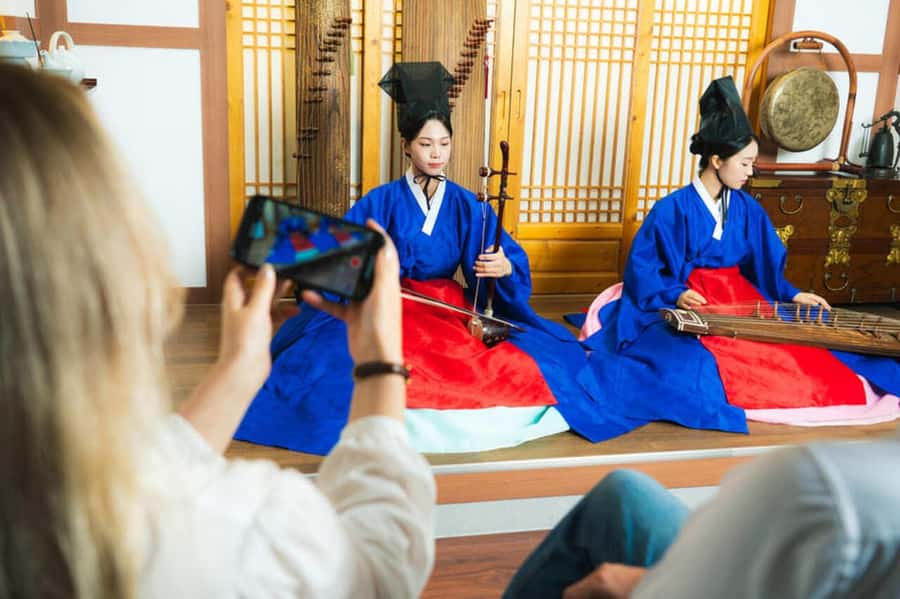
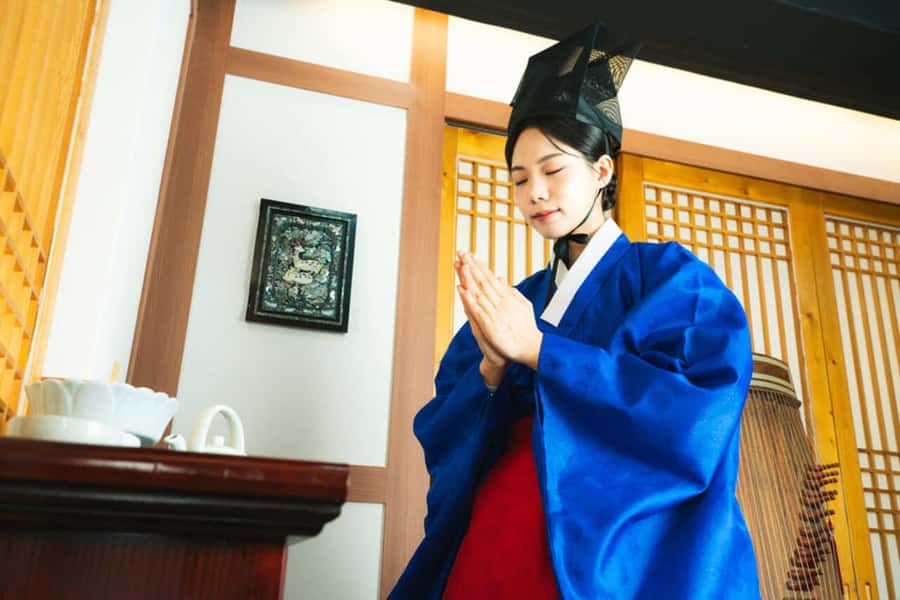
The first section is Gilje, an opening blessing ceremony. Its purpose is to begin the event with peace and good wishes, rather than rushing directly into a concert number.
This opening gives the hour a ceremonial shape. You are not simply arriving at a music recital, listening to three unrelated pieces, and leaving. The performance begins by setting a respectful tone, which helps explain why the room asks for quiet and attention.
For some people, this may be the most unfamiliar part of the program. It is less about quick entertainment and more about atmosphere and intention. If you prefer a concert that starts with an immediate burst of energy, the opening may feel slow. If you enjoy learning how music connects with custom and ritual, it adds useful context.
The blessing also helps you adjust from Seoul’s busy streets to the quieter interior. On a hot afternoon, the measured pace can feel especially welcome. One particularly memorable response to the performance described a sense of calm by the end of the hour, and that makes sense given the structure of the opening.
Stage two: Jinyeon and the sound of the royal court
The second section, also called Jinyeon, is the main banquet performance. It presents graceful court music alongside powerful solo instrumentals.
The court music gives you a taste of the formal sound associated with Korea’s royal past. The musicians’ traditional clothing and the hanok surroundings strengthen that visual connection. You may feel as if you have stepped into a carefully framed scene from the Joseon period, although this is a modern presentation for a modern audience.
The solo pieces let individual instruments take center stage. The gayageum, a Korean zither with strings stretched over a long wooden body, can sound clear, plucked, and lyrical. The haegeum, a small bowed instrument, has a more vocal quality, capable of a thin, expressive cry as well as stronger, urgent notes.
The contrast between those instruments is one of the show’s pleasures. You hear how different textures can share the same musical space. The musicians do not need a large orchestra to create variety, because the instruments themselves carry much of the drama.
You may also receive explanations in English or Korean about the instruments and musical styles. The performance is therefore accessible even if you know little about Korean music. It is still a concert first, not a long lecture, so the music remains at the center.
A different way to spend a day from here:
- Seoul: DMZ Tour with Optional Suspension Bridge
★ 4.8 · 5,277 reviews - Seoul: DMZ The 3rd Tunnel and Suspension Bridge Tour
★ 5.0 · 4,656 reviews - Signature DMZ Tour: Exclusive Defector Talk & Suspension Bridge
★ 5.0 · 4,459 reviews - Incheon Airport: Traveler SIM & T-money Transportation Card
★ 4.7 · 3,332 reviews
Stage three: folk songs, Arirang, and modern Korean favorites
The final section is called Together in Harmony. This is where the program broadens from court music and individual performances to Korean folk songs and creative arrangements of K-pop and drama OSTs.
For many people, this is the most immediately enjoyable part. Traditional instruments playing familiar modern melodies give you a clear sense of how old and new Korean culture can meet. You do not need to recognize every song to appreciate the change in mood, but knowing a K-pop track or Korean drama theme can make the arrangement more fun.
The inclusion of Arirang is especially meaningful. It is one of Korea’s best-known folk songs and an important cultural symbol. Hearing it in a traditional setting gives the closing section a strong sense of place, particularly for someone visiting Korea for the first time.
The program also includes international pieces. That choice makes the music easier to approach, since the musicians are not asking you to understand every tradition at once. Instead, you get a series of bridges: court music to folk music, Korean melodies to familiar popular songs, and traditional instruments to modern arrangements.
The final section is not a full K-pop concert in traditional clothing. The balance remains firmly on Korean traditional music. Still, the modern material keeps the hour from feeling like a museum display, and it may be the part children and teenagers remember best.
Meeting the musicians after the performance
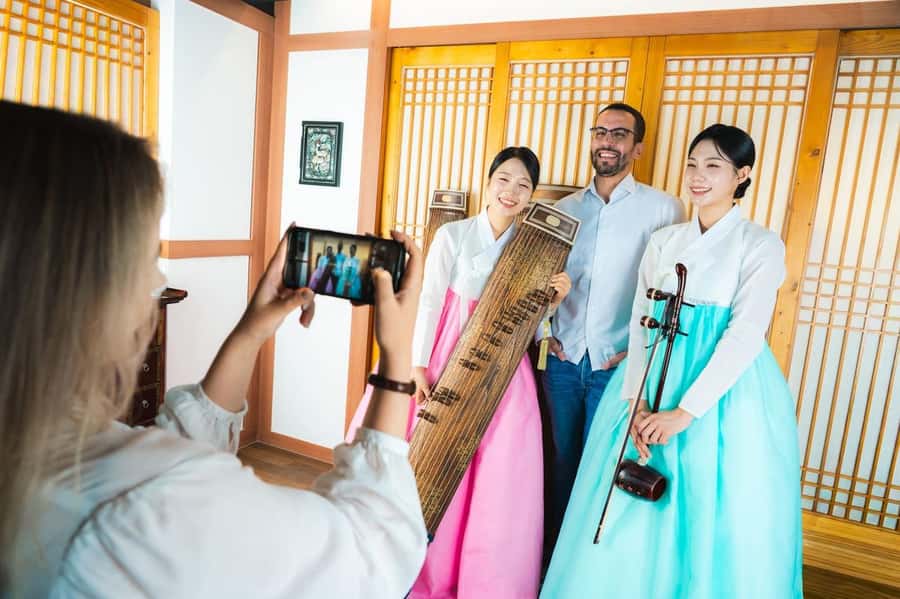
Do not rush out when the final piece ends. You are invited to take photographs with the musicians, and the informal exchange afterward can be one of the most valuable parts of the visit.
The performers may explain their instruments more closely and show you how they are played. That changes your understanding of what you have just heard. A gayageum or haegeum can look simple from a distance, but seeing the playing technique up close helps you notice the skill involved.
The small venue works in your favor here. In a large theater, meeting the performers would be unlikely. At Jinyeon Hall, the concert has a personal finish, and you have a chance to ask questions in English or Korean.
This is also the best time for photos. During the performance, keep your phone silent and avoid using it as a camera unless the performers clearly allow it. Save the visual record for the closing interaction.
How the setting affects the experience
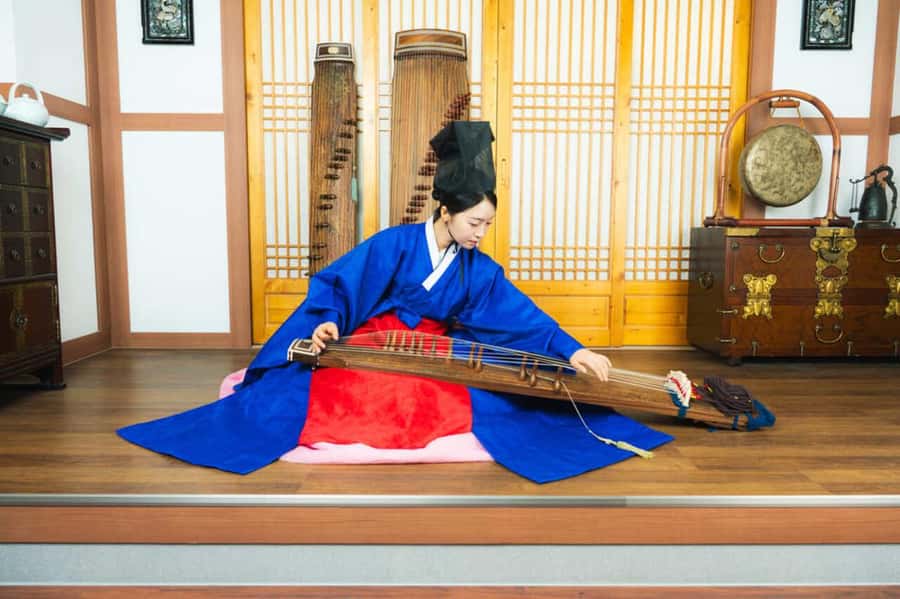
The hanok setting is not just decoration. Traditional Korean music can sound more natural in a compact wooden room than in a large modern auditorium. The room helps you focus on the instruments, while the clothing and architecture make the cultural setting easier to understand.
The space is described as small and simple rather than lavish. That is worth keeping in mind if you are expecting a grand palace show with elaborate stage effects. You are paying for the performance, the setting, and the close contact with the musicians, not for a large production.
Prepared chairs are provided, so you do not need to sit on the floor. That makes the performance more comfortable for most people, though the stairs remain an important limitation. The intimate layout also means that your experience may depend on the size of the group, which can range from one to 20 people.
A small audience can be a real advantage. You get a closer view of the musicians and a better chance of speaking with them after the show. It also means you should arrive on time. Coming in late is more noticeable in a quiet room and can interrupt both the musicians and the audience.
Is $47 a fair price?
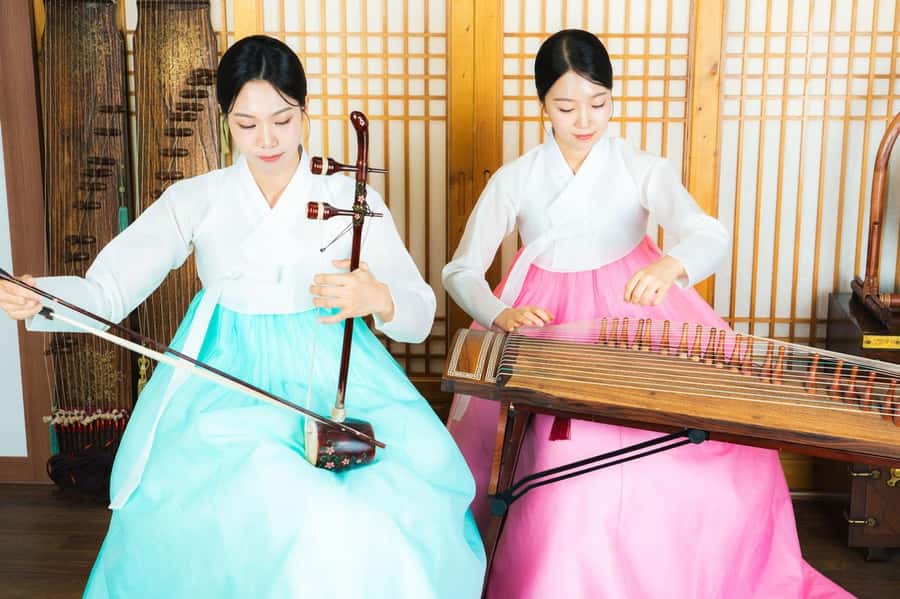
At $47 per person, this is not the cheapest cultural activity in Seoul. You do not receive food, drinks, transportation, or a longer guided tour. If you are comparing it with a free cultural performance or a short museum visit, the price may make you hesitate.
The value improves if you want a focused performance rather than a general sightseeing stop. You receive a full hour of live music, a traditional venue, English and Korean support, and a chance to meet the artists afterward. The blend of court music, folk songs, Arirang, K-pop, and drama OSTs also gives you more range than a program limited to one musical style.
I would consider it a fair splurge for someone who has already planned time in Insa-dong and wants a cultural experience with real artistic content. It is less convincing for someone who mainly wants a quick photo in a hanok or expects an elaborate evening show.
The weekday schedule can also affect the value. Performances are held Monday through Friday, excluding public holidays, at 11:00, 13:00, and 15:00. Those times are convenient for a daytime itinerary, but they do not help if your Seoul schedule is built around evenings or weekends.
Who will enjoy this concert most?
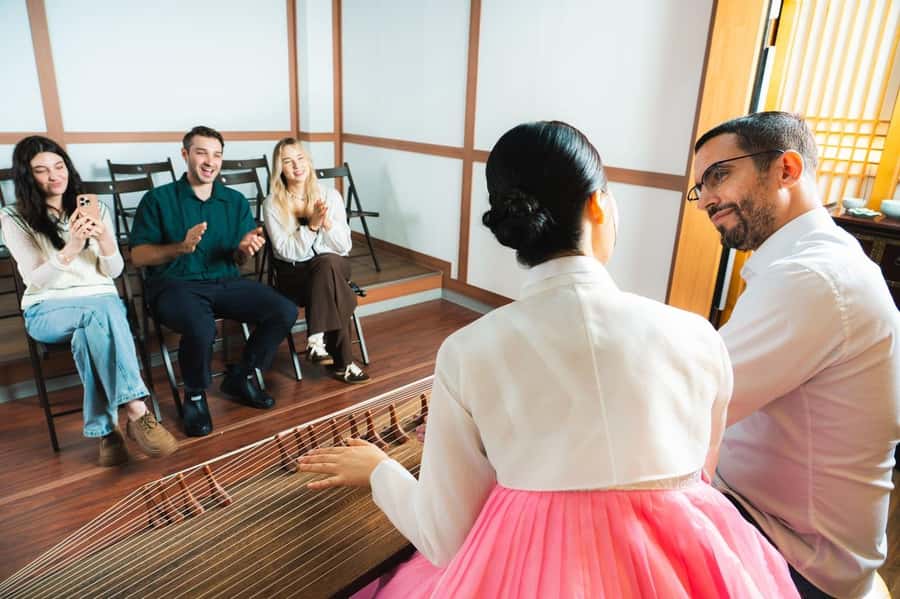
I would recommend this experience to you if you enjoy music, cultural traditions, or small performances where you can see the artists clearly. It is also a good choice if you want something more meaningful than a costume photo and more manageable than a full-day cultural tour.
Families can find it rewarding, especially when children are curious about unusual instruments. One family visit with parents was particularly successful, and the clear three-part format gives the hour enough variety to hold attention.
It suits first-time visitors because the program offers several entry points. You get ceremonial music, court traditions, folk songs, international pieces, and modern Korean arrangements. You do not need previous knowledge to follow the broad movement of the show.
It may not suit you if you need step-free access, want a large-scale concert, or dislike formal quiet settings. It is also a poor match for a weekend-only itinerary, since performances do not run on weekends or public holidays.
Planning the visit with Insa-dong
The concert fits neatly into a larger visit to central Seoul. Because it lasts about an hour, you can schedule it between time in Insa-dong and other Jongno sights. The 11:00, 13:00, and 15:00 options offer useful flexibility during a weekday.
Plan to arrive 10 minutes early. Use Google Maps if your navigation app struggles with the address, and look for the second-floor hall rather than assuming the map marker will place you directly at the entrance.
You may want to eat before or after the performance, since food and drinks are not included. Insa-dong gives you plenty of opportunities to continue the cultural theme with shops, galleries, and cafés, though the concert itself does not provide a meal or refreshment.
The activity ends where it starts, which makes onward planning simple. You can continue exploring on foot or return to the subway from Jonggak or Jongno 3-ga.
Should you book Korean Traditional Music Performance Ticket?
Book it if you want a compact, intimate introduction to Korean music and appreciate the chance to speak with performers after the show. The strongest reasons to go are the hanok setting, the skilled musicians, and the smart program that links court music, folk traditions, Arirang, K-pop, and drama OSTs.
Think twice if $47 feels steep for a one-hour performance, if you need an elevator, or if your schedule only allows evenings and weekends. For the right audience, this is a thoughtful cultural stop in Insa-dong, not just background entertainment. Arrive early, keep your phone silent, and save time afterward for the musicians and their instruments.
FAQ
Where does the Korean Traditional Music Performance take place?
The performance takes place at Jinyeon Hall, 2F, 10 Insadong 5-gil, Jongno-gu, Seoul, South Korea.
How long does the performance last?
The performance lasts approximately 60 minutes.
What time are performances held?
Weekday performances are scheduled at 11:00, 13:00, and 15:00. There are no performances on weekends or public holidays.
How do I reach Jinyeon Hall by subway?
The hall is about six minutes on foot from Exit 3-1 of Jonggak Station on Line 1, and about eight minutes from Exit 5 of Jongno 3-ga Station on Line 5.
What languages are available?
The experience is offered in English and Korean.
What music is included in the program?
The program includes Gilje, an opening blessing ceremony, Jinyeon with court music and solo instruments, and Together in Harmony with Korean folk songs, traditional arrangements of K-pop and drama OSTs, and other pieces.
Can I meet the musicians afterward?
Yes. You can take photos with the musicians after the performance and speak with them about their instruments. They may also show you how the instruments are played.
Is the venue accessible by elevator?
No. The venue is reached by stairs only and has no elevator. The activity is not suitable for people with mobility impairments.
What does the ticket include, and can I cancel?
The ticket includes the Korean traditional music performance. Hotel transfers, food, and drinks are not included. You can cancel up to 24 hours in advance for a full refund.
Recently added around Seoul
- Nami & Maple Road & Theatre des Lumieres Day Tour from Seoul★ 4.8 · 4 reviews
- Gyeongbokgung Palace Photo Session with your own phone★ 5.0 · 4 reviews
- Private Tour around Suwon UNESCO Fortress and Korea Folks Village★ 4.5 · 4 reviews
- Jisan Forest Resort: Ski Full-Day Tour or Shuttle from Seoul★ 5.0 · 4 reviews
- N Seoul Tower + Namsan Cable Car Ticket (Collect in Myeongdong)★ 3.5 · 4 reviews
- Seoul: Deoksugung Palace Night Tour★ 4.5 · 4 reviews
- Seoul Private Walking Tour with a Local★ 5.0 · 4 reviews
- Private Jeonju Hanok Village – Culinary tour★ 5.0 · 4 reviews
Seoul Tours, compared.
Best DMZ Tour Korea from Seoul (Red Suspension Bridge Optional)
Read the review →
DMZ Tour: 3rd Tunnel, Option(Suspension Bridge, Boat) from Seoul
Read the review →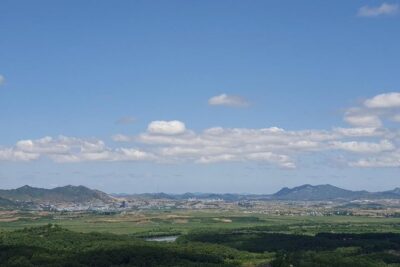
DMZ tour south Korea from Seoul (NK experience hall, defector)
Read the review →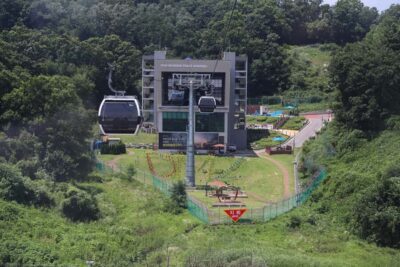
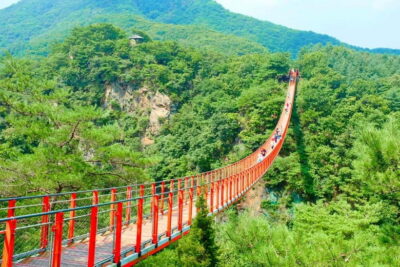
DMZ The 3rd Tunnel and Suspension Bridge Tour
Read the review →
Signature DMZ Tour: Exclusive Defector Talk & Suspension Bridge
Read the review →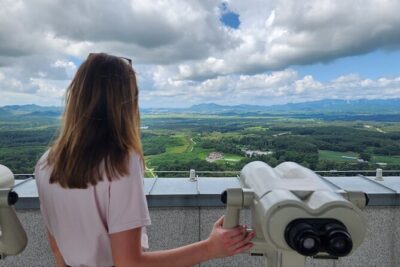
Thrilling Korean DMZ 3rd Tunnel Tour from Seoul + Red Bridge Rush
Read the review →