
Reviewed · DMZ TOURS
DMZ Tour Seoul to North Korea’s 3rd Tunnel & Majang Lake Crossing
The most striking part of this day is the sudden shift from Seoul’s busy streets to the guarded edge of North Korea. Within a few hours, you can walk beside war memorials, enter the Third Tunnel of Aggression, and look across the border through a telescope at North Korean territory.
I like the strong mix of history and real places, especially the Bridge of Freedom and Dora Observatory. I also like the practical setup: transport from central Seoul, an English or Chinese-speaking guide, and a full eight-hour schedule for about $35 per person. The drawback is that this is a large group tour, with up to 150 people, and the day can feel rushed if military activity changes access times.
Key points to know before booking
- The Third Tunnel requires effort: Expect steep slopes, stairs, low ceilings, and a hard hat. Taller visitors should watch their heads.
- Dora Observatory gives you the border view: Telescopes let you look toward North Korea, though weather and military rules affect visibility.
- The itinerary is packed: Imjingak, memorials, the tunnel, the observatory, Tongilchon, and optional bridge stops fill most of the day.
- Majang Lake is optional: The 262-meter suspension bridge adds a pleasant outdoor finish, but only if selected during checkout.
- Bring your passport: You need it for the military checkpoint at Unification Bridge.
- Lunch is not included: You get time at Tongilchon, but the schedule may not leave much room for a long meal.
Why this Seoul DMZ tour is worth your day
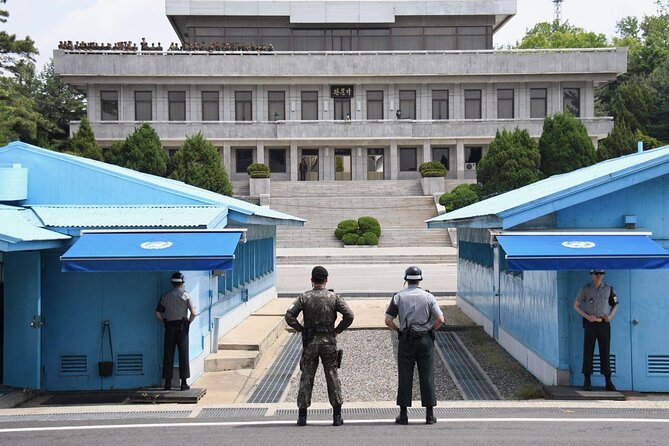
A visit to the Korean Demilitarized Zone is not simply a sightseeing trip. It gives you a physical sense of how close the two Koreas remain, and it places modern Seoul within the story of the Korean War and the 1953 armistice.
The DMZ is about 4 kilometers wide and runs across the peninsula. It is not an ordinary park. Access is controlled, identification is checked, and parts of the day depend on military conditions. That uncertainty is part of the experience, but it also means you should arrive with patience.
At $35, this tour offers good value if you want transportation, entrance tickets to the main DMZ attractions, and a guide to explain what you are seeing. You would pay more and spend extra effort arranging transport yourself, while still facing the same access rules.
The tour is especially useful for a first visit to Seoul. You get a broad introduction rather than a single museum or memorial. The tradeoff is time. You see many sites, but you do not linger long at every one.
More DMZ Tours in Seoul:
- Best DMZ Tour Korea from Seoul (Red Suspension Bridge Optional)
★ 5.0 · 41,422 reviews - DMZ Tour: 3rd Tunnel, Option(Suspension Bridge, Boat) from Seoul
★ 5.0 · 21,373 reviews - DMZ tour south Korea from Seoul (NK experience hall, defector)
★ 5.0 · 20,599 reviews
Starting from Myeongdong, City Hall, or Hongdae
The morning begins with pickup or a meeting arrangement in central Seoul. The listed pickup points are Myeongdong Subway Station Exit 9, Seoul City Hall Subway Station Exit 6, and outside Hongdae Subway Station Exit 3. You should arrive 10 to 15 minutes early, since several coaches may gather in the same area.
This detail matters more than it may seem. A missed departure can ruin a military-zone day, and the meeting points can be busy. Keep your guide’s instructions handy, look for the correct bus, and do not assume every coach at the station is yours.
Hotel pickup is described as pickup from a main subway station near your hotel or from a downtown area. Hotel drop-off is not included. At the end, you can get off at Myeongdong, Hongik University Station, or City Hall, which gives you a useful choice for continuing your evening.
The ride toward the DMZ takes about an hour in the itinerary. Your guide uses this time to explain the Korean War, the armistice, and the meaning of the border. Guides vary, but names praised for clear, warm explanations include Nancy, Alex, Kelly, Crystal, Hana, Moon, Emily, Lina, Gogo, K, and Ray.
Imjingak Park and the Bridge of Freedom
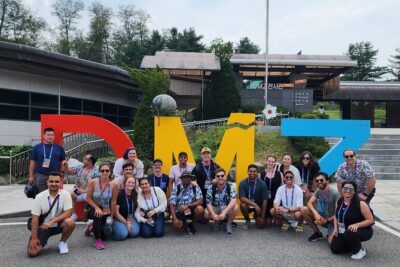
Your first major stop is Imjingak Resort, often called Imjingak Park. Built in 1972, it honors families separated by the Korean War. This is where the day’s emotional tone begins, with memorials and symbols of reunion rather than military hardware alone.
You will see the Bell Tower, the Peace Bell, and Mangbaedan, a memorial altar where families remember relatives in North Korea during traditional holidays. These places make the division personal. The Korean peninsula is not divided only by fences and soldiers. It is also divided through family stories passed down over generations.
The Bridge of Freedom is one of the most affecting stops. It was built in 1953 to replace a destroyed railroad bridge, and 12,773 prisoners of war returned to South Korea across it. The structure is modest, but its name carries a great deal of weight.
You also see the battle-damaged steam locomotive at Jangdan Station. Known as the Iron Horse, it once ran along the Gyeongui Line until the Korean War stopped its journey in 1950. The locomotive’s damage is a plain reminder that the conflict was fought through towns, railways, and ordinary lives.
Allow yourself time to look beyond the photo opportunities. Imjingak has several memorials close together, and the guide’s explanation helps connect them. If you skip the optional gondola, you can use the time to see more of the peace park.
Optional gondola over the Imjin River
The Paju Imjingak Peace Gondola is an optional part of the day. Launched in 2020, it crosses the Imjin River at a height of about 20 meters and gives you a different view of the edge of the DMZ.
The gondola is best for you if you want scenery and a quieter break from memorials. It also offers a sense of the river as a natural boundary, with wildlife and birds able to flourish in areas left relatively undisturbed since the armistice.
Do not treat it as essential to understanding the DMZ. The main historical sights at Imjingak remain available without it, and the extra ride can make the schedule feel tighter. Check what your selected package includes before you pay, since optional additions are not part of the basic DMZ-only tour.
A few more Seoul half-days to weigh up
- Seoul: DMZ Tour with Optional Suspension Bridge
★ 4.8 · 5,277 reviews - Seoul: DMZ The 3rd Tunnel and Suspension Bridge Tour
★ 5.0 · 4,656 reviews - Signature DMZ Tour: Exclusive Defector Talk & Suspension Bridge
★ 5.0 · 4,459 reviews - Incheon Airport: Traveler SIM & T-money Transportation Card
★ 4.7 · 3,332 reviews
Passing Unification Bridge and the military checkpoint
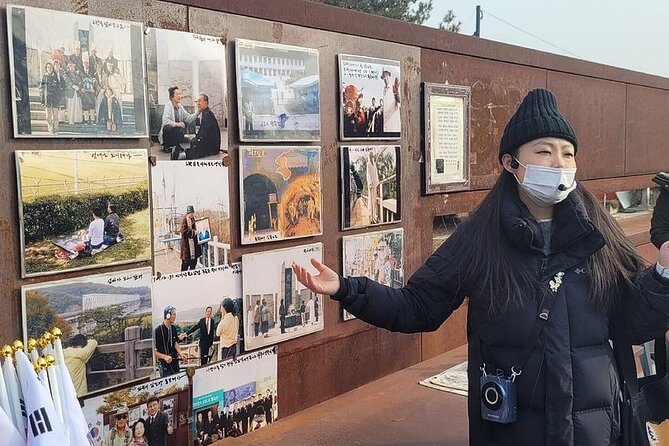
The bus stops at Unification Bridge, where soldiers inspect the vehicle and check identification before allowing entry into civilian-controlled areas. You must have your passport, military identification card, or South Korea-issued identification as required.
This is one of the moments when the DMZ stops feeling like a normal day trip. The checkpoint is not a staged attraction. Access is subject to military control, and the schedule can change because of exercises or early closures.
Keep your passport easy to reach, not buried at the bottom of your bag. You will save time and avoid a stressful scramble when the guide asks for identification.
After the checkpoint, the bus crosses the Imjin River. Look out the window for open river views and birds. The contrast is striking: nature continues quietly beside one of the world’s most heavily watched borders.
Walking into the Third Tunnel
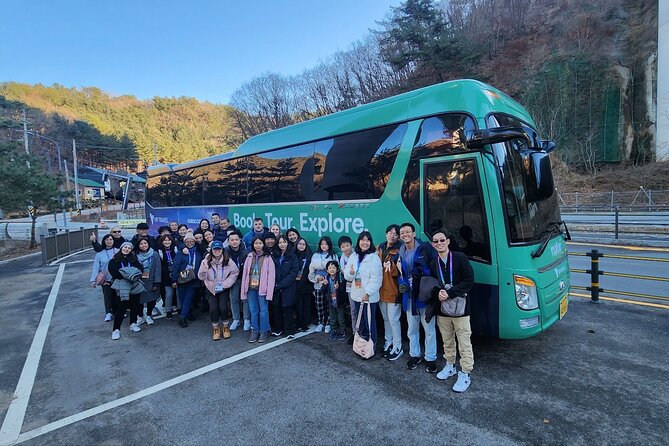
The Third Tunnel is the physical centerpiece of the tour. Discovered in 1978, it is one of four tunnels found beneath the border and is described as a North Korean infiltration route. The tunnel extends 1,635 meters and lies roughly 52 kilometers from Seoul.
You do not walk the full length. Still, the accessible section gives you a direct sense of the work involved in cutting through rock underground. It is narrow, sloped, and uncomfortable in places. The walk includes inclines and stairs, and you wear a hard hat.
This is not a good stop for anyone who dislikes confined spaces or has trouble with steep walking. Taller people should fasten the helmet securely and keep their heads down. One useful rule is to slow down rather than trying to keep pace with the fastest people in the group.
The tunnel is valuable because it turns an abstract security issue into something you can feel in your legs and shoulders. You are not simply hearing that the border was contested. You are walking through a passage built for a dangerous military purpose.
Photography rules and access can be controlled, so follow the guide’s instructions. The tunnel can also feel humid and warmer than the open-air stops. Wear comfortable shoes and bring water.
Dora Observatory and the view into North Korea
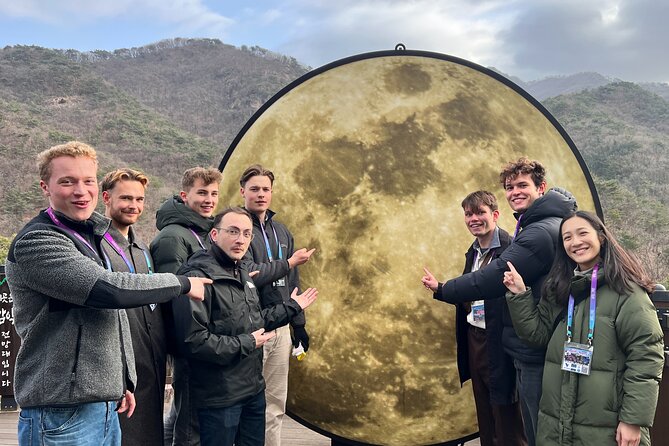
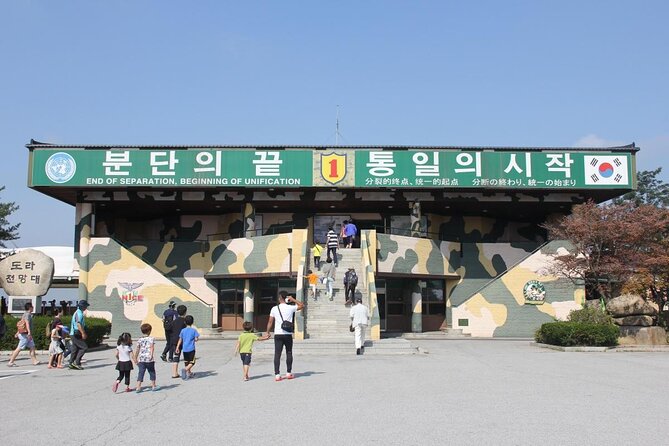
Dora Observatory is the visual high point of the day. Set on Dorasan and rebuilt in 2018, it offers one of the closest public views of North Korea from South Korea.
On a clear day, you can use telescopes to look across the border. You may see North Korean territory, fields, hills, and structures, but the quality of the view depends heavily on fog, haze, and other conditions. Do not expect a cinematic reveal every time.
The observatory’s importance is not just the view. You are looking from a South Korean hill toward a country that is geographically close but politically remote. Your guide provides the context that makes the scene meaningful rather than simply pointing out a distant line.
The tour can reverse the order of stops if fog affects the view. That flexibility is useful, since an observatory visit is much better when the air clears. It also means your day may not follow the exact order described in advance.
You can buy North Korean products at the observatory area. Treat this as a small shopping opportunity, not the main reason to come. The telescope view and the explanation of the border are the real draw.
Tongilchon, soybeans, and lunch planning
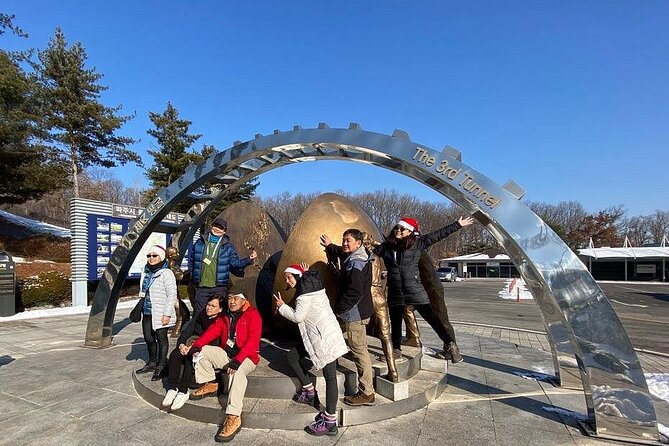
Tongilchon-gil takes you to Tongilchon Jangdankong Maeul, a village beyond the Civilian Control Line. The area is known for Jangdan soybeans, grown in soil associated with the DMZ region.
This stop adds a civilian and agricultural side to the day. After memorials, checkpoints, and tunnels, you see a place connected to local food and village life. You may have the chance to purchase soybean products or other local items.
Lunch is not included, so plan your expectations carefully. The available stop may offer food, but the time can be short. One useful comment from the tour experience is that about 45 minutes may not be enough for eating, using facilities, visiting the garden, and browsing the shop.
If you want a relaxed meal, this schedule may disappoint. If you are content with a quick, authentic bite and a look around, it fits the pace of the day.
Majang Lake and the Red Suspension Bridge options
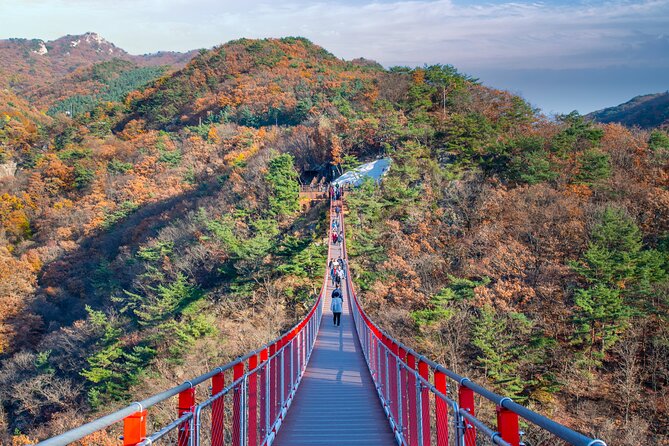
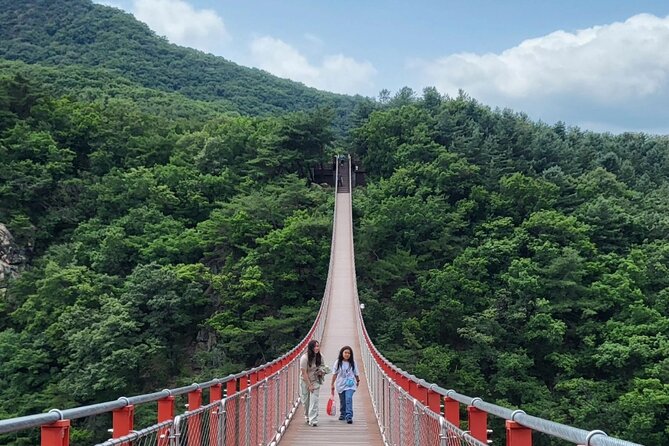
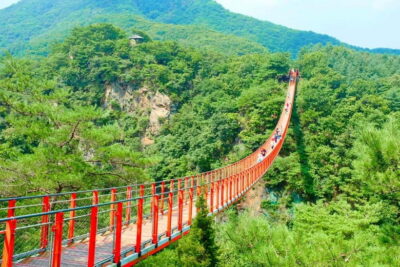
Majang Lake is an optional final attraction, and it changes the mood from solemn history to outdoor scenery. The Majang Reservoir Suspension Bridge is 262 meters long and rises about 25 meters above the lake. It opened in 2020.
I like this addition for anyone who wants a little fresh air and a clear finish after the DMZ sites. The bridge offers views across the reservoir and gives you time to stretch your legs. It is also a better fit for people who enjoy scenery than for those seeking more military history.
The experience provider also lists an optional Gamaksan Red Suspension Bridge and, on selected packages, strawberry picking. These are not included in the basic DMZ-only option. Check the exact package at checkout, since the title highlights Majang Lake but the available extras can vary.
The bridge portions require walking and may not suit you if you have limited stamina. The schedule already includes the tunnel, stairs, inclines, and several stops, so consider your energy before adding every optional activity.
Guides make the difference
The quality of the day depends greatly on the guide. The best guides keep the history moving, answer questions, explain practical details, and help a large group stay together.
Nancy is praised for bringing energy and clear directions without losing the historical focus. Alex is noted for adding personal stories about his family and the war’s impact, while Kelly is described as personable and good at keeping the group on schedule. Crystal is particularly effective at explaining Korean history and leading visitors through the tunnel.
Other guides named for warm delivery and strong organization include Hana, Moon, Emily, Lina, Gogo, K, and Ray. You may not be able to choose your guide, but you can expect the guide to be central to the experience rather than a person who merely counts heads.
Expect different styles. Some guides use humor and lively commentary. Others focus more heavily on historical detail. That variety can be a strength, though a large group means you should stay alert for meeting times and instructions.
Timing, group size, and physical demands
The full outing lasts about eight hours. That sounds generous, but the route includes several short stops, military checks, a long transfer from Seoul, and optional attractions. The day is active and tightly arranged.
The maximum group size is 150. Your actual coach may be smaller, but you should prepare for crowds at meeting points and busy facilities. A large group keeps the price low and makes transport simple, but it limits personal attention and can slow movement between stops.
The main physical challenge is the Third Tunnel. You also encounter stairs and inclines around the DMZ attractions and suspension bridges. One person with an average level of fitness may manage it, but the tour is not ideal if you need a completely flat, slow-paced day.
Wear comfortable shoes, bring a jacket, and carry water. Conditions can change from hot and humid to cool or windy, especially around open viewpoints. A jacket was specifically useful advice for this route.
Is $35 good value?
At roughly $35, the tour is priced as an efficient introduction to a difficult-to-arrange area. Your fee covers a professional English or Chinese guide, transport from central Seoul or a nearby main subway station, and admission to the included DMZ stops.
It does not cover lunch, hotel drop-off, or optional bridges and strawberry picking unless you select those extras. The cost is attractive because the tour gathers transport, border access, and interpretation into one day.
The value is strongest if you want to see several landmarks without planning connections yourself. It is weaker if you want long, quiet visits, a private guide, or a leisurely lunch.
Free cancellation is available up to 24 hours before the start time for a full refund. Changes or cancellations inside that window are not accepted for a refund.
Who should book this DMZ experience?
I would choose this tour if you are visiting Seoul for the first time and want a clear introduction to the Korean division. It suits history fans, photographers, families with older children, and anyone curious about the real border between North and South Korea.
You should think twice if you dislike group schedules, confined spaces, military checks, or walking on uneven and sloped routes. The Third Tunnel is not optional in spirit, even if you can decide how much effort to make, since it is one of the tour’s main attractions.
For the best chance of a satisfying day, bring your passport, arrive early, wear sturdy shoes, and accept that the order can change. Choose Majang Lake if you want scenery at the end. Skip optional extras if you would rather have more breathing room at Imjingak.
FAQ
How long does the DMZ tour from Seoul last?
The experience lasts approximately eight hours, including travel from Seoul, the DMZ stops, and the return to the city.
Where can I meet the tour?
Meeting points include Myeongdong Subway Station Exit 9, Seoul City Hall Subway Station Exit 6, and Hongdae Subway Station Exit 3. Pickup may also be arranged at a main subway station near your hotel or in a downtown area.
Is hotel pickup included?
Complimentary pickup is included from a main subway station near your hotel or from a downtown area. Hotel drop-off is not included.
Do I need my passport?
Yes. You need your passport, military identification card, or South Korea-issued identification for the checkpoint at Unification Bridge.
Is lunch included?
No. Lunch is not included in the tour price. Time is provided at Tongilchon, but the schedule may be too short for a long meal and extended browsing.
Is the Majang Lake Suspension Bridge included?
Majang Lake is optional and must be selected during checkout. The basic DMZ-only tour does not include Majang Lake Bridge, Gamaksan Red Suspension Bridge, or strawberry picking.
Can I see North Korea from the tour?
Yes. Dora Observatory offers a view toward North Korea, and telescopes are available. Visibility depends on weather and access conditions.
Is the Third Tunnel physically demanding?
The tunnel includes slopes, stairs, low ceilings, and a hard hat. You should have enough stamina for inclines and be careful if you are tall or uncomfortable in confined spaces.
What language is the guide?
Professional guiding is offered in English or Chinese. Guides may include Nancy, Alex, Kelly, Crystal, Hana, Moon, Emily, Lina, Gogo, K, or Ray, depending on the departure.
Should you book it?
Book this tour if you want the main DMZ sights in one organized day and value clear explanations over free time. The Third Tunnel, Bridge of Freedom, and Dora Observatory give the outing real substance, while Majang Lake can add a pleasant scenic finish.
Skip it if you want a private, slow-paced visit or if stairs and tight spaces are a serious concern. For most first-time visitors to Seoul, though, the low price, central pickup options, strong guide support, and access to places you cannot easily visit alone make this a practical choice.
Recently added around Seoul
- Private Tour around Suwon UNESCO Fortress and Korea Folks Village★ 4.5 · 4 reviews
- Nami & Maple Road & Theatre des Lumieres Day Tour from Seoul★ 4.8 · 4 reviews
- Gyeongbokgung Palace Photo Session with your own phone★ 5.0 · 4 reviews
- Seoul: Deoksugung Palace Night Tour★ 4.5 · 4 reviews
- Jisan Forest Resort: Ski Full-Day Tour or Shuttle from Seoul★ 5.0 · 4 reviews
- N Seoul Tower + Namsan Cable Car Ticket (Collect in Myeongdong)★ 3.5 · 4 reviews
- Private Jeonju Hanok Village – Culinary tour★ 5.0 · 4 reviews
- Seoul Private Walking Tour with a Local★ 5.0 · 4 reviews
DMZ Tours, compared.
Best DMZ Tour Korea from Seoul (Red Suspension Bridge Optional)
Read the review →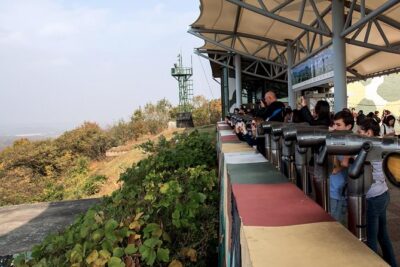
DMZ Tour: 3rd Tunnel, Option(Suspension Bridge, Boat) from Seoul
Read the review →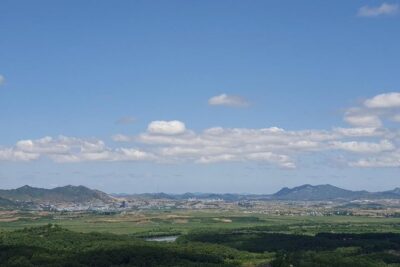
DMZ tour south Korea from Seoul (NK experience hall, defector)
Read the review →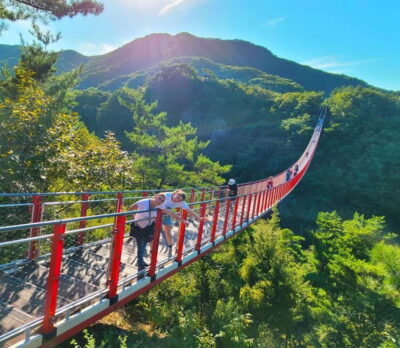
DMZ Insider Tour: 3rd Tunnel, NK Defector Meet & Red Bridge
Read the review →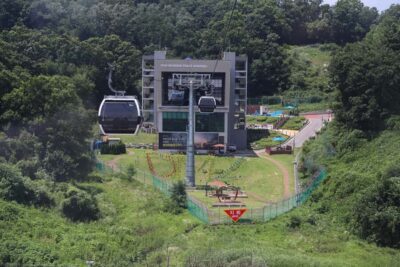
DMZ The 3rd Tunnel and Suspension Bridge Tour
Read the review →
Signature DMZ Tour: Exclusive Defector Talk & Suspension Bridge
Read the review →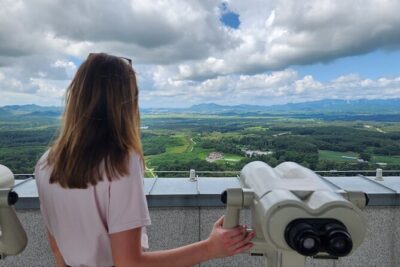
Thrilling Korean DMZ 3rd Tunnel Tour from Seoul + Red Bridge Rush
Read the review →Browse the lists this tour appears in