Reviewed · SEOUL TOURS
Learn and Make Your Very Own Craft Makgeolli
Makgeolli is not simply a sweet Korean drink poured from a plastic bottle. At Baekusaeng Makgeolli, you work with rice, nuruk, and fermentation, then leave with about 1.2 liters of your own batch to finish at home. Instructor Joe leads the class in clear English and keeps the session practical.
I like the wide tasting flight, which shows how much makgeolli can change in sweetness, acidity, aroma, and texture. I also like that the class teaches you to keep brewing after Seoul, rather than ending with a quick sample and a souvenir cup.
The main consideration is simple: this is a fermentation class with alcohol, not just a cultural talk. The tasting can be generous, and the space is small, so you should come ready to take part, listen closely, and handle a few hours of food-and-drink instruction.
Key points at a glance
- Taste before you brew: Compare several makgeolli styles and learn how sweetness, acidity, aroma, and texture work together.
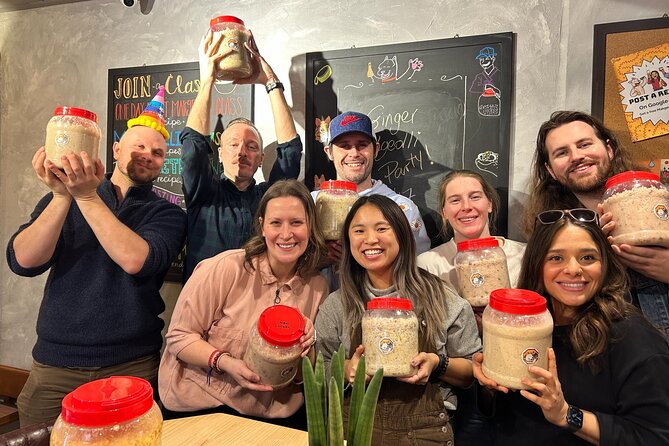
- Make a real batch: Prepare approximately 1.2 liters to take home and continue fermenting.
- Learn from Joe: The instructor explains the process in clear English and can help with questions during each step.
- Traditional methods matter: The class uses real ingredients and discusses nuruk, yeast activity, filtering, and conditioning.
- Small, social setting: The maximum group size is 15, with the class held in a compact makgeolli bar or brewery-style space.
- Useful for home brewers: You leave with a working foundation for experimenting with makgeolli in your own country.
Why this Seoul makgeolli class feels different
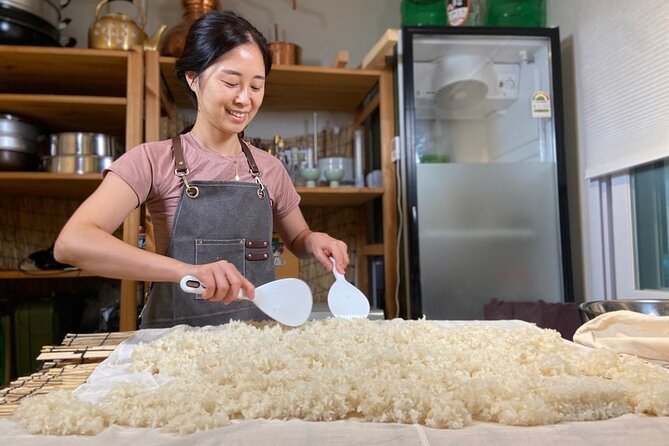
Many food activities give you a finished dish, a photo, and a few minutes of stirring. This one gives you a live process. Makgeolli changes as it ferments, so the class teaches you to think about time, temperature, ingredients, and texture rather than simply follow a recipe.
Baekusaeng Makgeolli presents itself as more than a one-day brewery activity. Its wider purpose is to help people keep brewing after they return home, supported by offline classes, a published book, and online courses. That matters if you are curious about making makgeolli more than once.
You do not need to arrive as a home brewer. The class is built for beginners, yet it also gives experienced cooks and fermentation hobbyists useful terms and methods to explore. You learn what each ingredient does, how fermentation begins, and why two batches made with similar materials can taste very different.
The experience takes place in Seoul at 346-35 Ahyeon-dong, Mapo-gu. It ends at the same meeting point, and the activity lasts about two hours. A group can include up to 15 people, though the compact setting may feel more intimate when attendance is lower.
A few more Seoul half-days to weigh up
- Best DMZ Tour Korea from Seoul (Red Suspension Bridge Optional)
★ 5.0 · 41,422 reviews - DMZ Tour: 3rd Tunnel, Option(Suspension Bridge, Boat) from Seoul
★ 5.0 · 21,373 reviews - DMZ tour south Korea from Seoul (NK experience hall, defector)
★ 5.0 · 20,599 reviews
Starting with a flight of makgeolli
The tasting comes early, and that is a smart choice. Before you make anything, you get a working idea of what the finished drink can be.
Expect to sample several kinds of makgeolli, with Joe explaining the differences as you go. The focus is not only on alcohol strength. You consider aroma, sweetness, acidity, and texture, which gives you a better vocabulary for understanding the drink.
This is where the class makes Korean drinking culture easier to understand. A basic supermarket bottle may suggest that makgeolli is always milky, sweet, and lightly fizzy. The tasting shows a much wider range, from clean and bright styles to fuller versions with more body and fermentation character.
The tasting also gives the class a social rhythm. You listen, compare, ask questions, and get to know the other people at the table. One Japanese-speaking couple found that the hands-on format made the class manageable even without strong English, helped by Joe’s patient use of translation tools when needed.
You should pace yourself. The samples keep coming, and the class is more enjoyable when you can still pay attention during the brewing section. If you are sensitive to alcohol, keep that in mind when judging the $70.70 price, since part of the value comes from the tasting as well as the instruction.
Learning rice, nuruk, and fermentation
Once you have tasted the range, Joe explains the building blocks of makgeolli. The class covers the essential ingredients and tools used in both traditional and modern brewing.
Nuruk is central to the lesson. It is a Korean fermentation starter that helps break down rice starches and supports the brewing process. You also learn about yeast activity and how fermentation turns a mixture of cooked grain and liquid into makgeolli.
The class does not present brewing as a magic trick. It explains the stages in a practical way, including fermentation, filtering, and conditioning. That makes the take-home batch more useful because you understand what is happening after you leave.
The distinction between traditional methods and shortcuts is also important. Baekusaeng focuses on fresh, real ingredients instead of reducing the process to a simplified demonstration. You are not just mixing a prepared base and calling it homemade.
Some class sessions have included a pumpkin mash, showing how ingredients can shape a batch and how makgeolli can become a place for creative experiments. The exact ingredients may vary, but the larger lesson stays the same: once you understand the base process, you can begin forming your own style.
The hands-on brewing session
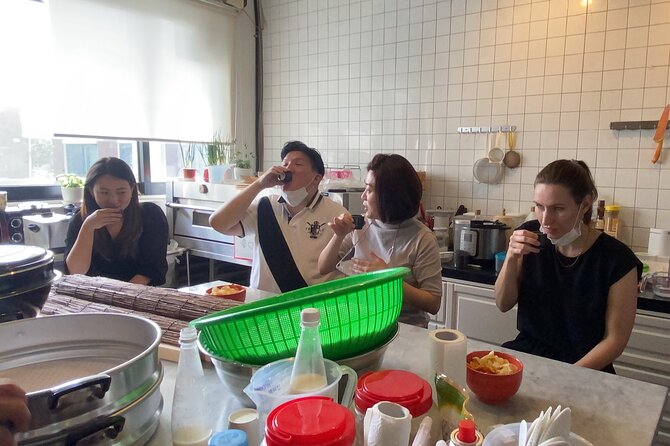
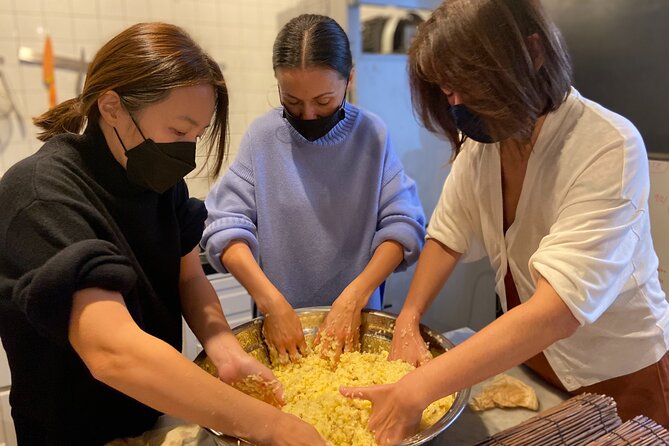
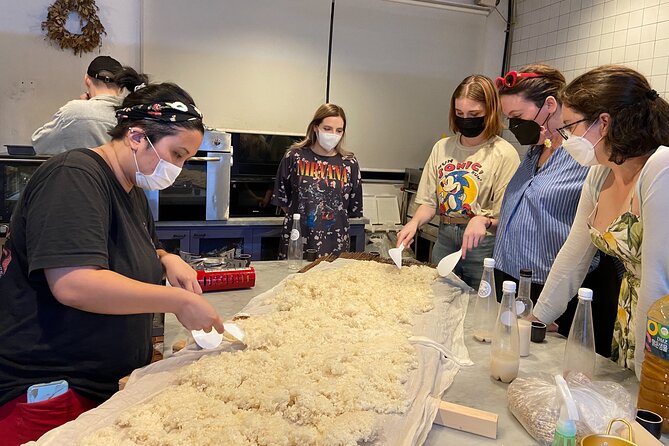
The most memorable part is the work itself. You handle the ingredients, follow the brewing steps, and prepare the mixture that will continue fermenting after the class.
This is not a spectator activity. You need to listen to the instructions, take part with your hands, and ask questions when something is unclear. Joe has been praised for organizing the session carefully and making sure participants understand each step, including people attending alone.
The class is especially useful because it does not stop at preparation. You learn about what happens next, including how to approach filtering and conditioning. That information helps you avoid treating your take-home batch as a finished drink immediately.
Your batch is packed in a large plastic bottle, similar in size and shape to a container used for fruit liqueur. You take it with you at the end, then continue the fermentation yourself. The amount is approximately 1.2 liters, enough to make the follow-up process feel real rather than symbolic.
You should remember that this creates an extra responsibility. The experience does not hand you a fully finished bottle ready for an instant toast. You leave with a living product that needs further attention, so the class is a better match for someone willing to follow through at home.
A different way to spend a day from here:
- Seoul: DMZ Tour with Optional Suspension Bridge
★ 4.8 · 5,277 reviews - Seoul: DMZ The 3rd Tunnel and Suspension Bridge Tour
★ 5.0 · 4,656 reviews - Signature DMZ Tour: Exclusive Defector Talk & Suspension Bridge
★ 5.0 · 4,459 reviews - Incheon Airport: Traveler SIM & T-money Transportation Card
★ 4.7 · 3,332 reviews
What the two-hour schedule means for you
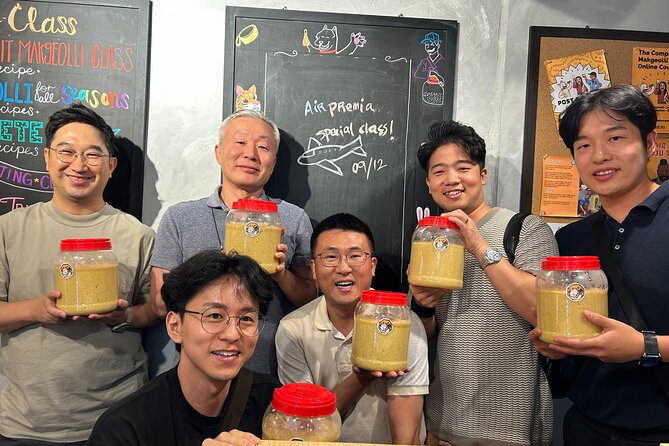
Two hours is enough time to cover the basics without turning the day into a technical brewing course. The schedule appears to divide naturally into tasting, explanation, hands-on preparation, and a final drink together.
The pace is active, but not rushed. You have time to compare samples and hear the Korean terms connected to the brewing process. Joe has even written terms on a whiteboard for people who needed help hearing or remembering them.
The class can also work well as an early-evening activity. One participant used it as a first-night experience in Seoul, finding that it offered a relaxed way to meet people while learning something tied directly to Korean culture. It is not a sightseeing tour, so you will not cover several city landmarks. Instead, you spend the full session in one place with one subject.
That narrow focus is a strength if you want depth. It may feel less suitable if you prefer a fast-moving itinerary with lots of stops. The activity ends back at the starting point, so you can continue your evening in Seoul afterward.
The small brewery setting in Ahyeon-dong
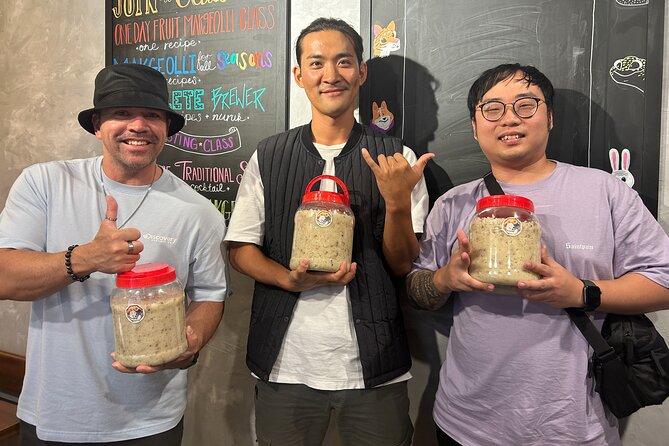
The venue has been described as a small, cozy makgeolli bar or microbrewery-style shop in a traditional Korean market setting. The space is compact and clean, with a more intimate feel than a large cooking school.
A small room changes the character of the class. You are close enough to see the ingredients and follow the preparation without standing at the back of a large demonstration hall. It also makes conversation easier, particularly when the group includes couples and solo participants from different countries.
The tradeoff is that you should not expect a grand production facility or a spacious dining room. With a maximum of 15 people, the class remains manageable, but the actual comfort depends on the day’s attendance and the compact layout.
The address is specific, yet one person still got lost and needed Joe’s help finding the shop. I would save the meeting-point details on your phone before leaving for the class. The activity offers a mobile ticket, is near public transportation, and begins and ends at 346-35 Ahyeon-dong, Mapo-gu.
Is $70.70 a fair price?
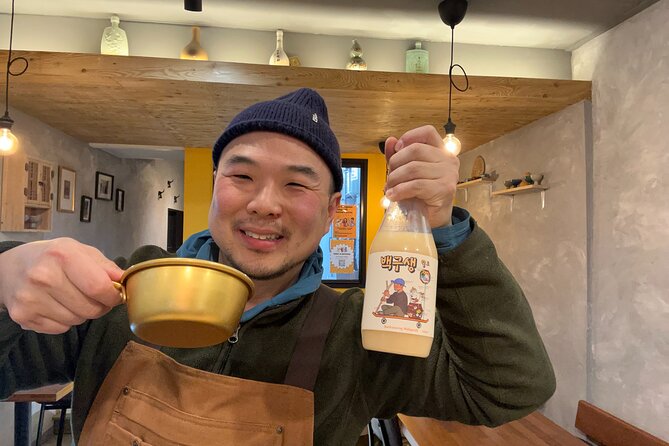
At $70.70 per person, this is not the cheapest tasting in Seoul. You are paying for more than drinks, though. The fee includes instruction, a broad sampling of makgeolli styles, hands-on preparation, and your own approximately 1.2-liter batch to take home.
The value improves if you care about learning a skill. A standard tasting may teach you what you like, but this class helps explain why you like it. You leave with a clearer sense of how rice, nuruk, fermentation, filtering, and conditioning affect the final drink.
The take-home batch also adds value, provided you plan to continue the process. If you are flying home soon and do not want to carry or manage a fermenting bottle, that part may be less useful. You should also check your own country’s rules before bringing alcohol-related products home, since those regulations are not provided here.
For someone who only wants one drink and a short cultural explanation, the price may feel high. For a person who wants a guided workshop, several tastings, and a starting point for home brewing, it is a reasonable price for a two-hour Seoul activity.
Who will enjoy this class most
I would choose this experience if you enjoy food traditions, fermentation, craft drinks, or hands-on workshops. It suits couples, solo participants, and small groups, and the relaxed format gives you a natural way to meet people without forcing a formal group activity.
It is also a strong pick for anyone who has tried makgeolli in Korea and wants to understand the drink beyond the bottle. You can compare commercial and craft styles, then see how the brewing process creates those differences.
The class works for beginners because Joe explains the stages in practical terms. It also offers enough detail for people already interested in making fermented drinks at home. Baekusaeng’s larger aim is to build a worldwide community of makgeolli brewers, so the instruction looks beyond the single afternoon.
You may want to choose another activity if you do not drink alcohol, dislike group participation, or want a finished souvenir with no follow-up work. The take-home makgeolli still needs to ferment, and the class expects you to take the process seriously.
Language, communication, and group comfort
Joe teaches in English, and the class has been described as easy to follow. He is also willing to answer questions patiently and use written Korean terms or translation help when language creates a problem.
The activity depends more on watching and doing than on listening to a long lecture. That helps if English is not your first language. You can follow the physical steps, check the ingredients, and ask for help as you work.
The maximum group size is 15, so the class is not private by default. A smaller turnout can create a more personal session, and one person even received one-on-one instruction when no one else had booked that date. You should not count on that, but it shows how the format can adapt.
Service animals are allowed, and the venue is near public transportation. The supplied details do not describe general accessibility beyond that, so contact the provider if you need specific information about the room or facilities.
Booking and timing advice
The experience is often booked about 23 days ahead, so I would not leave it until the last minute if it is important to your Seoul schedule. Confirmation arrives when you book, and the mobile ticket makes it easy to keep the booking on your phone.
Free cancellation is available if you cancel at least 24 hours before the local start time. Cancellations or changes made within 24 hours are not accepted for a refund, so confirm your Seoul plans before that deadline.
Save the address and allow time to find the small shop. Since the class begins and ends at the same location, it is easy to pair with nearby plans, but you should not assume the venue will be obvious from a major landmark.
Should you book Baekusaeng Makgeolli?
Book it if you want an authentic, hands-on look at one of Korea’s most interesting traditional drinks. The tasting flight, Joe’s patient teaching, and the chance to take home your own fermenting batch make this more useful than a simple bar stop.
I especially recommend it to curious eaters and drinkers who want to keep learning after the trip. Skip it if you want a quick, polished tasting with no work afterward, or if alcohol is not part of your plans.
For the right person, the best souvenir is not the bottle itself. It is the understanding that makgeolli is a living process, one you can continue long after Seoul.
FAQ
Where does the makgeolli class take place?
The class takes place at 346-35 Ahyeon-dong, Mapo-gu, Seoul, South Korea.
How long does the experience last?
The class lasts approximately two hours.
Where does the activity end?
The activity ends back at the meeting point in Ahyeon-dong.
How much does the class cost?
The listed price is $70.70 per person.
How much makgeolli can I take home?
You take home approximately 1.2 liters of your own makgeolli to continue fermenting.
Do I get to taste different makgeolli styles?
Yes. The class includes selected makgeolli tastings, with attention to aroma, sweetness, acidity, and texture.
What does the class teach?
You learn about ingredients, tools, nuruk, yeast activity, fermentation, filtering, and conditioning, along with traditional and modern brewing methods.
Is the class taught in English?
The class is taught by Joe in English. Written Korean terms and translation support may be used when helpful.
How many people can join the class?
The maximum group size is 15 people.
Can I cancel for a full refund?
Yes, if you cancel at least 24 hours before the experience start time. Changes or cancellations made less than 24 hours ahead are not accepted for a refund.
Recently added around Seoul
- Gyeongbokgung Palace Photo Session with your own phone★ 5.0 · 4 reviews
- Private Tour around Suwon UNESCO Fortress and Korea Folks Village★ 4.5 · 4 reviews
- Nami & Maple Road & Theatre des Lumieres Day Tour from Seoul★ 4.8 · 4 reviews
- N Seoul Tower + Namsan Cable Car Ticket (Collect in Myeongdong)★ 3.5 · 4 reviews
- Jisan Forest Resort: Ski Full-Day Tour or Shuttle from Seoul★ 5.0 · 4 reviews
- Seoul: Deoksugung Palace Night Tour★ 4.5 · 4 reviews
- Private Jeonju Hanok Village – Culinary tour★ 5.0 · 4 reviews
- Seoul Private Walking Tour with a Local★ 5.0 · 4 reviews
Seoul Tours, compared.
Best DMZ Tour Korea from Seoul (Red Suspension Bridge Optional)
Read the review →
DMZ Tour: 3rd Tunnel, Option(Suspension Bridge, Boat) from Seoul
Read the review →
DMZ tour south Korea from Seoul (NK experience hall, defector)
Read the review →
DMZ The 3rd Tunnel and Suspension Bridge Tour
Read the review →
Signature DMZ Tour: Exclusive Defector Talk & Suspension Bridge
Read the review →
Thrilling Korean DMZ 3rd Tunnel Tour from Seoul + Red Bridge Rush
Read the review →