Reviewed · SEOUL TOURS
Jeonju & Yeosu: 4-Day Foodie & Artist Journey
Yeosu’s seafood markets, seaside temples, and sunset yacht ride give this four-day trip a strong sense of place. Then the mood shifts inland to Jeonju, where you make hanji paper, wear hanbok, cycle beside a river, and learn traditional Korean painting.
I like the small group of no more than nine, which suits hands-on activities and makes meals easier to manage. I also like that the food is not an afterthought: you get marinated crab, seafood noodles, fried chicken by the sea, kongnamul-gukbap, and a full Jeolla-style feast.
The main consideration is the pace. You cover two cities, several restaurants, markets, craft sessions, a temple, a yacht cruise, and long train rides in four days. The $1,689 price is easier to justify if you want most meals, transport, and activities arranged for you, but it is not a budget tour.
Key points to know before booking
- Up to nine people: A compact group makes the cooking, craft, and painting sessions more personal.
- Two very different cities: Yeosu brings coast, seafood, fishing villages, and sunset views; Jeonju brings hanok streets, royal-era sights, and traditional arts.
- Food is central: Most meals are included, from Yeosu seafood to Jeonju’s famous soybean sprout soup rice.
- Hands-on Korean culture: You make gat kimchi and hanji paper, try traditional painting, wear hanbok, and join a tea or food-centered local experience.
- Long, full days: Expect early starts, several stops, and little unplanned time during the main touring hours.
- KTX and minivan travel: The trip begins and ends at Yongsan Station in Seoul, with high-speed trains and a private minivan used along the route.
Why Yeosu makes the perfect first stop
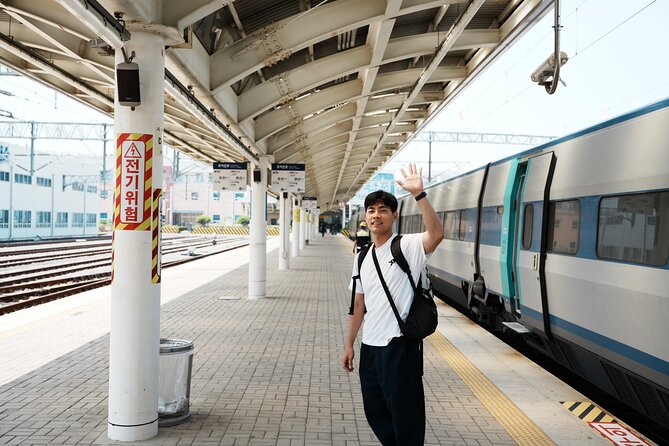
This journey begins at 8:00 a.m. at Yongsan Station, where you board a KTX train south. The train removes the stress of arranging intercity transport, and it lets you reach Yeosu without spending the first day navigating Korea’s rail system on your own.
Once you arrive, lunch at Cargo Restaurant sets the tone. The meal focuses on bold local flavors, including spicy sashimi and grilled meats. If you like Korean food with heat, seafood, and plenty of side dishes, this is a strong opening meal. If you prefer mild food or do not eat fish, tell the guide early so you understand your options.
An easy orientation at Namsan Park follows. With coffee and ocean views, you get time to settle in before the food stops begin in earnest. This is a useful pause after the train ride, especially because the rest of the day moves quickly.
A few more Seoul half-days to weigh up
- Seoul Street Food Market Tour
★ 5.0 · 1,226 reviews - Seoul: Night Market Food Tour with Local Guide
★ 4.9 · 943 reviews - Downtown Seoul Guided Food & Market Tour with 8+ Local Tastings
★ 5.0 · 580 reviews
Yeosu markets, fresh seafood, and a seaside chicken picnic
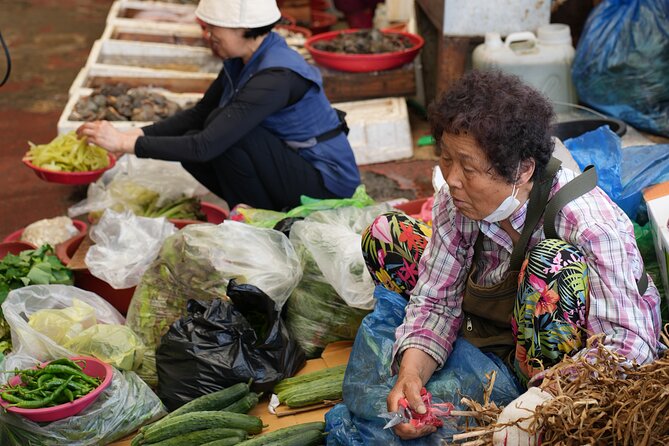
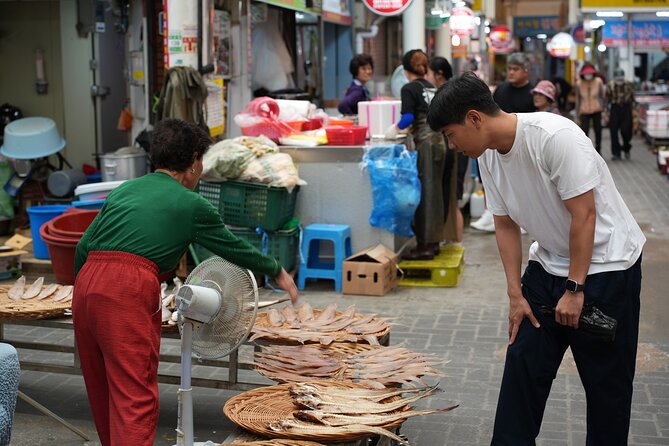
Yeosu Seomun Market, a century-old market, gives you a look at the everyday side of the city. The planned encounters include sesame oil makers and kimchi vendors, along with local snacks and the eye-catching clothing associated with Korean ajummas. This is the sort of stop where I would keep some personal spending money handy, even though the listed tour meals and activities are covered.
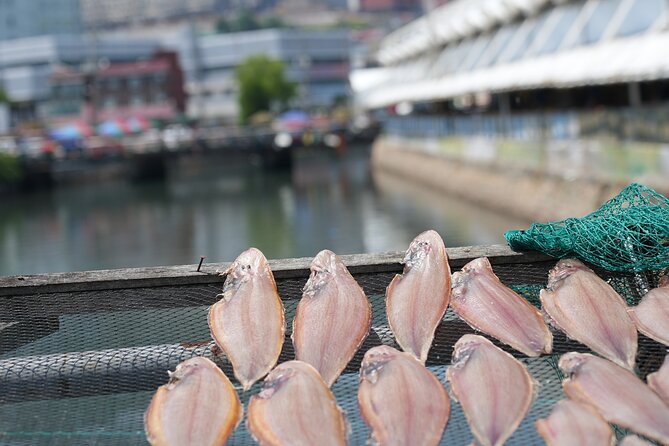
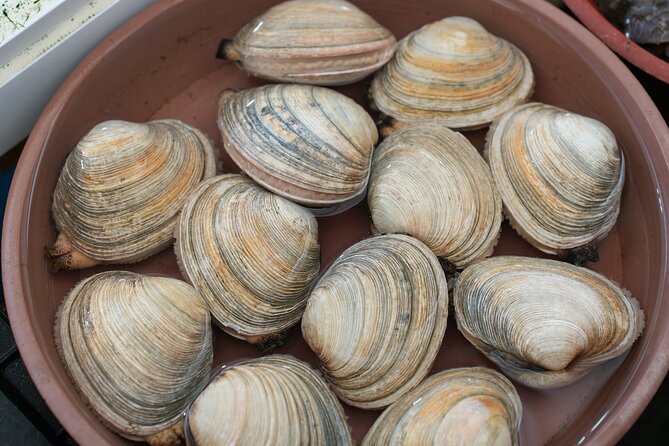
The Yeosu Fish Market is the big food event of the first afternoon. You choose seafood such as clams and shrimp, then take it upstairs to be steamed and served. That format connects the market purchase with the meal, and it gives you a clear sense of how fresh seafood moves from stall to table.
After checking into Shilla Stay Yeosu, you get time to rest before heading to Yeosu Marine Park. The evening meal is a fried chicken picnic on a mat beside the sea, with cold drinks and an ocean breeze. It is casual, social, and very Korean in spirit. You are not being led through another formal restaurant course, which helps break up the steady parade of sit-down meals.
Day two brings Hyangiram, mustard leaves, and marinated crab
The second day starts at Palgakjeong Pavilion on Dolsando with gimbap and coffee. A light hike leads to Hyangiram Hermitage, a seaside temple perched on the cliffs. The appeal here is not only the temple itself but also the quiet and the coastal views. Wear shoes you can walk comfortably in, since the morning includes both a hike and temple access.
The next stop is a gat kimchi workshop in a nearby countryside village. Yeosu is known for mustard leaf kimchi, and you get to mix your own batch rather than simply taste it. A stroll through mustard leaf fields adds context to the ingredient and gives the morning a slower rural feel.
Lunch is a Dolsan marinated crab set meal. Gejang is a signature dish of the region, but it is also a dish that may be challenging if you are not comfortable eating crab in a hands-on way. This meal is best for adventurous eaters who want a local specialty rather than a familiar substitute.
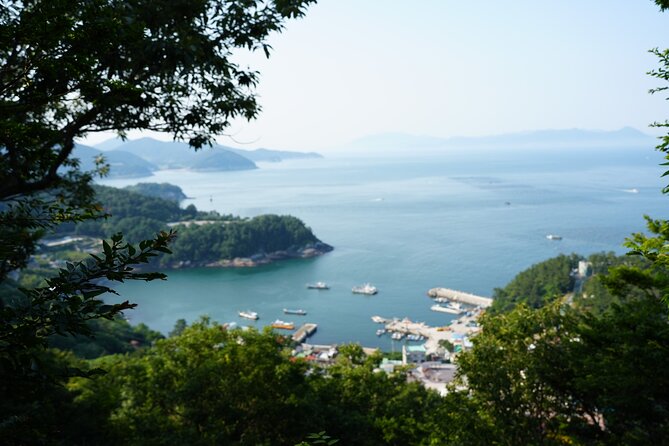
Dumun Village offers a short stop for fishing-village views and photographs. At only about 30 minutes, it is a quick scenic break, not a full village visit. Later, pajeon and makgeolli lead into Yeosu seafood kalguksu, a comforting knife-cut noodle dish. The food schedule is generous, so you should not expect much time for independent restaurant hunting.
Sunset from the South Coast, then a red-tent night
The sunset yacht ride is one of the trip’s most appealing extras. You spend about an hour on the water as the sun drops over the South Coast. The yacht adds a sense of occasion that a simple waterfront viewpoint cannot match, and it gives you a chance to sit back after a food-and-sightseeing day.
The evening continues at a red-tent pojangmacha on Yeosu Romantic Carriage Street. Soju is not included, so budget separately if you want to join this stop. The setting is designed around a classic Korean night out, but you can treat it as optional if you are tired or do not drink.
This is also where the trip’s schedule may test you. Day two includes a temple, a workshop, village scenery, several food stops, a yacht ride, and a late evening. I like the variety, but I would not book this program expecting long lie-ins.
A different way to spend a day from here:
- Best DMZ Tour Korea from Seoul (Red Suspension Bridge Optional)
★ 5.0 · 41,422 reviews - DMZ Tour: 3rd Tunnel, Option(Suspension Bridge, Boat) from Seoul
★ 5.0 · 21,373 reviews - DMZ tour south Korea from Seoul (NK experience hall, defector)
★ 5.0 · 20,599 reviews - Seoul: DMZ Tour with Optional Suspension Bridge
★ 4.8 · 5,277 reviews
Jeonju begins with hanok streets and a bowl of patbingsu
After a final Yeosu breakfast at Rotary Restaurant, you take the KTX to Jeonju. The train ride is practical and scenic, though the transfer uses a large part of the morning. Jeonju is known as Korea’s cultural and food capital, and the change from coast to traditional houses gives the trip a clear second chapter.
Lunch at Daebojang focuses on Korean-style Chinese food. This may sound like an odd choice in a city famous for Korean specialties, but it provides a different view of Korean dining: familiar Chinese dishes adapted to local tastes.
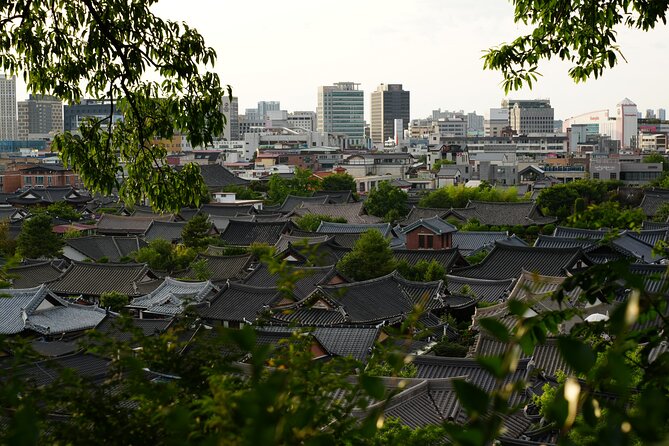
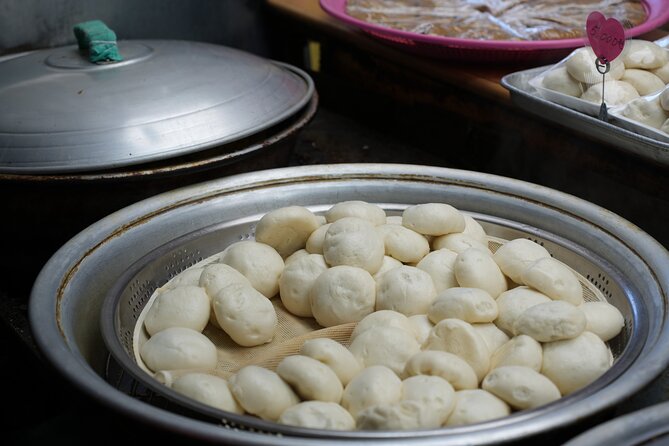
At Grandma’s Best, you have homemade-style patbingsu, a shaved ice dessert topped in a traditional manner. Then you enter Jeonju Hanok Village, where tiled roofs, timber homes, and narrow lanes create the visual setting many people associate with old Korea. The village can be busy, but the organized introduction helps you get your bearings without having to plan the first walk yourself.
Hanji paper and Joseon-era dress at Gyeonggijeon
The hanji session at Jeonju’s 1,000 Years Hanji Center is one of the trip’s most meaningful cultural activities. You make your own Korean handmade paper with a master artisan. The value here is that you leave with a better sense of the work behind an object that can otherwise look simple in a shop.
Next comes hanbok rental and a visit to Gyeonggijeon Shrine. You dress in traditional Korean clothing and pose at the shrine, which preserves the portrait of King Taejo. The combination works well because you are not only looking at a historic site. You also take part in the visual culture of the setting.
Allow time for changing clothes and photographs. The two-hour stop is not just a quick photo opportunity, and the clothing may feel warm or cumbersome if the weather is hot. Still, this is a good fit if you enjoy Korean dramas, portrait photography, or historic architecture.
Cycling beside Jeonjucheon and a late-night food finish
The afternoon cycling segment follows Jeonjucheon River toward Hanbyeokgul Tunnel. The route combines greenery, a riverside ride, and a tunnel known as a filming location. It gives you a break from indoor meals and dense old-town streets, though you should be comfortable riding a bicycle for about two hours.
Dinner at Taepyeong Jinmijip features charcoal-grilled pork wrapped in fresh greens. The restaurant carries four decades of pojangmacha tradition, so the setting is as important as the food. This is an informal meal with smoky flavors and a relaxed street-food feel.
The day still is not over. Deokjin Park brings a calmer night scene, with lotus flowers on the pond and illuminated hanok architecture. After returning to the Royal Room of King at Wangyijim Hanok Hotel, you have some free time before the Jeonju gamak experience at Chowon.
Gamak pairs beer with charcoal-grilled dried pollack. It is a local drinking-and-snacking tradition rather than a formal meal, and it makes a lively end to an already full day. If you want quiet evenings, this program offers only limited space for them.
Traditional painting and Jeolla generosity on the final morning
Breakfast begins with Jeonju kongnamul-gukbap, soybean sprout soup with rice and a poached egg. This is a simple, warming dish, but it is an important Jeonju specialty. After two days of seafood, grilled foods, and rich sauces, the soup provides a welcome reset.
The longest single activity is a three-hour traditional Korean painting session at Samwonhwabang. A certified restoration master artisan leads the class, giving you time to work carefully rather than rush through a quick demonstration. This is likely to suit you if you enjoy making things and want a quieter cultural experience.
The final meal is a full Jeolla-style bapsang, with a broad spread of regional dishes arranged across the table. Jeolla cuisine is known for generous side dishes and variety, so this meal functions as both lunch and a final display of the region’s food traditions. Come hungry, because this is not a light farewell snack.
The trip closes at Omokdae and Imokdae, a viewpoint overlooking Jeonju Hanok Village. It is a fitting last stop: after several days of eating, crafting, dressing up, and moving between places, you get a chance to look back over the tiled roofs before returning to Yongsan Station.
What the $1,689 price really covers
At $1,689 per person, this is an expensive four-day experience. The price makes more sense when you count what is bundled: KTX tickets, private minivan transport, the yacht, admission fees, all listed tours and activities, four lunches, three dinners, and four breakfasts.
You also avoid arranging hotels, local transfers, restaurant reservations, and workshop bookings on your own. For a first visit to Korea, that convenience can be worth a good part of the cost, especially in Yeosu, where a packed food schedule and several rural stops would take planning.
The value is weaker if you already speak Korean, are comfortable booking Korean trains and restaurants, or prefer to travel slowly. Personal expenses, international flights, travel insurance, and the soju night are not included. The experience also does not promise a long list of free hours for independent exploration.
Who should book this four-day Korean food tour
I would choose this for a food-focused visitor who wants more than Seoul, particularly someone interested in coastal Korea and regional cooking. It suits couples, friends, and solo visitors who like meeting local people in a small group and are happy to share meals.
It is also a good match for anyone who wants hands-on culture without giving up comfort. You get craft workshops, hanbok, painting, and a temple visit, but you also have hotel accommodation, KTX travel, and arranged transport between stops.
I would hesitate if you dislike seafood, cannot eat spicy food, avoid alcohol-related settings, or want a restful schedule. The tour includes crab, sashimi, seafood noodles, makgeolli, soju, beer, and many meals close together. Ask about dietary needs before booking, since the provided details do not specify substitutions.
The group maximum is nine, and most people can participate. The starting point is near public transportation at Yongsan Station, and the experience returns there at the end. Confirmation is normally immediate, but bookings made within nine days may take up to 48 hours, subject to availability.
Cancellation terms are fairly strict close to departure. You can receive a full refund if you cancel at least six full days before the start time, 50 percent back if you cancel two to six full days ahead, and no refund for cancellations less than two full days before departure. The provider may also offer a new date or a full refund if the minimum group size is not met.
Should you book the Yeosu and Jeonju journey?
Book it if you want Korea through food, craft, and local scenery rather than a checklist of major city sights. The strongest parts are the fresh seafood market, gat kimchi making, sunset yacht, hanji workshop, hanbok visit, and traditional painting class.
Skip it if you prefer to choose your own restaurants, sleep late, or spend several days in one place. At $1,689, you are paying for structure and access, not bargain transportation. For the right kind of visitor, the combination of Yeosu’s sea air and Jeonju’s handmade traditions gives you a memorable look at two very different sides of Korea.
FAQ
Where does the tour start?
The tour starts at 8:00 a.m. near Yongsan KTX Station on Hangang-daero 23-gil in Seoul’s Yongsan District.
Where does the tour end?
The experience ends back at the meeting point, Yongsan Station, after the return KTX journey from Jeonju.
How long does the experience last?
The tour lasts approximately four days.
How large is the group?
The tour has a maximum of nine travelers.
Is transportation included?
Yes. The package includes KTX train tickets and private transportation by minivan.
Are meals included?
Yes. The package includes four lunches, three dinners, and four breakfasts. Personal expenses are not included, and soju at the red-tent pojangmacha is listed separately.
Is the yacht ride included?
Yes. The sunset yacht tour in Yeosu is included.
Can most people participate?
The activity information says most travelers can participate. It is also near public transportation.
What is the cancellation policy?
You can cancel at least six full days before the start time for a full refund. Cancellations made two to six full days ahead receive a 50 percent refund, while cancellations less than two full days before departure are not refunded.
Recently added around Seoul
- Seoul: Private Car Tour with Licensed Professional Guide★ 5.0 · 3 reviews
- Imjingak DMZ Private Tour for Incheon Airport and Cruise Guests★ 5.0 · 3 reviews
- Unique Native Experience : Han River Picnic, Board game, BBQ★ 5.0 · 3 reviews
- Seoul: Nami and K-Garden with Optional Alpaca Winter Tour★ 5.0 · 3 reviews
- BTS In The Soop Version: One Day Private VIP Tour★ 5.0 · 3 reviews
- DMZTour from Seoul:3rd Tunnel,North Korea View&UNESCO Valley★ 5.0 · 3 reviews
- Bukhansan mountain hiking tour – 6 hours★ 4.7 · 3 reviews
- Seoul’s Hidden Dark History Guided Tour of Seodaemun Prison★ 5.0 · 3 reviews
Seoul Tours, compared.
Best DMZ Tour Korea from Seoul (Red Suspension Bridge Optional)
Read the review →
DMZ Tour: 3rd Tunnel, Option(Suspension Bridge, Boat) from Seoul
Read the review →
DMZ tour south Korea from Seoul (NK experience hall, defector)
Read the review →
DMZ The 3rd Tunnel and Suspension Bridge Tour
Read the review →
Signature DMZ Tour: Exclusive Defector Talk & Suspension Bridge
Read the review →
Thrilling Korean DMZ 3rd Tunnel Tour from Seoul + Red Bridge Rush
Read the review →