
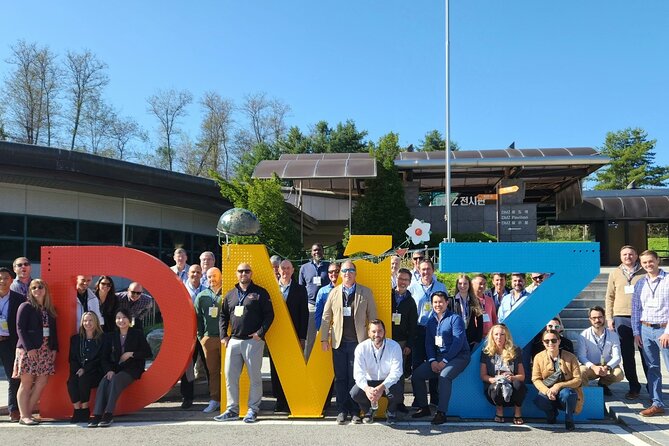
Reviewed · DMZ TOURS
DMZ Highlights & Exclusive Defector Interview – True Human Story
The most memorable part of this DMZ day is not the barbed wire or binocular view of North Korea. It is the personal interview with a North Korean defector, which puts human weight behind a conflict that can otherwise feel distant and abstract. Guides such as SP Hong add clear history, humor, and time for questions.
I like two things right away: you see the major DMZ sights in one outing, and the tour handles transport from Seoul in an air-conditioned vehicle. The Third Tunnel also gives you something physical to do, though the steep return walk and low ceiling can be tough.
The main catch is that this is a tightly scheduled group tour, sometimes with up to 90 people. The suspension bridge is an optional course, not automatically part of the $27 tour, and a stop at an amethyst jewelry shop may replace it on some versions. Check exactly what you are booking.
Key points to know before you go
- A defector interview gives the day its human focus: You hear about life in North Korea, escape, hardship, and hope through a live question-and-answer session.
- The Third Tunnel is a real workout: The route extends 435 meters into South Korea, with a steep uphill walk back and low sections that may challenge taller visitors.
- Dora Observatory offers a direct view north: On a clear day, binoculars reveal Gaeseong City, the Gaeseong Industrial Complex, and the carefully staged Propaganda Village.
- Imjingak mixes remembrance with modern attractions: Monuments and war relics sit beside restaurants, large buildings, and amusement-style rides.
- The $27 price is strong for a full day: Transport, guide services, entrance fees, and the defector session are included, but lunch and hotel drop-off are not.
- The route can change without warning: The DMZ is an active military area, so access may close suddenly and an alternative visit may be offered without a refund.
Why the defector interview changes the DMZ experience
Many DMZ outings can become a parade of viewpoints, fences, tunnels, and military facts. This one tries to connect those places with a person. The interview is the clearest reason to choose this tour over a cheaper transport-only visit.
The exact speaker can vary, but the experience includes a North Korean defector speaking about personal life and escape. The guide translates and manages questions. One session with Ms. Cho was described as detailed and thoughtful, while another was praised for a passionate exchange with many questions. That variation is normal with a live speaker, but the format gives the day a voice that museum panels cannot provide.
I would treat this part with respect. It is not entertainment, and the questions can touch on fear, family separation, political control, and the difficult process of leaving North Korea. The most useful approach is to listen first and ask clear, considerate questions.
The interview also helps you understand why the DMZ is more than a tourist stop. From Seoul, the division of Korea can feel like a political story in the news. Near the border, it becomes a question of ordinary people who cannot freely cross a line only a few dozen miles from the capital.
More DMZ Tours in Seoul:
- Best DMZ Tour Korea from Seoul (Red Suspension Bridge Optional)
★ 5.0 · 41,422 reviews - DMZ Tour: 3rd Tunnel, Option(Suspension Bridge, Boat) from Seoul
★ 5.0 · 21,373 reviews - DMZ tour south Korea from Seoul (NK experience hall, defector)
★ 5.0 · 20,599 reviews
Starting at 7:30 am in central Seoul
The meeting point is at 92 Sejong-daero in Jung District, with departure scheduled for 7:30 am. You need to arrive on time. There are no changes or refunds if you miss the departure, even for a reason that feels unavoidable.
Once the group is assembled, you travel directly toward the DMZ. The transfer from Seoul takes about 50 minutes according to the planned schedule, though traffic can alter the timing. An air-conditioned vehicle matters here because the day involves several outdoor stops, walking, and security-related pauses.
The group can be large, with a maximum of 90 people. That keeps the price low, but it also means you should expect a less personal rhythm than you would get on a private tour. A strong guide makes a major difference. SP Hong receives repeated praise for fluent English, comic timing, organization, and a good balance between serious history and lighter moments.
You will need your passport. Bring the same passport details used when booking if possible, and keep the document accessible throughout the day. The DMZ is a military zone, so security rules are not optional.
Imjingak Pyeonghoa-Nuri Park and the Freedom Bridge
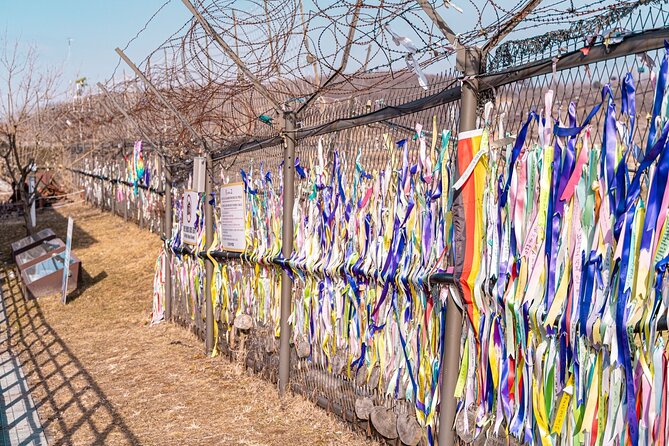
Imjingak is an effective first stop because it introduces the emotional side of Korea’s division before you reach the military zone. The park expresses the continuing wish for reunification, but it is not a solemn memorial site alone. You may see restaurants, large modern buildings, and amusement-style rides beside fences, monuments, and war relics.
That mixture can feel strange at first. It also reflects the way the DMZ has become both a place of mourning and a major day-trip destination. Your guide helps explain the monuments and the stories behind them, which is more useful than simply taking photographs.
The Freedom Bridge is the key historical feature. It was used by about 13,000 prisoners of war in 1953 as they returned to freedom. The bridge, sometimes identified in the itinerary as Mangbaedan Bridge on the Imjingang River, carries a strong symbolic meaning. It is a physical reminder that the border has separated families and soldiers, not just governments.
Allow about an hour here. You will have time to look around, but the schedule is not designed for slow wandering. If you want photographs, take them early and keep an eye on the guide.
Entering the DMZ itself
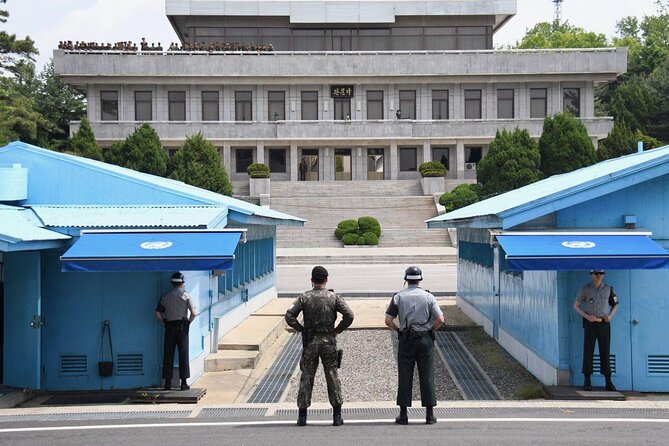
The main DMZ visit lasts about 40 minutes. The demilitarized zone is a military demarcation area between North and South Korea where military activity is officially prohibited. It remains one of the clearest symbols of the Korean Peninsula’s division since the Korean War.
The word demilitarized can sound reassuring, but this is still a controlled military area. Entry rules, road access, and opening times can change suddenly. The operator says an alternative tour may be provided if the DMZ closes, with no refund. That is an important condition, not a footnote to ignore.
This part of the day may feel less dramatic than the tunnel or observatory. Its value comes from understanding the geography. You are not simply visiting a museum about a border. You are moving through an active security zone where the political situation still affects daily access.
Keep your passport close, follow photography instructions, and stay with the group. A guide can explain what you are seeing, but no guide can override military restrictions.
A few more Seoul half-days to weigh up
- Seoul: DMZ Tour with Optional Suspension Bridge
★ 4.8 · 5,277 reviews - Seoul: DMZ The 3rd Tunnel and Suspension Bridge Tour
★ 5.0 · 4,656 reviews - Signature DMZ Tour: Exclusive Defector Talk & Suspension Bridge
★ 5.0 · 4,459 reviews - Incheon Airport: Traveler SIM & T-money Transportation Card
★ 4.7 · 3,332 reviews
The Third Tunnel: the day’s hardest walk
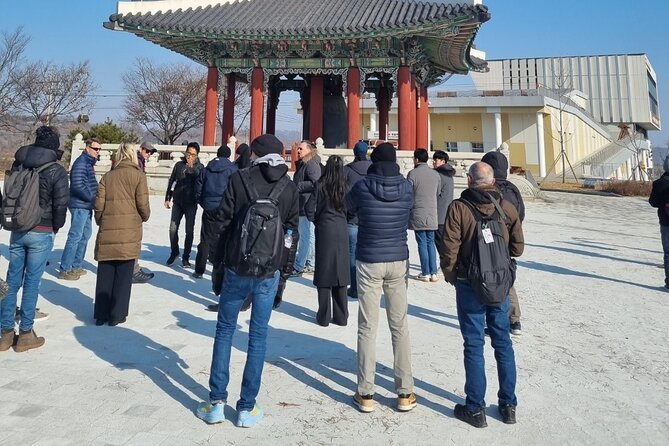
The Third Infiltration Tunnel is often the physical highlight. The tunnel reaches about 435 meters into South Korea and is believed to have been built by North Korea for military purposes. You can watch a documentary, see displays explaining the discovery, and walk part of the route.
The descent is manageable for many people. The return is the real test. You walk uphill, and the tunnel has low sections that can be awkward if you are tall. One hour is set aside for this stop, but the visit is not particularly accessible for people with mobility issues.
Wear sneakers or other comfortable shoes. Do not treat this as a quick stroll from the vehicle. The tunnel is a worthwhile part of the day if you can handle a steep walk, but you should be honest about your fitness before booking.
The tunnel gives the DMZ a physical presence. At Dora Observatory, you look toward the North. Here, you move underground through a passage connected to military tension. That contrast makes the two stops work well together.
Dora Observatory and the view into North Korea
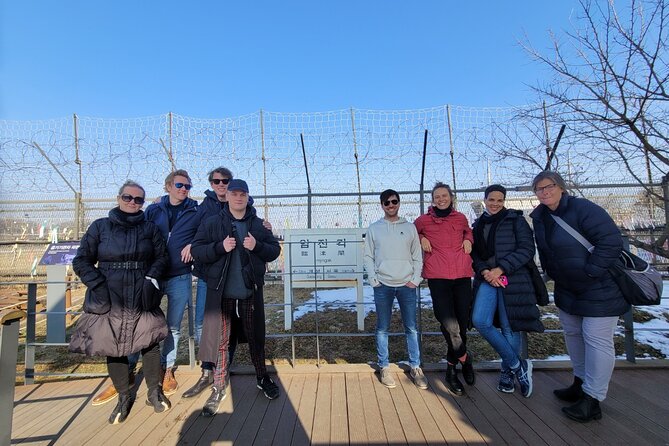
Dora Observatory provides the clearest outward view of North Korea on this route. From the viewing area, you may see Gaeseong City, the Gaeseong Industrial Complex, and the settlement often called Propaganda Village.
Bring patience. Visibility depends on weather, and the view can be hazy or subdued rather than cinematic. Binoculars help you identify the places your guide discusses. The observatory is most useful when you first hear the explanation, then use the viewing equipment to locate those sites yourself.
The so-called Propaganda Village was built to present an attractive image of North Korean life, though it is widely described as largely unoccupied. You will not receive the same impression from a distant view that you would from entering a town, but the sight still shows how the border has been used for political messaging.
The planned visit lasts about an hour. Take your time with the view, but do not expect a long private viewing session. On a clear day, this can be one of the most striking moments of the trip. On a cloudy day, the guide’s explanation becomes even more important.
Unification Village and the changing route
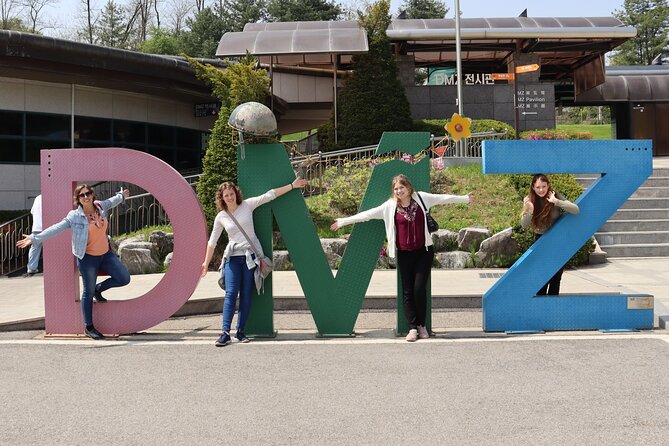
Tongilchon-gil, also called Unification Village, is a brief stop of about 10 minutes. The village lies north of the Civilian Control Line and is known for agricultural products including Jangdan ginseng and Jangdan soybeans.
This is a short pause rather than a full village visit. You may have a chance to understand how people live and work close to the controlled zone, but do not expect a long independent walk or a full market visit. Its value is practical: it shows that the border area is not only monuments and military infrastructure.
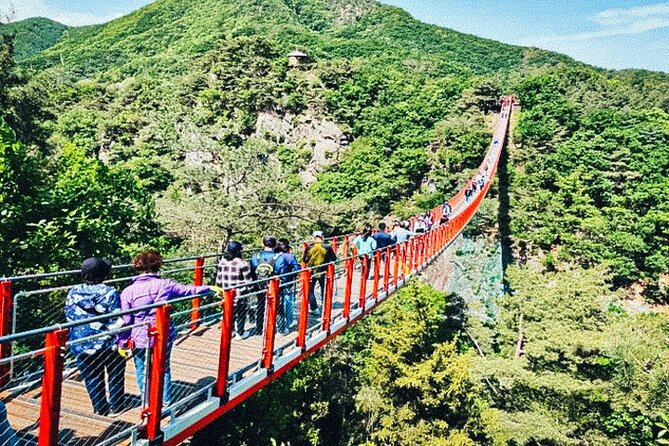
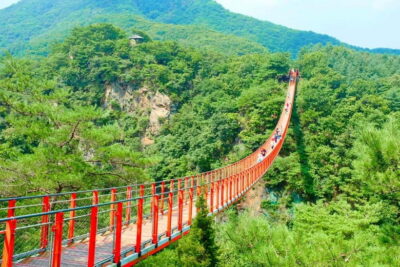
The schedule may also include the Gamaksan Chulleong Suspension Bridge. This is an optional course and should not be assumed to be part of the base booking. It was once Korea’s longest suspension bridge at 220 meters and crosses the Silmari Valley.
The approach requires a 20 to 30 minute uphill walk. The bridge option takes about an hour, and it needs a minimum number of participants. If that number is not reached, the operator may revise or change the route.
This is a very different experience from the defector interview. The bridge offers scenery and a little thrill, while the core tour centers on history, security, and personal testimony. If the bridge matters to you, choose the correct higher-priced option when booking and confirm it before departure.
The return to Seoul and the lunch problem
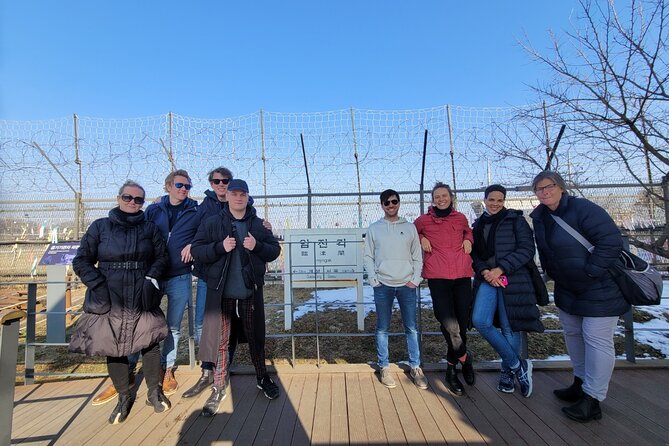
The day can last seven to nine hours, depending on traffic and site conditions. The schedule includes a return toward central Seoul, with drop-off at City Hall Station. Some information also refers to Myeongdong near the end of the route, but the stated drop-off is City Hall, so plan around that location.
Lunch is not included. One useful practical tip is to bring snacks because the schedule may leave little time for a proper meal. You are moving between controlled sites, and security or traffic delays can shift the plan.
The tour also does not include hotel drop-off. That is a small cost consideration if you are staying outside central Seoul, but City Hall is a useful end point for continuing your day. You may need to arrange your own dinner or late lunch after returning.
Is $27 a good value?
At $27 per person, this is a strong deal for a full-day outing. The price includes an English-speaking certified guide, transportation in an air-conditioned vehicle, entrance fees, taxes, and the defector interview. Paying separately for transport and admission could easily make a self-planned visit less simple, even before accounting for the military access rules.
The low price comes with trade-offs. A group of up to 90 people means waiting, repeated instructions, and limited freedom at each stop. The guide must keep everyone moving, especially at the tunnel and observatory.
You also need to compare the exact package. The defector-only version does not automatically include the Gamaksan bridge. The bridge option costs slightly more and may be changed if too few people select it. One account also described a jewelry shop stop in place of the expected bridge option, so read the selected course carefully rather than relying on the headline title.
For a first visit to Seoul, I think the value is especially good if you want the main sights without arranging several trains, buses, permits, and admission details. It is less attractive if you want a quiet, slow study of the DMZ or dislike group schedules.
Who should book this DMZ day?
I would recommend it to a first-time Seoul visitor who wants a clear introduction to the border and does not want to manage transport alone. It suits people who value explanation, ask questions, and want the defector interview to give the day a human center.
It also works well for solo visitors. The guide-led format removes the worry of finding the meeting point, arranging transport, or navigating a controlled area alone. The early start means you should be comfortable with a long day outside central Seoul.
Think twice if you have mobility limitations, dislike uphill walking, or find low tunnels uncomfortable. The Third Tunnel is not a gentle sightseeing stop, and the Gamaksan option adds another uphill approach. Children must be accompanied by an adult.
I would also avoid booking this as a casual last-minute activity if your schedule is tight. Site closures, traffic, and security procedures can change the timing. The tour promises a full day, not a perfectly predictable one.
My booking advice
Choose the defector interview package if personal testimony is your priority. Select the Gamaksan course only if the suspension bridge genuinely appeals to you, and confirm that it is included rather than assuming the title covers it.
Bring your passport, comfortable shoes, water, and snacks. Arrive well before 7:30 am. Keep an open mind about the day’s pace, since the guide has to move a large group through places where access can change without notice.
Free cancellation is available until 24 hours before the start time. After that, cancellations and changes are not accepted for a refund.
Should you book it?
Book this tour if you want the essential DMZ sights, a practical ride from Seoul, and a direct conversation with someone who escaped North Korea. The interview is the main reason to choose it, while the Third Tunnel supplies the physical challenge and Dora Observatory supplies the big geographic view.
Skip it if you want a private, slow-paced visit or if walking through the tunnel will be difficult. For most first-time visitors who can manage the early start and group format, $27 buys a serious day with more meaning than a simple border photo stop.
FAQ
What time and where does the tour start?
The tour starts at 7:30 am at 92 Sejong-daero, Jung District, Seoul, South Korea.
How long does the DMZ tour take?
The full experience lasts approximately seven to nine hours. The final timing can change because of traffic and conditions at the sites.
Is transportation included?
Yes. Transportation is provided in an air-conditioned vehicle, and the tour ends back in central Seoul.
Is lunch included?
No. Lunch is not included, and bringing snacks is recommended because the schedule may not leave much time for a meal.
Do I need to bring my passport?
Yes. All participants must bring a passport.
Does the tour include the Gamaksan suspension bridge?
Not necessarily. The Gamaksan Chulleong Bridge is an optional course that may cost slightly more and requires a minimum number of participants. Check the package you select.
Is the Third Tunnel difficult to walk?
The Third Tunnel includes an uphill return walk and low sections. A moderate level of physical fitness is required, and comfortable shoes are recommended.
What happens if the DMZ closes?
The DMZ can close suddenly because it is a military area. If that happens, an alternative tour may be provided, and no refund is offered for the closure.
Recently added around Seoul
- Gyeongbokgung Palace Photo Session with your own phone★ 5.0 · 4 reviews
- Private Tour around Suwon UNESCO Fortress and Korea Folks Village★ 4.5 · 4 reviews
- Nami & Maple Road & Theatre des Lumieres Day Tour from Seoul★ 4.8 · 4 reviews
- N Seoul Tower + Namsan Cable Car Ticket (Collect in Myeongdong)★ 3.5 · 4 reviews
- Jisan Forest Resort: Ski Full-Day Tour or Shuttle from Seoul★ 5.0 · 4 reviews
- Seoul: Deoksugung Palace Night Tour★ 4.5 · 4 reviews
- Private Jeonju Hanok Village – Culinary tour★ 5.0 · 4 reviews
- Seoul Private Walking Tour with a Local★ 5.0 · 4 reviews
DMZ Tours, compared.
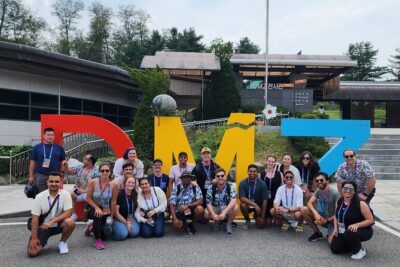
Best DMZ Tour Korea from Seoul (Red Suspension Bridge Optional)
Read the review →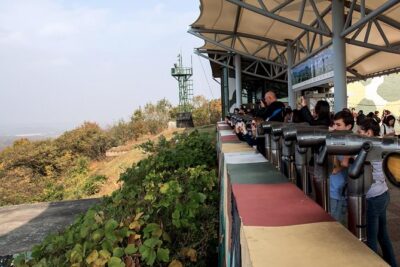
DMZ Tour: 3rd Tunnel, Option(Suspension Bridge, Boat) from Seoul
Read the review →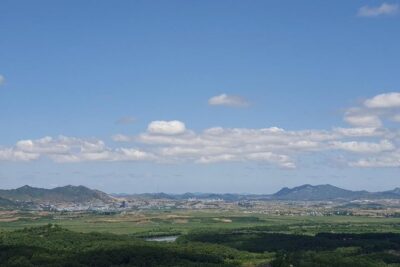
DMZ tour south Korea from Seoul (NK experience hall, defector)
Read the review →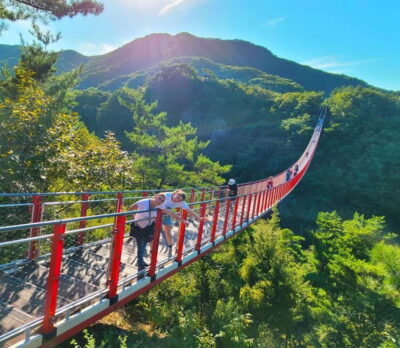
DMZ Insider Tour: 3rd Tunnel, NK Defector Meet & Red Bridge
Read the review →
DMZ The 3rd Tunnel and Suspension Bridge Tour
Read the review →
Signature DMZ Tour: Exclusive Defector Talk & Suspension Bridge
Read the review →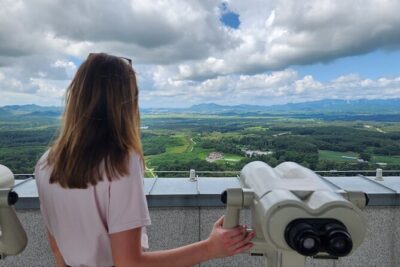
Thrilling Korean DMZ 3rd Tunnel Tour from Seoul + Red Bridge Rush
Read the review →Browse the lists this tour appears in