
Reviewed · DMZ TOURS
Private DMZ tour(Tunnel / Observation) with hotel pick up
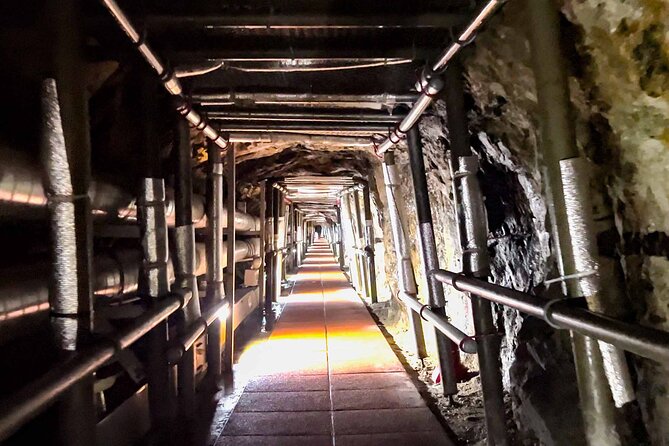
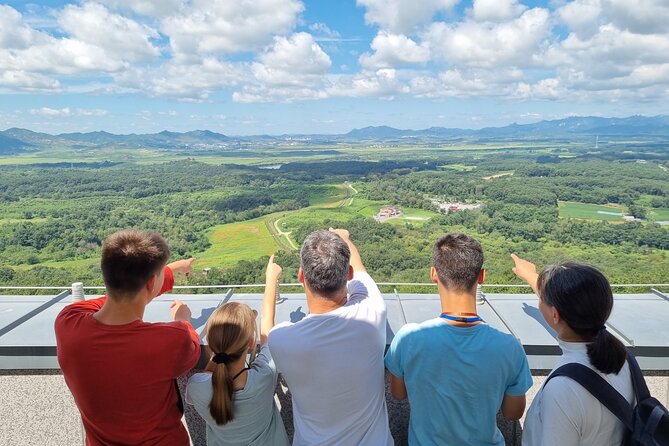
The most striking part of this tour is the Third Infiltration Tunnel, a passage dug by North Korea beneath the border. You walk into the dark, sloping tunnel and then look across the divided Korean Peninsula from Dora Observatory. The experience makes a distant political story feel physical and close.
I like the private hotel pickup, which saves you from finding an early meeting point, and the clear focus on two major DMZ sights. Guides such as Juno Lee and Miae are known for fluent English, patience, and plenty of context. The main drawback is the long day, plus a steep walk underground that will not suit anyone with claustrophobia or mobility trouble.
Key points before you book
- The Third Infiltration Tunnel: Walk into a North Korean passage built for a possible military attack, with a low ceiling and a downhill route.
- Dora Observatory: Use the viewing area to see toward the DMZ and understand the division from a distance.
- Private hotel pickup: Your own group participates, with pickup in Seoul at about 8:00 a.m.
- A guide-led history lesson: Juno Lee and Miae are among the guides associated with this experience, with clear English and an easy, helpful manner.
- Passport required: You enter a military zone outside the DMZ, so bring your passport.
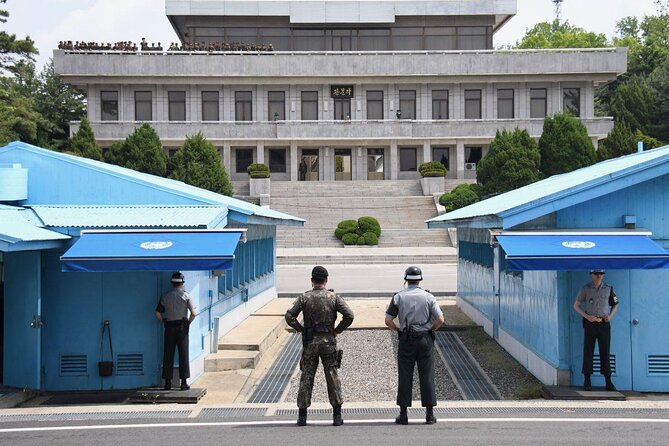
- Not a JSA visit: This tour does not include the Joint Security Area, where the 1953 armistice was signed.
Why the Third Tunnel changes the way you see the DMZ
Many Seoul day trips talk about the Korean War from a bus seat. This one gives you a physical place to remember: a tunnel cut through the rock by North Korea after the 1953 armistice.
The war stopped on July 27, 1953, when the armistice agreement was signed. It did not create a peace treaty. Instead, a buffer zone was drawn between North and South Korea, with heavily mined ground and strict military control. The tunnel shows that the danger did not simply end when the fighting stopped.
The tunnel is said to have been large enough for about 30,000 armed North Korean soldiers to pass through in one hour if completed. You do not need a military background to grasp the point. A passage built in secret, aimed toward the South, gives the division a stark physical presence.
You walk downhill into the tunnel. That means the return route is uphill, and the passage is not a good fit if you have difficulty walking. The tour also warns against joining if you are claustrophobic. That advice is worth taking seriously: the tunnel is enclosed, and the walk requires moderate physical fitness.
More DMZ Tours in Seoul:
- Best DMZ Tour Korea from Seoul (Red Suspension Bridge Optional)
★ 5.0 · 41,422 reviews - DMZ Tour: 3rd Tunnel, Option(Suspension Bridge, Boat) from Seoul
★ 5.0 · 21,373 reviews - DMZ tour south Korea from Seoul (NK experience hall, defector)
★ 5.0 · 20,599 reviews
Leaving Seoul for Imjingak
The day begins with pickup at around 8:00 a.m. in Seoul. A private, air-conditioned vehicle takes you toward Imjingak, with roughly one hour of driving before the first main stop.
Hotel pickup is a real benefit here. You do not need to cross Seoul before breakfast, and your guide can help keep the morning moving. One family described being collected directly at home, which let the children sleep longer. That small detail can matter when you are starting a full day before the city gets going.
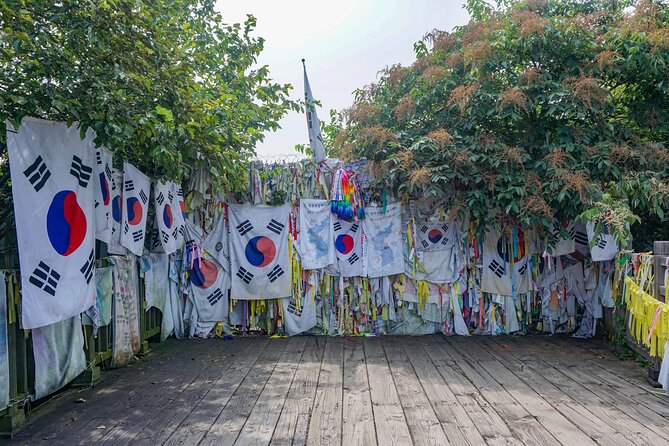
Imjingak Pyeonghoa-Nuri Park was built after the first talks between North and South Korea in 1972. It became a place connected with families separated by the division and with hopes for unification. The setting gives you an emotional introduction before you enter the controlled military area.
Expect this first stop to work more as an orientation than a major attraction. The real value comes from understanding why the area matters. Your guide can connect the park, the armistice, the divided families, and the present border before you reach the tunnel and observatory.
The drive also gives your guide time to explain the basic timeline. This is where a good guide makes a difference. Juno Lee is repeatedly praised for clear English, punctuality, flexibility, and the ability to answer many questions. Miae is also described as friendly, funny, helpful, and well informed. Ask questions early, since the road time is useful for setting the political context.
Entering the military zone outside the DMZ
A point worth clearing up before booking: the tour does not take you inside the DMZ itself. The DMZ is the heavily guarded buffer zone along the border. You enter the military zone outside it, then visit approved sights that let you understand the border without crossing into the DMZ.
You will need your passport. This is not a casual city excursion, and access rules can affect the day. Keep the passport with you rather than leaving it in your hotel or tour vehicle.
The tour uses a DMZ tour bus for the three military-zone stops: the Third Infiltration Tunnel, Dora Observatory, and a quick stop at a supermarket in the Unification Village. The private portion gives you your own group and guide, but the military-zone visit follows the required transport and access arrangements.
That distinction also explains why this is not the same as a JSA tour. The Joint Security Area is the site associated with the armistice signing and the famous meetings between North and South Korean officials. This experience does not go there. If standing at the conference site is your main goal, you need a different product specifically labeled JSA.
Walking through the Third Infiltration Tunnel
The tunnel is the most hands-on section of the day. You walk underground through a passage attributed to North Korean construction, with the route leading toward the border.
The walk is not just a display in a museum. You feel the slope and the confined space, which helps explain why the tour sets a moderate fitness requirement. The return climb can be more tiring than the walk down, so wear sensible shoes and do not treat the stop as a quick photo visit.
Photography rules and access conditions can vary in military areas, so follow the guide’s instructions. The tour description makes clear that the tunnel is part of an active military zone, not an ordinary historic site.
I like this stop because it avoids turning the DMZ into a distant viewing exercise. You are not simply told that tension existed. You are shown an actual military passage and asked to think about what it was built to do.
The limitation is comfort. If enclosed spaces make you anxious, the tunnel may overshadow the rest of the day. Anyone with walking difficulties should also think carefully before booking. There is no value in forcing yourself through a site that the tour itself identifies as physically demanding.
A different way to spend a day from here:
- Seoul: DMZ Tour with Optional Suspension Bridge
★ 4.8 · 5,277 reviews - Seoul: DMZ The 3rd Tunnel and Suspension Bridge Tour
★ 5.0 · 4,656 reviews - Signature DMZ Tour: Exclusive Defector Talk & Suspension Bridge
★ 5.0 · 4,459 reviews - Incheon Airport: Traveler SIM & T-money Transportation Card
★ 4.7 · 3,332 reviews
Looking north from Dora Observatory
After the tunnel, the tour continues to Dora Observatory. From here, you look toward the DMZ and the divided border from a controlled viewing point.
The observatory offers a different kind of lesson. The tunnel shows hidden military planning below ground. The observatory lets you see the division across open space. Together, the two stops make a stronger visit than either one alone.
The view is not the same as entering North Korea, and you should not expect a dramatic close-up of daily life across the border. The point is to understand distance, separation, and the geography of cooperation and conflict. On a clear day, the view can help you picture how the border cuts through the peninsula. On a less clear day, the guide’s explanation becomes even more important.
The tour description also points to signs of cooperation between North and South Korea. This gives the stop a present-day angle rather than leaving you with only a war story. Korea’s division is not frozen in one moment, and your guide can explain how the border has changed in meaning over time.
You get about 50 minutes at this part of the itinerary, followed by roughly one hour back toward Seoul after the military-zone visit. That timing makes the observatory a substantial stop, not a rushed roadside glance.
The Unification Village supermarket stop
The itinerary includes a quick stop at a supermarket in the Unification Village. It is a small detail, but it can add a little everyday life to a day focused on soldiers, tunnels, checkpoints, and political division.
Do not expect a long shopping session. The stop is described as quick, and its practical role is likely a chance to buy something before or after the main military-zone visits. It can also break up the more serious parts of the day.
This is where the tour feels less like a string of monuments and more like a guided route through a living border region. Still, lunch is not included. Plan to buy food during the day if the schedule allows, or ask your guide about the best timing.
Meeting a North Korean defector
After the DMZ portion, the group returns to Imjingak for a museum visit focused on North Korea. You may have the chance to meet a defector and interview them.
This can give the day a personal voice. The tunnel and observatory explain strategy and geography, while a defector can speak about life from an individual point of view. That combination helps you avoid seeing the division only through maps and military facts.
The schedule gives this stop about 40 minutes. That is enough for a focused encounter, but not a long seminar. The quality of the discussion depends on the available speaker and the questions your group asks. If you want to get the most from it, prepare a few respectful questions about the themes raised by the guide.
Because the subject is personal and political, listen carefully and avoid treating the meeting as entertainment. The best approach is to use it as a chance to understand one person’s experience within a much larger conflict.
What you get for $210 per person
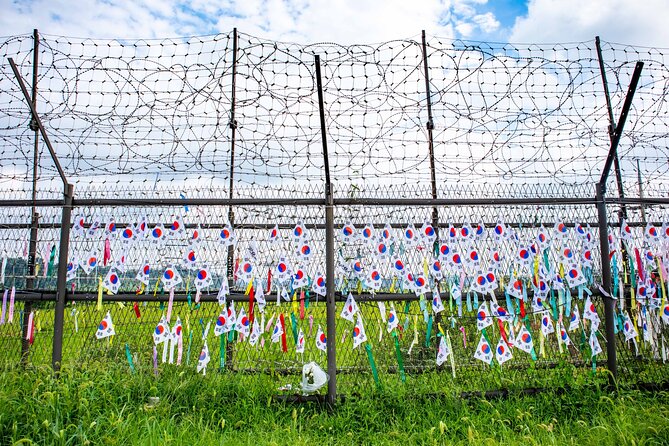
At $210 per person, this is not the cheapest way to see the border. The price needs to be judged against the private format, hotel pickup, air-conditioned transport, an English-speaking guide, bottled water, and admission to the Third Tunnel and Dora Observatory.
For a larger family or group, the value improves because only your group participates in the private tour. You also avoid organizing transport to a military area on your own, where access rules and timing are not simple. A private guide can adjust explanations to your group, answer questions without a crowded bus competing for attention, and help older family members or children keep track of the day.
The value is also tied to convenience. The outing lasts about seven to eight hours, with around two hours of driving in total, so transport is a major part of the experience. Hotel pickup turns that travel time into a guided history lesson rather than a series of transfers.
The price is harder to justify if you only want a quick border photo. You are paying for time, transport, interpretation, and controlled access. If you prefer independent sightseeing or have little interest in the Korean War and the modern division, the tour may feel long.
Group discounts are offered, but the exact saving is not provided here. Check the current price for your party before booking.
The guide can make or break a serious subject
A DMZ visit needs more than a driver who points toward the border. The subject is complex, and the sites can feel stark without explanation.
Juno Lee is the name that comes up most often in the supplied material. He is described as fluent in English, exceptionally helpful, flexible with schedules, punctual, and able to make the day memorable for families and older parents. One group also appreciated that he suggested other places to visit in Korea and returned them to their hotel.
Miae is described as delightful, funny, helpful, and well informed. Another family spent the day with a guide identified as June, who was kind, easygoing, and fluent in English. Since guide assignments can change, you should not assume a specific person is guaranteed unless the operator confirms it.
The private format gives the guide room to respond to your interests. Ask about the armistice, the tunnels, the separation of families, the military zone, and the difference between the DMZ and JSA. The best version of this tour is not just a ride to three points. It is a conversation that helps you connect them.
Who should book this DMZ day trip?
I would choose this experience if you want a serious introduction to Korea’s division without joining a large coach group. It suits families, couples, and small parties who value hotel pickup and direct access to an English-speaking guide.
It is also a good fit if you want both a physical site and a viewpoint. The Third Tunnel gives you the underground military story, while Dora Observatory gives you the border from above and at a distance. The defector meeting adds a personal dimension.
You should think twice if you dislike long drives, military checkpoints, enclosed spaces, or walking on uneven and sloping routes. Lunch is not included, and the day begins early, so this is not a relaxed late-start outing.
Bring your passport, wear comfortable shoes, and keep your schedule flexible. Access to a military area can be more controlled than a normal sightseeing stop.
Should you book this private DMZ tour?
Book it if you want a focused, guide-led day with hotel pickup, the Third Tunnel, Dora Observatory, and a chance to hear a personal account connected with North Korea. The private setup and strong guide reputation add real value, especially for families or groups sharing the cost.
Skip it if your priority is the JSA, a short visit, or a completely independent schedule. This tour visits the military zone outside the DMZ, not the JSA, and its seven to eight hours include a substantial amount of road time.
For the right visitor, the tunnel, the distant border view, and the clear explanations from guides such as Juno Lee or Miae make this one of Seoul’s most worthwhile history outings. Just bring your passport and be honest with yourself about the underground walk.
FAQ
How long does the private DMZ tour last?
The experience lasts approximately seven to eight hours, including the drive from Seoul and the return journey.
What time does the tour start?
The stated start time is 8:00 a.m. Hotel pickup is offered in Seoul.
Does the tour enter the DMZ?
No. The tour enters the military zone outside the DMZ and visits the Third Infiltration Tunnel and Dora Observatory.
Is the JSA included?
No. The Joint Security Area is not part of this experience. You need to book a separate JSA tour to visit that location.
Do I need to bring my passport?
Yes. The tour specifically requires a passport because you enter a military zone.
Is lunch included?
No. Lunch is not included in the tour price.
Is the tour private?
Yes. This is a private activity, so only your group participates in the private tour.
Is the tour suitable for people with limited mobility or claustrophobia?
The tour is not recommended for people who have difficulty walking or are claustrophobic. A moderate level of physical fitness is advised because you walk through the Third Infiltration Tunnel.
Recently added around Seoul
- Nami & Maple Road & Theatre des Lumieres Day Tour from Seoul★ 4.8 · 4 reviews
- Gyeongbokgung Palace Photo Session with your own phone★ 5.0 · 4 reviews
- Private Tour around Suwon UNESCO Fortress and Korea Folks Village★ 4.5 · 4 reviews
- N Seoul Tower + Namsan Cable Car Ticket (Collect in Myeongdong)★ 3.5 · 4 reviews
- Jisan Forest Resort: Ski Full-Day Tour or Shuttle from Seoul★ 5.0 · 4 reviews
- Seoul: Deoksugung Palace Night Tour★ 4.5 · 4 reviews
- Seoul Private Walking Tour with a Local★ 5.0 · 4 reviews
- Private Jeonju Hanok Village – Culinary tour★ 5.0 · 4 reviews
DMZ Tours, compared.
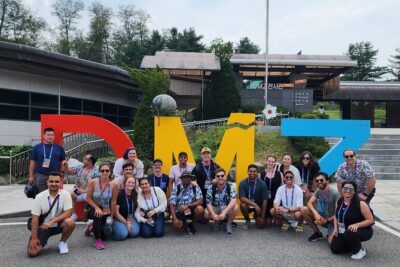
Best DMZ Tour Korea from Seoul (Red Suspension Bridge Optional)
Read the review →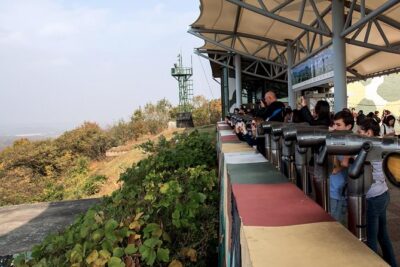
DMZ Tour: 3rd Tunnel, Option(Suspension Bridge, Boat) from Seoul
Read the review →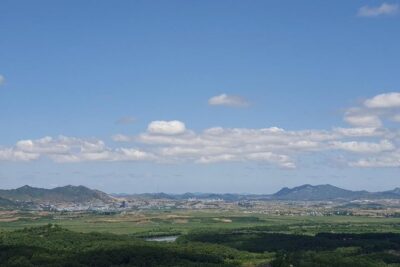
DMZ tour south Korea from Seoul (NK experience hall, defector)
Read the review →
DMZ Insider Tour: 3rd Tunnel, NK Defector Meet & Red Bridge
Read the review →
DMZ The 3rd Tunnel and Suspension Bridge Tour
Read the review →
Signature DMZ Tour: Exclusive Defector Talk & Suspension Bridge
Read the review →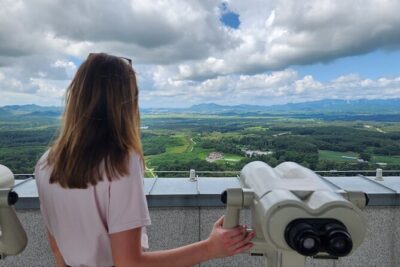
Thrilling Korean DMZ 3rd Tunnel Tour from Seoul + Red Bridge Rush
Read the review →Browse the lists this tour appears in