
Reviewed · SEOUL TOURS
Cook 3 Authentic Korean Dishes with Local Market Tour
Mangwon Market is the best part of this experience before the cooking even starts. You meet Jomin at Mangwon Station, walk through a real neighborhood food market, taste street snacks, and see the ingredients that later appear in your meal. It gives Korean food a useful setting, not just a list of recipes.
I like the small cooking setup, where you get your own table, cookers, and fresh ingredients. I also like the professionally designed cookbook, which gives you a way to repeat the dishes at home. The main consideration is that the menu changes, so you may not get every dish you have in mind. The class may also be rescheduled or canceled if the minimum group size is not met.
Key points to know before booking
- Mangwon Market comes first: Jomin introduces local ingredients, explains Korean food customs, and leaves time for street-food tasting.
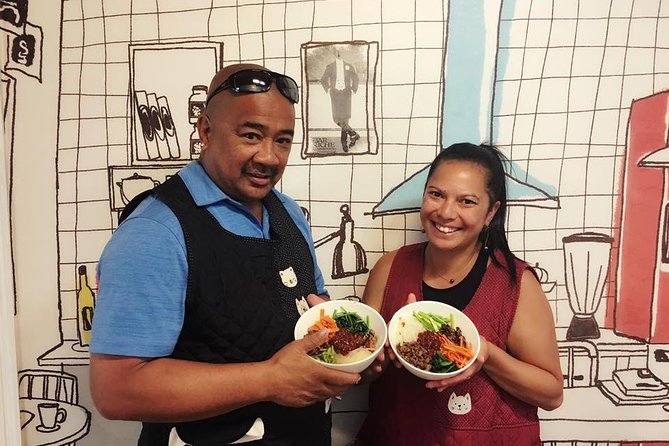
- You cook, not just watch: Each participant has a personal cooking station with the needed ingredients and equipment.
- Three Korean dishes are included: Possible dishes include bibimbap, bulgogi, soft tofu stew, kimchi stew, japchae, and stir-fried pork.
- The class is designed for beginners: Instructions are given step by step, with personal help as you work.
- Dietary needs can be handled: Vegetarian and vegan options are available, and food restrictions can be discussed.
- You leave with more than a full stomach: A cookbook, leftovers, and practical cooking skills are part of the experience.
Starting at Mangwon Station and entering the market
The meeting point is entrance 2 of Mangwon Metro Station on Line 6. From there, Jomin leads you toward Mangwon Market, a local food center where the cooking class begins in an informal way.
This walk matters because Korean cooking depends on ingredients that can look unfamiliar if you only see them measured in a studio. At the market, Jomin can point out the foods used in class, explain how they fit into Korean meals, and answer basic questions about items such as tofu, seafood, vegetables, anchovies, and prawns.
You also get time to taste street foods. That makes the market visit more than a shopping stop. It gives you a first look at everyday Korean food culture, including the way fresh produce, prepared foods, snacks, and pantry goods share the same space.
Do not expect a grand sightseeing tour. Mangwon Market is useful because it feels local and practical. You are there to learn what Koreans cook and eat, not to collect views or monuments. Market hours and holiday schedules can affect what is open, as happened during the Chuseok period, so the exact selection may vary.
The market section also helps you decide what to buy later in your Seoul visit. Jomin can explain unfamiliar products and suggest things worth tasting, which is especially handy if you are new to Korean food. Give yourself enough time to reach Mangwon Station without rushing, since the experience begins at a specific subway entrance.
More Market Tours in Seoul:
- Seoul Street Food Market Tour
★ 5.0 · 1,226 reviews - Local Home Korean Cooking Class & Market Adventure in Seoul
★ 5.0 · 1,024 reviews - Seoul: Night Market Food Tour with Local Guide
★ 4.9 · 943 reviews
From market ingredients to a clean cooking studio
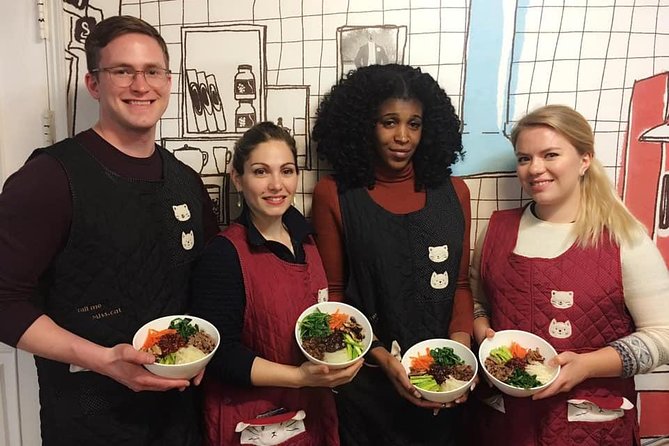
After the market walk, you return to Jomin’s cooking studio. The studio is described as clean, organized, and spacious, with individual cooking tables and burners. The format is hands-on, so you prepare the food yourself rather than standing behind a demonstration counter.
That distinction matters. A demonstration can be entertaining, but it does not always teach you how to hold the knife, manage a burner, mix a marinade, or judge when ingredients are ready. Here, you work through those steps with Jomin nearby to explain and correct as needed.
The advertised cooking group is limited to a maximum of four people, which should give the class a personal feel. Another part of the booking information lists a maximum of 11 for the overall activity, so I would confirm the expected class size when booking if a very small group is important to you. The cooking experience itself is presented as a small class.
The layout also makes the meal unfold in stages. One participant described cooking a stew first, taking it to the dining area to eat, then returning to prepare bibimbap and bulgogi. That approach keeps the food fresh and gives you a natural pause between recipes instead of leaving three cooling dishes on the table.
The possible three-dish menu
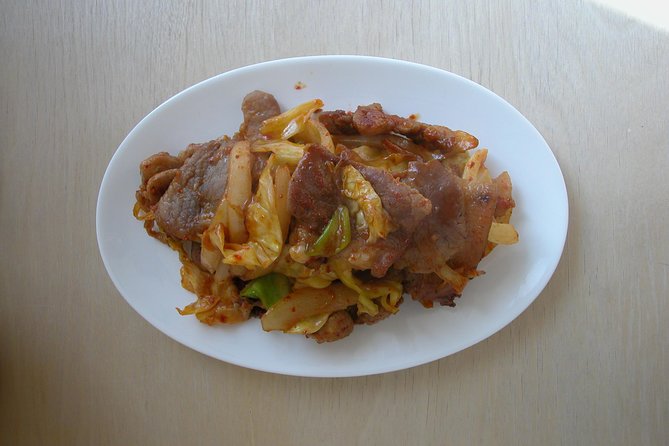
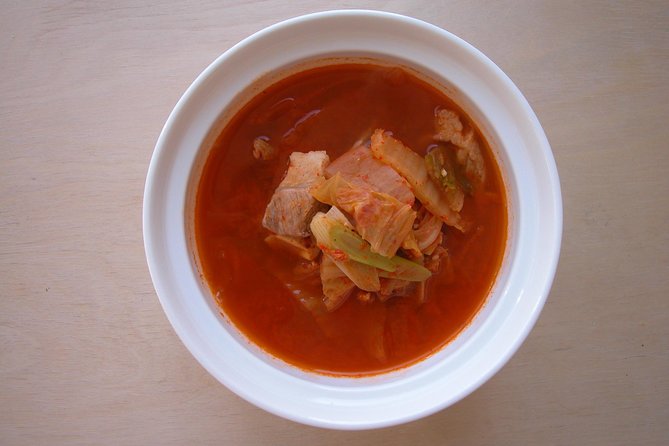
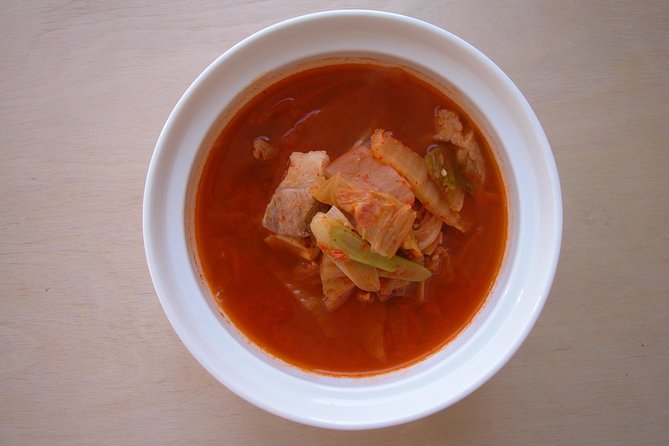
The three-course menu is not fixed in the information provided. It may include soft tofu stew, bibimbap, bulgogi, kimchi stew, japchae, or stir-fried pork. That variety is useful, but it means you should not book expecting a guaranteed combination unless the provider confirms it.
A common set described in the experience is sundubu jjigae, or soft tofu stew, beef bibimbap, and bulgogi. Other classes have included japchae, a noodle dish often made with vegetables, or different stew and pork preparations.
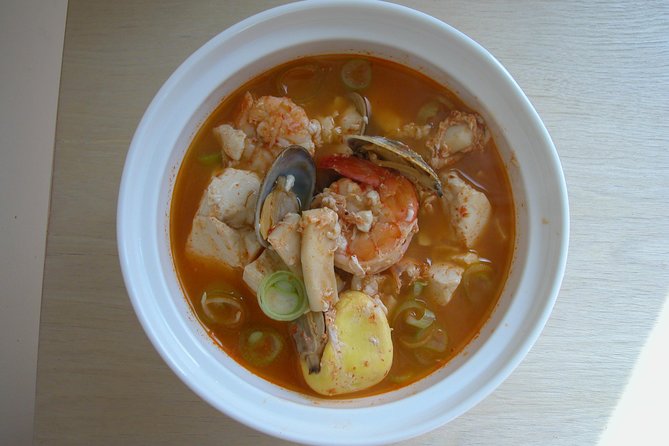
Soft tofu stew can introduce several Korean cooking ideas at once. You may work with tofu, shellfish, stock ingredients, and seasoning, then learn how a simple broth becomes a complete dish. One class involved making stock from scratch and preparing prawns and anchovies, giving the stew more context than simply opening a packet of seasoning.
Bibimbap is useful for learning organization. You prepare and cook separate vegetables, arrange them with rice, and add the main seasoning or protein. It looks simple on the plate, but the separate components teach you how Korean meals balance color, texture, and taste.
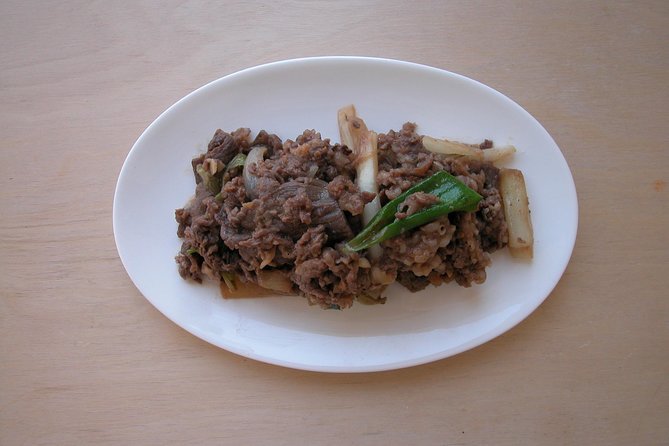
Bulgogi focuses on the marinade and cooking method. You may prepare the sauce, coat the beef, and cook it at your own burner. This is the sort of recipe that can become a reliable home meal because the main lesson is not hard to follow once you understand the balance of sweet, salty, and savory flavors.
Japchae adds a different texture and cooking rhythm, while kimchi stew gives you a stronger, more fermented flavor profile. Stir-fried pork can be a good choice if you want something direct and hearty. Since the menu can vary, tell Jomin about your preferences and restrictions before the class begins.
Why the hands-on format works
You are given a personal cooking station, cookers, and prepared ingredients. The class is set up so beginners can follow along, but it does not require you to be an experienced home cook.
Jomin explains each recipe and its ingredients, then walks you through the work in stages. That includes practical matters such as how to cut vegetables, how to prepare a bulgogi marinade, and how to use an individual burner. The pace appears structured without being rushed, with enough help for people who do not cook often.
I especially like the way the class combines instruction with eating. You cook a dish, sit down to enjoy it, and then return for the next preparation. That creates a proper meal rather than a single final tasting. Leftovers can be packed to take with you, which adds a little extra value to the $79 price.
The host’s teaching style is warm but attentive. One account described Jomin as a strict chef, which may be good news if you want clear direction rather than a loose social activity. If you prefer to work without correction, this may feel more structured than expected. For most first-time cooks, though, direct guidance prevents mistakes and makes the finished dishes more satisfying.
More shopping trips in Seoul:
- Private DMZ Tour (No Shopping): 3rd Tunnel & Suspension Bridge
★ 5.0 · 607 reviews - Downtown Seoul Guided Food & Market Tour with 8+ Local Tastings
★ 5.0 · 580 reviews - Seoul: Korean Cooking Class at a Local Home and Market Tour
★ 5.0 · 348 reviews - Seoul: Guided Food & Market Tour with 8+ Tastings
★ 4.9 · 342 reviews
Food culture explained as you cook
The class is not only about copying recipes. Jomin discusses Korean food culture and history, including subjects such as banchan, kimchi, common market ingredients, and the role of stock in Korean cooking.
That background helps you understand why a Korean meal often includes several small side dishes alongside rice, soup, or a main dish. It also explains why ingredients such as anchovies, tofu, fermented vegetables, and seafood appear so often in everyday recipes.
The market walk gives these ideas a physical setting. Instead of hearing about ingredients in the abstract, you can see them in the stalls and ask how they are used. You may also taste products that are not part of your three cooked dishes.
A little rice wine may be included as a tasting, according to the class details shared by participants. I would treat that as a possible extra rather than a guaranteed feature. The same applies to specific seafood or stock ingredients, since the market selection and day’s menu can change.
This is a good choice if you want a food activity that teaches you how dishes fit together. It is less suited to someone seeking a formal culinary-school lesson with advanced technique. The emphasis is on approachable Korean home cooking and cultural context.
The value of $79 and three and a half hours
At $79 per person, this is not the cheapest way to eat in Seoul. You can buy a filling market meal for far less. The value comes from combining a guided market visit, ingredient education, a three-dish meal, personal cooking instruction, and a cookbook in one three-and-a-half-hour session.
The small class format makes the price easier to justify. You are not only watching a chef prepare food for a large audience. You have your own station and take part in the cutting, mixing, seasoning, and cooking. The cookbook adds value after the trip, especially if it contains dishes beyond the recipes prepared that day.
You should also count the meal itself. By the end, you may eat three dishes and take home leftovers. That does not make the activity a bargain in the same way as a market lunch, but it makes the cost reasonable for a substantial half-day food experience.
Lunch and dinner class times are available. A lunch class can fit well before an afternoon in western Seoul, while dinner may work better if you want to spend the day sightseeing first. Since the activity ends back at the meeting point, you can plan your next stop around Mangwon Station rather than finding your way across Seoul from a separate cooking school.
Vegetarian, vegan, and food restriction planning
Vegetarian and vegan options are available. Food restrictions have also been accommodated in the class format, but you should state your needs when booking and remind Jomin at the start.
This is important in Korean cuisine because stocks, sauces, seafood, meat, and fermented ingredients can appear in dishes where you may not expect them. A stew may use anchovy or shellfish stock, for example. Do not assume a dish is vegetarian simply because it contains tofu or vegetables.
The flexible teaching format should make substitutions easier than in a large group demonstration. Still, the exact alternative menu is not specified, so ask what three dishes you are likely to prepare if you have strict dietary requirements.
Who will enjoy this Seoul food experience
I would recommend this class to first-time visitors who want a more personal introduction to Korean cuisine. It works particularly well for couples, families, and small groups who like to eat together and want a useful souvenir rather than another packaged attraction.
It also suits novice cooks. The instructions are clear, the equipment is supplied, and Jomin provides help as you work. You do not need advanced kitchen skills to take part.
Food lovers who already know Korean cuisine may still enjoy it, especially if they want to learn market ingredients or make dishes they have only ordered in restaurants. If you have already taken another class with Jomin, this menu can offer a different set of recipes, though the exact dishes should be checked ahead of time.
I would think twice if you dislike group activities, cannot tolerate changing menus, or want a quiet market visit without tastings and instruction. The class involves active participation, and the host’s structured teaching style may not suit someone looking only for a casual meal.
Practical details for a smooth visit
The activity lasts about 3 hours and 30 minutes and uses a mobile ticket. You meet at Mangwon Station entrance 2 and return to the same meeting point at the end.
Wear clothes and shoes that are comfortable for walking through the market and cooking. The supplied information does not list a dress code or special equipment to bring, so your main task is to arrive ready to participate.
Free cancellation is available if you cancel at least 24 hours before the local start time. Cancellations made later are not refunded, and late changes are not accepted. Because the class needs a minimum of four participants, the provider may reschedule or cancel it if that number is not reached. In that case, you are offered another date or experience, or a full refund.
Confirmation is sent when you book, and the meeting point is near public transportation. I would still save the station name and entrance number in your phone, since Seoul stations can have several exits and a wrong one can add unnecessary walking.
Should you book Cook 3 Authentic Korean Dishes?
Book it if you want to cook a real Korean meal, learn what you are seeing in a local market, and leave with recipes you can use at home. The combination of Mangwon Market, Jomin’s step-by-step teaching, a personal station, three dishes, and leftovers gives the activity more substance than a standard cooking demonstration.
The main points to check are the menu, your dietary needs, and the class size. If you want one specific dish, confirm that it is scheduled. If you have strict food restrictions, explain them before arrival. And if a maximum of four is essential, ask about the group size because the general booking information also lists a larger activity limit.
At $79, this is best viewed as a compact food lesson and meal rather than a cheap lunch. For many visitors, it is a practical way to understand Seoul through its ingredients, markets, and home-style dishes.
FAQ
Where does the Korean cooking class begin?
You meet Jomin at entrance 2 of Mangwon Metro Station on Line 6 in Seoul.
How long does the experience last?
The activity lasts approximately 3 hours and 30 minutes.
Where does the experience end?
The class ends back at the meeting point near Mangwon Station.
How many people can join the cooking class?
The cooking class is presented as a small-group experience with a maximum of four people. The additional booking information lists a maximum of 11 travelers for the overall activity, so confirm the expected group size if this matters to you.
Which Korean dishes will I cook?
The three-dish menu may include soft tofu stew, bibimbap, bulgogi, kimchi stew, japchae, or stir-fried pork. The exact menu can vary.
Are vegetarian or vegan options available?
Yes. Vegetarian and vegan options are available. You should provide your dietary requirements when booking.
Can I cancel for a refund?
Yes. You can cancel at least 24 hours before the experience start time for a full refund. Cancellations or changes made less than 24 hours before the start time are not accepted for a refund.
Recently added around Seoul
- Gyeongbokgung Palace Photo Session with your own phone★ 5.0 · 4 reviews
- Private Tour around Suwon UNESCO Fortress and Korea Folks Village★ 4.5 · 4 reviews
- Nami & Maple Road & Theatre des Lumieres Day Tour from Seoul★ 4.8 · 4 reviews
- Jisan Forest Resort: Ski Full-Day Tour or Shuttle from Seoul★ 5.0 · 4 reviews
- Seoul: Deoksugung Palace Night Tour★ 4.5 · 4 reviews
- N Seoul Tower + Namsan Cable Car Ticket (Collect in Myeongdong)★ 3.5 · 4 reviews
- Private Jeonju Hanok Village – Culinary tour★ 5.0 · 4 reviews
- Seoul Private Walking Tour with a Local★ 5.0 · 4 reviews
Seoul Tours, compared.
Best DMZ Tour Korea from Seoul (Red Suspension Bridge Optional)
Read the review →
DMZ Tour: 3rd Tunnel, Option(Suspension Bridge, Boat) from Seoul
Read the review →
DMZ tour south Korea from Seoul (NK experience hall, defector)
Read the review →

DMZ The 3rd Tunnel and Suspension Bridge Tour
Read the review →
Signature DMZ Tour: Exclusive Defector Talk & Suspension Bridge
Read the review →
Thrilling Korean DMZ 3rd Tunnel Tour from Seoul + Red Bridge Rush
Read the review →
DMZ Past and Present: Korean Demilitarized Zone Tour from Seoul
Read the review →Browse the lists this tour appears in