Reviewed · SEOUL TOURS
Gwanghwamun Tour l 120 minutes to Understand Local Korean Society
Seoul’s past and present meet on this compact walk through Gwanghwamun, Samcheongdong, and Bukchon. Guide June uses streets, government buildings, old homes, and political landmarks to explain how Joseon traditions, postwar development, and current affairs shape daily Korean life.
I especially like the clear link between history and ordinary customs, such as age hierarchy, work culture, coffee habits, and jjimjilbang, or Korean spa, culture. I also like the route’s short length and modest price of $14.10, though the two hours can feel brisk if you prefer long stops, personal exploration, or detailed sightseeing inside buildings.
Key points to know before booking
- June leads a history-based walk: Expect clear explanations of Korean society, politics, and historical change rather than a simple photo tour.
- Five distinct stops fit into 120 minutes: Gwanghwamun Square, the US Embassy area, Samcheongdong-gil Road, Bukchon Hanok Village, and the University of North Korean Studies.
- The route connects history to daily life: Confucian values, age hierarchy, work culture, capitalism, coffee shops, and Korean spa customs all enter the discussion.
- The walk ends at the Blue House: This gives you a useful starting point for continuing around Jongno after the tour.
- There are a few uphill sections: Most of the route is described as easy, but comfortable shoes still make sense.
- Small groups keep the discussion manageable: The maximum group size is 20 people, with all stops free to enter.
Why this Seoul walk offers more than standard sightseeing
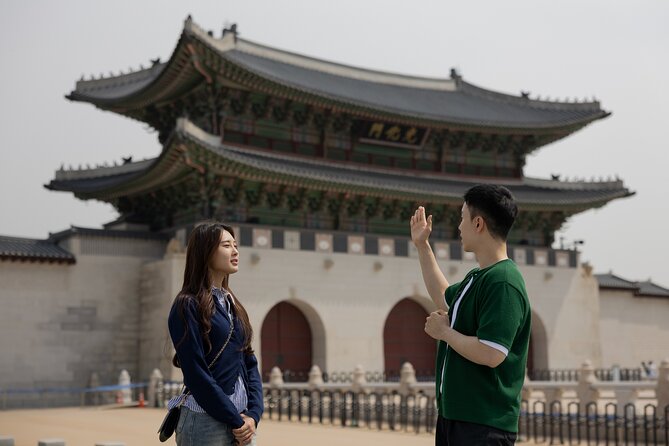
Many Seoul tours explain what a building is, when it was built, and where to take a picture. This one aims at a harder question: how did Korea become the society you see today?
That makes the tour a good choice if you want context for things that can seem puzzling at first. Why do age and seniority matter so much? Why does Seoul combine royal gates, glass offices, narrow alleys, and cafés within a few blocks? How do people in South Korea think about North Korea, Japan, and the United States?
June, a history major, guides the walk through those questions. His approach is structured and easy to follow, with explanations that can feel like a well-organized outdoor class. The tone is not presented as a dry lecture, though. The tour allows time for questions and conversation, and June is noted for being clear, fluent, kind, and occasionally funny.
The result is less about collecting attractions and more about connecting them. Joseon Confucian ideas help explain social rank and age customs. Postwar development helps explain Korea’s intense work culture and rapid urban change. Political landmarks show how foreign influence and the division of the peninsula remain part of modern public life.
At $14.10 per person, I consider this strong value if you care about history, politics, or culture. You do not pay separate admission at the listed stops, so most of the cost goes toward the guide’s time and interpretation. This is not the right pick if you mainly want palace interiors or extensive time for photographs, but it gives you a useful foundation for the rest of a Seoul visit.
A few more Seoul half-days to weigh up
- Best DMZ Tour Korea from Seoul (Red Suspension Bridge Optional)
★ 5.0 · 41,422 reviews - DMZ Tour: 3rd Tunnel, Option(Suspension Bridge, Boat) from Seoul
★ 5.0 · 21,373 reviews - DMZ tour south Korea from Seoul (NK experience hall, defector)
★ 5.0 · 20,599 reviews
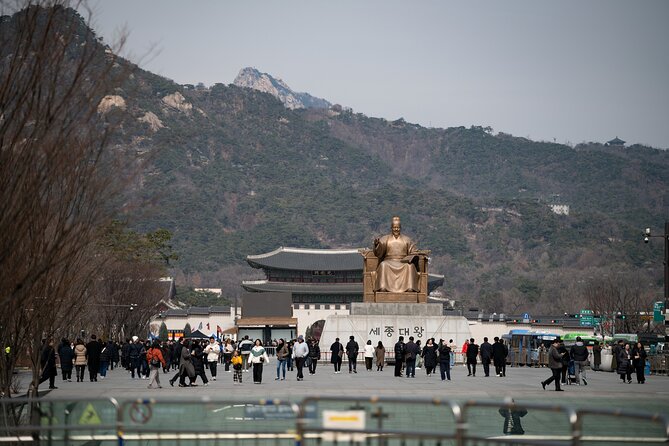
Starting at Gwanghwamun Square and the Joseon center of Seoul
The walk begins at Gwanghwamun Square on Sejong-daero at 10:30 am. This is an important starting point because the area has served as a central stage for Korean political and public life for more than 600 years.
The opening 15 minutes focus on the Joseon Kingdom and the role of the city center. You can expect June to use the square as a way to explain older ideas about government, social order, and Confucian society. That background matters because it gives you a lens for understanding modern customs rather than treating them as isolated quirks.
Gwanghwamun is also a practical meeting place. It is near public transportation, and the open setting should make it relatively easy to locate the group. Since the tour begins promptly in the morning, give yourself enough time to reach the square without rushing.
The stop is short, so you will not get a full palace tour here. Think of it as an orientation. If you want detailed architecture, royal ceremonies, or a long visit inside a palace, you will need to add that separately.
Reading modern Korea near the US Embassy
The next 15-minute stop is near the US Embassy and Consulate in the Republic of Korea. The point is not a building tour or entry into the embassy. Instead, June explains how the United States influenced Korea from the establishment of the modern republic to the present day.
This is one of the tour’s more useful political stops because it moves the discussion beyond old dynasties. South Korea’s modern identity was shaped by war, international alliances, security concerns, economic development, and contact with foreign powers. The embassy area provides a real-world setting for that conversation.
You can also expect discussion of how Koreans view the United States. A good guide should avoid reducing public opinion to one simple answer, and the tour’s stated focus on Korean attitudes suggests a more nuanced look at the relationship.
The stop is brief, so do not expect a full seminar on postwar geopolitics. Still, it adds a current political layer that many sightseeing walks leave out. If you have questions about the US-Korea relationship, this is a good moment to ask them.
Samcheongdong-gil Road and the price of rapid development
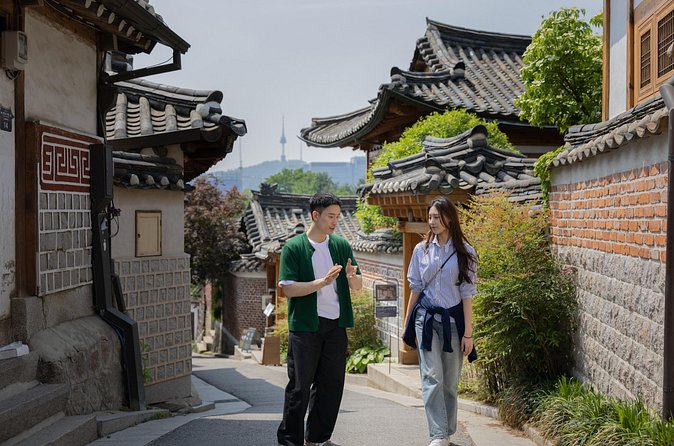
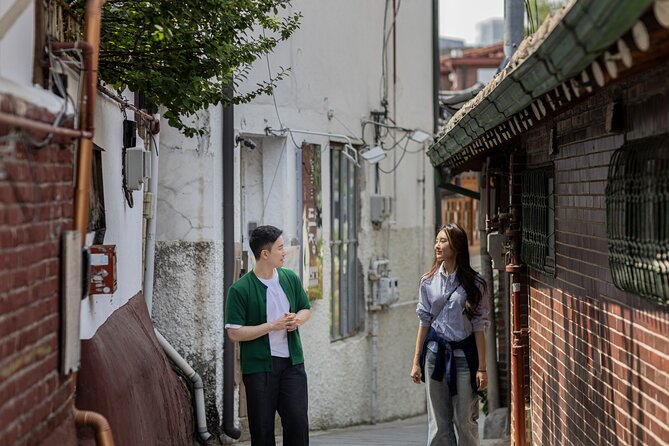
Samcheongdong-gil Road changes the mood. The area is known for retro-style shops and restaurants, giving you a look at a more stylish and commercial side of central Seoul. The tour spends about 15 minutes here, using the street to discuss modern development and its side effects.
This is where the walk connects urban change to working culture. South Korea’s economic growth transformed cities at remarkable speed, but growth also brings pressure. Old districts are redeveloped, businesses change, and traditional settings can become commercial destinations.
That tension is easier to grasp when you are walking through a street that mixes older character with shops and restaurants. You are not simply hearing that Seoul has changed. You are looking at one example of how the city balances memory, business, tourism, and everyday use.
The short stop means you may have time to notice the setting but not shop or eat at length. If you want to sample a restaurant or browse every storefront, save extra time after the tour. The walking route is designed for explanation, not a food crawl, despite the broader cultural discussion of Korean life.
A different way to spend a day from here:
- Seoul: DMZ Tour with Optional Suspension Bridge
★ 4.8 · 5,277 reviews - Seoul: DMZ The 3rd Tunnel and Suspension Bridge Tour
★ 5.0 · 4,656 reviews - Signature DMZ Tour: Exclusive Defector Talk & Suspension Bridge
★ 5.0 · 4,459 reviews - Incheon Airport: Traveler SIM & T-money Transportation Card
★ 4.7 · 3,332 reviews
Bukchon Hanok Village and the cost of preservation
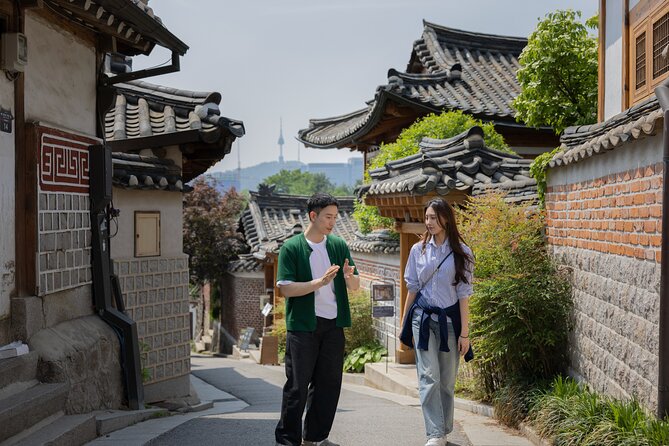
Bukchon Hanok Village receives the longest stop, at about 25 minutes. Its traditional hanok houses make it one of the most recognizable areas on the route, but the important subject here is not just architecture.
June discusses the tension between development and preservation. Bukchon is a living neighborhood, not merely an open-air museum. That creates difficult questions about residents, visitors, changing property values, noise, commercial activity, and the desire to protect traditional homes.
This is a valuable stop because it encourages you to look past the attractive rooflines. The village represents a broader problem found in many historic cities: how do you preserve a place without freezing it in time or turning it into a stage set?
The lanes include some uphill walking, so wear comfortable shoes. The tour describes the route as easy overall, but easy does not mean perfectly flat. You may also want to be mindful of the fact that people live in the village. Keep voices down, stay aware in narrow alleys, and treat the neighborhood as a community rather than a backdrop.
Because Bukchon is popular, the pace may feel quick if you want many photographs. You will get more from this stop if you listen to the explanation first and return later on your own for a slower look.
The University of North Korean Studies and a divided peninsula
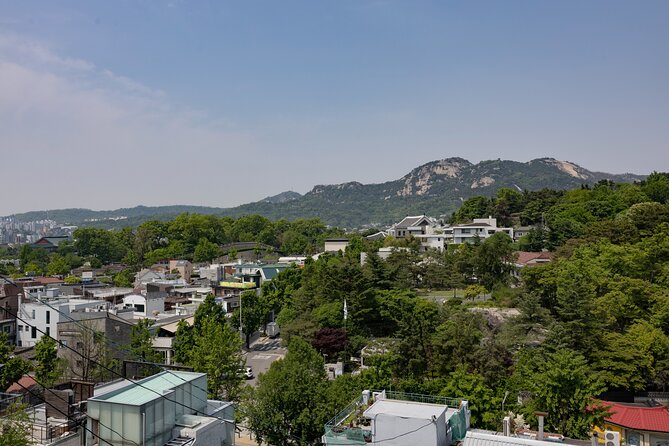
The final listed stop is the University of North Korean Studies, where the group spends about 20 minutes. The tour describes it as the only college specializing solely in North Korea, and June uses the setting to discuss South Korea’s relationship with its northern neighbor.
This is a subject many visitors find difficult to understand through headlines alone. The Korean peninsula’s division is not just a foreign-policy issue. It affects security, family memories, public debate, education, and ideas about national identity.
The stop focuses on how people in South Korea think about North Korea. You should expect interpretation rather than a museum display or a formal academic visit. The value comes from having a local guide explain how history and present concerns connect.
It is also a fitting final stop because the tour has moved from the Joseon state, through foreign influence and rapid development, to one of the central political questions of modern Korean life. By this point, the route has built a chain of ideas instead of presenting unrelated facts.
Some visitors may prefer more time at major monuments. Others will appreciate that the tour addresses a subject often skipped by short city walks. If Korean politics and modern history matter to you, this stop may be the most memorable part of the morning.
How June links history to Korean daily life
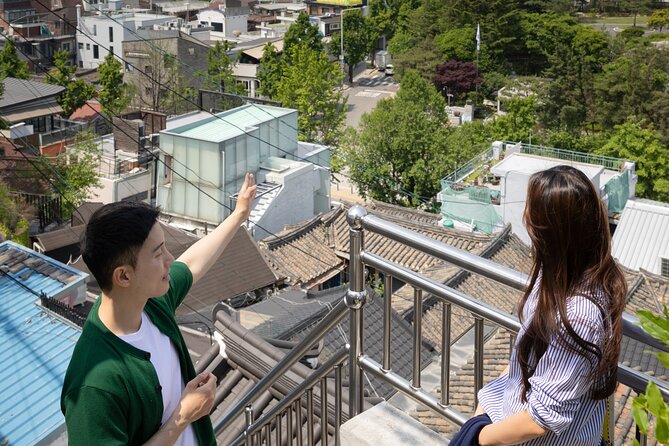
The best feature of this experience is its effort to connect public history with private behavior. You are not only told about a dynasty, a war, or a political relationship. You are shown how those forces may still appear in everyday customs.
Confucian values help explain why age hierarchy and seniority remain important topics. Postwar capitalism helps explain Korea’s demanding work culture and rapid economic change. Political history provides background for attitudes toward Japan, the United States, and North Korea.
June also discusses familiar parts of modern life, including Seoul’s strong coffee culture and Korean spa culture. These details keep the tour from becoming a timeline of rulers and conflicts. They give you practical cultural clues for the rest of your stay.
I would still treat these explanations as broad social patterns, not rules that describe every individual. Korea is a large, modern society with plenty of differences by age, region, profession, and personal outlook. The tour’s value is that it gives you questions to carry into your own observations.
The clear structure is helpful. One participant described the explanations as easy to understand, and that fits the tour’s stated aim. You do not need a background in Korean history to follow along. People who already know the basics may still enjoy the discussion, especially if they want a local view of present-day issues.
The pace, group size, and walking conditions
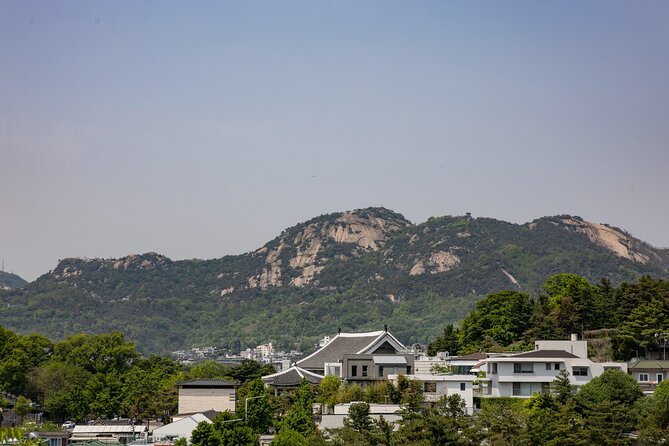
The full experience lasts about two hours and covers five stops. That is a sensible length for a first cultural orientation. You get enough time to build a picture of Korean society without spending half a day on one theme.
The group can include up to 20 people. That is not a private walk, but it is small enough for questions and conversation when everyone stays engaged. The guide’s reported willingness to answer questions and offer suggestions beyond the route adds value, especially if you want help shaping the rest of your Seoul plans.
The walk is generally easy, with a few uphill sections around the older neighborhoods. Wear walking shoes and expect the route to feel less comfortable in poor weather. The activity requires good weather, and a cancellation for that reason comes with the choice of another date or a full refund.
The mobile ticket is convenient, and confirmation arrives when you book. The meeting point is Gwanghwamun Square, while the walk ends in front of the Blue House, the former presidential house at 1 Cheongwadae-ro. That ending is useful because you can continue exploring the surrounding Jongno area afterward.
Since the tour starts at 10:30 am, it works well as a first activity of the day. You might want to avoid scheduling a timed attraction immediately afterward, since walking pace and discussion can vary. The experience finishes after roughly two hours, but a little flexibility makes the morning more relaxed.
Who will get the most from this $14.10 experience
I would choose this walk if you want to understand South Korea rather than simply photograph Seoul. It suits first-time visitors who feel unsure how Joseon history, modern politics, and daily customs fit together.
It is also a good match for solo visitors. The group format gives you people to talk with, while the two-hour length keeps the commitment manageable. Couples and friends in their 30s or older may especially enjoy the mix of history, politics, and present-day social questions, though the tour is not limited to any age group.
Students, educators, and anyone interested in international relations should find useful material here. The US Embassy and North Korean Studies stops give the walk more substance than a standard old-town route.
You may want to skip it if you prefer a food tour, a palace interior tour, or a leisurely photography walk. The route includes shops, restaurants, traditional homes, and political landmarks, but it does not promise extended shopping, meals, or admission to major attractions.
The cancellation terms are straightforward: cancel at least 24 hours before the 10:30 am start for a full refund. Changes made within 24 hours are not accepted, and the minimum group requirement means the provider may offer another date or a refund if the tour cannot run.
Should you book this Gwanghwamun tour?
Book it if you want a clear two-hour introduction to Korean society, led by June through places that show both old Seoul and modern Korea. The price is low, the route is manageable, and the subject matter reaches beyond royal history into work, age, politics, preservation, and national identity.
Do not book it expecting a full sightseeing day or a slow visit to every landmark. You will spend limited time at each stop, and some uphill walking is involved. But if you want the background that makes later visits to Bukchon, palaces, cafés, and political sites more meaningful, this is a smart early addition to a Seoul itinerary.
FAQ
How long does the Gwanghwamun Tour last?
The tour lasts approximately two hours, or 120 minutes.
What time does the tour start?
The listed start time is 10:30 am.
Where does the tour begin?
The meeting point is Gwanghwamun Square, at 172 Sejong-daero in Jongno District, Seoul.
Where does the tour end?
The walk ends in front of the Blue House, also called Cheong Wa Dae, at 1 Cheongwadae-ro.
Is the walk difficult?
The route is described as easy, but it includes a few uphill sections. Comfortable walking shoes are recommended.
Can I cancel for a full refund?
Yes. You can cancel at least 24 hours before the experience start time for a full refund. Cancellations or changes made less than 24 hours before the start are not accepted for a refund.
Recently added around Seoul
- Gyeongbokgung Palace Photo Session with your own phone★ 5.0 · 4 reviews
- Private Tour around Suwon UNESCO Fortress and Korea Folks Village★ 4.5 · 4 reviews
- Nami & Maple Road & Theatre des Lumieres Day Tour from Seoul★ 4.8 · 4 reviews
- N Seoul Tower + Namsan Cable Car Ticket (Collect in Myeongdong)★ 3.5 · 4 reviews
- Jisan Forest Resort: Ski Full-Day Tour or Shuttle from Seoul★ 5.0 · 4 reviews
- Seoul: Deoksugung Palace Night Tour★ 4.5 · 4 reviews
- Private Jeonju Hanok Village – Culinary tour★ 5.0 · 4 reviews
- Seoul Private Walking Tour with a Local★ 5.0 · 4 reviews
Seoul Tours, compared.
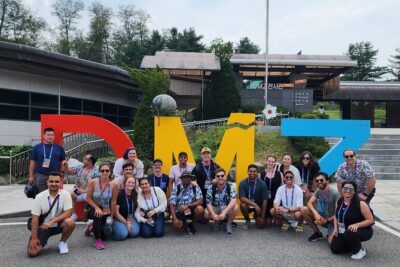
Best DMZ Tour Korea from Seoul (Red Suspension Bridge Optional)
Read the review →
DMZ Tour: 3rd Tunnel, Option(Suspension Bridge, Boat) from Seoul
Read the review →
DMZ tour south Korea from Seoul (NK experience hall, defector)
Read the review →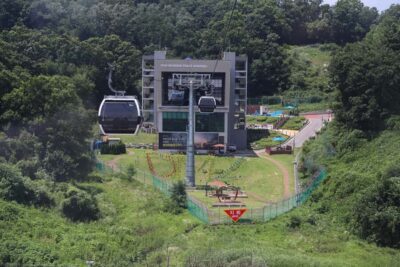
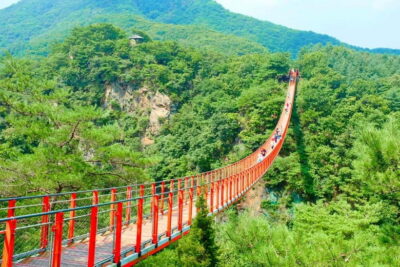
DMZ The 3rd Tunnel and Suspension Bridge Tour
Read the review →
Signature DMZ Tour: Exclusive Defector Talk & Suspension Bridge
Read the review →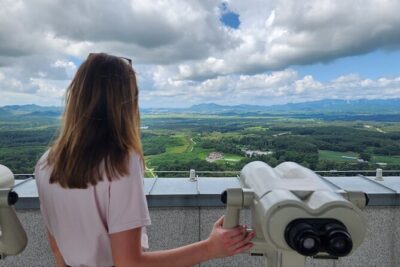
Thrilling Korean DMZ 3rd Tunnel Tour from Seoul + Red Bridge Rush
Read the review →