
Reviewed · SEOUL TOURS
(Small Group) Palace & Seoul Old Town Highlights
Seoul’s old center packs a remarkable amount into three hours. This walk links Gyeongbokgung Palace with Insadong, Jogyesa Temple, Gwanghwamun Square, and Bukchon Hanok Village, giving you a useful first look at both royal Seoul and the city’s modern visitor districts.
I like the small maximum of 10 people, which makes it easier to hear the guide and ask questions. I also like the balance of history and daily Korean culture, especially with guide Lee, who has been praised for patient explanations, mini quizzes, and traditional games during short breaks. The main consideration is pace: this is a walking tour with several stops, and the palace visit takes about 90 minutes.
Key points to know before you book
- Five central Seoul stops: Insadong, Jogyesa Temple, Gwanghwamun Square, Gyeongbokgung Palace, and Bukchon Hanok Village fit into one half-day.
- Small group of up to 10: You get a more personal outing than on a large coach tour.
- Guide Lee adds conversation: Her approach combines Joseon-era history with current Korean life, questions, and occasional games.
- Gyeongbokgung entry is included: You do not need to buy the palace ticket separately.
- A useful first-day orientation: The route introduces several districts you may want to revisit on your own.
- Plan for outdoor walking: The tour lasts about three hours, needs good weather, and ends where it begins.
A smart first walk through Seoul’s old center
This tour works best as an introduction, not as a detailed study of every site. You move from traditional shops and a Buddhist temple to a grand royal palace and a residential quarter filled with hanok, or traditional Korean houses.
That variety is the real value. In a short span, you see how Seoul connects its Joseon royal past with its current food, shopping, religious, and neighborhood life. If your time in the city is limited, this route helps you decide where to return later.
The meeting point is outside Exit 6 of Anguk Subway Station. That is a practical starting place because the route begins in the area around Insadong and later reaches the palace and Bukchon. The activity returns to the same meeting point at the end, so you should not need to arrange a separate pickup or figure out a new neighborhood afterward.
With a group capped at 10, you can expect a walking experience rather than a formal lecture. That matters in Seoul, where streets can be busy and several stops reward questions. Lee’s style, based on the available feedback, includes a good mix of historical explanation and present-day facts. She has also used short quizzes and Korean traditional games to keep the group involved.
More Small Group Tours in Seoul
- Small Group Tour to DMZ & Suspension Bridge with Hotel Pickup
★ 5.0 · 1,568 reviews - Small-Group Royal Palace and Seoul City Tour (hotel pick-up)
★ 5.0 · 1,474 reviews - Seoul: Small-Group DMZ Tour with North Korea Experience Hall
★ 4.7 · 1,399 reviews
Insadong gives you an easy start
The first walk leads into Insadong, known for traditional goods, restaurants, and tea houses. The stop is listed at about 10 minutes, so think of it as an orientation rather than a full shopping visit.
That short time still has a purpose. Insadong introduces the kind of traditional Korean atmosphere many first-time visitors want to find, while showing you a district you can return to after the tour. You may want to note shops or tea houses that catch your eye, since there will not be enough time to browse at length while staying with the group.
I like beginning here because it eases you into Seoul’s older central districts. You start with streets shaped by culture and commerce, then move into a place of worship and the royal center. The sequence makes the city feel connected rather than like a string of unrelated sights.
Do not expect a long shopping break. If traditional crafts, food, or tea are a major interest, plan to come back independently. The guide’s job here is to set the scene and keep the route moving.
Jogyesa Temple offers a quiet pause
Jogyesa Temple is the head temple of the Jogye Order of Korean Buddhism. Founded in 1910, it remains an important center of Korean Buddhism and sits in the middle of Seoul.
The scheduled visit lasts about 30 minutes. That is enough time to take in the temple grounds, observe the contrast between the religious site and the surrounding city, and hear the guide explain its place in Korean life. The stop gives the tour a welcome change of mood after Insadong’s shops and streets.
I especially like this part for the sense of contrast. Seoul does not keep its old and new sides in separate museum districts. A Buddhist temple can sit amid a modern capital, and this visit helps you notice that fact.
As with any active religious site, you should treat the grounds respectfully and follow the guide’s instructions. The information provided does not promise a ceremony or a special access arrangement, so the value here is the visit itself and the context Lee provides.
Gwanghwamun Square connects history and public life
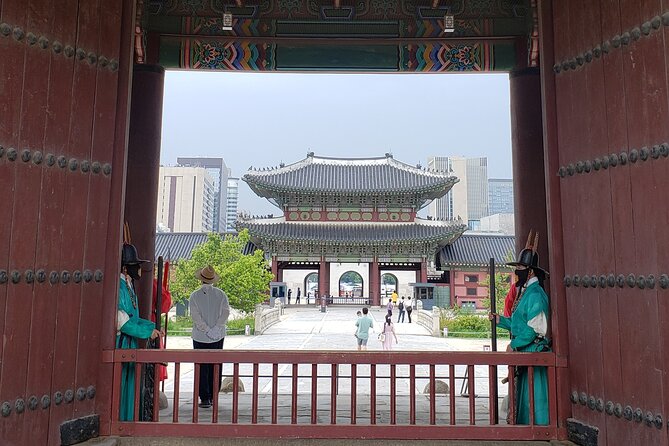
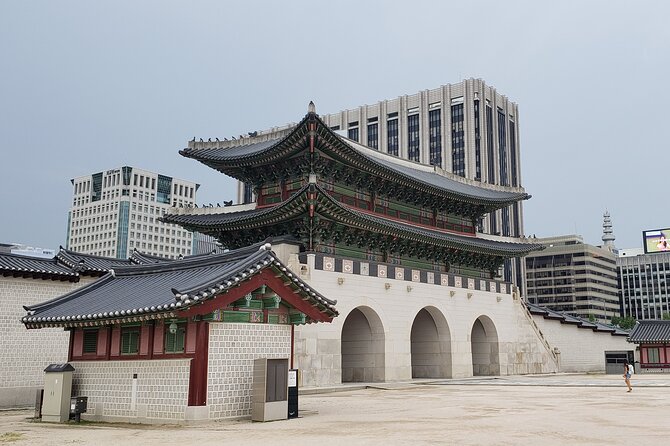
Gwanghwamun Square is a central public plaza in front of Gyeongbokgung Palace. It is associated with two important Korean figures, King Sejong the Great and Admiral Yi Sun-sin, whose statues help frame the country’s cultural and military past.
The stop lasts about 20 minutes. It is a good place for the guide to explain how the palace, the city center, and national memory fit together before you enter Gyeongbokgung.
This is also one of the tour’s best orientation points. You get a sense of the broad civic center of Seoul, rather than seeing only narrow lanes and palace walls. The square helps you understand that the old royal quarter remains part of the working capital around it.
The tradeoff is that 20 minutes goes quickly. You will have time to look, listen, and take photographs, but not to linger over every feature. If large public spaces are a special interest, you may want to return later when you can explore at your own pace.
A different way to spend a day from here:
- Best DMZ Tour Korea from Seoul (Red Suspension Bridge Optional)
★ 5.0 · 41,422 reviews - DMZ Tour: 3rd Tunnel, Option(Suspension Bridge, Boat) from Seoul
★ 5.0 · 21,373 reviews - DMZ tour south Korea from Seoul (NK experience hall, defector)
★ 5.0 · 20,599 reviews - Seoul: DMZ Tour with Optional Suspension Bridge
★ 4.8 · 5,277 reviews
Gyeongbokgung Palace is the main event
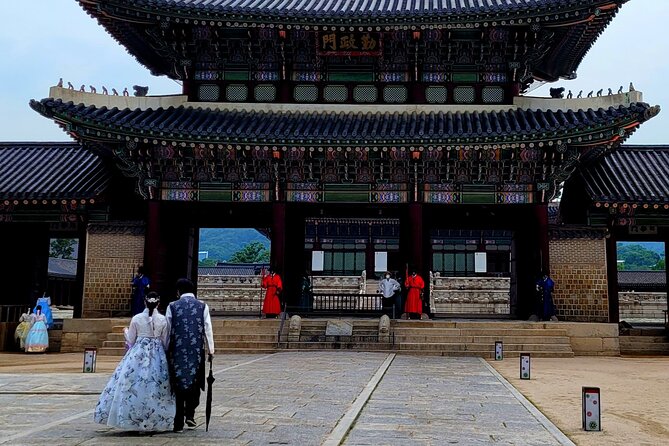
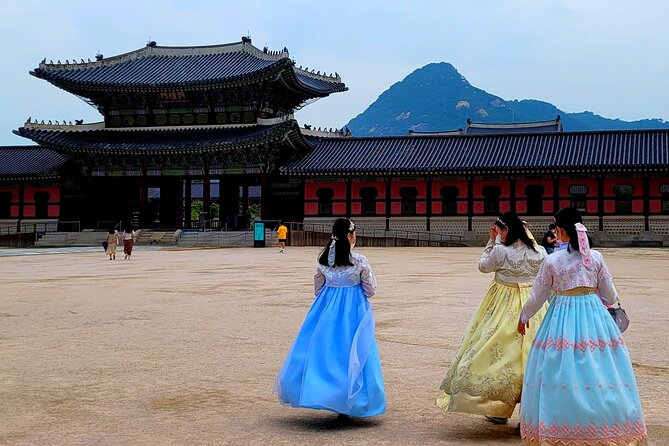
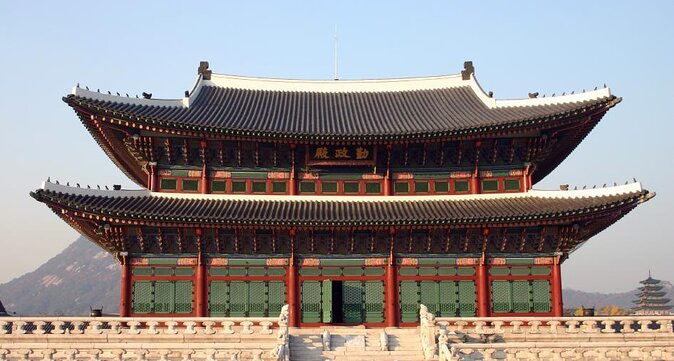
The palace visit takes about 90 minutes, by far the longest stop. Gyeongbokgung was built in 1395 as the main royal palace of the Joseon Dynasty. Its setting, with mountains behind and the city in front, helps explain why it became such a powerful symbol of traditional Korea.
Admission is included in the $60.27 price, which improves the value of the outing. More important, the palace receives enough time to make the ticket worthwhile. You are not simply stopping for a quick photograph at the gate. The guide can explain the site’s royal role, architecture, and connection to Joseon political life while you walk through the grounds.
I would treat this as the part that gives the tour its backbone. Insadong and Jogyesa show different sides of Seoul, but Gyeongbokgung provides the clearest picture of the old royal center. The architecture also gives you a strong visual contrast with the city beyond the walls.
The palace is a large site, so 90 minutes still will not cover every corner. That is not a flaw so much as a limit of a three-hour tour. You get a focused introduction, then can decide if you want to return for a longer visit. If you want a specialist palace tour with detailed attention to every building, this walk may feel too broad. If you want the main story and key views without giving up a full day, the timing makes sense.
The available feedback gives useful clues about the guiding style here. Lee has been praised for answering many questions, explaining both Joseon history and modern Korea, and remaining patient with different interests. One especially appealing touch is her use of mini quizzes and Korean traditional games during breaks. That can make a history-heavy palace visit feel more like a conversation than a classroom.
Bukchon Hanok Village shows Seoul as a neighborhood
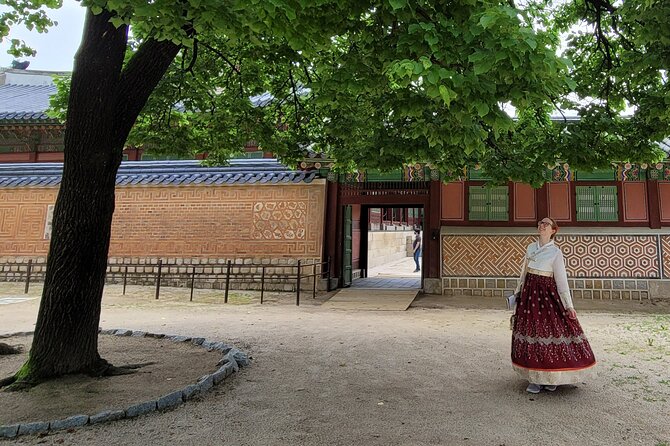
The final listed stop is Bukchon Hanok Village, a historic residential area between two royal palaces. Its winding alleys and traditional hanok houses show how people lived during the Joseon period.
The visit lasts about 30 minutes. You will have time to see the lanes and rooftops, hear about the traditional homes, and take in the character of the neighborhood. This is another introduction rather than a long photographic walk.
Bukchon is valuable because it shifts the focus from royal power to ordinary domestic life. After spending time in a palace, you can see how traditional architecture also shaped homes and residential streets. The change gives the tour a satisfying final chapter.
Keep in mind that Bukchon is a residential area, not simply an open-air attraction. The provided details do not specify a particular route through the village or special access to any house. Stay with the group, respect private property, and expect some walking on narrow, winding streets.
The route then returns to the Anguk Station meeting point. That makes the finish convenient if you want to continue exploring the same central area, return to your hotel by subway, or revisit Insadong for food and shopping.
What the $60.27 price buys you
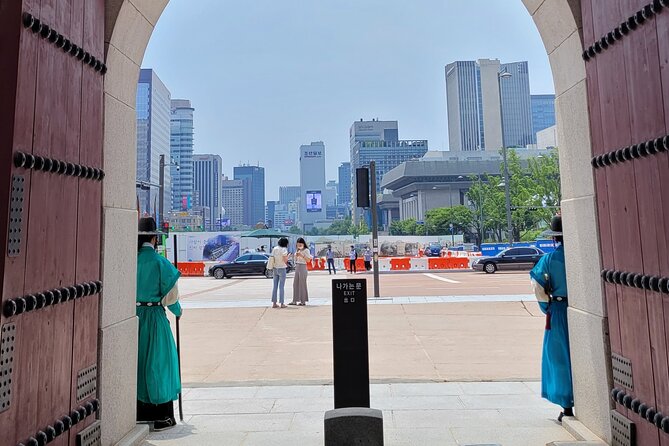
At $60.27 per person, this is not the cheapest way to walk around Seoul. You could visit several of these areas on your own for less, especially since Insadong, Jogyesa Temple, Gwanghwamun Square, and Bukchon do not list separate admission charges.
The price makes more sense if you place a value on interpretation and efficient routing. You receive a three-hour guided walk, a small group limited to 10 people, and admission to Gyeongbokgung Palace. You also avoid spending your first day working out the historical links between five different places.
For a first visit, that can be worthwhile. A good guide turns a palace gate, a statue, a temple, or a traditional house into part of a larger story. Lee’s combination of historical facts, modern cultural notes, questions, and games adds a personal element that a self-guided walk cannot easily match.
The value is weaker for independent visitors who already know Seoul’s history or prefer to set their own pace. You will have limited time at each stop, and you cannot linger whenever a shop, statue, or alley catches your attention. The tour is best for orientation and context, not total freedom.
The fact that it is often booked about 34 days ahead suggests you should reserve early if your dates are fixed. That is especially sensible for a small activity with a 10-person limit.
Who will get the most from this walk?
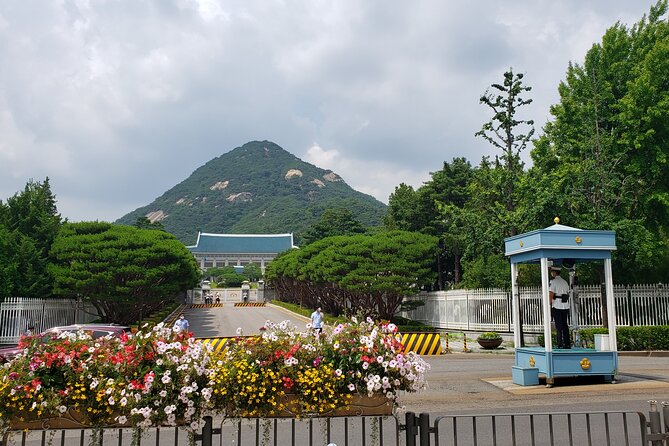
I would recommend it for a first-time visitor who wants a clear introduction to Seoul’s central historic districts. It suits anyone who likes to combine major sights with local streets, religious places, and neighborhood architecture.
It is also a good match for families and mixed-age groups. The quizzes and traditional games can help younger participants stay engaged, while the short stops prevent the entire outing from becoming a long palace lecture. One available account specifically describes the guide as caring toward her audience, which is useful if your group needs a patient pace and room for questions.
You should also consider it if you have only a few days in Seoul. By the end, you will know where several important areas are and which ones deserve another visit.
This may not be right for you if you dislike walking, want a deep examination of one palace, or need a flexible schedule. The activity requires good weather, and the cancellation terms allow a full refund only when you cancel at least 24 hours before the start time. If poor weather or an insufficient number of bookings causes cancellation, you are offered another date or activity, or a full refund.
Confirmation arrives at booking, a mobile ticket is provided, and the meeting point is near public transportation. Most people can participate, and service animals are allowed. Personal expenses are not included.
Should you book Palace and Seoul Old Town Highlights?
Book this tour if you want a compact first look at Seoul’s old center, a guide who can explain both history and current culture, and a group small enough for real questions. The included Gyeongbokgung ticket and the five-stop route make the price reasonable for a time-pressed visitor.
Skip it if you would rather explore slowly, shop in Insadong, or spend several hours inside Gyeongbokgung alone. For everyone else, this is a practical way to get your bearings, learn the story behind Seoul’s central sights, and leave with a useful list of places to revisit.
FAQ
How long does the Palace and Seoul Old Town Highlights tour last?
The experience lasts approximately three hours.
Where does the tour begin?
It begins outside Exit 6 of Anguk Subway Station in Seoul.
Which places are included in the route?
The route includes Insadong, Jogyesa Temple, Gwanghwamun Square, Gyeongbokgung Palace, and Bukchon Hanok Village.
Is admission to Gyeongbokgung Palace included?
Yes. The Gyeongbokgung Palace ticket is included in the tour price.
How large is the tour group?
The tour has a maximum of 10 people.
Can I cancel for a full refund?
Yes, if you cancel at least 24 hours before the experience start time. Cancellations or changes made less than 24 hours before the start time are not refunded or accepted.
Recently added around Seoul
- Nami & Maple Road & Theatre des Lumieres Day Tour from Seoul★ 4.8 · 4 reviews
- Gyeongbokgung Palace Photo Session with your own phone★ 5.0 · 4 reviews
- Private Tour around Suwon UNESCO Fortress and Korea Folks Village★ 4.5 · 4 reviews
- N Seoul Tower + Namsan Cable Car Ticket (Collect in Myeongdong)★ 3.5 · 4 reviews
- Jisan Forest Resort: Ski Full-Day Tour or Shuttle from Seoul★ 5.0 · 4 reviews
- Seoul: Deoksugung Palace Night Tour★ 4.5 · 4 reviews
- Private Jeonju Hanok Village – Culinary tour★ 5.0 · 4 reviews
- Seoul Private Walking Tour with a Local★ 5.0 · 4 reviews
Seoul Tours, compared.
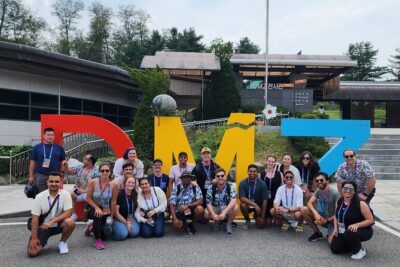
Best DMZ Tour Korea from Seoul (Red Suspension Bridge Optional)
Read the review →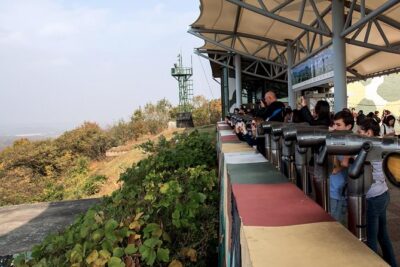
DMZ Tour: 3rd Tunnel, Option(Suspension Bridge, Boat) from Seoul
Read the review →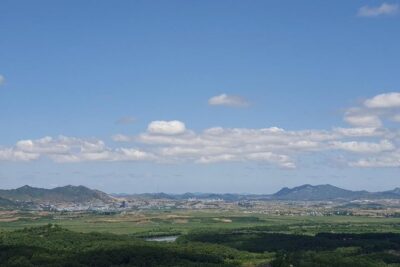
DMZ tour south Korea from Seoul (NK experience hall, defector)
Read the review →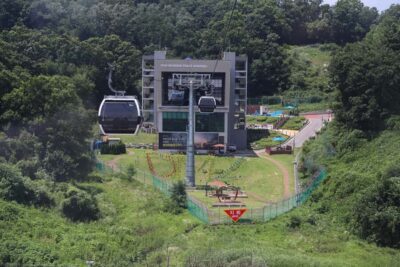
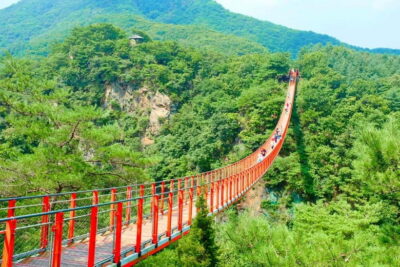
DMZ The 3rd Tunnel and Suspension Bridge Tour
Read the review →
Signature DMZ Tour: Exclusive Defector Talk & Suspension Bridge
Read the review →
Thrilling Korean DMZ 3rd Tunnel Tour from Seoul + Red Bridge Rush
Read the review →
DMZ Past and Present: Korean Demilitarized Zone Tour from Seoul
Read the review →Browse the lists this tour appears in