Reviewed · SEOUL TOURS
Seoul Palace Morning Tour
Gyeongbokgung Palace is the star here, but the morning begins at Jogyesa Buddhist Temple, giving you a quick look at two important sides of Seoul: its Buddhist tradition and its Joseon royal past. The tour then moves through the palace grounds before finishing at Gwanghwamun Gate for the changing of the guard ceremony.
I like the hotel pickup and included entrance fees, which remove some of Seoul’s morning logistics. I also like the compact route: in about three hours, you see Jogyesa, Gyeongbokgung, the Korean National Folk Museum, the Blue House from the vehicle, and City Hall. The main caution is the forced ginseng-center stop, which can take time away from the sights and feels like shopping rather than sightseeing.
Key points to know before booking
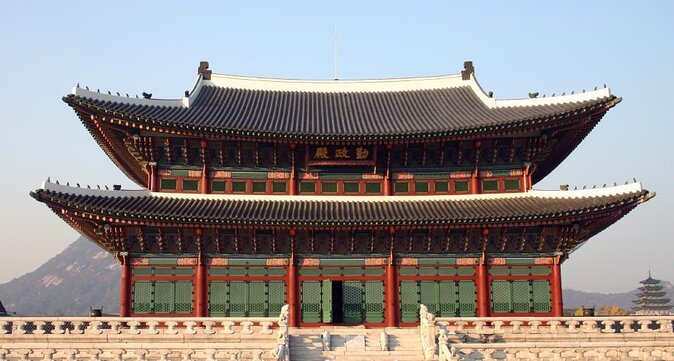
- Gyeongbokgung gets the most attention: You visit the throne hall, royal offices, living quarters, banquet pavilion, and Folk Museum.
- Jogyesa offers a sharp change of mood: Look for its old locust and baeksong trees, colorful main hall, statue of Seokgamoni, and seven-story stone pagoda.
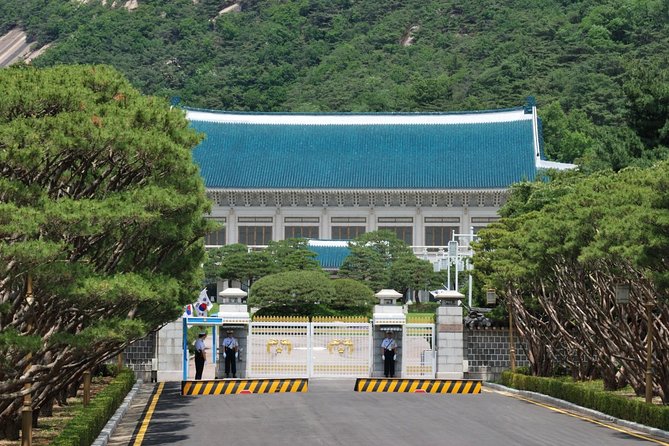
- The Blue House is a drive-by sight: Security rules mean you do not stop in front of it.
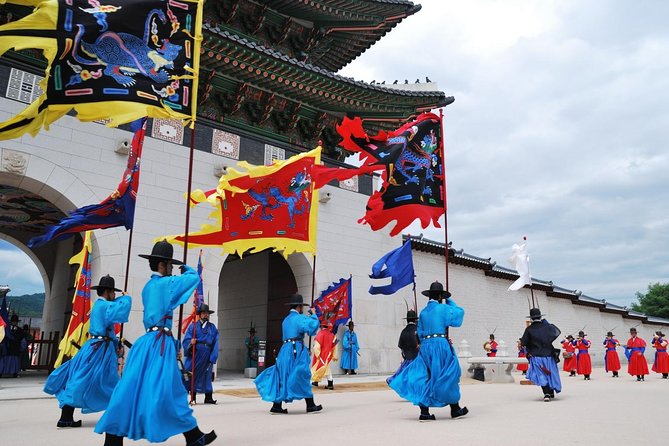
- The guard ceremony is the morning finale: The changing of the royal guard at Gwanghwamun Gate is often the tour’s most memorable moment.
- The end point is City Hall, not your hotel: This is useful if you plan to continue sightseeing downtown, but less convenient if you want to return to your room.
- The ginseng-center visit is part of the route: Expect a shopping stop, even if your main interest is history.
A compact start to Seoul’s royal quarter
This three-hour morning tour is built for first-time visitors who want a guided introduction rather than a full day spent inside palace grounds. Pickup begins around 9 a.m., with an air-conditioned vehicle, driver, and guide included.
The group can reach up to 30 people. That size matters. A good guide can give you useful context without the cost of a private tour, but the pace may feel brisk, especially when the group gathers at several palace buildings. You should not expect long, quiet stretches for photography or independent wandering.
The experience has a listed price of $40 per person. That is a fair price if you value hotel pickup, transportation, a guide, and entrance fees in one package. It is less appealing if you are comfortable using Seoul’s public transport and prefer to set your own pace. Gyeongbokgung and Jogyesa are accessible enough to visit independently, but you would need to arrange the route and find your own explanations.
The tour has earned an overall rating of 4.3 from 53 ratings, though the individual experiences vary sharply. The strongest praise centers on friendly guides, useful stories, and seeing a good number of sights in one morning. The most serious complaints concern rushed commentary, unclear pickup communication, and the ginseng stop.
A few more Seoul half-days to weigh up
- Mt. Seorak+Nami Island+Garden of Morning Calm Day Trip from Seoul
★ 5.0 · 959 reviews - Seoul: Nami Island and Garden of Morning Calm opt Railbike
★ 4.6 · 907 reviews - Day Trip to Nami Island with Rail bike and The Garden of Morning Calm
★ 4.5 · 459 reviews
Jogyesa Temple and Seoul’s Buddhist side
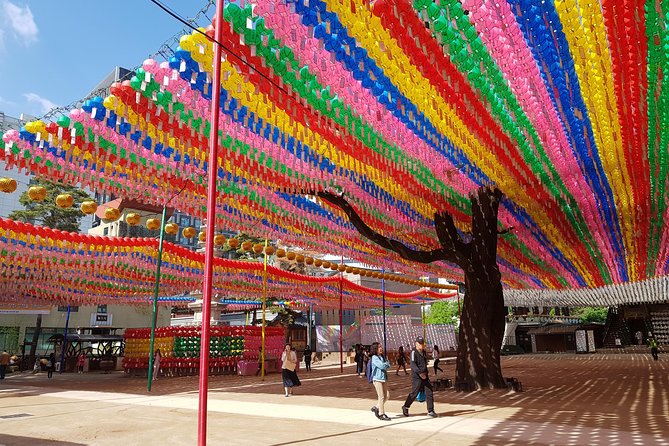
Jogyesa Buddhist Temple is a good opening stop because it sets a different tone from the palace. The temple is described as the center of Zen Buddhism in Korea, and its central Daeungjeon building is easy to recognize by its bright, carefully painted decoration.
Take a moment to look at the trees before you enter. The locust trees and baeksong tree in front of the main building are about 500 years old. The baeksong tree has been designated a Natural Monument, giving this small urban temple an unexpectedly old connection to Seoul’s past.
The Daeungjeon building dates from 1938. Inside is a statue of Seokgamoni, and in front of the building is a seven-story stone pagoda containing Jinsinsari. These details are exactly where a guide can help. Without explanation, you may see a colorful temple courtyard and move on. With a short explanation, you can understand why the trees, pagoda, and main hall matter.
The stop is not designed as a long meditation visit or a detailed study of Korean Buddhism. It is an introduction, usually followed by several palace visits. Keep your expectations in line with that format, and Jogyesa works well.
One guide named Chloe received special praise for sharing stories, answering questions, taking photographs, and suggesting a restaurant for lunch after the tour. You may not have Chloe as your guide, but her style gives you a useful idea of what the best version of this tour can offer: clear interpretation, practical help, and a friendly presence.
The Blue House is seen from the road
After Jogyesa, the vehicle passes the Blue House on the way to Gyeongbokgung Palace. The Blue House is a security area, so the group cannot stop in front of it or explore the grounds.
This is an important detail to understand before booking. The Blue House is a pass-by sight, not a visit. You may catch a view from the vehicle, but you should not count on a photo stop or a close look at the former presidential residence.
The route still has value because your guide can point it out and place it within Seoul’s government district. Yet anyone booking this tour mainly to visit the Blue House will be disappointed. The palace is where the tour spends its real sightseeing time.
Gyeongbokgung reveals the Joseon court
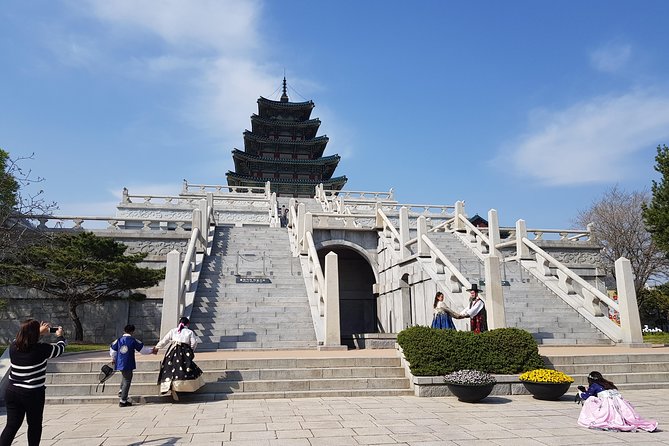
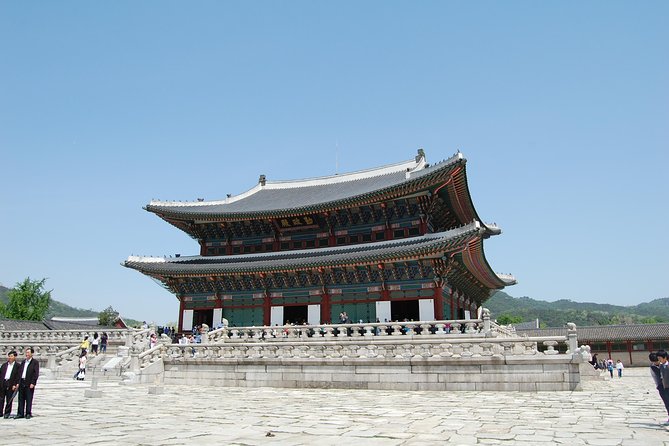
Gyeongbokgung Palace served as the main palace during the Joseon Dynasty. For many people, this is the reason to book the morning tour. The grounds include a series of halls and courtyards, and the guide connects them to the lives of the kings, queens, officials, and foreign envoys who used them.
The tour includes several major buildings:
- Geunjeongjeon: The main throne hall, used for formal royal business and ceremonies.
- Sajeongjeon: The king’s office, where day-to-day government work took place.
- Gangnyeongjeon: The king’s living quarters.
- Gyotaejeon: The queen’s living quarters.
- Gyeonghoeru: The pavilion where the king held formal banquets for foreign envoys.
This sequence is helpful because it moves beyond the usual palace photograph. You see the public face of royal power at the throne hall, then the working spaces and private quarters behind it. Gyeonghoeru adds a social and diplomatic angle, showing how the palace also hosted formal gatherings.
I like this part of the itinerary because it gives you a basic map of palace life without asking you to remember a long list of dates and names. The tradeoff is time. Gyeongbokgung has enough buildings and open space for a much longer visit, so the tour gives you selected highlights rather than a complete exploration.
Some people have found the pace too fast, with commentary delivered quickly and little time to look around before moving on. That is the main weakness to watch for. If photography matters to you, take pictures as soon as the group stops instead of waiting until the explanation ends.
The guide quality makes a real difference here. A pleasant and efficient guide can turn the buildings into a story. A rushed guide can leave you trying to listen, take photos, and keep up with the group at the same time.
A different way to spend a day from here:
- Best DMZ Tour Korea from Seoul (Red Suspension Bridge Optional)
★ 5.0 · 41,422 reviews - DMZ Tour: 3rd Tunnel, Option(Suspension Bridge, Boat) from Seoul
★ 5.0 · 21,373 reviews - DMZ tour south Korea from Seoul (NK experience hall, defector)
★ 5.0 · 20,599 reviews - Seoul: DMZ Tour with Optional Suspension Bridge
★ 4.8 · 5,277 reviews
The Folk Museum adds everyday life
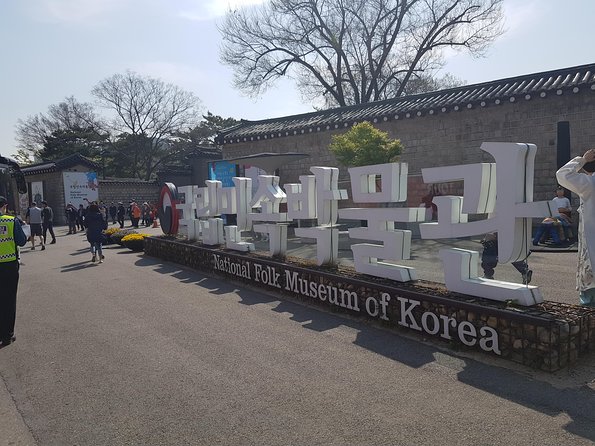
The Korean National Folk Museum is part of the Gyeongbokgung complex and gives the tour a useful change of focus. The palace buildings show the royal court. The museum looks at daily life and traditional Korean culture.
That balance helps you understand Korea beyond kings and grand halls. The museum is intended to provide educational and cultural context for traditional Korean lifestyles, so it can fill in the ordinary side of the story that palace architecture cannot.
Because the entire morning lasts only about three hours, the museum visit is likely to be an introduction rather than a lengthy museum study. If you have a strong interest in its collections, plan to return independently with more time. If you simply want a broader sense of Korean life, this stop adds worthwhile context.
Gwanghwamun Gate and the changing guard
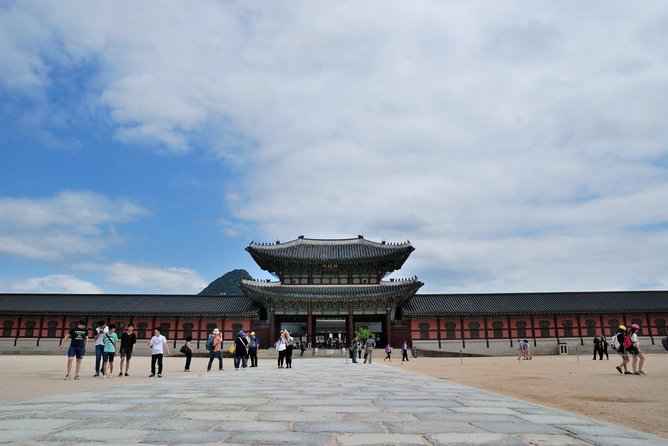
The tour returns to Gwanghwamun Gate, the south gate of Gyeongbokgung, for the changing of the royal guard ceremony. This is often the clearest visual payoff of the morning.
The gate gives you a strong closing point because it connects the palace interior with the city outside. The ceremony adds uniforms, movement, and formal ritual after the quieter work of looking at halls and courtyards.
Timing matters. The tour is scheduled in the morning, and the guard ceremony is part of the planned route, but ceremony schedules can affect what you see. The supplied details do not promise a particular duration or guarantee that weather or official changes will never affect it, so treat it as a planned highlight rather than the sole reason to book.
Several people have found the guard change to be the best part of the experience. I understand why. It is easy to grasp even if you know little about Joseon history, and it gives you a memorable scene to carry away from the palace.
The ginseng center changes the tone
After the historical sights, the route includes a stop at a ginseng center. This is not an optional historical attraction. It is one of the shopping centers included in the tour.
You should know this before paying. Some participants have disliked spending more time there than at the places they actually came to see. Others have simply found it unnecessary. If you are not interested in buying ginseng or browsing a specialty shop, the stop may feel like an interruption.
That does not erase the value of the palace portion, but it affects the overall rhythm. The morning begins with culture, moves into royal history, then ends with commerce. If your schedule is tight, factor in the shopping stop rather than assuming every minute will be devoted to monuments and museums.
Ending at City Hall helps some schedules
The tour ends at City Hall in Seoul, not at your hotel. Hotel drop-off is not included.
This arrangement is practical if you want to continue exploring central Seoul after lunch. City Hall is close to other attractions, and ending there can save you from returning to your hotel before beginning the rest of your day. It is also useful if you plan to meet someone downtown or arrange your own afternoon sightseeing.
It is less convenient if you have luggage, mobility concerns, or a hotel far from the center. Pickup is offered in the morning, but the return arrangement is different, so read that detail carefully before booking.
Communication has been uneven in some cases. One person expected a hotel pickup after confirming the arrangement, while the operator stated that the pickup was attempted and the person did not appear. The practical lesson is simple: confirm your hotel, pickup time, and meeting instructions clearly before the morning of the tour. The listed start time is 9 a.m., though one pickup confirmation referenced 8:45 a.m., so pay attention to the exact time given for your hotel.
What the guide and group format mean
The tour includes both a driver-guide and a professional guide, plus an air-conditioned vehicle. This makes the route easier than arranging several stops yourself, especially if you are still learning Seoul’s layout.
A group of up to 30 people keeps the price modest, but it can also make the experience less personal. You may have to stand where you can hear, stay close to the guide, and accept a fixed pace. A smaller private tour would give you more control, but that is not what this product offers.
The best reports describe guides as pleasant, efficient, and helpful. Chloe is specifically praised for stories, photographs, and a lunch recommendation. The weaker experiences describe fast speech, limited explanation, and too little time at the sights. Those differences suggest that guide assignment is a major variable.
I would choose this tour if I wanted a clear introduction and did not want to manage transportation. I would skip it if I already knew the palace complex well or wanted a slow architectural study.
Who should book this three-hour tour?
This experience suits you if:
- You are visiting Seoul for the first time.
- You want a guided overview of royal and Buddhist sites.
- You have only one free morning.
- You value hotel pickup and included admissions.
- You prefer a planned route to figuring out Seoul transport yourself.
- You are happy to finish at City Hall and continue on your own.
Families can use the compact format well, since the tour combines outdoor courtyards, colorful architecture, a ceremony, and a museum. Older visitors may appreciate the vehicle between locations, though palace grounds still involve walking.
You may want another option if you dislike shopping stops, need a slow pace, want a private guide, or mainly want to visit the Blue House. You should also avoid building an important connection around the exact end time, since group movement and the ginseng stop can affect the schedule.
The cancellation policy allows a full refund when you cancel at least 24 hours before the local start time. Cancellations or changes made within 24 hours are not refunded or accepted.
Should you book the Seoul Palace Morning Tour?
Book it if you want a value-priced introduction to Seoul’s royal quarter and like having transport, admissions, and a guide bundled together. The route covers a lot: Jogyesa’s Buddhist setting, Gyeongbokgung’s main royal buildings, the Folk Museum, Gwanghwamun Gate, and the guard ceremony.
Go in with realistic expectations. The Blue House is only viewed from the vehicle, the group may move quickly, and the ginseng-center stop can frustrate anyone who wants pure sightseeing. Confirm pickup details, protect time for photographs, and plan to continue your day from City Hall.
At $40, this is a sensible orientation tour, not a deep palace visit. For a first morning in Seoul, that can be exactly the point.
FAQ
What is included in the Seoul Palace Morning Tour?
The tour includes hotel pickup, an air-conditioned vehicle, a driver-guide, a professional guide, and all entrance fees. Lunch, infant meals, and hotel drop-off are not included.
What time does the tour start?
The stated start time is 9 a.m. Pickup details may give you an earlier meeting time, so confirm the exact time assigned to your hotel.
Does the tour stop at the Blue House?
No. The Blue House is viewed from the vehicle while passing by. Because it is a security area, the tour cannot stop in front of it.
Which palace buildings are included?
The tour visits Geunjeongjeon, Sajeongjeon, Gangnyeongjeon, Gyotaejeon, and Gyeonghoeru at Gyeongbokgung Palace. It also includes the Korean National Folk Museum within the palace complex.
Where does the tour end?
The tour ends at City Hall in Seoul after the ginseng-center stop. Hotel drop-off is not included.
Can I cancel for a full refund?
Yes, if you cancel at least 24 hours before the experience start time. Cancellations and changes made less than 24 hours before the start time are not accepted or refunded.
Recently added around Seoul
- Nami & Maple Road & Theatre des Lumieres Day Tour from Seoul★ 4.8 · 4 reviews
- Gyeongbokgung Palace Photo Session with your own phone★ 5.0 · 4 reviews
- Private Tour around Suwon UNESCO Fortress and Korea Folks Village★ 4.5 · 4 reviews
- Jisan Forest Resort: Ski Full-Day Tour or Shuttle from Seoul★ 5.0 · 4 reviews
- N Seoul Tower + Namsan Cable Car Ticket (Collect in Myeongdong)★ 3.5 · 4 reviews
- Seoul: Deoksugung Palace Night Tour★ 4.5 · 4 reviews
- Seoul Private Walking Tour with a Local★ 5.0 · 4 reviews
- Private Jeonju Hanok Village – Culinary tour★ 5.0 · 4 reviews
Seoul Tours, compared.
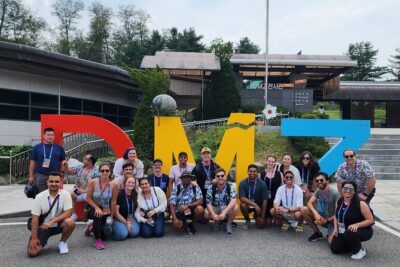
Best DMZ Tour Korea from Seoul (Red Suspension Bridge Optional)
Read the review →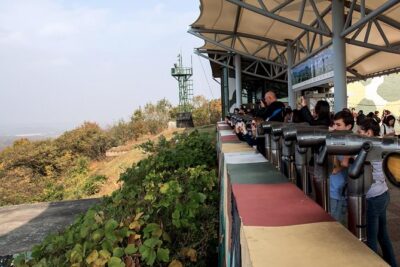
DMZ Tour: 3rd Tunnel, Option(Suspension Bridge, Boat) from Seoul
Read the review →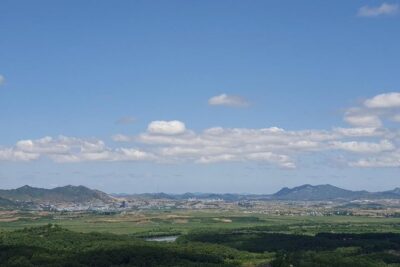
DMZ tour south Korea from Seoul (NK experience hall, defector)
Read the review →
DMZ The 3rd Tunnel and Suspension Bridge Tour
Read the review →
Signature DMZ Tour: Exclusive Defector Talk & Suspension Bridge
Read the review →
Thrilling Korean DMZ 3rd Tunnel Tour from Seoul + Red Bridge Rush
Read the review →