
Reviewed · SEOUL TOURS
Seoul One Day Sightseeing Tour with N Tower and Lunch
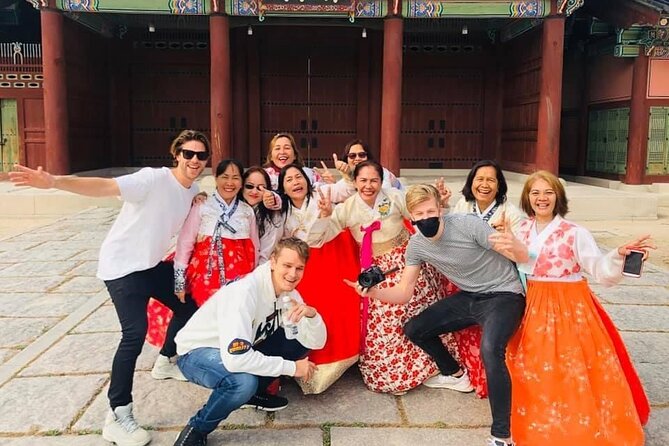
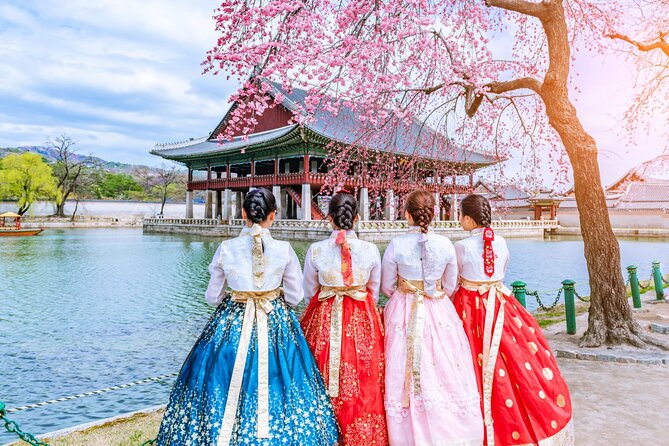
The most memorable part of this Seoul day tour comes early: you put on a Korean hanbok and enter Gyeongbokgung Palace dressed for the Joseon era. A professional photographer takes photos during the experience, giving you more than a quick palace stop and a useful souvenir of your first day in Seoul.
I like the way this tour joins old and new Seoul in one route. You get royal gates, Buddhist traditions, traditional homes, Korean food, a mountain-top city view, and modern shopping without having to figure out the subway. I also like the practical hotel pickup and the guides, including Jessie, who is described as fluent in English, funny, and especially good at taking photos.
The tradeoff is pace. You cover a lot in 9 to 10 hours, but most stops are short, and the N Seoul Tower observatory ticket costs extra. This is a strong orientation day, not a slow, in-depth visit to every sight.
Key things to know before booking
- Hanbok photos are part of the morning: Choose a traditional outfit, wear it to Gyeongbokgung Palace, and have a professional photographer capture the moment.
- The route mixes six centuries of Seoul with modern city life: Expect palace courtyards, Bukchon alleys, Samcheong-dong, Namsan views, and Myeongdong shopping.
- Lunch is included: The meal is a Korean dish, but the restaurant and exact dish can change with traffic and the day’s timing.
- N Seoul Tower’s observatory costs extra: The entrance area and love-lock displays are included, while the top observation deck requires your own ticket.
- Hotel pickup is limited to Seoul city hotels: The tour starts at 9:00 a.m. and uses a 12-passenger van or 25-passenger mini bus.
- Plan for walking: Comfortable shoes matter, especially around the palace, Bukchon, Samcheong-dong, and Namsan.
Why this tour works as a first day in Seoul
Seoul can feel enormous at first. The city combines royal palace grounds, dense shopping streets, mountain ridges, quiet temple courtyards, and rebuilt urban districts. On your own, you can see these places, but connecting them in one day takes planning and several subway rides.
This tour gives you a ready-made route with an English-speaking guide. The vehicle matters because it cuts down on transfers between districts, although traffic can affect the timing and lunch location. With a maximum of 18 people, you get more structure than on a large coach tour, but you should still expect a group experience rather than a private guide.
The price is $168 per person. That is not a bargain basement sightseeing tour, but it includes hotel pickup within Seoul, transportation, a Korean lunch, bottled water, snacks, gratuities, the guide, and hanbok rental. The value is strongest if you want a single, organized introduction and would otherwise pay separately for transport, food, a hanbok rental, and several admissions.
The main extra cost is the N Seoul Tower observatory ticket, listed at about $14 for adults and $9 for children. You can enjoy the entrance level and city views without paying to go higher, so you can make that choice on the day.
More lunch stops around Seoul:
- Seoul City Private Full-Day Tour Including Lunch
★ 5.0 · 469 reviews - Premium Private DMZ Tour & (Suspension Bridge or N-Tower) include lunch
★ 5.0 · 348 reviews - Private DMZ Tour with North Korean Defector + N Korean Lunch
★ 5.0 · 122 reviews
Hanbok first, then Gyeongbokgung Palace
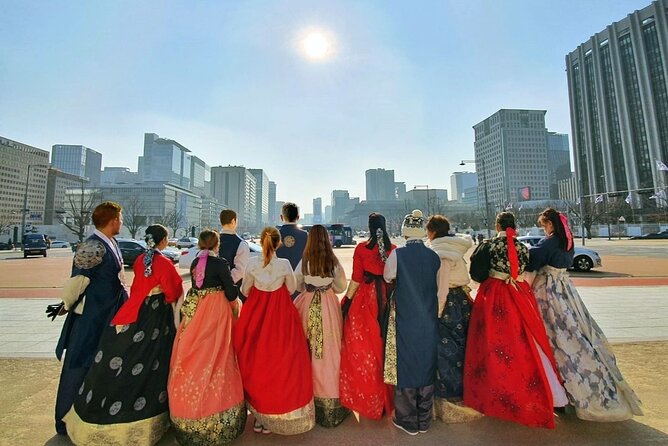
The morning begins around Gwanghwamun and Jongno with the hanbok experience. You select from traditional Korean clothing, get dressed, and then visit the palace in costume. The tour includes professional photography, and this detail has real value. A quick phone snapshot is easy to arrange; a planned set of photos is not.
Guides Jessie and Jesse are both named in the supplied information, so the exact guide may vary. The strongest guide feedback centers on Jessie, whose fluent English, humor, and willingness to take many photos helped make the day feel relaxed. You should still treat the guide quality as dependent on the person assigned that day.
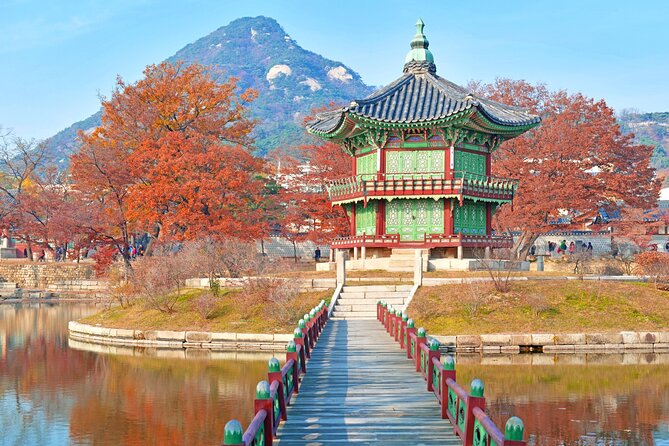
Gyeongbokgung Palace is Seoul’s largest and most famous royal palace. King Taejo founded it in 1395 after moving the Joseon capital to Hanyang, the historic name for Seoul. The palace gives you a clear starting point for understanding the city’s political past and the long reach of the Joseon Dynasty.
You have about 50 minutes inside the palace. That is enough to admire the grand gates, painted wooden buildings, courtyards, and open grounds, but not enough for a slow architectural study. Wear shoes you can walk in, and expect some time outdoors.
Gyeongbokgung closes on Tuesdays. On that day, the tour substitutes Changdeokgung Palace. This is important if you have your heart set on Gyeongbokgung, but Changdeokgung is also one of Seoul’s major royal palaces and keeps the historical focus intact.
National Folk Museum and everyday Korean life
The National Folk Museum of Korea is located within the Gyeongbokgung grounds. Its focus is not only kings and palace ceremonies. You can learn about household customs, cultural beliefs, farming, and the daily routines of earlier Korean communities.
The museum visit lasts about 20 minutes, so you will get an introduction rather than a full museum session. I see this as a useful companion to the palace. Gyeongbokgung shows how the royal court projected power; the museum helps you think about how ordinary people lived.
After the museum, you return the hanbok. The sequence makes sense, since you get the photos and palace experience before changing back into regular clothes. If you want a longer museum visit or more time examining individual exhibits, this schedule will feel brisk.
Korean lunch and the practical side of a moving schedule
Lunch lasts about an hour and includes a Korean dish. The location changes according to traffic and the timing of the day, so you should not plan around a particular restaurant or menu.
That uncertainty is a small drawback, but it also lets the guide keep the route moving. You will not need to search for a restaurant while trying to stay on schedule, and the meal gives you a taste of Korean food without adding another decision to a busy day.
The tour also provides bottled water and snacks. Since you will walk several times during the day, those small inclusions are useful. If you have dietary restrictions, the supplied details do not promise special meal arrangements, so you should confirm directly before booking.
A few more Seoul half-days to weigh up
- Mt. Seorak+Nami Island+Garden of Morning Calm Day Trip from Seoul
★ 5.0 · 959 reviews - Seoul: Gangwon-do Day Trip with Alpaca World & Nami Island
★ 4.7 · 581 reviews - Day Trip to Nami Island with Rail bike and The Garden of Morning Calm
★ 4.5 · 459 reviews - Day Trip to Nami Island with The Garden of Morning Calm
★ 4.5 · 215 reviews
Bukchon Hanok Village and Samcheong-dong
Bukchon Hanok Village brings you into a network of traditional Korean homes called hanok. These wooden houses and narrow alleys sit in the middle of modern Seoul, making the area a striking contrast to the palace grounds and high-rise city around it.
You get about an hour here. That gives you time to walk through the historic lanes and see how traditional forms remain part of a living urban district. The village is well maintained for tourism, but remember that it is also a real neighborhood. Keep your voice down and respect homes as you walk.
The route then continues through Samcheong-dong for another hour. This district is associated with Korean film and television locations, including places connected with Goblin, The Liar and His Lover, and While You Were Sleeping. If Korean dramas are part of your interest in Seoul, this is one of the more personal stops on the route.
Bukchon and Samcheong-dong are walking stops, not drive-by photo points. Hills and uneven streets may make this part tiring, so comfortable shoes are more than a suggestion. You will also want to keep your camera ready, since the appeal comes from the small details of the alleys and houses rather than one single monument.
Central Seoul landmarks seen along the way
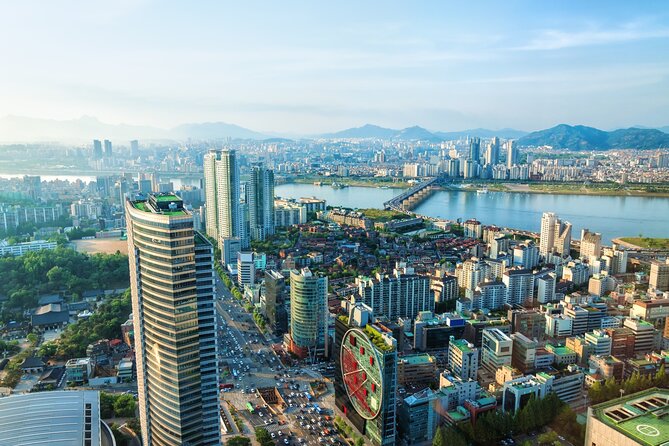
Several central sights are included as brief stops or drive-by points during the day. Their exact time allocation is not listed, so think of them as part of the wider city introduction rather than full visits.
The Blue House, or Cheongwadae, was the official residence of South Korea’s president. It sits near Gyeongbokgung below Bugaksan Mountain and helps connect the palace district with the country’s modern political life.
Jogyesa Temple gives you a look at Korean Buddhism in the center of Seoul. The temple is one of the country’s major Buddhist sites, and its location amid city streets makes it easy to see how religious spaces fit into daily urban life.
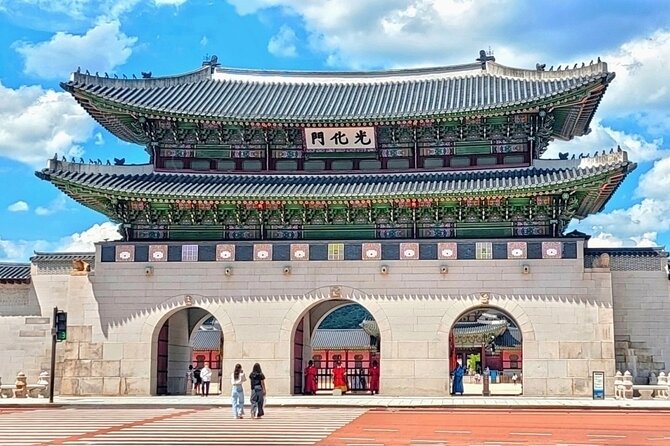
Gwanghwamun is the main southern gate of Gyeongbokgung Palace. Nearby Gwanghwamun Plaza features statues of King Sejong and Admiral Yi Sun-sin, two major figures in Korean history. This is a useful place to hear how royal, military, cultural, and national stories meet in one downtown setting.
Cheonggyecheon Stream is an 11-kilometer man-made waterway created as part of an urban renewal project. Its walkways are now used for recreation, offering a quick look at Seoul’s efforts to reshape central city space for residents.
These sights add breadth, but they also explain why the day can feel packed. You are sampling several parts of Seoul rather than spending half a day at one landmark.
N Seoul Tower and the choice to pay for the observatory
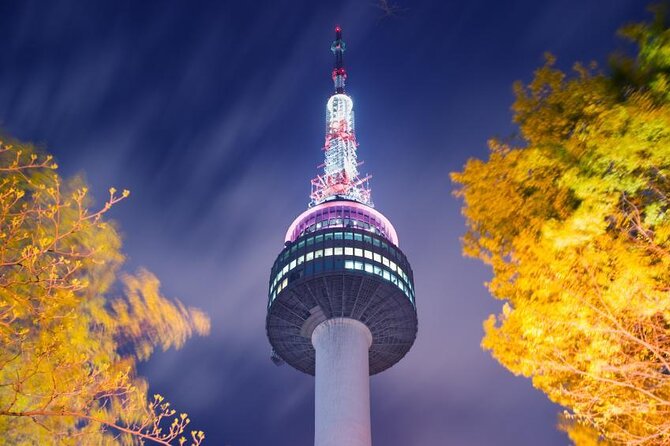
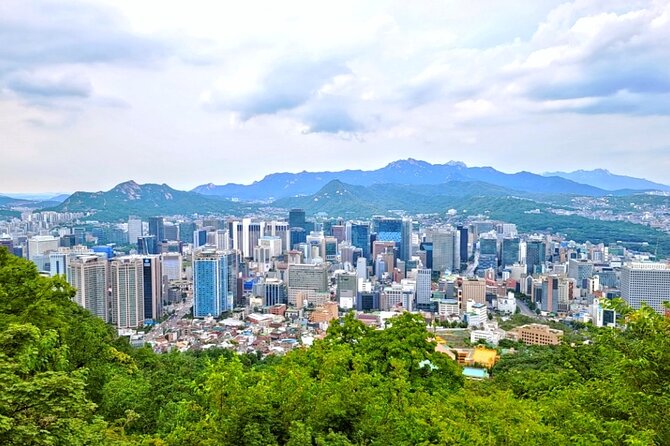
N Seoul Tower, also called Namsan Tower, sits on Namsan Mountain and is one of the city’s most recognizable markers. From the tower area, you can look across Seoul, and the location gives you a useful sense of the city’s scale after a morning in central districts.
The tower is 237 meters high and sits about 480 meters above sea level. The entrance area is included, along with the familiar love-lock displays often seen in Korean dramas. You can enjoy the views from this area without buying an observatory ticket.
Going to the top is optional. The observatory ticket costs about $14 for an adult and $9 for a child, paid separately. I would decide based on the weather and visibility. On a clear day, the higher viewpoint may be worth it. If the air is hazy or you are keeping costs down, the included area still gives you the Namsan experience.
The stop lasts about an hour. That includes getting to the site, seeing the entrance area, taking photos, and deciding if you want to pay for the upper level. Do not treat the observatory admission as part of the tour price.
Finishing in Myeongdong
Myeongdong is Seoul’s best-known shopping district and the final scheduled stop. You get about 20 minutes to see the area, which is enough for a quick look but not enough for serious shopping.
The district includes department stores, shopping malls, cosmetics shops, higher-end brands, food, and souvenirs. If you want Korean skincare or gifts, note what catches your eye, then return on another evening with more time.
There is an important flexibility here. If you want to stay longer in Myeongdong, the tour can end there, but you must arrange and pay for your own return. Otherwise, the activity ends back at the starting point near DongHwa Dutyfree on Sejong-daero.
Timing, transport, and walking
The tour begins at 9:00 a.m. and lasts roughly 9 to 10 hours. Hotel pickup is available only from hotels in Seoul city, so confirm that your accommodation qualifies. The stated meeting point is DongHwa Dutyfree, 149 Sejong-daero, in Jongno District.
Transportation is by air-conditioned 12-passenger van or 25-passenger mini bus. The group maximum is 18 people, which means the vehicle may not always be full, but the precise vehicle depends on the day.
Traffic can change the order or length of stops, especially around lunch. That is why the flexible meal location matters. You should avoid booking another fixed activity immediately after the tour, particularly if you hope to remain in Myeongdong.
Some walking is built into the day. You will move through palace grounds, museum areas, traditional alleys, shopping streets, and the Namsan Tower area. Comfortable shoes and a practical day bag will make the experience easier.
Free cancellation is available up to 24 hours before the start time. The tour can also be changed or refunded if poor weather or insufficient bookings force a cancellation. Changes made inside the 24-hour window are not accepted.
Who should book this Seoul sightseeing tour?
I would recommend it most strongly for a first-time Seoul visitor who wants a broad introduction in one day. It suits you if you value hotel pickup, an English-speaking guide, a Korean lunch, and a route that connects historic sites with modern Seoul.
It is also a good match if you want hanbok photos without arranging the rental and photographer yourself. The photo element is a real reason to choose this tour over a standard palace-and-city bus route.
You may want something else if you prefer long museum visits, unhurried meals, or detailed time at each palace. Independent visitors who are comfortable using Seoul’s public transportation can see some of these areas more slowly and spend less.
Final verdict: a useful first-day overview
Book this tour if your goal is to get your bearings quickly and collect a strong set of Seoul experiences: palace architecture, traditional clothing, a Korean meal, hanok lanes, Buddhist culture, a mountain view, and Myeongdong shopping.
Skip it if you want a relaxed day or if the extra N Seoul Tower charge bothers you. The schedule is full, and the short Myeongdong stop may leave shoppers wanting more. For many first visits, though, the combination of transportation, guide support, lunch, hanbok rental, and professional photos makes the $168 price reasonable, especially when you have only one free day.
FAQ
How long does the Seoul sightseeing tour last?
The tour lasts approximately 9 to 10 hours and starts at 9:00 a.m.
Is hotel pickup available?
Yes. Hotel pickup is offered from hotels located within Seoul city. The listed meeting point is DongHwa Dutyfree at 149 Sejong-daero in Jongno District.
What type of transportation is used?
The tour uses an air-conditioned 12-passenger van or a 25-passenger mini bus.
Is lunch included?
Yes. Lunch is included and consists of a Korean dish. The restaurant and exact meal can vary based on traffic and the timing of the day.
Is hanbok rental included?
Yes. Fusion hanbok rental and wearing are included, along with a professional photographer taking hanbok photos.
What happens if Gyeongbokgung Palace is closed?
Gyeongbokgung Palace is closed every Tuesday. On Tuesdays, the tour replaces it with Changdeokgung Palace.
Is the N Seoul Tower observatory ticket included?
No. The entrance area is included, but going to the observatory requires an optional ticket purchased at your own expense. The listed approximate prices are $14 for adults and $9 for children.
Can I stay in Myeongdong after the tour?
Yes. If you want to remain in Myeongdong, the tour can end there. You are responsible for arranging and paying for your own return.
Recently added around Seoul
- Nami & Maple Road & Theatre des Lumieres Day Tour from Seoul★ 4.8 · 4 reviews
- Gyeongbokgung Palace Photo Session with your own phone★ 5.0 · 4 reviews
- Private Tour around Suwon UNESCO Fortress and Korea Folks Village★ 4.5 · 4 reviews
- Jisan Forest Resort: Ski Full-Day Tour or Shuttle from Seoul★ 5.0 · 4 reviews
- N Seoul Tower + Namsan Cable Car Ticket (Collect in Myeongdong)★ 3.5 · 4 reviews
- Seoul: Deoksugung Palace Night Tour★ 4.5 · 4 reviews
- Seoul Private Walking Tour with a Local★ 5.0 · 4 reviews
- Private Jeonju Hanok Village – Culinary tour★ 5.0 · 4 reviews
Seoul Tours, compared.
Best DMZ Tour Korea from Seoul (Red Suspension Bridge Optional)
Read the review →
DMZ Tour: 3rd Tunnel, Option(Suspension Bridge, Boat) from Seoul
Read the review →
DMZ tour south Korea from Seoul (NK experience hall, defector)
Read the review →
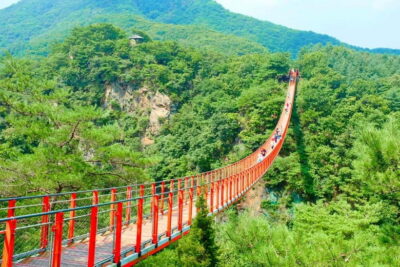
DMZ The 3rd Tunnel and Suspension Bridge Tour
Read the review →
Signature DMZ Tour: Exclusive Defector Talk & Suspension Bridge
Read the review →
Thrilling Korean DMZ 3rd Tunnel Tour from Seoul + Red Bridge Rush
Read the review →
DMZ Past and Present: Korean Demilitarized Zone Tour from Seoul
Read the review →Browse the lists this tour appears in