
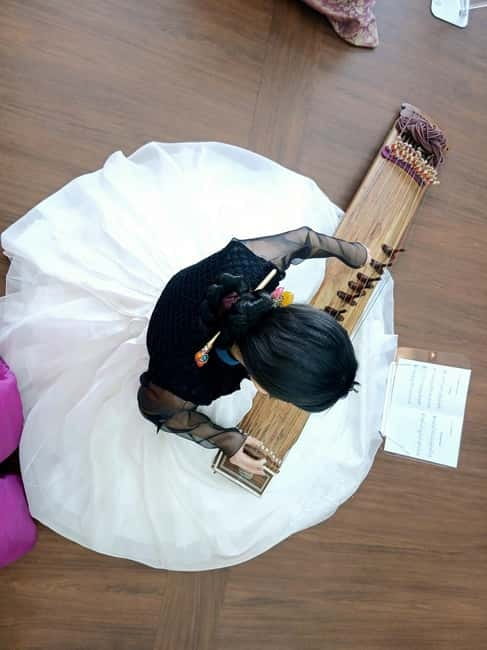
Reviewed · HANBOK RENTAL
Seoul: Learn Traditional Korean Strings Instrument & Hanbok
The most memorable part of this Seoul experience is the moment you make the gayageum speak. This 12-string Korean zither has a warm, gentle tone, and you do not need music training to play a simple tune by the end of the 80-minute class.
I like two things in particular: you learn the instrument through patient, small steps, and you wear a Hanbok while doing it. The class also includes professional photos in the Bukchon studio, so you leave with more than a new cultural skill. The main consideration is the price, $106 per person, which is fair for a private-feeling cultural session but high if you only want a quick costume photo.
Key points to know
- You play a real gayageum: Learn basic hand positions and techniques on Korea’s traditional 12-string instrument.
- You can learn a recognizable song: The class may include Arirang, Amazing Grace, or a popular K-pop melody.
- Hanbok is included: Wear traditional Korean clothing for the full class and photo session.
- The teaching is beginner-friendly: Ava and Yu Min have been praised for clear, patient instruction.
- Bukchon supplies the setting: The studio is at 3F, 43 Bukchon-ro 5ga-gil, in one of Seoul’s best-known traditional neighborhoods.
- Photos are part of the package: Professional pictures are taken while you play in Hanbok.
Meeting the gayageum in Bukchon
This is not a passive cultural demonstration. You sit down with the gayageum and learn how to produce its sound yourself. The instrument looks elegant, with strings stretched across a long wooden body, but the first steps are kept simple enough for a complete beginner.
Your English-speaking instructor begins with an introduction to the instrument and its place in Korean culture. The class then moves into short demonstrations and guided practice. You learn in clear stages instead of being handed an instrument and left to guess what to do.
That matters because traditional instruments can seem intimidating at first. The gayageum has its own posture, hand movements, and playing methods. A calm teacher makes the difference between feeling clumsy for five minutes and feeling proud of your first successful notes.
The teaching team has included Ava and Yu Min, also written as Yoo Min in some accounts. Yu Min has 30 years of experience with gayageum performance, yet the class is aimed at beginners rather than trained musicians. Her patience and humor are useful qualities when your fingers do not quite do what you expect.
More Hanbok Rental in Seoul:
- Seoul Half-Day City Highlight, Palace Tour with Hanbok
★ 4.9 · 764 reviews - Seoul: Hanbok Rental with Gyeongbokgung Palace Entry
★ 4.6 · 611 reviews - Small Group Seoul Highlight Tour opt. Hanbok & Tea Ceremony
★ 5.0 · 318 reviews
An 80-minute class with a clear rhythm
The class has enough time to feel like a real introduction, but it does not take half a day from your Seoul sightseeing. I would allow extra time around the appointment for reaching Bukchon, changing clothes, and finding the third-floor studio at 43 Bukchon-ro 5ga-gil.
The session generally follows this pattern:
- You arrive and receive help choosing and putting on a Hanbok.
- The instructor introduces the gayageum and explains some background about the instrument.
- You learn basic techniques in short, manageable stages.
- You practice alone or with the instructor, depending on what feels useful.
- You play a song together.
- You pose for professional photos in Hanbok with the gayageum.
The order may feel slightly flexible, which is a good thing for a hands-on lesson. If you need more practice, you can repeat a technique. If you pick it up quickly, you can spend more time playing the melody.
The class does not promise a full concert-level education in 80 minutes. What it gives you is a first connection with the instrument, enough technique to play a simple piece, and a better sense of how Korean traditional music works.
Learning Arirang, Amazing Grace, and familiar melodies
A useful feature of the lesson is that the goal is not just to pluck random notes. You work toward a recognizable song. Arirang, one of Korea’s best-known traditional songs, is an especially fitting choice for this setting.
Another class participant finished by playing Amazing Grace, and popular K-pop melodies may also be included. These options help make the lesson accessible. You do not need to know Korean music beforehand, and a familiar tune gives you a clear reason to keep practicing.
The gayageum’s sound is softer and warmer than many visitors expect. That gentle tone rewards careful playing. You may not produce a polished performance on your first try, but you can hear progress as the hand movements become more natural.
I like this approach because it connects a traditional instrument with music you already recognize. You get cultural context without being asked to sit through a long lecture. The lesson stays focused on doing.
Why the Hanbok adds more than a costume change
The Hanbok is not simply a prop for a photograph. Wearing it changes the pace of the experience. You are no longer rushing through a neighborhood with a camera in your hand. You sit in traditional clothing, handle a traditional instrument, and pay closer attention to the setting.
The class includes Hanbok rental for the duration of the session. You can receive advice about color and combinations, which is helpful if you are unsure what works together. The clothing is described as elegant and well prepared, and the fitting guidance makes the process less awkward.
You should remember that Hanbok can make movement feel different from ordinary clothes. That is not a serious problem for this class, since you are seated for much of the musical practice, but it is one reason to avoid treating the session as a rushed stop between other activities.
For couples, friends, and families, the clothing also creates a shared activity. You are not simply taking separate portraits. You can learn together, practice together, and play the final piece as a group.
A few more Seoul half-days to weigh up
- Best DMZ Tour Korea from Seoul (Red Suspension Bridge Optional)
★ 5.0 · 41,422 reviews - DMZ Tour: 3rd Tunnel, Option(Suspension Bridge, Boat) from Seoul
★ 5.0 · 21,373 reviews - DMZ tour south Korea from Seoul (NK experience hall, defector)
★ 5.0 · 20,599 reviews - Seoul: DMZ Tour with Optional Suspension Bridge
★ 4.8 · 5,277 reviews
Professional photos in a traditional studio
The photo session comes after you have learned the basics, so you can be photographed doing something rather than simply standing in costume. You pose with the gayageum in the Hanbok, using the Bukchon setting and studio atmosphere as part of the picture.
Professional photos are included in the $106 price. This is important when judging value. A standard Hanbok rental and self-guided photo outing may cost less, but this class combines clothing, instruction, an instrument, and photography in one appointment.
The photos are also a practical souvenir. One participant who described herself as not very photogenic still received several pictures she liked. That does not guarantee a particular result, but it suggests the session includes active help with posing rather than a quick camera click.
You should think of this as a cultural portrait session with a music lesson, not a dedicated photography shoot. If your main aim is dozens of carefully styled images, another photo service may suit you better. If you want a few strong pictures tied to something you actually learned, this format makes more sense.
The Bukchon Hanok Village setting
The studio is in Bukchon Hanok Village, a historic Seoul neighborhood known for traditional Korean houses and cultural sites. The address is 3F, 43 Bukchon-ro 5ga-gil, Jongno-gu, Seoul.
The location gives the class a strong sense of place. You are learning Korean music in the middle of a neighborhood associated with traditional architecture, rather than in a generic hotel meeting room. The studio itself has been described as charming and thoughtfully prepared.
Bukchon is also hilly and made up of narrow streets, so you should give yourself time to reach the address. The supplied information does not specify a transport route, so check the map carefully before setting out. Look for the exact building and third-floor meeting point rather than assuming every Hanok Village activity gathers at the same spot.
The class is indoors, but the neighborhood is worth pairing with your appointment. You can explore the traditional streets before or after the lesson, as long as you remember that Bukchon is also a residential area. Keep your voice down and avoid blocking doorways when taking pictures outside.
The teaching style is the real strength
The strongest part of this experience is the instruction. Ava has been described as kind, enthusiastic, and patient. Yu Min has been praised for explaining clearly, adding humor, and helping complete beginners feel comfortable.
That combination is especially valuable with an unfamiliar instrument. You may worry about breaking a string, using the wrong technique, or slowing down your group. The lesson is designed to correct those problems gently and give you time to repeat each movement.
You can practice independently or together after learning the different techniques. That flexibility suits mixed groups. A music enthusiast can keep working on the melody, while a nervous beginner can repeat the basics without feeling rushed.
The class is taught in English. That makes the explanations easier to follow for international visitors, though the precise experience may vary slightly depending on the instructor leading your session. The stated language is English, so you should not book this expecting instruction in another language.
Is $106 a fair price?
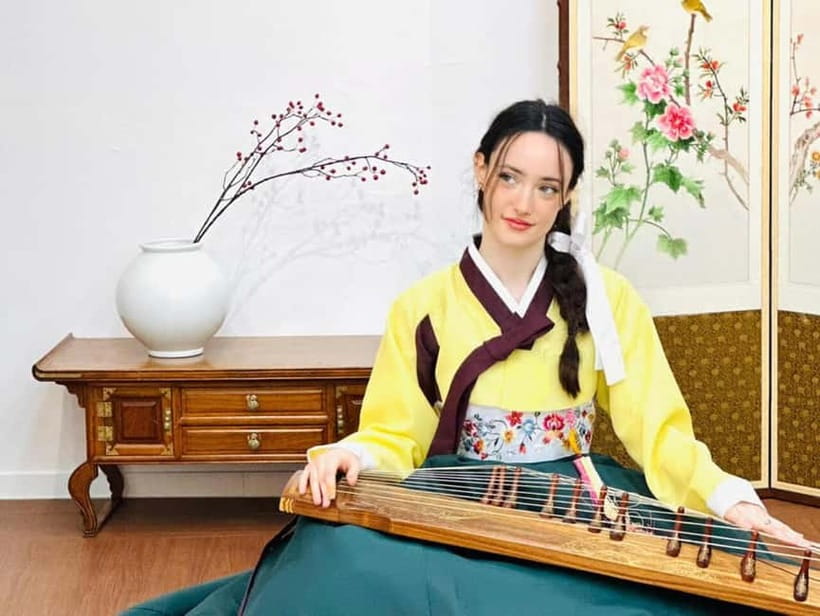
At $106 per person, this is not a budget activity. The value depends on how many parts of the experience you would otherwise book separately.
You receive:
- An 80-minute gayageum lesson
- An English-speaking professional instructor
- Hanbok rental during the class
- Professional photos while playing the instrument
- A setting in Bukchon Hanok Village
For someone already planning a Hanbok rental and interested in Korean music, the combined format is attractive. You save the trouble of arranging separate activities, and the lesson gives your photos a real story.
The price is harder to justify if you only want to wear Hanbok for a few outdoor pictures. Seoul has many lower-cost ways to see traditional clothing, and you could visit Bukchon without booking an activity. This class earns its price through personal instruction and access to an instrument you might not otherwise get to play.
I would consider it good value for a special occasion, a first-time Seoul visit, or a small group that wants one polished cultural memory. Solo visitors should consider the cost more carefully, since the photos and shared practice may feel more worthwhile with a friend or partner.
Who will enjoy this class most?
I would recommend it first to people who want to make something during a cultural activity. You do not need to be a musician. In fact, the beginner-friendly structure is one of the best reasons to book.
It suits:
- First-time visitors seeking a focused Korean culture experience
- Music lovers curious about instruments outside the Western tradition
- Couples and friends who want a shared activity
- Families with an interest in Hanbok and hands-on learning
- Anyone who wants professional photos with a more meaningful setting
- Visitors staying near Jongno who can easily combine it with Bukchon sightseeing
It may be less suitable if you dislike dressing up, prefer fast sightseeing, or want a long and advanced music lesson. The class introduces the gayageum rather than training you to perform a complex traditional piece.
You should also be comfortable with a seated activity and a set appointment time. The information provided does not give a group size, so you should ask the provider if the size of the class matters to you.
Practical planning for your Seoul day
The class lasts 80 minutes, but I would not schedule another timed attraction immediately afterward. You may need time to change out of the Hanbok, collect your photos or photo details, and walk through Bukchon’s streets.
Wear something comfortable underneath the Hanbok. The outfit is supplied for the session, and the class includes rental, but the exact changing arrangements are not specified. Keeping your underlayers simple will make changing easier.
Arrive with a little breathing room. The meeting point is on the third floor, and Bukchon’s lanes can be confusing if you are following a map while hurrying. The address is more useful than a broad search for Bukchon Hanok Village.
The activity offers free cancellation up to 24 hours before the start time, with a full refund. You can also reserve now and pay later, which is helpful when your Seoul schedule is still shifting. Check the available start times before planning the rest of your day.
My verdict on the gayageum and Hanbok experience
I would book this if you want a cultural activity that combines instruction, clothing, music, and photos without requiring previous skill. The patient teaching, gentle sound of the gayageum, and Bukchon setting give the 80 minutes a clear sense of purpose.
The $106 price deserves a careful look, especially for solo visitors or anyone uninterested in photographs. But if you value personal guidance and want to say you actually played a traditional Korean instrument, the package is stronger than a simple Hanbok rental.
My best tip is to reserve it for a day when you can slow down around Bukchon. Arrive without rushing, listen closely to the instrument, and let the photo session be the final keepsake rather than the whole point. For music-curious visitors, this is one of Seoul’s more personal ways to meet Korean culture.
FAQ
How long does the gayageum and Hanbok activity last?
The experience lasts 80 minutes.
What instrument will I learn to play?
You will learn the gayageum, a traditional Korean 12-string zither.
Do I need musical experience?
No. The class is designed for complete beginners as well as music enthusiasts.
Is Hanbok rental included?
Yes. Hanbok rental is included for the duration of the class.
Are photos included?
Yes. Professional photos are taken while you wear Hanbok and play the gayageum.
What language is the class taught in?
The instructor teaches in English.
Where is the meeting point?
The meeting point is 3F, 43 Bukchon-ro 5ga-gil, Jongno-gu, Seoul.
Can I cancel for a full refund?
Yes. You can cancel up to 24 hours in advance for a full refund. You can also reserve now and pay later.
Recently added around Seoul
- Nami & Maple Road & Theatre des Lumieres Day Tour from Seoul★ 4.8 · 4 reviews
- Gyeongbokgung Palace Photo Session with your own phone★ 5.0 · 4 reviews
- Private Tour around Suwon UNESCO Fortress and Korea Folks Village★ 4.5 · 4 reviews
- Jisan Forest Resort: Ski Full-Day Tour or Shuttle from Seoul★ 5.0 · 4 reviews
- N Seoul Tower + Namsan Cable Car Ticket (Collect in Myeongdong)★ 3.5 · 4 reviews
- Seoul: Deoksugung Palace Night Tour★ 4.5 · 4 reviews
- Seoul Private Walking Tour with a Local★ 5.0 · 4 reviews
- Private Jeonju Hanok Village – Culinary tour★ 5.0 · 4 reviews
Hanbok Rental, compared.
Seoul Half-Day City Highlight, Palace Tour with Hanbok
Read the review →

Small Group Seoul Highlight Tour opt. Hanbok & Tea Ceremony
Read the review →
Hanbok Photoshoot and History Tour at Gyeongbokgung Palace
Read the review →
Professional Hanbok Photography at Gyeongbok Palace
Read the review →
Gyeongbokgung Palace Hanbok Rental Experience in Seoul
Read the review →
Seoul City Full Day Tour – Changdeok Palace (wearing Hanbok)
Read the review →Browse the lists this tour appears in