
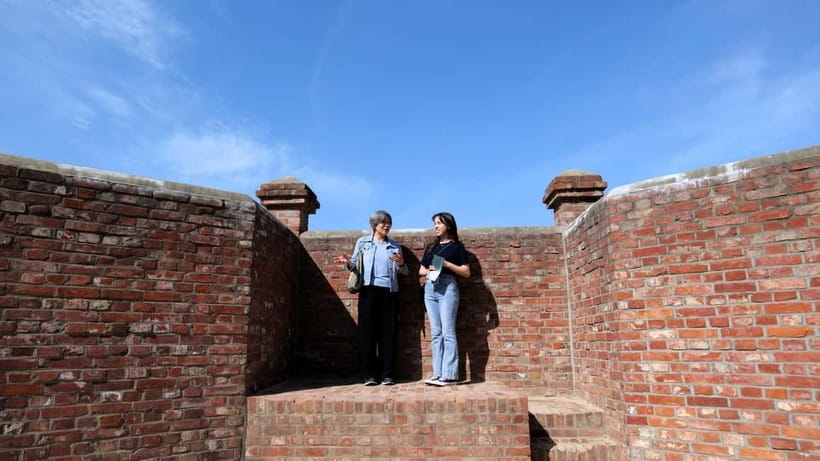
Reviewed · SEOUL TOURS
Seoul: Korea Dark History Tour at Seodaemun Prison
Seodaemun Prison is not a light sightseeing stop. Its preserved cells, interrogation rooms, and memorial displays bring Korea’s struggle for independence and democracy close to you in a way a textbook cannot. The tour also visits Independence Gate, a symbol of Korea’s wish to govern itself.
I like the small group limit of 10, which gives you room to ask questions. I also like the way the guide connects a national story to one young person, Yu Gwan-sun, who was only 17 when she became a symbol of courage. The main consideration is the subject matter: parts of the prison visit are grim and emotionally intense.
Key points
- Independence Gate sets the political context: Begin with Korea’s first monument to self-determination before entering the prison complex.
- Seodaemun Prison takes up most of the tour: Expect about 100 minutes inside the history hall and preserved prison grounds.
- Yu Gwan-sun’s story adds a human face: Her experience helps you understand the cost of resistance beyond dates and political events.
- Small groups make the history easier to discuss: The tour is limited to 10 people, with time for questions.
- English and Japanese guiding is available: Japanese is optional, and the English explanations have been praised for being clear and fluent.
- Comfortable shoes matter: You will walk between sites and through the prison complex, and the tour is not suitable for wheelchair users.
Why Seodaemun Prison belongs on a Seoul history itinerary
Seoul offers palaces, markets, towers, and polished modern districts at every turn. Seodaemun Prison gives you a different view of the city. Here, the focus is not royal ceremony or pop culture, but the people who paid a high price for Korea’s independence and later democratic ideals.
The prison opened during the period of Japanese colonial rule and became a place where Korean independence activists were detained, interrogated, and punished. The site now preserves parts of that prison and explains the wider political story through displays and guided interpretation.
I find this kind of place far more meaningful with a guide than on my own. Labels can tell you what a building was used for. A good local storyteller can explain why a location still matters to Korean identity, how the events fit together, and which details deserve your attention.
This tour is led in English or Japanese, depending on the booking. Some recent departures have been guided by Bae Jung-hui, whose calm explanations, strong command of English and Japanese, and willingness to answer questions have been singled out by several participants. The exact guide can vary, but the format is designed around explanation rather than simply walking from room to room.
More Historical Tours in Seoul
- Seoul: Evening Dark History, Folklore & Ghost Story Walking Tour
★ 5.0 · 593 reviews - Hanbok Photoshoot and History Tour at Gyeongbokgung Palace
★ 5.0 · 276 reviews - From Seoul: Dae Jang Geum Park Historic K-Drama Set Tour
★ 4.9 · 143 reviews
Starting at Independence Gate
The tour begins at one of two listed meeting-point options, shown as 102-55 or 102-6. Check the exact option selected when you book, since the meeting location may vary. The walk then heads to Dongnimmun Gate, also known as Independence Gate.
You spend about 20 minutes here with the guide. That is a sensible amount of time. The gate is important, but the prison is the main event, so this opening stop works as a compact introduction rather than a long architectural lecture.
The gate carries a strong political message. It was built to express Korea’s desire for self-determination and to mark a break from outside control. Your guide explains the meaning behind the structure and places it within Korea’s fight for independence.
I like beginning here because it gives you a question to carry into the prison: what does independence cost when people are willing to resist an occupying power? Without that context, the prison can feel like a collection of harsh rooms. With it, the site becomes part of a much larger story about national identity.
Do not expect a long stop or a large set of exhibits at the gate. Its value comes from the explanation and symbolism. The surroundings are also part of modern Seoul, so this is a useful reminder that difficult history is often woven into ordinary city spaces.
Entering the Seodaemun Prison History Hall
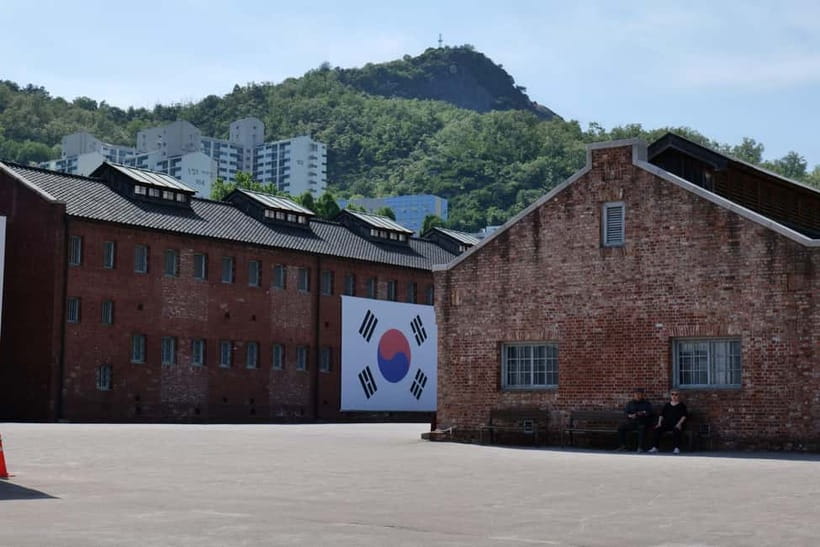
About 100 minutes are devoted to Seodaemun Prison History Hall. Admission is included in the tour price, so you are not paying separately to enter the main site.
The history hall and prison grounds preserve the setting where many independence activists were held. You move through spaces connected to confinement and punishment while the guide explains what happened there and how the prison functioned during Korea’s colonial period.
The physical setting does much of the work. Cells and institutional rooms are not abstract. Their size, layout, and stark purpose help you picture the loss of freedom in a direct way. The guide then fills in the historical context and points out details you might pass without understanding.
A self-guided visit could still be worthwhile, but it would be a thinner experience. Several participants have stressed that the explanations made a major difference, especially when the guide organized events in chronological order and paused to answer questions. That is particularly useful if you know only the broad outline of Korean history.
The tour is not built around entertainment. You will hear about suffering, imprisonment, courage, and sacrifice. The guide’s job is to make the history understandable without turning it into a dramatic performance. A respectful approach matters here, and the strongest feedback has focused on clear explanations, patience, and personal warmth.
The story of Yu Gwan-sun
One of the tour’s central stories is Yu Gwan-sun, a 17-year-old student who became a national symbol of resistance. Her age makes the story especially affecting. You are not only learning about officials, movements, and political change. You are learning how a young person could become part of a national struggle.
Her story gives the prison visit a human scale. Large historical terms such as independence and democracy can feel remote. The account of one teenager helps you see what those ideas meant to an individual and what courage looked like in daily life.
The guide uses personal stories such as hers to connect the exhibits to modern Korea. That is one of the best reasons to book a guided visit instead of treating Seodaemun Prison as a quick photo stop. You leave with names and choices to remember, not just a general sense that the site was important.
The subject can be hard to hear. You should come prepared for accounts of mistreatment and sacrifice, though the exact detail and emphasis will depend on the guide. This is a place for attention and respect, not a casual stop between shopping districts.
A different way to spend a day from here:
- Best DMZ Tour Korea from Seoul (Red Suspension Bridge Optional)
★ 5.0 · 41,422 reviews - DMZ Tour: 3rd Tunnel, Option(Suspension Bridge, Boat) from Seoul
★ 5.0 · 21,373 reviews - DMZ tour south Korea from Seoul (NK experience hall, defector)
★ 5.0 · 20,599 reviews - Seoul: DMZ Tour with Optional Suspension Bridge
★ 4.8 · 5,277 reviews
How the small group changes the visit
The group is limited to 10 people. That is small enough for the guide to keep everyone together and answer questions without turning each explanation into a public speech.
I value this format at a site where the meaning is not always obvious. You may want to ask how one event connects to another, why a particular building was preserved, or how the independence movement influenced later ideas about democracy. A small group gives you a better chance to ask those questions.
The experience can feel almost personal when numbers are low. One booking had only a mother and daughter, allowing them to receive close attention throughout the visit. You cannot count on having a private tour, but a maximum of 10 is far more manageable than a large coach group.
The guide’s communication skills matter greatly. Bae Jung-hui has been praised for making visitors feel welcome while explaining the prison in careful detail. Other feedback highlights clear English, fluent Japanese, and the ability to organize the history in a way that was easy to follow. Those are practical strengths, not minor extras, because the site has emotional weight and a lot of information.
Language, pace, and walking comfort
The tour is available in English and Japanese. Japanese is optional, so select the language that matches your needs when booking.
The pace is steady rather than rushed. You spend 20 minutes at Independence Gate and roughly 100 minutes at the prison, for a total duration of two hours. That balance gives the prison enough time without making the activity an all-day commitment.
Wear comfortable walking shoes. You will walk between the meeting point, Independence Gate, and the prison site, then move through the historic complex. The information provided does not give a total distance or describe every surface, so anyone with mobility concerns should check carefully before booking.
The experience is not suitable for wheelchair users. This is an important limitation, particularly because historic prison buildings can include uneven access and restricted routes. If accessibility is a deciding factor for you, ask the operator for current details before paying.
Weather does not necessarily ruin the tour. A recent departure continued in poor weather, and the guide even shared a UV umbrella with a participant. Still, bring suitable protection for sun or rain, since the experience includes outdoor walking and waiting around historic sites.
Is $31 a fair price?
At $31 per person, this is a reasonable price for a two-hour guided visit that includes admission to Seodaemun Prison. You are paying for more than entry. The main value lies in having a guide explain the political background, connect the buildings to individual stories, and answer questions as you walk.
The price is especially fair if you have limited time in Seoul and want a focused history experience. You do not need to plan separate transport between the two main sites, and the tour keeps the visit to a manageable morning or afternoon block. Meals, drinks, and transportation to or from the attractions are not included, so budget for those separately.
I would not choose this tour because it is the cheapest way to enter the prison. I would choose it because the site gains much of its meaning through context. If you already have strong knowledge of Korean colonial and independence history, you may prefer to visit alone and read at your own pace. For most first-time visitors, the guide makes the admission fee more worthwhile.
The reserve-now-and-pay-later option also helps if your Seoul schedule is still changing. Free cancellation is available up to 24 hours before the activity for a full refund, according to the booking conditions.
Who will get the most from this experience?
This tour suits you if you want to understand Korea beyond palaces, food, and modern city life. It is a good choice for anyone interested in independence movements, political history, human rights, or the way national memory shapes a country.
It also works well for families with older children and teenagers who can handle serious subject matter. Yu Gwan-sun’s story may give younger visitors a clear way into the history, though parents should explain that the prison material is emotionally difficult.
The experience is less suitable if you want a light sightseeing walk or a photo-focused outing. The prison is not a cheerful attraction, and the guide will ask you to pay attention to painful events. That is exactly why many people find it worthwhile, but it is best to know the tone before you arrive.
The two-hour length makes it easy to pair with other Seoul plans. You could schedule it as a focused history activity rather than giving up a full day. Just leave enough time around it for transport, since travel to and from the attractions is not included.
What to know before you book
Confirm the meeting-point option carefully. The listed starting locations are 102-55 and 102-6, with the exact point depending on the option booked. The tour finishes at 102-6, so read the booking details rather than assuming you will return to your original starting point.
Check the language before confirming. English and Japanese are offered, but Japanese is optional. The guide can explain the history in a clear sequence, yet your own experience will still depend on the language you select and the guide assigned that day.
Allow yourself time to reflect after the visit. The tour moves from a public symbol of independence into a place tied to imprisonment and suffering. You may not want to schedule a loud, crowded activity immediately afterward.
Alcohol and drugs are not allowed. Comfortable shoes are required in practical terms, and the tour is not designed for wheelchair users.
FAQ
How long does the Seodaemun Prison tour last?
The tour lasts two hours. About 20 minutes are spent at Dongnimmun Gate, also called Independence Gate, and about 100 minutes at Seodaemun Prison History Hall.
What languages are available?
The tour is conducted in English and Japanese. Japanese is optional, so choose the preferred language when booking.
Is admission to Seodaemun Prison included?
Yes. Guided touring and admission to Seodaemun Prison are included in the price.
Is transportation included?
No. Transportation to and from the attractions is not included. The activity itself is a walking tour between Independence Gate and Seodaemun Prison.
How large is the group?
The tour is limited to 10 participants, making it a small-group experience with time for questions.
Is the tour suitable for wheelchair users?
No. The experience is listed as unsuitable for wheelchair users. You should also wear comfortable walking shoes and prepare for an emotionally intense visit.
Should you book this history tour?
I would book it if you want a clear, human explanation of Korea’s fight for independence and democracy. The combination of Independence Gate, Seodaemun Prison, and Yu Gwan-sun’s story gives the two-hour visit a strong shape, while the small group leaves room for questions.
I would skip it if you are looking for a relaxed Seoul stroll or if prison history is likely to feel too heavy. For everyone else, $31 is a sensible price for the guide’s context and the included admission. Come with comfortable shoes, an open mind, and enough time afterward to think about what you have seen.
Recently added around Seoul
- Nami & Maple Road & Theatre des Lumieres Day Tour from Seoul★ 4.8 · 4 reviews
- Gyeongbokgung Palace Photo Session with your own phone★ 5.0 · 4 reviews
- Private Tour around Suwon UNESCO Fortress and Korea Folks Village★ 4.5 · 4 reviews
- N Seoul Tower + Namsan Cable Car Ticket (Collect in Myeongdong)★ 3.5 · 4 reviews
- Jisan Forest Resort: Ski Full-Day Tour or Shuttle from Seoul★ 5.0 · 4 reviews
- Seoul: Deoksugung Palace Night Tour★ 4.5 · 4 reviews
- Private Jeonju Hanok Village – Culinary tour★ 5.0 · 4 reviews
- Seoul Private Walking Tour with a Local★ 5.0 · 4 reviews
Seoul Tours, compared.
Best DMZ Tour Korea from Seoul (Red Suspension Bridge Optional)
Read the review →
DMZ Tour: 3rd Tunnel, Option(Suspension Bridge, Boat) from Seoul
Read the review →
DMZ tour south Korea from Seoul (NK experience hall, defector)
Read the review →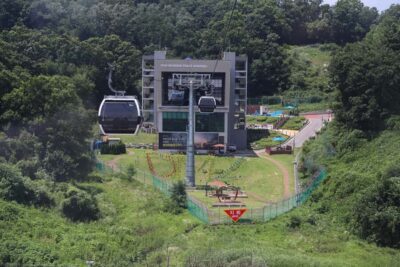
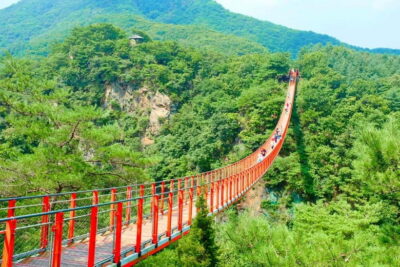
DMZ The 3rd Tunnel and Suspension Bridge Tour
Read the review →
Signature DMZ Tour: Exclusive Defector Talk & Suspension Bridge
Read the review →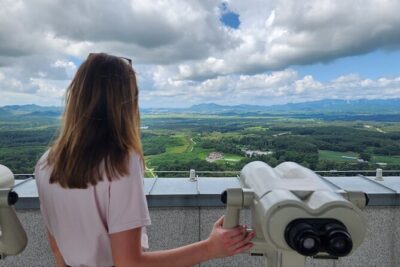
Thrilling Korean DMZ 3rd Tunnel Tour from Seoul + Red Bridge Rush
Read the review →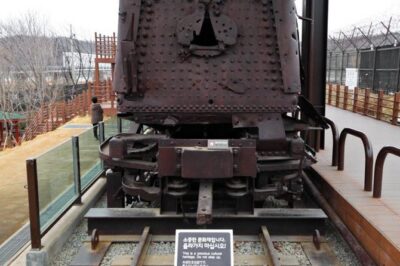
DMZ Past and Present: Korean Demilitarized Zone Tour from Seoul
Read the review →Browse the lists this tour appears in