Reviewed · SEOUL TOURS
Seoul: Highlights of Seoul Full-Day Tour
Gyeongbokgung’s royal guard ceremony is the lively opening to a day that moves from palace courtyards and old hanok lanes to a mountain viewpoint, food market, Buddhist temple, and war museum. For $60, this is a smart way to get your bearings fast, especially if Seoul is your first stop in Korea.
I like the mix of places. You get pretty photos in Bukchon, a high city view at Bugak Palgakjeong, lunch freedom at Gwangjang Market, and serious history at the War Memorial. I also like the practical transport, since Seoul’s sights are spread out and traffic can make a self-planned day awkward.
The tradeoff is pace. You will see many places, but only briefly, and the ginseng stop is a shopping visit rather than a major cultural attraction. Expect about 12,000 steps, outdoor time in all weather, and no time for hanbok rental.
Key points to know before booking
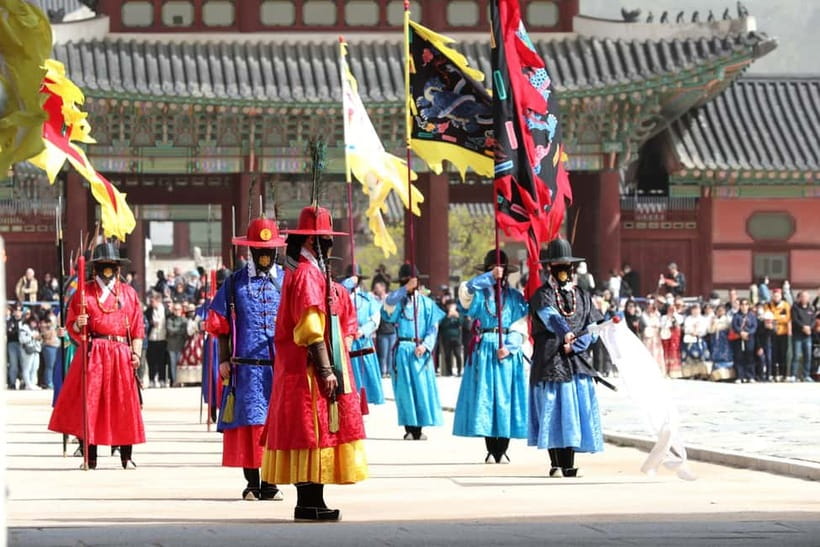
- The guard-changing ceremony starts the day: Arrive ready for one of Seoul’s most photogenic palace moments.
- Eight major stops fit into eight hours: You cover royal Korea, traditional neighborhoods, modern history, religion, shopping, and street food in one outing.
- Gwangjang Market lunch is on your own: Bring cash for the widest choice of stalls and snacks.
- Bugak Skyway gives you the city view: Bugak Palgakjeong is a peaceful mountain stop above central Seoul.
- The guides make a real difference: Chloe, Sunny, Sophie, Shin, Stella, and Leo are praised for clear English, humor, patience, and photo help.
- This is a walking tour with vehicle support: Comfortable shoes matter, and the tour is not suitable for wheelchair users.
A fast, useful introduction to Seoul
This full-day outing is designed for the first-time visitor who wants to see the broad outline of Seoul without piecing together several subway routes and separate admissions. You move between the city’s royal past, traditional homes, Korean Buddhism, wartime history, food culture, and a modern shopping district.
The day begins at your selected pickup point, or at the meeting point outside Myeongdong Station Exit 10, next to Sejong Hotel. Optional hotel pickup covers central Seoul areas such as Gangnam, Myeongdong, Gwanghwamun, Itaewon, and Dongdaemun. Hotel pickup is scheduled between 7:20 and 8:40 in the morning, so check your confirmation for the exact time.
Transport is by air-conditioned minivan or coach. That matters in Seoul, where a stop can be close on a map but slow to reach by road. You are not spared all traffic, of course, but the vehicle lets you rest between stops instead of changing trains with a group.
The tour ends near Myeongdong Cathedral, by Myeong-dong Station. There is no hotel drop-off, so plan your evening from central Seoul rather than expecting to be returned to your accommodation.
A few more Seoul half-days to weigh up
- Full Day Tour In The Soop BTS Ver in PyeongChang Filming Location
★ 5.0 · 1,709 reviews - Seoul City Private Full-Day Tour Including Lunch
★ 5.0 · 469 reviews - Full-day Customizable Private Seoul Highlight Tour
★ 5.0 · 301 reviews
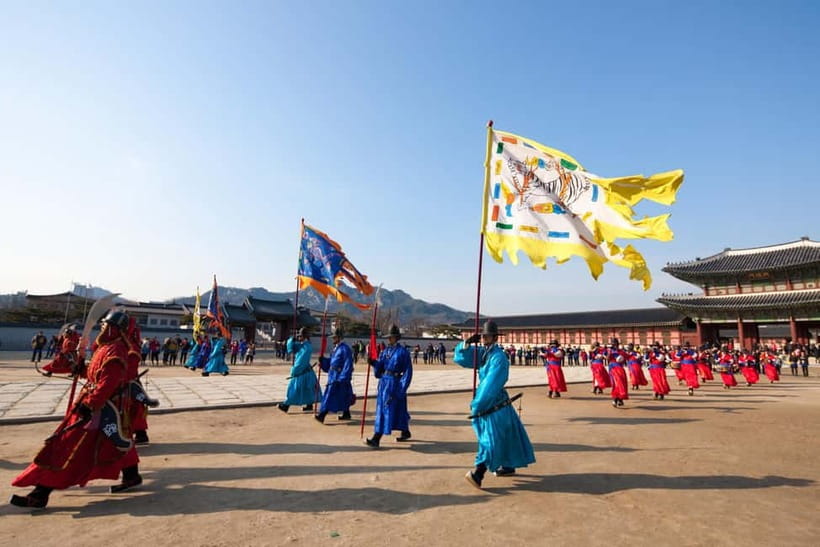
Gyeongbokgung and the royal guard ceremony
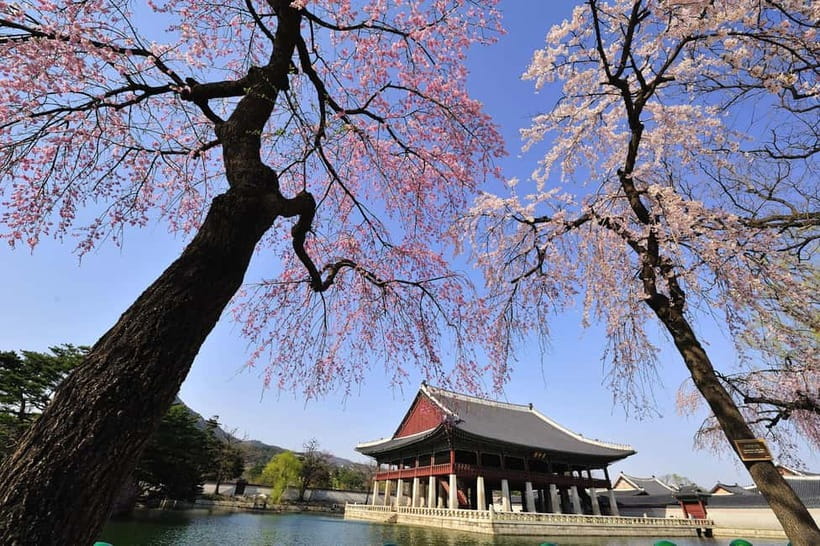
Gyeongbokgung is the natural first stop. It is the largest and often considered the most beautiful of Seoul’s five royal palaces. A one-hour guided visit gives you time to see the palace setting and understand its role before the day moves on.
The changing of the royal guard is the visual highlight here. Bright uniforms, formal movements, and traditional ceremony make it easy to enjoy even if you know little about Korean history. Keep your camera ready, but listen to the guide too, since the value of the presentation is greater when you know what you are seeing.
One important rule is easy to miss: you cannot simply meet the group at Gyeongbokgung after the tour begins. Joining late or trying to contact the guide once the tour is underway is not permitted. If you are using the central meeting point, arrive early and allow time to find Exit 10.
Hanbok rental is not included, and no rental time is provided. If wearing traditional clothing is a priority, this is not the tour to build around that plan. You will need a separate visit and enough time to rent, dress, and explore at your own pace.
Bukchon Hanok Village and the photo-friendly lanes
After the palace, the group visits Bukchon Hanok Village for about 30 minutes. Bukchon means northern village, and the area is known for traditional Korean houses, or hanok. Some of these buildings now serve as cultural centers, guesthouses, and restaurants.
This is a short stop, so think of it as an introduction rather than a slow neighborhood walk. You will have time to see the architecture, hear why the district matters, and take photos. The narrow lanes and tiled roofs offer a very different view of Seoul from the palace grounds.
Bukchon is also a lived-in neighborhood, not an open-air stage set. Keep voices low, stay aware of residents, and follow the guide’s route. The area can involve slopes and uneven walking, which is another reason to wear shoes with good grip.
Solo visitors can benefit from a guide here. Several guides, including Sophie and Chloe, are praised for helping with photographs. That small service can make a difference when you are traveling alone and want a picture that includes more than a blurry arm’s length view.
Bugak Palgakjeong above the city
The next stop leaves the dense central streets for Bugak Skyway and Bugak Palgakjeong, also called Bugak Pavilion. The guided visit lasts about 40 minutes.
The pavilion sits on the slopes of Bugaksan Mountain and offers broad views over Seoul. This is the day’s best pause for fresh air and city photographs. You can look back at how large Seoul is, after seeing only a few historic districts on foot.
The stop is also a useful change of rhythm. Gyeongbokgung and Bukchon involve close views of buildings and lanes. Bugak gives you distance and perspective. On clear days, the view should be the main event; on cloudy or wet days, visibility may be limited.
The tour runs rain or shine, and winter can be very cold. One January group faced freezing conditions, while another found snow at the viewpoint. Wear a warm layer, protect your hands, and do not assume the vehicle will make outdoor stops feel mild.
A different way to spend a day from here:
- Best DMZ Tour Korea from Seoul (Red Suspension Bridge Optional)
★ 5.0 · 41,422 reviews - DMZ Tour: 3rd Tunnel, Option(Suspension Bridge, Boat) from Seoul
★ 5.0 · 21,373 reviews - DMZ tour south Korea from Seoul (NK experience hall, defector)
★ 5.0 · 20,599 reviews - Seoul: DMZ Tour with Optional Suspension Bridge
★ 4.8 · 5,277 reviews
The ginseng museum and the shopping question
Cheongha Korea Ginseng is scheduled for about 30 minutes. The visit explains the long use of ginseng in East Asian medicine and introduces Korean ginseng products.
Korean ginseng is associated with adaptogenic properties and has long been treated as an all-purpose remedy in traditional accounts. The stop can be useful if you want to understand why ginseng is such a prominent Korean export and gift item.
It is also the clearest commercial stop of the day. Product prices can be high, and you should not feel obliged to buy. One practical way to approach it is to treat the visit as an orientation to the product range, then purchase only if you genuinely want something and understand the cost.
This is where the tour’s value is a little less even. The entrance fees and transport help justify the $60 price, but a shopping stop will not appeal to everyone. If you dislike sales-oriented visits, use the time to learn, browse politely, and keep your budget in mind.
Lunch at Gwangjang Market
Lunch is at your own expense in Gwangjang Market, Korea’s first market. This is one of the day’s most flexible stops because you choose how much to eat and what to try.
The market is known for food, snacks, and a wide selection of inexpensive goods. You do not need a formal restaurant meal to enjoy it. A small plate or snack lets you sample more, while a fuller lunch gives you a proper break before the afternoon history stops.
Bring cash. It gives you more options at food vendors, and one visitor specifically found it helpful for choosing among the stalls. Food and drinks are not included in the tour price, so budget separately.
You should also watch the time. A market can easily swallow an hour, especially when you are comparing unfamiliar dishes. Follow the guide’s instructions for when to return to the vehicle. The schedule works because the group keeps moving.
The War Memorial of Korea
The afternoon begins at the War Memorial of Korea, with about one hour for a guided visit. The museum was established in 1994 and presents the Korean War alongside the broader goal of preventing future conflict and hoping for reunification between North and South Korea.
This is not simply another photo stop. It gives essential context for understanding the Korean Peninsula, its division, and the continuing importance of the subject in South Korea. After the royal palace and traditional village, the museum shifts the day into modern Korean history.
An hour is enough for an introduction, not for every exhibit. If military history is your main interest, you may want to return independently for a longer visit. On this tour, the guide helps you focus on the key ideas and keeps the experience connected to the rest of the day.
I especially like having this stop included because a city tour that shows only palaces and shopping leaves out a major part of Korea’s story. The War Memorial gives the itinerary some weight.
Jogyesa Temple and Korean Buddhism
Jogyesa Temple receives about 25 minutes. It is the chief temple of the Jogye order, the tradition that represents Korean Buddhism, and it promotes a society shaped by shared living and the spirit of the bodhisattva.
The visit is short but worthwhile. You get a glimpse of a working religious site in central Seoul and a break from the more civic and commercial stops. The temple has also lived through Korea’s turbulent modern period, so it connects spiritual life with the country’s recent past.
Use the time respectfully. This is a place of worship, not only a sightseeing backdrop. Follow the guide’s instructions about where to stand and how to behave, and remember that quiet observation is part of the visit.
Because the stop is only 25 minutes, do not expect an extended meditation session or detailed temple study. It is a concise introduction that works well in a day built around variety.
Tapgol Park, independence, and a pop-culture footnote
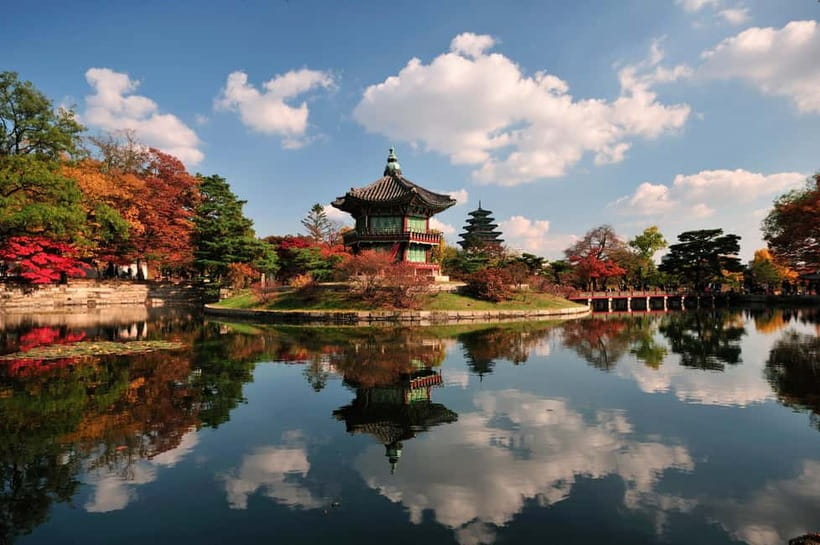
Tapgol Park is a public park near Insadong and the final sightseeing stop before Myeongdong Cathedral. The guided visit lasts about 30 minutes.
The park is historically important as the place where the March 1 Korean Independence Movement began in 1919. That movement called for Korean independence from Japanese rule. A guide can help connect the park’s modest urban setting with the scale of the event that began there.
There is also a modern pop-culture detail. Tapgol Park appears briefly in Squid Game Season 2, episode 1, in a scene where the recruiter hands out bread and lottery tickets to homeless people before stamping on the remaining bread. If you know the show, it adds a fun visual connection. If you do not, the independence story is still the reason to pay attention.
The tour then concludes at Myeongdong Cathedral. Ending there puts you close to Myeong-dong Station, shopping streets, restaurants, and onward subway connections.
What the guides add to the day
The guide is the thread holding this packed itinerary together. Chloe is frequently praised for humor, energy, patience, and easy English. She has shared film suggestions and K-pop songs, helped solo visitors take photos, and kept large groups engaged through cold weather and long hours.
Sunny is praised for clear explanations of historical meaning and for answering questions patiently. Sophie is described as warm, organized, and strong at storytelling. Shin receives praise for broad knowledge of Seoul and South Korea, while Leo is noted for local insight, communication, and careful attention to the group.
The exact guide depends on the departure date, so you cannot assume you will receive a particular person. Still, the pattern is clear: this tour depends heavily on a guide who can keep the mood light while explaining serious subjects.
The drivers also matter. The vehicle is repeatedly described as comfortable and well managed, which makes the long day easier. Traffic can stretch the schedule. One unusually slow day ran close to 10 hours instead of eight, with the guide continuing rather than cutting the program short. That is encouraging, but you should avoid booking a flight, train, or strict evening reservation immediately after the advertised finish.
Is $60 good value?
At $60 per person, the tour offers solid value if you want breadth. You receive entrance fees, an English-speaking local guide, air-conditioned transport, and a full day of organized sightseeing. You also avoid the time cost of planning transport among palace grounds, mountain roads, the market, museum, temple, and central parks.
The price does not cover lunch, drinks, personal purchases, travel insurance, or hotel drop-off. The ginseng visit may also feel less useful if you have no interest in buying health products.
For a first day in Seoul, I think the value is strongest. You get a practical overview, then can return to the places that caught your attention. For a repeat visitor who prefers long museum visits, unhurried meals, or independent wandering, the fixed schedule may feel too tight.
The transport received a 97 percent perfect score for comfort and quality, and the overall rating is 5 from 378 reviews. That does not remove the normal limits of a group tour, but it supports the idea that organization and vehicle support are major strengths.
Who should book this Seoul day tour?
I would choose this tour if you have only one full day, are traveling alone, or want a clear introduction before exploring Seoul independently. It is also useful during a short stopover, provided your schedule allows a full eight-hour outing and some flexibility for traffic.
It suits people who enjoy moving between different kinds of sights. History, food, architecture, religion, shopping, and viewpoints all appear in one day.
I would hesitate if you use a wheelchair, need a slow pace, want hanbok rental, or dislike commercial stops. The tour is not suitable for wheelchair users, and the walking, stairs, slopes, and outdoor exposure require reasonable mobility.
Comfortable walking shoes are essential. Bring water, weather protection, and cash for Gwangjang Market. In winter, dress more warmly than you think you need. In wet weather, expect the tour to continue.
Should you book it?
Book it if your priority is seeing Seoul’s main cultural and historical themes in one well-supported day. The itinerary is full, the vehicle saves effort, and guides such as Chloe, Sunny, Sophie, Shin, and Leo add the explanations that turn a string of stops into a useful introduction.
Skip it if you want to linger. The 30 minutes in Bukchon, 25 minutes at Jogyesa, and one hour at the War Memorial are enough for orientation, but not total exploration. For most first-time visitors with limited time, though, the mix is worth the $60, especially when you want to finish near Myeongdong and continue your evening on your own.
FAQ
How long does the Seoul highlights tour last?
The scheduled duration is 8 hours. Traffic can affect the day, so avoid making a tight evening booking immediately afterward.
What language is the tour conducted in?
The live guide language is English.
Where is the meeting point?
Meet outside Myeongdong Station Exit 10, next to Sejong Hotel.
Is hotel pickup available?
Yes, hotel pickup is available with the selected option. Pickup covers central Seoul areas including Gangnam, Myeongdong, Gwanghwamun, Itaewon, and Dongdaemun, generally between 7:20 AM and 8:40 AM.
Where does the tour finish?
The tour finishes at Myeongdong Cathedral, near Myeong-dong Station.
Is lunch included?
No. Lunch and drinks are not included. You have free time to eat at your own expense in Gwangjang Market.
Is the ginseng shopping stop mandatory?
The itinerary includes a 30-minute visit to Cheongha Korea Ginseng. Purchases are not included, and personal expenses are your responsibility.
Can I rent a hanbok during the tour?
No. Hanbok rental time is not offered as part of this activity.
Is the tour suitable for wheelchair users?
No. The activity is not suitable for wheelchair users. Comfortable walking shoes are recommended, and the tour runs rain or shine.
Recently added around Seoul
- Gyeongbokgung Palace Photo Session with your own phone★ 5.0 · 4 reviews
- Private Tour around Suwon UNESCO Fortress and Korea Folks Village★ 4.5 · 4 reviews
- Nami & Maple Road & Theatre des Lumieres Day Tour from Seoul★ 4.8 · 4 reviews
- Seoul: Deoksugung Palace Night Tour★ 4.5 · 4 reviews
- Jisan Forest Resort: Ski Full-Day Tour or Shuttle from Seoul★ 5.0 · 4 reviews
- N Seoul Tower + Namsan Cable Car Ticket (Collect in Myeongdong)★ 3.5 · 4 reviews
- Private Jeonju Hanok Village – Culinary tour★ 5.0 · 4 reviews
- Seoul Private Walking Tour with a Local★ 5.0 · 4 reviews
Seoul Tours, compared.
Best DMZ Tour Korea from Seoul (Red Suspension Bridge Optional)
Read the review →
DMZ Tour: 3rd Tunnel, Option(Suspension Bridge, Boat) from Seoul
Read the review →
DMZ tour south Korea from Seoul (NK experience hall, defector)
Read the review →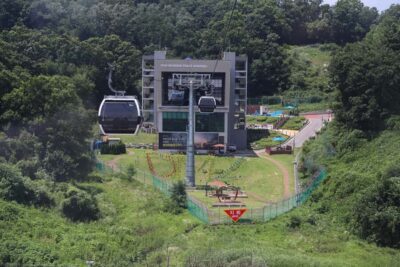
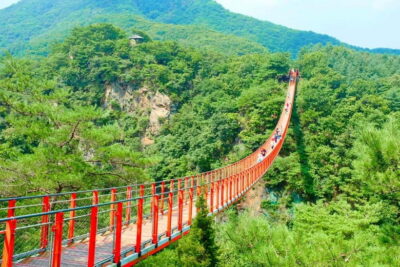
DMZ The 3rd Tunnel and Suspension Bridge Tour
Read the review →
Signature DMZ Tour: Exclusive Defector Talk & Suspension Bridge
Read the review →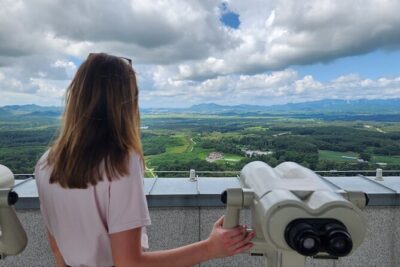
Thrilling Korean DMZ 3rd Tunnel Tour from Seoul + Red Bridge Rush
Read the review →