
Reviewed · SEOUL TOURS
Seoul: Guided Small Group V.I.P Morning Pedicab Tour
Seoul’s old city is a lot easier to understand from a quiet, low-slung e-rickshaw than from a busy sidewalk. In three hours, you move from the stream at Cheonggyecheon to palace gates, market lanes, royal-era neighborhoods, the Blue House, Bukchon’s steep streets, and Jogyesa Temple. It is a quick but useful first look at the city’s traditional core.
I like the private capacity of one pedicab, which keeps the experience personal for a couple or small family. I also like the practical extras: Wi-Fi, a power bank, water, a blanket, and the chance to stop for Korean food at Tongin Traditional Market. The main drawback is simple: with so many stops, some visits last only 10 or 15 minutes, so you get orientation and photos rather than a full museum-style tour.
Key points to know before you book
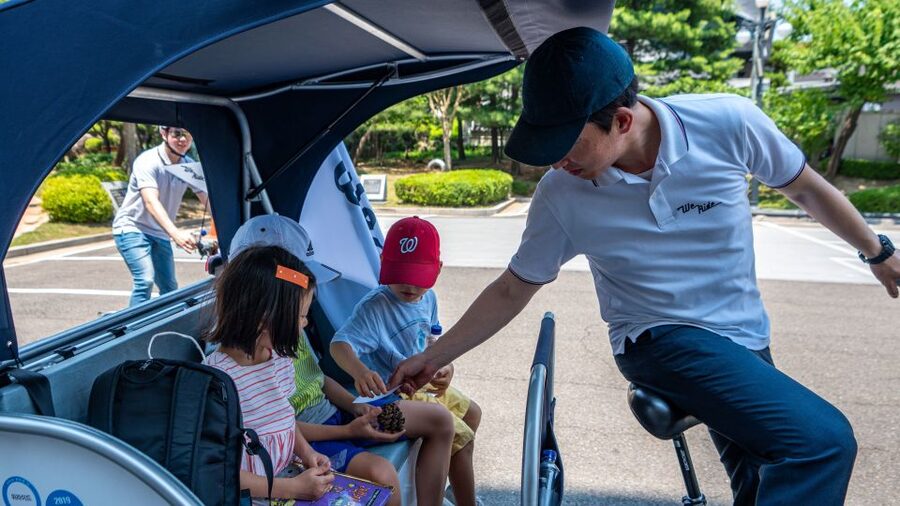
- One pedicab holds up to three people, with room for two adults and one child, or three children.
- The route covers Seoul’s old center, including Cheonggyecheon, Gwanghwamun, Gyeongbokgung, Seochon, Bukchon, the Blue House, and Jogyesa Temple.
- Tongin Traditional Market adds a food stop, with time for a tasting and a look around.
- An English-speaking driver-guide handles the ride and commentary, so you can focus on the streets and scenery.
- Wi-Fi, a power bank, water, and a blanket are included, useful on a cool morning.
- The tour runs for three hours, but individual stops are brief and the schedule works best as an overview.
Why a pedicab works well in Seoul’s old city
The old center is compact on a map but not always easy on foot. Major sights are separated by broad roads, sloping streets, and busy intersections. A pedicab lets you cover more ground without turning the morning into a march.
You sit above the traffic and get a clear view of gates, tiled roofs, shopfronts, and narrow neighborhood streets. The driver-guide can point out details as you pass, then pull over for photographs and short explanations. That is the real value here. You are not simply being driven from attraction to attraction. You are getting a moving introduction to how royal Seoul, political Seoul, religious Seoul, and everyday Seoul fit together.
The vehicle is an e-rickshaw, driven by a professional guide. You can also choose to ride your own bike, though the supplied description gives the most detail about the pedicab option. The tour includes an optional safety helmet, and a short safety briefing takes about 10 minutes before departure.
The experience is private in practical terms, since the price covers one pedicab and its guide for up to three people. At $219 per group, it is not a budget sightseeing ride for one person. For three people, though, the cost works out to $73 each before any other booking considerations. A couple pays more per person, but gets a private vehicle and a guide focused on that small party.
More Small Group Tours in Seoul
- Small Group Tour to DMZ & Suspension Bridge with Hotel Pickup
★ 5.0 · 1,568 reviews - Small-Group Royal Palace and Seoul City Tour (hotel pick-up)
★ 5.0 · 1,474 reviews - Seoul: Small-Group DMZ Tour with North Korea Experience Hall
★ 4.7 · 1,399 reviews
Starting beside Jong-ro Boulevard
You meet at the We Ride Korea shop on the second floor of the Le Meiller Jongno Town building. The address is Jong-ro 19, Jongno-gu, Seoul, and the shop is between Jonggak Station on Line 1 and Gwanghwamun Station on Line 5.
The easiest landmark is a statue of a man on a horse along Jong-ro Boulevard. Enter through the large glass doors marked with the number 19, take the escalator to the second floor, and look for the shop. Plan to arrive 20 to 30 minutes early. The advertised start time is when the tour begins, not when you should first walk into the building.
That early arrival matters because you need time to find the shop, complete the briefing, and get ready. Comfortable shoes are still a good idea, even though the pedicab handles much of the distance. If you lose your way, the phone or WhatsApp number on your voucher is the stated contact option.
Cheonggyecheon gives you a calm opening
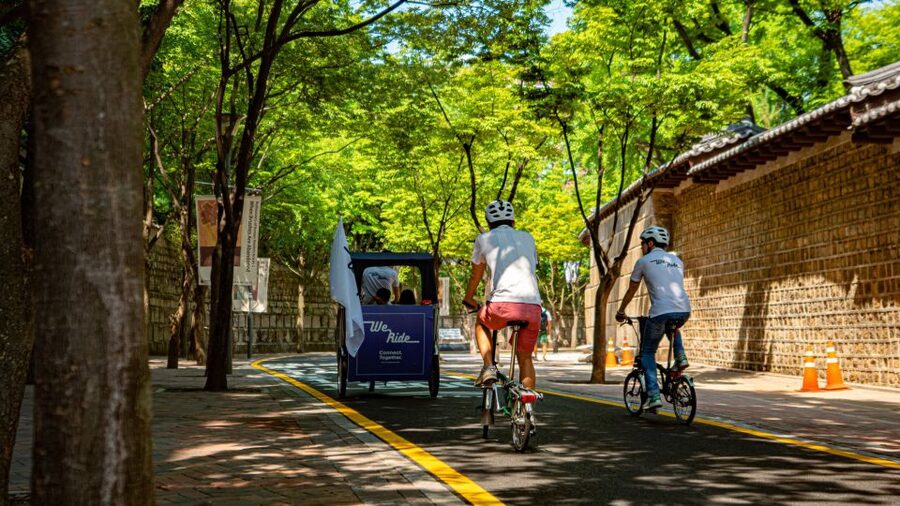
The first sightseeing stop is Cheonggyecheon, the long urban stream running through central Seoul. You spend about 15 minutes here on a guided bike tour and sightseeing stop.
This is a good place to begin because it gives you a quick sense of Seoul’s modern public spaces before the route turns toward palaces and traditional neighborhoods. The stream is also a useful orientation point in the old center. Your guide can explain what you are seeing while you take a few photographs, rather than leaving you to figure out the geography from a map.
Do not expect a long walk beside the water. The schedule keeps this stop short, and that is part of the bargain. You get the view, the basic context, and a transition into the older quarters.
Gwanghwamun and Gyeongbokgung set the royal tone
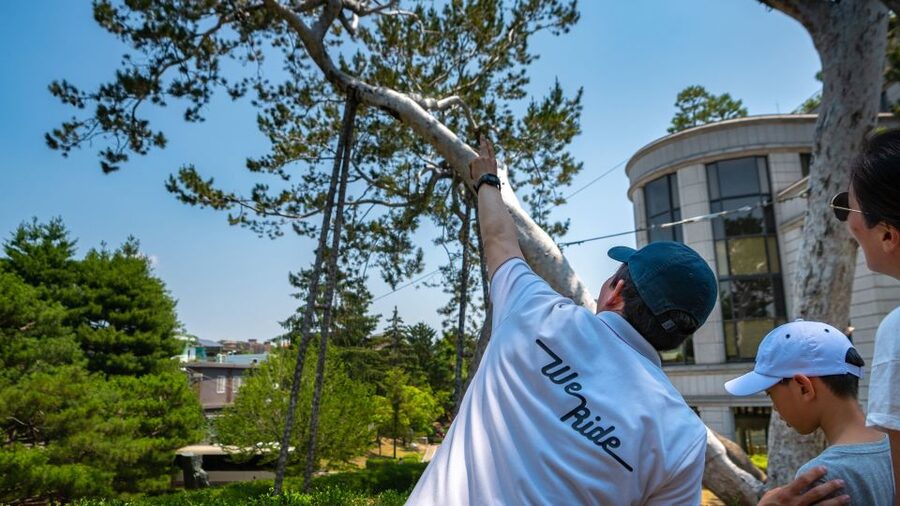
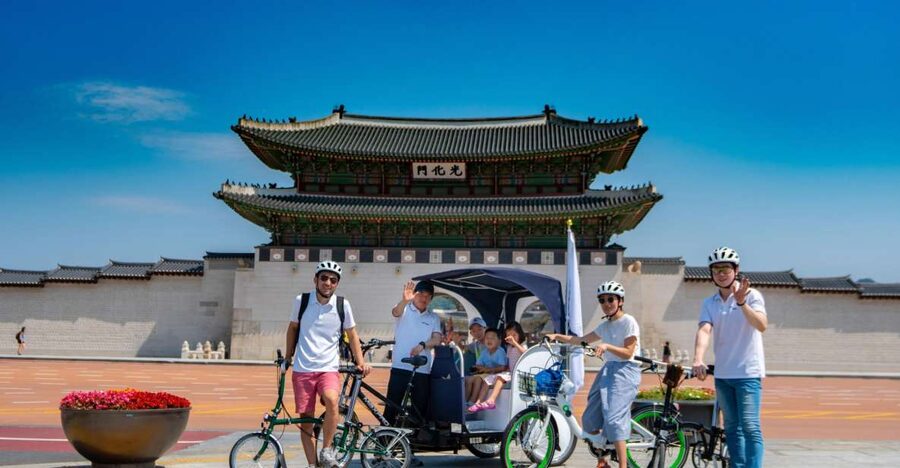
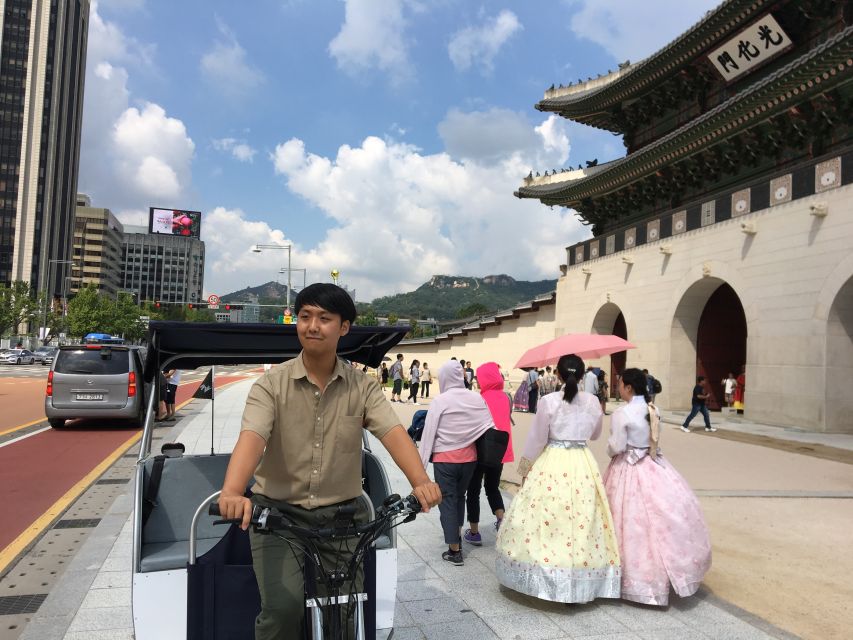
The pedicab continues to Gwanghwamun, where you have about 10 minutes for a photo stop and guided sightseeing. Gwanghwamun Gate is the grand front door to the Gyeongbokgung palace complex, and its scale makes an immediate impression even during a short stop.
Next comes Gyeongbokgung, with about 15 minutes for photographs, commentary, and a short bike tour. The palace is one of the essential sights in this part of Seoul, but this experience is not a palace admission tour. The supplied plan focuses on the exterior architecture and the route around it, so you should not book this expecting extensive courtyard time or a detailed look inside every building.
I see this as a strength for a first morning in Seoul. The guide gives you a clear introduction without consuming half a day. If Gyeongbokgung is your main priority, you should return separately with more time. If you want to understand the city’s traditional center in one efficient outing, the brief stop does its job.
A different way to spend a day from here:
- Best DMZ Tour Korea from Seoul (Red Suspension Bridge Optional)
★ 5.0 · 41,422 reviews - DMZ Tour: 3rd Tunnel, Option(Suspension Bridge, Boat) from Seoul
★ 5.0 · 21,373 reviews - DMZ tour south Korea from Seoul (NK experience hall, defector)
★ 5.0 · 20,599 reviews - Seoul: DMZ Tour with Optional Suspension Bridge
★ 4.8 · 5,277 reviews
Seochon shows the quieter side of old Seoul
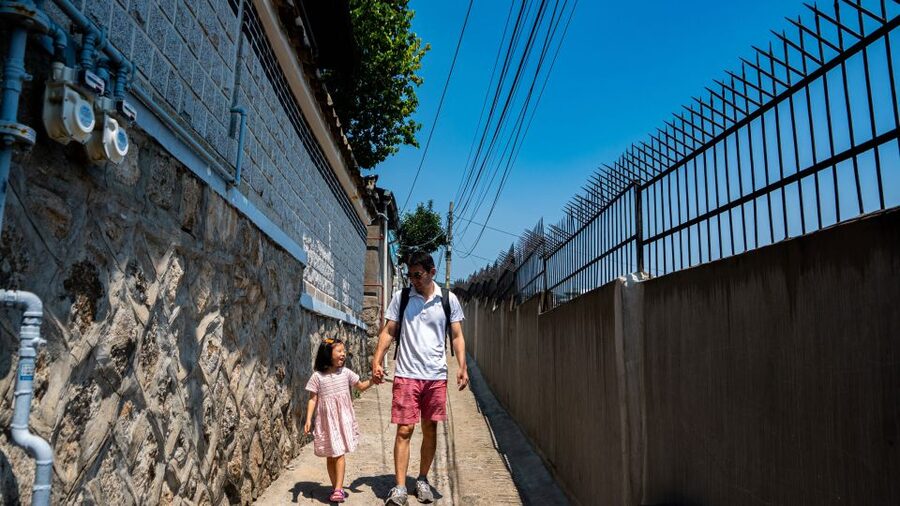
The route then moves into Seochon Hanok Village for roughly 30 minutes. This is one of the longer stops and one of the more useful ones. Seochon’s traditional houses and smaller streets offer a different feel from the formal palace gates nearby.
Here, the guide can help you notice the shift from royal architecture to lived-in neighborhood streets. The route includes sightseeing and a bike tour, so you should expect to see the area from the pedicab rather than spend the entire time walking through it.
The contrast matters. Seoul’s old city is not just a collection of grand monuments. It also includes ordinary lanes, small businesses, traditional homes, and pockets that are easy to miss when you move only between headline sights. The pedicab is particularly helpful here because it can take you into areas that would be awkward to cover by a large vehicle.
Tongin Traditional Market brings food into the morning
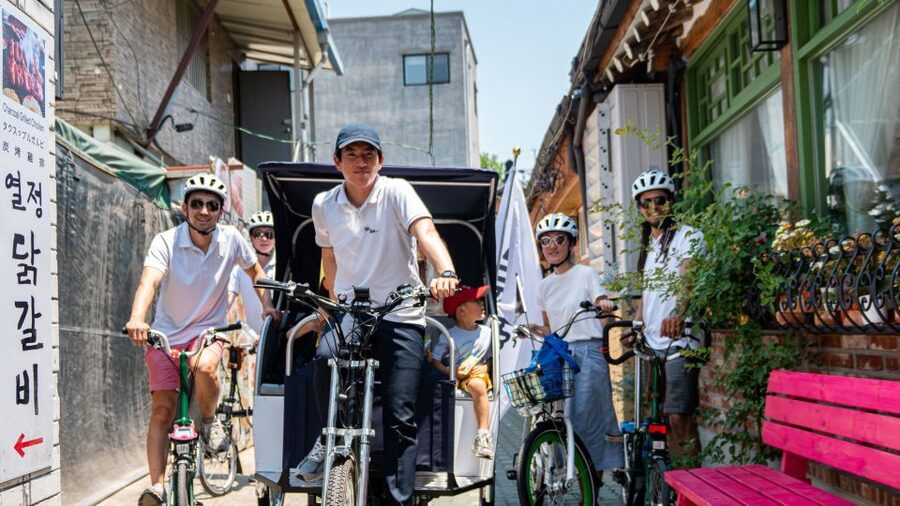
Tongin Traditional Market gets about 15 minutes, including a photo stop, guided visit, free time, and food tasting. This is a short market visit, but it adds something the palace stops cannot: a taste of everyday Korean food culture.
You should treat the tasting as an introduction, not a full market meal. The timing allows you to sample regional food and look around, but it does not leave much room for a slow lunch or extended shopping. If you are hungry, you may want to plan another meal afterward.
The market stop also breaks up the architecture-heavy route. Instead of only hearing about Korean culture, you get a direct sensory connection through food. One booking led by Hagar and June included clear explanations, many photographs taken by an accompanying photographer, and enjoyable tastings. That level of photo help may not be guaranteed on every departure, but it shows how the experience can be especially useful if you want a record of the morning without constantly handing your phone to strangers.
A short stop for less obvious streets
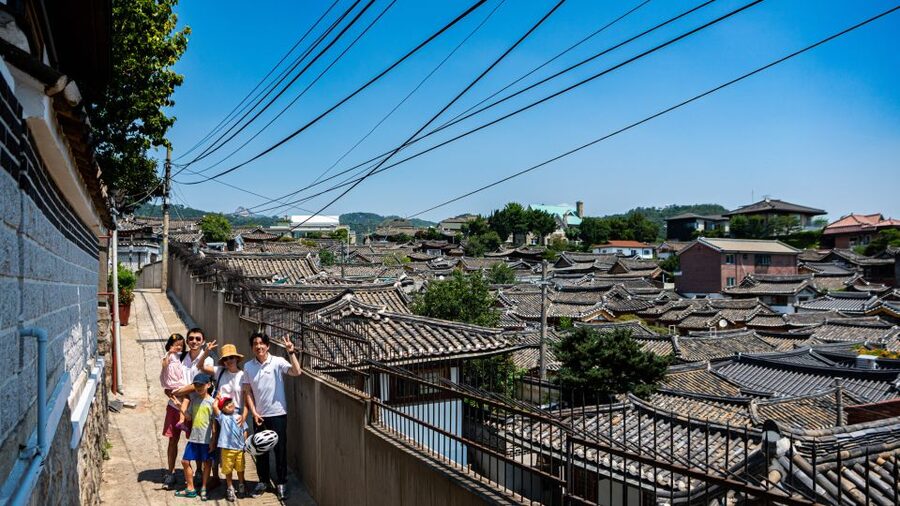
After the market, the route includes about 10 minutes at a tucked-away stop for guided sightseeing, free time, and possible shopping. The exact name and details of this stop are not specified, so you should think of it as a flexible neighborhood pause rather than a major attraction.
This is the kind of moment that can make a guided ride worthwhile. You might pass a small street or local corner that would be easy to overlook on your own. The trade-off is that 10 minutes is not enough for serious shopping or a long independent wander. Keep your expectations modest and use the time to ask your guide questions or take a few photographs.
The Blue House adds modern political history
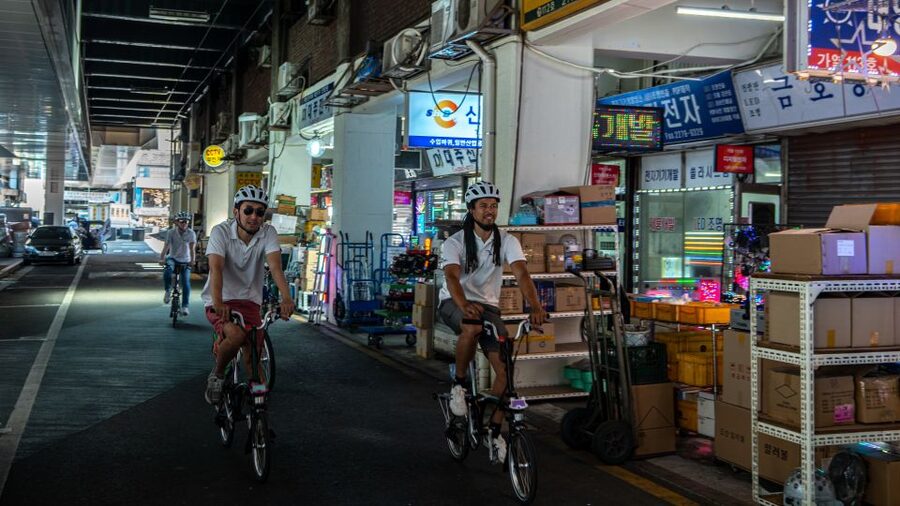
The pedicab next visits the Blue House, Seoul’s well-known presidential complex, for about 10 minutes of guided sightseeing. The stop adds modern Korean political context to a route otherwise centered on palaces, traditional homes, markets, and temples.
Again, this is a viewing and explanation stop rather than a full interior visit. The schedule does not state that entry is included, so do not assume you will go inside. Your guide’s role is to explain the place and help you see it in relation to the surrounding old neighborhoods.
This quick change of subject is useful. Seoul’s story did not end with the Joseon royal court. The Blue House reminds you that the same central district has continued to matter in contemporary Korea.
Bukchon Hanok Village is the longest photo stop
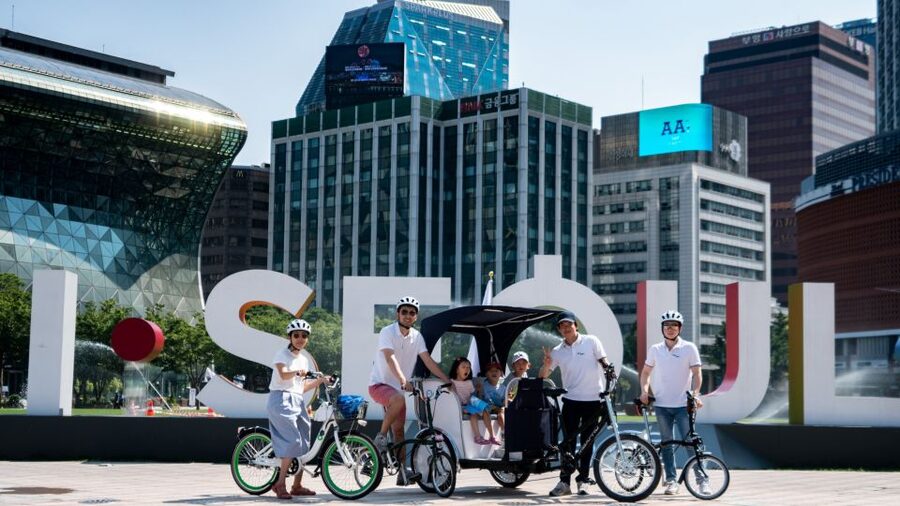
Bukchon Hanok Village receives about 30 minutes, making it one of the most substantial stops on the route. Its preserved Korean-style houses and hilly lanes are among Seoul’s most recognizable sights.
The pedicab is a practical help here. Bukchon’s slopes can be tiring, and a ride lets you reach viewpoints and streets without spending all your energy on uphill walking. You will still want comfortable shoes, since the stop includes sightseeing and photographs, and the vehicle may not place you at every point you would choose to explore on foot.
Keep in mind that Bukchon is a living residential area, not simply an open-air museum. Stay respectful around homes, keep voices down, and follow your guide’s lead about where to stop. The 30-minute window gives you a strong visual introduction, but it is not enough to explore every lane.
Jogyesa Temple closes the sightseeing loop
Jogyesa Temple is the final named stop, with about 10 minutes for photographs, guided sightseeing, and a bike tour. Your guide explains the brief history of Buddhism in Korea and gives you time to take in the temple’s calmer setting.
This is a welcome change after the traffic, gates, markets, and hills. Even a short pause can help you notice the religious side of Seoul’s old center. The stop is not designed as an extended temple visit or meditation session, but it gives the route a quieter ending and adds cultural context that a palace-and-market tour might leave out.
From Jogyesa, the ride continues for about 25 minutes before returning to We Ride Korea. That final stretch gives you time to see more of central Seoul from the vehicle and ask last questions before the tour ends.
What the three-hour schedule really feels like
The full experience is advertised as three hours, while some promotional wording describes the main history and culture portion as about two and a half hours. The detailed timing adds up to a full morning once the safety briefing, transfers, and return ride are included.
You should expect a brisk overview. The schedule includes several 10-minute stops, two 15-minute stops, and two 30-minute neighborhood visits. That structure is excellent for seeing many districts in one morning, but it will feel rushed if you prefer long museum visits, extended meals, or unplanned wandering.
I would book it early in a Seoul visit. It helps you get your bearings fast, introduces the major sights, and shows you which areas deserve a return visit. Afterward, you can choose to spend more time at Gyeongbokgung, browse Bukchon on foot, or eat more slowly at a market.
The ride includes Wi-Fi, a power bank, a bottle of water, and a blanket. Those details matter more than they may sound. A morning in an open vehicle can feel cool, and the power bank is handy when you are taking photographs throughout the route. The safety helmet is optional.
Weather, comfort, and who should skip it
The tour operates in most weather conditions. In extreme conditions, you are offered a refund or an alternative date. You should dress for the forecast and bring comfortable shoes, since the vehicle is open to the surroundings and the route includes short stops.
The supplied information lists the tour as wheelchair accessible but also says it is not suitable for people with mobility impairments. That is an important inconsistency. If you have mobility concerns, confirm the exact boarding and stop arrangements with We Ride Korea before paying.
The pedicab seats up to two adults and one child, or three children. The price is for one vehicle, so a group of four cannot fit into a single booking as described. Alcohol intoxication is not permitted, and anyone under the influence will not be allowed to participate.
The tour is conducted in English. It is best suited to couples, a parent with a child, or a small group of friends who want a private introduction without joining a large bus tour.
Is $219 good value for this Seoul experience?
The answer depends on how many people share the vehicle and what kind of morning you want. For three participants, $219 buys a private pedicab, a professional local guide, transportation between several central sights, a market tasting, water, Wi-Fi, a power bank, and insurance. That is a reasonable splurge for a compact private orientation.
For one person, the same price is harder to justify unless comfort, personal attention, and convenience matter more than cost. A couple also pays a premium, but avoids the slower pace and fixed feel of a large group.
The strongest value comes from combining several things that are awkward to connect independently: Cheonggyecheon, palace gates, Seochon, Tongin Market, the Blue House, Bukchon, and Jogyesa Temple. You save time on route planning and get commentary as you move.
The weak point is depth. A 10-minute stop cannot replace a proper palace visit, a long market meal, or an unhurried neighborhood walk. Think of this as a well-organized first chapter, not the whole book on Seoul.
Should you book the Seoul pedicab tour?
Book it if you want to cover Seoul’s old center in one comfortable morning, prefer a private guide, and like having photographs and food tasting built into the route. It is especially useful for a first visit, a small family group, or anyone who wants help with the city’s hills and broad roads.
Skip it if you want long visits at each sight, a full palace interior tour, or a low-cost activity for a solo visitor. The brief stops are the central compromise.
For most people who can share the $219 price among two or three participants, I see this as a practical introduction with genuine local texture. Just arrive early, wear sensible shoes, and leave your afternoon open for the places that catch your interest most.
FAQ
How long does the Seoul pedicab tour last?
The tour lasts three hours, including the safety briefing, sightseeing route, and return to We Ride Korea.
How many people can ride in one pedicab?
One pedicab can seat up to two adults and one child, or three children.
Is the price for each person?
No. The $219 price is for private use of one pedicab with a tour guide and driver, for up to three participants.
Where does the tour meet?
It meets at the We Ride Korea shop on the second floor of the Le Meiller Jongno Town building at Jong-ro 19, Jongno-gu, Seoul.
How do I find the meeting point?
Walk along Jong-ro Boulevard until you see a statue of a man on a horse. Enter the glass doors marked with the number 19, take the escalator to the second floor, and look for We Ride Korea.
What language is the tour conducted in?
The live tour guide speaks English.
Is food included?
A food tasting at Tongin Traditional Market is included. The supplied information does not describe the exact dishes or amount of food.
What should I bring?
Bring comfortable shoes. The tour also takes place in most weather conditions, so dress suitably for the forecast.
Can I cancel the booking?
You can cancel up to 24 hours in advance for a full refund. Reserve-now, pay-later booking is also available.
More Morning in Seoul
- Mt. Seorak+Nami Island+Garden of Morning Calm Day Trip from Seoul
★ 5.0 · 959 reviews - Seoul: Nami Island and Garden of Morning Calm opt Railbike
★ 4.6 · 907 reviews - Day Trip to Nami Island with Rail bike and The Garden of Morning Calm
★ 4.5 · 459 reviews - Trip to Nami Island with Petite France & Italian Village, Garden of Morning Calm
★ 4.5 · 373 reviews
Recently added around Seoul
- Nami & Maple Road & Theatre des Lumieres Day Tour from Seoul★ 4.8 · 4 reviews
- Gyeongbokgung Palace Photo Session with your own phone★ 5.0 · 4 reviews
- Private Tour around Suwon UNESCO Fortress and Korea Folks Village★ 4.5 · 4 reviews
- N Seoul Tower + Namsan Cable Car Ticket (Collect in Myeongdong)★ 3.5 · 4 reviews
- Jisan Forest Resort: Ski Full-Day Tour or Shuttle from Seoul★ 5.0 · 4 reviews
- Seoul: Deoksugung Palace Night Tour★ 4.5 · 4 reviews
- Seoul Private Walking Tour with a Local★ 5.0 · 4 reviews
- Private Jeonju Hanok Village – Culinary tour★ 5.0 · 4 reviews
Seoul Tours, compared.
Best DMZ Tour Korea from Seoul (Red Suspension Bridge Optional)
Read the review →
DMZ Tour: 3rd Tunnel, Option(Suspension Bridge, Boat) from Seoul
Read the review →
DMZ tour south Korea from Seoul (NK experience hall, defector)
Read the review →
DMZ The 3rd Tunnel and Suspension Bridge Tour
Read the review →
Signature DMZ Tour: Exclusive Defector Talk & Suspension Bridge
Read the review →
Thrilling Korean DMZ 3rd Tunnel Tour from Seoul + Red Bridge Rush
Read the review →
DMZ Past and Present: Korean Demilitarized Zone Tour from Seoul
Read the review →Browse the lists this tour appears in