
Reviewed · SEOUL TOURS
SEOUL: Gugak – Korean Traditional Music Museum&Concert Tour
The best part of this experience is the move from display cases to live sound. You first learn how Korean traditional music developed and see the instruments up close, then hear those instruments used in a concert at the National Gugak Center. The museum and performance belong together, giving you both context and atmosphere.
I like the small group limit of 10 and the English-speaking guide. A guide can explain what you are seeing instead of leaving you to guess at unfamiliar instruments, and the compact group should make questions easier. The main consideration is transport: getting to the museum and returning afterward are not included, and the meeting details arrive before the tour.
Key points to know before booking
- A 40-minute museum visit introduces the instruments, history, and place of Gugak in Korean culture.
- An 80-minute live concert follows at the National Gugak Center’s Performance Rehearsal Hall.
- The gayageum provides a memorable sound, from soft plucked notes to fuller ensemble passages.
- English guidance keeps the experience accessible if you do not know Korean music.
- Groups are limited to 10 people, a useful size for explanations and questions.
- The $49 price covers the museum, guide, and concert, but not transportation, meals, or drinks.
Why this Gugak experience works
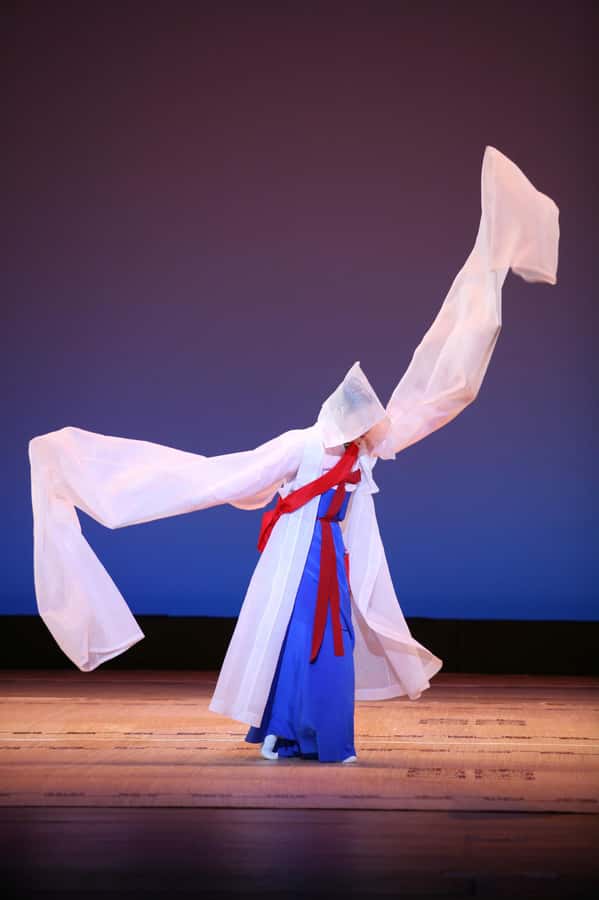
Gugak is Korea’s traditional music, but the word alone tells you little about what you will hear. This tour gives you a clear introduction before asking you to sit through a performance. That order matters. When you see the instruments and learn a little about them first, the concert becomes easier to follow.
You are not simply checking a museum off your Seoul list. You are learning what to listen for. The guide introduces the instruments and explains the background of Gugak, then the concert lets you hear their tone, pace, and interaction in real time.
I particularly like the balance between explanation and performance. The museum portion lasts 40 minutes, long enough to give you a useful foundation without taking over the outing. The concert lasts 80 minutes, so the main event gets the larger share of your time.
The full activity runs for 140 minutes. That makes it a manageable cultural stop for a day when you also have palaces, markets, or neighborhoods to visit. It is long enough to feel like a proper experience, but not an all-day commitment.
More Museums in Seoul
- Seoul: War Memorial of Korea Private Guided Museum Tour
★ 4.9 · 29 reviews - DMZ Tour + The War Memorial of Korea Museum
★ 5.0 · 28 reviews - Color Pool Museum
★ 4.0 · 22 reviews
At the Korean Traditional Music Museum
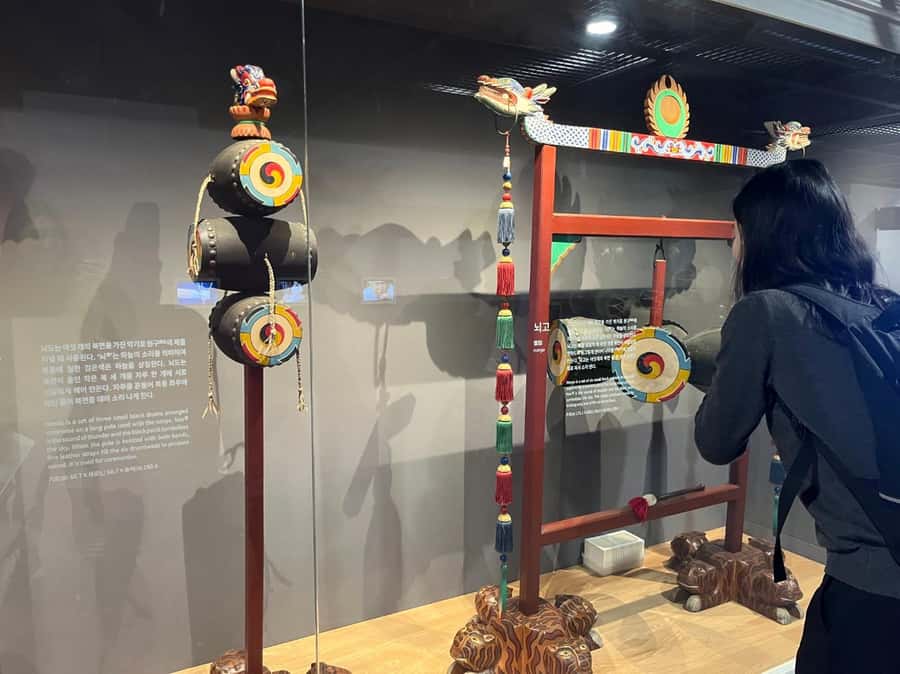
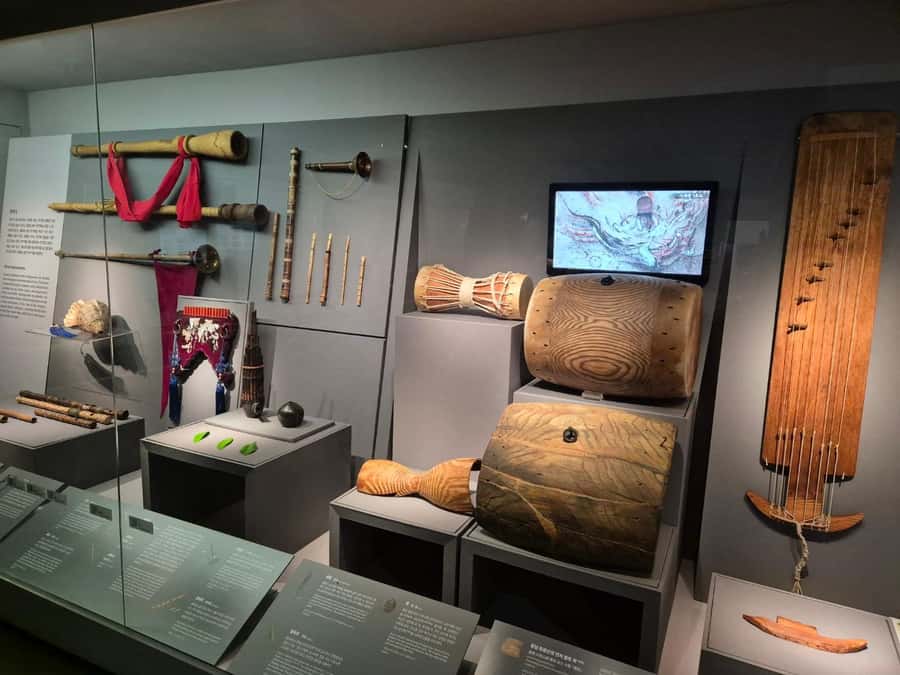
The tour begins at the Korean Traditional Music Museum in Gyeonggi Province. Your guide leads a 40-minute visit through displays about Gugak, its instruments, and its development in Korea.
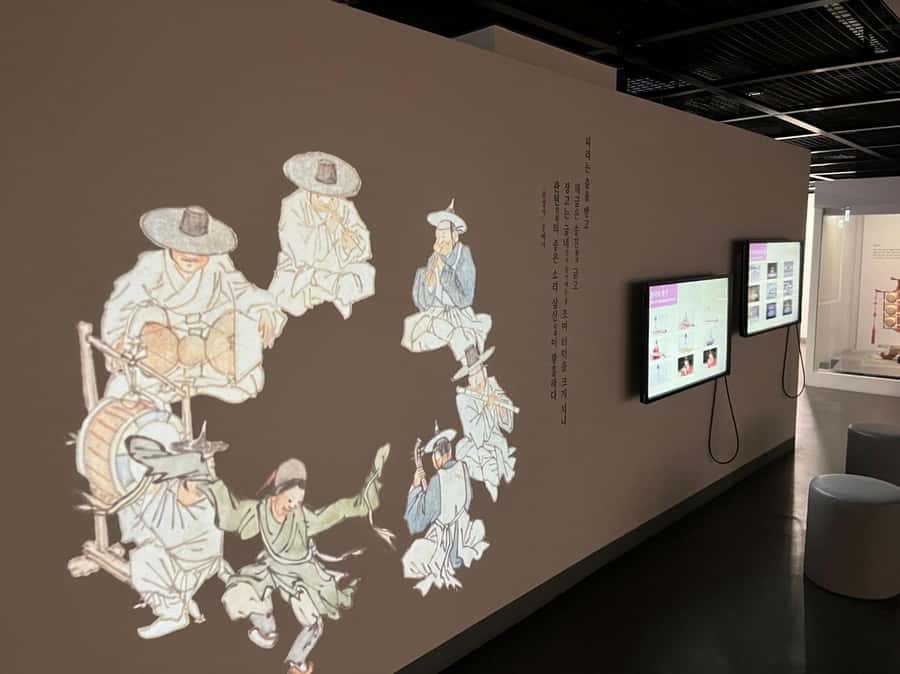
Expect the museum to do the work that a short concert introduction often cannot. You can look at the instruments, connect names with shapes, and get a basic sense of how Korean musical traditions were formed. If you have never encountered Gugak, this first stop gives you useful signposts before the performance begins.
The guide is important here. An English-speaking explanation can point out details that are easy to miss, especially when an instrument looks unfamiliar or when its role is not obvious from a display. Elisa is named in the tour feedback as a guide who explained things clearly and warmly, so you may be placed with her, although guide assignment is not guaranteed by the information provided.
The museum visit is guided rather than a free period to wander. That suits you if you want a focused introduction. It may feel brief if you prefer to read every panel or study every object, but the short format keeps the afternoon moving toward the concert.
The museum also gives you a chance to ask questions before the music starts. Use it. Ask about the instruments you will hear, the difference between solo and ensemble pieces, or what to notice in the performers’ technique. The more you understand here, the more rewarding the second half should be.
From the gayageum to ensemble music
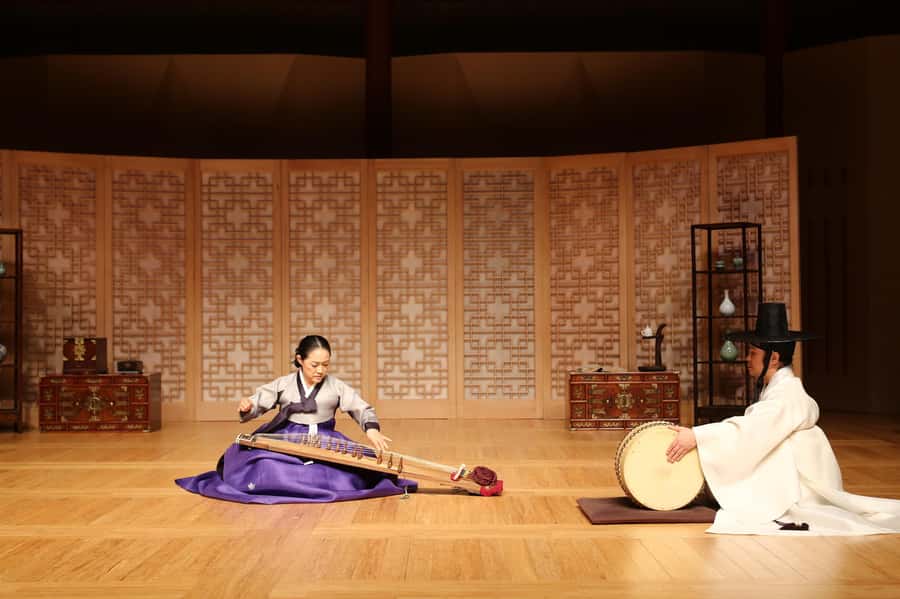
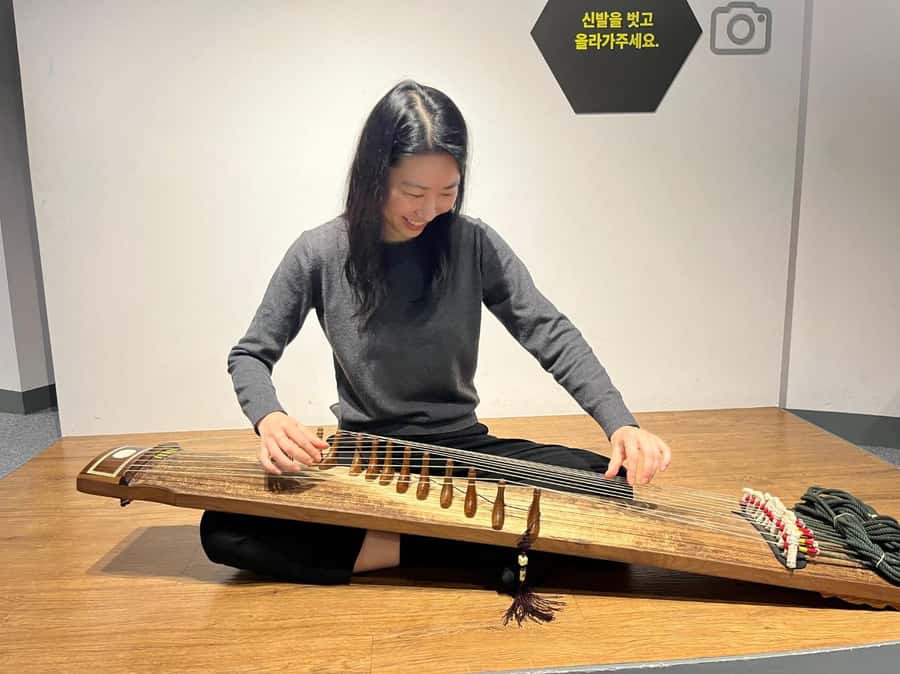
One of the clearest musical details provided for this experience is the gayageum. Its strings are plucked, and the sound can move from soft, delicate notes to stronger passages when joined by other instruments.
That contrast is a useful way into Gugak. You may hear an intimate sound that feels almost conversational, followed by a fuller ensemble section with more movement and force. The concert gives you the chance to hear those changes rather than simply read about them.
The performance is not presented as background music. It is the central portion of the tour, held at the National Gugak Center’s Performance Rehearsal Hall. The 80-minute length allows time for more than a quick sample, though the exact program is not provided, so you should not book expecting a named musician, fixed repertoire, or specific instrument lineup.
That lack of a published program is worth noting. Some people want to know every piece before they book a concert. Here, the appeal is the chance to encounter Korean traditional music with an introduction from a guide and a live performance afterward.
The National Gugak Center performance
After the museum, you go to the National Gugak Center for the concert. The venue listed for the activity is the Performance Rehearsal Hall, which gives the outing a direct connection to the country’s main traditional music institution.
The concert lasts 80 minutes. For many people, this will be the emotional center of the experience. The museum gives you facts and visual clues, while the concert supplies the sound, rhythm, and human skill that a display cannot provide.
I like that the performance is not tacked on as a tiny finale. Eighty minutes is a serious amount of time for listening. You can settle into the music and notice how a piece develops, rather than hearing one short demonstration and leaving just as you begin to understand it.
The concert is also a good choice if you find museums tiring. You spend less than half the tour in the museum, then shift to a live setting. The change in pace helps the activity feel varied.
Keep your expectations practical. The information confirms a live Gugak concert and mentions gayageum playing and ensemble performances, but it does not promise a particular concert theme, named performers, or guaranteed audience participation. You are booking an introduction to traditional music, not a personalized lesson or a backstage visit.
A different way to spend a day from here:
- Best DMZ Tour Korea from Seoul (Red Suspension Bridge Optional)
★ 5.0 · 41,422 reviews - DMZ Tour: 3rd Tunnel, Option(Suspension Bridge, Boat) from Seoul
★ 5.0 · 21,373 reviews - DMZ tour south Korea from Seoul (NK experience hall, defector)
★ 5.0 · 20,599 reviews - Seoul: DMZ Tour with Optional Suspension Bridge
★ 4.8 · 5,277 reviews
What the guide adds
A guide can make the difference between hearing unfamiliar music and understanding what you hear. This is especially true when the names of instruments, performance styles, and cultural references are new to you.
The tour includes a friendly English-speaking guide, and the group is limited to 10 participants. That is a useful combination. A large group can turn a museum explanation into a distant speech. A small group gives you a better chance to hear the guide and ask a short question without holding up dozens of people.
Elisa is the only guide named in the information provided. Feedback describes her as sweet and clear in her explanations, and one visitor specifically praised the way she handled the experience. You should not assume Elisa will lead every departure, but the mention gives you a sense of the personal approach this tour aims for.
The guide’s role is most useful during the museum visit. At the concert, the musicians take over, but the earlier explanation can help you listen with purpose. Think of the guide as your translator into the musical setting, not a replacement for the performance itself.
Is $49 a fair price?
At $49 per person, this is reasonably priced if you want both instruction and a live concert. The fee includes entry to the Korean Traditional Music Museum, the guided visit, and the Gugak performance. You are paying for a two-part cultural activity rather than a museum ticket alone.
The value depends on your plans. If you already know Gugak well or only want to see instruments briefly, the 140-minute format may be more than you need. If you are curious about Korean culture and would otherwise struggle to choose a traditional music performance on your own, the combination is more useful.
The small group also matters. You are not paying only for admission. Part of the price goes toward a guided experience with a limited number of people, which should make the explanations more personal than a standard large group outing.
Transportation is not included, and that can change the real cost and effort of the activity. You need to arrange your own way to the museum and back to the meeting point. The detailed meeting information is sent before the tour, so check it carefully before committing to a tight schedule.
Meals and drinks are also excluded. That is not a serious issue for a 140-minute activity, but plan around it if you are arranging this between other sightseeing stops.
Who should book this activity?
I would recommend this tour to you if you want a cultural experience with a clear beginning, middle, and end. It suits first-time visitors who want to understand something about Korean traditional music before hearing it performed.
It is also a good fit for:
- People who enjoy live music but do not know where to start with Gugak
- Visitors who prefer a small group to a large coach tour
- Couples and families looking for a quieter cultural activity
- Museum fans who want to add a performance
- Anyone interested in Korean instruments such as the gayageum
You may want to skip it if your Seoul schedule is already packed and you cannot spare nearly two and a half hours. You should also think twice if arranging your own transport is inconvenient, since rides to and from the museum are not part of the package.
This is not the right choice if you want a broad tour of Seoul’s major sights. The activity focuses closely on music. A separate historical-sites tour would cover more locations, while this one gives you more attention on a single part of Korean culture.
Timing, meeting details, and cancellations
The activity lasts 140 minutes, but starting times vary. You need to check availability for the departure that fits your schedule.
The start point is listed as 2364, with detailed meeting information sent before the tour. Since the location information supplied is brief, read the instructions carefully and keep the provider’s WhatsApp contact, 82-10-6263-5744, available if you need clarification.
The activity ends back at the meeting point. Transportation to and from the museum is not included, so allow enough time before and after the scheduled activity to make your own travel arrangements.
You can cancel up to 24 hours before the tour for a full refund. The reserve-now-and-pay-later option is useful if your Seoul plans are still changing. It lets you hold a place without paying today, subject to the booking terms shown when you reserve.
How to get more from the concert
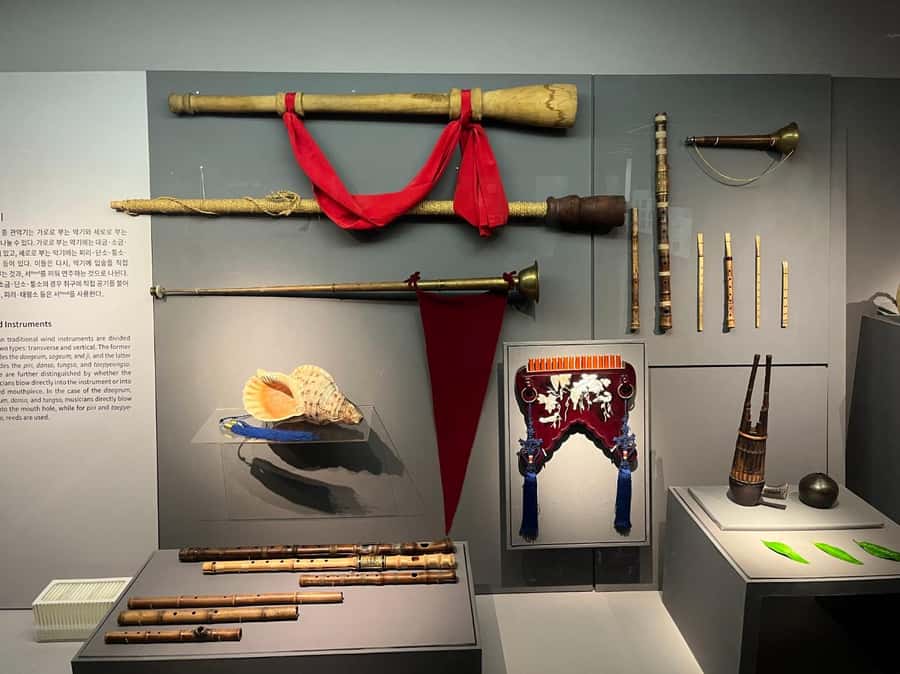
Go into the museum portion ready to listen, not just look. Note the names and shapes of the instruments that the guide discusses, then see if you can identify their sounds during the concert.
Pay attention to the change from solo or softer gayageum passages to larger ensemble music. You do not need a technical background. Simply noticing which sounds seem delicate, forceful, high, or low will help you follow the performance.
Ask questions early. Once the concert begins, you may not have another chance to clarify what you are hearing. A short question at the museum can make the live portion feel much less distant.
Keep the rest of your day flexible enough to enjoy the change of pace. Traditional music rewards patience. If you arrive rushed from another attraction, you may spend the first part of the concert settling down instead of listening.
Final verdict: should you book it?
Book this Gugak experience if you want a focused, approachable introduction to Korean traditional music, especially if you value a guide who can explain the instruments before the performance. The museum visit gives the concert context, and the 80-minute live program gives the outing real substance.
At $49, the package makes sense for a small group activity that includes both museum access and a concert. The main drawbacks are the need to arrange your own transportation and the absence of a published concert program or guaranteed guide name.
For a first encounter with Gugak, I think the format is strong: learn the basics, see the instruments, then hear them in action. If that sounds more appealing than another busy sightseeing circuit, this is a worthwhile addition to your Seoul plans.
FAQ
Where does the Gugak tour take place?
The activity takes place in Gyeonggi Province, South Korea. It includes the Korean Traditional Music Museum and the National Gugak Center’s Performance Rehearsal Hall.
How long does the experience last?
The total duration is 140 minutes. The museum visit is guided for 40 minutes, followed by an 80-minute concert.
What is included in the price?
The $49 price includes a visit to the Korean Traditional Music Museum, a live Gugak concert, and an English-speaking guide.
Is transportation included?
No. Transportation to and from the museum is not included. The activity ends back at the meeting point.
What language is the tour conducted in?
The live tour guide speaks English. English is the listed tour language.
How many people are in the group?
The experience is offered as a small-group tour limited to 10 participants.
Can I cancel for a refund?
Yes. You can cancel up to 24 hours in advance for a full refund.
Can I reserve now and pay later?
Yes. The activity offers a reserve-now-and-pay-later option, allowing you to book without paying at the time of reservation.
Recently added around Seoul
- Private Tour around Suwon UNESCO Fortress and Korea Folks Village★ 4.5 · 4 reviews
- Nami & Maple Road & Theatre des Lumieres Day Tour from Seoul★ 4.8 · 4 reviews
- Gyeongbokgung Palace Photo Session with your own phone★ 5.0 · 4 reviews
- Seoul: Deoksugung Palace Night Tour★ 4.5 · 4 reviews
- Jisan Forest Resort: Ski Full-Day Tour or Shuttle from Seoul★ 5.0 · 4 reviews
- N Seoul Tower + Namsan Cable Car Ticket (Collect in Myeongdong)★ 3.5 · 4 reviews
- Private Jeonju Hanok Village – Culinary tour★ 5.0 · 4 reviews
- Seoul Private Walking Tour with a Local★ 5.0 · 4 reviews
Seoul Tours, compared.
Best DMZ Tour Korea from Seoul (Red Suspension Bridge Optional)
Read the review →
DMZ Tour: 3rd Tunnel, Option(Suspension Bridge, Boat) from Seoul
Read the review →
DMZ tour south Korea from Seoul (NK experience hall, defector)
Read the review →
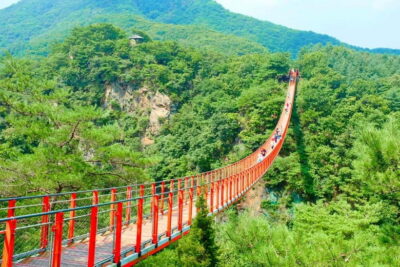
DMZ The 3rd Tunnel and Suspension Bridge Tour
Read the review →
Signature DMZ Tour: Exclusive Defector Talk & Suspension Bridge
Read the review →
Thrilling Korean DMZ 3rd Tunnel Tour from Seoul + Red Bridge Rush
Read the review →
DMZ Past and Present: Korean Demilitarized Zone Tour from Seoul
Read the review →Browse the lists this tour appears in