
Reviewed · SEOUL TOURS
Seoul City Half Day Tour-Gyeongbok Palace Guard Changing Ceremony
Gyeongbokgung Palace’s guard-changing ceremony is the star here: a colorful, tightly timed display of royal uniforms, drums, flags, and formal movement at Gwanghwamun Gate. This three-hour morning tour gives you that show plus Jogyesa Temple, presidential exhibits, and a palace visit without asking you to solve Seoul’s transport puzzle on your first day.
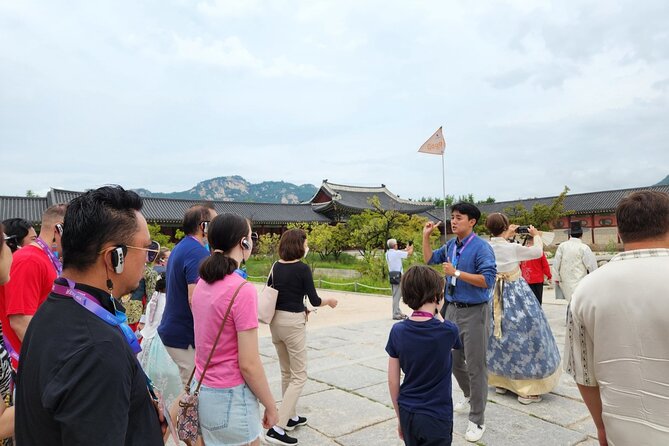
I like the air-conditioned coach and hotel pickup, especially when heat, cold, or jet lag makes a long morning of subway changes less appealing. I also like the guide-led palace visit. Guides named Kelly, Emily, Sunny, Ray, Crystal, and Yuna are praised for clear explanations, useful sightseeing tips, and helping people find a good viewing spot for the ceremony.
The catch is the final ginseng stop. It is presented as a museum visit, but expect a shop and sales presentation, not simply a quiet cultural exhibit. If you dislike sales pitches, that twenty- to thirty-minute stop may sour an otherwise useful introduction to Seoul.
Key points to know before booking
- The guard ceremony is the main event: Your guide takes you to Gwanghwamun Gate for a traditional royal guard display.
- You cover several central sights quickly: Jogyesa Temple, Gyeongbokgung Palace, presidential exhibits, and palace museums fit into one morning.
- Coach transport saves time: Hotel pickup and an air-conditioned vehicle make this easier than linking the sights yourself.
- The tour suits first-time visitors: It gives you useful background on Seoul, Korean Buddhism, the Joseon royal court, and modern Korea.
- The ginseng stop is commercial: Plan for a sales presentation at the end, with no pressure to buy stated as part of the tour terms.
- Tuesday requires a different plan: Gyeongbokgung Palace and the National Folk Museum are closed, so substitute sights are used.
Why this works as a first morning in Seoul
Seoul can feel enormous when you first arrive. The city spreads across a wide area, yet many of its most important sights sit around the old royal center. This tour uses a coach to connect them, giving you a basic map of the city before you spend later days exploring on your own.
The pace is brisk but sensible for a half-day outing. You spend about forty minutes at Jogyesa Temple, an hour at Gyeongbokgung Palace and the ceremony, thirty minutes at the museum stop, and another thirty minutes at the ginseng center. Add driving and the morning fills roughly three hours.
That format is useful if you have only a short stay, or if you want an introduction before exploring Insadong, Bukchon Hanok Village, or the palace district independently. It is less suitable if you prefer to linger at one site, read every display, and set your own pace.
The maximum group size is listed as forty people. That is large enough to feel like a standard coach tour, though some departures may be smaller. Several guide names appear in the tour’s customer feedback, including Kelly, Emily, Sunny, Ray, Gabby, Hana, Yuna, Jenny, and Henry. The praise is strongest for guides who explain Korean history in plain language and stay available for questions.
More City Tours in Seoul
- Best Seoul City Tour (Gyeongbokgung Palace,Insadong,Namsan Tower)
★ 5.0 · 1,647 reviews - Small-Group Royal Palace and Seoul City Tour (hotel pick-up)
★ 5.0 · 1,474 reviews - Seoul City Sightseeing Tour Including Gyeongbokgung Palace, N Seoul Tower, and Namsangol Hanok Village
★ 5.0 · 1,423 reviews
Jogyesa Temple, a calm opening in central Seoul
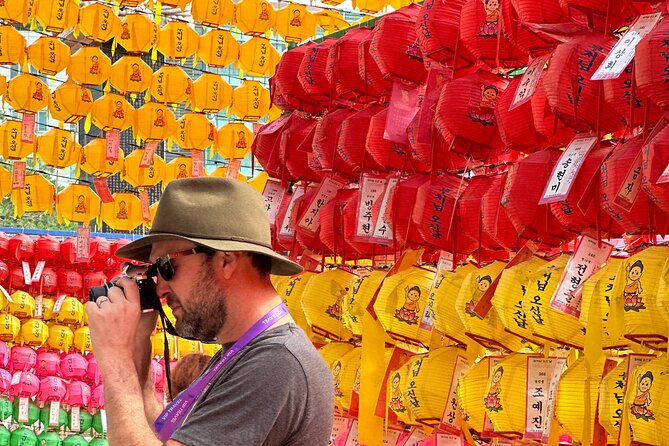
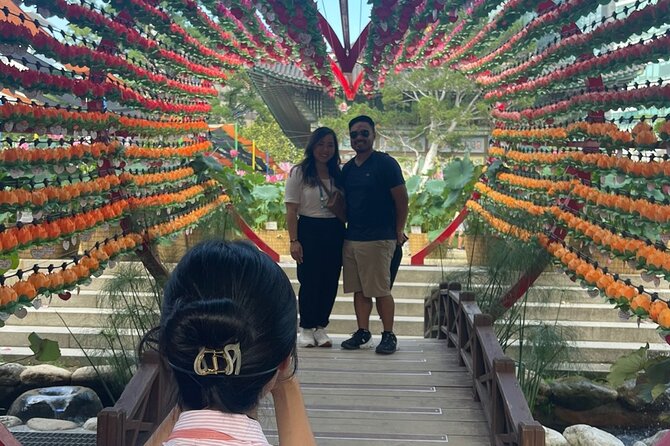
The morning begins at Jogyesa Temple, one of Korea’s leading Buddhist temples. Its downtown setting makes the first impression especially striking. You move from Seoul’s busy streets into a tree-lined entrance and a quieter temple compound.
The visit includes a seven-story pagoda and the main temple building, where you can see an important Buddha statue. Your guide provides the cultural setting, which matters here. A short stop at a working Buddhist temple can otherwise become a quick photo break with little sense of what you are seeing.
The allotted forty minutes should be enough for a guided look and some photographs. It will not allow for a slow, reflective visit or a long study of every building. I like this stop because it gives the tour a spiritual and cultural counterpoint to the palace that follows.
The temple is also a good place to notice seasonal details. One customer specifically enjoyed the flowers and autumn leaves around the temple, while another warned that the amount of walking can feel tough in high summer. Bring water and sensible shoes, especially if Seoul is hot.
Cheongwadae Sarangchae and the Blue House
After Jogyesa, the coach continues to Cheongwadae Sarangchae, an exhibition hall focused on Korea’s presidents, cultural traditions, and UNESCO World Heritage Sites. The displays help connect the old royal court with modern Korean government and national identity.
The information supplied for the tour gives you time to look around the exhibits. That makes this more than a drive-by photo stop, though the exact amount of free time can vary with traffic and the group’s schedule. If you enjoy museums, you may want more time than the morning allows.
The route also passes the Blue House, or Cheongwadae, the former presidential home. It is often compared with the White House in Washington, but the comparison is only a rough guide. Here, the value is seeing how the modern state sits beside Seoul’s royal and religious landmarks.
You should treat this portion as an orientation stop rather than a full palace or museum visit. The tour helps you place the presidential district on your mental map, then moves on to Gyeongbokgung, the morning’s major historic site.
Gyeongbokgung Palace and the royal center
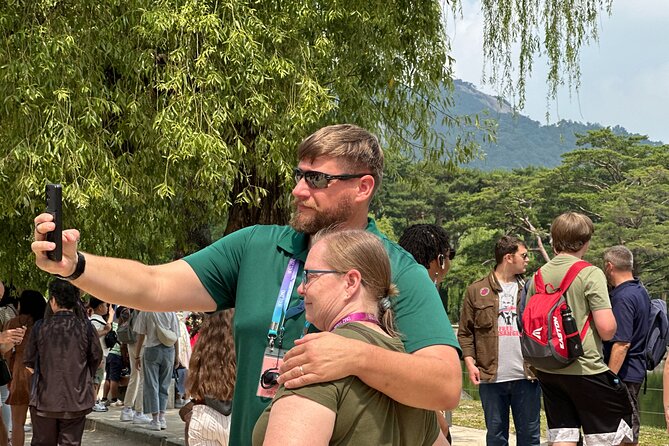
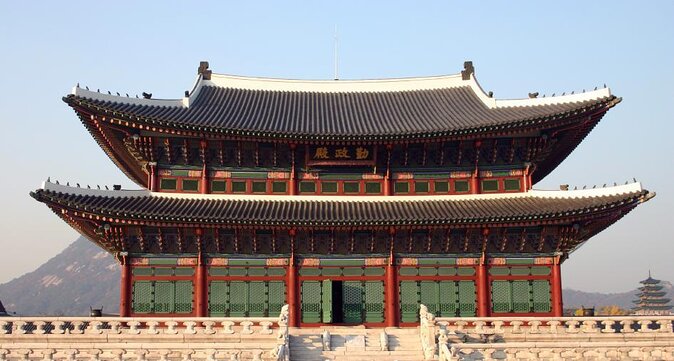
Gyeongbokgung was built in 1394 and served as the main royal residence during the Joseon Dynasty. It is the largest of Seoul’s Five Grand Palaces and is widely regarded as the city’s most beautiful palace complex.
The grounds give you more than ornate gates and photo backdrops. Your guide can explain the palace’s role in royal life and point out the spaces that made up the court compound. One customer especially enjoyed seeing the kings’ bedrooms, a reminder that this was once a lived-in royal center rather than a single ceremonial building.
You spend about an hour at the palace, including the guard-changing ceremony. That is enough for a structured introduction, but not enough to see every corner. If Gyeongbokgung is high on your list, I would return later for a longer visit, perhaps in traditional Korean dress if that is part of your independent plans. This tour is best viewed as a strong first look.
The palace grounds involve outdoor walking and limited shade. A review specifically advised bringing a hat, and that is sound advice in warm weather. In winter, the same open spaces can feel sharply cold. One person took the tour during heavy snow and still found it worthwhile, but weather will affect your comfort.
A few more Seoul half-days to weigh up
- Best DMZ Tour Korea from Seoul (Red Suspension Bridge Optional)
★ 5.0 · 41,422 reviews - DMZ Tour: 3rd Tunnel, Option(Suspension Bridge, Boat) from Seoul
★ 5.0 · 21,373 reviews - DMZ tour south Korea from Seoul (NK experience hall, defector)
★ 5.0 · 20,599 reviews - Seoul: DMZ Tour with Optional Suspension Bridge
★ 4.8 · 5,277 reviews
The guard-changing ceremony at Gwanghwamun Gate
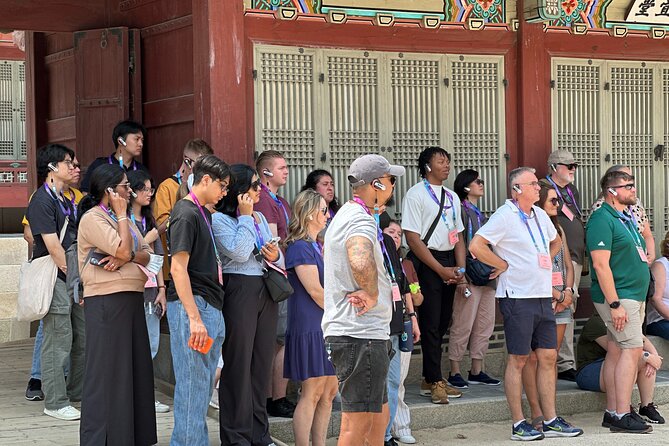
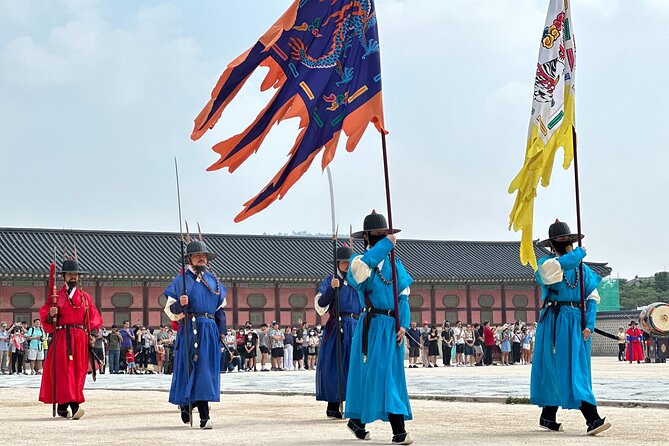
The ceremony takes place in front of Gwanghwamun Gate, the grand entrance to the palace. It is the most visual part of the morning, with formal uniforms, traditional colors, flags, and carefully timed movements.
The timing matters. You are not just wandering into the palace and hoping to catch the show. The guide brings the group to the gate at the right point in the schedule, and several customers specifically appreciated being placed near the front for a clear view.
This is where a guide adds real value. A good leader can help you understand what is happening and keep the group together in a crowded viewing area. Ray was praised for knowing the best place to stand for photographs, while another customer credited the guide with securing a front-row view.
Allow yourself some patience around the ceremony. The viewing position may depend on crowd size and the day’s conditions. You will want your camera ready, but do not spend the entire display looking at your screen. The uniforms and choreography are what make this memorable.
The museum stop and Tuesday changes
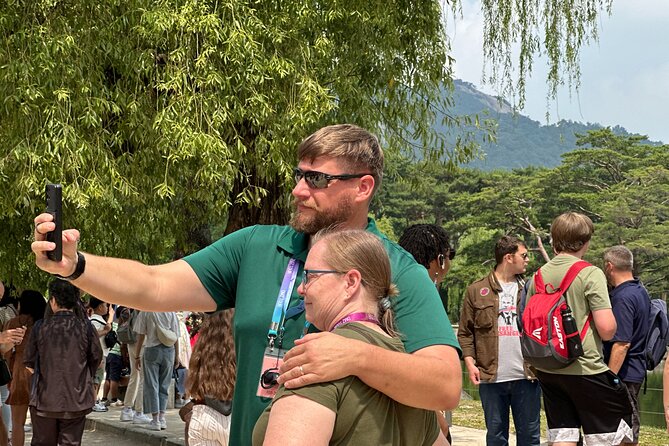
The itinerary describes a thirty-minute stop at the National Folk Museum of Korea, while the tour information also refers to the National Palace Museum. The supplied details are not fully consistent about which museum is visited, so confirm the exact stop when booking or with the operator before departure.
Either way, this short museum portion is meant to add context about Korean culture and royal life. Thirty minutes gives you a sample, not a full museum visit. If you are especially interested in Korean art or court history, plan a separate museum visit later.
Tuesday needs special attention. Gyeongbokgung Palace and the National Folk Museum are closed every Tuesday. The supplied tour details list different replacement combinations, including Deoksugung Palace and Bukchon Hanok Village, and also mention a palace substitution. Confirm the Tuesday route before paying, since the central palace experience and guard ceremony may not be available in its usual form.
The ginseng stop: useful context, clear warning
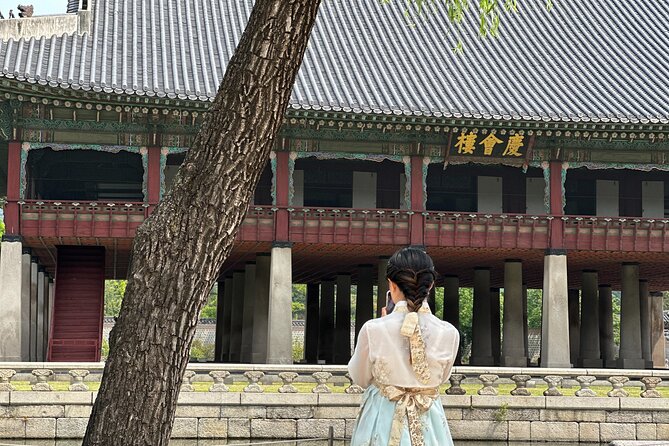
The last stop is a ginseng center described as a museum and shopping visit. Expect a brief explanation of Korean ginseng followed by time in a retail setting.
This is the tour’s most important drawback. Several customers found the sales pitch too strong and felt they were placed in a room for roughly twenty minutes while staff encouraged purchases. One person compared it to a time-share presentation. Others bought something or enjoyed the stop, but the commercial purpose is clear.
You do not need to purchase anything to understand the tour. If shopping for Korean health products interests you, the stop may be useful. If you want every minute devoted to temples, palaces, and museums, this is wasted time.
I would make my expectations clear before booking. The ginseng visit is not a minor surprise tucked into the schedule. It is part of the morning’s planned route, and the tour ends afterward. Knowing that makes the choice easier.
Pickup, transport, and where the morning ends
Hotel pickup is offered in Seoul, and the tour uses an air-conditioned coach. Some customers describe pickup help that went beyond the basic plan, including assistance for a person who was late after arriving from the airport and a driver who returned for someone lost near City Hall Station.
That kind of flexibility cannot be guaranteed, but it suggests you should keep the operator’s contact details handy. Pickup arrangements can be important in a large city, particularly on your first morning or after a long flight.
The tour does not include hotel drop-off. The supplied information names City Hall, Itaewon, and Myeongdong in different places as possible ending points, while the stated meeting point is City Hall Station and the listed end address is Seoul City Hall. Confirm your exact drop-off point before departure.
Ending in the central city is not a major problem. You can continue into Insadong, explore nearby shopping streets, or make your own way to lunch. One customer even received restaurant advice from Sunny and continued toward Insadong after the tour.
Is $38 a fair price?
At $38 per person, the tour offers reasonable value if you want transport, a guide, palace admission, and a fixed morning schedule. Gyeongbokgung admission and the guard ceremony are included, as are taxes, fees, and hotel pickup.
The value comes from the time saved. You visit several central sights without arranging taxis, checking palace hours, or working out the best order. For a first morning, that convenience can be worth more than a small price difference.
The value drops if you dislike group tours or sales stops. A group of up to forty people is not the same as a private guide, and the ginseng visit takes time from the cultural program. You also buy only a brief look at each major place.
I would choose it for a short first visit, especially if you want a guide to explain the basics. I would skip it if you already know Seoul well, want a full day at Gyeongbokgung, or prefer independent sightseeing by subway.
Practical advice for a better morning
Wear shoes suited to outdoor walking. The temple and palace visits are not difficult for most people, but the tour includes time on foot and conditions can be hot, cold, snowy, or wet.
Bring a hat and water in summer. In winter, add warm layers because the palace compound is exposed. A small umbrella or rain layer is sensible when the forecast is uncertain, although poor weather can lead to a different date or a full refund if the operator cancels.
Keep your morning open until the stated three-hour duration is complete. Traffic and group movement can affect the exact timing, and you should not book an important appointment immediately afterward.
The tour accepts mobile tickets and confirmation is sent at booking. English and Chinese guiding are offered. Most people can participate, but anyone with mobility concerns should discuss needs with the operator before booking, since the tour includes temple and palace walking.
Free cancellation is available up to twenty-four hours before the local start time. Cancellations or changes within twenty-four hours are not refunded or accepted. The tour also requires a minimum number of participants, so an operator cancellation may result in a different date, another experience, or a full refund.
Who should book this Seoul half-day tour?
I would recommend it to first-time visitors who want a quick grounding in Seoul’s royal, religious, and political center. It is also a good fit for people staying only a few days, families who prefer a coach, and anyone who wants the guard ceremony handled at the right time and place.
The strongest part is the combination of guide quality and palace access. Names such as Kelly, Emily, Sunny, Ray, Gabby, and Henry appear repeatedly in positive comments for warmth, clear explanations, and personal help. The guide can turn a fast tour into a useful lesson rather than a simple succession of photo stops.
I would hesitate if the ginseng shop would irritate you, or if you want a quiet, self-directed morning. The sales stop is a real tradeoff, not a minor footnote.
For most first visits, I think the $38 price is fair, provided you accept the group format and commercial ending. Book it for orientation, the ceremony, and efficient transport. Do not book it expecting a slow palace study or a purely cultural program.
FAQ
How long does the tour last?
The tour lasts approximately three hours.
What sights are included?
The tour includes Jogyesa Temple, Gyeongbokgung Palace, the guard-changing ceremony, presidential exhibits at Cheongwadae Sarangchae, a view of the Blue House, a museum stop, and a ginseng center.
Is hotel pickup included?
Yes. Hotel pickup in Seoul is included.
Is hotel drop-off included?
No. The tour ends at a central drop-off point rather than returning you to your hotel. The supplied details name City Hall, Itaewon, and Myeongdong, so confirm your exact ending point.
What language is the guide?
The professional guide is available in English or Chinese.
Is admission to Gyeongbokgung Palace included?
Yes. Palace admission and the guard-changing ceremony are included.
Does the tour operate on Tuesdays?
The regular Gyeongbokgung Palace and National Folk Museum visits are not available on Tuesdays because they are closed. Replacement sights are used, including Deoksugung Palace and Bukchon Hanok Village according to the supplied tour information. Confirm the exact Tuesday route.
How large can the group be?
The tour can have a maximum of forty participants.
Is lunch included?
No. Lunch is not included.
Can I cancel for a full refund?
You can cancel at least twenty-four hours before the local start time for a full refund. Cancellations within twenty-four hours are not refunded.
What happens if bad weather cancels the tour?
If poor weather causes cancellation, you will be offered a different date or a full refund.
Recently added around Seoul
- Nami & Maple Road & Theatre des Lumieres Day Tour from Seoul★ 4.8 · 4 reviews
- Gyeongbokgung Palace Photo Session with your own phone★ 5.0 · 4 reviews
- Private Tour around Suwon UNESCO Fortress and Korea Folks Village★ 4.5 · 4 reviews
- Jisan Forest Resort: Ski Full-Day Tour or Shuttle from Seoul★ 5.0 · 4 reviews
- N Seoul Tower + Namsan Cable Car Ticket (Collect in Myeongdong)★ 3.5 · 4 reviews
- Seoul: Deoksugung Palace Night Tour★ 4.5 · 4 reviews
- Private Jeonju Hanok Village – Culinary tour★ 5.0 · 4 reviews
- Seoul Private Walking Tour with a Local★ 5.0 · 4 reviews
Seoul Tours, compared.
Best DMZ Tour Korea from Seoul (Red Suspension Bridge Optional)
Read the review →
DMZ Tour: 3rd Tunnel, Option(Suspension Bridge, Boat) from Seoul
Read the review →
DMZ tour south Korea from Seoul (NK experience hall, defector)
Read the review →
DMZ The 3rd Tunnel and Suspension Bridge Tour
Read the review →
Signature DMZ Tour: Exclusive Defector Talk & Suspension Bridge
Read the review →
Thrilling Korean DMZ 3rd Tunnel Tour from Seoul + Red Bridge Rush
Read the review →
DMZ Past and Present: Korean Demilitarized Zone Tour from Seoul
Read the review →Browse the lists this tour appears in