
Reviewed · SEOUL TOURS
Korean Cooking at Seoul Cooking Club
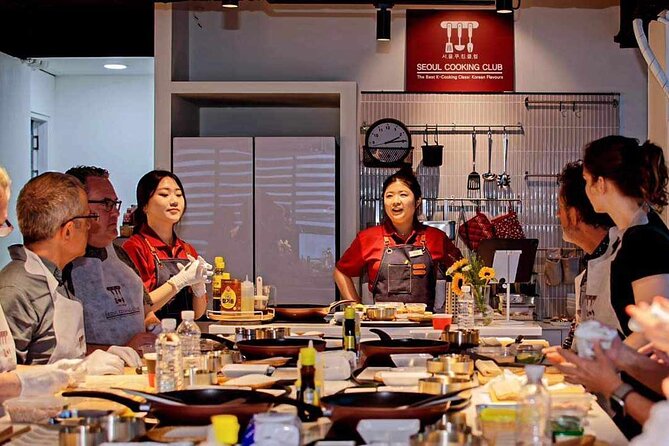
Korean cooking is best understood at the worktable, where you can taste gochujang, sesame oil, kimchi, and other building blocks instead of simply reading a menu. At Seoul Cooking Club, you prepare a generous spread that can include bulgogi, bibimbap, gimbap, japchae, three kinds of jeon, and dessert, then sit down to eat it.
I like the wide menu and the friendly teaching style. Instructors including Olivia, Elly, Sally, and Grace explain techniques in clear steps, and they make room for questions about Korean food and culture. I also like the practical finish: you receive a cookbook, and the portions may leave you with food to take home.
The main consideration is that this is a beginner-friendly class, not a professional kitchen course. Much of the chopping, measuring, and advance cooking is done for you, so some hands-on cooks may find it closer to guided assembly than from-scratch cooking.
Key points to know before you book
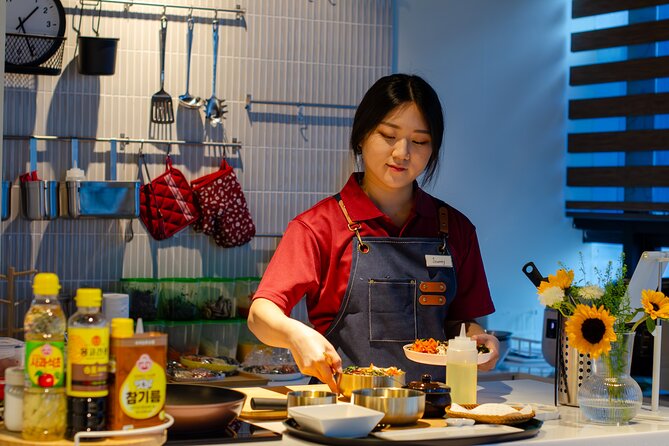
- Seven dishes plus dessert: Menus can include bulgogi, bibimbap, gimbap, japchae, and several jeon pancakes.
- Ten Korean flavors: The class combines savory dishes, small tastes, drinks, and a sweet finish.
- Clear instruction: Olivia, Elly, Sally, and Grace are praised for patient demonstrations and simple explanations.
- Dietary flexibility: Vegan, vegetarian, pescatarian, gluten-free, halal, and some allergy-related requests can be accommodated.
- Small group size: The class is limited to 12 people, which gives you a better chance to ask questions.
- Come hungry: The amount of food is a major part of the value, and leftovers are possible.
What the 2.5-hour Seoul cooking class is really like
The class takes place at 71-6 Jongno 2(i)-ga in Seoul’s Jongno District. It lasts about two and a half hours and ends where it begins, making it easy to fit into a day of sightseeing without arranging a second pickup point.
You can book it for brunch, lunch, or dinner. That flexibility matters in Seoul, where a morning palace visit, an afternoon market walk, or an evening neighborhood stroll can all compete for your time. The cooking session works especially well near the start of a visit because it gives you a working vocabulary for Korean menus and ingredients.
The format is social but not oversized. With a maximum of 12 people, you are likely to share the table with other visitors, couples, families, and solo participants. That setup can make the meal more enjoyable, though anyone seeking a private lesson should note that this is a small-group activity rather than a one-on-one session.
More Cooking Classes in Seoul:
- Local Home Korean Cooking Class & Market Adventure in Seoul
★ 5.0 · 1,024 reviews - Master Korean traditional cooking with a Kimchi chef
★ 5.0 · 385 reviews - Seoul: Korean Cooking Class at a Local Home and Market Tour
★ 5.0 · 348 reviews
Starting with Korean flavors and ingredients
The class is built around tasting as much as cooking. You try roughly 10 Korean flavors across appetizers, main dishes, drinks, and dessert, so the session is not limited to one famous recipe.
This is useful because Korean food can seem difficult to decode from a restaurant menu. A little fermented heat from gochujang, the nutty aroma of sesame oil, the salty depth of soy sauce, and the sweet-sour balance found in Korean side dishes make more sense once you have tasted them in context.
The instructors also explain why particular ingredients are used and how they affect the final dish. That information is more useful than memorizing a recipe. You begin to understand which flavors form the base of Korean cooking and which ingredients add heat, sweetness, fragrance, or texture.
Drinks are part of the experience, too. Water and tea are available, and one menu description includes sujeonggwa, a refreshing traditional cinnamon and ginger drink. The exact selection can vary, but the inclusion of Korean beverages helps turn the class into a cultural food lesson rather than a simple cooking demonstration.
Making gimbap, the hands-on highlight
Gimbap is one of the most practical dishes to learn because it combines rice, seasoned fillings, and seaweed into a neat roll. It also rewards careful technique more than brute force.
Elly is specifically praised for explaining how to make gimbap in a clear, approachable way. You can expect a demonstration followed by guided practice, with attention to spreading the rice, arranging fillings, and rolling the seaweed tightly enough to hold its shape.
This is the kind of instruction that translates well to your home kitchen. You may not reproduce the exact Korean ingredients after returning home, but the method is easy to remember and adaptable. Gimbap also gives you an immediate connection to food you may see in Seoul convenience stores, markets, and casual restaurants.
For beginners, the appeal is simple: the steps are broken down so you can take part without needing advanced knife skills. For experienced home cooks, the value lies more in the tips about seasoning and assembly than in complex technique.
Bulgogi, bibimbap, and the foundation of a Korean meal
The menu can include two of Korea’s most familiar dishes, bulgogi and bibimbap. Bulgogi introduces the sweet-savory marinade and the way seasoning penetrates thinly sliced meat. Bibimbap shows how rice, vegetables, sauce, and toppings come together in one bowl.
You are not simply handed a finished plate. The instructors explain the ingredients and guide you through the key steps, making it easier to see how the dishes are built. That helps you order with more confidence later. You will recognize the names, understand the basic components, and have a better sense of how to adjust spice or mix sauces.
Dietary planning is important here. The class advertises vegan, vegetarian, pescatarian, gluten-free, halal, and other dietary options. One participant with a peanut allergy and restrictions on beef and pork was accommodated, but you should still provide your needs when booking and confirm them before the session.
The class can suit people who have never cooked Korean food, but the menu is broad enough to interest an experienced cook. One particularly ambitious format includes gimbap, bibimbap, bulgogi, japchae, three types of pancake, and dessert. That is a lot to cover in one sitting, so expect instruction to focus on useful foundations rather than restaurant-level precision.
A few more Seoul half-days to weigh up
- Best DMZ Tour Korea from Seoul (Red Suspension Bridge Optional)
★ 5.0 · 41,422 reviews - DMZ Tour: 3rd Tunnel, Option(Suspension Bridge, Boat) from Seoul
★ 5.0 · 21,373 reviews - DMZ tour south Korea from Seoul (NK experience hall, defector)
★ 5.0 · 20,599 reviews - Seoul: DMZ Tour with Optional Suspension Bridge
★ 4.8 · 5,277 reviews
Jeon and japchae add variety to the table
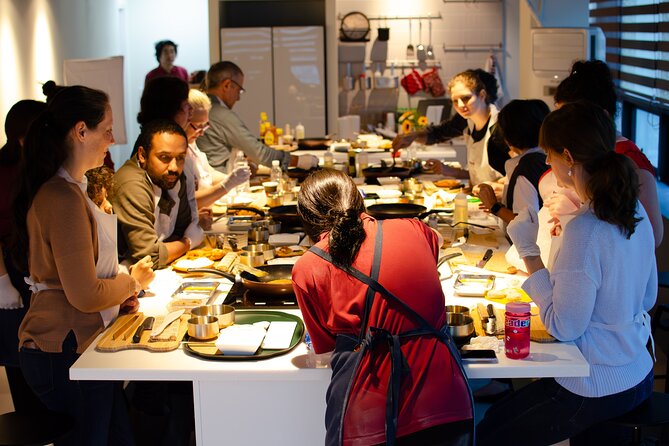
Jeon are Korean savory pancakes, often made with vegetables, seafood, or other fillings. Preparing three kinds gives you a good lesson in how small changes in ingredients and texture create different results.
This variety is one of the class’s strongest features. You are not spending two and a half hours repeating one recipe. Instead, you see several ways Korean cooks handle batter, frying, vegetables, noodles, rice, and seasoned meat.
Japchae provides another change of texture. The glass noodles are springy and absorb the savory seasoning, while the vegetables add color and crunch. Learning the dish alongside pancakes and rice-based recipes makes the meal feel like a proper Korean spread rather than a single entree with a side dish.
There is a tradeoff. Since the class covers so many dishes, some ingredients are prepared in advance. That keeps the pace manageable and helps the group eat everything within the allotted time, but it limits your chance to practice every stage from raw ingredients to finished plate.
Dessert and the meal that follows
After the savory cooking, the experience finishes with dessert. The supplied description does not name the dessert, so you should not book this expecting a particular sweet dish. What is clear is that the class includes a sweet course as part of its three-course structure.
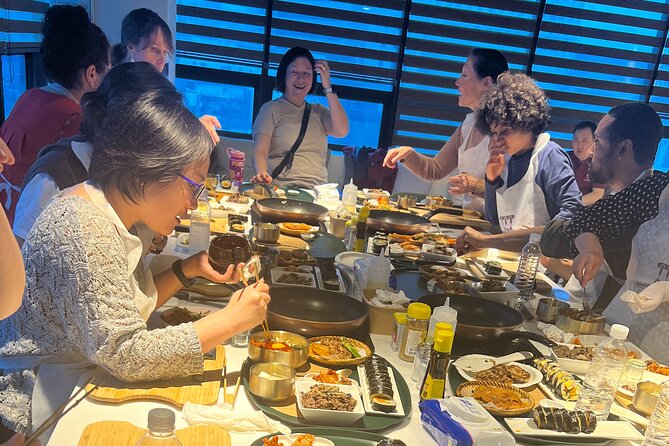
Then comes the best part for many people: you eat what you prepared. The meal includes a mix of the dishes made during the session, and the portions can be large enough that you may want takeaway containers or packaging for leftovers.
Several class formats include enough food for a second meal. Families have taken leftovers back for the next day, and some people specifically advise you not to eat beforehand. I would treat the session as a substantial meal, not a light activity with a token tasting.
The social side also matters. You share the food at the end, which gives solo participants an easy way to meet people without committing to a full group tour. Couples and families can work together, while individual cooks can ask questions and compare results around the table.
The instructors make the difference
The strongest part of the experience is the teaching. Olivia is described as friendly, patient, and clear. Elly is praised for her demonstrations, cultural explanations, and encouragement. Sally is noted for her warmth and personable style, while Grace is credited with making complicated-looking dishes feel simple.
Staff members prepare much of the setup, then guide you through the important steps. That arrangement keeps the class welcoming for beginners and lets you focus on learning rather than racing to chop every ingredient.
You should expect a relaxed lesson with demonstrations, hands-on preparation, tasting, and conversation. The instructors also answer questions about Korean culture, food history, ingredients, and restaurant dishes. That context is especially helpful if your main goal is to understand what you are eating during the rest of your time in Seoul.
The teaching style may not satisfy someone who wants a rigorous culinary course. One fair criticism is that the experience can feel like assembling prepared components. If you want to practice butchering, stock-making, fermentation, or every step of a sauce, this is not that kind of class.
Is $109 a fair price?
At $109 per person, this is not a bargain meal. You can eat Korean food much more cheaply in Seoul. The price makes more sense when you count the two and a half hours of instruction, the number of dishes, drinks, dessert, the small group, and the recipes you take home.
You are also paying for convenience. Ingredients are organized, the menu is planned, and instructors keep several dishes moving at once. For a first introduction to Korean cooking, that structure saves you from spending a day trying to identify unfamiliar ingredients or translate recipes.
The value is strongest if you want more than dinner. You get a cultural lesson, a social activity, and practical cooking ideas in one booking. It is also a good choice if you have dietary restrictions and want a meal designed around them rather than hoping a restaurant can make last-minute substitutions.
The value is weaker for confident cooks who dislike pre-prepared ingredients or want a private lesson. In that case, a market visit followed by a more focused class may suit you better, though this experience still offers more variety and a larger meal.
Who should book this Seoul cooking experience?
I would recommend it for first-time visitors who want to understand Korean food quickly. It is also a good fit for solo participants, couples, families, and anyone who enjoys meeting people around a shared meal.
Beginners should feel comfortable here. The recipes are explained in manageable steps, the food is prepared with guidance, and the instructors encourage questions. You do not need to arrive with Korean cooking experience.
This class is particularly useful for people who want to recreate dishes at home. The cookbook gives you a reference after the trip, while the hands-on practice helps you remember the order of operations and the balance of flavors.
You may want to skip it if you want a fully from-scratch workshop, a quiet private setting, or a narrow focus on one advanced dish. The class aims for broad exposure and a satisfying meal, not technical specialization.
Practical details for your Seoul itinerary
The meeting point is 71-6 Jongno 2(i)-ga in Jongno District, Seoul. The location is near public transportation, and the activity ends back at the same point. A mobile ticket is provided, and confirmation arrives when you book.
Service animals are allowed. Dietary preferences and allergies should be raised in advance so the class can plan appropriately. Options listed include vegan, vegetarian, pescatarian, gluten-free, and halal meals.
You can cancel for a full refund if you do so at least 24 hours before the start time. Cancellations or changes inside that 24-hour window are not accepted for a refund, and all cut-off times use Seoul local time.
Should you book Seoul Cooking Club?
Book it if you want a friendly, food-heavy introduction to Korean cuisine with plenty of variety. The combination of gimbap, bulgogi, bibimbap, japchae, jeon, drinks, dessert, and a cookbook gives you far more than a single recipe lesson.
Go in with the right expectation. This is a polished beginner class with prepared ingredients and strong guidance, not intensive chef training. If that sounds like a good use of 2.5 hours, the $109 price is reasonable for the meal, instruction, social setting, and takeaway value.
FAQ
How long does the Seoul Cooking Club class last?
The class lasts approximately 2 hours and 30 minutes.
Where does the activity begin?
It begins at 71-6 Jongno 2(i)-ga, Jongno District, Seoul, South Korea.
Where does the activity end?
The class ends back at the meeting point.
How many people can join the class?
The maximum group size is 12 travelers.
What dishes might I prepare?
Menus can include bulgogi, bibimbap, gimbap, japchae, three types of jeon, appetizers, main dishes, and dessert. The exact selection may vary.
Does the class include dessert?
Yes. The experience includes a dessert course, although the specific dessert is not named.
Can the class accommodate dietary restrictions?
Yes. Listed options include vegan, vegetarian, pescatarian, gluten-free, and halal meals. Allergy and ingredient restrictions can also be discussed when arranging the class.
Is transportation included?
The activity is near public transportation, but transportation to and from the meeting point is not listed as included.
Is a mobile ticket available?
Yes. The experience provides a mobile ticket, and confirmation is received at the time of booking.
What is the cancellation policy?
You can receive a full refund if you cancel at least 24 hours before the experience start time. Cancellations or changes made less than 24 hours before the start time are not refunded or accepted.
Recently added around Seoul
- Nami & Maple Road & Theatre des Lumieres Day Tour from Seoul★ 4.8 · 4 reviews
- Gyeongbokgung Palace Photo Session with your own phone★ 5.0 · 4 reviews
- Private Tour around Suwon UNESCO Fortress and Korea Folks Village★ 4.5 · 4 reviews
- N Seoul Tower + Namsan Cable Car Ticket (Collect in Myeongdong)★ 3.5 · 4 reviews
- Jisan Forest Resort: Ski Full-Day Tour or Shuttle from Seoul★ 5.0 · 4 reviews
- Seoul: Deoksugung Palace Night Tour★ 4.5 · 4 reviews
- Seoul Private Walking Tour with a Local★ 5.0 · 4 reviews
- Private Jeonju Hanok Village – Culinary tour★ 5.0 · 4 reviews
Seoul Tours, compared.
Best DMZ Tour Korea from Seoul (Red Suspension Bridge Optional)
Read the review →
DMZ Tour: 3rd Tunnel, Option(Suspension Bridge, Boat) from Seoul
Read the review →
DMZ tour south Korea from Seoul (NK experience hall, defector)
Read the review →

DMZ The 3rd Tunnel and Suspension Bridge Tour
Read the review →
Signature DMZ Tour: Exclusive Defector Talk & Suspension Bridge
Read the review →
Thrilling Korean DMZ 3rd Tunnel Tour from Seoul + Red Bridge Rush
Read the review →
DMZ Past and Present: Korean Demilitarized Zone Tour from Seoul
Read the review →Browse the lists this tour appears in