
Reviewed · DMZ TOURS
Half Day Korea DMZ Tour/ opt: suspension bridge
The most striking part of this half-day tour is the chance to look across one of the world’s most closely watched borders. You’ll walk through the 3rd Infiltration Tunnel, view North Korea from Dora Observatory, and hear how an armistice created a heavily guarded divide that still shapes Korean life.
I like the mix of history and firsthand places: Freedom Bridge gives the Korean War a human face, while the observatory turns a distant political story into something you can actually see. I also like the strong guide-led format. Guides including AJ, Grace, Sadie, Katie, Lisa, and Laura are repeatedly praised for clear explanations, humor, good pacing, and helpful communication.
The main consideration is that the DMZ is a working military zone, not a normal sightseeing district. Access can change with military conditions, photography is controlled, the tunnel requires a steep walk, and pickup details need careful checking because the information lists both hotel pickup and City Hall as the meeting point.
Key points to know before you book
- The 3rd Infiltration Tunnel is the physical centerpiece: Expect a steep, narrow walk underground, with comfortable shoes strongly advised.
- Dora Observatory depends on visibility: On a clear day, binoculars may reveal North Korea and the village of Kijongdong. Clouds and rain can limit the view.
- Freedom Bridge adds a human story: Nearly 13,000 Korean prisoners of war crossed here after the conflict.
- The guides make a major difference: AJ, Grace, Sadie, Katie, Lisa, Erica, Laura, Chloe, and others are praised for history, humor, timing, and care.
- The tour costs $35 per person: That is good value for about six hours with an expert guide and air-conditioned coach transport.
- Confirm the meeting point: City Hall is listed as the start and end point, while hotel pickup appears in the description. Get exact instructions from the operator before departure.
Why the DMZ is worth a half-day from Seoul
You can read about the Korean War in a museum, but the DMZ gives the subject a physical setting. From Seoul, the coach carries you north toward the Imjin River, where the road gradually leaves the city behind and the guide explains the division between North and South Korea.
This is not a polished attraction built only for photographs. The border is controlled by military rules, and parts of the visit depend on conditions outside the tour company’s control. That uncertainty is part of the experience, though it also means you should not expect every stop to feel relaxed or flexible.
The tour lasts about six hours, making it a practical choice if you want to keep most of your day for Seoul. You travel by air-conditioned coach and return to City Hall. The group can reach as many as 40 people, so this is a shared sightseeing trip rather than a private history lesson.
The strongest part is the guide commentary on the bus and at each stop. Guides such as AJ are praised for making difficult history entertaining, while Grace, Sadie, Katie, Laura, and Chloe are praised for clear explanations and good time control. One less positive experience involved a guide who spoke too softly and was hard to understand, so guide quality may vary from day to day.
More DMZ Tours in Seoul:
- Best DMZ Tour Korea from Seoul (Red Suspension Bridge Optional)
★ 5.0 · 41,422 reviews - DMZ Tour: 3rd Tunnel, Option(Suspension Bridge, Boat) from Seoul
★ 5.0 · 21,373 reviews - DMZ tour south Korea from Seoul (NK experience hall, defector)
★ 5.0 · 20,599 reviews
Imjingak Park and the meaning of Freedom Bridge
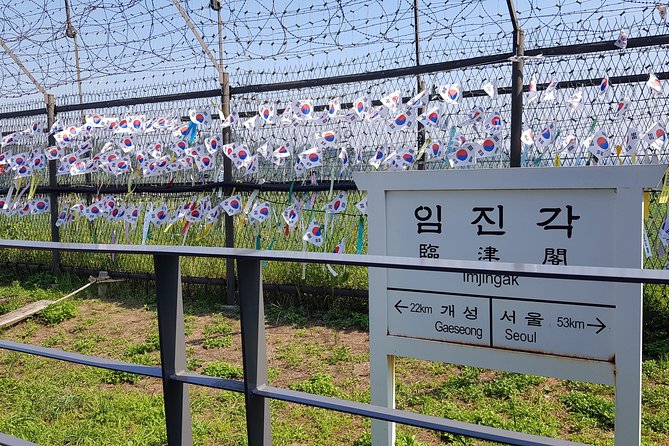
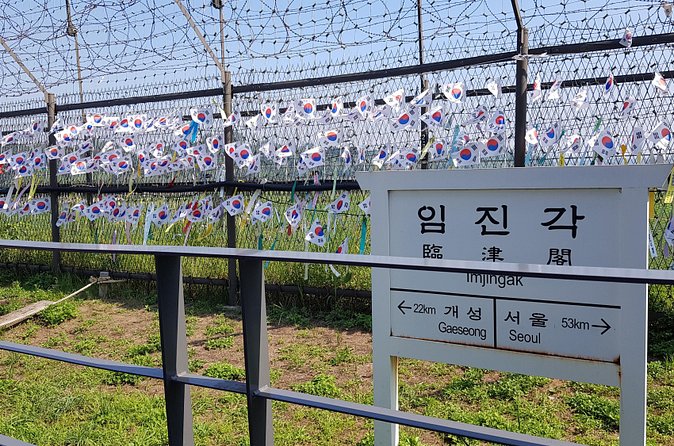
The first main stop is Imjingak Pyeonghoa-Nuri Park, near the banks of the Imjin River. You get about 30 minutes to see artillery and other war artifacts connected with the Korean conflict.
This stop works best as an introduction. The objects are tangible: weapons, military equipment, and reminders of a war that is often presented through dates and political speeches. Your guide helps connect those objects with the people affected by the division.
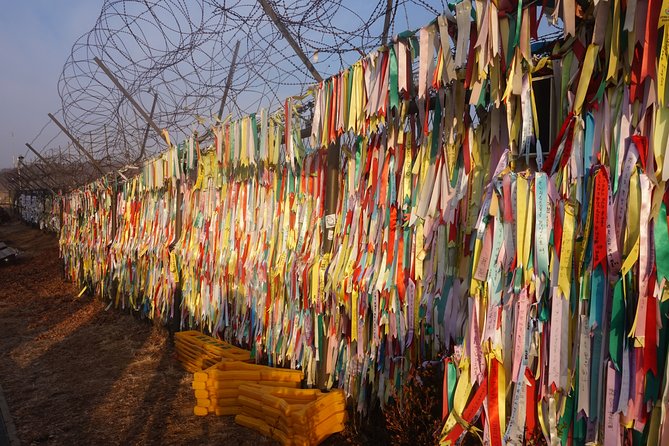
Freedom Bridge is especially meaningful. Nearly 13,000 Korean prisoners of war crossed here on their way back home. That detail changes the feel of the stop. You are not simply looking at an old crossing point. You are standing near a place that carried people from captivity toward family, uncertainty, and a country still split in two.
Thirty minutes is enough for a look around, but not enough for a slow museum visit. I would pay close attention to the guide here, since the explanation gives the artifacts their meaning. You will also want to keep an eye on the clock. This tour moves on a fixed schedule, and the border stops require coordination.
Walking the 3rd Infiltration Tunnel
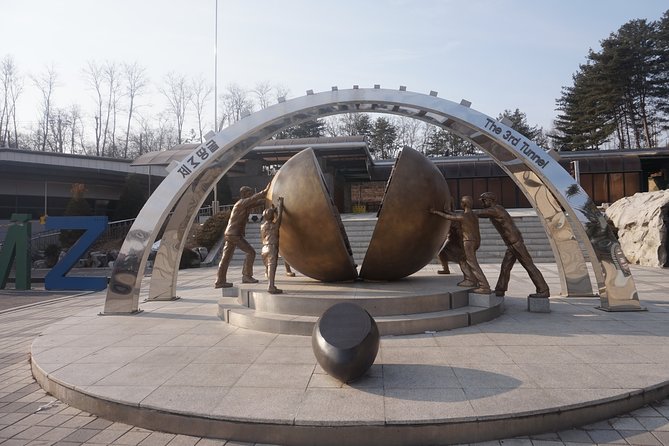
The itinerary describes the second major visit as Dora Observatory, but the details clearly refer to the 3rd Infiltration Tunnel. This underground passage was discovered beneath the border and is presented as evidence of North Korean attempts to move south.
The tunnel is the most physically demanding portion of the tour. You walk through a steep and narrow passage, and the description warns of a moderate amount of walking. The route is not suited to anyone expecting an effortless coach excursion. Wear shoes with a firm grip and clothing that lets you move comfortably.
The tunnel’s power comes from its scale and setting. Instead of only hearing that the border was fortified, you enter a passage cut into the rock beneath it. South Korea has blocked access at the actual Military Demarcation Line with concrete, so you do not simply walk through to the other side.
You get about an hour for this portion, including the visit and movement through the site. That sounds generous, but the slope and narrow route can make the walk feel substantial. One guide kept the group moving well, and another visitor described the tunnel as a workout that was worth the effort. I would treat this as the tour’s main test of stamina.
Photography rules matter here and throughout the DMZ. Follow your guide’s instructions about when and where you may take pictures. This is a military area, so ordinary sightseeing habits do not always apply.
Dora Observatory and the view toward Kijongdong
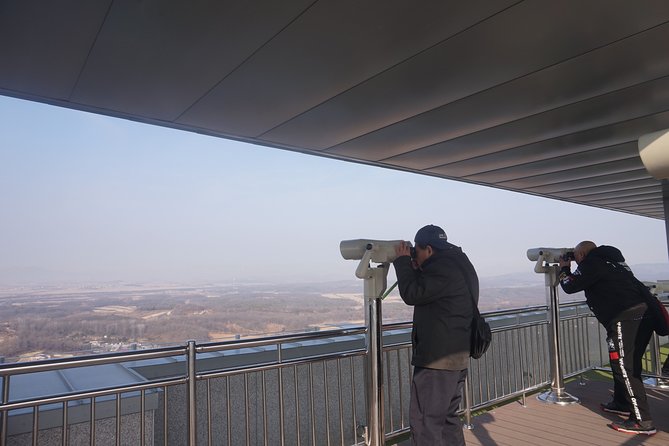
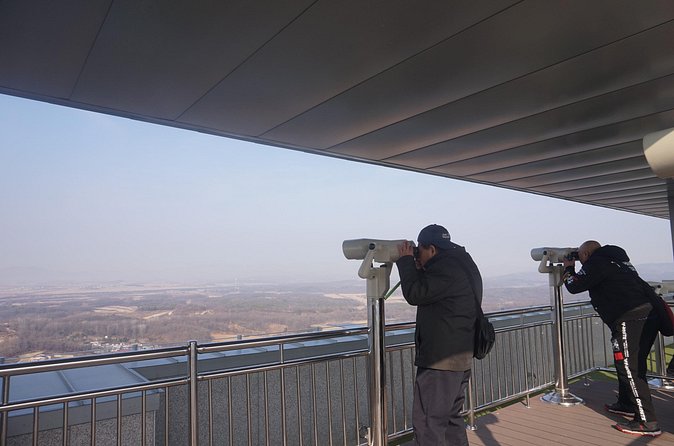
After the tunnel, the coach takes you to Dora Observatory. Here, binoculars let you look toward North Korea, including the village of Kijongdong across the border.
The view is weather-dependent. On a clear day, the sight of North Korean territory can be the emotional high point of the tour. On a rainy or gloomy day, the experience becomes more about the guide’s explanation than the view itself. The tour can still work in poor weather, but you should keep your expectations realistic.
Your guide explains daily life in Kijongdong and points out what you are seeing across the border. The 30-minute stop is short, yet it gives you time to use the binoculars and absorb the unusual setting. Do not expect a close view of ordinary neighborhood life. This is a distant, controlled vantage point, and what you see may be limited by weather, distance, and site rules.
I like this stop because it makes the division visible without turning it into a spectacle. You are looking at a real place across a real border, while also being reminded that the view is shaped by politics, security, and competing stories.
More Suspension Bridge Tours in Seoul:
- Seoul: DMZ Tour with Optional Suspension Bridge
★ 4.8 · 5,277 reviews - Seoul: DMZ The 3rd Tunnel and Suspension Bridge Tour
★ 5.0 · 4,656 reviews - Signature DMZ Tour: Exclusive Defector Talk & Suspension Bridge
★ 5.0 · 4,459 reviews - Ultimate Korea DMZ Tour from Seoul (Gondola & Suspension Bridge)
★ 5.0 · 2,396 reviews
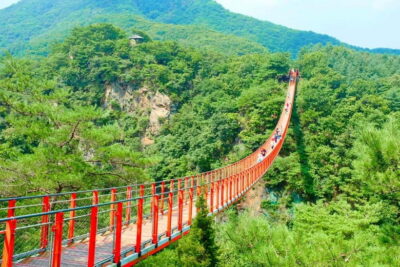
The optional suspension bridge
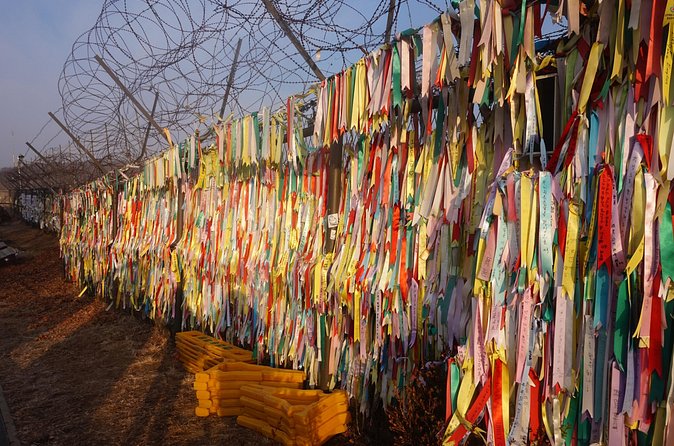
The title refers to an optional suspension bridge, but the supplied details do not explain its exact location, extra cost, walking time, or operating conditions. That means you should ask the local operator for the precise arrangement before booking or at the start of the tour.
Do not assume the bridge is included in the $35 price. The listed inclusions cover the guide and air-conditioned coach, while the itinerary also says the tram is not included. Since the bridge option is not described in the main schedule, confirm whether it replaces a stop, adds time, or requires a separate payment.
If you enjoy scenic walks and want another physical element, the option may appeal to you. If your priority is the historic core of the visit, the park, tunnel, and observatory are the clearly described parts to judge the tour by.
What $35 buys you
At $35 per person, this is a strong-value introduction to the DMZ. You receive roughly six hours of transport and guided touring from Seoul, along with admission to the listed sites. You avoid figuring out the route yourself, and the guide supplies the political and historical background that would be difficult to assemble on your own.
The price is especially fair if you want a straightforward group outing. A private guide would offer more room for questions and a slower pace, but this coach trip gives you the main stops at a much lower cost. The group may hold up to 40 people, so you should expect some waiting and a less personal feel.
The tour does not include the tram. Hotel pickup and drop-off also need clarification. City Hall is listed as both the meeting point and the end point, while the overview says hotel pickup is included and the inclusions do not list it. I would not rely on a general booking page alone. Get the exact location and departure time directly from Seoul City Tour before the day of the visit.
A confirmation is provided when you book, but the operator still requires you to confirm the exact meeting place and time. Missing the bus because of a confusing date or late arrival brings no refund.
Which guide style suits you
The guide is central to this experience. The best feedback consistently points to clear history, friendly communication, humor, enthusiasm, and firm time management.
AJ is praised for combining detailed history with a lively sense of humor. Grace is repeatedly described as warm, energetic, and thorough. Sadie receives high marks for punctual communication and her ability to explain the Korean War in a way that makes its effect on Korean people easier to understand.
Katie is praised for her energy, history knowledge, and ability to keep a group on schedule. Laura is noted for explaining what to expect at every stop and keeping the timing sensible even in bad weather. Chloe is singled out for thoughtful answers, with the tunnel becoming a highlight of the day.
You cannot normally choose your guide, so book this as a well-run group tour rather than expecting a specific person. Still, the number of strong guide comments suggests that the company has several experienced staff members. The one warning is communication: if your guide speaks softly or has difficult-to-follow English, some of the historical detail may be lost.
What to bring and how to prepare
Bring your current valid passport. You do not need to send a copy in advance, but you must have the passport with you on the day.
Wear comfortable clothes and sturdy shoes. The tunnel is steep and narrow, and the tour includes walking at more than one stop. The coach handles the long transfers, but this is not a sit-down excursion from beginning to end.
Be ready to follow instructions. Your guide will tell you where photographs are allowed and when you need to return to the coach. Military conditions or local circumstances can cancel part of the itinerary without a refund, so the schedule is not entirely within the operator’s control.
The tour is near public transportation, and most people can participate. The afternoon departure requires at least two adults to book. Free cancellation is available up to 24 hours before the start time, but cancellations or changes made inside that window are not refunded.
Who should book this DMZ tour?
I would choose this tour if you have limited time in Seoul and want a practical introduction to the Korean division. It suits history-minded visitors, first-time DMZ visitors, and anyone who prefers having transport and explanations arranged in one package.
It is also a good fit if you want several different kinds of stops: outdoor war displays, a historic bridge, an underground tunnel, and a distant border view. The variety keeps the half-day from feeling like one long lecture.
I would think twice if you dislike fixed schedules, group transport, military restrictions, or moderate physical effort. The tunnel is not optional in spirit if you want the full experience, and the observatory may disappoint on a cloudy day. You also need to sort out the pickup details before committing.
Should you book it?
Yes, if you want good value and a clear introduction to the DMZ from Seoul. The $35 cost, six-hour format, coach transport, and strong guide emphasis make it an efficient choice, especially for a first visit.
Book with realistic expectations. The border may restrict part of the route, the weather may hide North Korea, and the tunnel takes effort. Confirm City Hall or hotel pickup, carry your passport, wear proper shoes, and ask about the suspension bridge before departure. If those conditions suit you, this tour offers a memorable look at Korea’s divided past and present without taking your entire day.
FAQ
How long does the DMZ tour last?
The tour lasts about six hours, including coach transportation from Seoul and visits to the listed sites.
What is the tour price?
The listed price is $35 per person.
Where does the tour start and end?
City Hall in Seoul is listed as both the start and end point. The description also refers to hotel pickup, so you should get the exact meeting place and time from Seoul City Tour before departure.
Is hotel pickup included?
The overview says hotel pickup is included, but the inclusions list does not include hotel pickup or drop-off. Confirm this detail directly with the local operator.
Do I need a passport?
Yes. A current valid passport is required on the day of travel. You do not need to send a copy before the tour.
Is the 3rd Infiltration Tunnel difficult to walk through?
The tour includes a moderate amount of walking through a steep and narrow tunnel. Comfortable clothes and shoes are recommended.
Can I take photographs at the DMZ?
You must follow the guide’s instructions about when and where photography is allowed.
What happens if part of the itinerary is cancelled?
A portion of the itinerary may be cancelled because of military conditions or local circumstances, and no refund is provided for that cancellation.
Recently added around Seoul
- Private Tour around Suwon UNESCO Fortress and Korea Folks Village★ 4.5 · 4 reviews
- Nami & Maple Road & Theatre des Lumieres Day Tour from Seoul★ 4.8 · 4 reviews
- Gyeongbokgung Palace Photo Session with your own phone★ 5.0 · 4 reviews
- Seoul: Deoksugung Palace Night Tour★ 4.5 · 4 reviews
- N Seoul Tower + Namsan Cable Car Ticket (Collect in Myeongdong)★ 3.5 · 4 reviews
- Jisan Forest Resort: Ski Full-Day Tour or Shuttle from Seoul★ 5.0 · 4 reviews
- Private Jeonju Hanok Village – Culinary tour★ 5.0 · 4 reviews
- Seoul Private Walking Tour with a Local★ 5.0 · 4 reviews
DMZ Tours, compared.
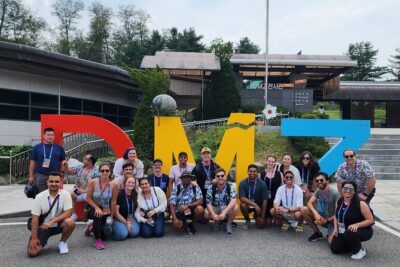
Best DMZ Tour Korea from Seoul (Red Suspension Bridge Optional)
Read the review →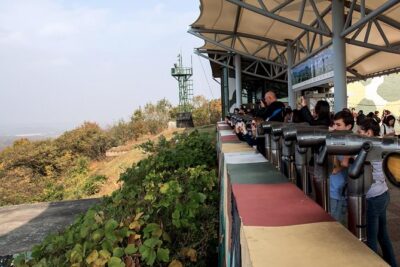
DMZ Tour: 3rd Tunnel, Option(Suspension Bridge, Boat) from Seoul
Read the review →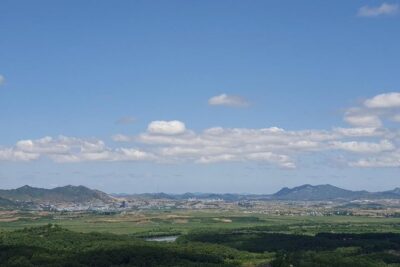
DMZ tour south Korea from Seoul (NK experience hall, defector)
Read the review →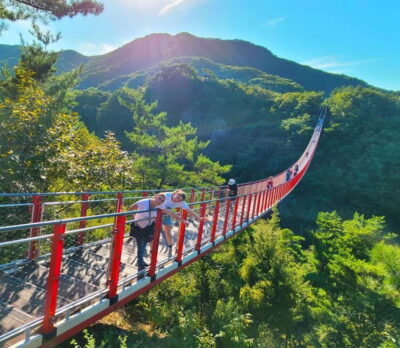
DMZ Insider Tour: 3rd Tunnel, NK Defector Meet & Red Bridge
Read the review →
DMZ The 3rd Tunnel and Suspension Bridge Tour
Read the review →
Signature DMZ Tour: Exclusive Defector Talk & Suspension Bridge
Read the review →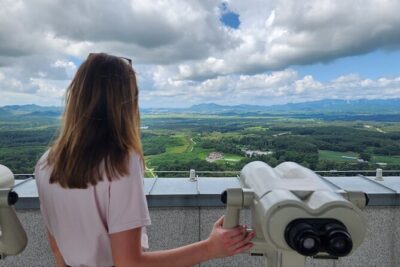
Thrilling Korean DMZ 3rd Tunnel Tour from Seoul + Red Bridge Rush
Read the review →Browse the lists this tour appears in