
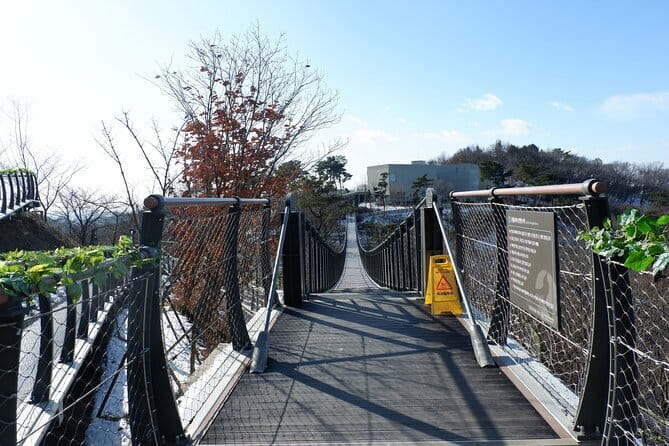
Reviewed · DMZ TOURS
Closest Observatory to DMZ & Suspension Bridge Tour from Seoul
At Jogang Observatory, you can look toward North Korea from only 1.4 kilometers away. That is the hook: this is not a distant museum display, but a border viewpoint at the mouth of the Hangang and Jogang rivers, inside the Civilian Control Zone.
I like two things here. First, the visit connects the view with the lives of Koreans separated from their hometowns after the Korean War. Second, the tour is short enough to fit into a Seoul schedule, yet includes transport, admission, and time at the unusual Starbucks at Aegibong Peace Ecopark. The main consideration is that the view depends on weather, and the tour needs at least two participants to run.
Key points before you book
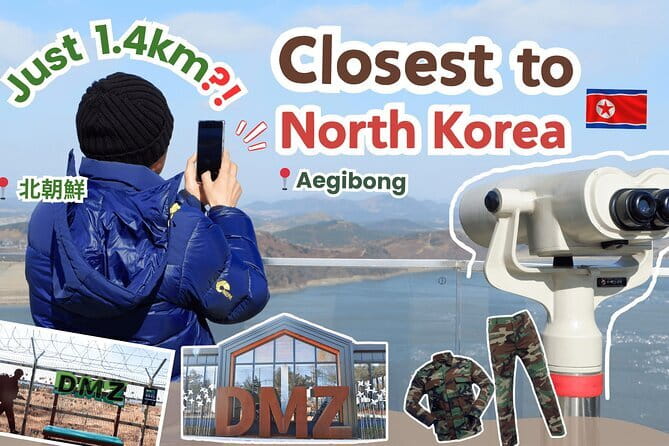
- North Korea is only 1.4 kilometers away: Jogang Observatory offers one of the closest public views of the northern side.
- Aegibong has personal meaning: Displaced Koreans once came here to look toward the homes they could no longer reach.
- The famous Christmas tree is gone: Its lights were considered too bright across the border, so the park created bridges shaped like a tree instead.
- Transport begins and ends in Myeongdong: The air-conditioned vehicle makes this easier than arranging your own route.
- Guiding is a major part of the experience: Guides such as Sunny, Thomas, and Shin have led especially well-regarded departures.
- Bring your passport: It is mandatory for this Civilian Control Zone visit.
Why this observatory matters more than a simple border photo
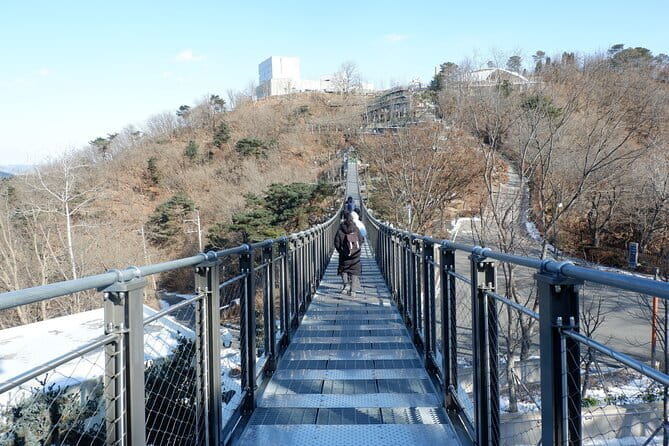
Many border excursions focus on military hardware, tunnels, or formal observation platforms. Aegibong offers something different. It puts you at a place shaped by separation, memory, and the everyday wish to see home again.
After the Korean War, displaced people came to Aegibong to look toward their former hometowns. They could not cross the river or return north, but this hill gave them a place to face that direction. That human angle gives the stop more weight than a quick photo opportunity.
The site was once known as Hill 154, a fiercely contested position during the war. The old observatory opened in 1978, but it was later removed and rebuilt as Jogang Observatory. The new setting presents the northern side from an exceptionally close distance.
You should keep expectations sensible. This is a viewing experience, not a border crossing or a full tour of the Demilitarized Zone. What you see will depend on visibility, and the supplied information does not promise a particular view on every departure. Still, the location itself makes the visit worthwhile for anyone interested in the division of Korea.
More DMZ Tours in Seoul:
- Best DMZ Tour Korea from Seoul (Red Suspension Bridge Optional)
★ 5.0 · 41,422 reviews - DMZ Tour: 3rd Tunnel, Option(Suspension Bridge, Boat) from Seoul
★ 5.0 · 21,373 reviews - DMZ tour south Korea from Seoul (NK experience hall, defector)
★ 5.0 · 20,599 reviews
The ride from Myeongdong and what the four hours mean
The tour starts in Myeongdong, one of Seoul’s easiest areas for visitors to reach, and ends at Myeongdong Station. You travel in an air-conditioned vehicle, which matters because the destination lies outside central Seoul and is not a casual walk from the city center.
The total experience lasts about four hours and 45 minutes. The scheduled stop at Aegibong Peace Ecopark takes around one hour and 30 minutes, with admission included. The remaining time covers transport and the visit’s wider schedule.
That makes this a useful half-day choice. You can spend the morning or afternoon at the border and still have time for Seoul plans afterward. It is also less demanding than a full-day excursion, especially if you want one focused look at the border rather than several separate military sites.
The group can reach as many as 120 people. That is a large possible maximum, so do not book expecting a private outing. The guide’s delivery will matter. A well-run group can make the history clear and keep the visit moving, while a crowded departure may feel less personal.
A professional guide is included if you select that option. Guides named Sunny, Thomas, and Shin have led departures praised for clear explanations, friendly help, and strong knowledge of the South-North conflict. Thomas, in particular, has been noted for explaining the division in an engaging way and for sharing personal insight as a South Korean. Those details are useful because this site raises questions that a view alone cannot answer.
Aegibong Peace Ecopark: a park built around memory
Aegibong Peace Ecopark is the main destination rather than a quick roadside stop. The park presents itself as a place of peace and harmony, but it does not hide the fact that the hill was once a battlefield.
That contrast is important. You move through a modern public park while standing in a place tied to the Korean War and the long separation that followed it. The visit gives you a chance to think about the border as a human problem, not only a political line.
The park is also known for its unusual Starbucks. Having coffee at a global chain beside one of the world’s most tense borders is an odd pairing, but that is part of the site’s current identity. The café gives you a familiar place to pause after confronting a difficult subject.
Coffee is not included in the tour price, and neither are snacks or other food and drinks. If you want something from Starbucks, plan to pay separately. Lunch is also not included, so this half-day outing should not be treated as a meal-inclusive excursion.
The Starbucks is best understood as an optional extra, not the reason to book. The observatory and the story of Aegibong carry the real value. Still, it can make the stop more approachable, especially if you like pairing a serious historical visit with a simple break.
Jogang Observatory and the view toward North Korea
The observatory is the emotional center of the tour. From here, you can look toward the northern land at a distance of about 1.4 kilometers. That close range helps you grasp the geography of the division in a way that a map cannot.
You may see the northern side only from the observatory, and the quality of the view will depend on weather. The tour requires good conditions, so a poor-weather cancellation is possible. If that happens, the operator offers another date or a full refund.
The wording about the closest observatory should not lead you to expect a dramatic city skyline or a guaranteed crystal-clear panorama. The value lies in standing at a very close public viewpoint and understanding how narrow the physical gap can be compared with the political distance.
Your guide adds the context. The best use of the stop is to listen first, then take time to look. Ask yourself what it means for two sides to be so close geographically and yet so difficult to reach. That simple pause can turn the observatory from a photo stop into a memorable part of your Seoul visit.
Passport checks are part of the practical reality here. You must bring your passport. Do not leave it at the hotel, even if you are carrying another form of identification.
More Suspension Bridge Tours in Seoul:
- Seoul: DMZ Tour with Optional Suspension Bridge
★ 4.8 · 5,277 reviews - Seoul: DMZ The 3rd Tunnel and Suspension Bridge Tour
★ 5.0 · 4,656 reviews - Signature DMZ Tour: Exclusive Defector Talk & Suspension Bridge
★ 5.0 · 4,459 reviews - Ultimate Korea DMZ Tour from Seoul (Gondola & Suspension Bridge)
★ 5.0 · 2,396 reviews
The Christmas tree story and the bridges shaped like one
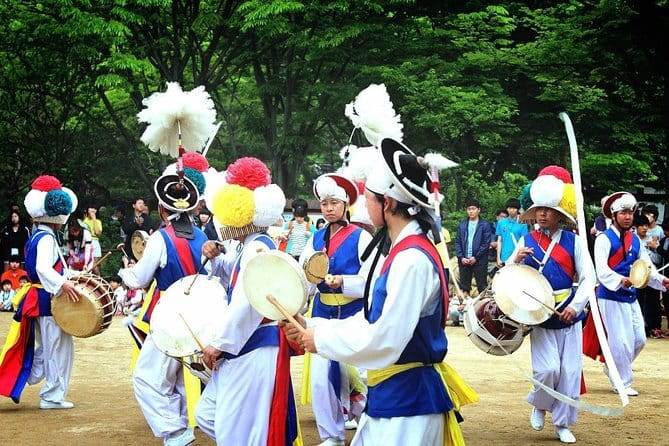
Aegibong was once famous for a huge Christmas tree. Its lights were visible across the border, but they were considered too bright for North Korea, where electricity was scarce. The lights became a source of conflict, and the tree was eventually removed.
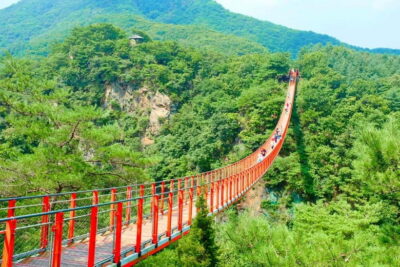
The park now has bridges shaped like the tree. This small design detail gives you a concrete way to understand the political sensitivity of the site. A festive object became a border issue because even light could carry a message across the river.
I like this story because it is easy to remember and helps explain the tension in ordinary terms. You do not need a long lecture to grasp the basic point: at a divided border, even a Christmas display can become political.
Look for these bridges as you move around the park. They are not just decoration. They connect the present park with an older chapter of Aegibong’s identity.
What the guide adds to the visit
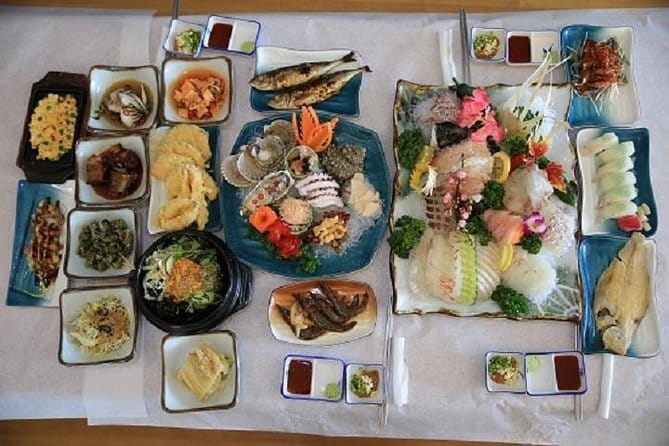
A guide is especially useful here because the physical site does not explain itself. You can look across the water, but without context, it may be difficult to understand why this particular hill matters or how the area was affected by the war.
The strongest guiding style for this tour is clear and personal rather than overly formal. Thomas has been praised for making the South-North conflict easy to follow and for adding personal perspective. Sunny has been described as caring, clear, and engaging. Shin has been singled out for making the visit highly informative.
You should still check which booking option you choose. The professional guide is included only if that option is selected. If you are comparing prices, make sure you are comparing the same version of the tour.
The guide also helps with the site’s emotional balance. A border tour can become either too technical or too sensational. Here, the better approach is to explain the war, the division, and displaced families without turning the North Korean view into a spectacle.
Is $48 a fair price?
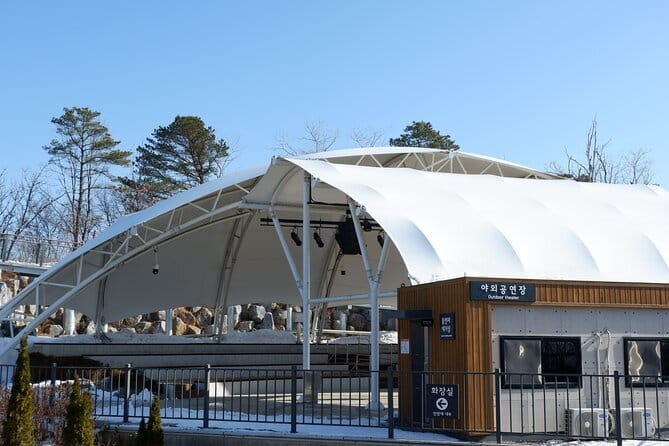
At $48 per person, this tour offers fair value if you want a guided border visit without spending a full day away from Seoul. The price includes the air-conditioned vehicle and admission to Aegibong Peace Ecopark. If you choose the guided option, professional guiding is included as well.
You are paying for convenience as much as entry. Myeongdong pickup and return simplify the trip, while the vehicle removes the need to piece together local transport to a restricted border-area destination. That matters for a first visit to Seoul.
The price is less attractive if you only want a quick view and are comfortable arranging transportation yourself. You will also need to budget separately for coffee, snacks, drinks, lunch, and travel insurance.
Group discounts may improve the value for people booking together. The tour is commonly reserved well ahead of time, with an average booking lead of about 31 days. That suggests you should not leave it until the final morning if the date matters to you.
Who will get the most from this half-day tour?

I would recommend it most strongly to you if you want to understand Korea’s division through a specific place. The story of displaced people at Aegibong gives the stop an emotional center, while the close view of North Korea gives you a clear sense of geography.
It also suits visitors who want a shorter alternative to a longer DMZ excursion. The tour lasts about four hours and 45 minutes, so it leaves room for other Seoul plans.
History-minded visitors will get the most from the guide’s explanations. The site is also a good choice if you are curious about how a modern park, a café, memorial meaning, and a sensitive border can exist together.
You may want to choose something else if your priority is a large number of military attractions, underground sites, or a full-day border program. This experience is focused on one park and one observatory. Its strength is concentration, not variety.
It is also not ideal for anyone unable to manage a moderate level of physical activity. The activity notes recommend moderate fitness, though no more specific mobility information is provided.
Practical details worth knowing before departure
Bring your passport. This is the most important requirement, and the tour cannot be treated like an ordinary city sightseeing trip.
Meet in Myeongdong, and expect the tour to return to Myeongdong Station. Hotel pickup and drop-off are not included, so allow time to reach the meeting point yourself.
The mobile ticket is convenient, and confirmation arrives when you book. Food is not included, so eat before departure or plan around the tour’s timing. Starbucks coffee costs extra.
The tour needs at least two participants to operate. If that minimum is not met, you can be offered another date or experience, or receive a full refund.
Free cancellation is available up to 24 hours before the start time. Changes or cancellations inside that window are not accepted for a refund. Poor weather can also lead to cancellation, with a different date or full refund offered.
Should you book the Aegibong tour?
Book this tour if you want a close, thoughtful look toward North Korea and prefer a compact trip from central Seoul. The 1.4-kilometer distance, the history of displaced Koreans, and the guide’s explanation give the visit more substance than a simple border photo.
I would choose the guided option, especially if this is your first time studying the Korean division. Sunny, Thomas, and Shin have all been associated with strong departures, and the right guide can make the site much easier to understand.
Skip it if you want a broad military tour or dislike weather-dependent plans. For everyone else, Aegibong offers a practical half-day outing with an unusual mix of history, memory, geography, and one very unexpected Starbucks.
FAQ
How close is Jogang Observatory to North Korea?
Jogang Observatory is about 1.4 kilometers from North Korea. The northern land can be viewed from the observatory.
Where does the tour start and finish?
The tour starts in Myeongdong in Seoul and ends at Myeongdong Station. Hotel pickup and drop-off are not included.
Is a passport required?
Yes. Passports are mandatory for this experience.
Is transportation included?
Yes. An air-conditioned vehicle is included. Professional guiding is included if you select the guided option.
Is Starbucks coffee included?
No. Coffee, tea, snacks, other drinks, and lunch are not included in the price.
How long does the tour last?
The experience lasts approximately four hours and 45 minutes. The Aegibong Peace Ecopark visit itself takes about one hour and 30 minutes.
What happens if the weather is poor or the tour does not meet its minimum?
The experience requires good weather and at least two participants. If it is canceled for either reason, you can be offered another date or experience, or receive a full refund.
More day trips out of Seoul
- Thrilling Korean DMZ 3rd Tunnel Tour from Seoul + Red Bridge Rush
★ 5.0 · 3,097 reviews - DMZ Past and Present: Korean Demilitarized Zone Tour from Seoul
★ 5.0 · 2,481 reviews - DMZ Tour from Seoul – Optional Suspension Bridge Experience
★ 5.0 · 1,918 reviews - Half-Day DMZ Tour Led by a Retired Military Officer from Seoul
★ 5.0 · 1,774 reviews
Recently added around Seoul
- Gyeongbokgung Palace Photo Session with your own phone★ 5.0 · 4 reviews
- Private Tour around Suwon UNESCO Fortress and Korea Folks Village★ 4.5 · 4 reviews
- Nami & Maple Road & Theatre des Lumieres Day Tour from Seoul★ 4.8 · 4 reviews
- N Seoul Tower + Namsan Cable Car Ticket (Collect in Myeongdong)★ 3.5 · 4 reviews
- Jisan Forest Resort: Ski Full-Day Tour or Shuttle from Seoul★ 5.0 · 4 reviews
- Seoul: Deoksugung Palace Night Tour★ 4.5 · 4 reviews
- Private Jeonju Hanok Village – Culinary tour★ 5.0 · 4 reviews
- Seoul Private Walking Tour with a Local★ 5.0 · 4 reviews
DMZ Tours, compared.
Best DMZ Tour Korea from Seoul (Red Suspension Bridge Optional)
Read the review →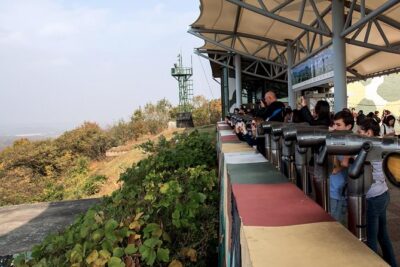
DMZ Tour: 3rd Tunnel, Option(Suspension Bridge, Boat) from Seoul
Read the review →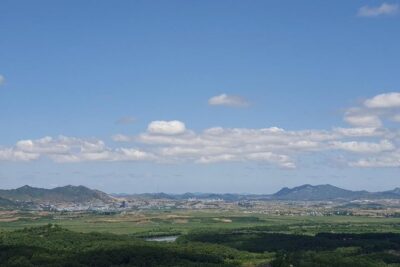
DMZ tour south Korea from Seoul (NK experience hall, defector)
Read the review →
DMZ Insider Tour: 3rd Tunnel, NK Defector Meet & Red Bridge
Read the review →
DMZ The 3rd Tunnel and Suspension Bridge Tour
Read the review →
Signature DMZ Tour: Exclusive Defector Talk & Suspension Bridge
Read the review →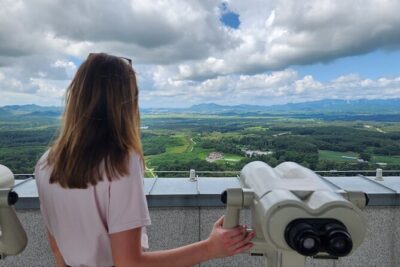
Thrilling Korean DMZ 3rd Tunnel Tour from Seoul + Red Bridge Rush
Read the review →Browse the lists this tour appears in