
Reviewed · BUSAN TOURS
Busan Tailored Korean cooking class (Vegan OK)with market tour
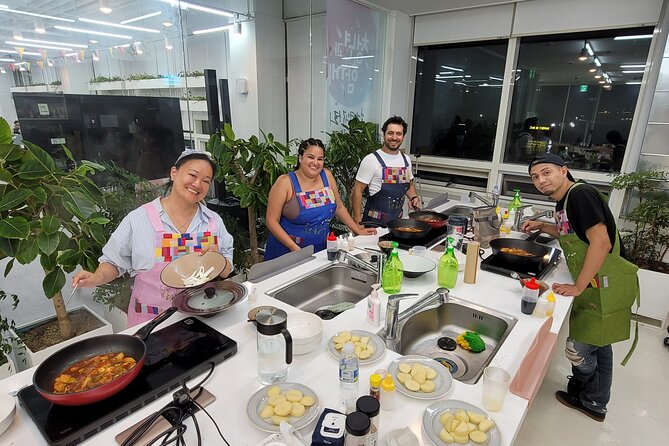
Busan’s best food lesson may begin before you reach the kitchen. You’ll walk through Bujeon Market with local host Suyang Chang, choose fresh ingredients, then turn them into a Korean meal you actually eat. This is not a quick pancake demonstration. You work through several dishes from start to finish.
I like the market-to-table format, which gives the meal a clear sense of place. I also like the flexible menu, especially for vegan diners and anyone who wants to move beyond the usual bibimbap and barbecue. The main consideration is that menu choices can be affected if several groups join, and the five-hour class is a serious time commitment.
Key points at a glance
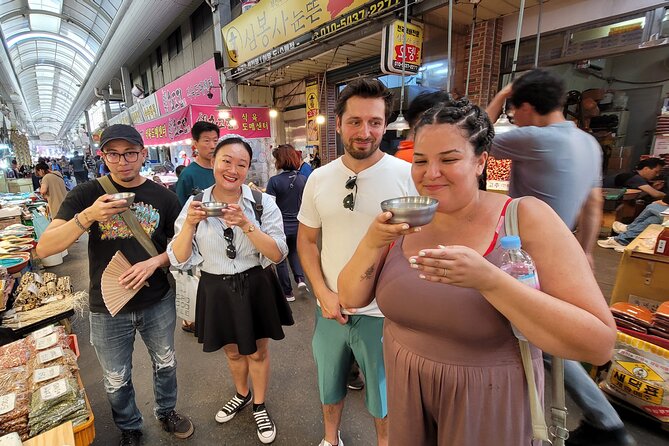
- Bujeon Market comes first: Shop for ingredients with Suyang and learn about unfamiliar Korean vegetables, seafood, sauces, and pantry staples.
- Choose three dishes: Pick two banchan, or side dishes, plus one stew or soup from a broad menu.
- Vegan cooking is available: Vegetarian menus can be arranged, and one class even used gluten-free soybean paste by request.
- You cook from scratch: The class focuses on real preparation, not simply assembling food that someone else has made.
- Lunch is included: You eat the food you prepare, with bottled water and barley tea, corn tea, or instant coffee.
- Allow five hours: The experience is near public transportation, begins at a Seomyeon meeting point, and returns there.
Why this Busan cooking class feels different
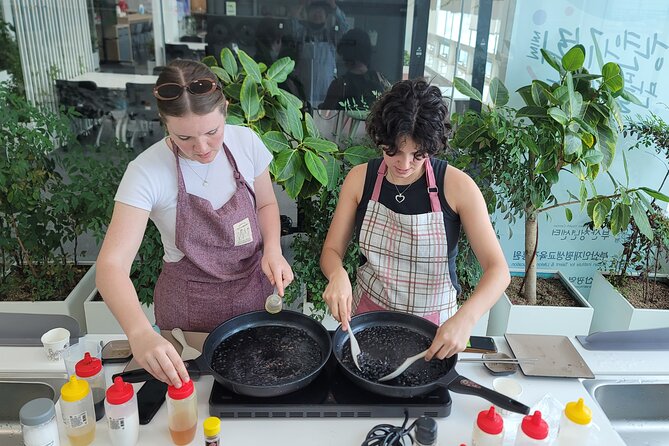
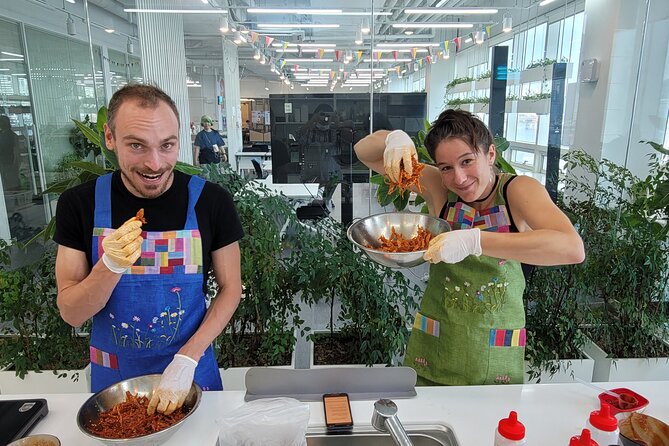
A lot of Korean food classes center on one famous dish. This one takes a wider view. You might prepare seasoned dried pollack, braised black beans, cucumber kimchi, japchae, braised tofu, seafood pancake, or a soup made with clams or dried pollack.
That broader menu matters because Korean home cooking is not just one sizzling main course. A meal often includes several small dishes, a soup or stew, rice, and contrasting flavors on the same table. By making two banchan and one larger dish, you get a practical introduction to how that balance works.
I especially like that the food list includes less familiar choices. Stir-fried anchovies, seasoned spinach, bracken namul, pickled radish, pan-fried shrimp and seaweed, and braised flat fish may not be the first foods you search for in Busan. They are useful choices if you want to learn something you cannot easily copy from a tourist menu.
The class is led by Suyang Chang, also known by the nickname Busan oppa. The experience is built around personal attention, conversation, and cultural explanation. Past participants also received restaurant suggestions and ideas for other things to do in Busan, which can be handy early in your stay.
More Market Tours in Busan
- Busan Seafood Tour : Jagalchi market Seafood Tour & Dinner
★ 5.0 · 74 reviews - Gamcheon Culture Village, Jagalchi fish market story telling Tour
★ 4.5 · 63 reviews - Busan history and market food tour with local chef
★ 5.0 · 58 reviews
Starting at Seomyeon and heading into Bujeon Market
The meeting point is outside KB Kookmin Bank on Seomyeon Joongang 2 Saessak-ro in Busanjin District. The area is near public transportation, so it is a practical starting place if you are staying around Seomyeon.
From there, you visit Bujeon Market with your host. This is where the experience earns much of its value. You are not simply shown a row of stalls and sent on your way. You shop for the ingredients needed for your selected dishes while Suyang explains what you are seeing.
A market visit with a cook changes how you look at the food. Instead of passing unfamiliar greens, dried fish, shellfish, and fermented ingredients, you can ask how they are used and why they belong in a particular dish. Suyang’s explanations also cover Korean food and culture, with some language instruction included.
The market is busy and very local in feel. That is part of the appeal, but it also means you should expect movement, noise, and a practical shopping pace rather than a polished sightseeing walk. If you prefer a quiet guided tour with lots of sitting, this is not that sort of outing.
One particularly useful feature is the chance to see ingredients in their everyday setting. Korean cooking often depends on ingredients that are sold dried, salted, pickled, fermented, or prepared in ways you may not recognize. Seeing them in the market gives the later kitchen work more meaning.
Choosing two banchan and one main pot
You choose three menus: two banchan and one stew or soup. The exact list is longer than the most familiar Korean restaurant staples, and more menu choices are provided after booking.
Banchan options include:
- Stir-fried anchovies
- Seasoned dried pollack with spicy sauce
- Black beans seasoned with soy sauce
- Egg seasoned with soy sauce
- Kimchi pancake or seafood pancake
- Beef pancake
- Bracken or bean sprout namul
- Braised radish
- Braised tofu with spicy sauce
- Steamed tofu and egg
- Pickled radish and perilla leaves
- Cucumber kimchi
- Seasoned eggplant
- Pan-fried shrimp and seaweed
For the stew or soup, choices include kimchi stew with pork, soybean paste stew, seaweed soup with clam or dried pollack, Alaska pollack soup, spicy or soy-sauce chicken, braised pollack, and braised flat fish.
This structure gives you a good mix of texture and technique. You might pair a soft braised tofu dish with a crisp pancake, then learn a soup that shows how Korean cooks build flavor with soybean paste, dried seafood, or seaweed.
You should choose according to what you want to learn, not just what sounds familiar. If you already know kimchi stew, ask about dried pollack, seaweed soup, braised fish, or one of the vegetable dishes. The more unusual options are likely to give you the most useful cooking memories.
There is one scheduling detail to watch. If multiple groups participate, the first group to reserve gets the right to choose the menu. That means you may not receive every first choice if another group has selected dishes before you. If a particular menu matters to you, raise it when confirming your reservation.
The hands-on kitchen lesson
After the market, you move to the kitchen and begin cooking. The class is designed around doing the work yourself, with Suyang guiding the preparation and explaining the steps.
That distinction is important. One participant specifically valued being taught the dishes from scratch rather than receiving pre-prepared food to assemble. You can expect to chop, season, mix, pan-fry, simmer, and monitor the food with help when needed.
The menu also lets you compare techniques. A pancake teaches you about batter and pan heat. Braised tofu or black beans shows how a sauce reduces and clings to the food. A soup introduces a different approach to seasoning and stock. The lesson is more useful when you pay attention to the reasons behind each step, not just the ingredient list.
Portions have also been generous in past classes. You may find that the finished food is enough to feel like a full meal, rather than a few tasting bites. That works well because lunch is made by you and included in the price.
The pace should feel relaxed, but five hours is still a long class. The market, shopping, preparation, cooking, eating, and conversation all take time. You will get more from it if you arrive ready to participate rather than treating it as a quick activity between major sightseeing stops.
More Cooking Classes in Busan:
- Korean cooking class in Haeundae, Busan
★ 5.0 · 92 reviews - Busan: Small-Group Traditional Korean Food Cooking Class
★ 4.9 · 58 reviews - Busan Local Food Cooking Class with Market Tour
★ 5.0 · 53 reviews - Local Home Korean Cooking Class & Market Adventure in Seoul
★ 5.0 · 1,024 reviews
Vegan and special-diet planning
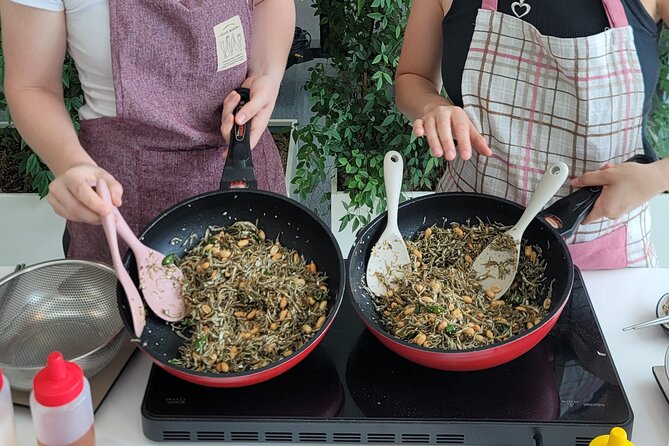
The title clearly allows vegan participation, and vegetarian menus are provided. This is a real strength in Korea, where seafood, fish sauce, meat stock, eggs, and fermented seafood can appear in dishes that look vegetable-based.
You should explain your diet when booking and confirm it again before the class. The menu needs to be selected around your restrictions, not adapted at the last second. A past vegan class included braised black beans, spicy braised tofu, and spinach soybean paste soup. On another occasion, gluten-free soybean paste was supplied at the participant’s request.
That example shows useful flexibility, but it does not mean every ingredient or menu is automatically vegan or gluten-free. Some listed dishes contain pork, beef, chicken, fish, shellfish, or egg. Ask specifically about sauces, broths, and condiments if you have a strict allergy or medical restriction.
For vegetarian diners, the class may offer a better introduction to Korean food than simply ordering vegetable bibimbap. You can learn how tofu, beans, greens, mushrooms, pickles, and soybean paste work together in Korean meals.
Eating what you have made
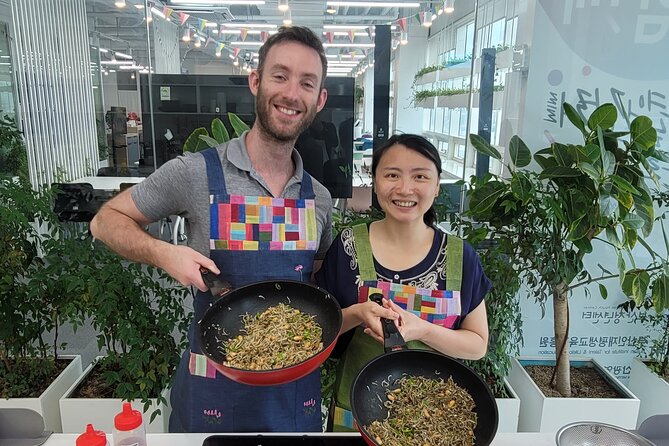
The meal is the natural reward at the end of the lesson. You sit down with the dishes you prepared, rather than watching a chef serve something unrelated to the class.
Included drinks are bottled water, barley tea, corn tea, and instant coffee. Alcohol is not included, so plan on a nonalcoholic meal unless you make separate arrangements at your own expense.
The food can also be a social part of the class. The host has used the meal to talk about Korean habits, ingredients, culture, and language. This informal conversation is one reason the experience can feel more personal than a standard cooking demonstration.
Recipes are another practical benefit reported from the experience. Suyang has sent recipes afterward so participants could remake the dishes at home. That makes the class more than a pleasant meal in Busan. You leave with a chance of repeating the food in your own kitchen, provided you can find similar ingredients.
What the $95 price buys you
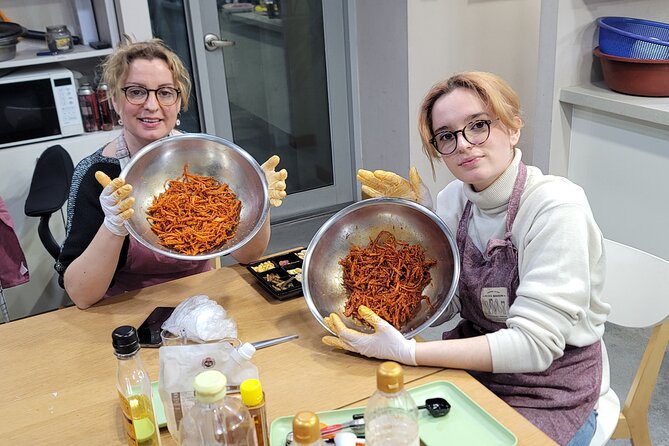
At $95 per person, this is not a budget meal. You are paying for about five hours, a guided market visit, ingredients, instruction, and the lunch you prepare. You also get a flexible menu and the attention of a local host who can explain food beyond the standard tourist vocabulary.
I consider the price reasonable if you treat it as both a meal and a private-style lesson. A short market tour followed by one recipe would offer less value. Here, you may prepare three dishes and spend a substantial part of the day learning how they fit into Korean home cooking.
The value is weaker if you only want to eat Korean food. Busan has plenty of cheaper meals, and this class requires active participation. It is also not the right pick if your schedule is packed with sightseeing and you cannot spare half a day.
Group discounts are available, and the maximum is 15 participants. The experience may feel intimate when only one or two groups attend, but a larger session could mean less individual attention and less control over the menu. The advertised format is tailored, yet the group arrangement can affect how personalized it feels.
Who should book this experience
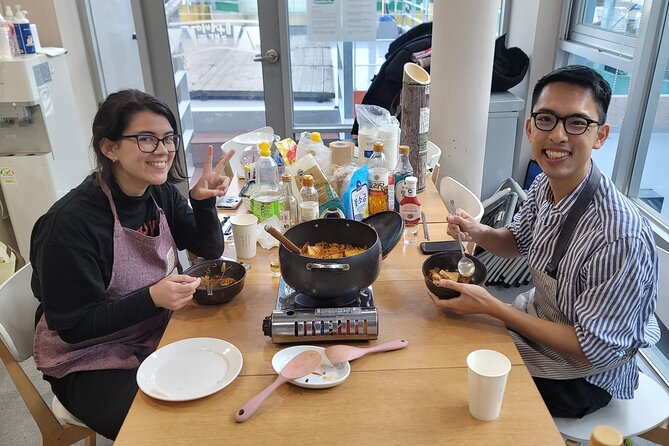
I would recommend this class to you if you enjoy food enough to ask how it is made. It suits couples, families, small groups, solo visitors who like meeting people, and cruise passengers with enough time in Busan.
Families can benefit because the meal gives everyone a shared task. An eight-person family used the class as a group activity, and the host worked to make it suitable for different ages. The class also works for friends who want something more active than another restaurant dinner.
It is a particularly good choice if you have already tried Korean barbecue, fried chicken, bibimbap, or kimchi stew and want a wider view of the cuisine. The recipes reach into the everyday side-dish tradition that can be harder to notice when eating out.
You should think twice if you dislike markets, have difficulty standing or moving through crowded food areas, or want a highly formal culinary school. The schedule is long, the market is active, and the experience depends on conversation and hands-on work.
Practical details before you reserve
The tour starts and ends at the stated KB Kookmin Bank meeting point near Seomyeon. The activity is close to public transportation, but you should allow time to find the exact bank and arrive promptly.
Confirmation is sent within 48 hours, subject to availability. The experience is often booked about 45 days ahead, so reserve early if you need a certain date, particularly during a short Busan stay or around a cruise schedule.
The activity is non-refundable and cannot be changed after booking for any reason. Check your date, meeting point, party size, dietary needs, and preferred dishes before paying.
You should wear comfortable clothes suitable for cooking and plan for a full five-hour block. Bottled water and tea are included, but alcohol and personal expenses are not.
My call: book it if food is part of your travel plan
I would book this Busan cooking class if you want to understand Korean food through ingredients, preparation, and conversation. The strongest parts are the Bujeon Market visit, the chance to select less familiar dishes, the from-scratch cooking, and Suyang’s personal guidance.
The choice is less clear if you only want a quick activity or a guaranteed private menu. Multiple groups may participate, and the first reservation can control menu selection. Still, for an active food experience with vegan options, useful recipes, and a proper meal at the end, the $95 price can make good sense.
FAQ
Where does the Busan cooking class meet?
The meeting point is KB Kookmin Bank Seomyeon Joongang 2 Saessak-ro in Busanjin District, Busan. The activity ends back at the meeting point.
How long does the experience last?
The cooking class and market visit take approximately five hours.
Which market do you visit?
You visit Bujeon Market with the local host before buying ingredients and moving to the kitchen.
How many dishes can I choose?
You can choose three menus: two banchan, or side dishes, and one stew or soup.
Is the class suitable for vegans?
Yes. Vegetarian menus are available, and the cooking class can be tailored for vegan diners. You should state your dietary needs when booking.
Are food and drinks included?
Lunch made during the class, bottled water, and barley tea, corn tea, or instant coffee are included. Alcoholic drinks are not included.
How many people can join the activity?
The maximum group size is 15 travelers. If several groups participate, the first group to reserve has the right to choose the menu.
More Food in Busan
- Busan Private Night Tour – City Lights & Food
★ 5.0 · 22 reviews - Busan Night Food Market with Night View points
★ 5.0 · 12 reviews - Busan: Food Crawl with Fish Market, Soju Tents & Local Snacks
★ 5.0 · 8 reviews - Busan Food Market Tour Seafoods and Street Foods
★ 5.0 · 8 reviews
More Vegan & Vegetarian in Busan
- Vegan & Vegetarian Korean Market Adventure Gwangjang Market
★ 5.0 · 34 reviews - Vegan Korean Food Cooking Class: Gimbap, Sundubu Jjigae, and more
★ 5.0 · 32 reviews - Seoul Vegan & Vegetarian Gwangjang Market Food Tour (11 Tastings)
★ 5.0 · 24 reviews - Seoul: Gwangjang Market Vegan & Vegetarian Food Tour
★ 5.0 · 16 reviews
Recently added around Busan
- Full Day Busan and Gyeongju Guided Tour★ 5.0 · 4 reviews
- Andong Hahoe Folk Village Day Tour From Busan★ 5.0 · 4 reviews
- Make your own Makgeolli (Rice Wine) in Busan★ 5.0 · 4 reviews
- Best Busan night views : Mountain observatory streets★ 5.0 · 4 reviews
- Busan: Naejangsan National Park Autumn Foliage One Day Tour★ 4.8 · 4 reviews
- Gyeongju private tour with an official tour guide (Unesco)★ 4.5 · 4 reviews
- 5 Highlights Pohang Tour from Busan (Group Tour)★ 5.0 · 5 reviews
- Busan: Winter Healing Park and (Gyeongju/Daegu) One Day Tour★ 5.0 · 5 reviews
Busan Tours, compared.

Gyeongju Guided Day Trip to Three Kingdoms Capital
Read the review →

Gyeongju UNESCO World Heritage Guided Day Tour
Read the review →
Busan Private Tour with licensed tour guide + private vehicle
Read the review →
Coastal Treasures Beach Train, Culture Village & More
Read the review →
Busan’s Cultural Wonders with Beach Train & Gamcheon Village etc
Read the review →
Gyeongju UNESCO World Heritage Guided Day Tour from Busan
Read the review →
Private Busan Tour -Explore Cultural Landmarks with a Local Guide
Read the review →Browse the lists this tour appears in