
Reviewed · BUSAN TOURS
Korean cooking class in Haeundae, Busan
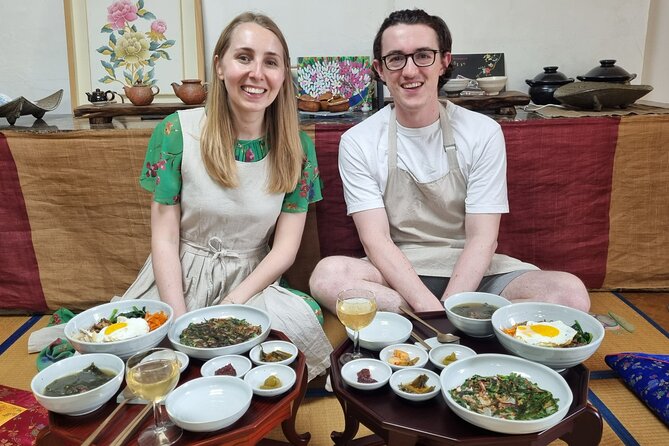
Korean cooking becomes much easier to understand when you make it yourself. At Bapsang in Haeundae, you wear a palace-style Korean apron, taste the country’s main sauces, then prepare dishes such as bibimbap, seaweed soup, and Korean pancakes at your own station.
I like the small class size, which gives Min room to help beginners one on one. I also like the way the food connects to culture, from Joseon-era cooking traditions to the Korean dining table used for your meal. The main consideration is the price: at $100 per person, this is not a budget lunch, though it includes instruction, food, dessert, tea, and a certificate.
What makes this Busan cooking class special

- You cook at a personal station, rather than simply watching a demonstration.
- Min teaches food and culture together, including Korean sauces, language, dining customs, and Joseon-era traditions.
- The meal is served on a bapsang, a traditional Korean dining table, with a chair available if floor seating is difficult.
- The class is small, with the details listing a maximum of seven people in one place and eight travelers in another, so confirm the final group size when booking.
- You receive a certificate and a small parting surprise, making this more memorable than an ordinary meal.
- Dietary needs can be handled, with past classes providing gluten-free and vegetarian options when arranged.
Cooking Korean food with Min in Haeundae
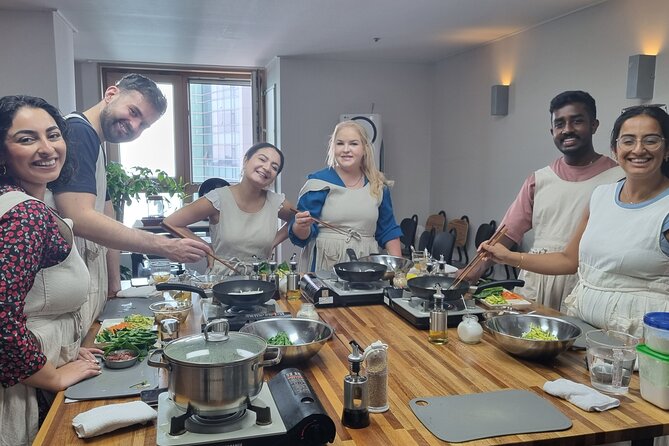
The class begins at 10 a.m. at 37 Marine City 3-ro in Haeundae. You receive a mobile ticket and booking confirmation, and the activity returns to the same meeting point after the roughly three-hour session.
The setting in Marine City makes this easy to pair with a morning or afternoon around Haeundae. It is near public transportation, but you should allow time to find the exact building and arrive ready to start. A cooking class is not the place to cut things close, especially when the first part includes changing into the traditional apron and settling in with a welcome drink.
Min is the instructor and host. Her teaching style is a major part of the appeal. She explains what you are doing, but also why the food is prepared that way. She has helped participants read Korean menus, understand food-related language, and connect cooking methods with Korean customs.
You do not need previous cooking experience. The class is built for beginners, and the instruction is hands-on. That said, a little kitchen confidence helps you work at a comfortable pace. If you rarely cook, you can still take part, since Min gives close guidance and adjusts her help to the group.
More Cooking Classes in Busan:
- Busan Tailored Korean cooking class (Vegan OK)with market tour
★ 5.0 · 66 reviews - Busan: Small-Group Traditional Korean Food Cooking Class
★ 4.9 · 58 reviews - Busan Local Food Cooking Class with Market Tour
★ 5.0 · 53 reviews
The palace apron, welcome drink, and sauce tasting
One of the class’s nicest touches comes before the cooking begins. You put on a Korean traditional apron modeled on the type worn by palace cooks in the past. It is a simple detail, but it gives the lesson a sense of place and helps explain that Korean food has long included careful preparation and presentation.
You are also served a welcome drink. Then comes a tasting of the main Korean sauces. This is useful for visitors who know Korean food mainly by sight but are less familiar with the flavors behind it. Learning how sauces affect a dish helps you understand why two meals made from similar ingredients can taste so different.
The sauce tasting also gives Min a natural way to discuss Korean food culture and language. Several participants have found this part helpful for understanding menus later in their trip. If you plan to eat in local restaurants, pay attention here. The lesson may make unfamiliar Korean dish names and flavor descriptions less intimidating.
Bibimbap, seaweed soup, and Korean pancake
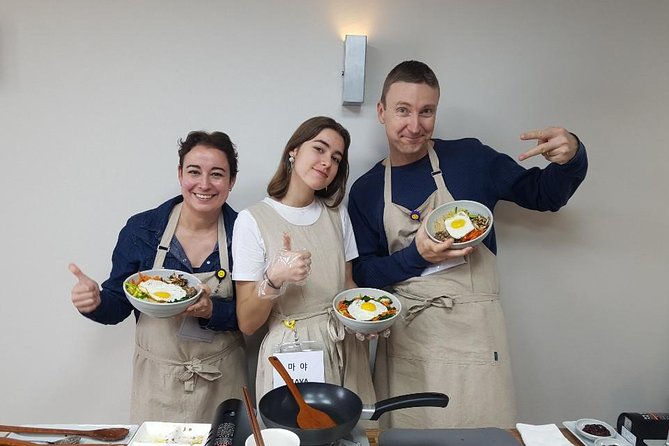
The menu commonly includes a bibimbap set, seaweed soup, and a Korean pancake such as chive pancake, though the dishes can change by date. You should check the menu when booking if one particular dish matters to you.
Bibimbap is a good teaching dish because it brings together several parts of Korean cooking in one bowl. You learn how the ingredients are prepared, how the sauce is used, and how the finished dish is arranged. The class makes the process practical rather than treating bibimbap as something mysterious that only a restaurant cook can manage.
Seaweed soup gives you a different lesson in texture and seasoning. It is also a dish with a familiar place in Korean home cooking. The Korean pancake adds a hands-on element that many people find especially satisfying. It is simple enough for a beginner but still rewards attention to heat, batter, and timing.
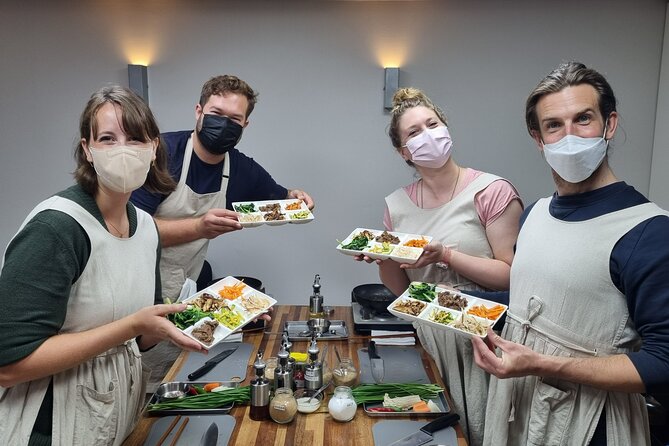
The food is prepared at your own cooking station. That matters. You are not standing at the back of a room trying to see a chef’s hands. You take part in the chopping, mixing, seasoning, and cooking, with Min available to correct small mistakes before they become larger ones.
Families can work well here. A class with children aged 12 and 16 was especially successful because Min included them rather than treating them as spectators. Adults who are not confident cooks can also manage the dishes, as long as they follow the instructions and ask for help when needed.
Eating at a traditional Korean bapsang
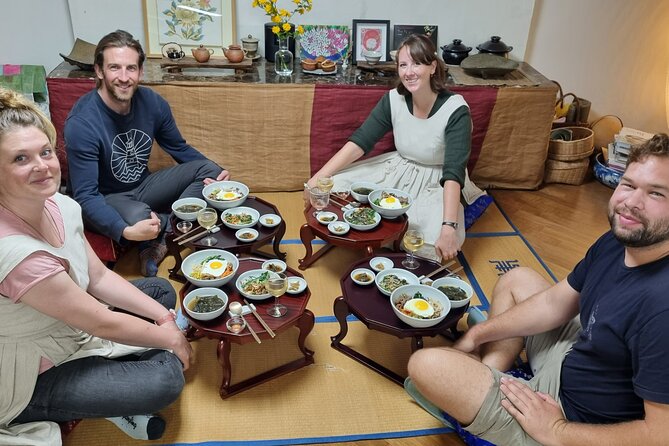
Once the dishes are ready, you sit down to eat what you made. The meal is served on a bapsang, a traditional Korean dining table placed on the floor. This changes the meal from a quick bite after class into a cultural experience with its own dining style.
Floor seating may not suit everyone. If sitting on the floor is hard for you, the class provides a table and chair instead. It is worth mentioning this need in advance so the arrangement is clear.
The best part of eating your own food is that you can connect each flavor to a step you performed. You know which sauce went into the bibimbap and how the pancake came together. That makes the meal more useful than a standard restaurant visit because you leave with techniques you can try at home.
After lunch, you have tea and a simple Korean dessert. The dessert is not presented as a major separate tasting, but it gives the class a pleasant finish and introduces another small part of Korean food culture.
More hands-on workshops in Busan:
- [BUSAN,GamcheonVillage] Private Korean Art Painting Class
★ 5.0 · 20 reviews - Korean Pottery Town Tour with the pottery class from Busan
★ 5.0 · 7 reviews - Busan private tour : K-pop dance class + tour
★ 5.0 · 6 reviews - Busan Kkakdugi(Korean radish Kimchi) class with various options
★ 5.0 · 6 reviews
Joseon traditions without a dry history lecture
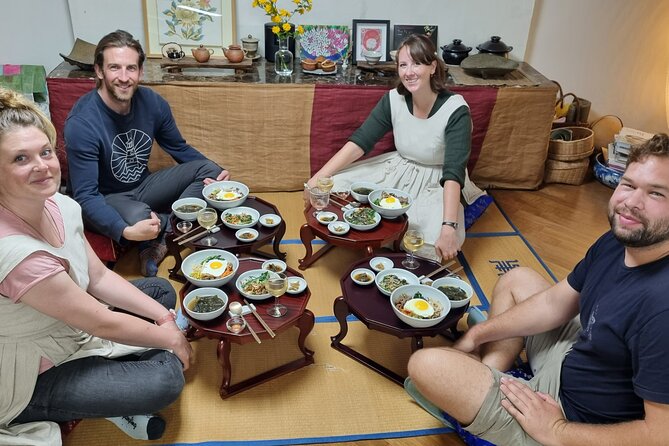
The class includes cooking traditions from the Joseon dynasty. The value here is not memorizing dates or royal names. It is seeing how food, presentation, ingredients, and hospitality fit together.
Min explains the meaning behind the dishes and the apron, while also discussing Korean culture and language. Her approach gives you context without turning the class into a formal lecture. The instruction remains practical, so you can keep cooking while learning.
This cultural layer is especially useful if you are already planning to eat your way around Busan. A dish on a restaurant table can seem straightforward until you know how it was assembled, what its sauce does, or why it is served in a certain setting. The class gives you that background in a friendly, manageable way.
The atmosphere is social, too. The group can include people from different countries, and the small size makes conversation easy. If you are traveling alone, this is a comfortable way to meet people without committing to a full-day group tour.
The Marine City location and nearby sights
The activity is based in Haeundae’s Marine City area. The listed route includes Dongbaekseom, Haeundae Beach, The Bay 101 Yacht Club, and Nurimaru APAC House. These places are associated with the nearby Haeundae waterfront, and the area offers plenty to do before or after the class.
Haeundae Beach is the most familiar stop. It gives you a broad seaside setting and an easy way to add a walk before or after cooking. If you have not spent much time in Haeundae, this is a useful pairing: food in the morning, then the beach and waterfront afterward.
Dongbaekseom offers a change from the beach’s open sand. The island area is tied to Haeundae’s coastal walking routes and provides a quieter setting for a stroll. The Bay 101 Yacht Club is another nearby point of interest, especially if you want harbor views and modern Marine City scenery.
Nurimaru APAC House adds a political and architectural note to the area. The name refers to the venue used for the 2005 APEC meeting, and it sits near the waterfront on Dongbaekseom. The cooking class does not promise a guided sightseeing tour of these sites, so treat them as nearby places for your own plans rather than assuming a full sightseeing program is included.
The wording of the schedule lists these four stops, while the core description focuses on the cooking class, dining, tea, and local counseling. If seeing every listed place is important to you, ask the provider exactly how the route works on your date.
Is $100 a fair price?
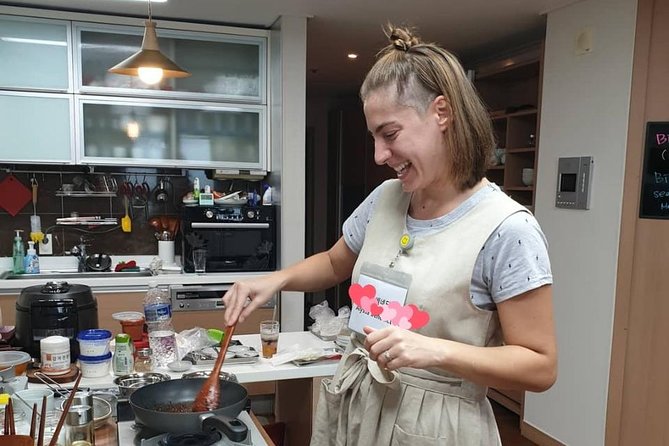
At $100 per person, this class costs more than simply ordering bibimbap at a Haeundae restaurant. But a restaurant meal gives you food for one sitting. This experience gives you a three-hour lesson, ingredients, a personal work station, cultural explanation, a prepared meal, dessert, tea, and a certificate.
The small group helps justify the cost. A maximum of seven people is stated in the main description, while the additional information allows up to eight travelers. Either way, this is much more intimate than a large demonstration class. You have a better chance to receive individual help, especially with seasoning and cooking technique.
The value is strongest for people who want to recreate Korean food at home. Several dishes are approachable, and the class sends you away with practical skills rather than just photos. It is also a good choice if you want an activity that combines food with a personal introduction to Korean culture.
The value is weaker if you only want a cheap meal or if your schedule is packed with sightseeing. You will spend a full morning at the class, and the listed meeting point is in Marine City rather than directly on the beach. For a food-focused visit to Busan, though, the price is reasonable for the amount of instruction and attention included.
Dietary needs, timing, and booking details
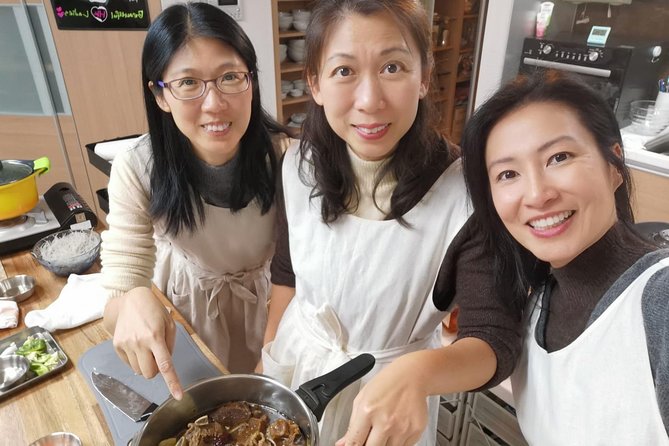
Dietary requests should be raised before the class. Gluten-free and vegetarian meals have been provided, but the available details do not promise every dietary option on every date. Do not wait until the cooking begins.
The class starts at 10 a.m. and lasts about three hours. It ends back at the meeting point, making it easy to plan lunch elsewhere afterward or continue around Haeundae. The activity is near public transportation, and service animals are allowed.
The class requires good weather. If poor weather causes cancellation, you are offered another date or a full refund. You can cancel for a full refund up to 24 hours before the local start time. Changes or cancellations made less than 24 hours before the start are not accepted, so check your Busan plans carefully.
Special cooking dates for 2025 are listed as not scheduled. That includes both special Korean dishes and Korean temple food dates. If you want a vegan temple-food lesson or a particular seasonal menu, confirm availability before paying.
Who should book this class?
I would choose this for first-time visitors who want more than sightseeing, home cooks who want useful Korean recipes, and families with older children or teenagers. It also suits solo visitors because the small class creates an easy setting for conversation.
The class is less suitable if you need a strictly fixed menu, dislike hands-on activities, or cannot spare three hours. It is also not the best pick if your only goal is to sample as many restaurant dishes as possible.
Min’s strengths are warmth, patience, and clear instruction. She has also provided recommendations for places to visit around Busan, which adds value if you are still shaping your itinerary. The certificate and small end-of-class surprise are modest touches, but they make the morning feel complete.
Should you book Bapsang in Haeundae?
Book it if you want to understand Korean food by preparing it yourself. The personal station, small group, cultural background, and traditional bapsang meal offer more substance than a simple cooking demonstration.
I would be comfortable recommending it at $100 if you care about learning, not just eating. Confirm the menu, group-size limit, and any dietary requests in advance. If you want a relaxed, personal introduction to Korean home-style cooking with Min, this is one of the better food activities to add to a Busan stay.
FAQ
Where does the Korean cooking class take place?
The class starts at 37 Marine City 3-ro in Haeundae, Busan, South Korea.
What time does the class begin?
The scheduled start time is 10 a.m.
How long does the experience last?
The cooking class lasts approximately three hours.
How much does the class cost?
The listed price is $100 per person.
How many people can join the class?
The main details state a maximum of seven people, while the additional information states a maximum of eight travelers. Confirm the final group size when booking.
Do I need previous cooking experience?
No. Previous culinary experience is not necessary, and the instructor provides hands-on guidance.
What dishes will I cook?
The class may include bibimbap, seaweed soup, and Korean pancake. The menu may vary by date.
Will I eat the food I prepare?
Yes. After cooking, you eat your dishes at a traditional Korean bapsang table. A table and chair are available if floor seating is difficult.
Are vegetarian or gluten-free options available?
Vegetarian and gluten-free options have been provided, but you should request them in advance because the available information does not guarantee them on every date.
What happens if the weather is poor?
The experience requires good weather. If it is canceled because of poor weather, you can choose another date or receive a full refund.
Recently added around Busan
- Full Day Busan and Gyeongju Guided Tour★ 5.0 · 4 reviews
- Andong Hahoe Folk Village Day Tour From Busan★ 5.0 · 4 reviews
- Make your own Makgeolli (Rice Wine) in Busan★ 5.0 · 4 reviews
- Best Busan night views : Mountain observatory streets★ 5.0 · 4 reviews
- Busan: Naejangsan National Park Autumn Foliage One Day Tour★ 4.8 · 4 reviews
- Gyeongju private tour with an official tour guide (Unesco)★ 4.5 · 4 reviews
- 5 Highlights Pohang Tour from Busan (Group Tour)★ 5.0 · 5 reviews
- Busan: Winter Healing Park and (Gyeongju/Daegu) One Day Tour★ 5.0 · 5 reviews
Busan Tours, compared.

Gyeongju Guided Day Trip to Three Kingdoms Capital
Read the review →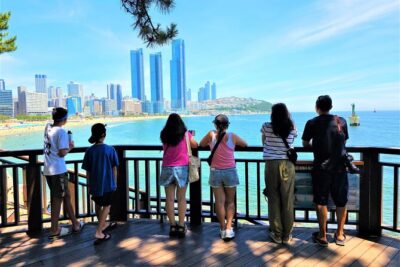
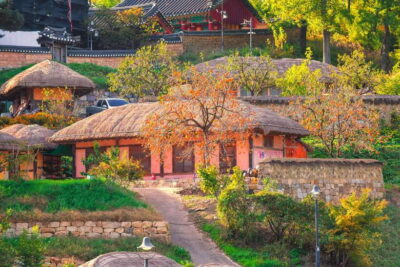
Gyeongju UNESCO World Heritage Guided Day Tour
Read the review →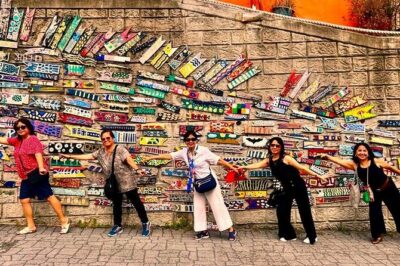
Busan Private Tour with licensed tour guide + private vehicle
Read the review →
Coastal Treasures Beach Train, Culture Village & More
Read the review →
Busan’s Cultural Wonders with Beach Train & Gamcheon Village etc
Read the review →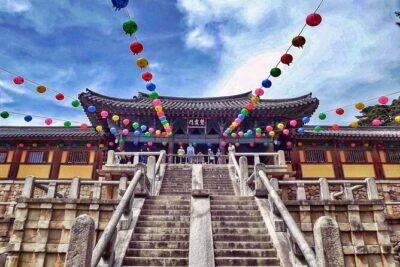
Gyeongju UNESCO World Heritage Guided Day Tour from Busan
Read the review →
Private Busan Tour -Explore Cultural Landmarks with a Local Guide
Read the review →Browse the lists this tour appears in